Skip to Content Facebook Feature Image

Beijing's historic neighborhood blends historic Hutong charm with modern revival

China

China

China

Beijing's historic neighborhood blends historic Hutong charm with modern revival

2025-10-22 17:50 Last Updated At:21:07

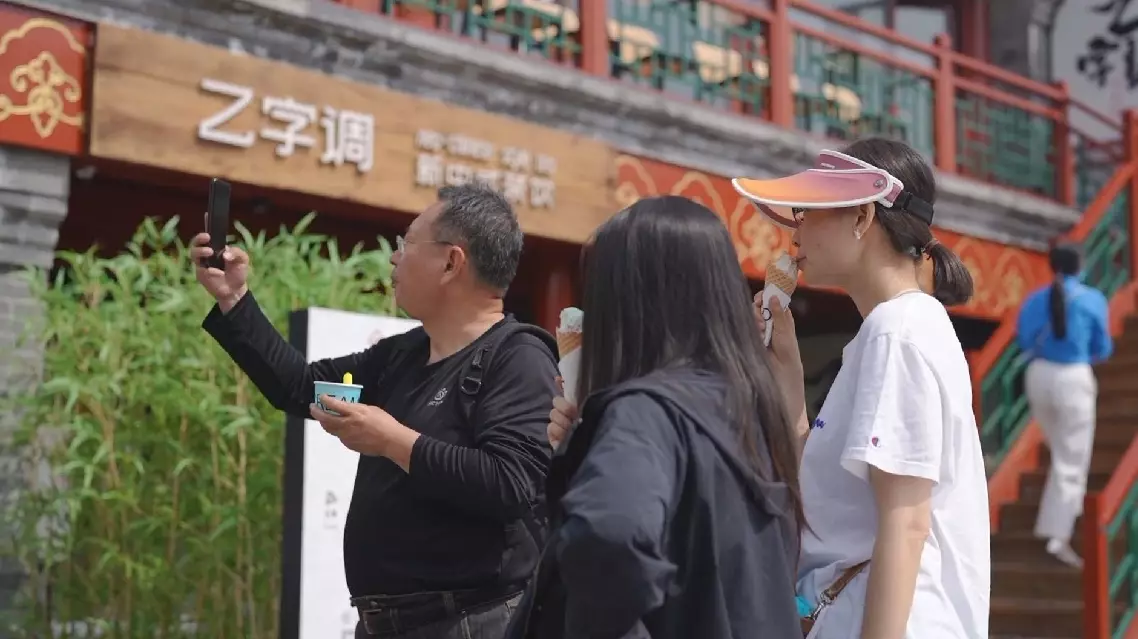
The historic Miaoying Temple (or Baita Temple) in Beijing's Xicheng District, renowned for its ancient white pagoda, is experiencing a vibrant renaissance. Once a quiet, traditional neighborhood, it now buzzes with trendy cafes, stylish shops and lively eateries.

Despite this modern surge, the area still harbors many long-standing residents and century-old shops, creating a unique blend of old and new that is transforming it into an emerging cultural hotspot.

The manager at Jm Cafe shared that they serve nearly 100 cups a day, with numbers soaring to 300 to 400 on weekends and holidays. Many young visitors are drawn to the area's fresh vibe.

"I've noticed that since the old area was renovated, there are now many coffee shops, including this café, which also offers attractive merchandise that really appeals to young people. The products are quite creative, and it's also a great place for taking photos," said Wang, a customer.

Walking upstairs at Jm Cafe, it's easy to see why it's become a favorite hangout spot. The neighborhood's lively atmosphere extends beyond cafes, with a glimpse into its traditional charm.

Deeper into the area, a more authentic, local scene unfolds. Master Gao's Grain and Oil Store, a humble shop, remains a staple for residents buying groceries such as rice, flour and cooking oil.

Gao Jishun, the shop owner, said the shop has been here for 34 years, things have really improved over time, and that the environment is much better than it used to be.

Nearby, a small stall named Bing Ge and Gao Jie is famous for its fried snacks that locals, especially seasoned Beijingers, can't get enough of. Chen Zhonglie, the owner, has been running the stall for over 30 years. Many returned customers couldn't stop praising the crispy and sweet meatballs.

Meanwhile, for Tian Xinmiao, who has lived here her whole life, the neighborhood's vibrant transformation feels both refreshing and inspiring.

"This area really showcases the hutong culture. And when you look at the food and drinks here, everything feels fresh and lively," Tian said.

As the neighborhood continues to evolve, it embodies a delicate balance, preserving its historic hutong charm while embracing modern vitality. It's a place where tradition and innovation coexist, making it a compelling symbol of Beijing's ongoing cultural renewal.

Hutong is the name given to a narrow lane, alley, or small street between rows of single-storey courtyards dwelled by Beijingers in the past.
Beijing's historic neighborhood blends historic Hutong charm with modern revival


Beijing's historic neighborhood blends historic Hutong charm with modern revival

An exciting wave of innovative winter tourism experiences is drawing visitors to the icy parts of China, as destinations transform ice and snow resources into immersive, experience-driven attractions that boost local consumption and development.

In Jiuru Mountain Scenic Area in Jinan City, east China's Shandong Province, towering icefalls formed by the area's canyon terrain and sustained winter cold create a spectacular frozen landscape.

Covering around 30,000 square meters, dense icicles and ice curtains hang like crystal glass, offering visitors a prime viewing season.

This winter, the scenic area has creatively incorporated fire elements, installing more than 100 stoves and log cabins throughout the park, creating a unique scene with "a stove available every few steps and a wooden cabin every 100 meters."

"The experience is really amazing and far beyond my expectations," said a tourist named Tian Yujuan.

Beyond sightseeing, the tourist attraction has also introduced more than 20 creative handicraft studios where visitors can make sachets and chocolates, while its snow play park that features ice sleds and snow tubing has become especially popular with families.

Since the New Year's Day, both visitor numbers and operating revenues at the site have more than doubled year on year.

In Yinchuan City, northwest China's Ningxia Hui Autonomous Region, local attractions are also expanding winter offerings through a "snow and ice plus" model.

On the Yuehai Lake, tourists wearing specially designed red protective suits float calmly in icy water in an activity known as "ice floating". The suits feature heat-locking inner layers and high-buoyancy outer layers, ensuring warmth and safety, while on-site photography services use drones and cameras to capture the experience.

"On weekends, I am willing to come to nearby cities to experience this kind of effortless relaxation. I find it quite stress-relieving," said a tourist.

In Pingxiliang Village, a small mountain village in suburban Urumqi, northwest China's Xinjiang Uygur Autonomous Region, ice and snow tourism has become a catalyst for rural revitalization.

Once an extremely impoverished village, Pingxiliang has developed winter cultural tourism by leveraging local resources.

Nowadays, more than 80 percent of households in the village operate homestays, and 236 villagers work in tourism, with related income accounting for over 70 percent of the total revenue.

Meanwhile, at the Sayram Lake in Xinjiang, winter visitors are flocking to newly created blue ice waterfalls -- each about 10 meters high and covering a total area of 15,000 square meters.

Built by staff who erected supports and sprayed water starting in November, the frozen formations preserve the natural shape of cascading water, creating a striking man-made icefall.

Shared widely on social media, the blue ice waterfalls have become a new must-see destination for winter tourists to the Sayram Lake.

China's winter tourism blends ice landscapes with immersive experiences

China's winter tourism blends ice landscapes with immersive experiences

China's winter tourism blends ice landscapes with immersive experiences

China's winter tourism blends ice landscapes with immersive experiences

Recommended Articles