Skip to Content Facebook Feature Image

What to know about the French militants who clashed with Syrian forces in Idlib

News

What to know about the French militants who clashed with Syrian forces in Idlib
News

News

What to know about the French militants who clashed with Syrian forces in Idlib

2025-10-24 01:46 Last Updated At:01:51

BEIRUT (AP) — Clashes broke out this week between Syrian government forces and fighters in a camp in northern Syria’s Idlib province led by an internationally wanted French militant.

The clashes come at a delicate moment, as Syria’s interim authorities are trying to decide how to handle the presence of thousands of Islamist foreign fighters in the country.

Foreign fighters joined forces with the Syrian insurgents who unseated former President Bashar Assad in a lightning offensive last year after nearly 14 years of civil war.

But now, as the country’s new leaders are trying to cement new ties with the west, these foreign fighters have become a political liability. Their presence is widely unpopular with Syrians, particularly religious minorities, who view them as often more extreme in their views than local Islamist factions.

Here’s what happened at the camp in Idlib and what might be coming next.

Al-Fardan camp in the Idlib countryside near the Turkish border is home to a small number of French and Francophone militants and their families.

Syria’s Interior Ministry said in a statement Wednesday that internal security forces had surrounded the camp after complaints from residents about “grave violations,” including the recent kidnapping of a girl from her mother by an armed group led by a French citizen named Omar Diaby.

The statement said that after forces tried to convince Diaby to surrender, he “refused, barricaded himself inside the camp, prevented civilians from leaving, and began firing, provoking security personnel, and terrorizing residents.”

SARI Global, a center providing geopolitical and security analysis, said armed clashes had begun overnight from Tuesday into Wednesday with “intense exchanges of gunfire and drone strikes reported inside the camp.”

It was not clear how many people were killed and wounded. Videos circulating on social media, apparently shot by residents of the camp, showed blasted-out walls and windows. One shows a group of women and children escorted by an armed man as they flee for cover.

Omar Diaby’s son, Jibril, in a video posted on social media Wednesday appealed to Syrians, saying that the security forces were preparing to overrun the camp and “we have families and children and orphans and women here, including elderly women.”

“We are your brothers, the immigrants who left our lands and our families and everything behind us to come and help you when you were saying, ‘Where is the world? Where are the Arabs? Where is the Islamic nation?’” he said. “Now you have turned on us.”

Another group of foreign fighters — Uzbek militants — flocked to the area, preparing to defend the camp. That, along with fears of the political fallout if women and children were killed, prompted government forces to halt their plans to storm the camp, said Wassim Nasr, a senior research fellow with the Soufan Center, a New York-based think tank focused on security issues.

Instead, the two sides reached a truce under which Diaby agreed to hand over the camp's heavy weapons.

The leader of the militants in the camp, Diaby, also known as Omar Omsen, is a Senegal-born French citizen known for posting French-language jihadist recruitment videos on YouTube. France issued an international arrest warrant against him in 2014.

In 2016, the U.S. State Department designated him a terrorist, saying that he led a group of about 50 French fighters who had joined the Nusra Front, then al-Qaida’s affiliate in Syria.

“Diaby’s videos have been credited as the chief reason behind why so many French nationals have joined militant groups in Syria and Iraq,” it said.

In 2015, Diaby faked his own death, reemerging the following year.

Despite having allied with the Nusra Front, Diaby later butted heads with the group’s spinoff, Hayat Tahrir al-Sham, the militant group that controlled much of Syria’s northwest before Assad’s fall. Former HTS leader Ahmad al-Sharaa is now Syria’s interim president.

Nasr noted that HTS had twice imprisoned Diaby before Assad's fall and had forbidden him from leading his militants as an independent unit, allowing them to fight only as part of “the ranks of another group which has an agreement with HTS.”

Foreign nationals streamed into Syria to fight on different sides after the outbreak of the country’s civil war in 2011.

Some joined the Islamic State group. Thousands of alleged foreign IS militants and family members are still held in camps and detention centers guarded by Kurdish-led forces in northeast Syria.

Others joined various insurgent factions in northwest Syria, where many remain today, while some have been stationed in different parts of the country as part of the new national army since Assad's fall.

Dareen Khalifa, a senior adviser at the International Crisis Group, noted that for HTS, “the presence of foreign fighters in areas under their control has always been a dilemma and a headache,” both because of friction with the fighters’ home countries and because many “Syrians are very unhappy with their presence.”

However, she noted that because the group relied on foreign fighter support, it has been reluctant to launch a wide-scale crackdown that “would give the impression to the ‘good’ foreign fighters — quote unquote — that HTS is turning against them," she said.

Nasr said that Diaby's situation was too “particular” to be considered an indication of how the Syrian government will handle the issue of foreign fighters. In general, the interim government has pursued a policy of incorporating the foreign fighters into the new Syrian army, which Nasr said the west has accepted since there is no clear alternative.

“If you don’t incorporate them in the army, when they fought for more than a decade to topple Assad, married and had children in Syria, what would they do?" he said. "They will cause problems for the new rulers of Damascus or cause problems for their home countries, which nobody wants. Nobody wants them back.”
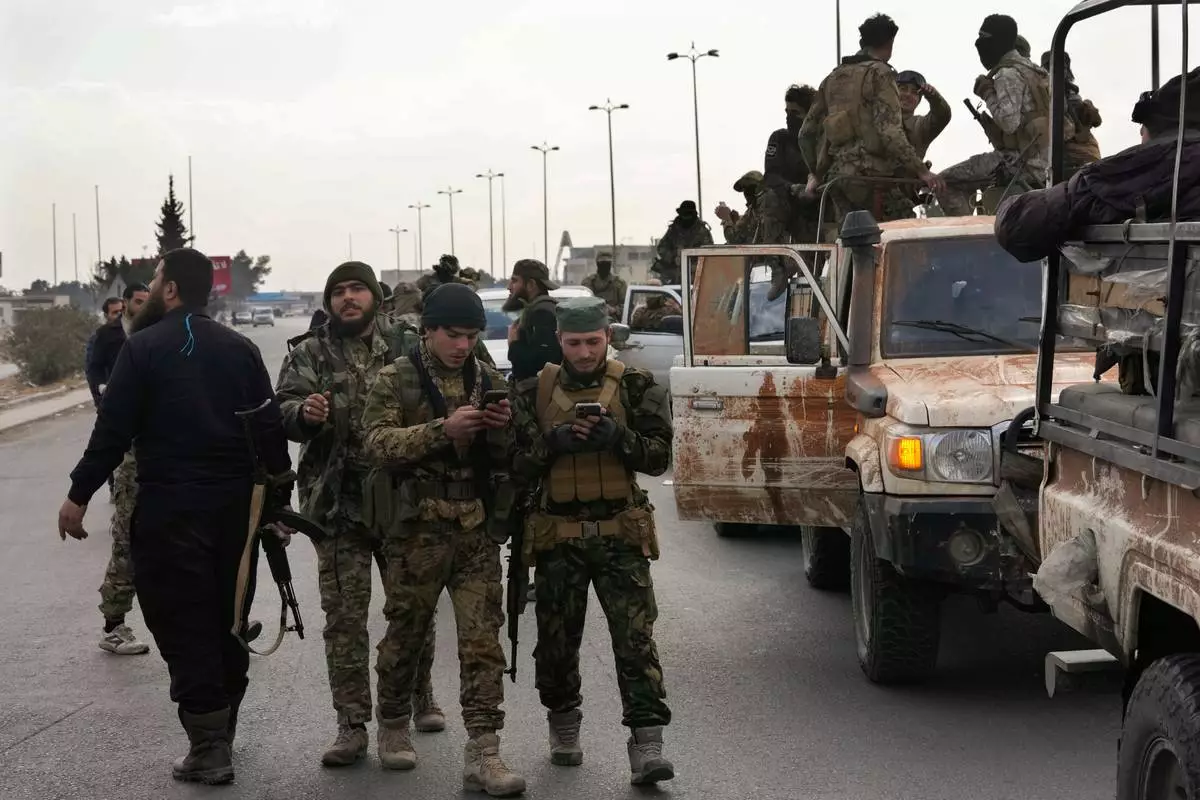
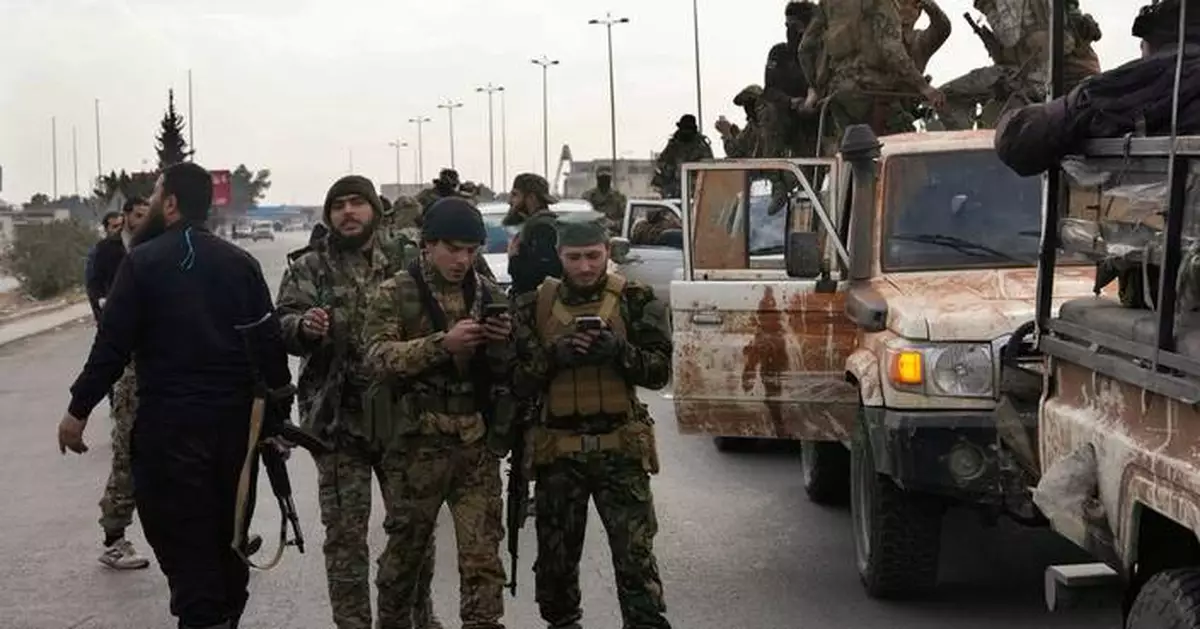
FILE - Syrian fighters check their mobiles, as they patrol a highway in Damascus, Syria, Thursday, Dec. 26, 2024. (AP Photo/Hussein Malla, File)
FILE - Syrian fighters check their mobiles, as they patrol a highway in Damascus, Syria, Thursday, Dec. 26, 2024. (AP Photo/Hussein Malla, File)
JERUSALEM (AP) — Over two dozen families from one of the few remaining Palestinian Bedouin villages in the central West Bank have packed up and fled their homes in recent days, saying harassment by Jewish settlers living in unauthorized outposts nearby has grown unbearable.

The village, Ras Ein el-Auja, was originally home to some 700 people from more than 100 families that have lived there for decades.

Twenty-six families already left on Thursday, scattering across the territory in search of safer ground, say rights groups. Several other families were packing up and leaving on Sunday.

“We have been suffering greatly from the settlers. Every day, they come on foot, or on tractors, or on horseback with their sheep into our homes. They enter people’s homes daily,” said Nayef Zayed, a resident, as neighbors took down sheep pens and tin structures.

Israel's military and the local settler governing body in the area did not respond to requests for comment.

Other residents pledged to stay put for the time being. That makes them some of the last Palestinians left in the area, said Sarit Michaeli, international director at B’Tselem, an Israeli rights group helping the residents.

She said that mounting settler violence has already emptied neighboring Palestinian hamlets in the dusty corridor of land stretching from Ramallah in the West to Jericho, along the Jordanian border, in the east.

The area is part of the 60% of the West Bank that has remained under full Israeli control under interim peace accords signed in the 1990s. Since the war between Israel and Hamas erupted in October 2023, over 2,000 Palestinians — at least 44 entire communities — have been expelled by settler violence in the area, B'Tselem says.

The turning point for the village came in December, when settlers put up an outpost about 50 meters (yards) from Palestinian homes on the northwestern flank of the village, said Michaeli and Sam Stein, an activist who has been living in the village for a month.

Settlers strolled easily through the village at night. Sheep and laundry went missing. International activists had to begin escorting children to school to keep them safe.

“The settlers attack us day and night, they have displaced us, they harass us in every way” said Eyad Isaac, another resident. “They intimidate the children and women.”

Michaeli said she’s witnessed settlers walk around the village at night, going into homes to film women and children and tampering with the village’s electricity.

The residents said they call the police frequently to ask for help — but it seldom arrives. Settlement expansion has been promoted by successive Israeli governments over nearly six decades. But Benjamin Netanyahu’s far-right government, which has placed settler leaders in senior positions, has made it a top priority.

That growth has been accompanied by a spike in settler violence, much of it carried out by residents of unauthorized outposts. These outposts often begin with small farms or shepherding that are used to seize land, say Palestinians and anti-settlement activists. United Nations officials warn the trend is changing the map of the West Bank, entrenching Israeli presence in the area.

Some 500,000 Israelis have settled in the West Bank since Israel captured the territory, along with east Jerusalem and the Gaza Strip, in the 1967 Mideast war. Their presence is viewed by most of the international community as illegal and a major obstacle to peace. The Palestinians seek all three areas for a future state.

For now, displaced families of the village have dispersed between other villages near the city of Jericho and near Hebron further south, said residents. Some sold their sheep and are trying to move into the cities.

Others are just dismantling their structures without knowing where to go.

"Where will we go? There’s nowhere. We’re scattered,” said Zayed, the resident, “People’s situation is bad. Very bad.”

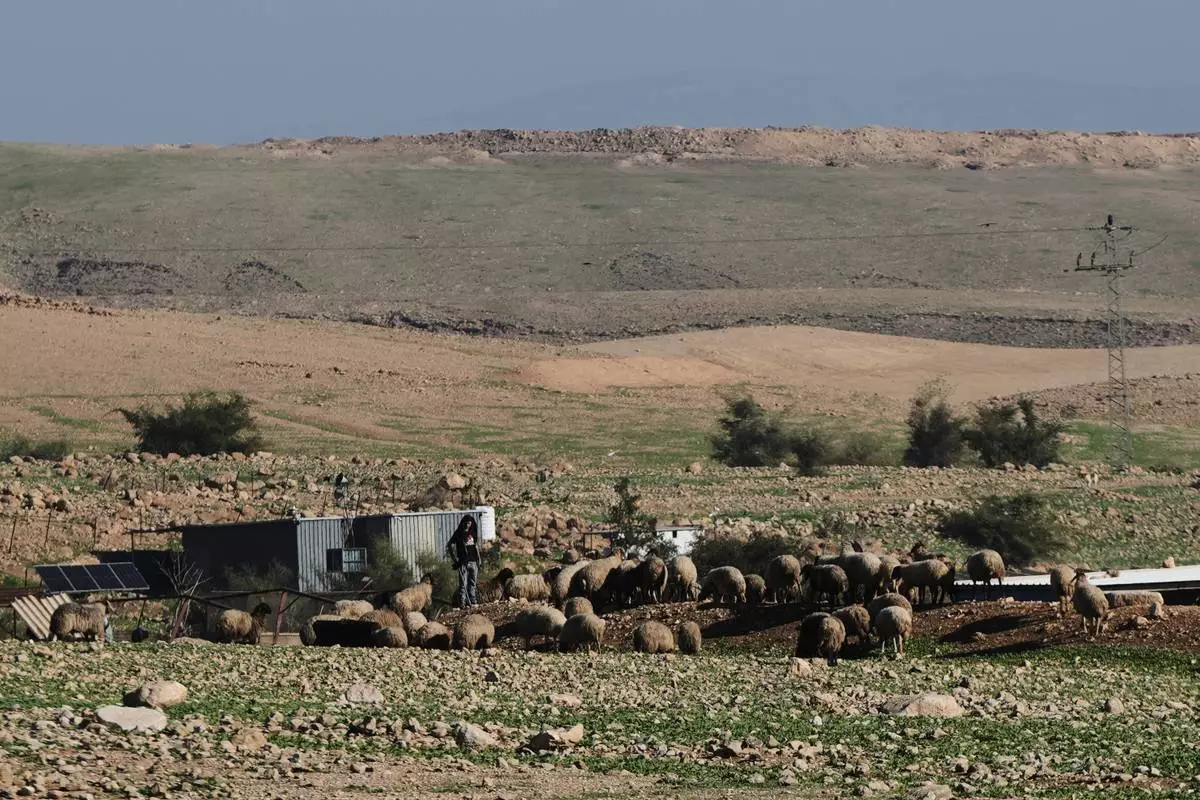
An Israeli settler herds his flock near his outpost beside the Palestinian village of Ras Ein al-Auja in the West Bank, Sunday, Jan. 11, 2026. (AP Photo/Mahmoud Illean)

An Israeli settler herds his flock near his outpost beside the Palestinian village of Ras Ein al-Auja in the West Bank, Sunday, Jan. 11, 2026. (AP Photo/Mahmoud Illean)

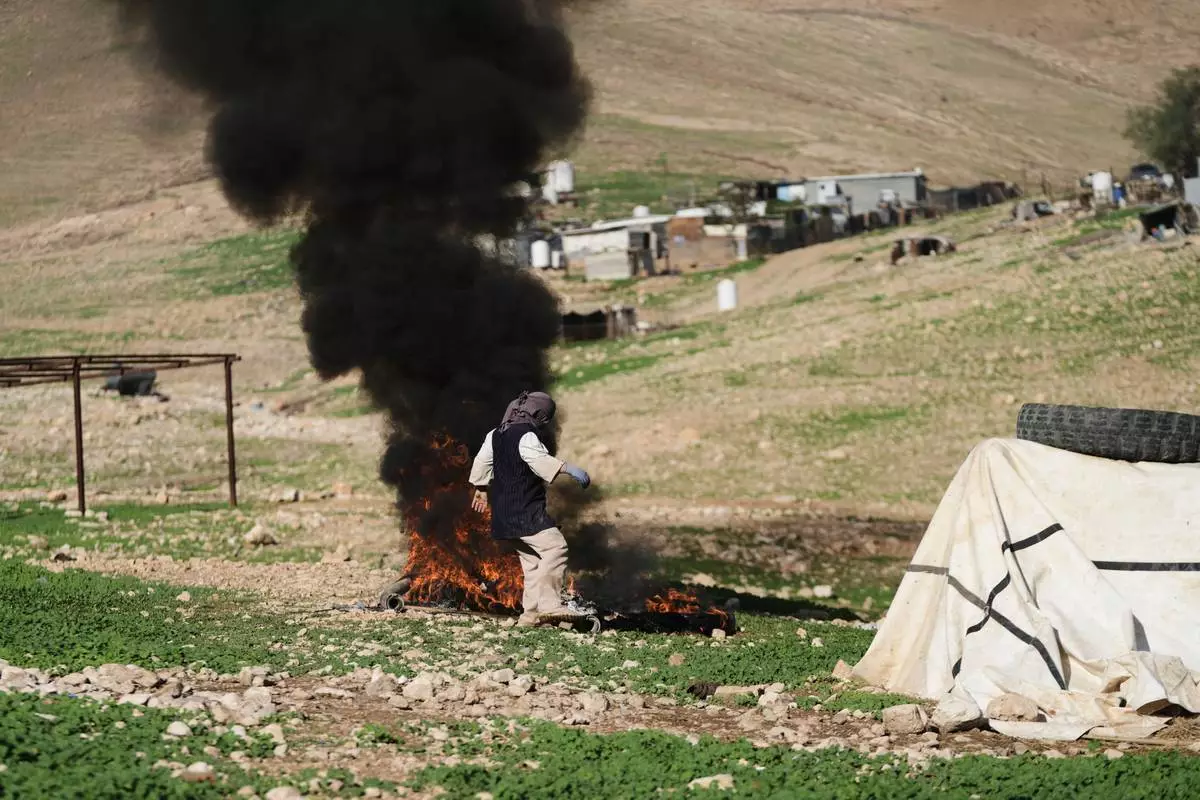
A Palestinian resident of Ras Ein al-Auja village, West Bank burns trash, Sunday, Jan. 11, 2026. (AP Photo/Mahmoud Illean)

A Palestinian resident of Ras Ein al-Auja village, West Bank burns trash, Sunday, Jan. 11, 2026. (AP Photo/Mahmoud Illean)

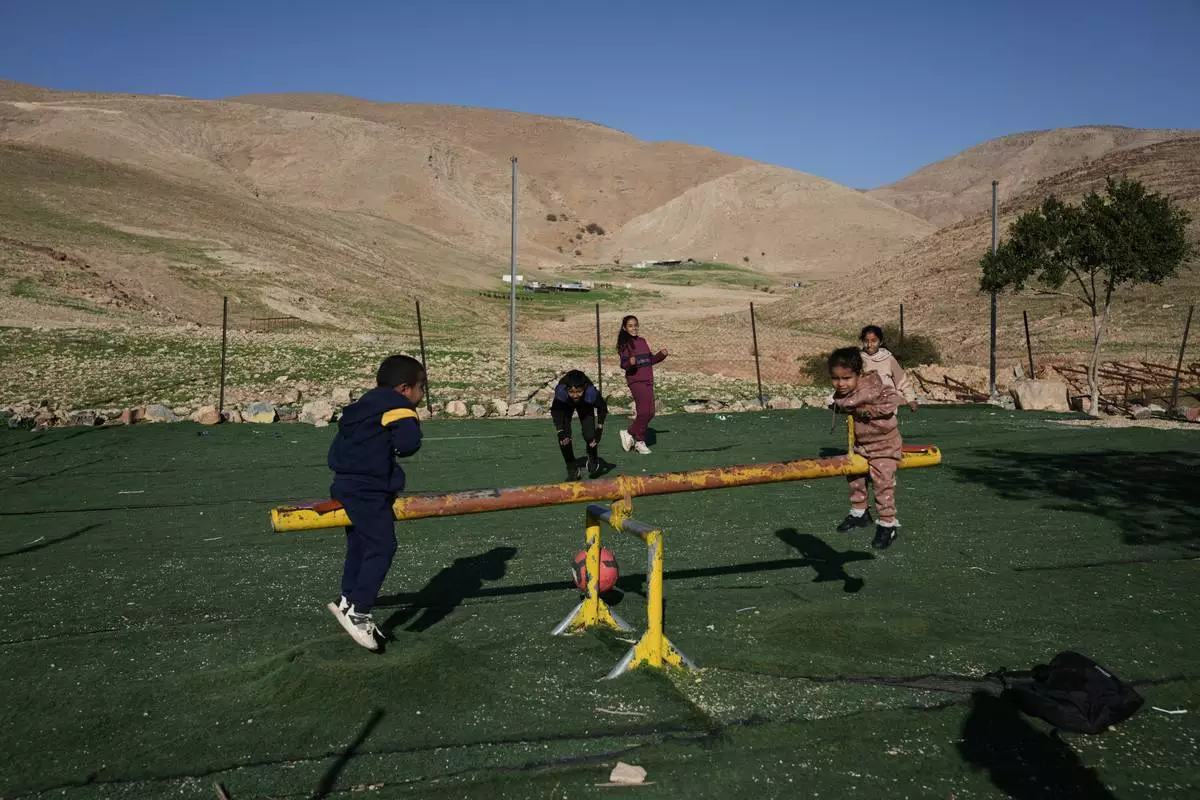
Palestinian children play in the West Bank village of Ras Ein al-Auja, Sunday, Jan. 11, 2026. (AP Photo/Mahmoud Illean)

Palestinian children play in the West Bank village of Ras Ein al-Auja, Sunday, Jan. 11, 2026. (AP Photo/Mahmoud Illean)

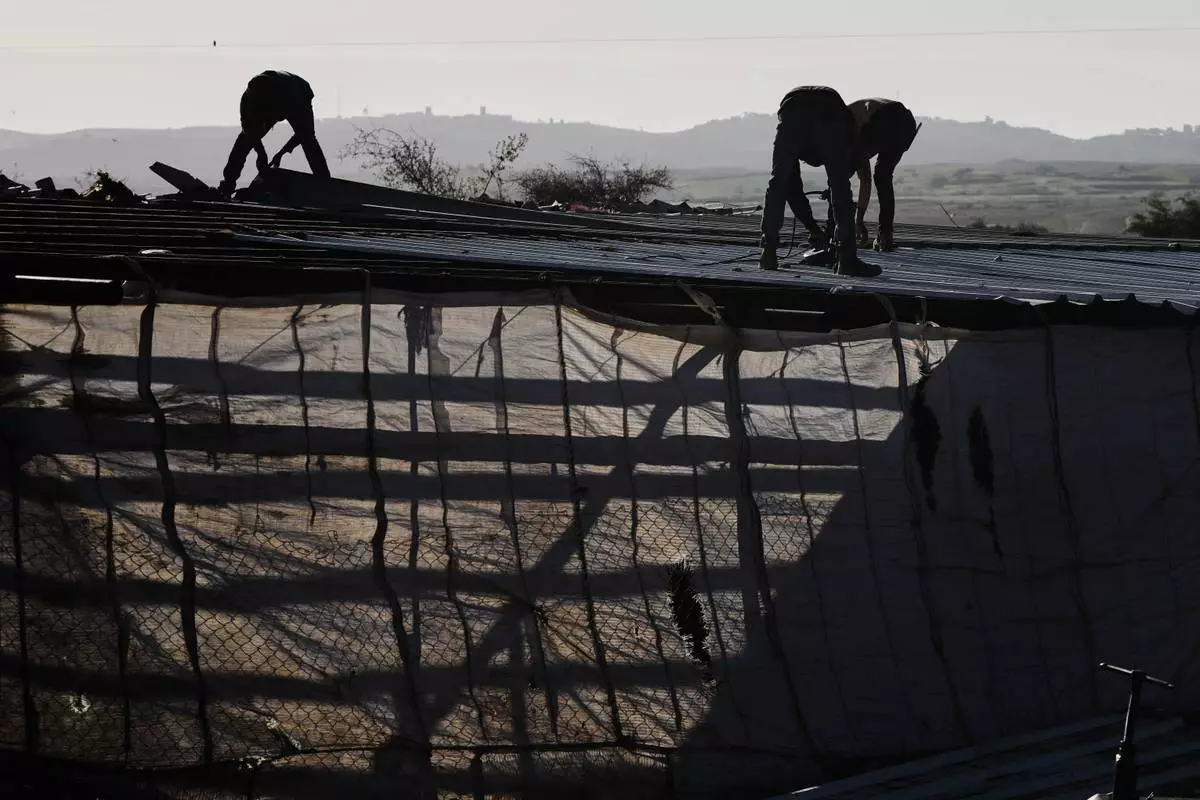
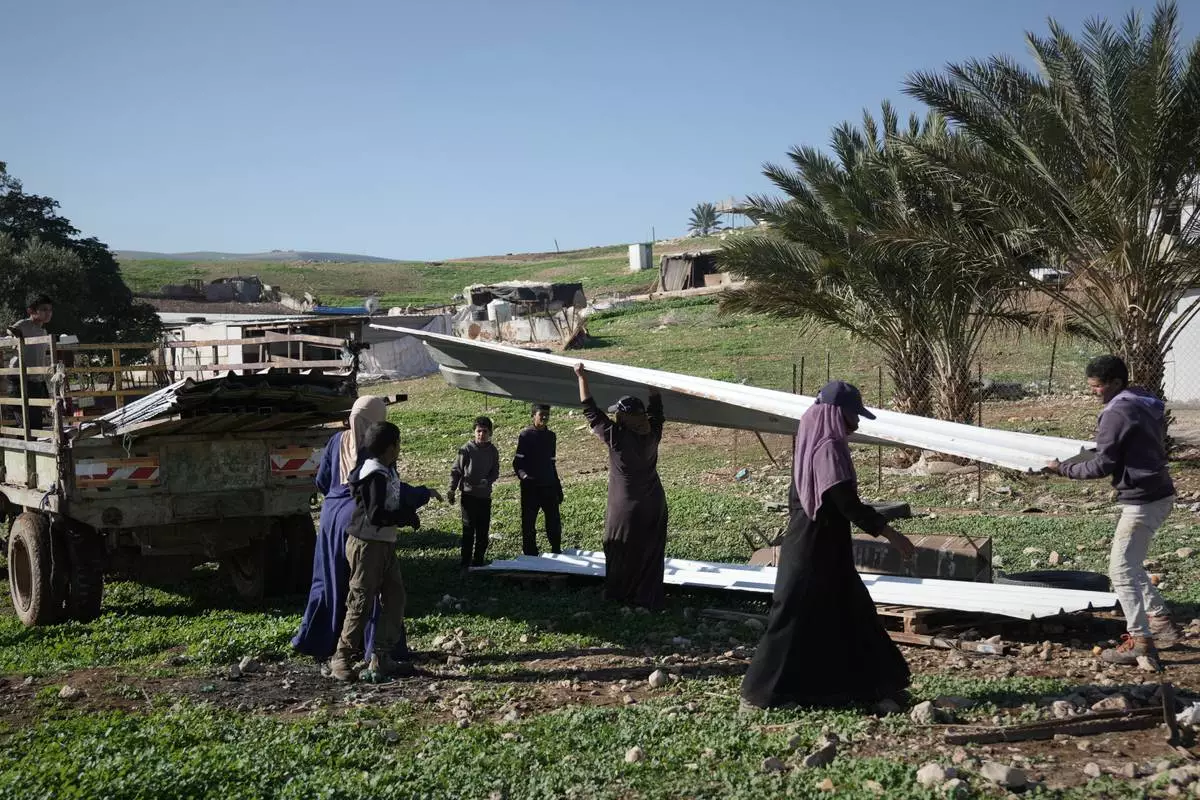
Palestinian residents of Ras Ein al-Auja village, West Bank pack up their belongings and prepare to leave their homes after deciding to flee mounting settler violence, Sunday, Jan. 11, 2026. (AP Photo/Mahmoud Illean)

Palestinian residents of Ras Ein al-Auja village, West Bank pack up their belongings and prepare to leave their homes after deciding to flee mounting settler violence, Sunday, Jan. 11, 2026. (AP Photo/Mahmoud Illean)

Palestinian residents of Ras Ein al-Auja village, West Bank pack up their belongings and prepare to leave their homes after deciding to flee mounting settler violence, Sunday, Jan. 11, 2026. (AP Photo/Mahmoud Illean)

Palestinian residents of Ras Ein al-Auja village, West Bank pack up their belongings and prepare to leave their homes after deciding to flee mounting settler violence, Sunday, Jan. 11, 2026. (AP Photo/Mahmoud Illean)

Recommended Articles