LONDON (AP) — Ukrainian President Volodymyr Zelenskyy on Friday urged the United States to expand sanctions on Russian oil from two companies to the whole sector, and appealed for long-range missiles to hit back at Russia.
Zelenskyy was in London for talks with two dozen European leaders who have pledged military help to shield his country from future Russian aggression if a ceasefire stops the more than three-year war.
Click to Gallery
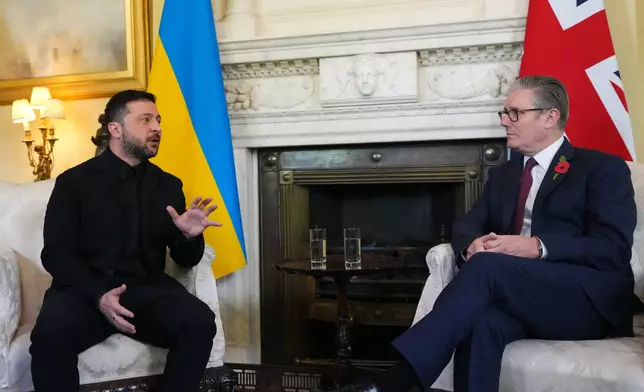
Britain's Prime Minister Keir Starmer welcomes Ukraine's President Volodymyr Zelenskyy to 10 Downing Street in London, Friday, Oct. 24, 2025 for bilateral talks and a later meeting of the so-called "coalition of the willing".(AP Photo/Kirsty Wigglesworth, Pool)
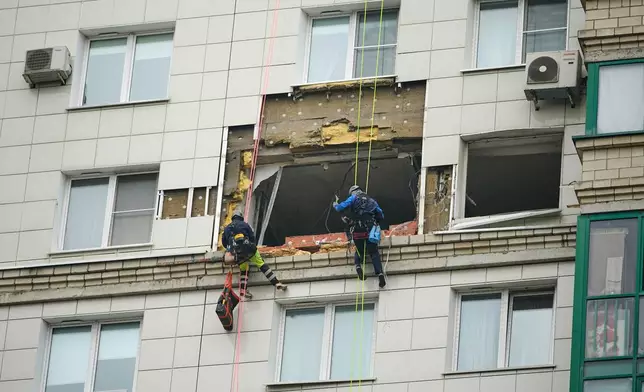
Municipal employees work at the side of a damaged multi-storey apartment building hit by a Ukrainian drone in Krasnogorsk, just outside Moscow, Russia, on Friday, Oct. 24, 2025. (AP Photo/Pavel Bednyakov)
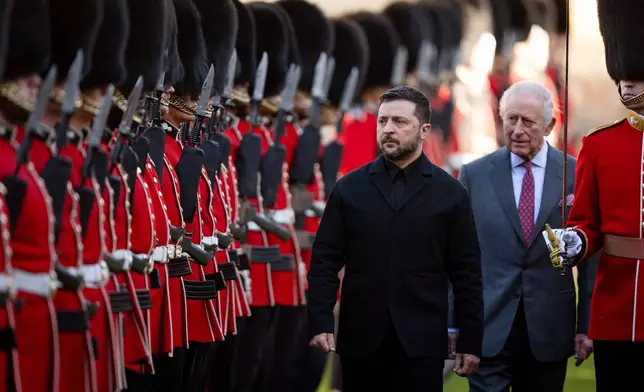
Centre from left: Ukraine's President Volodymyr Zelenskyy, King Charles III and Major Ben Tracey inspecting a guard of honour at Windsor Castle, England, Friday, Oct, 24, 2025. (Aaron Chown/Pool Photo via AP)
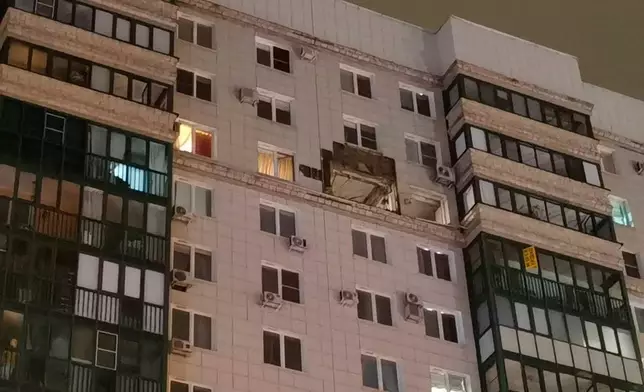
This photo released by Moscow Region Governor Andrei Vorobyev official telegram channel shows a view of the damaged multi-storey apartment building hit by a Ukrainian drone in Krasnogorsk, just outside Moscow, Russia, on Friday, Oct. 24, 2025. (Moscow Region Governor Andrei Vorobyev official telegram channel via AP)
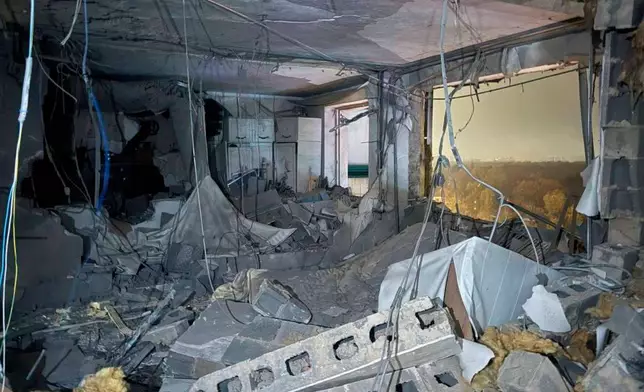
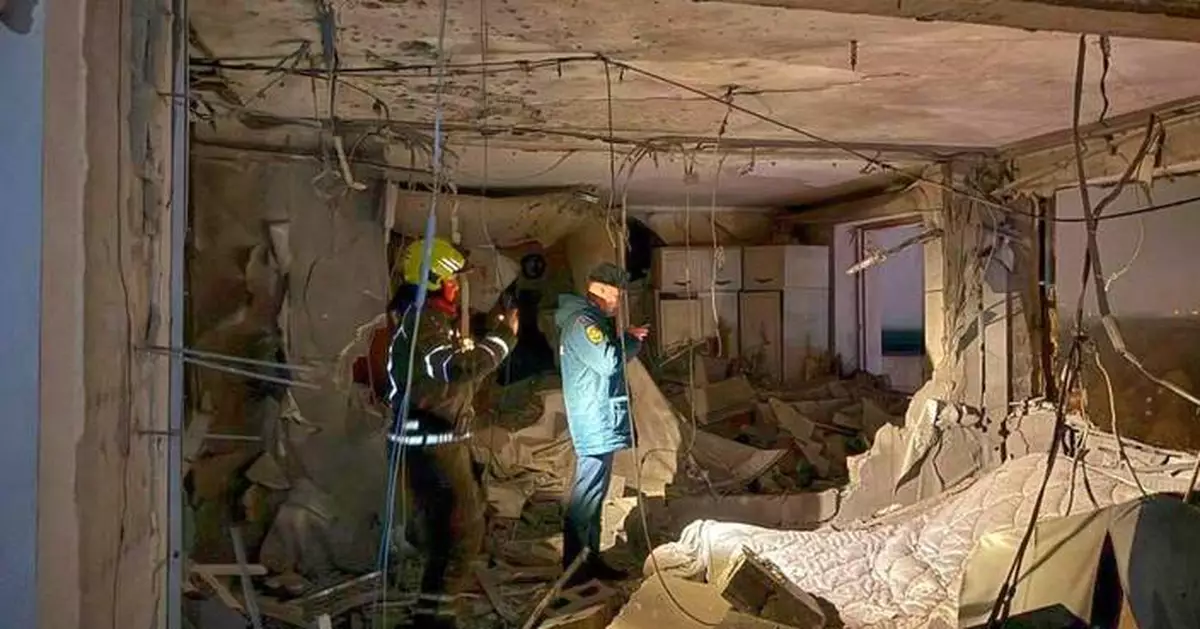
This photo released by Moscow Region Governor Andrei Vorobyev official telegram channel shows a view of the flat in the damaged multi-storey apartment building hit by a Ukrainian drone in Krasnogorsk, just outside Moscow, Russia, on Friday, Oct. 24, 2025. (Moscow Region Governor Andrei Vorobyev official telegram channel via AP)
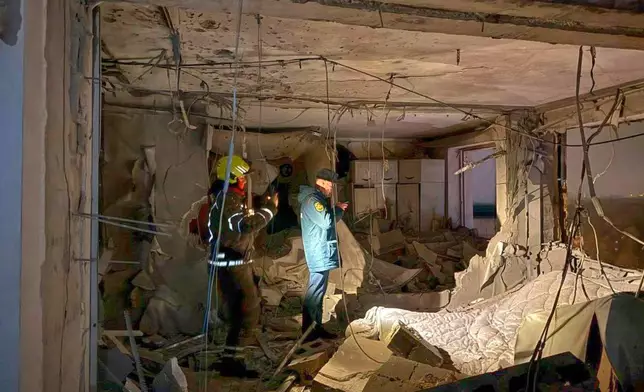
This photo released by Moscow Region Governor Andrei Vorobyev official telegram channel shows investigators working in the damaged multi-storey apartment building hit by a Ukrainian drone in Krasnogorsk, just outside Moscow, Russia, on Friday, Oct. 24, 2025. (Moscow Region Governor Andrei Vorobyev official telegram channel via AP)
The meeting hosted by British Prime Minister Keir Starmer aimed to step up pressure on Russian President Vladimir Putin, adding momentum to recent measures that have included a new round of sanctions from the United States and European countries on Russia’s vital oil and gas export earnings.
The talks also addressed ways of helping protect Ukraine’s power grid from Russia’s almost daily drone and missiles attacks as winter approaches, enhancing Ukrainian air defenses, and supplying Kyiv with longer-range missiles that can strike deep inside Russia. Zelenskyy has urged the U.S. to send Tomahawk missiles, an idea U.S. President Donald Trump has flirted with.
The Ukrainian leader said Trump's decision this week to impose oil sanctions was “a big step,” and said “we have to apply pressure not only to Rosneft and Lukoil, but to all Russian oil companies.”
“Besides, we are carrying out our own campaign of pressure with drones and missiles specifically targeting the Russian oil sector," he said during a news conference at the Foreign Office in London.
Trump also has put on hold a plan for a swift meeting with Putin in Budapest, because he didn’t want it to be a “waste of time.”
Putin has so far resisted efforts to push him into negotiating a peace settlement with Zelenskyy and has argued that the motives for Russia’s all-out invasion of its smaller neighbor are legitimate. Russia has also been adept at finding loopholes in Western sanctions.
A top Russian official said Friday he has arrived in the United States for talks with U.S. officials. Kirill Dmitriev, Putin’s envoy for investment and economic cooperation, announced his visit in a post on X. He said it was “planned a while ago” on an invitation “from the U.S. side.”
Dmitriev will meet with U.S. envoy Steve Witkoff, a White House official not authorized to publicly discuss the private meeting confirmed on condition of anonymity. The meeting was first reported by Axios.
Dmitriev has been a key interlocutor in discussions between the Trump administration and the Kremlin on numerous issues, including the Ukraine war and the release of American detainees in Russia.
Putin's unbudging stance has exasperated Western leaders.
“He’s rejected the opportunity for talks once again, instead making ludicrous demands for Ukrainian land, which he could not and has not taken by force," Starmer said at a news conference alongside Zelenskyy and several other European leaders. “Of course, that is a complete non-starter.”
NATO Secretary-General Mark Rutte said Putin's goals remain unchanged but he "is running out of money, troops and ideas.”
Danish Prime Minister Mette Frederiksen and Dutch Prime Minister Dick Schoof also attended Friday's meeting of the “Coalition of the Willing” in person. About 20 other leaders joined by video link.
Ukraine’s Western allies need to resolve some big questions about the future part they will play as Europe’s biggest conflict since World War II heads toward its fourth anniversary.
The uncertainties include how they can help fund war-devastated Ukraine, what postwar security guarantees they might be able to provide, and what Washington’s commitments to future security arrangements might be.
Details of the potential future “reassurance force” are scant, and the London meeting seeks to further develop the idea — even though any peace agreement appears at the moment to be only a distant possibility.
The force is likely to consist of air and naval support rather than Western troops deployed in Ukraine, according to officials. U.K. Defense Secretary John Healey says it would be “a force to help secure the skies, secure the seas, a force to help train Ukrainian forces to defend their nation.”
The war has shown no sign of subsiding, as a front-line war of attrition kills thousands of soldiers on both sides while drone and missile barrages cause damage in rear areas.
The Russian Defense Ministry claimed Friday that over the past week its forces have captured 10 Ukrainian villages. The small conquests are part of Russia’s slow but steady slog to envelop the remaining Ukrainian strongholds in the Donetsk region from both the north and the south and create footholds for pressing further west into the Dnipropetrovsk region.
The Defense Ministry also said its forces downed 111 Ukrainian drones over several regions overnight, with debris causing damage to homes and infrastructure..
Moscow Mayor Sergei Sobyanin reported that air defenses downed three drones heading to the city, which forced flights to be suspended at two Moscow airports.
Meanwhile, Ukrainian authorities said Russian artillery struck a residential block in the southeastern city of Kherson on Friday, killing two people and injuring 22 others.
Russian planes also dropped at least five powerful glide bombs on the northeastern city of Kharkiv, injuring six people and damaging homes, according to Kharkiv Mayor Ihor Terekhov.
And for the first time, Russia fired glide bombs on Ukraine’s southern Odesa region Friday, according to Oleh Kiper, head of the Odesa Regional Military Administration, calling it “a new, serious threat” in the area. Glide bombs are significantly cheaper than missiles and carry a heavier payload.
__
Associated Press writer Aamer Madhani in Washington contributed to this report.
Follow AP’s coverage of the war in Ukraine at https://apnews.com/hub/russia-ukraine
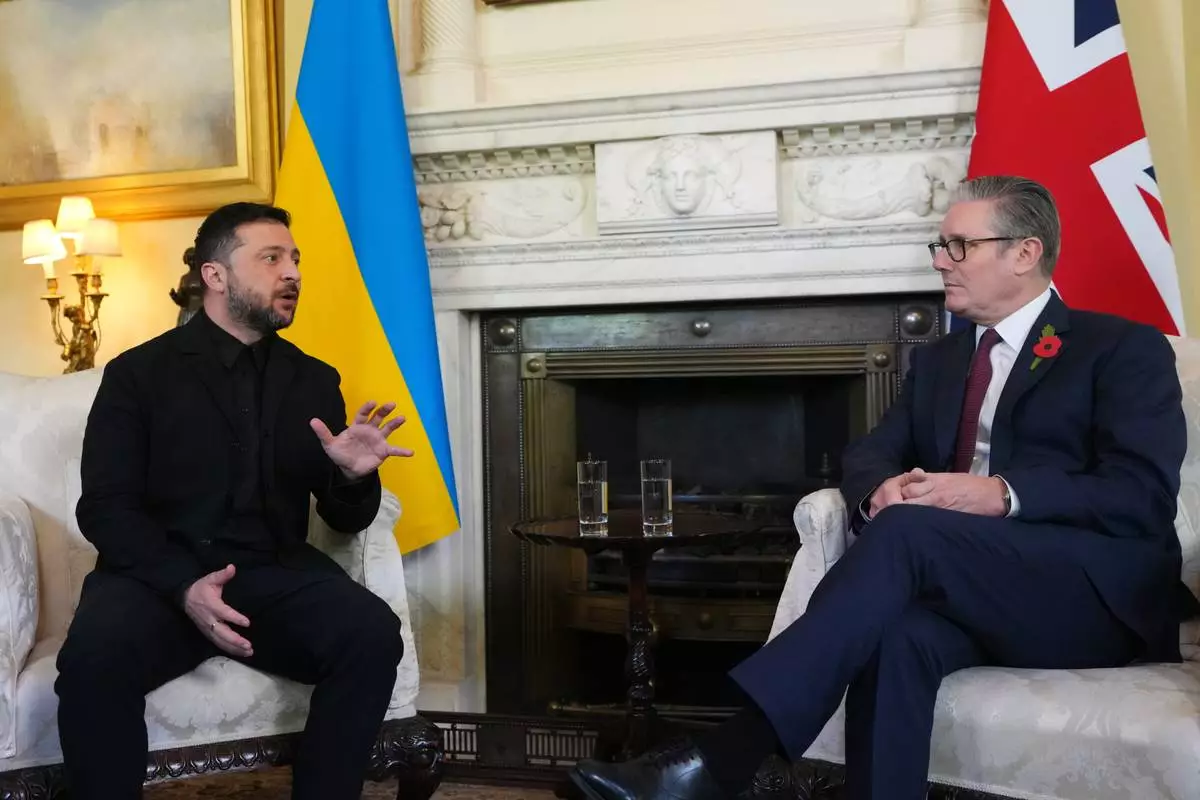
Britain's Prime Minister Keir Starmer welcomes Ukraine's President Volodymyr Zelenskyy to 10 Downing Street in London, Friday, Oct. 24, 2025 for bilateral talks and a later meeting of the so-called "coalition of the willing".(AP Photo/Kirsty Wigglesworth, Pool)
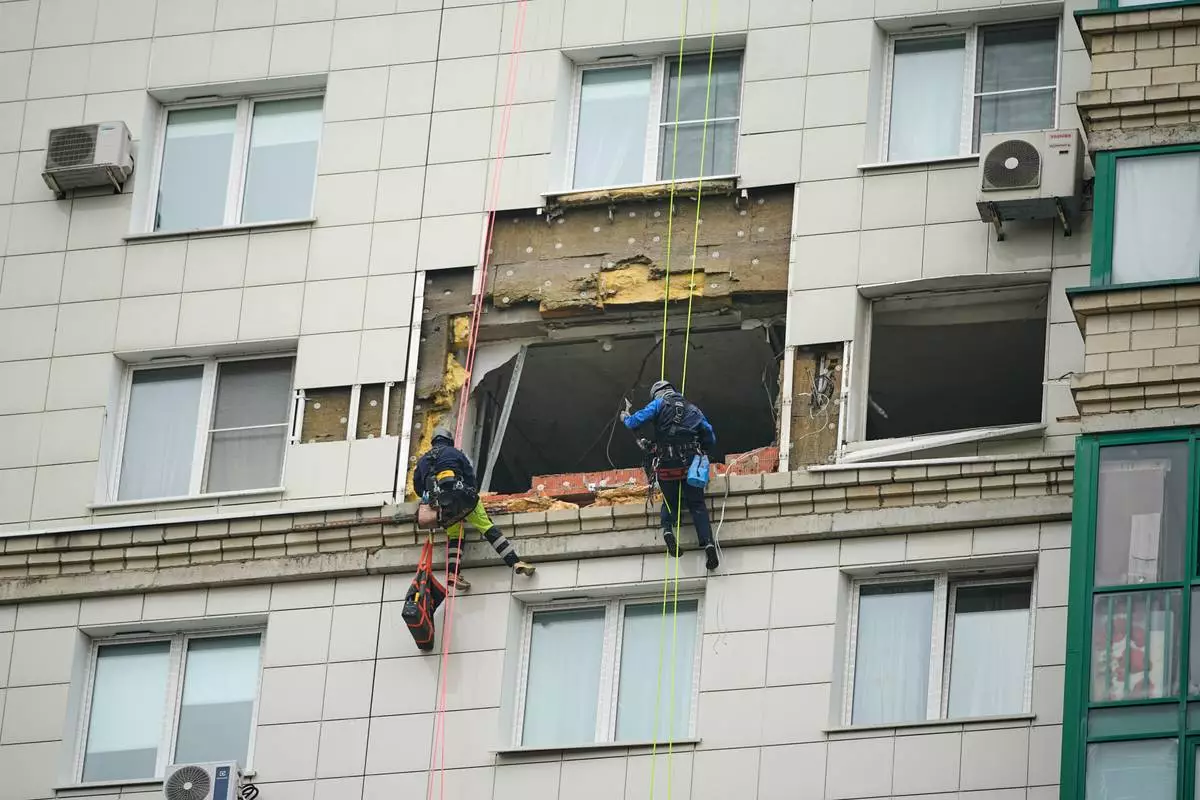
Municipal employees work at the side of a damaged multi-storey apartment building hit by a Ukrainian drone in Krasnogorsk, just outside Moscow, Russia, on Friday, Oct. 24, 2025. (AP Photo/Pavel Bednyakov)
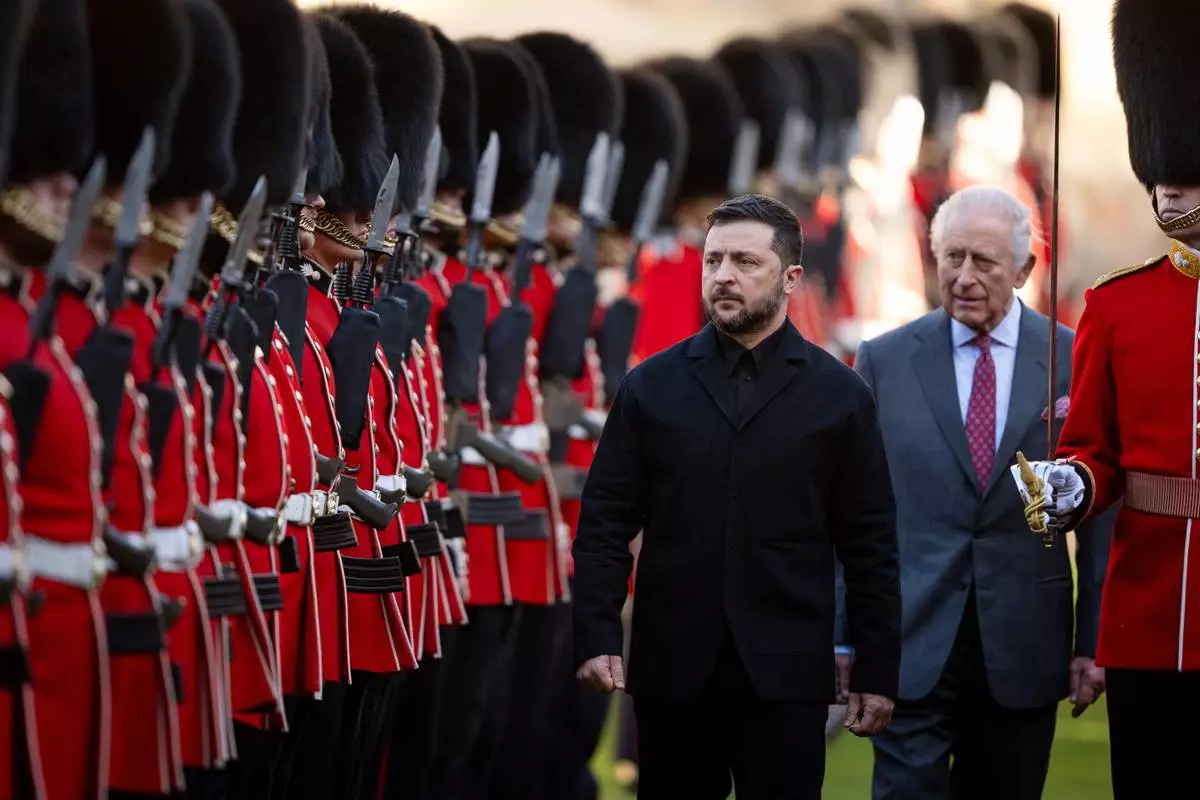
Centre from left: Ukraine's President Volodymyr Zelenskyy, King Charles III and Major Ben Tracey inspecting a guard of honour at Windsor Castle, England, Friday, Oct, 24, 2025. (Aaron Chown/Pool Photo via AP)

This photo released by Moscow Region Governor Andrei Vorobyev official telegram channel shows a view of the damaged multi-storey apartment building hit by a Ukrainian drone in Krasnogorsk, just outside Moscow, Russia, on Friday, Oct. 24, 2025. (Moscow Region Governor Andrei Vorobyev official telegram channel via AP)
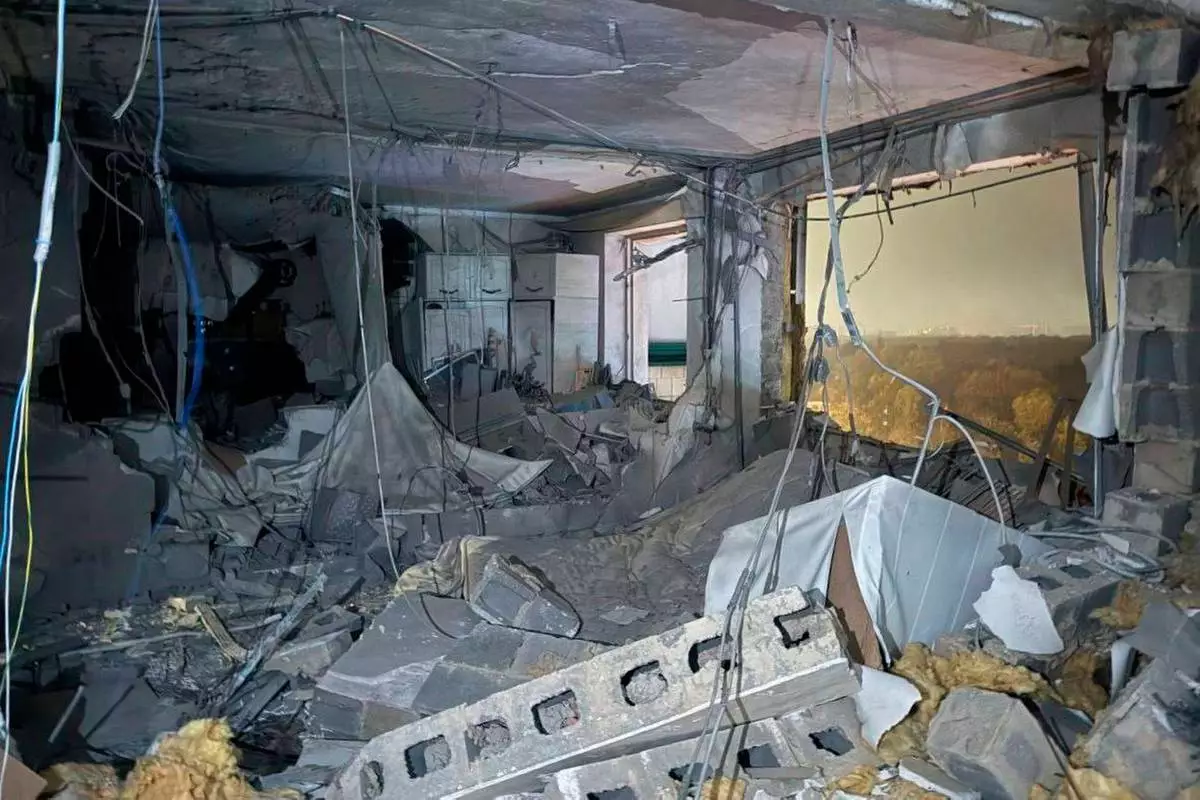
This photo released by Moscow Region Governor Andrei Vorobyev official telegram channel shows a view of the flat in the damaged multi-storey apartment building hit by a Ukrainian drone in Krasnogorsk, just outside Moscow, Russia, on Friday, Oct. 24, 2025. (Moscow Region Governor Andrei Vorobyev official telegram channel via AP)
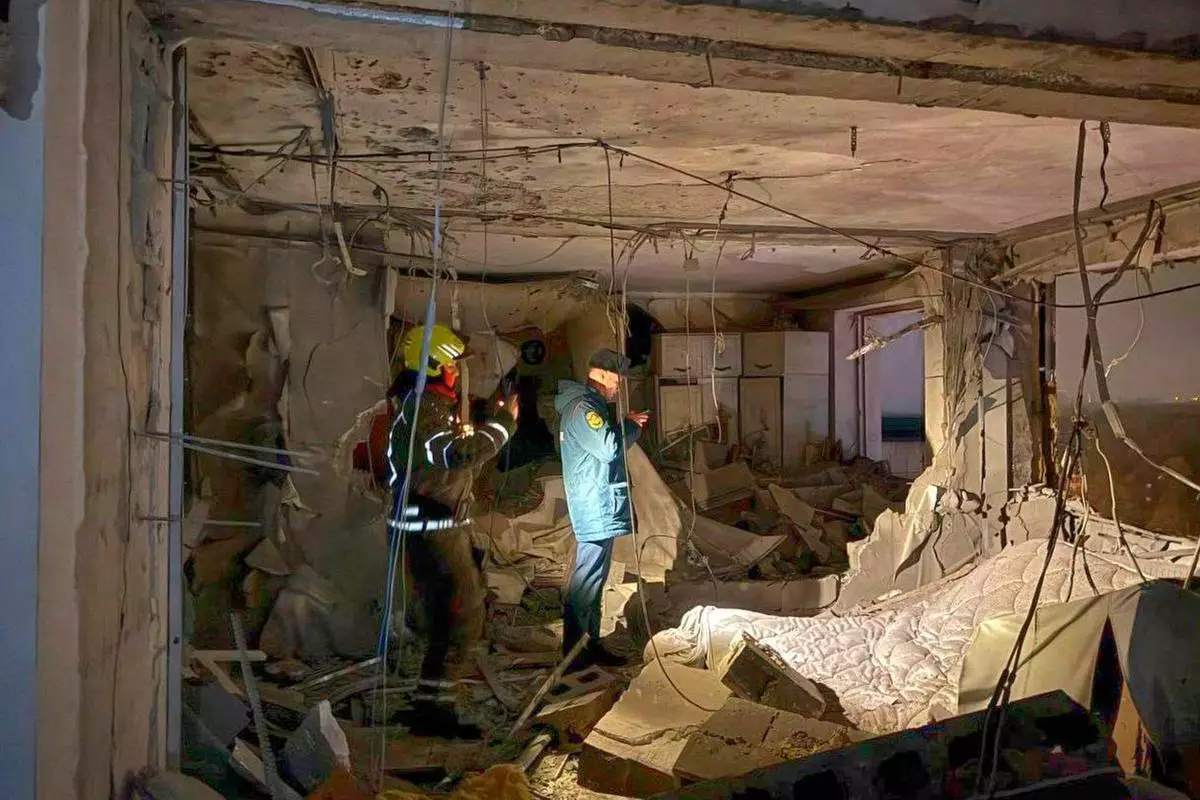
This photo released by Moscow Region Governor Andrei Vorobyev official telegram channel shows investigators working in the damaged multi-storey apartment building hit by a Ukrainian drone in Krasnogorsk, just outside Moscow, Russia, on Friday, Oct. 24, 2025. (Moscow Region Governor Andrei Vorobyev official telegram channel via AP)