Pregnancy centers in the U.S. that discourage women from getting abortions have been adding more medical services — and could be poised to expand further.
The expansion — ranging from testing and treatment for sexually transmitted infections to even providing primary medical care — has been unfolding for years. It gained steam after the Supreme Court overturned Roe v. Wade three years ago, clearing the way for states to ban abortion.
The push could get more momentum with Planned Parenthood closing some clinics and considering shuttering others following changes to Medicaid. Planned Parenthood is not just the nation's largest abortion provider, but also offers cancer screenings, STI testing and treatment, and other reproductive health services.
“We ultimately want to replace Planned Parenthood with the services we offer,” said Heather Lawless, founder and director of Reliance Center in Lewiston, Idaho. She said about 40% of patients at the anti-abortion center are there for reasons unrelated to pregnancy, including some who use the nurse practitioner as a primary caregiver.
The changes have frustrated abortion-rights groups, who, in addition to opposing the centers' anti-abortion messaging, say they lack accountability; refuse to provide birth control; and most offer only limited ultrasounds that cannot be used for diagnosing fetal anomalies because the people conducting them don't have that training. A growing number also offer unproven abortion-pill reversal treatments.
Because most of the centers don't accept insurance, the federal law restricting release of medical information doesn't apply to them, though some say they follow it anyway. They also don't have to follow standards required by Medicaid or private insurers, though those offering certain services generally must have medical directors who comply with state licensing requirements.
“There are really bedrock questions,” said Jennifer McKenna, a senior adviser for Reproductive Health and Freedom Watch, a project funded by liberal policy organizations that researches the pregnancy centers, “about whether this industry has the clinical infrastructure to provide the medical services it’s currently advertising.”
Perhaps best known as “crisis pregnancy centers,” these mostly privately funded and religiously affiliated centers were expanding services such as diaper banks ahead of the Supreme Court's 2022 Dobbs v. Jackson Women's Health Organization ruling.
As abortion bans kicked in, the centers expanded medical, educational and other programs, said Moira Gaul, a scholar at the Charlotte Lozier Institute, the research arm of SBA Pro-Life America. “They are prepared to serve their communities for the long-term,” she said in a statement.
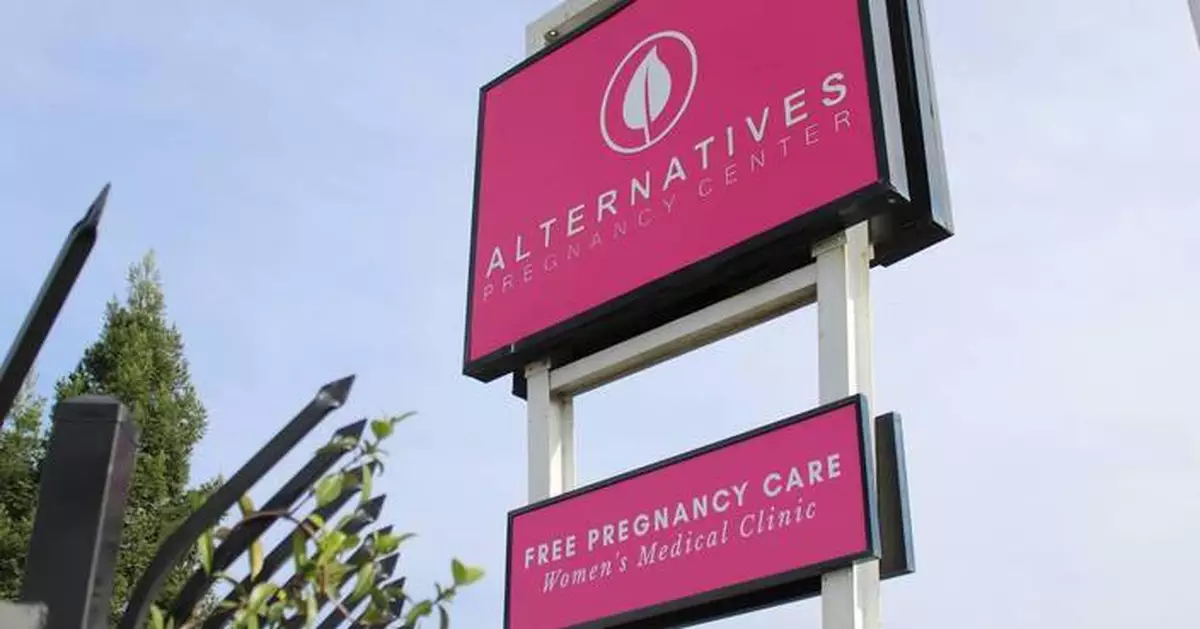
In Sacramento, California, for instance, Alternatives Pregnancy Center in the last two years has added family practice doctors, a radiologist and a specialist in high-risk pregnancies, along with nurses and medical assistants. Alternatives — an affiliate of Heartbeat International, one of the largest associations of pregnancy centers in the U.S — is some patients' only health provider.
When The Associated Press asked to interview a patient who had received only non-pregnancy services, the clinic provided Jessica Rose, a 31-year-old woman who took the rare step of detransitioning after spending seven years living as a man, during which she received hormone therapy and a double mastectomy.
For the last two years, she’s received all medical care at Alternatives, which has an OB-GYN who specializes in hormone therapy. Few, if any, pregnancy centers advertise that they provide help with detransitioning. Alternatives has treated four similar patients over the past year, though that's not its main mission, director Heidi Matzke said.
“APC provided me a space that aligned with my beliefs as well as seeing me as a woman,” Rose said. She said other clinics "were trying to make me think that detransitioning wasn’t what I wanted to do.”
As of 2024, more than 2,600 anti-abortion pregnancy centers operated in the U.S., up 87 from 2023, according to the Crisis Pregnancy Center Map, a project led by University of Georgia public health researchers who are concerned about aspects of the centers. According to the Guttmacher Institute, 765 clinics offered abortions last year, down more than 40 from 2023.
Over the years, pregnancy centers have received a boost in taxpayer funds. Nearly 20 states, largely Republican-led, now funnel millions of public dollars to these organizations. Texas alone sent $70 million to pregnancy centers this fiscal year, while Florida dedicated more than $29 million for its “Pregnancy Support Services Program”
This boost in resources is unfolding as Republicans have barred Planned Parenthood from receiving Medicaid funds under the tax and spending law President Donald Trump signed in July. While federal law already blocked the use of taxpayer funds for most abortions, Medicaid reimbursements for other health services were a big part of Planned Parenthood's revenue.
Planned Parenthood said its affiliates could be forced to close up to 200 clinics.
Some already had closed or reorganized. They have cut abortion in Wisconsin and eliminated Medicaid services in Arizona. An independent group of clinics in Maine stopped primary care for the same reason. The uncertainty is compounded by pending Medicaid changes expected to result in more uninsured Americans.
Some abortion-rights advocates worry that will mean more health care deserts where the pregnancy centers are the only option for more women.
Kaitlyn Joshua, a founder of abortion-rights group Abortion in America, lives in Louisiana, where Planned Parenthood closed its clinics in September.
She's concerned that women seeking health services at pregnancy centers as a result of those closures won’t get what they need. “Those centers should be regulated. They should be providing information which is accurate,” she said, “rather than just getting a sermon that they didn’t ask for.”
Thomas Glessner, founder and president of the National Institute of Family and Life Advocates, a network of 1,800 centers, said the centers do have government oversight through their medical directors. “Their criticism,” he said, “comes from a political agenda.”
In recent years, five Democratic state attorneys general have issued warnings that the centers, which advertise to people seeking abortions, don't provide them and don't refer patients to clinics that do. And the Supreme Court has agreed to consider whether a state investigation of an organization that runs centers in New Jersey stifles its free speech.
Choices Medical Services in Joplin, Missouri, where the Planned Parenthood clinic closed last year, moved from focusing solely on discouraging abortion to a broader sexual health mission about 20 years ago when it began offering STI treatment, said its executive director, Karolyn Schrage.
The center, funded by donors, works with law enforcement in places where authorities may find pregnant adults, according to Arkansas State Police and Schrage.
She estimates that more than two-thirds of its work isn't related to pregnancy.
Hayley Kelly first encountered Choices volunteers in 2019 at a regular weekly dinner they brought to dancers at the strip club where she worked. Over the years, she went to the center for STI testing. Then in 2023, when she was uninsured and struggling with drugs, she wanted to confirm a pregnancy.
She anticipated the staff wouldn’t like that she was leaning toward an abortion, but she says they just answered questions. She ended up having that baby and, later, another.
“It’s amazing place,” Kelly said. “I tell everybody I know, ‘You can go there.’”
The center, like others, does not provide contraceptives — standard offerings at sexual health clinics that experts say are best practices for public health.
“Our focus is on sexual risk elimination," Schrage said, “not just reduction.”
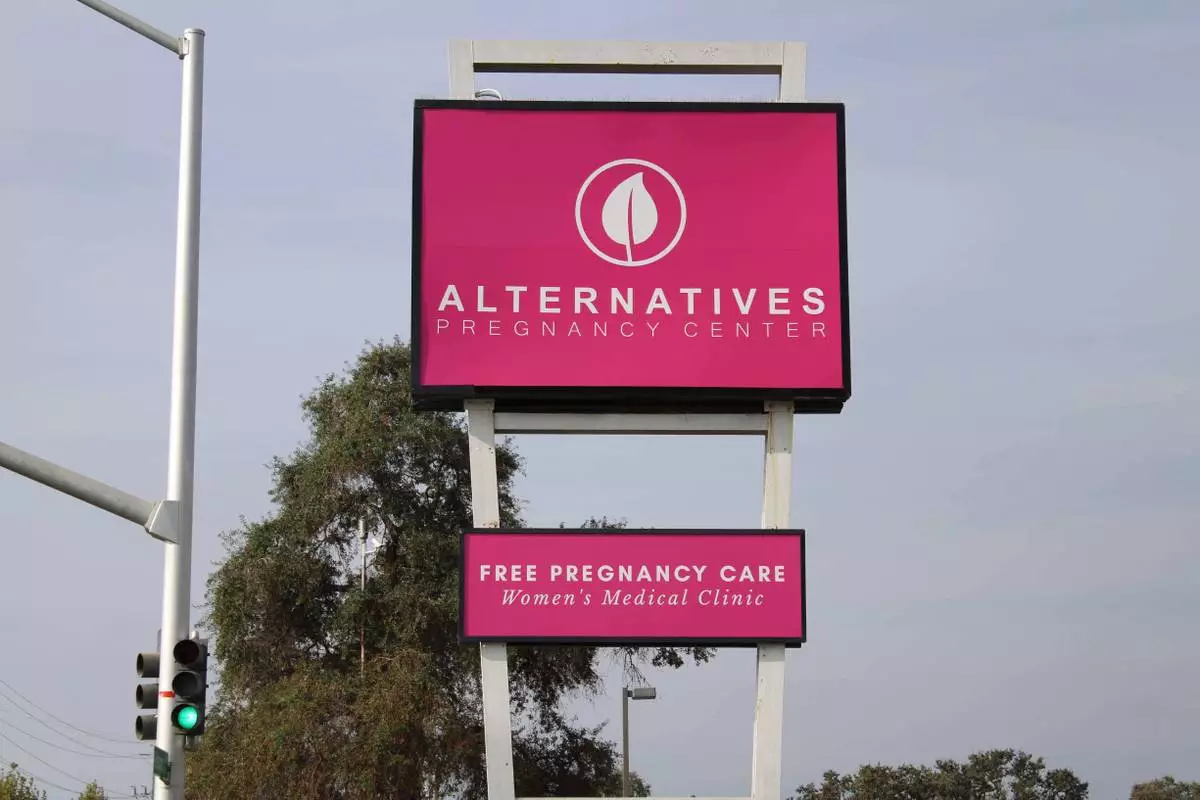
A sign for the Alternatives Pregnancy Center in Sacramento, Calif., is seen on Friday, Oct. 24, 2025. (AP Photo/Sophie Austin)
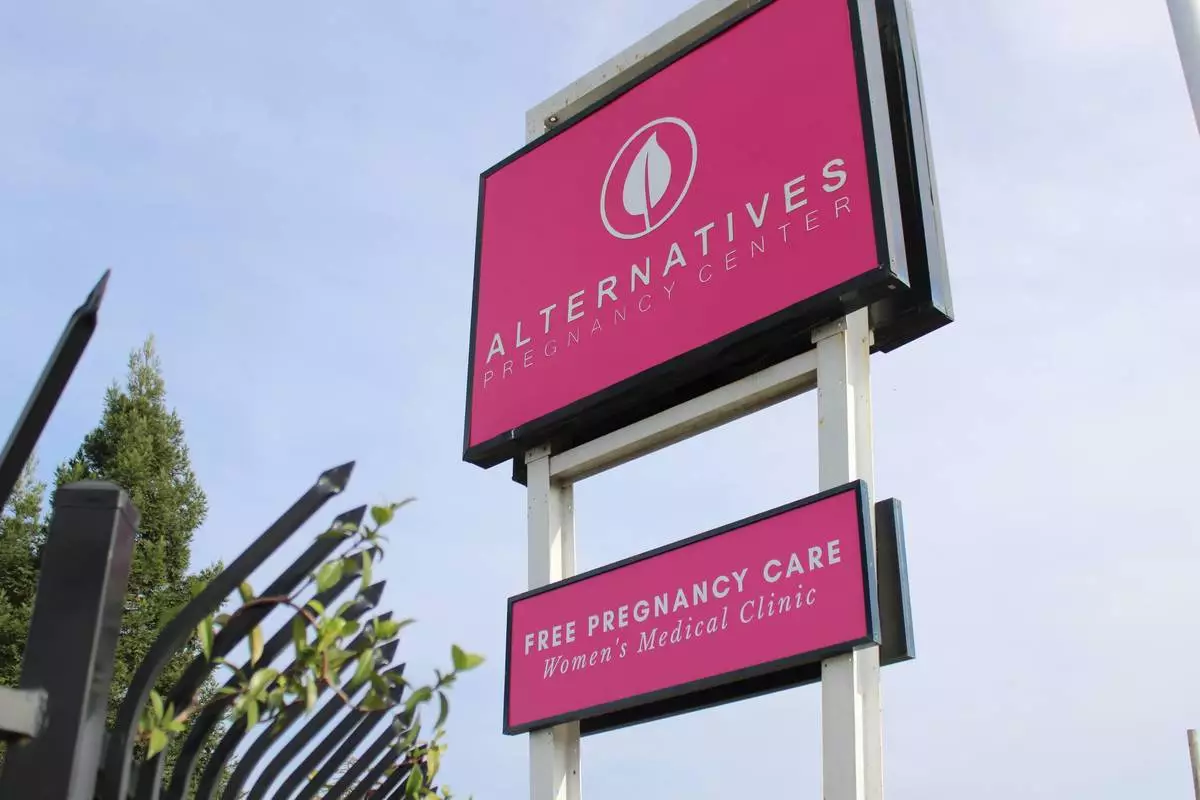
A sign for the Alternatives Pregnancy Center in Sacramento, Calif., is seen on Friday, Oct. 24, 2025. (AP Photo/Sophie Austin)