China is embarking on a new stage of opening-up centered on a "China+N" global cooperation framework, a senior expert said in Beijing on Friday, following the conclusion of the Fourth Plenary Session of the 20th Central Committee of the Communist Party of China.
The four-day political gathering, which concluded in Beijing on Thursday, established the guiding principles for economic and social development during the 15th Five-Year Plan period (2026-2030), according to a communique of the session.
Zhu Min, a member of the senior expert committee at the China Center for International Economic Exchanges, elaborated on China's foreign economic strategy for the coming five years in an interview with China Media Group.
He noted that while multinational companies have historically utilized China primarily as a manufacturing base for global exports, current trends indicate a shift toward more diversified global operations.
"In the adverse current of deglobalization, there has emerged 'China+1,' with many international firms producing in China while making arrangements outside. Chinese companies, too, are gradually expanding overseas. But we've seen more and more that the new paradigm should be 'China+N': global enterprises engage in operation, research and development, and test production in China plus several production sites abroad, and Chinese firms using China as a base for global deployment," Zhu noted.
According to Zhu, this new framework redefines China's opening-up in two key aspects.
"In this 'China+N' patten, opening-up takes on new implications: First, we continue to welcome high-quality foreign enterprises to come in. Second, we support Chinese companies in going out, forming China's industrial chains worldwide, and encouraging Chinese firms that have walked out of the country, Chinese industrial chains, and foreign-fund enterprises China has introduced into the country to team up into combined forces. This, I believe, is the new pattern of China's opening-up," he said.
Looking ahead to the overall economic priorities of the 15th Five-Year Plan period, Zhu stressed that "it is of primary importance for us to focus our strength on doing our own business well and taking major undertakings. So the key is to put the economic work at the core. Sci-tech, new industrial chains, domestic market, consumption, and people's livelihood - all these will be the crucial battlefields of the 15th Five-Year Plan."

Expert on China's new pattern of opening-up
Only 24 registered survivors of the Nanjing Massacre remain alive today, as China observes another memorial day for the victims of the Nanjing Massacre on Saturday.
This Saturday marks the 12th national memorial day for the Nanjing Massacre victims, which was formally established on Feb 27, 2014, by the Standing Committee of the 12th National People's Congress, designating Dec 13 as an annual day of remembrance through legislative procedure.
The Nanjing Massacre occurred after Japanese forces captured Nanjing, then the Chinese capital, on Dec 13, 1937, initiating six weeks of slaughter that claimed the lives of more than 300,000 Chinese civilians and unarmed soldiers.
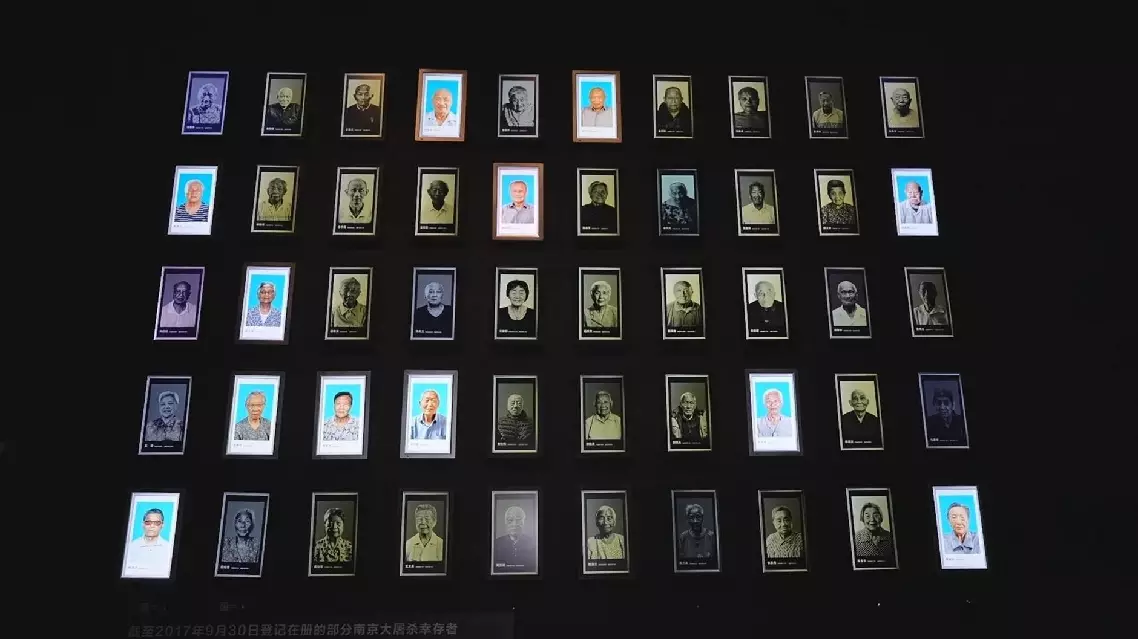
At the Memorial Hall of the Victims in Nanjing Massacre by Japanese Invaders in east China's Jiangsu Province, a wall displays photographs of 100 elderly individuals who represent some of the registered survivors of the Nanjing Massacre as of September 30, 2017.
Whenever a survivor passes away, a light on the wall is extinguished.
Now, only 24 lights remain illuminated on the wall, as eight survivors have passed away since the beginning of this year.
"Currently, only 24 registered survivors remain alive, with an average age of 95, and the oldest being 102. We provide one-on-one care for each survivor, maintaining individual files to support their daily lives. We have also mobilized hospitals, neighborhoods, and communities to assist them," said Zhou Feng, director of the memorial hall.
Xia Shuqin, one of the registered survivors, is now 96 years old but remains sharp-minded and articulate.
In 1937, during the Nanjing Massacre, seven members of her family were brutally murdered by Japanese troops.
Only she, then eight years old, and her four-year-old sister survived.
Xia was stabbed three times.
Standing before the memorial wall listing the victims' names, her eyes filled with tears as she gazed at the names with profound sorrow.
"I was only eight years old then, and my younger sister was four. I was covered in blood. When I came to consciousness, my sister was crying out, but later we couldn't find anyone," she said.
Despite her advanced age, Xia has remained steadfast on the front lines of spreading historical truth over the years.
She has participated in the national memorial ceremony many times for the victims of the Nanjing Massacre and family memorial services, sharing her personal experiences.
She has also traveled to Japan to recount the history of that era to local Japanese residents.
She hopes that her efforts will help people cherish peace.
"Our nation is prosperous and strong. I am living well now. I hope the next generation will have peace, eternal peace," said Xia.
Only 24 survivors of Nanjing Massacre remain alive today