HAMILTON, New Zealand (AP) — Another top-order failure saw England dismissed for 175 and New Zealand win the second one-day cricket international by five wickets Wednesday to take an unassailable 2-0 lead in the series.
England's innings lasted only 36 overs and New Zealand reached the target in 33.1 overs with Daryl Mitchell making an unbeaten 56 and Rachin Ravindra scoring 54. Mitch Santner finished 34 not out.
Click to Gallery
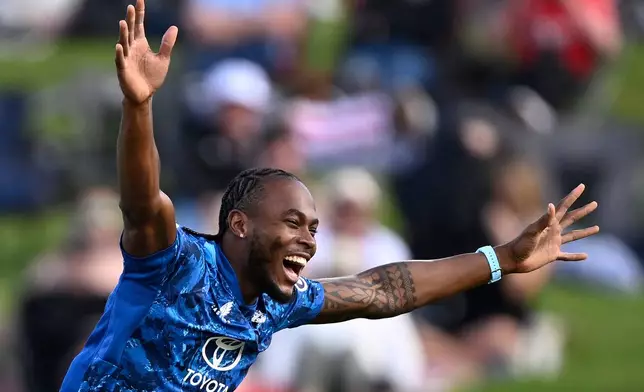
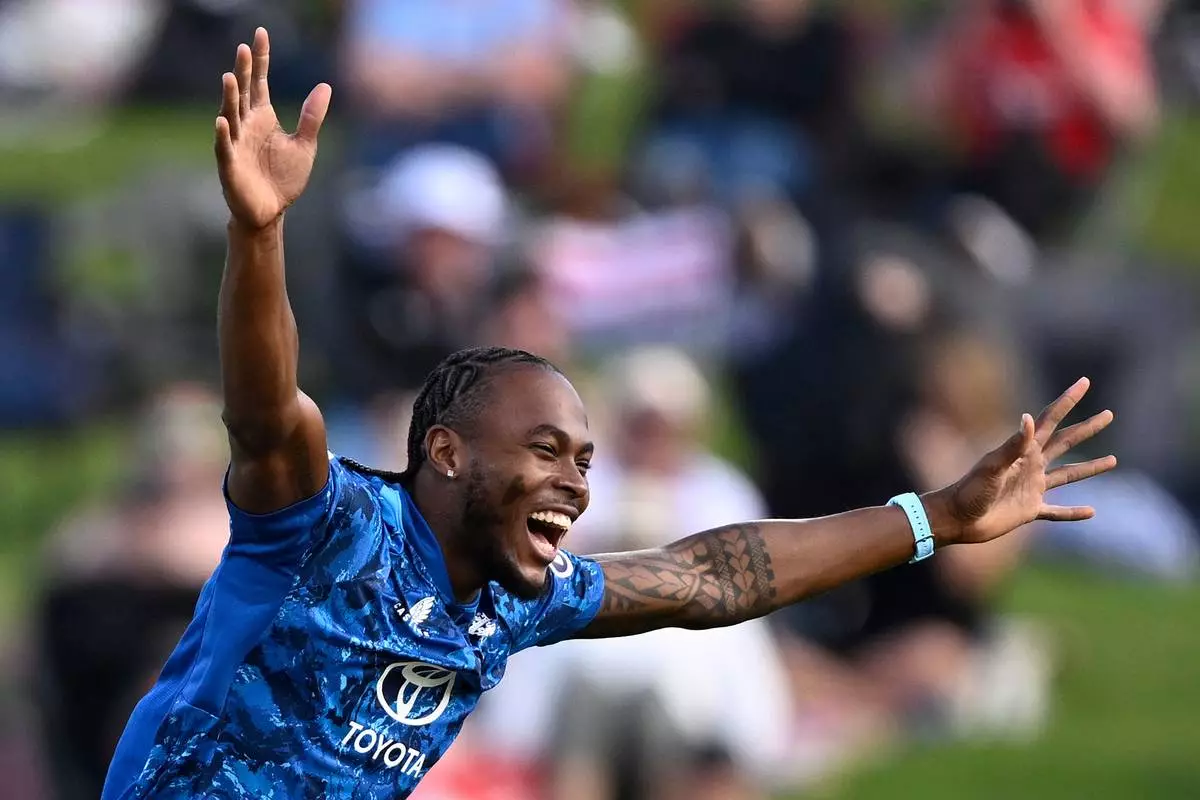
England's bowler Jofra Archer celebrates the wicket of New Zealand's Will Young during their T20 cricket match in Hamilton, New Zealand, Wednesday, Oct. 29, 2025. (Andrew Cornaga/Photosport via AP)
England's Harry Brook bats against New Zealand during their T20 cricket match in Hamilton, New Zealand, Wednesday, Oct. 29, 2025. (Andrew Cornaga/Photosport via AP)
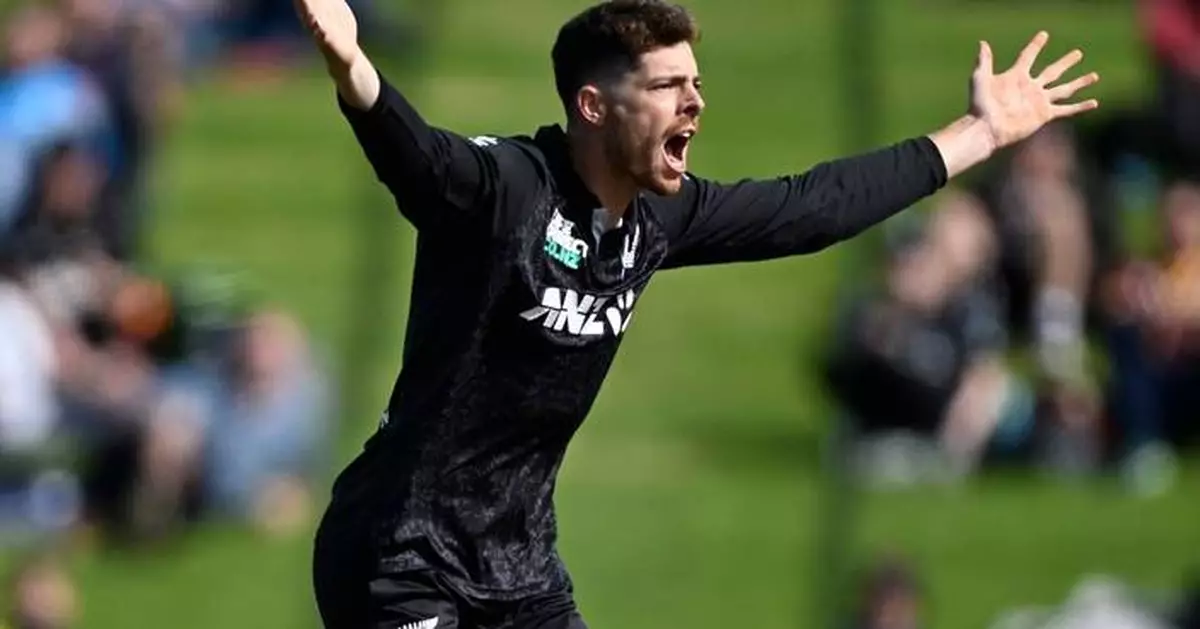
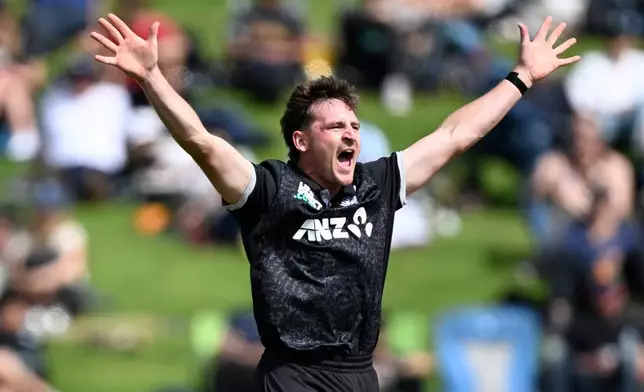
New Zealand's bowler Nathan Smith successfully appeals for a LBW decision to dismiss England's Jos Butler during their T20 cricket match in Hamilton, New Zealand, Wednesday, Oct. 29, 2025. (Andrew Cornaga/Photosport via AP)
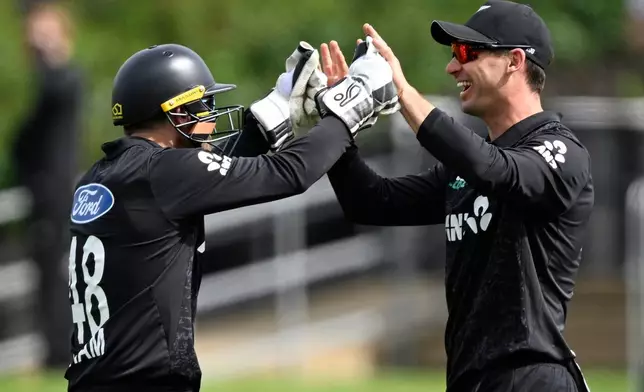
New Zealand's Tom Latham, left, celebrates with teammate Will Young after the dismissal of England's Harry Brook during their T20 cricket match in Hamilton, New Zealand, Wednesday, Oct. 29, 2025. (Andrew Cornaga/Photosport via AP)
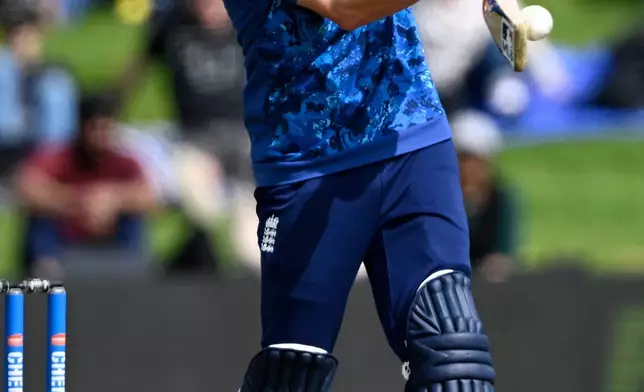
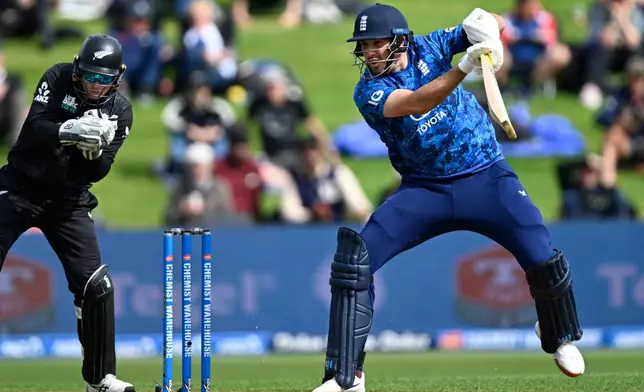
England's Jamie Overton, right, bats in front of New Zealand's Tom Latham during their T20 cricket match in Hamilton, New Zealand, Wednesday, Oct. 29, 2025. (Andrew Cornaga/Photosport via AP)
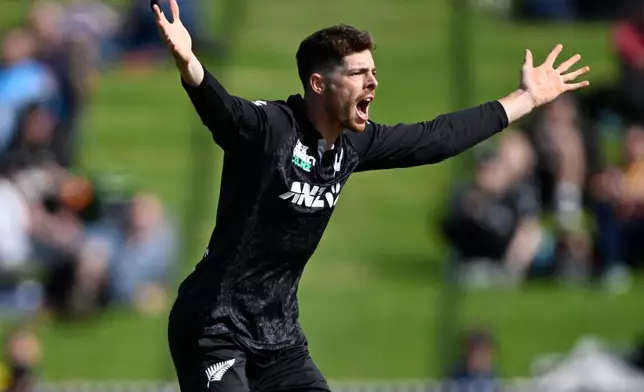
New Zealand's Mitchell Santner unsuccessfully appeal for a decision against England during their T20 cricket match in Hamilton, New Zealand, Wednesday, Oct. 29, 2025. (Andrew Cornaga/Photosport via AP)
Mitchell also led New Zealand to a four-wicket win in the series-opener on Saturday with an unbeaten 78 after England was bowled out for 223.
One positive for England was the return of fast bowler Jofra Archer, who bowled at pace and took 3-23 from 10 overs. Archer took 1-8 in his first spell of five overs.
He averaged 141 kph (88 mph) and seamed the ball sharply, looking fully fit ahead of the Ashes test series in Australia which starts in less a month.
In his first over, Archer dismissed Will Young with a 143 kph (89 mph) delivery which jagged back and hit the batter on the back pad in front of middle stump.
“He's an awesome bowler. Everyone loves watching him,” England captain Harry Brook said. “He bowls 90-95 mph and he hoops it both ways. He's a valuable asset for us and for him to take 3-23 off 10 overs is amazing. It's awesome to have him back.”
Ravindra and Kane Williamson steered New Zealand to 32-1 at the end of the first 10-over power play and Ravindra, then Mitchell, completed a run chase which required New Zealand to score at only 3.5 runs per over.
Williamson was out for 21 from 39 balls and New Zealand was 118-5 before Mitchell and captain Santner completed the run chase.
Earlier, New Zealand won an advantageous toss and chose to bowl on a pitch which had been covered in recent days and produced variable bounce, some slow seam movement and even turn later in the innings.
England slumped to 56-6 in the first ODI on Saturday before Brook's 135 lifted them to 233. New Zealand won that match by four wickets. On Wednesday, England was 105-6 when Brook was dismissed by Santner for 34.
Of the rest of the England top order, Jamie Smith made 13, Ben Duckett 1, Joe Root 25, Jacob Bethell 18 and Jos Buttler 9.
Jamie Overton, who batted at No. 8, top-scored with 42 from 28 balls. Overton made 46 in a partnership of 87 with Brook in the first match.
Blair Tickner, who was recalled to play his first ODI for New Zealand since 2023, was the top wicket-taker for the hosts with 4-34 .
“It was disappointing to say the least,” Brook said of the loss. “But we have to come back stronger and better for the third match on Saturday and hopefully get at least one win.”
Duckett was the first batter to fall in the third over, caught by wicketkeeper Tom Latham from the bowling of Jacob Duffy.
Root hit two fours in the same over and Smith hit a six off Zak Foulkes in the next as the England batters felt compelled to keep up a high scoring rate.
Smith was caught by Williamson off Foukes in the sixth over and England was 49-2 at the end of the first power play.
Root was caught down the leg side by Latham off Tickner in the 12th over. The two previous balls from Tickner passed outside leg stump but were not called wides because Root had stepped inside the line and both balls were inside the wide line. Root attempted to flick the third ball on a similar line but only managed a fine touch to Latham.
Bethell was caught by Foulkes from the bowling of Nathan Smith from the first ball after the drinks break and Buttler was trapped lbw by Smith.
Brook fell to an excellent diving catch by Will Young off a ball from Santner which gripped and turned away from the batter.
AP cricket: https://apnews.com/hub/cricket
England's bowler Jofra Archer celebrates the wicket of New Zealand's Will Young during their T20 cricket match in Hamilton, New Zealand, Wednesday, Oct. 29, 2025. (Andrew Cornaga/Photosport via AP)
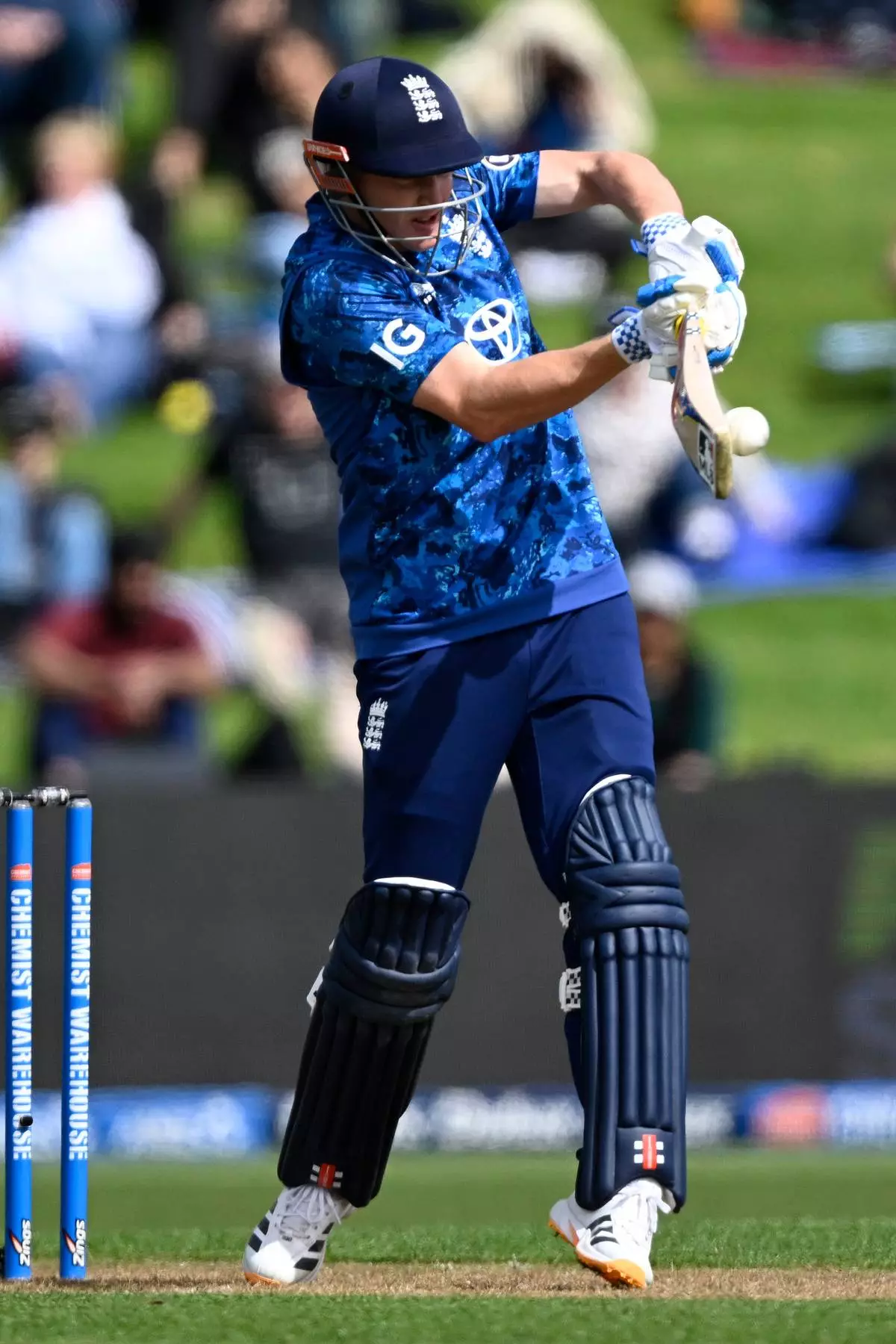
England's Harry Brook bats against New Zealand during their T20 cricket match in Hamilton, New Zealand, Wednesday, Oct. 29, 2025. (Andrew Cornaga/Photosport via AP)

New Zealand's bowler Nathan Smith successfully appeals for a LBW decision to dismiss England's Jos Butler during their T20 cricket match in Hamilton, New Zealand, Wednesday, Oct. 29, 2025. (Andrew Cornaga/Photosport via AP)
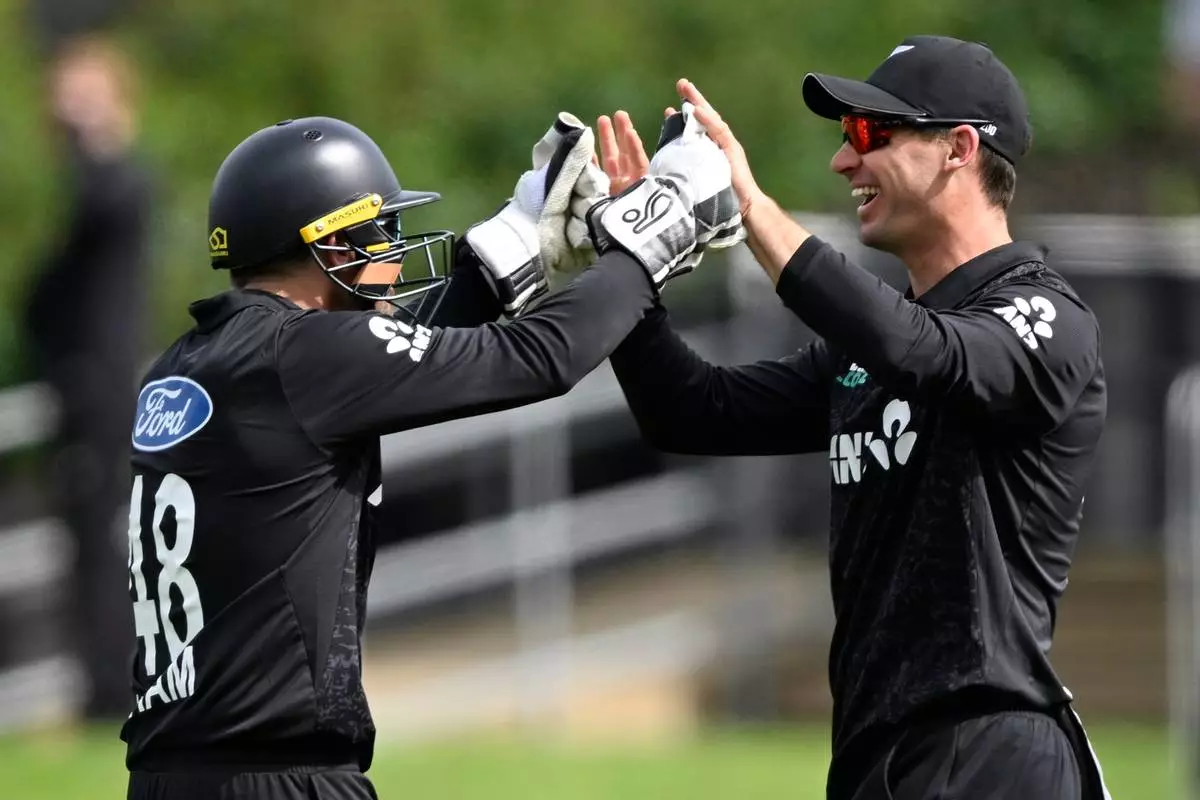
New Zealand's Tom Latham, left, celebrates with teammate Will Young after the dismissal of England's Harry Brook during their T20 cricket match in Hamilton, New Zealand, Wednesday, Oct. 29, 2025. (Andrew Cornaga/Photosport via AP)
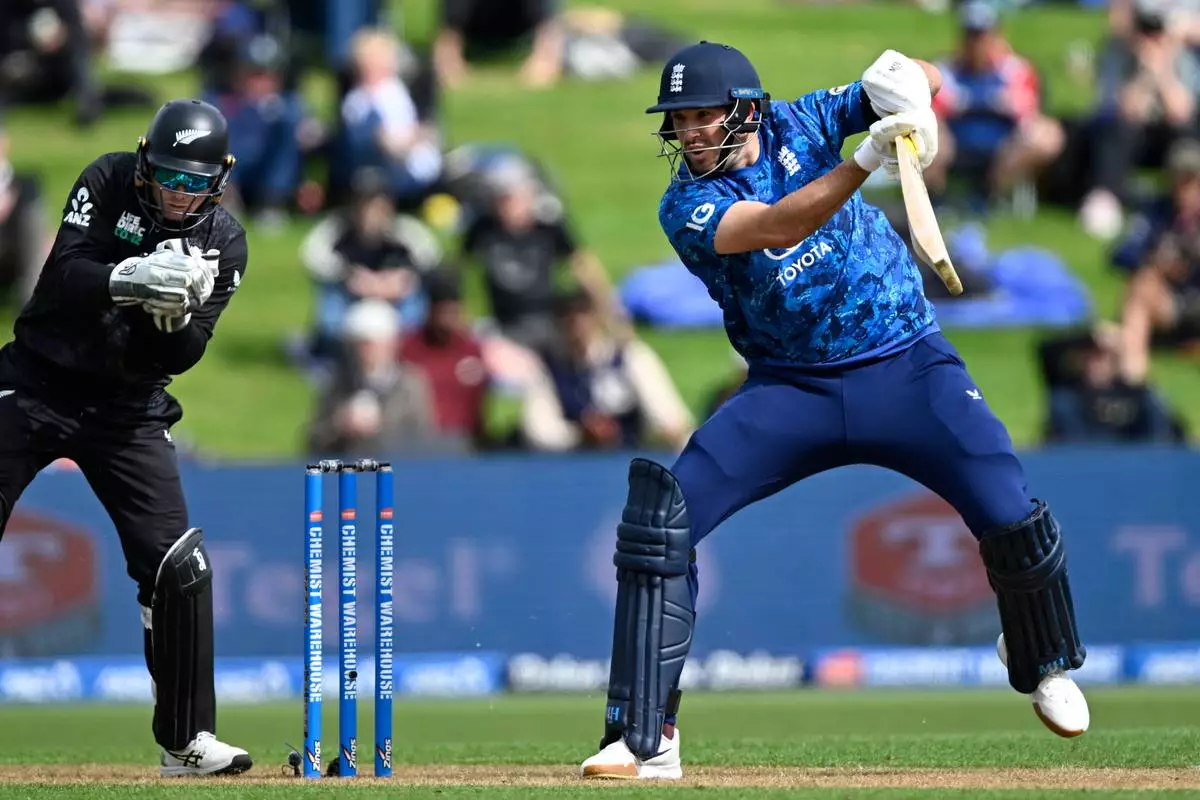
England's Jamie Overton, right, bats in front of New Zealand's Tom Latham during their T20 cricket match in Hamilton, New Zealand, Wednesday, Oct. 29, 2025. (Andrew Cornaga/Photosport via AP)
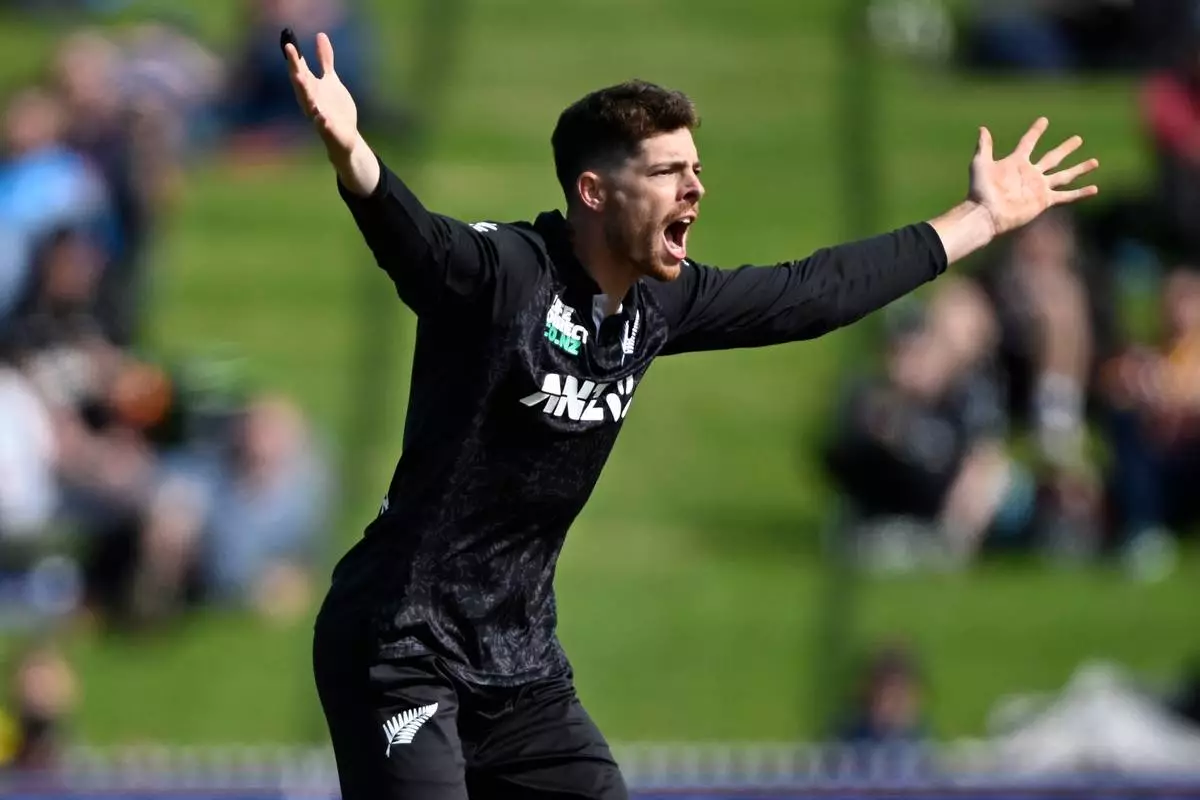
New Zealand's Mitchell Santner unsuccessfully appeal for a decision against England during their T20 cricket match in Hamilton, New Zealand, Wednesday, Oct. 29, 2025. (Andrew Cornaga/Photosport via AP)
WASHINGTON (AP) — When President Donald Trump announced the audacious capture of Nicolás Maduro to face drug trafficking charges in the U.S., he portrayed the strongman’s vice president and longtime aide as America’s preferred partner to stabilize Venezuela amid a scourge of drugs, corruption and economic mayhem.
Left unspoken was the cloud of suspicion that long surrounded Delcy Rodríguez before she became acting president of the beleaguered nation earlier this month.
In fact, Rodríguez has been on the radar of the U.S. Drug Enforcement Administration for years and in 2022 was even labeled a “priority target,” a designation DEA reserves for suspects believed to have a “significant impact” on the drug trade, according to records obtained by The Associated Press and more than a half dozen current and former U.S. law enforcement officials.
The DEA has amassed a detailed intelligence file on Rodríguez dating to at least 2018, the records show, cataloging her known associates and allegations ranging from drug trafficking to gold smuggling. One confidential informant told the DEA in early 2021 that Rodríguez was using hotels in the Caribbean resort of Isla Margarita “as a front to launder money,” the records show. As recently as last year she was linked to Maduro’s alleged bag man, Alex Saab, whom U.S. authorities arrested in 2020 on money laundering charges.
The U.S. government has never publicly accused Rodríguez of any criminal wrongdoing. Notably for Maduro’s inner circle, she’s not among the more than a dozen current Venezuelan officials charged with drug trafficking alongside the ousted president.
Rodríguez’s name has surfaced in nearly a dozen DEA investigations, several of which remain ongoing, involving agents in field offices from Paraguay and Ecuador to Phoenix and New York, the AP learned. The AP could not determine the specific focus of each investigation.
Three current and former DEA agents who reviewed the records at the request of AP said they indicate an intense interest in Rodríguez throughout much of her tenure as vice president, which began in 2018. They were not authorized to discuss DEA investigations and spoke on the condition of anonymity.
The records reviewed by AP do not make clear why Rodríguez was elevated to a “priority target,” a designation that requires extensive documentation to justify additional investigative resources. The agency has hundreds of priority targets at any given moment, and having the label does not necessarily lead to being charged criminally.
“She was on the rise, so it’s not surprising that she might become a high-priority target with her role,” said Kurt Lunkenheimer, a former federal prosecutor in Miami who has handled multiple cases related to Venezuela. “The issue is when people talk about you and you become a high-priority target, there’s a difference between that and evidence supporting an indictment.”
Venezuela's communications ministry did not respond to emails seeking comment.
The DEA and U.S. Justice Department also did not respond to requests for comment. Asked whether the president trusts Rodríguez, the White House referred AP to Trump’s earlier remarks on a “very good talk” he had with the acting president Wednesday, one day before she met in Caracas with CIA Director John Ratcliffe.
Almost immediately after Maduro’s capture, Trump started heaping praise on Rodríguez — this past week referring to her as a "terrific person — in close contact with officials in Washington, including Secretary of State Marco Rubio.
The DEA’s interest in Rodríguez comes even as Trump has sought to install her as the steward of American interests to navigate a volatile post-Maduro Venezuela, said Steve Dudley, co-director of InSight Crime, a think tank focused on organized crime in the Americas.
“The current Venezuela government is a criminal-hybrid regime. The only way you reach a position of power in the regime is by, at the very least, abetting criminal activities,” said Dudley, who has investigated Venezuela for years. “This isn’t a bug in the system. This is the system.”
Those sentiments were echoed by opposition leader María Corina Machado, who met with Trump at the White House Thursday in a bid to push for more U.S. support for Venezuelan democracy.
“The American justice system has sufficient information about her,” said Machado, referring to Rodríguez. “Her profile is quite clear.”
Rodríguez, 56, worked her way to the apex of power in Venezuela as a loyal aide to Maduro, with whom she shares a deep-seated leftist bent stemming from her socialist father’s death in police custody when she was only 7 years old. Despite blaming the U.S. for her father’s death, she steadily worked while foreign minister and later vice president to court American investment during the first Trump administration, hiring lobbyists close to Trump and even ordering the state oil company to make a $500,000 donation to his inaugural committee.
The charm offensive flopped when Trump, urged on by Rubio, pressured Maduro to hold free and fair elections. In September 2018,the White House sanctioned Rodríguez, describing her as key to Maduro’s grip on power and ability to “solidify his authoritarian rule.” She was also sanctioned earlier by the European Union.
But those allegations focused on her threat to Venezuela’s democracy, not any alleged involvement in corruption.
“Venezuela is a failed state that supports terrorism, corruption, human rights abuses and drug trafficking at the highest echelons. There is nothing political about this analysis,” said Rob Zachariasiewicz, a longtime former DEA agent who led investigations into top Venezuelan officials and is now a managing partner at Elicius Intelligence, a specialist investigations firm. “Delcy Rodríguez has been part of this criminal enterprise.”
The DEA records seen by AP provide an unprecedented glimpse into the agency’s interest in Rodríguez. Much of it was driven by the agency’s elite Special Operations Division, the same Virginia-based unit that worked with prosecutors in Manhattan to indict Maduro.
One of the records cites an unnamed confidential informant linking Rodríguez to hotels in Margarita Island that are allegedly used as a front to launder money. The AP has been unable to independently confirm the information.
The U.S. has long considered the resort island, northeast of the Venezuelan mainland, a strategic hub for drug trafficking routes to the Caribbean and Europe. Numerous traffickers have been arrested or taken haven there over the years, including representatives of Joaquín “El Chapo” Guzmán’s Sinaloa cartel.
The records also indicate the feds were looking at Rodríguez’s involvement in government contracts awarded to Maduro’s ally Saab — investigations that remain ongoing even after President Joe Biden pardoned him in 2023 as part of a prisoner swap for Americans imprisoned in Venezuela.
The Colombian businessman rose to become one of Venezuela’s top fixers as U.S. sanctions cut off its access to hard currency and Western banks. He was arrested in 2020 on federal charges of money laundering while traveling from Venezuela to Iran to negotiate oil deals helping both countries circumvent sanctions.
The DEA records also indicate agents’ interest in Rodríguez’s possible involvement in allegedly corrupt deals between the government and Omar Nassif-Sruji, the brother of her longtime romantic partner, Yussef Nassif. Nassif-Sruji and Nassif did not respond to emails and text messages seeking comment.
Companies registered by the two brothers in Hong Kong received more than $650 million in Venezuelan government contracts between 2017 and 2019 to import food and dialysis medicine, according to copies of the contracts obtained in 2021 by Venezuelan investigative journalism outlet Armando.info.
Taken together, the DEA investigations underscore how power has long been exercised in Venezuela, which is ranked as the world’s third most corrupt country by Transparency International. For Rodríguez, they also represent something of a razor-sharp sword over her head, breathing life to Trump’s threat soon after Maduro’s ouster that she would “pay a very big price, probably bigger than Maduro” if she didn’t fall in line. The president added that he wanted her to provide the U.S. “total access” to the country’s vast oil reserves and other natural resources.
“Just being a leader in a highly corrupted regime for over a decade makes it logical that she is a priority target for investigation,” said David Smilde, a Tulane University professor who has studied Venezuela for three decades. “She surely knows this, and it gives the U.S. government leverage over her. She may fear that if she does not do as the Trump administration demands, she could end up with an indictment like Maduro.”
—-
Mustian reported from New York.
—-
Contact AP’s global investigative team at Investigative@ap.org or https://www.ap.org/tips/.
—-
This story is part of an ongoing collaboration between The Associated Press and FRONTLINE (PBS) that includes an upcoming documentary.
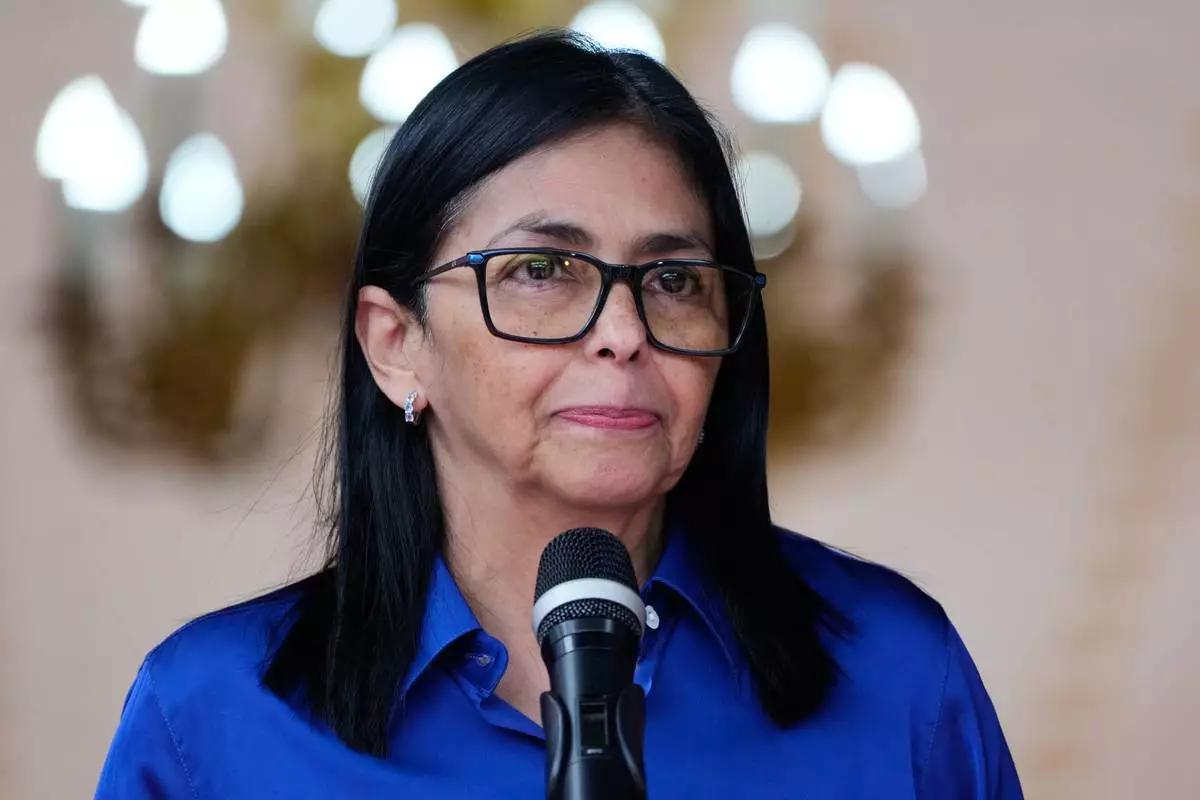
Venezuela's acting President Delcy Rodriguez makes a statement to the press at Miraflores presidential palace in Caracas, Venezuela, Wednesday, Jan. 14, 2026. (AP Photo/Ariana Cubillos)
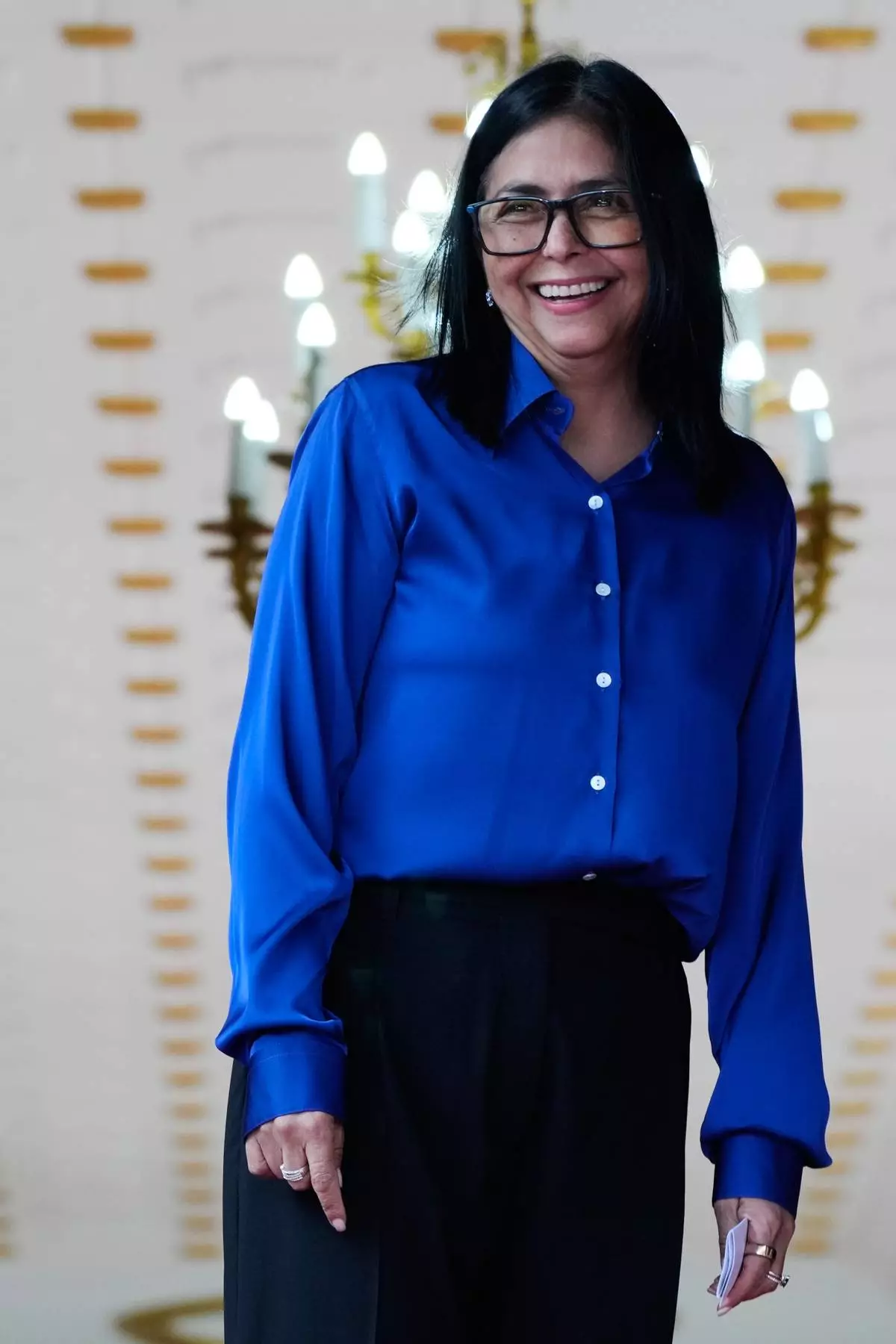
Venezuela's acting President Delcy Rodriguez smiles while delivering a statement at Miraflores presidential palace in Caracas, Venezuela, Wednesday, Jan. 14, 2026. (AP Photo/Ariana Cubillos)
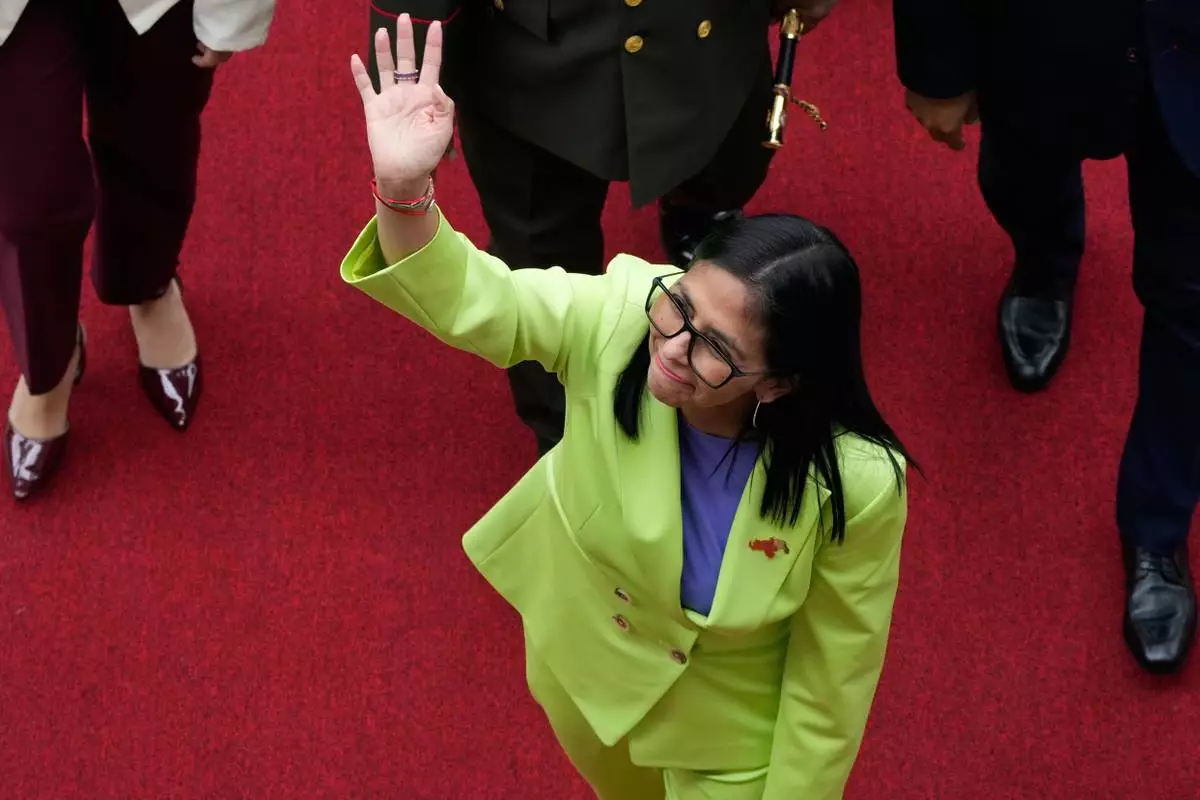
Venezuela's acting President Delcy Rodriguez arrives at the National Assembly in Caracas, Venezuela, Thursday, Jan. 15, 2026. (AP Photo/Ariana Cubillos)