WASHINGTON (AP) — Republican leaders in Congress said it’s all or nothing on Wednesday as they rejected a Democratic push to carve out food aid funding for more than 40 million Americans who stand to lose it as part of the government shutdown.
Democrats have repeatedly voted against reopening the government as they demand that Republicans negotiate with them to extend expiring health care subsidies. But they pushed for expedited approval of legislation to continue funding for the Supplemental Nutrition Assistance Program, or SNAP, in the meantime.
“It’s simple, it’s moral, it’s urgent,” Senate Democratic leader Chuck Schumer said as he called for passage of the SNAP funding Wednesday.
Senate Majority Leader John Thune, R-S.D., angrily objected to the Democratic request, calling it “a cynical attempt to provide political cover” for Democrats to continue the shutdown, now in its 29th day.
“We’re not going to let them pick winners and losers," Thune said. "It’s time to fund everybody."
If Democrats want to prevent damage from the shutdown, “they can end the shutdown,” Thune said.
The increasingly pointed statements from lawmakers on Capitol Hill reflected growing frustration and pressure that is building as the SNAP deadline looms and federal workers face missed paychecks this week.
Vulnerable families could see federal money dry up soon for some other programs, as well — from certain Head Start preschool programs to aid for mothers to care for their newborns through the Special Supplemental Nutrition Program for Women, Infants, and Children, known as WIC.
Another group at risk from the shutdown — members of the military — won't miss a paycheck on Friday, as the Trump administration plans to tap existing accounts to cover their payroll.
The Department of Agriculture has posted on its website that the SNAP benefits will end Friday. “Bottom line, the well has run dry,” the statement read.
Almost two dozen states have filed a lawsuit arguing that President Donald Trump's administration has the money to continue the benefits and is legally required to do so. Schumer said that SNAP benefits have never stopped during previous government shutdowns and that Trump is “picking politics over the lives of hungry kids."
Republican leaders, in turn, blamed Democrats. The solution, they said, was for Democrats in the Senate to allow for passage of their short-term funding patch that has so far failed 13 times in that chamber.
“Things are getting really tough on the American people,” House Speaker Mike Johnson said on Wednesday.
The House has been out of session since mid-September, and Johnson is resolute that he will not bring the chamber back until the Senate has passed a bill to fund the government. The House passed the bill Sept. 19.
Senate Democrats have shown no signs publicly that they are backing away from their insistence that a government funding bill also include help for millions of Americans who purchase health insurance coverage on the exchanges established through the Affordable Care Act.
Still, Thune told reporters there's been a “higher level of conversation” with Democrats this week and that he may soon get personally involved.
But the underlying dynamics of the impasse remained the same. Thune said that he's assured the Democrats all along that they could have a vote on a bill to extend health care subsidies “as soon as they're ready to open up the government.”
In addition to the SNAP benefits, several other government services faced critical shortfalls if the shutdown continues.
Air traffic controllers missed their paychecks on Tuesday and Transportation Secretary Sean Duffy expressed concerns that flight delays could multiply as increasingly stressed-out controllers call out sick.
Pay for the military on Friday had also been in doubt. But the Trump administration plans to move around $5.3 billion from various accounts to cover it, with about $2.5 billion of the funding coming from Trump’s so-called “big, beautiful bill” of tax breaks that was signed into law this summer.
The transfers were first reported by Axios and confirmed by a senior White House official who was unauthorized to discuss the situation and granted anonymity.
The nonpartisan Congressional Budget Office said the shutdown could reduce GDP growth in the fourth quarter of 2025 by as much as 2 percentage points. But the CBO said it expects much of the spending that was halted on government pay and programs to be made up once government reopens.
In a press conference, House Democrats called on Trump to return from his trip in Asia to address the SNAP issue.
“If the president wanted to help feed hungry American children, he would,” said Rep. Angie Craig of Minnesota, the ranking Democrat on the House Agriculture Committee that handles the food aid program. “I’m calling on the president to get back from Asia and do the right thing — and the moral thing."
As Republicans objected to the legislation to continue SNAP benefits, Democrats said they'd also support a similar bill from Republican Sen. Josh Hawley of Missouri, who has separate legislation to immediately fund the program.
But Thune said Republicans won't allow a piecemeal process. He called on Democrats to support their bill to extend all government funding and reopen the government.
“If Democrats really want to fund SNAP and WIC, we have a bill for them,” he said.
Associated Press writers Lisa Mascaro, Stephen Groves and Matt Brown contributed to this report.
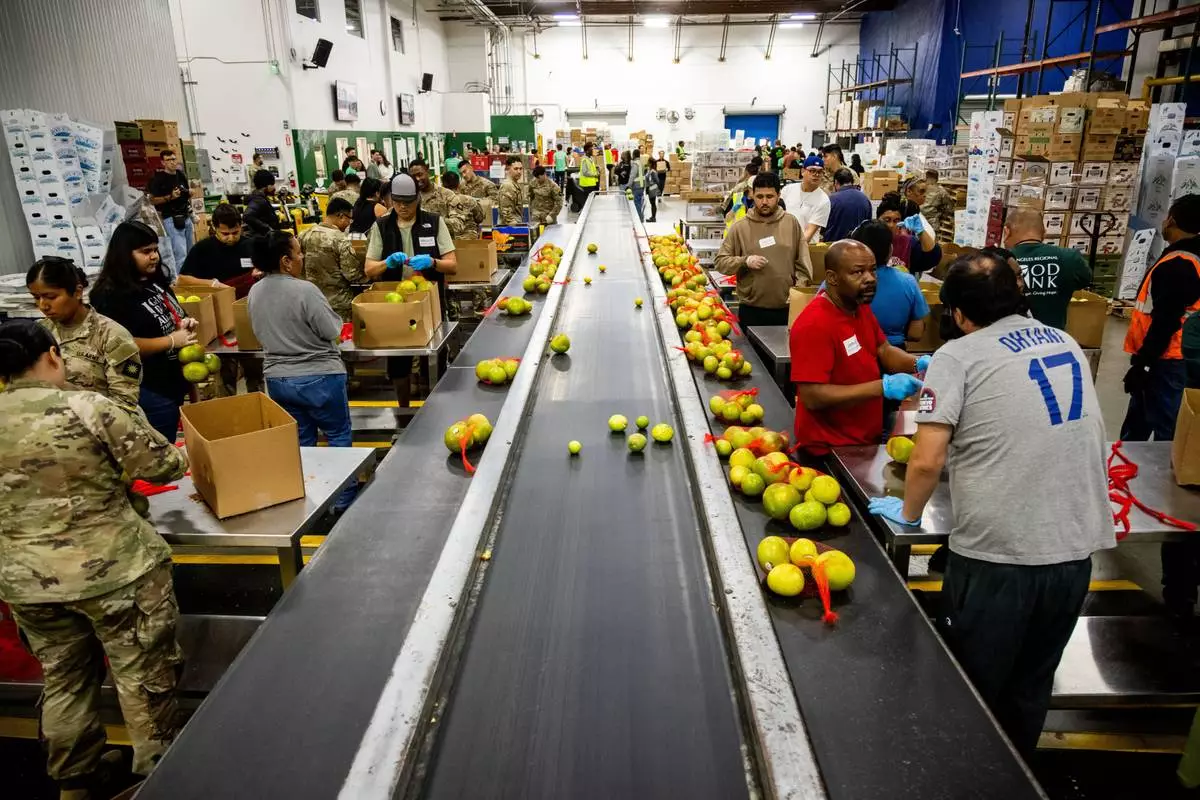
California National Guard sort produce at the Los Angeles Food Bank Wednesday, Oct. 29, 2025, in Los Angeles. (AP Photo/Ethan Swope)
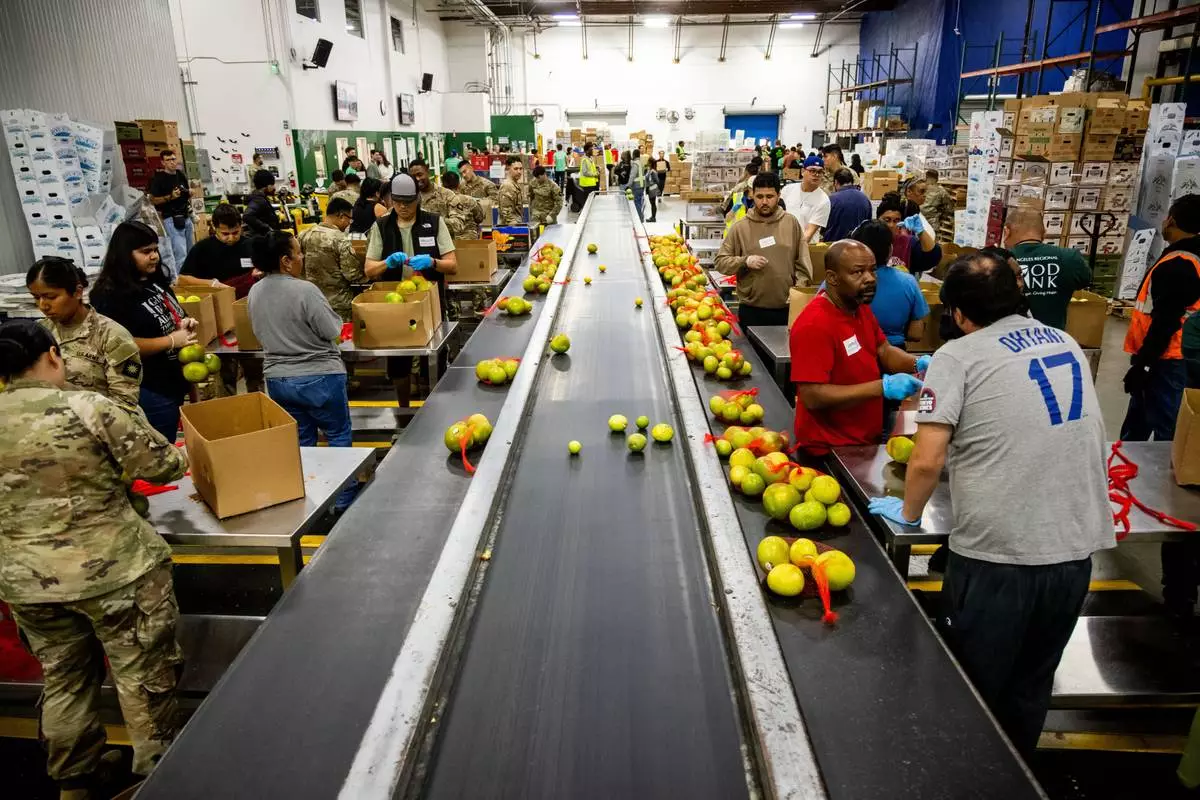
California National Guard sort produce at the Los Angeles Food Bank Wednesday, Oct. 29, 2025, in Los Angeles. (AP Photo/Ethan Swope)
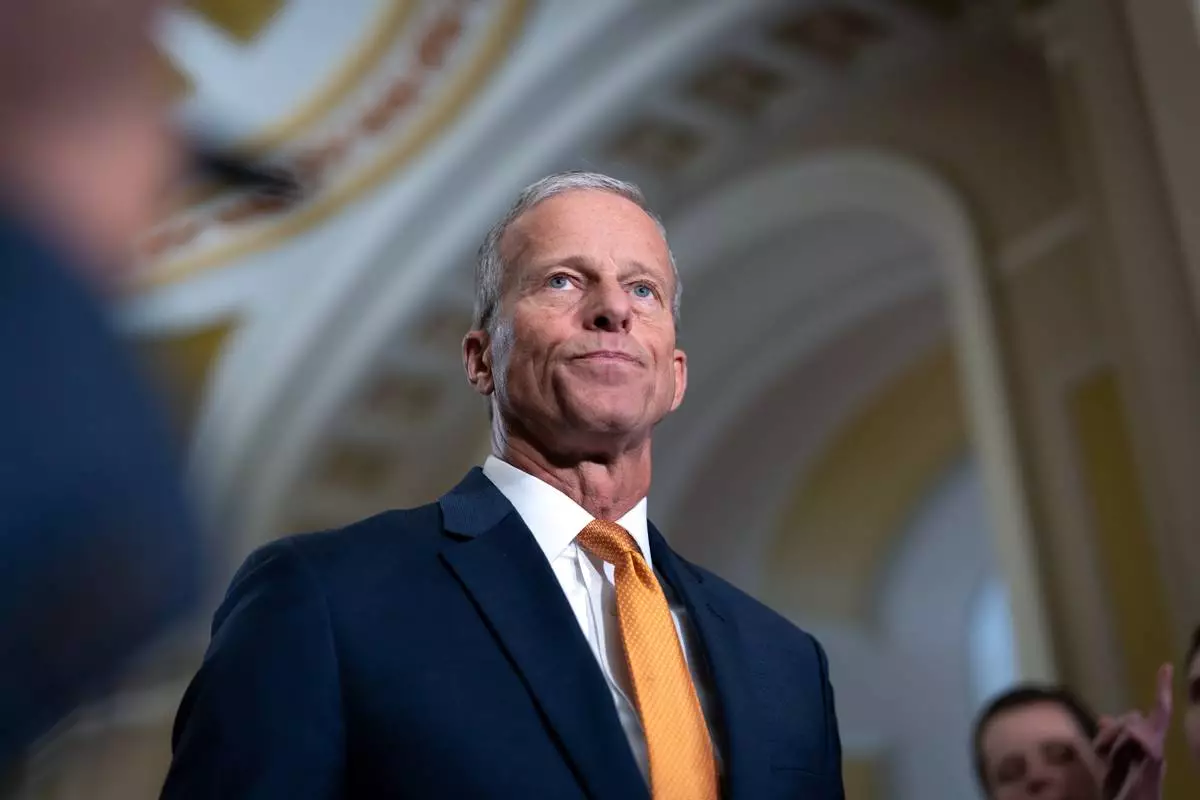
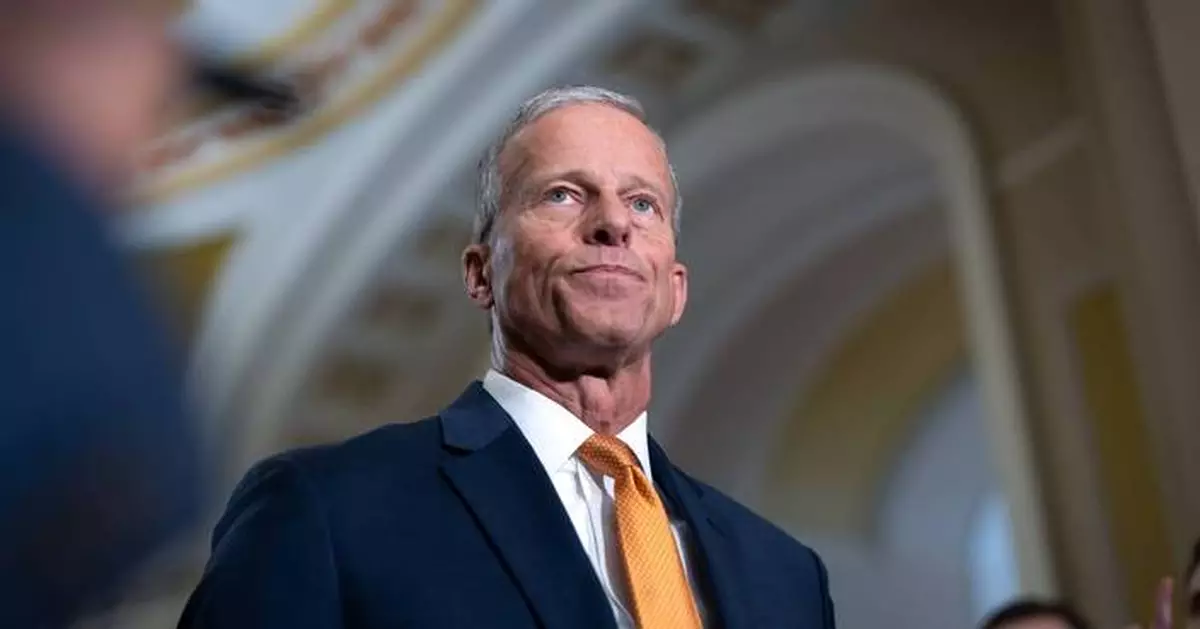
Senate Majority Leader John Thune, R-S.D., speaks with reporters following a closed-door meeting of Senate Republicans on day 28 of the government shutdown, at the Capitol in Washington, Tuesday, Oct. 28, 2025. (AP Photo/J. Scott Applewhite)