Skip to Content Facebook Feature Image

Trump's comments on nuclear testing upend decades of US policy. Here's what to know about it

News

Trump's comments on nuclear testing upend decades of US policy. Here's what to know about it
News

News

Trump's comments on nuclear testing upend decades of US policy. Here's what to know about it

2025-10-31 01:07 Last Updated At:01:10

DUBAI, United Arab Emirates (AP) — President Donald Trump's comments Thursday suggesting the United States will restart its testing of nuclear weapons upends decades of American policy in regards to the bomb, but come as Washington's rivals have been expanding and testing their nuclear-capable arsenals.

Nuclear weapons policy, once thought to be a relic of the Cold War, increasingly has come to the fore as Russia has made repeated atomic threats to both the U.S. and Europe during its war on Ukraine. Moscow also acknowledged this week testing a nuclear-powered-and-capable cruise missile called the Burevestnik, code-named Skyfall by NATO, and a nuclear-armed underwater drone.

More Images
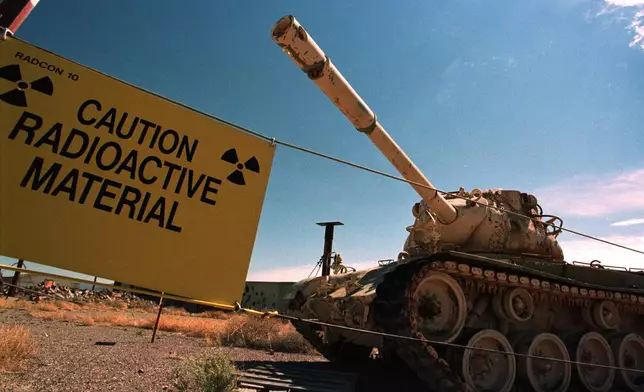
FILE - An M-48 tank which fired uranium-tipped shells in the 1970s sits at the Nevada Test Site on Aug. 24, 1999. (AP Photo/Laura Rauch, File)
FILE - An M-48 tank which fired uranium-tipped shells in the 1970s sits at the Nevada Test Site on Aug. 24, 1999. (AP Photo/Laura Rauch, File)

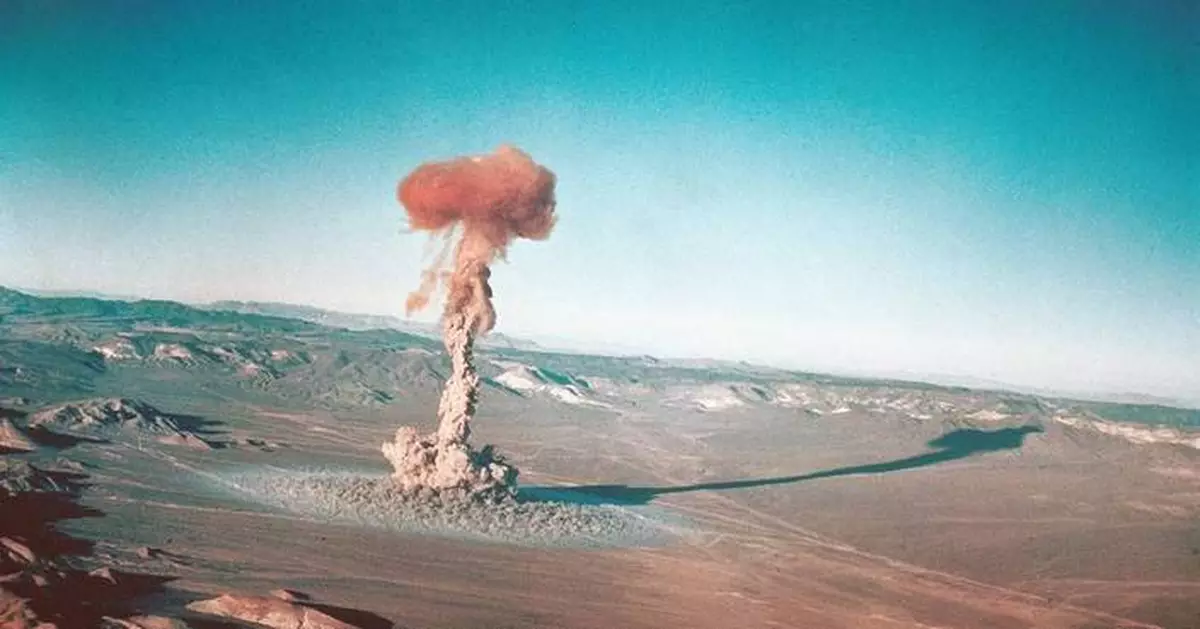
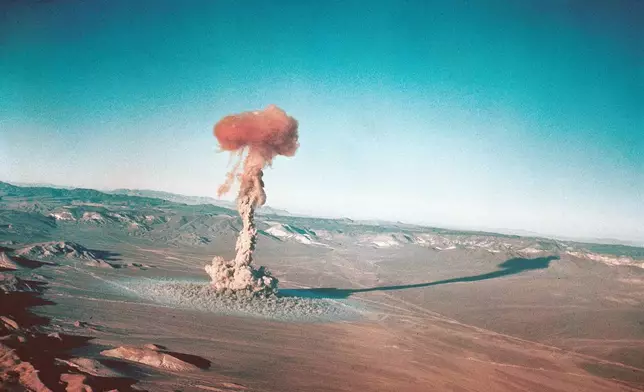
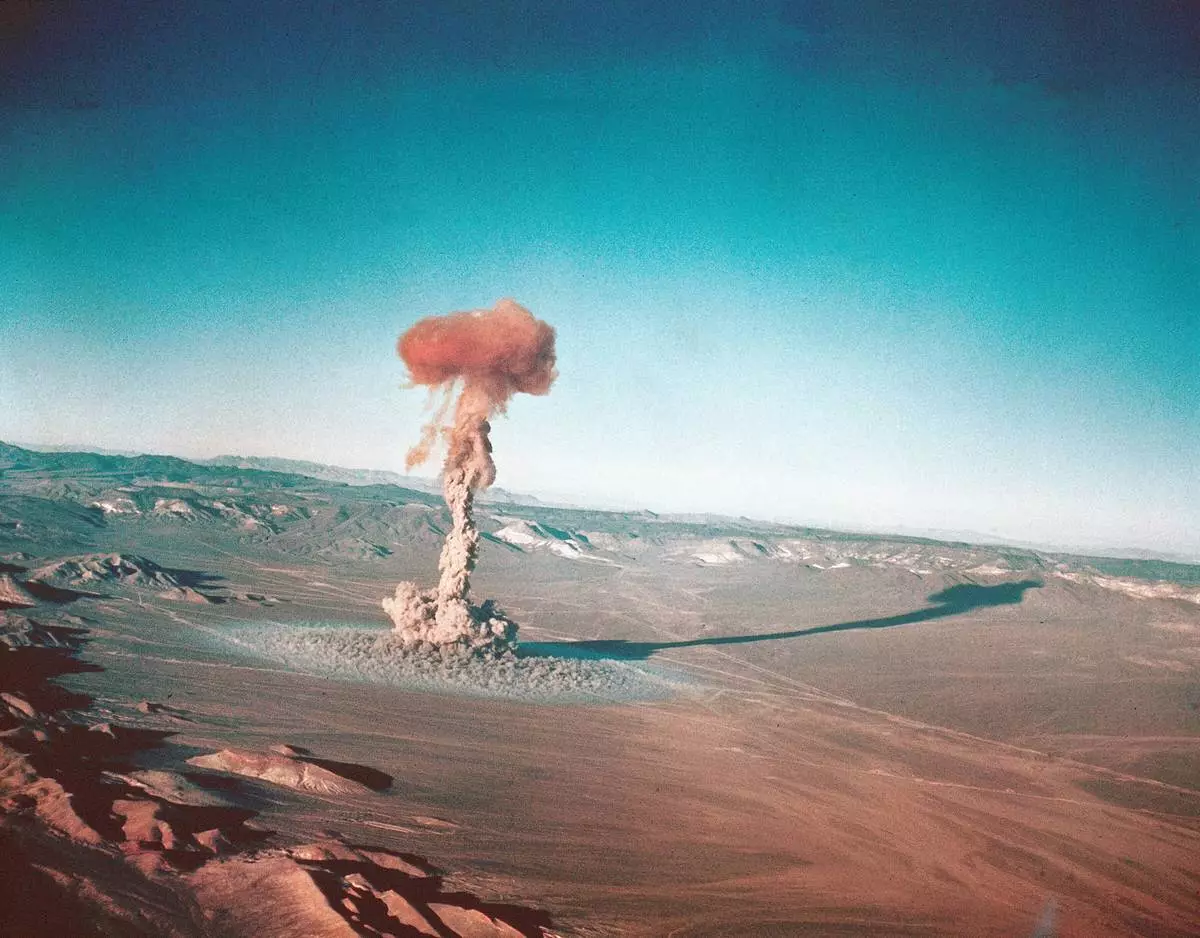
FILE - A mushroom cloud rises from a test blast at the Nevada Test Site on June 24, 1957. (U.S. Energy Department via AP, File)
FILE - A mushroom cloud rises from a test blast at the Nevada Test Site on June 24, 1957. (U.S. Energy Department via AP, File)

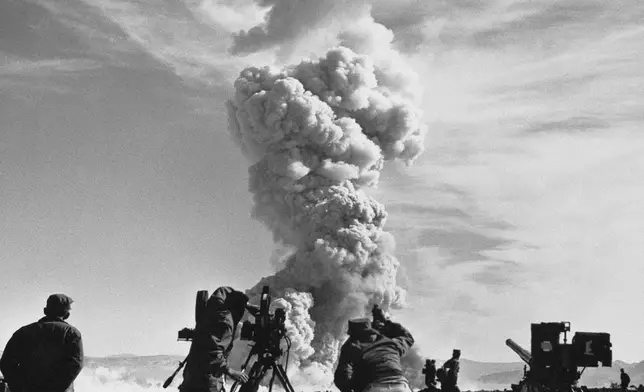
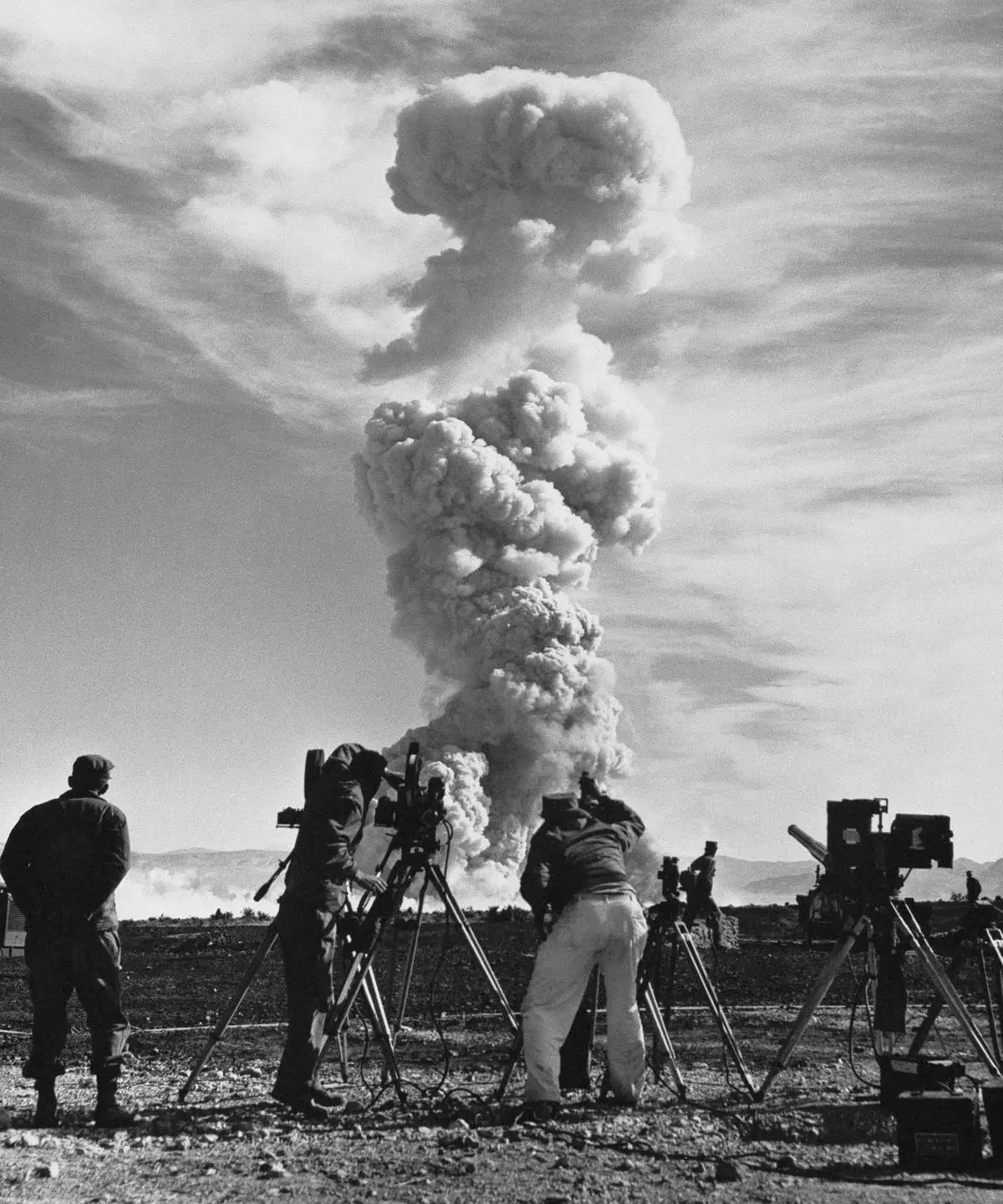
FILE - In this June 1953, file photo, film crews photograph an atom cloud forming after an atomic shell fired a test in the Nevada desert. (AP Photo, File)
FILE - In this June 1953, file photo, film crews photograph an atom cloud forming after an atomic shell fired a test in the Nevada desert. (AP Photo, File)

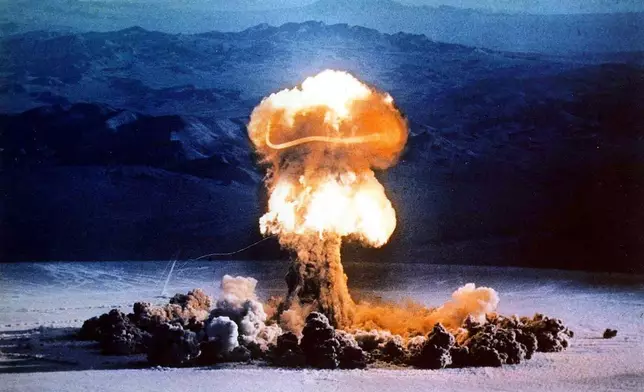
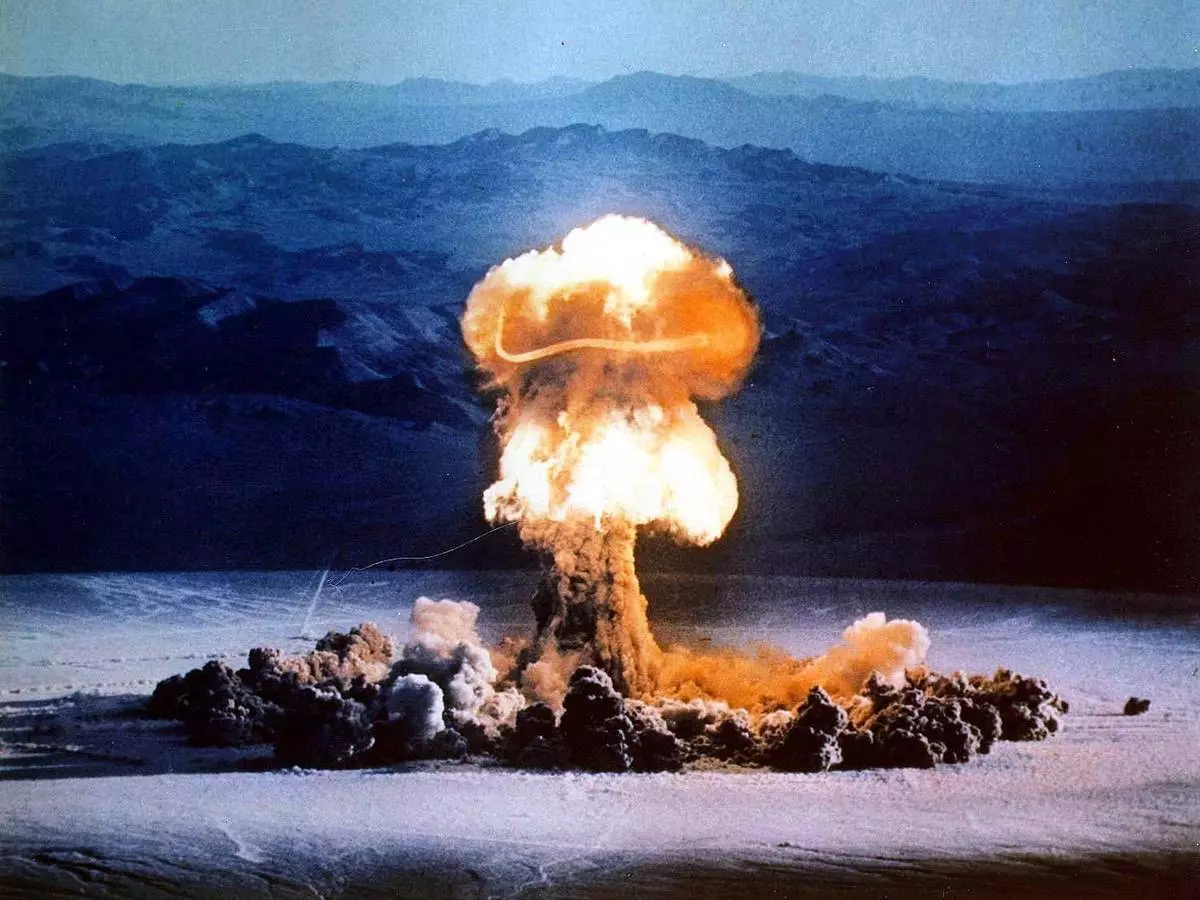
FILE - A sub-surface atomic test is shown March 23, 1955 at the Nevada Test Site near Yucca Flats, Nev. (U.S. Atomic Energy Commission via AP, File)

FILE - A sub-surface atomic test is shown March 23, 1955 at the Nevada Test Site near Yucca Flats, Nev. (U.S. Atomic Energy Commission via AP, File)

China is building more ground-based nuclear missile silos. Meanwhile, North Korea just unveiled a new intercontinental ballistic missile it plans to test, part of a nuclear-capable arsenal likely able to reach the continental U.S.

The threat is starting to bleed into popular culture as well, most recently with director Kathryn Bigelow 's new film “A House of Dynamite.”

But what does Trump's announcement mean and how would it affect what's happening now with nuclear tensions? Here's what to know.

Trump’s comments came in a post on his Truth Social website just before meeting Chinese leader Xi Jinping. In it, Trump noted other countries testing weapons and wrote: “I have instructed the Department of War to start testing our Nuclear Weapons on an equal basis. That process will begin immediately.”

The president’s post raised immediate questions. America’s nuclear arsenal is maintained by the Energy Department and the National Nuclear Security Administration, a semiautonomous agency within it — not the Defense Department. The Energy Department has overseen testing of nuclear weapons since its creation in 1977. Two other agencies before it — not the Defense Department — conducted tests.

Trump also claimed the U.S. “has more Nuclear Weapons than any other country.” Russia is believed to have 5,580 nuclear warheads, according to the Washington-based Arms Control Association, while the U.S. has 5,225. Those figures include so-called “retired” warheads waiting to be dismantled.

The Stockholm International Peace Research Institute further breaks the warhead total down, with the U.S. having 1,770 deployed warheads with 1,930 in reserve. Russia has 1,718 deployed warheads and 2,591 in reserve.

The two countries account for nearly 90% of the world’s atomic warheads.

From the time America conducted its “Trinity” nuclear bomb detonation in 1945 to 1992, the U.S. detonated 1,030 atomic bombs in tests — the most of any country. Those figures do not include the two nuclear weapons America used against Japan in Hiroshima and Nagasaki at the end of World War II.

The first American tests were atmospheric, but they were then moved underground to limit nuclear fallout. Scientists have come to refer to such tests as “shots.” The last such “shot,” called Divider as part of Operation Julin, took place Sept. 23, 1992, at the Nevada National Security Sites, a sprawling compound some 105 kilometers (65 miles) from Las Vegas.

America halted its tests for a couple of reasons. The first was the collapse of the Soviet Union at the end of the Cold War. The U.S. also signed the Comprehensive Nuclear Test-Ban Treaty in 1996. There have been tests since the treaty, however — by India, North Korea and Pakistan, the world's newest nuclear powers. The United Kingdom and France also have nuclear weapons, while Israel long has been suspected of possessing atomic bombs.

But broadly speaking, the U.S. also had decades of data from tests, allowing it to use computer modeling and other techniques to determine whether a weapon would successfully detonate. Every president since Barack Obama has backed plans to modernize America's nuclear arsenal, whose maintenance and upgrading will cost nearly $1 trillion over the next decade, according to the Congressional Budget Office.

The U.S. relies on the so-called “nuclear triad” — ground-based silos, aircraft-carried bombs and nuclear-tipped missiles in submarines at sea — to deter others from launching their weapons against America.

If the U.S. restarted nuclear weapons testing, it isn't immediately clear what the goal would be. Nonproliferation experts have warned any scientific objective likely would be eclipsed by the backlash to a test — and possibly be a starting gun for other major nuclear powers to begin their own widespread testing.

“Restarting the U.S. nuclear testing program could be one of the most consequential policy actions the Trump administration undertakes — a U.S. test could set off an uncontrolled chain of events, with other countries possibly responding with their own nuclear tests, destabilizing global security, and accelerating a new arms race,” experts warned in a February article in the Bulletin of Atomic Scientists.

“The goal of conducting a fast-tracked nuclear test can only be political, not scientific. ... It would give Russia, China and other nuclear powers free rein to restart their own nuclear testing programs, essentially without political and economic fallout.”

Any future U.S. test likely would take place in Nevada at the testing sites, but a lot of work likely would need to go into the sites to prepare them given it's been over 30 years since the last test. A series of slides made for a presentation at Los Alamos National Laboratory in 2018 laid out the challenges, noting that in the 1960s the city of Mercury, Nevada — at the testing grounds — had been the second-largest city in Nevada.

On average, 20,000 people had been on site to organize and prepare for the tests. That capacity has waned in the decades since.

“One effects shot would require from two to four years to plan and execute,” the presentation reads. “These were massive undertakings.”

This story has been corrected to fix transposed numbers for the United States and Russia’s nuclear missile reserves.

The Associated Press receives support for nuclear security coverage from the Carnegie Corporation of New York and Outrider Foundation. The AP is solely responsible for all content.
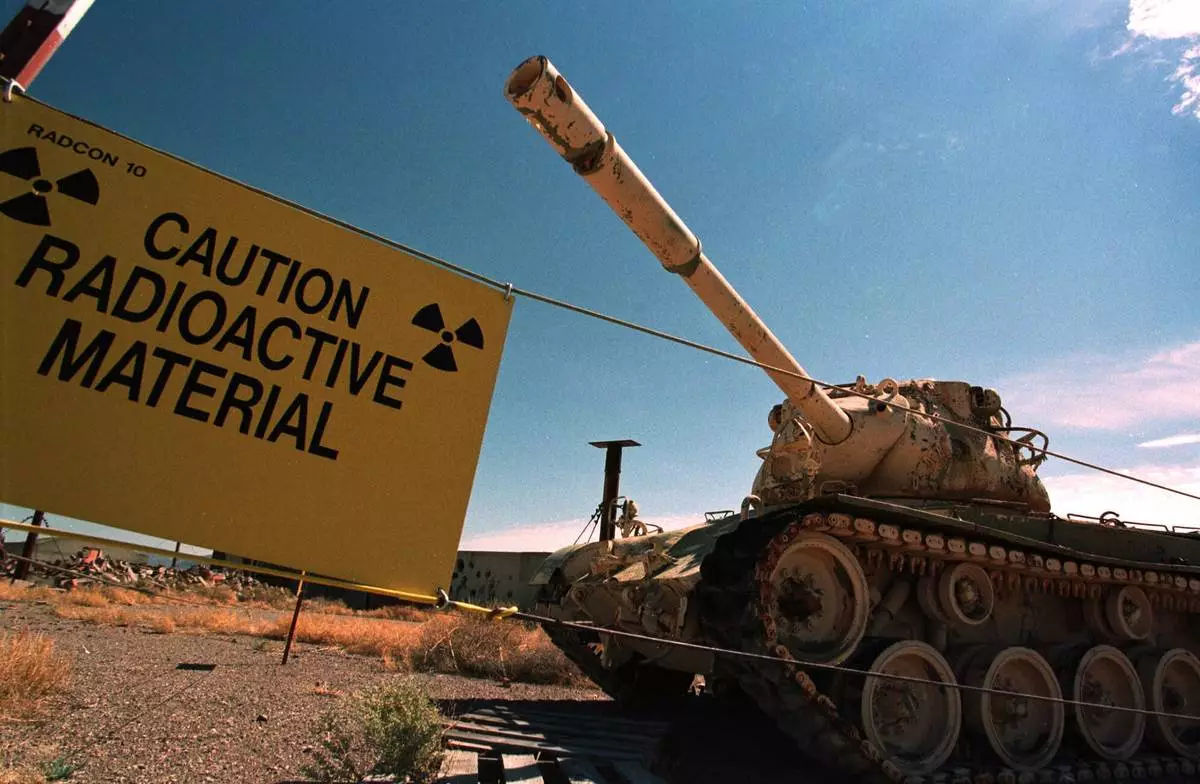
FILE - An M-48 tank which fired uranium-tipped shells in the 1970s sits at the Nevada Test Site on Aug. 24, 1999. (AP Photo/Laura Rauch, File)
FILE - An M-48 tank which fired uranium-tipped shells in the 1970s sits at the Nevada Test Site on Aug. 24, 1999. (AP Photo/Laura Rauch, File)

FILE - A mushroom cloud rises from a test blast at the Nevada Test Site on June 24, 1957. (U.S. Energy Department via AP, File)
FILE - A mushroom cloud rises from a test blast at the Nevada Test Site on June 24, 1957. (U.S. Energy Department via AP, File)

FILE - In this June 1953, file photo, film crews photograph an atom cloud forming after an atomic shell fired a test in the Nevada desert. (AP Photo, File)
FILE - In this June 1953, file photo, film crews photograph an atom cloud forming after an atomic shell fired a test in the Nevada desert. (AP Photo, File)

FILE - A sub-surface atomic test is shown March 23, 1955 at the Nevada Test Site near Yucca Flats, Nev. (U.S. Atomic Energy Commission via AP, File)
FILE - A sub-surface atomic test is shown March 23, 1955 at the Nevada Test Site near Yucca Flats, Nev. (U.S. Atomic Energy Commission via AP, File)
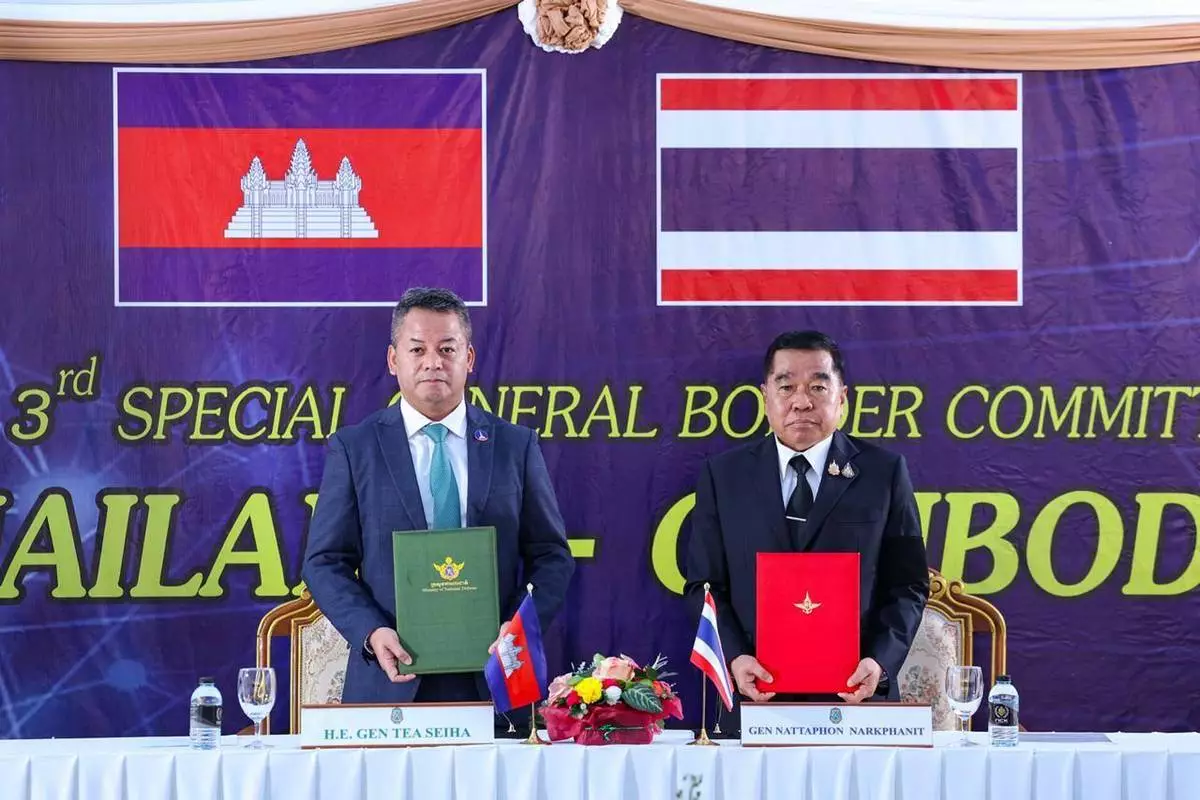
BANGKOK (AP) — Thailand and Cambodia signed a ceasefire agreement on Saturday to end weeks of fighting along their border over competing territorial claims.

The agreement took effect at noon (0500 GMT) and calls for a halt in military movements and airspace violation for military purposes.

Only Thailand has carried out airstrikes, hitting sites in Cambodia as recently as Saturday morning, according to the Cambodian Defense Ministry.

The deal also calls for Thailand, after the ceasefire has held for 72 hours, to repatriate 18 Cambodian soldiers it has held as prisoners since earlier fighting in July. Their release has been a major demand of the Cambodian side.

Within hours of the signing, Thailand's Foreign Ministry protested to Cambodia that a Thai soldier sustained a permanent disability when he stepped on an anti-personnel land mine it charged had been laid by Cambodian forces.

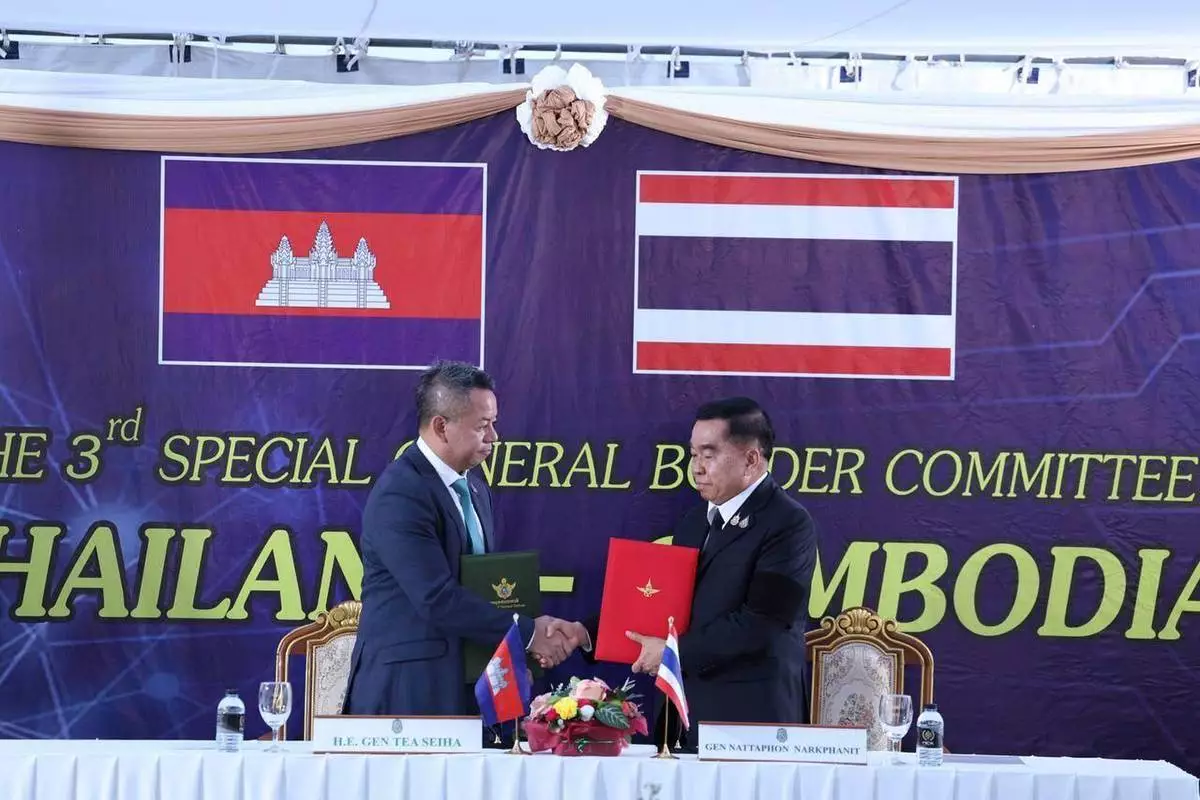
The agreement was signed by the countries’ defense ministers, Cambodia’s Tea Seiha and Thailand’s Nattaphon Narkphanit, at a border checkpoint. It followed three-day lower-level talks by military officials.

It declares that the sides are committed to an earlier ceasefire that ended five days of fighting in July and follow-up agreements.

The original July ceasefire was brokered by Malaysia and pushed through by pressure from U.S. President Donald Trump, who threatened to withhold trade privileges unless Thailand and Cambodia agreed. It was formalized in more detail in October at a regional meeting in Malaysia that Trump attended.

Despite those deals, the countries carried on a bitter propaganda war and minor cross-border violence continued, escalating in early December to widespread heavy fighting.

On Saturday, U.S. Secretary of State Marco Rubio welcomed the ceasefire announcement and urged Cambodia and Thailand to fully honor it and the terms of the peace accord reached earlier in Malaysia.

U.N. Secretary-General Antonio Guterres called the ceasefire “a positive step towards alleviating the suffering of civilians, ending current hostilities, and creating an environment conducive to achieving lasting peace,” his spokesman said..

The U.N. chief expressed appreciation to Malaysia, China and the United States for their efforts to peacefully resolve the conflict, U.N. spokesman Stephane Dujarric said. “The United Nations stands ready to support efforts aimed at sustaining peace and stability in the region.”

Thailand has lost 26 soldiers and one civilian as a direct result of the combat since Dec. 7, according to officials. Thailand has also reported 44 civilian deaths.

Cambodia hasn’t issued an official figure on military casualties, but says that 30 civilians have been killed and 90 injured. Hundreds of thousands of people have been evacuated on both sides of the border.

“Today’s ceasefire also paves the way for the displaced people who are living in the border areas to be able to return to their homes, work in the fields, and even allow their children to be able to return to schools and resume their studies,” Cambodia's Defense Minister Tea Seiha told reporters after the signing.

Each side blamed the other for initiating the fighting and claimed to be acting in self-defense.

The agreement also calls on both sides to adhere to international agreements against deploying land mines, a major concern of Thailand.

Thai soldiers along the border have been wounded in at least 10 incidents this year by what Thailand says were newly planted Cambodian mines. Cambodia says the mines were left over from decades of civil war that ended in the late 1990s.

Following the latest injury on Saturday, Thailand's Foreign Ministry noted that the new agreement “includes key provisions on joint humanitarian demining operations to ensure the safety of military personnel and civilians in the border areas as soon as possible.”

Another clause says the two sides “agree to refrain from disseminating false information or fake news.”

The agreement calls for a resumption of previous measures to demarcate the border. The sides also agreed to cooperate in suppressing transnational crimes. That's primarily a reference to online scams perpetrated by organized crime that have bilked victims around the world of billions of dollars each year. Cambodia is a center for such criminal enterprises.

Malaysia's Prime Minister Anwar Ibrahim, who was instrumental in putting together the original ceasefire, said the new agreement “reflects a shared recognition that restraint is required, above all in the interest of civilians.”

Many clauses similar to those in Saturday's agreement were included in October's ceasefire document, and were open to various interpretations and generally honored only in part. These included provisions concerning land mines and the Cambodian prisoners.

The fragility of the new agreement was underlined by Thailand’s Defense Ministry spokesperson Surasant Kongsiri in a news briefing after Saturday's signing. He said that the safe return of civilians to their homes would indicate the situation had stabilized enough to allow the repatriation of the captured Cambodian soldiers.

“However if the ceasefire does not materialize, this would indicate a lack of sincerity on the Cambodian side to create sure peace,” he said. "Therefore, the 72- hour ceasefire beginning today is not an act of trust nor unconditional acceptance but a time frame to tangibly prove whether Cambodia can truly cease the use of weapons, provocations and threats in the area.”

——-

Sopheng Cheang reported from Phnom Penh, Cambodia.

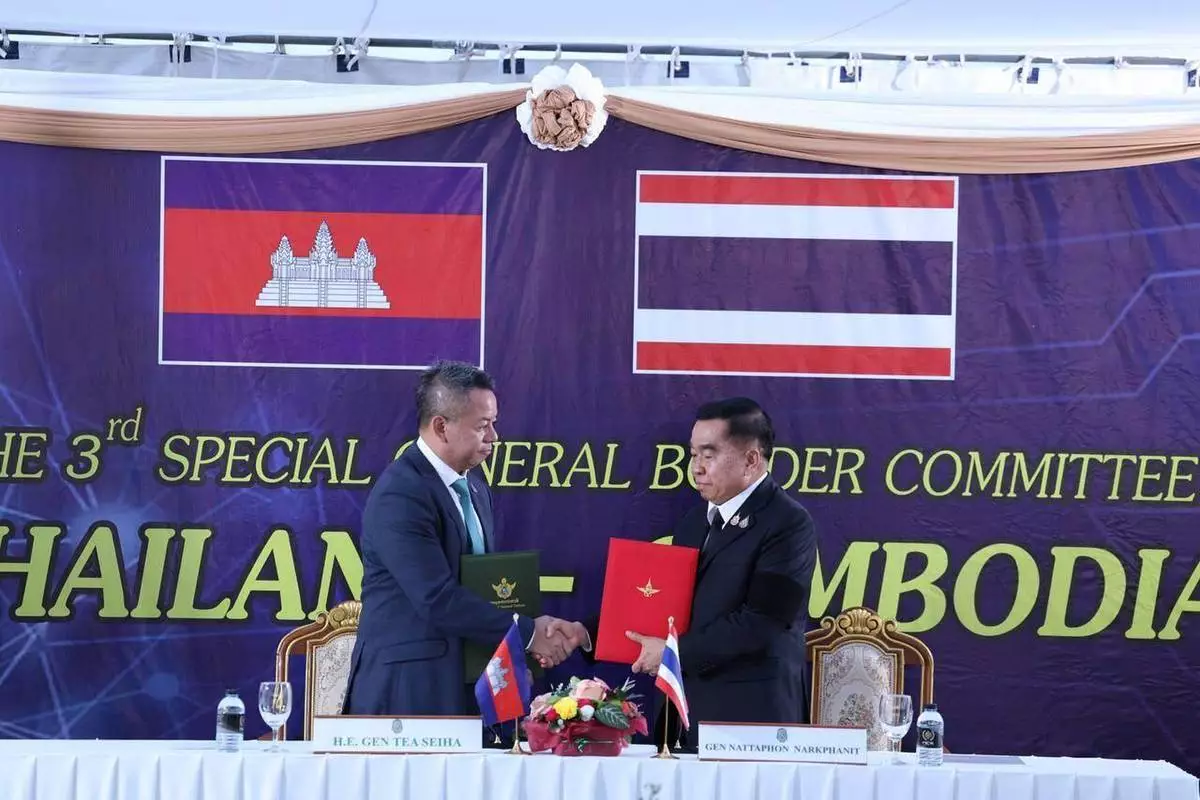
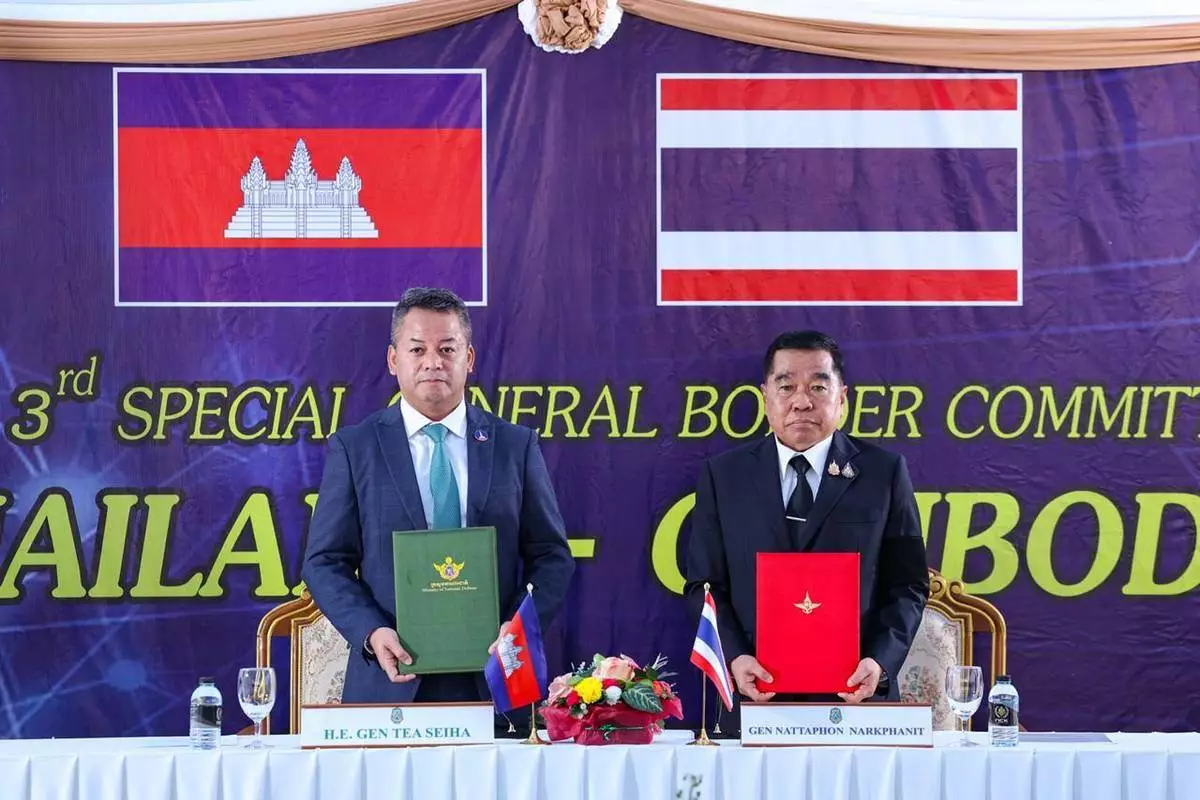
CORRECTS NAME OF THAI DEFENSE MINISTER - In this photo released by Agence Kampuchea Press (AKP), Cambodian Defense Minister Tea Seiha, left, stands with Thai Defense Minister Nattaphon Narkphanit, right, at the General Border Committee Meeting in Chanthaburi Province, Thailand Saturday, Dec. 27, 2025. (AKP via AP)

CORRECTS NAME OF THAI DEFENSE MINISTER - In this photo released by Agence Kampuchea Press (AKP), Cambodian Defense Minister Tea Seiha, left, stands with Thai Defense Minister Nattaphon Narkphanit, right, at the General Border Committee Meeting in Chanthaburi Province, Thailand Saturday, Dec. 27, 2025. (AKP via AP)

CORRECTS NAME OF THAI DEFENSE MINISTER - In this photo released by Agence Kampuchea Press (AKP), Cambodian Defense Minister Tea Seiha, left, stands with Thai Defense Minister Nattaphon Narkphanit, right, at the General Border Committee Meeting in Chanthaburi Province, Thailand Saturday, Dec. 27, 2025. (AKP via AP)

CORRECTS NAME OF THAI DEFENSE MINISTER - In this photo released by Agence Kampuchea Press (AKP), Cambodian Defense Minister Tea Seiha, left, stands with Thai Defense Minister Nattaphon Narkphanit, right, at the General Border Committee Meeting in Chanthaburi Province, Thailand Saturday, Dec. 27, 2025. (AKP via AP)

In this photo released by Agence Kampuchea Press (AKP), Cambodian Defense Minister Tea Seiha, left, stands with Thai Defense Minister Natthaphon Narkphanit, right, at the General Border Committee Meeting in Chanthaburi Province, Thailand Saturday, Dec. 27, 2025. (AKP via AP)

In this photo released by Agence Kampuchea Press (AKP), Cambodian Defense Minister Tea Seiha, left, stands with Thai Defense Minister Natthaphon Narkphanit, right, at the General Border Committee Meeting in Chanthaburi Province, Thailand Saturday, Dec. 27, 2025. (AKP via AP)

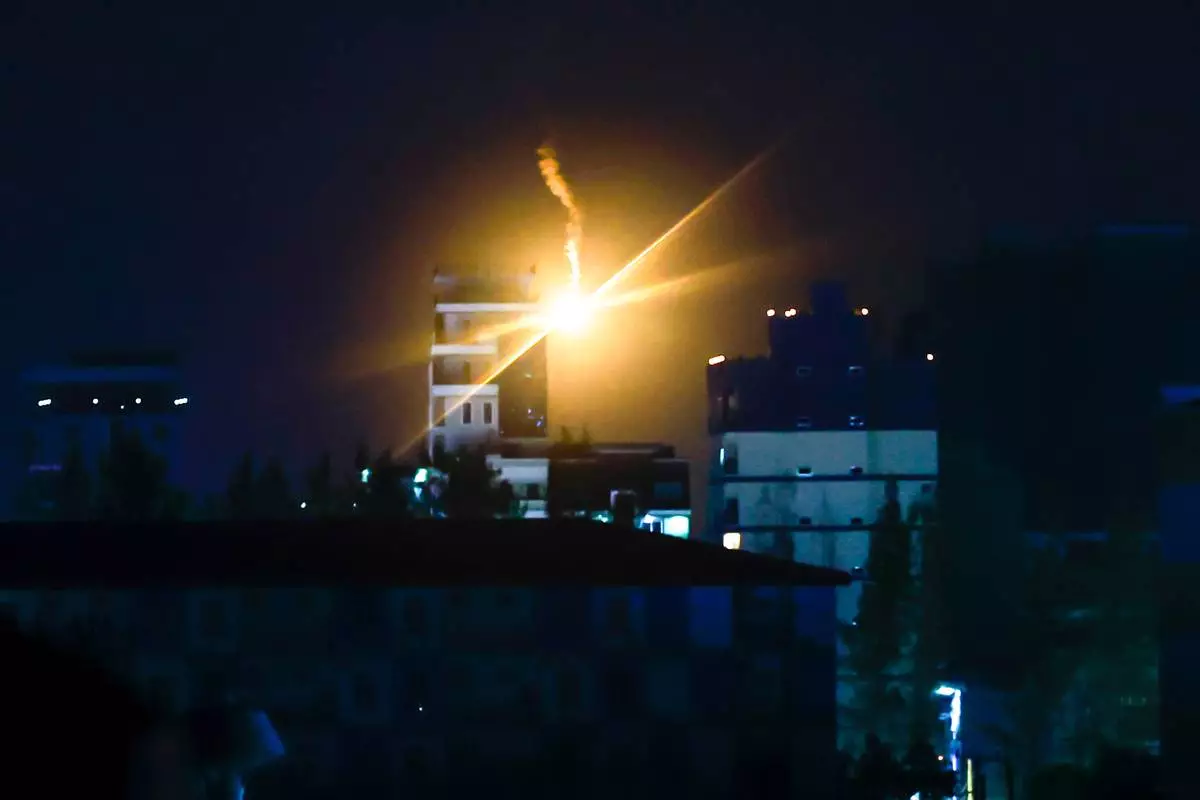
Illumination flares fired by Thai military forces shine in Poipet, Cambodia, as seen from Sa Kaeo, Thailand, on Friday, Dec. 26, 2025, following clashes between Thai and Cambodian soldiers. (AP Photo/Wason Wanichakorn)

Illumination flares fired by Thai military forces shine in Poipet, Cambodia, as seen from Sa Kaeo, Thailand, on Friday, Dec. 26, 2025, following clashes between Thai and Cambodian soldiers. (AP Photo/Wason Wanichakorn)

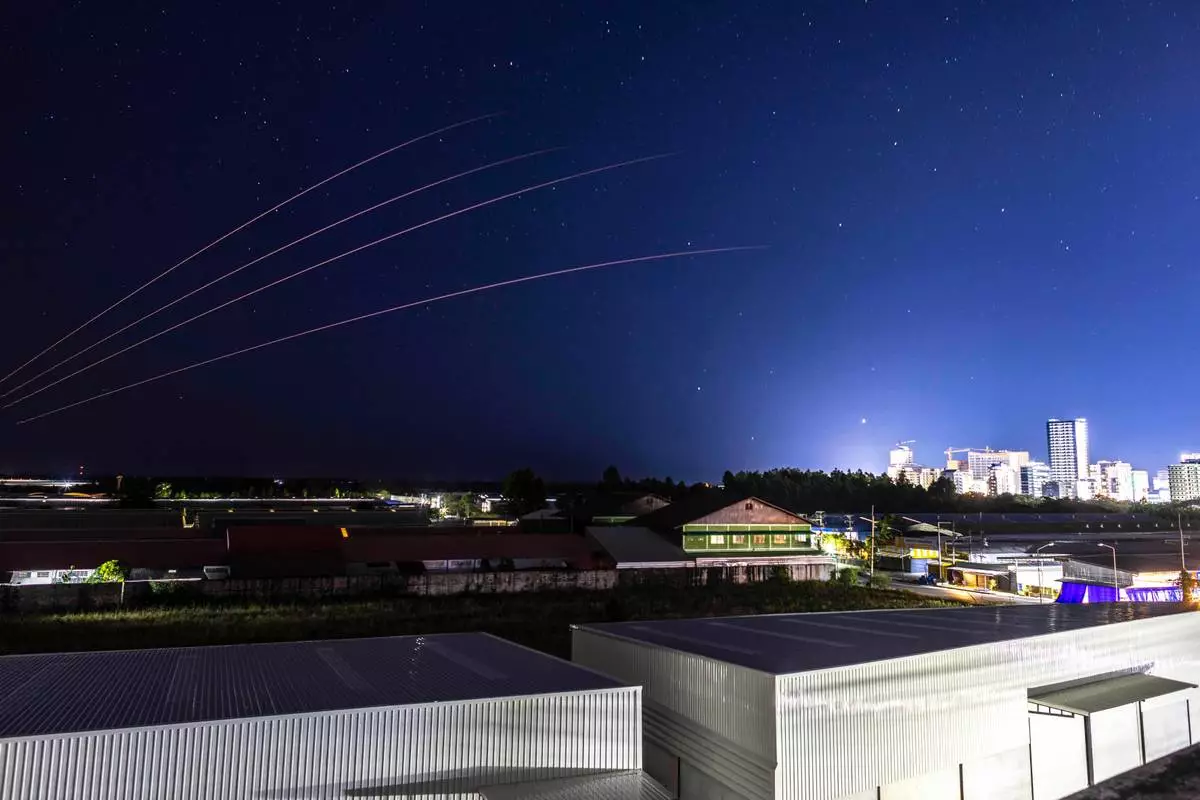
The Thai military fires artillery towards Cambodia, Friday, Dec. 26, 2025, seen from Thailand's Sa Kaeo province. (AP Photo/Wason Wanichakorn)

The Thai military fires artillery towards Cambodia, Friday, Dec. 26, 2025, seen from Thailand's Sa Kaeo province. (AP Photo/Wason Wanichakorn)

In this photo released by Agence Kampuchea Press (AKP), Cambodian Defense Minister Tea Seiha, left, stands with Thai Defense Minister Natthaphon Narkphanit, right, at the General Border Committee Meeting in Chanthaburi Province, Thailand Saturday, Dec. 27, 2025. (AKP via AP) g

In this photo released by Agence Kampuchea Press (AKP), Cambodian Defense Minister Tea Seiha, left, stands with Thai Defense Minister Natthaphon Narkphanit, right, at the General Border Committee Meeting in Chanthaburi Province, Thailand Saturday, Dec. 27, 2025. (AKP via AP) g

Recommended Articles