Skip to Content Facebook Feature Image

Erika Kirk's words spotlight forgiveness in a divided nation

ENT

Erika Kirk's words spotlight forgiveness in a divided nation
ENT

ENT

Erika Kirk's words spotlight forgiveness in a divided nation

2025-10-30 19:02 Last Updated At:19:40

“That man, that young man — I forgive him.”

Erika Kirk softly spoke those words about the gunman accused of assassinating her husband, conservative activist Charlie Kirk, as she struggled to hold back tears last month during his memorial service.

Her public declaration inspired another. Hollywood actor Tim Allen said he was so moved by her words that he was forgiving the drunken driver who caused his father’s death 60 years ago. Barely two weeks after Charlie Kirk’s death, members of a Michigan congregation made public that they too were forgiving a gunman, the one who had just attacked their church, killing four people and injuring eight others.

Their high-profile acts of forgiveness are all the more remarkable given the politically charged and highly polarizing climate gripping the U.S. It has pushed people of faith to contemplate what forgiveness means, particularly in the face of violence, trauma and unspeakable grief, and whether it could shift public consciousness toward compassion.

While some see a glimmer of hope in this moment, others are skeptical. Miroslav Volf, professor of theology at Yale Divinity School, said he views President Donald Trump’s response to Erika Kirk’s words — that he hates his opponents — as the more typical sentiment.

"Erika Kirk’s gesture is the outlier,” he said. “It was an extraordinary act of courage. But it was also telling that (Trump’s) response got the bigger reaction from the crowd at the memorial. You have to wonder about these two very different responses. How do we find space for grace when we are so at odds that we cannot recognize humanity on the other side of the divide?”

California pastor Jack Hibbs, who leads Calvary Chapel Chino Hills and is a friend of the Kirks, called her words an “incredibly powerful” message of hope for the shooter, and in keeping with the family's deep commitment to the Gospel, which commands Christians to forgive even their enemies.

“The Bible warns us that bitterness, when left alone, can grow up in and destroy your heart,” Hibbs said. “So forgiveness was given to us by God to set us free from what’s been done to us.”

The Rev. Thomas Berg, visiting professor at the McGrath Institute for Church Life at the University of Notre Dame, said he hopes Erika Kirk’s gesture “ignites some kind of meaningful national conversation about forgiveness.”

He said forgiveness is not a one-time event, but a process that takes time and work. Berg, who counsels victims of sex abuse in the Catholic Church, warns that it should never be coerced but authentically given — an act that he says has the power to heal the deepest wounds.

He would like to see more public expressions of forgiveness, which could serve as a balm for the country.

“I hope this is not a passing moment,” he said. “The dynamic of forgiveness throws a wrench into the dysfunction of our partisan divides and our inability to have a reasonable exchange of ideas.”

Dave Butler, a member of The Church of Jesus Christ of Latter-day Saints and science fiction writer based in Utah, believes forgiveness is a mandate for all Christians, as his church teaches. He started a crowdfunding initiative for the family of the Michigan shooter who opened fire on the Latter-day Saints congregation, which as of this week, had raised a little over $388,000.

Butler said he started it because — in addition to the grieving church members who had lost loved ones in this mass shooting — there was the family of the gunman that was also traumatized.

“They also did not choose this,” he said. “Nevertheless, they are now short a husband and a father. If we’re not really thoughtful, we might be inclined to see them more as antagonists rather than victims. More than 10,000 people have contributed and they understand what they’re doing is an act of forgiveness.”

An often-cited modern example of forgiveness is the response of the Amish community around Nickel Mines, Pennsylvania, after a gunman killed five Amish schoolgirls and wounded five more in 2006 before taking his own life. Local Amish immediately expressed forgiveness for the killer and supported his widow.

Amish are part of the wider Anabaptist movement, which puts heavy emphasis on Jesus’ Sermon on the Mount, containing some of his most radical and counter-cultural sayings — to love enemies, live simply, bless persecutors, turn the other cheek and to endure sufferings joyfully. In it, Jesus says God will only forgive those who forgive others.

While many outside the Anabaptists' world have endorsed their beliefs about forgiveness — which they also voiced for Haitian kidnappers of Anabaptist missionaries in 2021 — others say the picture is more complex. Advocates for victims of sexual abuse in Anabaptist communities say victims and their families are often forced to reconcile with abusers after the latter make a confession and undergo a brief period of discipline.

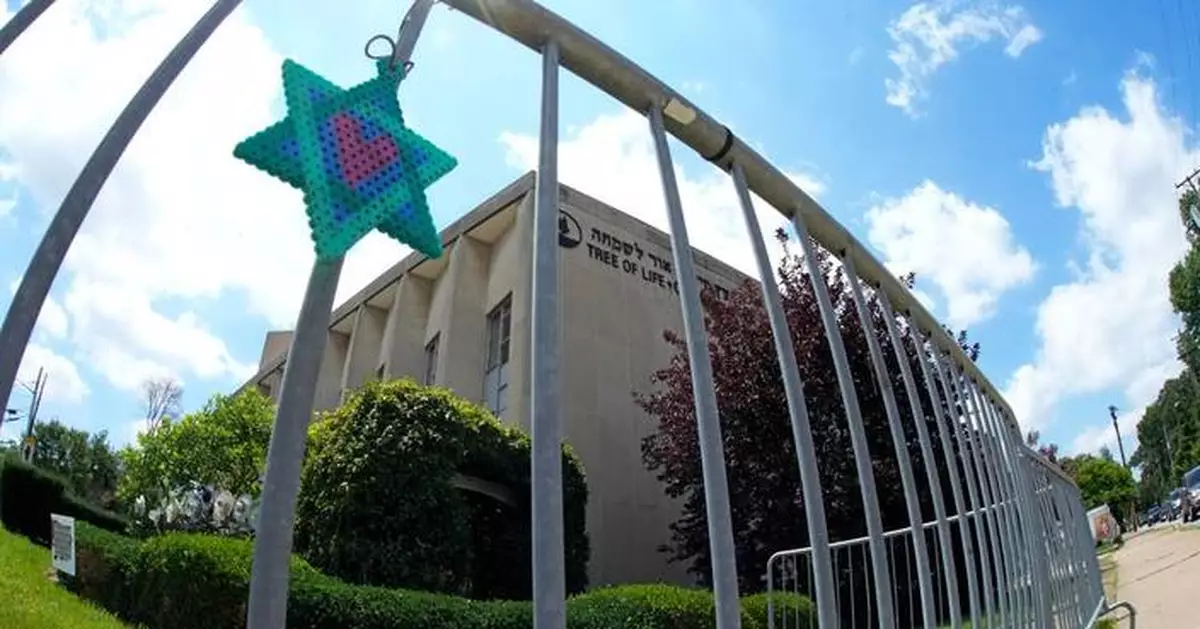
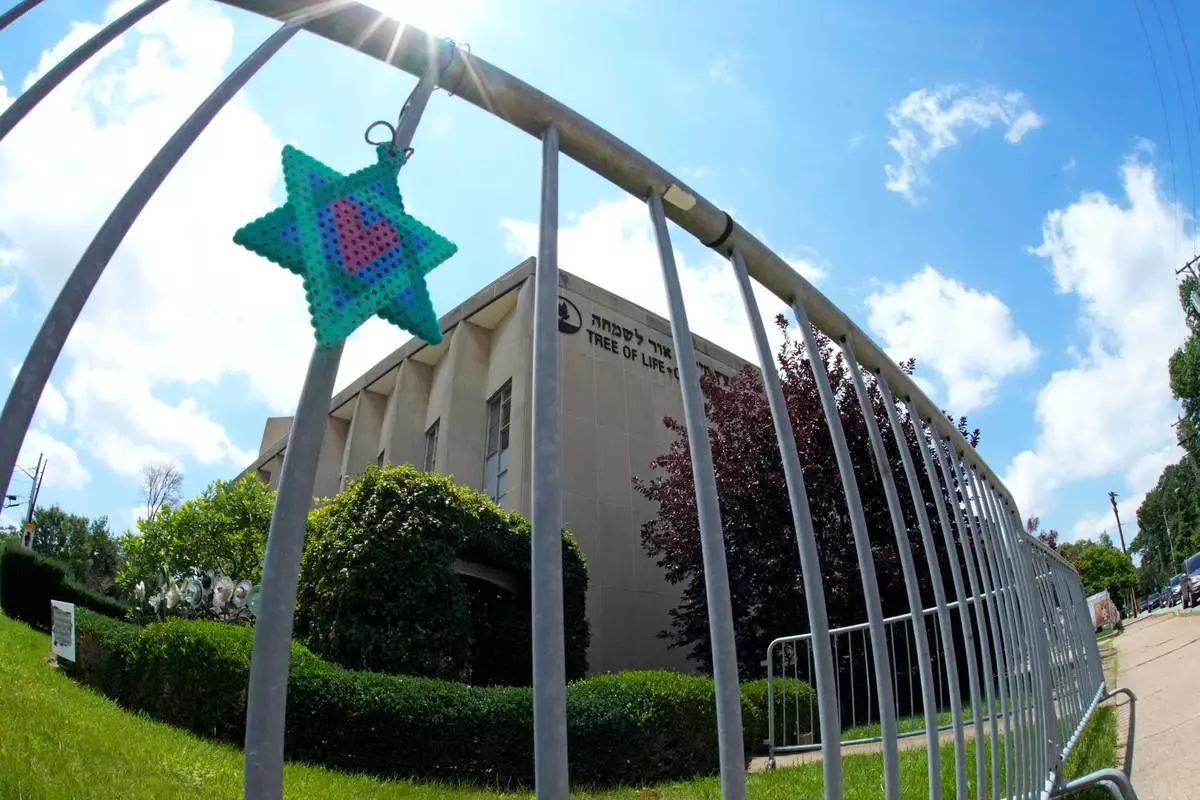
The Jewish perspective on forgiveness is different in that it requires the perpetrator to seek forgiveness from the person who has been wronged, said Rabbi Jeffrey Myers. He heads Tree of Life synagogue in Pittsburgh where 11 people from three congregations were killed after a gunman attacked it during Shabbat services on Oct. 27, 2018.

“For me, it’s complicated because there are 11 dead people who cannot be sought for forgiveness,” Myers said, adding that he cannot offer forgiveness because the perpetrator — who faces execution — did not show remorse.

“While the perpetrator has received a measure of justice as outlined by the judicial process, it didn’t give me closure because those 11 people are gone," Myers said. "There is nothing that makes that pain go away.”

What gives him some comfort is being able to help other congregations that are going through similar trauma. Myers said he was grateful to have received that support from the Rev. Eric Manning, pastor of Mother Emanuel AME Church in Charleston, South Carolina, a historically Black church where a self-proclaimed white supremacist shot and killed nine congregants on June 17, 2015 — including the church’s pastor at the time.

“Today, as someone who belongs to that club no one should belong to, I view it as my sacred obligation to help,” Myers said. “Even if I can help one person, that’s gratifying, that feels healing.”

Peg Durachko, whose husband Dr. Richard Gottfried, a dentist, was one of the victims in the synagogue shooting, said that as a Catholic, she looked to Pope John Paul II for inspiration as she read about how he visited the imprisoned man who shot him and offered forgiveness.

“I recognize (the gunman) as a child of God who made bad choices to lead him in that direction,” she said. “I’m not his judge, God is. I want him to have eternal life. I don’t harbor hate or ill wishes to anyone, including him. I don’t want to carry this baggage of hate.”

AP journalist Peter Smith in Pittsburgh contributed to this report.

Associated Press religion coverage receives support through the AP’s collaboration with The Conversation US, with funding from Lilly Endowment Inc. The AP is solely responsible for this content.
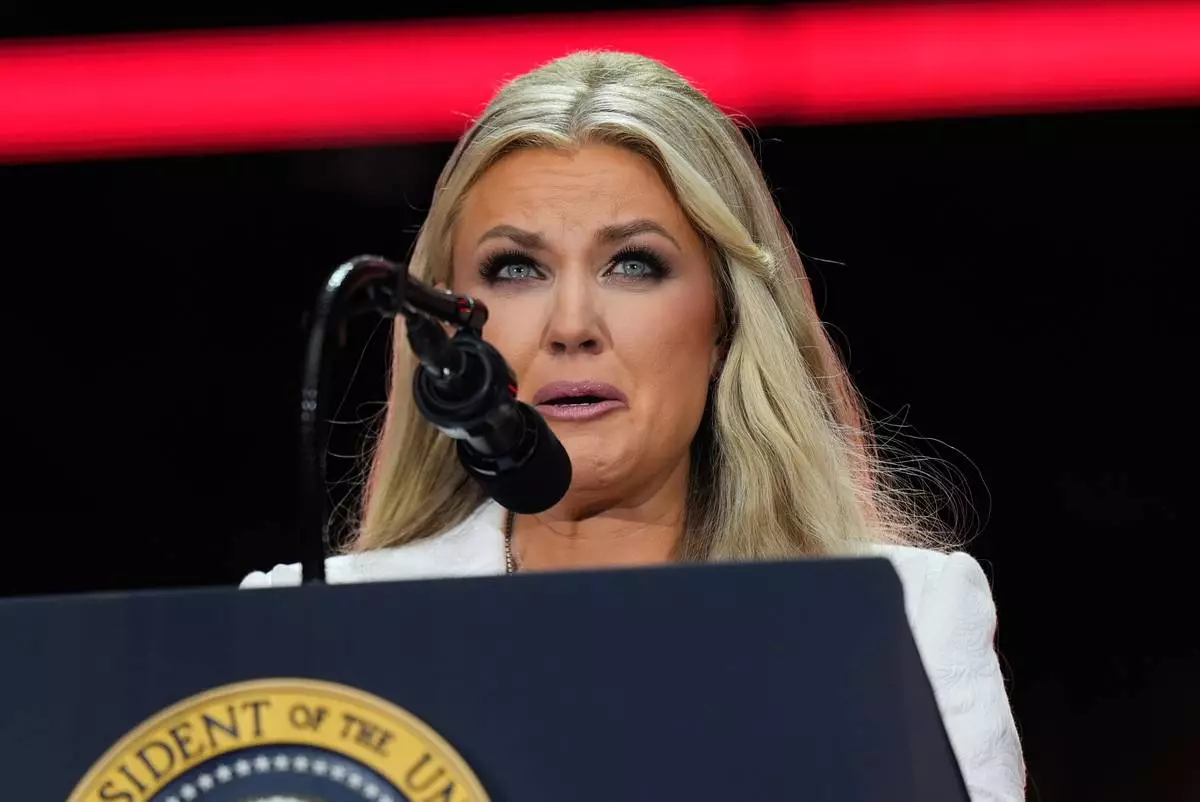
FILE - Erika Kirk speaks at a memorial for her husband Charlie Kirk, Sept. 21, 2025, at State Farm Stadium in Glendale, Ariz. (AP Photo/Julia Demaree Nikhinson, file)
FILE - Erika Kirk speaks at a memorial for her husband Charlie Kirk, Sept. 21, 2025, at State Farm Stadium in Glendale, Ariz. (AP Photo/Julia Demaree Nikhinson, file)

FILE - A Star of David hands from a fence outside the dormant landmark Tree of Life synagogue in Pittsburgh's Squirrel Hill neighborhood on July 13, 2023. (AP Photo/Gene J. Puskar/File)

FILE - A Star of David hands from a fence outside the dormant landmark Tree of Life synagogue in Pittsburgh's Squirrel Hill neighborhood on July 13, 2023. (AP Photo/Gene J. Puskar/File)

Five years ago, video images from a Minneapolis street showing a police officer kneeling on the neck of George Floyd as his life slipped away ignited a social movement.

Now, videos from another Minneapolis street showing the last moments of Renee Good's life are central to another debate about law enforcement in America. They've slipped out day by day since ICE agent Jonathan Ross shot Good last Wednesday in her maroon SUV. Yet compared to 2020, the story these pictures tell is murkier, subject to manipulation both within the image itself and the way it is interpreted.

This time, too, the Trump administration and its supporters went to work establishing their own public view of the event before the inevitable imagery appeared.

But half a decade later, so many things are not the same — from cultural attitudes to rapidly evolving technology around all kinds of imagery.

“We are in a different time,” said Francesca Dillman Carpentier, a University of North Carolina journalism professor and expert on the media's impact on audiences.

No one who saw the searing video of Minneapolis police officer Derek Chauvin with his knee on Floyd's neck for more than nine minutes on May 25, 2020, is likely to forget it — and Chauvin's impassive face Floyd insisted he couldn't breathe. United in revulsion, demonstrators began one of the nation's largest-ever social movements. Chauvin was convicted of murder.

The footage “caused many individuals to experience an epiphany about racism, specifically cultural racism, in the United States,” legal scholar Angela Onwuachi-Willig wrote in a Houston Law Review study that examined whether white Americans experienced a collective cultural trauma.

She eventually concluded that didn't happen and that the impact diminished with time. The rollback of diversity programs with the second Trump administration offers evidence for her argument.

“The people who are writing the cultural narrative of the Good shooting took notes from the Floyd killing and are managing this narrative differently,” said Kelly McBride, an expert on media ethics for the Poynter Institute.

Homeland Security Secretary Kristi Noem labeled Good, who was demonstrating in opposition to ICE enforcement of immigration laws, a domestic terrorist — an interpretation that Minneapolis Mayor Jacob Frey dismissed with an expletive. Both President Donald Trump and Vice President JD Vance suggested the shooting was justified because Good was trying to run Ross down with her vehicle.

On the night of the killing, White House border czar Tom Homan was cautious in an interview with the “CBS Evening News” when anchor Tony Dokoupil showed him the most widely distributed video of the incident, taken by a bystander and posted by a reporter for the Minnesota Reformer. The veteran law enforcement official said it would be unprofessional for him to prejudge before an investigation.

Later that evening, Homan issued a statement calling the shooting “another example of the results of the hateful rhetoric and violent attacks” against U.S. Immigration and Customs Enforcement and Border Patrol officers.

Video of the incident has been generally inconclusive about whether Good's vehicle actually hit Ross before he opened fire. Even if she did, many experts question whether that represented grounds for firing his weapon. Clearly, however, that would bolster public sympathy for the officer.

“These ICE videos do present irrefutable facts — a woman drove her car and then she was shot dead by an ICE agent,” said Duy Linh Tu, a documentarian and professor at the Columbia University journalism school. “What the videos can't show is the intent of the woman or the officer. And that's the tricky part.”

Good, obviously, can’t speak to what motivated her to put her SUV in drive and move on Portland Avenue South.

Several news organizations have carefully examined the forensic evidence that has emerged. The Associated Press wrote that it was unclear if Good's car made contact with Ross. The Washington Post wrote that “videos examined by The Post, including one shared on Truth Social by Trump, do not clearly show whether the agent is struck or how close the front of the vehicle comes to striking him.”

The New York Times said that “in one video, it looks like the agent is being struck by the SUV. But when we synchronize it with the first clip, we can see the agent is not being run over.”

Video that emerged Friday from the Minnesota site Alpha News showed the incident from Ross' perspective. It, too, left many questions and no shortage of people willing to answer them.

Vance linked to the video online and wrote: “Many of you have been told this law enforcement officer wasn't hit by a car, wasn't being harassed and murdered an innocent woman. The reality is that his life was endangered and he fired in self-defense.”

Senate Democratic leader Chuck Schumer wrote online that “how could anyone on the planet watch this video and conclude what JD Vance says?” Schumer said the administration “is lying to you.”

When one online commentator wrote that Good did not deserve to be shot in the face, conservative media figure Megyn Kelly responded, “Yes, she did. She hit and almost ran over a cop.”

Poynter’s McBride said the media has generally done a good and careful job outlining the evidence that is circulating around in the public. But the administration has also been effective in spreading its interpretation, she said.

There are more camera angles available now than there was with Floyd, but “I don't know if that adds clarity or more fog to this case,” Tu said. “I think that people will see what they want to see. Or, rather, they'll pick the angle that aligns with what they already believe.”

That nagging sense of uncertainty left by the videos leaves experts like Tu and Carpentier to conclude they will pale in impact compared to the Floyd case. With each passing year, the public is becoming more desensitized to images of violence — as the online spread of footage showing Republican activist Charlie Kirk illustrated, she said.

The spread of AI-enhanced fake images is also teaching the public to question what it sees, she said. Before Ross was identified, BBC Verify said false images were being spread online speculating about what the masked agent looked like, and fake video of a Minneapolis demonstration spread.

“Now you can't believe what you're seeing,” Carpentier said. “You don't know if what you're seeing is the real video or if it has been doctored. I don't think AI is being a friend in this case at all.”

David Bauder writes about the intersection of media and entertainment for the AP. Follow him at http://x.com/dbauder and https://bsky.app/profile/dbauder.bsky.social.

Federal immigration officers make an arrest as bystanders film the incident Sunday, Jan. 11, 2026, in Minneapolis. (AP Photo/John Locher)

Federal immigration officers make an arrest as bystanders film the incident Sunday, Jan. 11, 2026, in Minneapolis. (AP Photo/John Locher)

Bystanders film a federal immigration officer in their car Sunday, Jan. 11, 2026, in Minneapolis. (AP Photo/John Locher)

Bystanders film a federal immigration officer in their car Sunday, Jan. 11, 2026, in Minneapolis. (AP Photo/John Locher)

Recommended Articles