
WASHINGTON (AP) — The government shutdown is exacting a heavy mental toll on the nation's military families, leaving them not knowing from week to week whether their paychecks will arrive.
Alicia Blevins, whose husband is a Marine, said she's going to see a therapist in large part because of the grinding uncertainty.
Click to Gallery
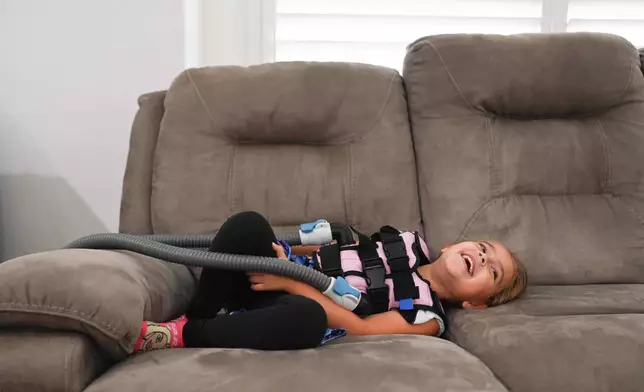
Amelia Bittner, 6, uses her vibrating CPT vest at her home on Wednesday, Oct. 29, 2025, in Pflugerville, Texas. (AP Photo/Jack Myer)
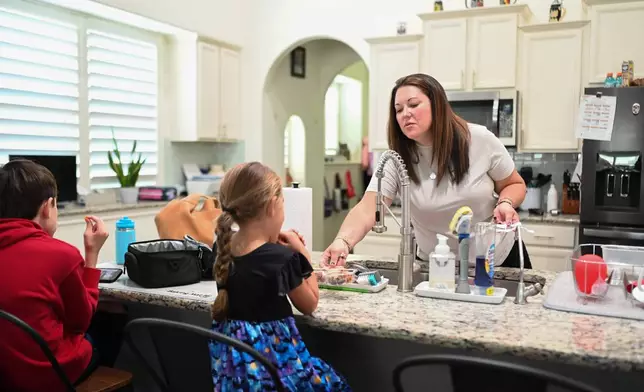
Jennifer Bittner serves lunch to her children at her home on Wednesday, Oct. 29, 2025, in Pflugerville, Texas. Bittner worries the government shutdown will affect her husband's Army salary, and thus their ability to afford their children's healthcare costs. (AP Photo/Jack Myer)

Jennifer Bittner holds her 6-year-old daughter Amelia's inhaler as she puts on her vibrating CPT vest at her home on Wednesday, Oct. 29, 2025, in Pflugerville, Texas. Amelia is a carrier for cystic fibrosis, so the vest helps break up and clear fluid from her lungs and chest. (AP Photo/Jack Myer)
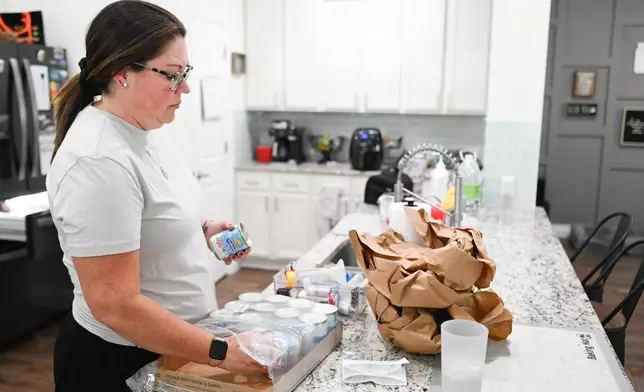
Jennifer Bittner unloads a case of PediaSure at her home on Wednesday, Oct. 29, 2025, in Pflugerville, Texas. (AP Photo/Jack Myer)

Jennifer Bittner holds her 6-year-old daughter Amelia at their home on Wednesday, Oct. 29, 2025, in Pflugerville, Texas. (AP Photo/Jack Myer)
"I don’t feel like I have the tools to deal with this,” said Blevins, 33, who lives at Camp Lejeune, a Marine base near North Carolina's coast. “I don’t want to dump all this on my husband. He’s got men that he’s in charge of. He’s got enough to deal with.”
Even though the Trump administration has found ways to pay the troops twice since the shutdown began on Oct. 1, the process has been fraught with anxiety for many Americans in uniform and their loved ones. Both times, they were left hanging until the last minute.
Four days before paychecks were supposed to go out on Oct. 15, President Donald Trump directed the Pentagon to use “all available funds” to ensure U.S. troops were paid. With the next payday approaching Friday, the White House confirmed Wednesday that it had found the money.
The Trump administration plans to move around $5.3 billion from various accounts, with about $2.5 billion coming from Trump’s big tax and spending cuts bill that was signed into law this summer.
But the scrounging in Washington for troop pay can only last for so long.
Treasury Secretary Scott Bessent said Sunday on CBS' "Face the Nation” that the government will soon run out of ways to compensate the military and that by Nov. 15, the troops "aren’t going to be able to get paid.”
The uncertainty has been fueling resentment among families of the roughly 2 million active duty service members, National Guard members and reservists. There’s a common refrain that the troops are being used as pawns.
But Jennifer Bittner, whose husband is an Army officer, said that gives Congress too much credit.
“You have to be thought of to be used as a pawn,” said Bittner, 43, of Austin, Texas. “And we’re not being thought of at all.”
Bittner’s 6-year-old daughter is using three inhalers right now because she has high-risk asthma, a chronic lung condition and a cold. Each device requires a $38 copay at the pharmacy. Bittner’s severely autistic son requires diapers that cost $200 a month, while she sometimes has to haggle with military insurance to cover the expense.
She worries about those costs as well as the mortgage and groceries for their family of five.
“It is mentally and sometimes physically exhausting stressing about it,” Bittner said of her husband possibly missing a paycheck, while noting that members of Congress are still getting paid.
Many active duty troops live paycheck to paycheck and survive on only one income. Even when they get paid, the shutdown is deepening the financial strain that many families face, said Delia Johnson, chief operating officer for the nonprofit Military Family Advisory Network.
The Oct. 15 paychecks arrived days after they usually do for many people with early direct deposit to their bank accounts, disrupting their ability to pay bills on time and forcing some to pay late fees or rack up debt, Johnson said. Active duty troops also may be dealing with the added expense of moving from one base to another, which she said occurs for roughly 400,000 military households each year.
And many military spouses lose their jobs because of the move or are underemployed from frequent relocations, Johnson said. Reimbursements for moving costs are paused for many during the shutdown, while not all expenses are being repaid.
Monthly weekend drills for many reservists also have been canceled, eliminating a chunk of pay that can be several hundred dollars each month, military advocates said. Besides helping with mortgages and other bills, the drill money is used by some reservists to cover premiums for military health insurance, said John Hashem, executive director of the Reserve Organization of America, an advocacy group.
“People rely on that money,” Hashem said of the drill pay. “The way that this is stretching out right now, it’s almost like the service is taken for granted.”
The reserve organization, along with other groups, urged leaders in Congress in a letter Tuesday to pass a measure to pay National Guard members and reservists.
The financial strain exacerbated by the shutdown prompted the Military Family Advisory Network to set up an emergency grocery support program this month. The nonprofit said 50,000 military families signed up within 72 hours.
The food boxes were assembled in a Houston warehouse by the grocery and logistics company Umoja Health, said chief marketing officer Missy Hunter, and contained everything from noodles and spaghetti sauce to pancake mix and syrup.
Blevins said she and her husband received a box, which provided some peace of mind. In the meantime, she said, her husband is still working, coming home exhausted and with a “long gaze” in his eyes.
The couple moved to North Carolina from Camp Pendleton in California in September, drawing down their savings. They're still waiting for roughly $9,000 in reimbursement.
“We're constantly checking the news," Blevins said. "And my Facebook feed is nothing but, 'It's the Democrats' fault. It's the Republicans' fault.' And I’m just like, can't we just get off the blame game and get this taken care of?”
AP Congressional Correspondent Lisa Mascaro contributed to this report.
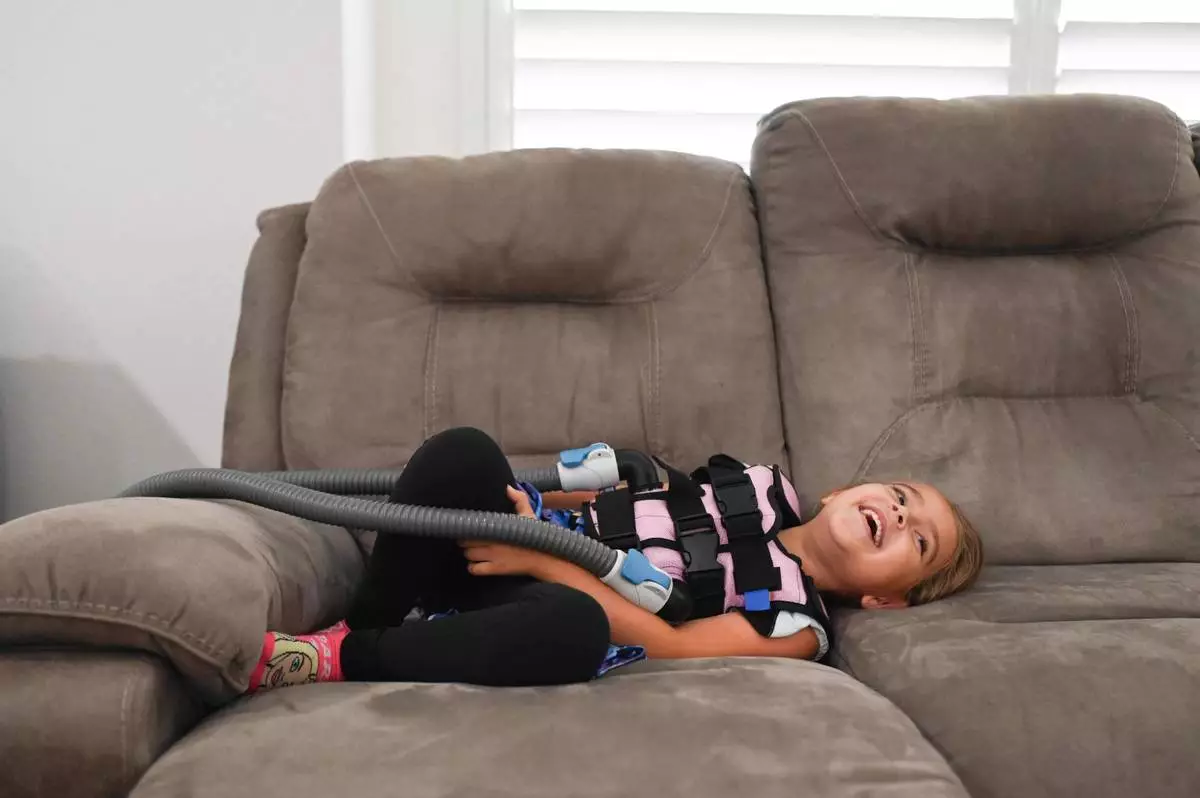
Amelia Bittner, 6, uses her vibrating CPT vest at her home on Wednesday, Oct. 29, 2025, in Pflugerville, Texas. (AP Photo/Jack Myer)

Jennifer Bittner serves lunch to her children at her home on Wednesday, Oct. 29, 2025, in Pflugerville, Texas. Bittner worries the government shutdown will affect her husband's Army salary, and thus their ability to afford their children's healthcare costs. (AP Photo/Jack Myer)

Jennifer Bittner holds her 6-year-old daughter Amelia's inhaler as she puts on her vibrating CPT vest at her home on Wednesday, Oct. 29, 2025, in Pflugerville, Texas. Amelia is a carrier for cystic fibrosis, so the vest helps break up and clear fluid from her lungs and chest. (AP Photo/Jack Myer)
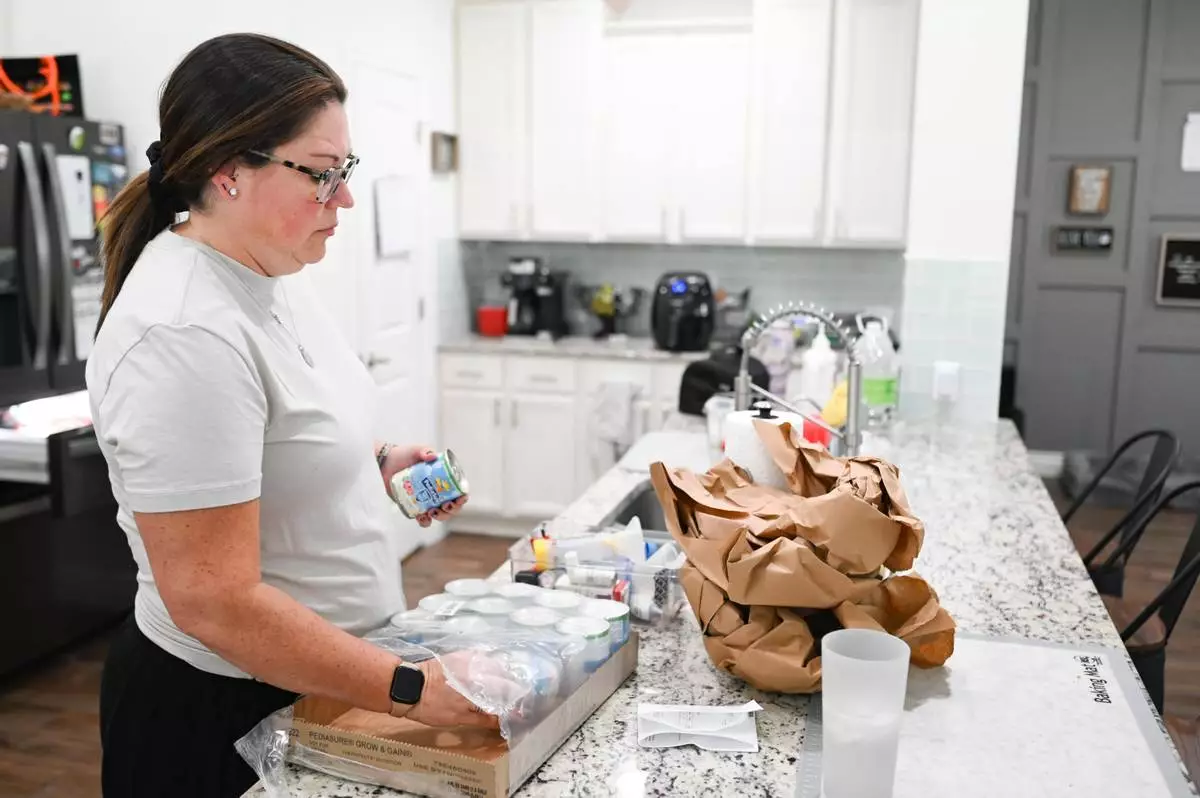
Jennifer Bittner unloads a case of PediaSure at her home on Wednesday, Oct. 29, 2025, in Pflugerville, Texas. (AP Photo/Jack Myer)

Jennifer Bittner holds her 6-year-old daughter Amelia at their home on Wednesday, Oct. 29, 2025, in Pflugerville, Texas. (AP Photo/Jack Myer)