The recent escape of several research monkeys after the truck carrying them overturned on a Mississippi interstate is the latest glimpse into the secretive industry of animal research and the processes that allow key details of what happened to be kept from the public.
Three monkeys have remained on the loose since the crash on Tuesday in a rural area along Interstate 59, spilling wooden crates labeled “live monkeys” into the tall grass near the highway. Since then, searchers in masks, face shields and other protective equipment have scoured nearby fields and woods for the missing primates. Five of the 21 Rhesus macaques on board were killed during the search, according to the local sheriff, but it was unclear how that happened.
Mississippi authorities have not disclosed the company involved in transporting the monkeys, where the monkeys were headed or who owns them. While Tulane University in New Orleans has acknowledged that the monkeys had been housed at its National Biomedical Research Center in Covington, Louisiana, it said it doesn't own them and won't identify who does.
An initial report from the sheriff described the monkeys as “aggressive” and carrying diseases such as herpes, adding to the confusion. Tulane later said the monkeys were free of pathogens, but it is still unclear what kind of research the monkeys were used for.
The questions surrounding the Mississippi crash and the mystery of why the animals were traveling through the South are remarkable, animal advocates say.
“When a truck carrying 21 monkeys crashes on a public highway, the community has a right to know who owned those animals, where they were being sent, and what diseases they may have been exposed to and harbored simply by being caught up in the primate experimentation industry,” said Lisa Jones-Engel, senior science adviser on primate experimentation with People for the Ethical Treatment of Animals.
“It is highly unusual — and deeply troubling — that Tulane refuses to identify its partner in this shipment,” Jones-Engel added.
One thing that is known is that the 2025 Chevrolet Silverado pickup hauling the monkeys was driven by a 54-year-old Cascade, Maryland, man when it ran off the highway into the grassy median area, the Mississippi Highway Patrol said in a statement to The Associated Press. The driver wasn’t hurt, nor was his passenger, a 34-year-old resident of Thurmont, Maryland.
Transporting research animals typically requires legally binding contracts that prohibit the parties involved from disclosing information, Tulane University said in a statement to the AP. That's done for the safety of the animals and to protect proprietary information, the New Orleans-based university said.
“To the best of Tulane’s knowledge, the 13 recovered animals remain in the possession of their owner and are en route to their original destination,” the statement said.
The crash has drawn a range of reactions — from conspiracy theories that suggest a government plot to sicken people to serious responses from people who oppose experimenting on animals.
“How incredibly sad and wrong,” Republican U.S. Rep. Marjorie Taylor Greene said of the crash.
“I’ve never met a taxpayer that wants their hard-earned dollars paying for animal abuse nor who supports it,” the Georgia congresswoman said in a post on the social platform X. “This needs to end!"
Tulane's Covington center has received $35 million annually in National Institutes of Health support, and its partners include nearly 500 investigators from more than 155 institutions globally, the school said in an Oct. 9 news release. The center has been funded by NIH since 1964, and federal grants have been a significant source of income for the institution, it said.
In July, some of the research center’s 350 employees held a ribbon-cutting ceremony to mark the opening of a new 10,000-square-foot office building and a new laboratory at the facility. This fall, the facility's name was changed from the Tulane National Primate Research Center to the Tulane National Biomedical Research Center to reflect its broader mission, university officials announced.
The Mississippi crash is one of at least three major monkey escapes in the U.S. over the past four years.
Last November, 43 Rhesus macaques escaped from a South Carolina compound that breeds them for medical research after an enclosure wasn't fully locked. Employees from the Alpha Genesis facility in Yemassee, South Carolina, set up traps to capture them. However, some spent two months that winter living in the woods and weathering a rare snowstorm. By late January, the last four escapees were recaptured after being lured back into captivity by peanut butter and jelly sandwiches.
In January 2022, several cynomolgus macaque monkeys escaped when a truck towing a trailer of about 100 of the animals collided with a dump truck on a Pennsylvania highway, authorities said. The monkeys were headed to a quarantine facility in an undisclosed location after arriving at John F. Kennedy International Airport in New York on a flight from Mauritius, an Indian Ocean island nation, authorities said. A spokesperson for the Centers for Disease Control and Prevention said all of the animals were accounted for within about a day, though three were euthanized for undisclosed reasons.
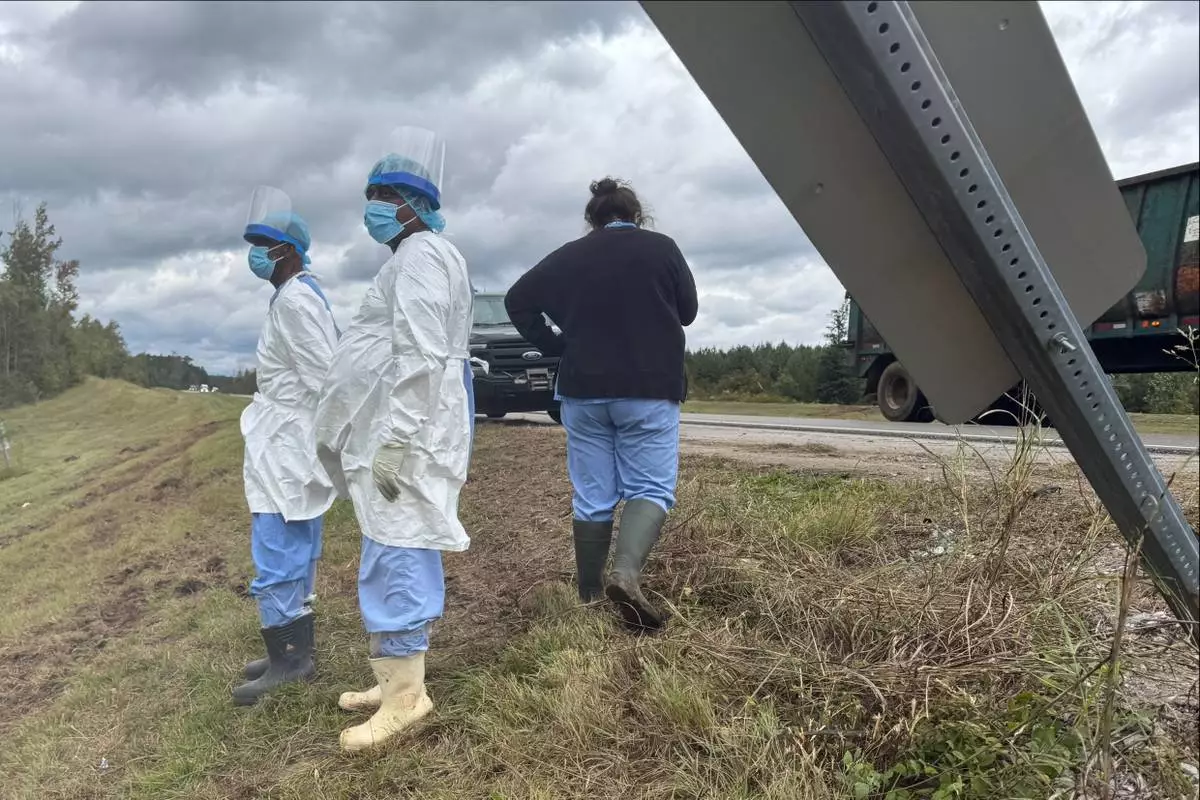
People wearing protective clothing search along a highway in Heidelberg, Miss., on Wednesday, Oct. 29, 2025, near the site of a truck which overturned Tuesday, that was carrying research monkeys. (AP Photo/Sophie Bates)
Iran reversed its decision to reopen the Strait of Hormuz and warned that it would continue to block transit through the strait as long as the U.S. blockade of Iranian ports remained in effect.
The escalating standoff over the critical choke point threatened to deepen the energy crisis roiling the global economy and push the two countries toward renewed conflict, even as mediators expressed confidence that a new deal was within reach.
The strait is closed until the U.S. blockade is lifted, Iran’s Revolutionary Guard navy said Saturday night. Hours earlier, two gunboats from Iran’s Revolutionary Guard opened fire on a tanker transiting the Strait of Hormuz, the British military’s United Kingdom Maritime Trade Operations center said. It reported that the tanker and crew were safe, without identifying the vessel or its destination.
Roughly one-fifth of the world’s oil passes through the strait and further limits would squeeze the already constrained supply, driving prices higher once again. Meanwhile, a 10-day truce between Israel and the Iran-backed Hezbollah militant group in Lebanon appeared to be holding.
The fighting in the Middle East conflict, which is approaching the two-month mark, has killed at least 3,000 people in Iran, nearly 2,300 in Lebanon, 23 civilians and 15 soldiers in Israel, and more than a dozen in Gulf Arab states. Thirteen U.S. service members have also been killed.
Here is the latest:
The far-right South American leader landed on Sunday for a three-day visit, meeting Prime Minister Benjamin Netanyahu and visiting the Western Wall of Jerusalem’s Temple Mount.
Milei is scheduled to sign new binational accords with Israel and receive a Presidential Medal from Israeli President Isaac Herzog celebrating his commitment to fighting anti-semitism, Herzog’s office said. It is at least Milei’s third visit to the Western Wall.
He has backed the United States and Israel’s decision to launch a war on Iran. Earlier this month Argentina expelled Iran’s ambassador from Buenos Aires.
Milei is among a small cohort of right-leaning leaders who have deepened ties with Netanyahu’s government even as Israel faces diplomatic isolation over wartime conduct, including in Gaza and Lebanon. Some of Argentina’s South American neighbors have cut diplomatic ties or withdrawn their ambassadors,
Speaking at the end of his Mass in Kilamba, Angola, Leo said the ceasefire between Israel and Hezbollah was a “sign of relief for the Lebanese people.”
He said: “I encourage those who have been committed to the search for a diplomatic solution to continue peace talks so that the end of hostilities throughout the Middle East becomes permanent.”
Leo said he prays for a permanent ending of hostilities in the Middle East.
The pope is on an 11-day, four-nation African journey that has been characterized by repeated appeals for peace.
Pakistani authorities have begun tightening security in the capital, Islamabad, ahead of a possible second round of ceasefire talks between the U.S. and Iran.
Authorities on Sunday deployed troops at roadside checkpoints, closed tourist sites and ordered major hotels to cancel bookings and keep facilities available.
Islamabad’s streets are largely deserted, as residents stayed home to avoid road closures seen earlier this month during the first round of talks.
While there were no formal announcements, Pakistani officials said arrangements are in place for talks in the coming days.
A regional official involved in the mediation efforts said mediators were finalizing the preparations. He said U.S. advance security teams are already on the ground. The officials spoke on condition of anonymity to discuss the preparations.
Pakistan has led mediation efforts to end the war. Its military chief visited Tehran last week, while Prime Minister Shehbaz Sharif met with regional leaders in Saudi Arabia, Qatar and Turkey.
The Israeli army says it carried out a series of strikes that killed more than 150 Hezbollah fighters.
Among those killed was Ali Rida Abbas, which it said was Hezbollah’s commander in Bint Jbeil. The southern Lebanese town and its surroundings were the site of intense clashes between Israeli troops and Hezbollah militants in the days leading up to the ceasefire.
Israel gave no evidence to support its claims, and Hezbollah didn't immediately confirm the death of its commander.
The ceasefire took effect early Friday.
Iran’s chief negotiator says his country wants “a lasting peace so that war is not repeated again.”
Parliamentary Speaker Mohammad Bagher Qalibaf made the comments in a televised interview late Saturday, a few days before a ceasefire deadline is set to expire, according to Iranian state media.
“What is fundamental for us is distrust of the United States,” he said. “At the same time, we have good intentions and seek a lasting peace — one that prevents the recurrence of war.”
He said that the Islamabad negotiations didn’t address the mistrust, but that the U.S. and Iranian negotiators “reached a more realistic understanding of one another.”
He said that the two sides achieved progress in the Islamabad talks, but disagreement remained on some key issues, including the nuclear program and the Strait of Hormuz.
“The gaps remain wide and some fundamental issues are still unresolved,” he said.
He didn’t elaborate with further details.
The Lebanese army said in a statement Sunday that it reopened the Khardali road that links the southern city of Nabatiyeh with the town of Marjayoun.
The army said that it also reopened the road that links the port city of Tyre with the village of Bourj Rahhal. The army is also working on reopening other roads, including a bridge on the Litani River in the village of Tayr Filsay.
During Israel’s invasion of southern Lebanon over the past several weeks, Israel’s air force has destroyed several bridges on the river.
After a 10-day ceasefire was declared as of midnight Thursday, the Lebanese army and the Litani Authority have been working on putting up temporary bridges to replace the destroyed ones.
Iran’s parliamentary Speaker Mohammed Bagher Qalibaf says the Strait of Hormuz will remain closed as long as the U.S. imposes a naval blockade on Iran.
“It is impossible for others to pass through the Strait of Hormuz while we cannot,” he said in televised comments aired by Iranian semiofficial media late Saturday.
Qalibaf, who is Iran’s chief negotiator with the United States, said that the strait is now under Iran’s control, linking the choke point’s reopening to the U.S. lifting of its blockade.
“If the U.S. does not lift the blockade, traffic in the Strait of Hormuz will definitely be restricted,” he said.
He said that the ceasefire was on verge of collapse when the U.S. attempted to mine-clear the strait.
He said Iran viewed the U.S. attempt as a violation of the ceasefire.
“The situation escalated to the point of conflict but the enemy retreated,” he said.
Israel’s military says another soldier died in combat in southern Lebanon, the second death announced in under 12 hours.
It brought the total number of soldiers killed in Lebanon to 15, and was the second soldier killed in combat since the ceasefire.
The military said that another soldier was badly wounded, along with four moderately wounded and four slightly injured.
The navy of Iran’s Revolutionary Guard Corps said that it extended the closure to the corridor it had earlier designated for the safe passage of vessels through the strategic waterway and declared the strait fully closed until the U.S. blockade on Iranian ports and ships is lifted.
On Friday, Iran said that vessels could move through the strait in coordination with it and against the payment of a toll.
But in a statement late Saturday carried by Iran’s state media, the navy warned that any violating vessel would be targeted.
Iran considers the U.S. blockade a violation of the ceasefire between the two countries. Two vessels were attacked earlier on Saturday in the Strait of Hormuz and off Oman’s coast, at least one of them by Iranian gunboats.
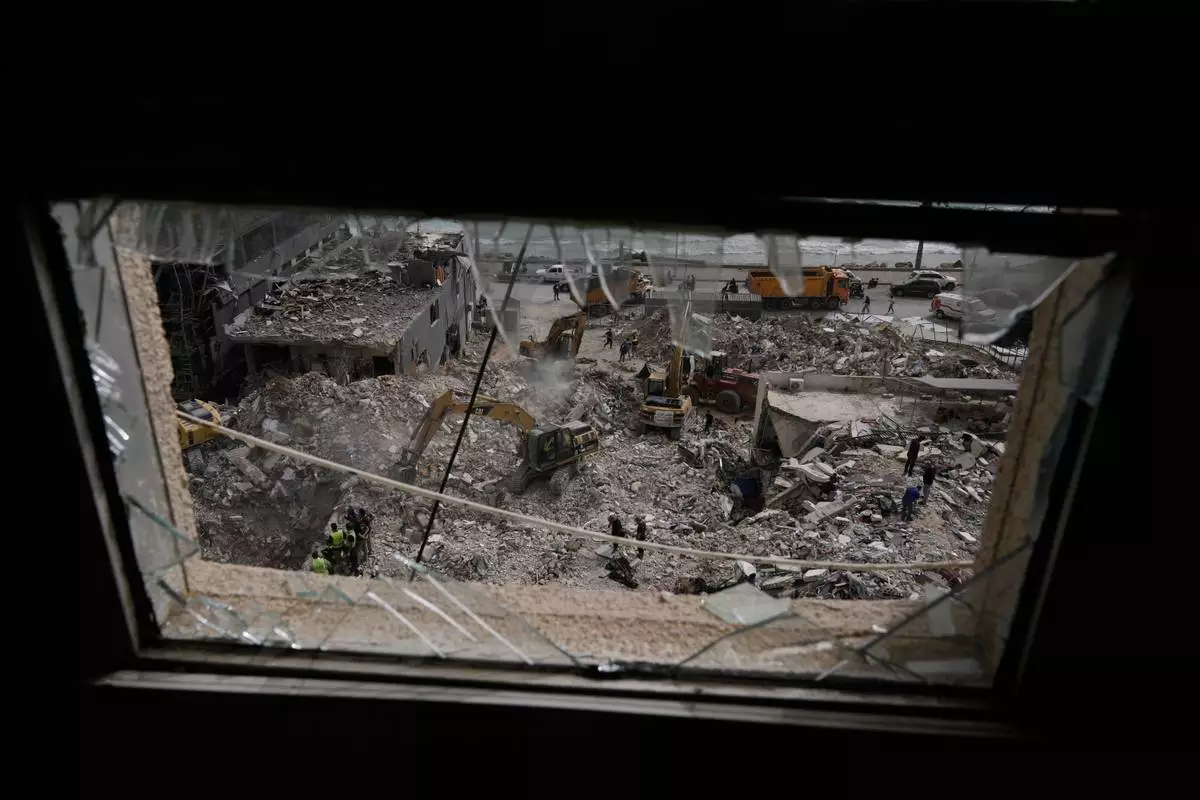
Excavators remove rubble from destroyed buildings that were hit on Thursday by Israeli airstrikes, as they keep searching for victims in Tyre city, southern Lebanon, Saturday, April 18, 2026. (AP Photo/Bilal Hussein)
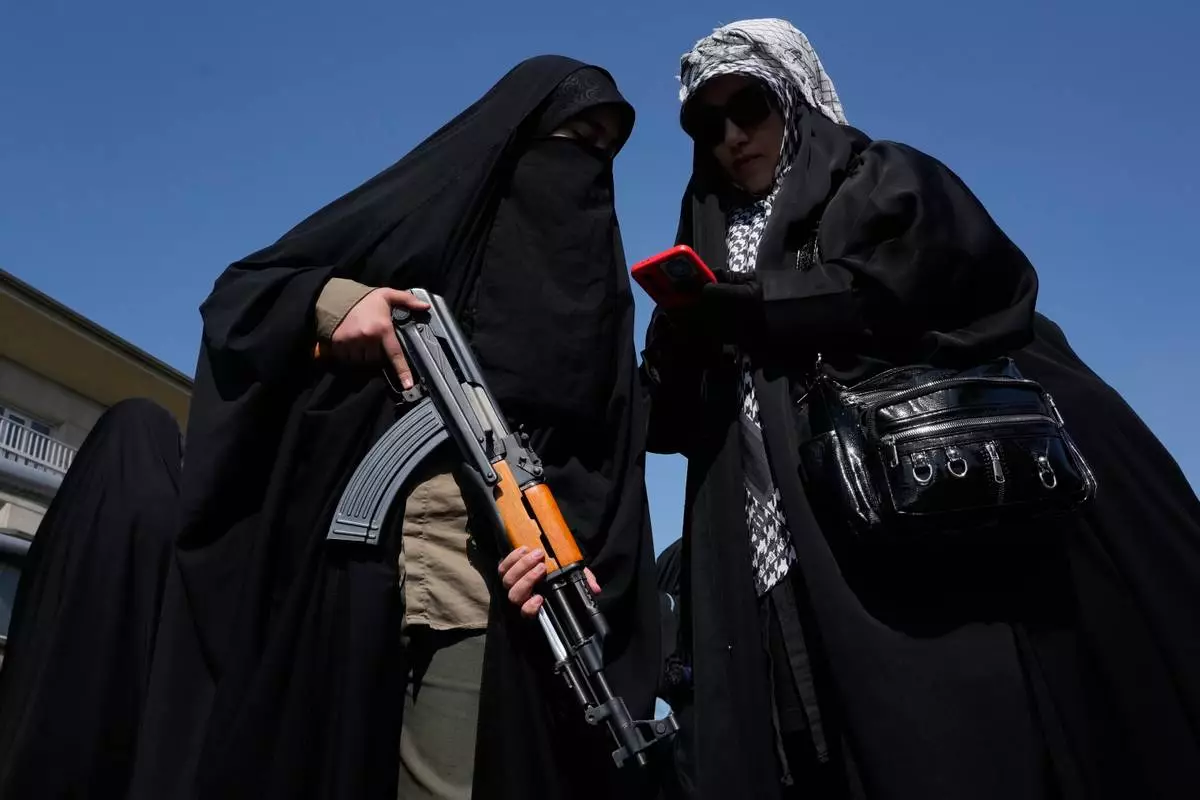
A woman member of the Basij paramilitary, affiliated with Iran's Revolutionary Guard, holds her gun during a state-organized rally in support of the supreme leader marking National Girl's Day in Tehran, Iran, Friday, April 17, 2026. (AP Photo/Vahid Salemi)
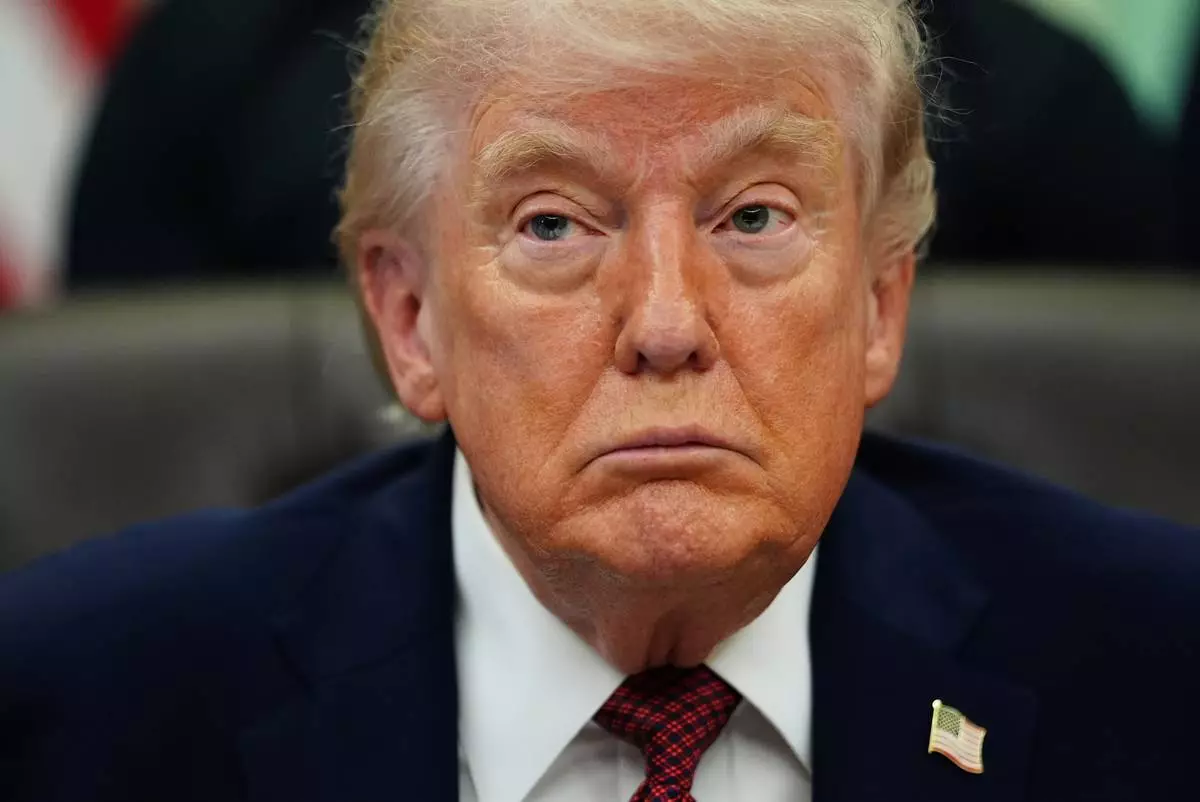
President Donald Trump listens to speeches before signing an executive order in the Oval Office of the White House, Saturday, April 18, 2026, in Washington. (AP Photo/Julia Demaree Nikhinson)
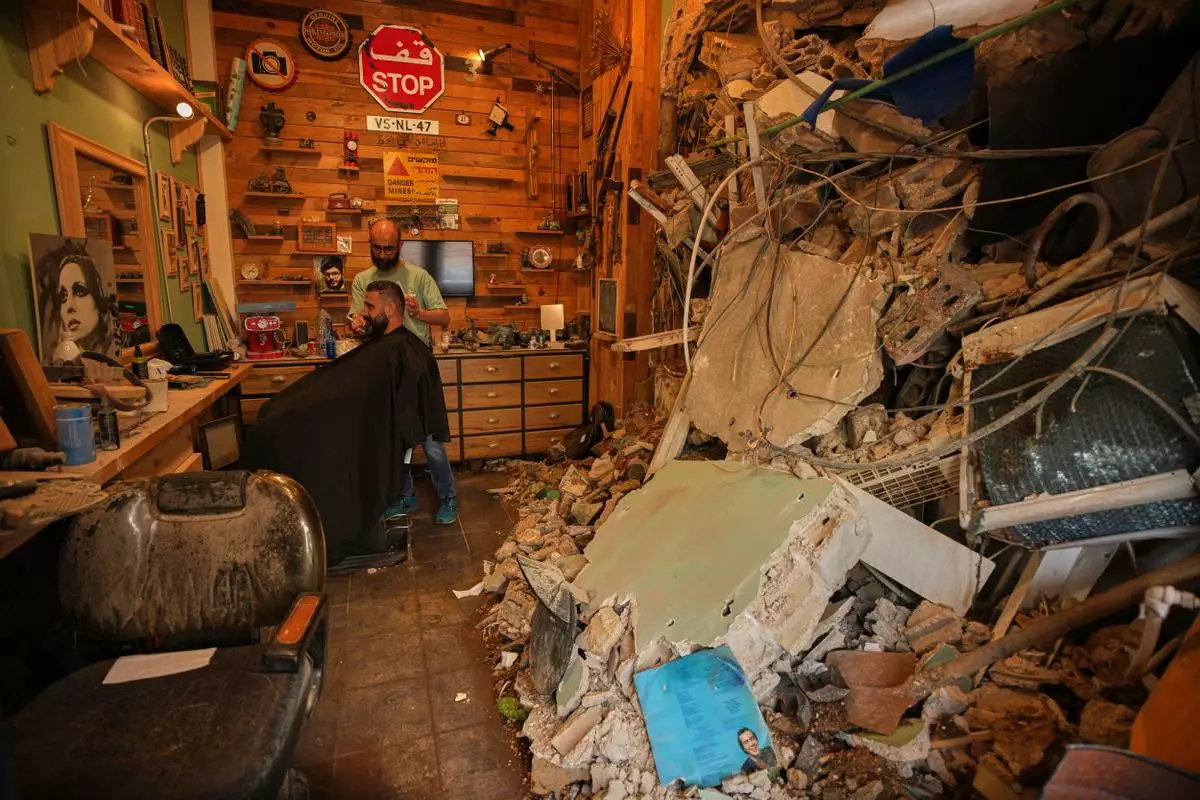
Barber Mohammad Mehdi cuts the hair of his client Ayman Al Zein inside his shop, which was damaged in an Israeli airstrike that also damaged Al Zein's shop, in Dahiyeh, Beirut's southern suburbs, Lebanon, Saturday, April 18, 2026. (AP Photo/Hassan Ammar)
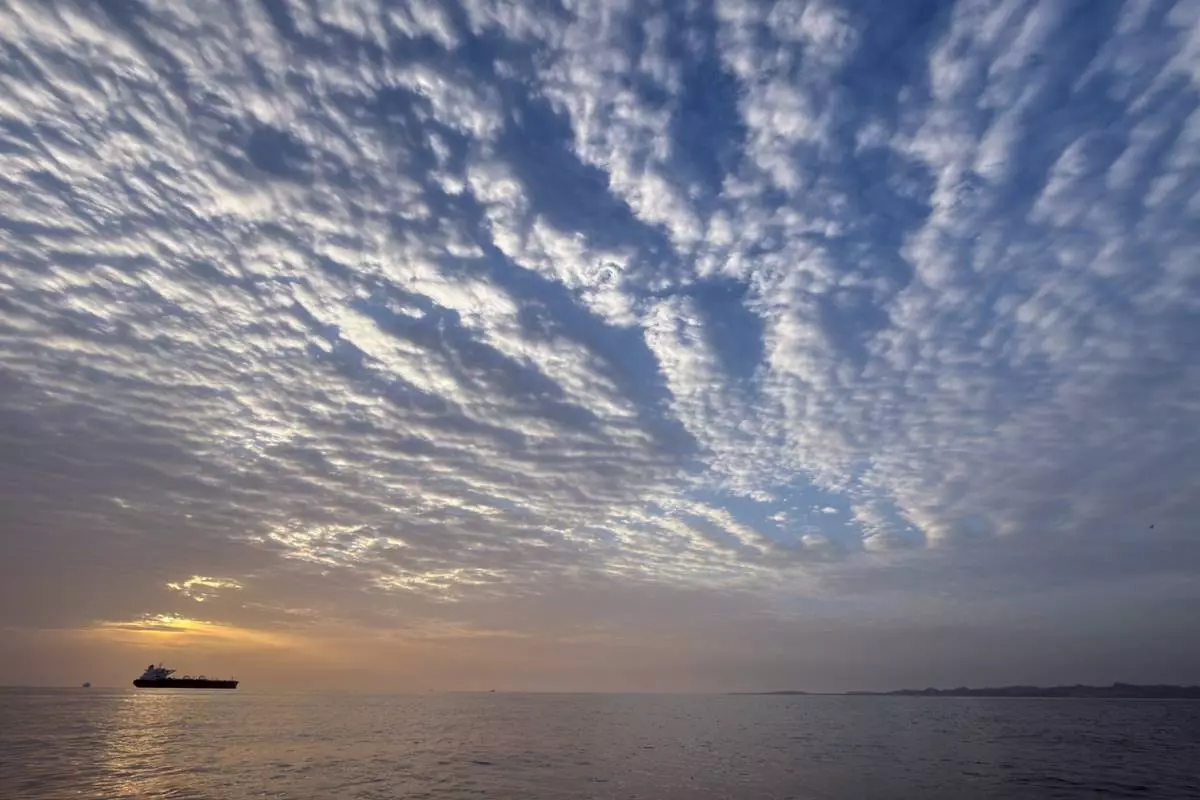
The sun rises behind a tanker anchored in the Strait of Hormuz off the coast of Qeshm Island, Iran, Saturday, April 18, 2026. (AP Photo/Asghar Besharati)