China has successfully achieved the first-ever thorium-to-uranium nuclear fuel conversion in an experimental Thorium Molten Salt Reactor (TMSR), and obtained valid experimental data following thorium fuel loading, confirming the technical feasibility of thorium utilization in a molten-salt reactor nuclear energy system, said the Shanghai Institute of Applied Physics (SINAP) of the Chinese Academy of Sciences on Saturday.
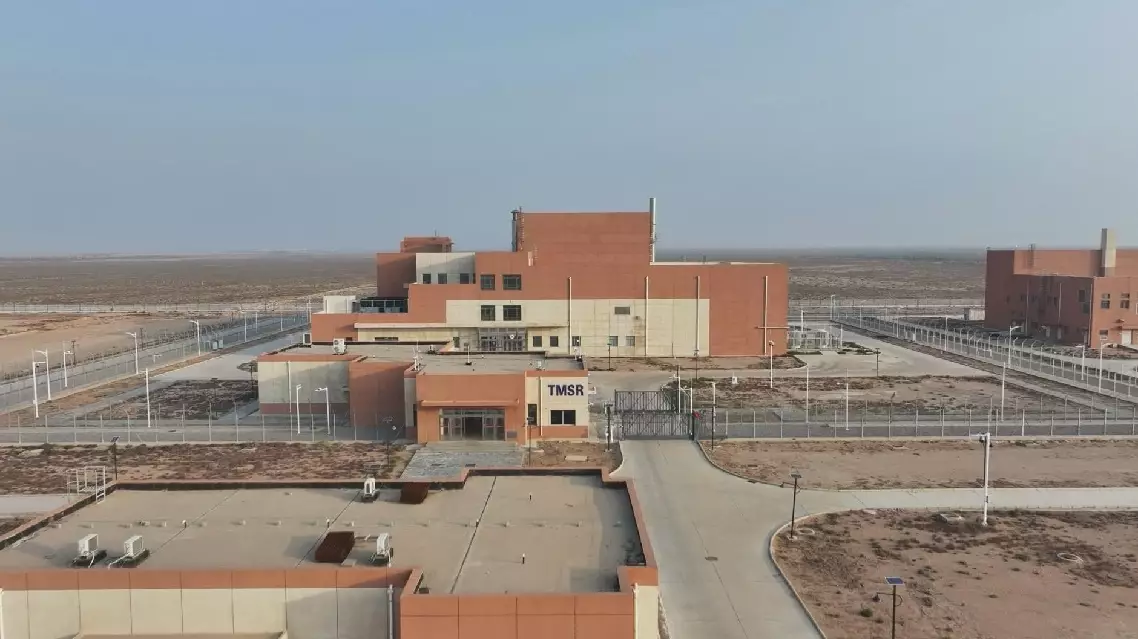
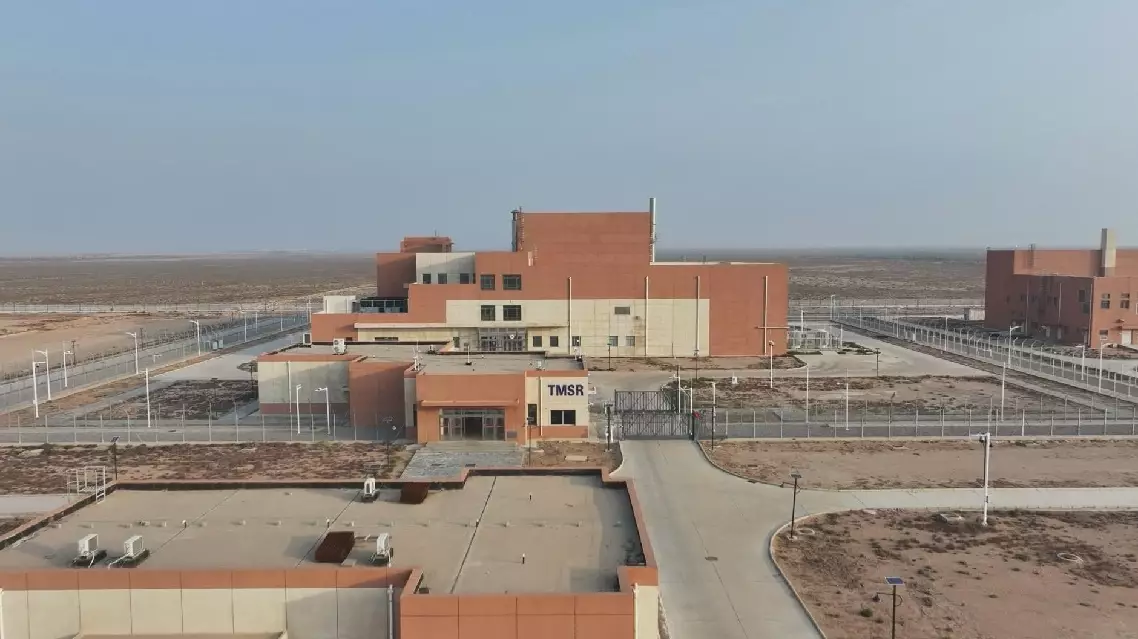
The experimental TMSR, which was built by SINAP in collaboration with other Chinese institutions in Wuwei City of northwest China's Gansu Province, is currently the only operational molten-salt reactor in the world loaded with thorium fuel. The realization of thorium-uranium conversion marks a milestone in TMSR development, providing core technical support and a feasible solution for China's large-scale development and utilization of thorium resources, and for the future progress of advanced nuclear energy systems.
Molten-salt reactors are fourth-generation advanced nuclear energy systems that use high-temperature molten salt as a coolant. They boast inherent safety features, cool without water, run at atmospheric pressure, and deliver a high-temperature output. These features mean the reactors are widely recognized as the most suitable type for thorium resource utilization in nuclear energy production.
"Featuring thorium-uranium conversion, it is the first time in the world that thorium was added to a molten-salt reactor, demonstrating the feasibility of our thorium resources utilization. It is also a unique thorium-uranium cycle research platform in the world, laying a solid foundation for the construction of demonstration reactors and relevant commercial development in the future," said Dai Zhimin, director of SINAP.
This technological route aligns particularly well with China's abundant thorium reserves. It also allows for deep integration with industries such as solar power, wind power, high-temperature molten-salt energy storage, high-temperature hydrogen production, coal chemical engineering and petrochemical engineering, facilitating the construction of a complementary, low-carbon, integrated energy system.
According to SINAP, the TMSR program was launched in 2011, achieving major progress from laboratory research to the engineering verification of core materials, equipment and technologies. With domestically developed core equipment and an independent supply chain, China has established complete TMSR technology and industrial chains in basic terms.
SINAP said that it will work with leading energy companies to consolidate the TMSR industrial and supply chains, and accelerate technology iteration and engineering application. The ultimate goal is to construct a 100-megawatt demonstration project and realize its demonstration application by 2035. The TMSR is a clean and efficient energy system, which can combine with high-temperature molten salt energy storage, high-temperature hydrogen production, solar energy, wind energy, and coal, gas and oil chemical industries to form a composite energy system featuring multi-energy mutual complementarity and low carbon.
"Wind energy and solar energy are subject to weather conditions. Therefore, if we build molten-salt reactors in inland areas, they can play a role in balancing and stabilizing the power grid. So, we chose to build the reactor in Wuwei, Gansu Province, to create a multi-energy mutual complementation system," said Li Qingnuan, deputy director of SINAP.
"Thorium is related to rare earths which are in abundant supply in China, which means a sufficient reserve of thorium. Therefore, the research on thorium-based molten salt reactors is highly suitable for our national conditions. If all the electricity in our country were generated with thorium resources, it could last thousands of years, fully ensuring our energy security and independence," Dai said.
China achieves thorium-uranium nuclear fuel conversion in molten-salt reactor
China achieves thorium-uranium nuclear fuel conversion in molten-salt reactor