Chinese tech giant Tencent and the First Affiliated Hospital of Guangzhou Medical University in south China have launched a powerful artificial intelligence model that can identify gene mutations in just one minute, enhancing prospects for early diagnosis and treatment of lung cancer.
The model, DeepGEM, was trained on the world's largest dataset comprising 9,000 samples and achieves an accuracy rate of 80 to 90 percent in identifying lung cancer gene mutations.
According to Liang Wenhua, a professor at First Affiliated, current genetic testing typically requires significant time and costs between 10,000 and 20,000 yuan (about 1,406-2,812 U.S. dollars), making it unaffordable for many patients.
"Gene testing is essential before formulating a corresponding precision treatment plan for lung cancer. The challenges with genetic testing are that it is relatively slow and expensive. Our current NGS (Next Generation Sequencing) gene testing generally takes 7 to 14 days," he said.
By reducing both the time and cost of testing, DeepGEM offers new hope for patients, particularly those in rural areas.
Recently, researchers are focused on further validating and improving the model's accuracy in genetic mutation detection.
"We need more and richer data to train, validate, and confirm its effectiveness," said Li Yinghua, vice president of Guangzhou KingMed Diagnostics Group.
This leap in medical AI solutions comes as China focuses on technological independence in its next Five-Year Plan (2026-2030), with goals centered on promoting the construction of a "Digital China" and advancing the Healthy China Initiative -- a national drive to promote the overall health of the people.
"As the upcoming launch of China's 15th Five-Year Plan proposes building a 'Digital China,' we aim to enhance public services, healthcare, education, urban governance, and many other aspects through the process," said Cao Zhongxiong, assistant president of the China Development Institute.
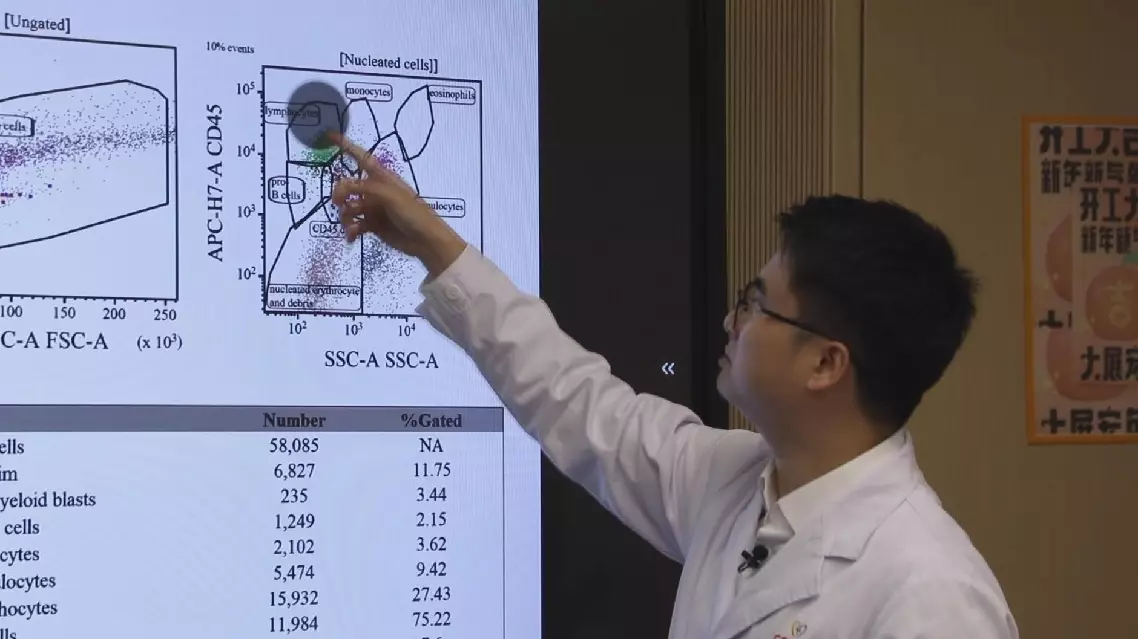
Chinese hospital launches powerful AI model with sub-60-second gene mutation testing capability