Skip to Content Facebook Feature Image

Abu Dhabi hosts oil summit as OPEC+ halts production hikes planned for first quarter of 2026

News

Abu Dhabi hosts oil summit as OPEC+ halts production hikes planned for first quarter of 2026
News

News

Abu Dhabi hosts oil summit as OPEC+ halts production hikes planned for first quarter of 2026

2025-11-03 15:51 Last Updated At:11-09 15:55

ABU DHABI, United Arab Emirates (AP) — Abu Dhabi opened a major oil summit Monday with officials offering bullish optimism that power demands for artificial intelligence and global aviation will boost energy prices, just hours after OPEC+ paused production increases planned for next year.

The comments at the annual Abu Dhabi International Petroleum Exhibition and Conference in the Emirati capital highlighted the contradictions in the market and in the United Arab Emirates, a major oil producer that hosted the United Nations COP28 climate talks in 2023.

More Images
UAE Minister of Industry and Advanced Technology and Managing Director of state-run Abu Dhabi National Oil Co. (ADNOC) Sultan al-Jaber speaks during the inaugural session of annual Abu Dhabi International Petroleum Exhibition and Conference (ADIPEC) in Abu Dhabi, United Arab Emirates, Monday, Nov. 3, 2025. (AP Photo/Altaf Qadri)

UAE Minister of Industry and Advanced Technology and Managing Director of state-run Abu Dhabi National Oil Co. (ADNOC) Sultan al-Jaber speaks during the inaugural session of annual Abu Dhabi International Petroleum Exhibition and Conference (ADIPEC) in Abu Dhabi, United Arab Emirates, Monday, Nov. 3, 2025. (AP Photo/Altaf Qadri)

UAE Minister of Industry and Advanced Technology and Managing Director of state-run Abu Dhabi National Oil Co. (ADNOC) Sultan al-Jaber speaks during the inaugural session of annual Abu Dhabi International Petroleum Exhibition and Conference (ADIPEC) in Abu Dhabi, United Arab Emirates, Monday, Nov. 3, 2025. (AP Photo/Altaf Qadri)

UAE Minister of Industry and Advanced Technology and Managing Director of state-run Abu Dhabi National Oil Co. (ADNOC) Sultan al-Jaber speaks during the inaugural session of annual Abu Dhabi International Petroleum Exhibition and Conference (ADIPEC) in Abu Dhabi, United Arab Emirates, Monday, Nov. 3, 2025. (AP Photo/Altaf Qadri)

UAE Minister of Industry and Advanced Technology and Managing Director of state-run Abu Dhabi National Oil Co. (ADNOC) Sultan al-Jaber speaks during the inaugural session of annual Abu Dhabi International Petroleum Exhibition and Conference (ADIPEC), in Abu Dhabi, United Arab Emirates, Monday, Nov. 3, 2025. (AP Photo/Altaf Qadri)

UAE Minister of Industry and Advanced Technology and Managing Director of state-run Abu Dhabi National Oil Co. (ADNOC) Sultan al-Jaber speaks during the inaugural session of annual Abu Dhabi International Petroleum Exhibition and Conference (ADIPEC), in Abu Dhabi, United Arab Emirates, Monday, Nov. 3, 2025. (AP Photo/Altaf Qadri)
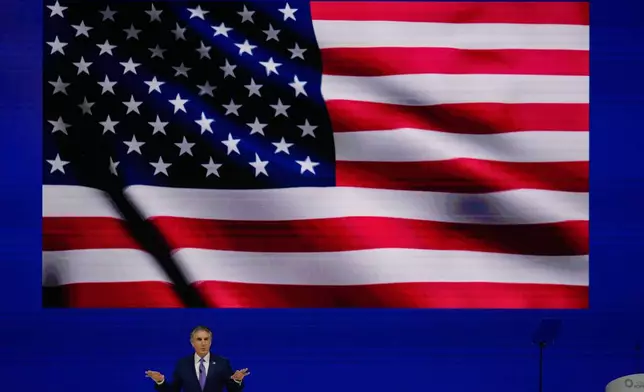
Delegates are silhouetted against a screen as they attend the inaugural session of the annual Abu Dhabi International Petroleum Exhibition and Conference (ADIPEC), in Abu Dhabi, United Arab Emirates, Monday, Nov. 3, 2025. (AP Photo/Altaf Qadri)

Delegates are silhouetted against a screen as they attend the inaugural session of the annual Abu Dhabi International Petroleum Exhibition and Conference (ADIPEC), in Abu Dhabi, United Arab Emirates, Monday, Nov. 3, 2025. (AP Photo/Altaf Qadri)

CORRECTS NAME SPELLING - U.S. Interior Secretary Doug Burgum speaks during the inaugural session of annual Abu Dhabi International Petroleum Exhibition and Conference (ADIPEC), in Abu Dhabi, United Arab Emirates, Monday, Nov. 3, 2025. (AP Photo/Altaf Qadri)

CORRECTS NAME SPELLING - U.S. Interior Secretary Doug Burgum speaks during the inaugural session of annual Abu Dhabi International Petroleum Exhibition and Conference (ADIPEC), in Abu Dhabi, United Arab Emirates, Monday, Nov. 3, 2025. (AP Photo/Altaf Qadri)

Sultan al-Jaber, the head of the state-run Abu Dhabi National Oil Co. who led COP28, described the energy market as needing “reinforcement, not replacement.” U.S. Interior Secretary Doug Burgum applauded al-Jaber's remarks and criticized what he described as “a set of policies that have been driven by an ideology around climate extremism.”

“The demand for power is going to go up and up and up," Burgum said. "Today’s the day to announce that there is no energy transition. There is only energy addition.”

On Sunday, OPEC+ met and decided to increase its production by an additional 137,000 barrels of oil beginning in December. However, it said other adjustments planned in January, February and March of next year would be paused “due to seasonality.”

OPEC+ includes the core members of the cartel, as well as nations outside of the group led by Russia.

Benchmark Brent crude sold Monday around $65 a barrel, down from a post-COVID high of some $115 a barrel after Russia’s full-scale invasion of Ukraine in 2022. It had fallen to $60 a barrel in recent days over concerns that the market had too much production.

“Yes, OPEC+ is blinking, but it’s a calculated move,” said Jorge León, the head of geopolitical analysis at Rystad Energy. “Sanctions on Russian producers have injected a new layer of uncertainty into supply forecasts, and the group knows that overproducing now could backfire later. By pausing, OPEC+ is protecting prices, projecting unity and buying time to see how sanctions play out on Russian barrels.”

Suhail al-Mazerouei, the Emirates' energy and infrastructure minister, however, dismissed any idea long-term of too much oil being in the market.

“I’m not going to talk about a an oversupply scenario," he said. "I can’t see that. I can’t justify that. And I think all of what we are seeing is more demand.”

Burgum, a former Republican governor of North Dakota and the chair of U.S. President Donald Trump’s National Energy Dominance Council, was on hand for the Abu Dhabi oil summit on Monday. He praised the partnership oil-producing Gulf Arab states have with America, saying: "We share a belief about energy policy.”

“People have described the climate as an existential threat. Again, to help people understand U.S. energy policy, we are focused on two substantial threats. One is Iran could not have a nuclear weapon," Burgum said. “But the second thing is that the free world cannot lose the AI arms race. ... You need chips, you need software models and you need more electricity.”

The average price for a gallon of gasoline in the U.S., a key economic and political indicator in the country, stood at $3.03 on Monday. Trump also has criticized both OPEC+ and Saudi Arabia at times over the price per barrel, particularly in his first term.

Meanwhile, both the United States and the United Kingdom implemented new oil sanctions targeting Russia over its war on Ukraine. Those sanctions targets included Rosneft and the Russian oil company Lukoil, whose red-and-white logo hung over the annual oil conference. The UAE has maintained close ties to Russia despite the war, but has served as a key interlocutor between Kyiv and Moscow to negotiate prisoner exchanges.

“The Russian and Ukraine war is being funded by energy sales,” Burgum said on a stage that had flashed the Lukoil logo before his remarks.

The oil conference comes after the UAE hosted COP28. Those talks ended with a call by nearly 200 countries to move away from planet-warming fossil fuels — the first time the conference made that crucial pledge. Scientists have called for drastically slashing the world’s emissions by nearly half in the coming years to limit global warming to 1.5 degrees Celsius (2.7 degrees Fahrenheit) compared with pre-industrial times.

But the UAE as a whole still plans to increase its production capacity of oil to 5 million barrels a day in the coming years as it pursues more clean energy at home.

Qatari Energy Minister Saad Sherida al-Kaabi repeated a warning to the European Union that his nation could halt their liquefied natural gas shipments — something crucial due to Russian LNG being banned — over its Corporate Sustainability Due Diligence Directive. That seeks to have companies pursue net-zero emission goals.

“I think, you know, a small part of this conference, unfortunately, changes with politics depending on when it was President Biden and President Trump and so on," al-Kaabi said. "I think that they're not looking at facts and realities and I think we shouldn't be following politics when we look at the lives of people for the future and how much energy we need in the future.”
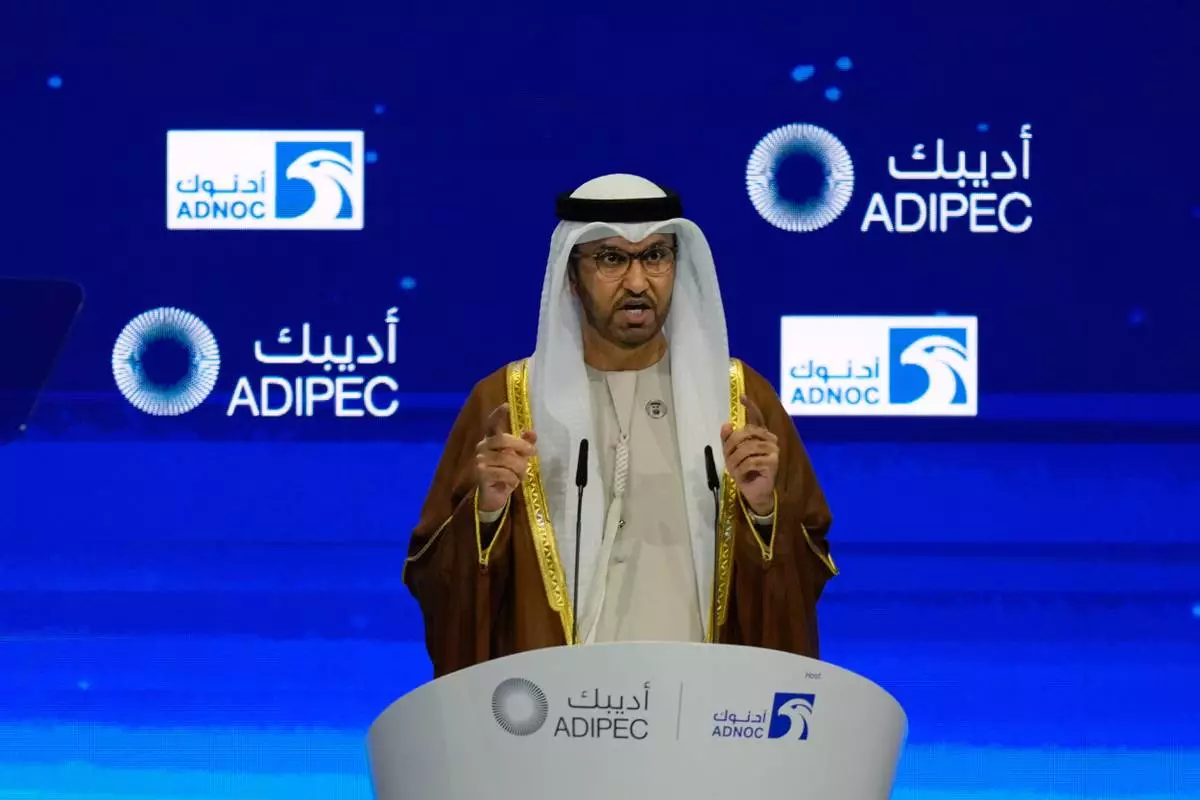
UAE Minister of Industry and Advanced Technology and Managing Director of state-run Abu Dhabi National Oil Co. (ADNOC) Sultan al-Jaber speaks during the inaugural session of annual Abu Dhabi International Petroleum Exhibition and Conference (ADIPEC) in Abu Dhabi, United Arab Emirates, Monday, Nov. 3, 2025. (AP Photo/Altaf Qadri)
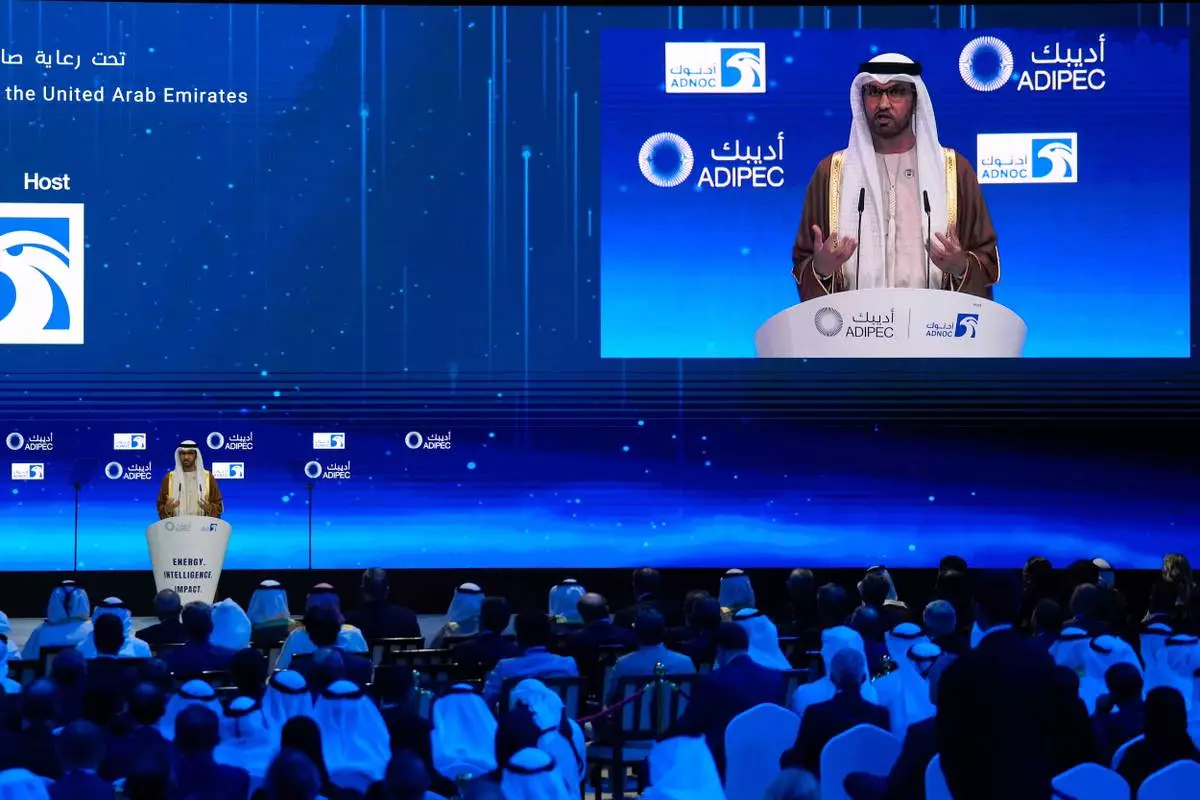
UAE Minister of Industry and Advanced Technology and Managing Director of state-run Abu Dhabi National Oil Co. (ADNOC) Sultan al-Jaber speaks during the inaugural session of annual Abu Dhabi International Petroleum Exhibition and Conference (ADIPEC) in Abu Dhabi, United Arab Emirates, Monday, Nov. 3, 2025. (AP Photo/Altaf Qadri)
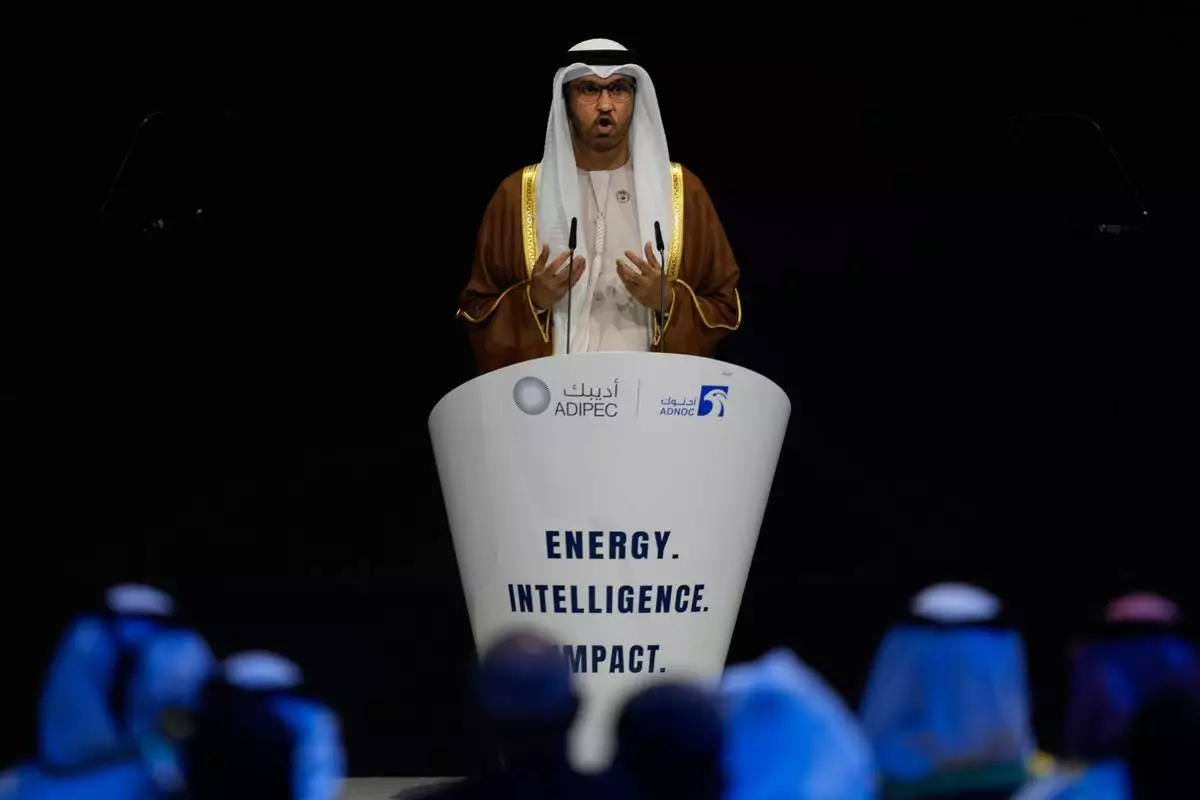
UAE Minister of Industry and Advanced Technology and Managing Director of state-run Abu Dhabi National Oil Co. (ADNOC) Sultan al-Jaber speaks during the inaugural session of annual Abu Dhabi International Petroleum Exhibition and Conference (ADIPEC) in Abu Dhabi, United Arab Emirates, Monday, Nov. 3, 2025. (AP Photo/Altaf Qadri)

UAE Minister of Industry and Advanced Technology and Managing Director of state-run Abu Dhabi National Oil Co. (ADNOC) Sultan al-Jaber speaks during the inaugural session of annual Abu Dhabi International Petroleum Exhibition and Conference (ADIPEC) in Abu Dhabi, United Arab Emirates, Monday, Nov. 3, 2025. (AP Photo/Altaf Qadri)

UAE Minister of Industry and Advanced Technology and Managing Director of state-run Abu Dhabi National Oil Co. (ADNOC) Sultan al-Jaber speaks during the inaugural session of annual Abu Dhabi International Petroleum Exhibition and Conference (ADIPEC), in Abu Dhabi, United Arab Emirates, Monday, Nov. 3, 2025. (AP Photo/Altaf Qadri)

UAE Minister of Industry and Advanced Technology and Managing Director of state-run Abu Dhabi National Oil Co. (ADNOC) Sultan al-Jaber speaks during the inaugural session of annual Abu Dhabi International Petroleum Exhibition and Conference (ADIPEC), in Abu Dhabi, United Arab Emirates, Monday, Nov. 3, 2025. (AP Photo/Altaf Qadri)
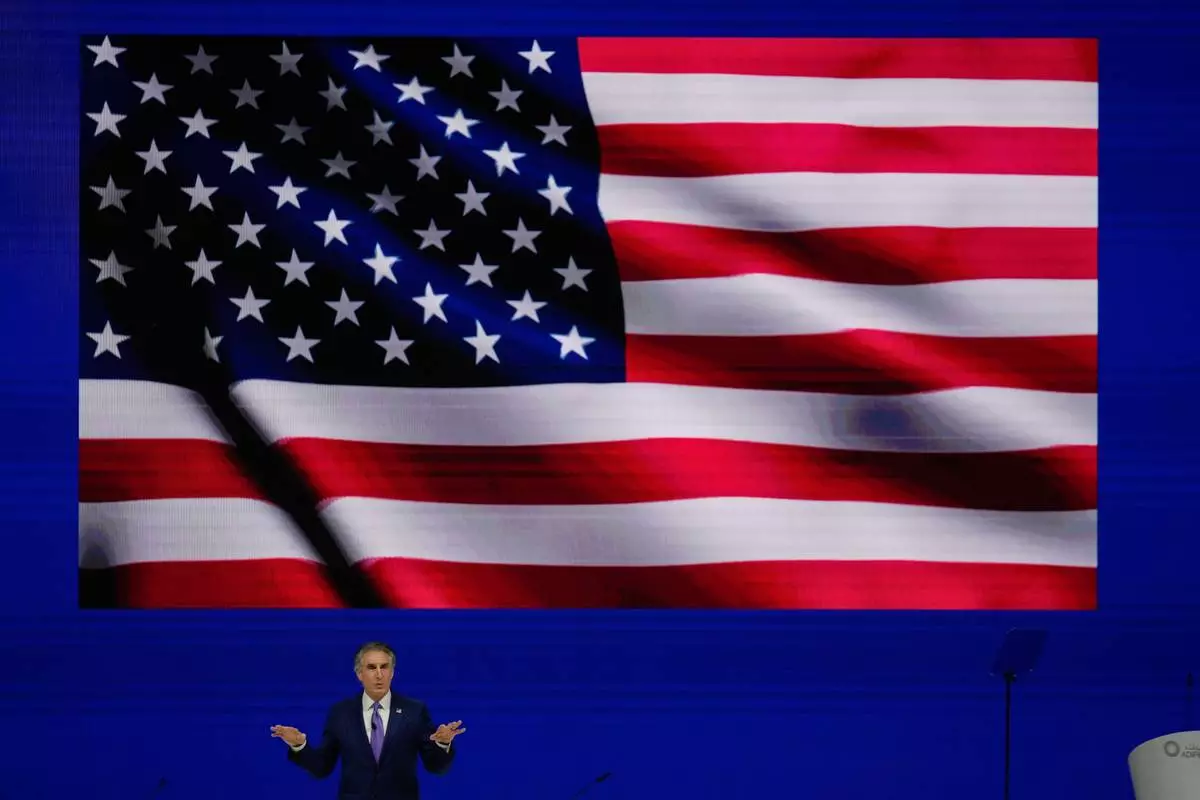
Delegates are silhouetted against a screen as they attend the inaugural session of the annual Abu Dhabi International Petroleum Exhibition and Conference (ADIPEC), in Abu Dhabi, United Arab Emirates, Monday, Nov. 3, 2025. (AP Photo/Altaf Qadri)

Delegates are silhouetted against a screen as they attend the inaugural session of the annual Abu Dhabi International Petroleum Exhibition and Conference (ADIPEC), in Abu Dhabi, United Arab Emirates, Monday, Nov. 3, 2025. (AP Photo/Altaf Qadri)
CORRECTS NAME SPELLING - U.S. Interior Secretary Doug Burgum speaks during the inaugural session of annual Abu Dhabi International Petroleum Exhibition and Conference (ADIPEC), in Abu Dhabi, United Arab Emirates, Monday, Nov. 3, 2025. (AP Photo/Altaf Qadri)
CORRECTS NAME SPELLING - U.S. Interior Secretary Doug Burgum speaks during the inaugural session of annual Abu Dhabi International Petroleum Exhibition and Conference (ADIPEC), in Abu Dhabi, United Arab Emirates, Monday, Nov. 3, 2025. (AP Photo/Altaf Qadri)

NASHVILLE, Tenn. (AP) — As civil rights advocates protest, Republican lawmakers in several Southern states are seizing on the opportunity afforded by a U.S. Supreme Court ruling to redraw congressional districts ahead of the November midterm elections.

The latest state to jump on the redistricting bandwagon is Tennessee, where a special legislative session is to begin Tuesday, a day after a similar session kicked off in Alabama. In Louisiana, lawmakers also are making plans for new U.S. House districts after the Supreme Court last week struck down the state's current map.

The high court’s ruling said Louisiana relied too heavily on race when creating a second Black-majority House district as it attempted to comply with the Voting Rights Act. The ruling last week significantly altered a decades-old understanding of the law, giving Republicans in various states grounds to try to eliminate majority-Black districts that have elected Democrats.

It could lessen congressional representation for Black Americans and other minorities, reversing decades of gains in minority voting rights.

President Donald Trump has been encouraging more states to join in redistricting as Republicans seek to hold on to their narrow House majority in this year’s elections.

Alabama lawmakers heard testimony Tuesday on legislation that would allow a special congressional primary, if the Supreme Court clears the way for the state to change its U.S. House districts.

In light of the court's ruling on Louisiana's districts, Alabama officials have asked the high court to set aside a judicial order to use a U.S. House map that includes two districts with a substantial number of Black voters and instead let the state revert to a map previously passed by Republican lawmakers. That map could help the GOP win at least one of those two seats currently held by Democrats.

Alabama's primaries are scheduled for May 19. If the Supreme Court grants the state's request after or too close to the primary, the legislation under consideration would ignore the results of that primary and direct the governor to schedule a new primary under the revised districts.

“This is the voice of the people,” Alabama House Speaker Nathaniel Ledbetter said while promoting the Republican plan. “We had three judges determine how five million people were supposed to vote, and I don’t think that’s the way.”

During a House committee hearing, several Black residents urged lawmakers not to change the current congressional districts.

“Representation matters — not just politically but in access, in power and in who gets to be heard,” said Eliza Jane Franklin, of rural Barbour County.

Republican Gov. Bill Lee called Tennessee lawmakers into a special session to consider a plan that could break up the state’s lone Democratic-held U.S. House district, centered on the majority-Black city of Memphis. The move comes after pressure from Trump.

The candidate qualifying period in Tennessee ended in March, and the primary election is scheduled for Aug. 6.

Some clergy members have denounced the plan to split Memphis’ congressional district, and Martin Luther King III sent a letter to Tennessee legislative leaders expressing “grave concern” about it.

“This decision undermines the work that my father, Dr. Martin Luther King, Jr., carried out to help secure passage of the Voting Rights Act,” he wrote, noting that his father was assassinated in Memphis. He added: “Do not dismantle the only Congressional district that provides Black voters in Memphis a fair opportunity to have a voice in our democracy. Do not take this nation back to the days of Jim Crow.”

After last week’s Supreme Court decision, Louisiana moved to delay its May 16 congressional primary to allow time for lawmakers to approve new U.S. House districts.

Louisiana state Sen. Caleb Kleinpeter, a Republican who chairs a Senate committee tasked with redistricting, told The Associated Press that his committee plans to hold a public hearing Friday. Kleinpeter said lawmakers are still weighing their options, including bills that would eliminate one or both of the state’s two majority-Black Congressional districts.

Democrats and civil rights groups have filed several lawsuits challenging the suspension of Louisiana's congressional primary. They are encouraging people in Louisiana — where early voting already is underway — to go ahead and cast votes in the congressional primaries in case courts later allow them to be counted.

Legislative voting districts typically are redrawn only once a decade, after a census, to account for population changes. But Trump urged Texas Republicans last year to redraw U.S. House districts to give the party an advantage. Democrats in California responded by doing the same, and then other states joined in.

Florida became the eighth state to enact new House districts when Republican Gov. Ron DeSantis announced on Monday he had signed a redrawn map passed by the GOP-controlled Legislature. It could help Republicans win as many as four additional House seats. The new map was immediately challenged in court as a partisan gerrymander that violates a Florida constitutional provision against drawing districts that favor one political party over another.

All told, Republicans think they could gain as many as 13 seats from new congressional districts in five states, while Democrats think they could pick up as many as 10 seats from new districts adopted in three states. The newly proposed redistricting in Southern states could add to the Republicans’ tally.

Chandler reported from Montgomery, Alabama, and Lieb from Jefferson City, Missouri. Associated Press writers Jack Brook in New Orleans and Nicholas Riccardi in Denver contributed to this report.

A woman protests against a special session of the state legislature to redraw U.S. Congressional voting maps Tuesday, May 5, 2026, in Nashville, Tenn. (AP Photo/George Walker IV)

A woman protests against a special session of the state legislature to redraw U.S. Congressional voting maps Tuesday, May 5, 2026, in Nashville, Tenn. (AP Photo/George Walker IV)

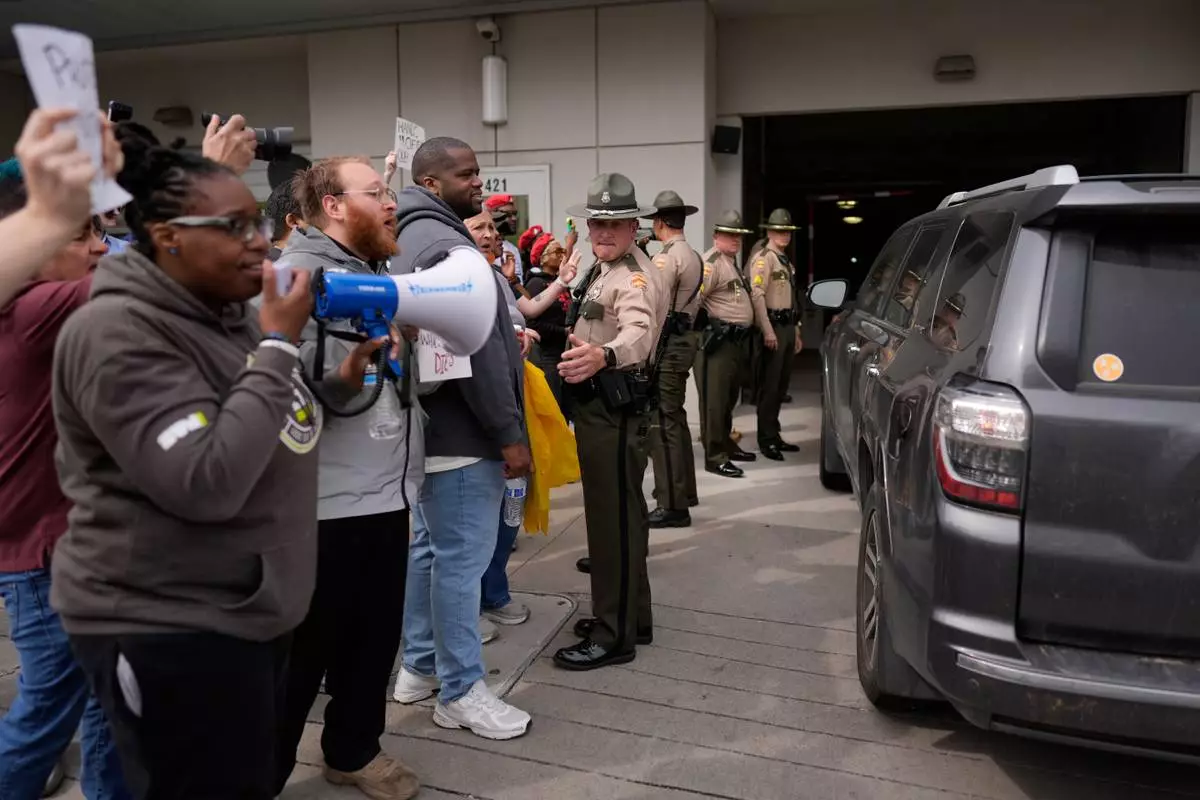
People protest against a special session of the state legislature to redraw U.S. Congressional voting maps Tuesday, May 5, 2026, in Nashville, Tenn. (AP Photo/George Walker IV)

People protest against a special session of the state legislature to redraw U.S. Congressional voting maps Tuesday, May 5, 2026, in Nashville, Tenn. (AP Photo/George Walker IV)

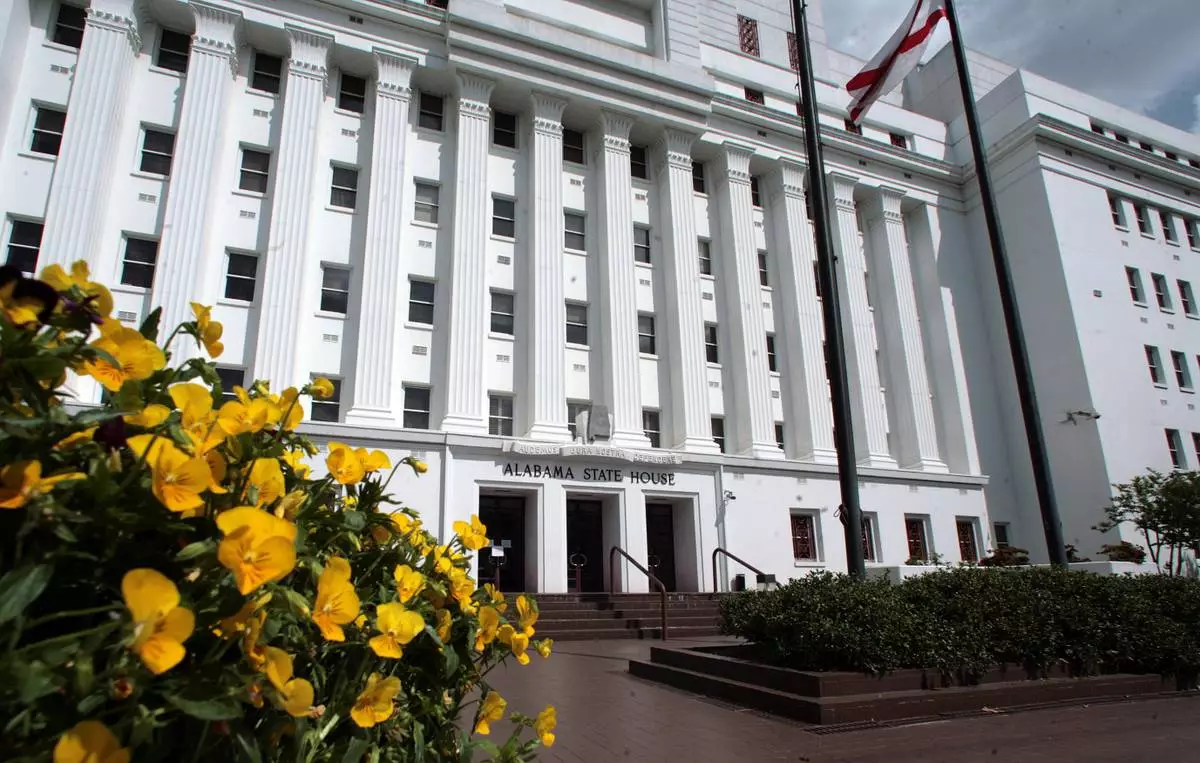
FILE - Pansies bloom in front of the Alabama Statehouse in Montgomery, Ala., April 11, 2008. (AP Photo/Dave Martin, File)

FILE - Pansies bloom in front of the Alabama Statehouse in Montgomery, Ala., April 11, 2008. (AP Photo/Dave Martin, File)

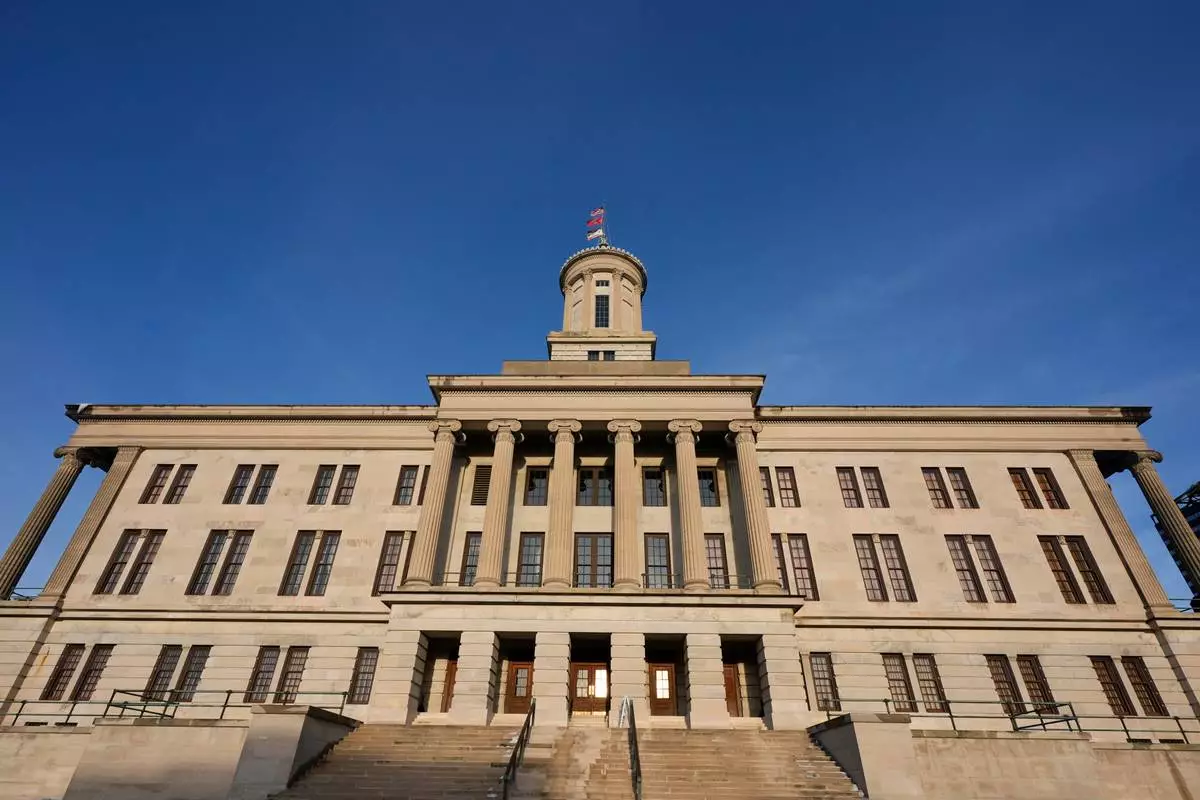
FILE - The Tennessee Capitol is seen, Jan. 22, 2024, in Nashville, Tenn. (AP Photo/George Walker IV, File)

FILE - The Tennessee Capitol is seen, Jan. 22, 2024, in Nashville, Tenn. (AP Photo/George Walker IV, File)

Recommended Articles