New intraocular lenses made from a novel material by Eyedeal, a Chinese medical company based in Xi'an City, northwest China's Shaanxi Province, have offered a superior treatment option for cataract patients to restore their vision.
This is the first intraocular lens made of a completely new material in the global ophthalmology field in over 30 years, marking a major breakthrough for China in the research and development of ophthalmic implant materials.
According to Chin's National Medical Products Administration, the new intraocular lenses was approved for market launch in the country in September.
Cataracts are the leading cause of blindness worldwide, and the surgical implantation of an intraocular lens is currently the only effective treatment.
This innovative product, developed by Eyedeal, employs a material called crosslinked polyisobutylene (xPIB) with independent intellectual property rights. It features a high refractive index and a high Abbe number, which can effectively minimize post-refractive surgery glare and floaters while reducing inflammatory responses.
Moreover, with a thickness of only 6.5 millimeters, the lens can be implanted through a minimally invasive incision smaller than 2.0 mm. This enhances surgical safety and provides patients with better visual quality.
"This is the world's first lens in over 30 years to use a new material, which is of revolutionary significance. It can perfectly replace materials like medical silicone, polyurethane, and acrylate. Essentially, it has the potential to replace all known types of materials used in implantable devices," said Guo Guangxu, chairman and general manager of Xi'an Eyedeal Medical Technology Co., Ltd.
For years, China's intraocular lens industry has been constrained by its dependence on foreign sources for core raw materials. This intraocular lens has broken the long-standing foreign technological monopoly on upstream raw materials for intraocular lenses.
Since its founding in 2015, Eyedeal has persisted in innovation and focused on the research and development of ophthalmic implant materials. With comprehensive support from local governments in Shaanxi Province, the company has established a complete industrial chain -- from raw material synthesis and optical design to manufacturing and quality control. Now, it holds the global patent for the xPIB material.
"The support from Shaanxi Province, Xi'an City, and especially the high-tech zone has been tremendous. As a start-up, the provincial and municipal governments have given us access to many platforms, including engineering research centers and technology centers. This also includes academician workstations and postdoctoral innovation bases, making it very convenient for us to attract higher-level talents, including PhDs and masters. Furthermore, Shaanxi itself has many universities and research institutions, meaning there is a large talent pool, which is very beneficial for cultivating a new generation of young teams," said Guo Guangxu.
By achieving a breakthrough at the material source and gaining full control over the entire industrial chain, Eyedeal has, through nearly 12 years of dedication, realized China's capability in high-end ophthalmic material manufacturing.
This achievement is not only a milestone in China's independent innovation in the medical device sector but also a demonstration of new quality productive forces in the biomedical field, offering a superior "Chinese solution" for cataract patients worldwide.
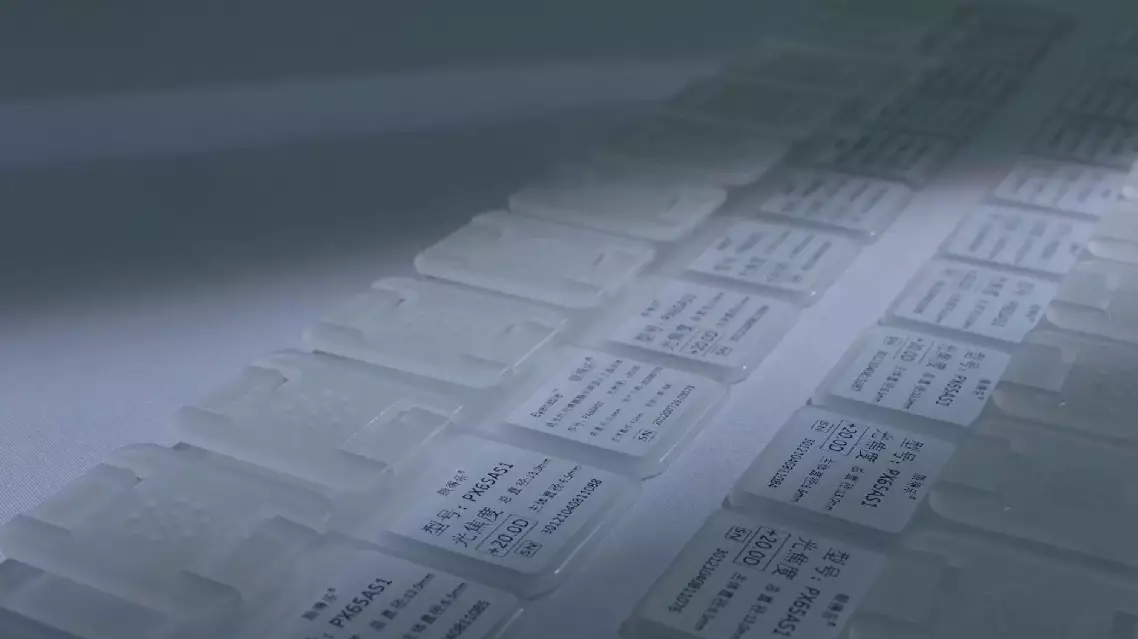
Chinese medical company's breakthrough intraocular lens helps cataract patients restore eyesight