McDonald’s sales got a lift from Snack Wraps and other value-oriented products in the third quarter.
But McDonald’s Chairman and CEO Chris Kempczinski warned Wednesday that consumers in the U.S. and other top international markets remain under economic pressure, a problem he thinks will persist well into 2026. Concern about SNAP food aid benefits and whether the U.S. government will pay them during the shutdown is exacerbating those worries, he said.
Kempczinski said U.S. visits to fast food restaurants by lower-income consumers fell again in the July-September period, a trend that has persisted for nearly two years. And while higher-income customers are continuing to dine out, they're also looking for deals.
“I think sometimes there’s this idea that value only matters to low-income (customers). But value matters to everybody,” Kempczinski said on a conference call with investors. “Feeling like you’re getting good value for your dollar is important.”
As a result, McDonald's is leaning heavily into discounts. It launched Extra Value Meals in the U.S. in early September, piling those on top of other deals, including its McValue menu, which was introduced in January. In Australia, McDonald's said it locked in pricing on its value items for 12 months starting in July, which lifted store traffic.
U.S. restaurant sales got a boost in July when Snack Wraps returned after a nine-year absence. McDonald's said Snack Wraps were the most popular new chicken product in recent U.S. history, with 20% of customers buying one in the first month they were on sale. The $2.99 Snack Wraps also appealed to value-conscious consumers, Kempczinski said.
McDonald's global same-store sales, or sales at locations open at least a year, rose 3.6% for the July-September period. That was slightly ahead of Wall Street’s forecast of 3.5%, according to analysts polled by FactSet.
Same-store sales rose 2.4% in the U.S. in the third quarter.
The deals are costly for McDonald's. Chief Financial Officer Ian Borden said the company agreed to pay its U.S. franchisees half the cost of the price reduction in Extra Value Meals, which cost $15 million in September and will amount to $75 million in the fourth quarter. McDonald's also kicked in $40 million to support marketing of the Extra Value Meals.
That's cutting into its profit. McDonald's net income rose 1% to $2.28 billion in the third quarter. Adjusted for one-time items, including $39 million in restructuring charges, McDonald’s earned $3.22 per share. That was lower than the $3.33 analysts forecast.
Third quarter revenue rose 3% to $7.08 billion, the Chicago company said. That was in line with Wall Street’s expectations.
McDonald’s shares were up 3% in early afternoon trading Wednesday.
Kempczinski said he doesn't see demand from households making less than $45,000 per year returning unless those consumers start to feel some relief in the cost of nondiscretionary items like food prices, child care and rent.
“There’s some significant inflation there that the low-income consumers are having to absorb, and I think that’s affecting their outlook and their sentiment,” he said.
Value perception appeared to be a critical for U.S. restaurants in the third quarter. Higher-priced fast casual chains Cava and Chipotle both reported weaker-than-expected results.
Chipotle CEO Scott Boatwright said young adults, in particular, are facing multiple headwinds, including unemployment, increased student loan repayment, and slower real wage growth. Boatwright said Chipotle plans a new ad campaign to spotlight its fresh ingredients and portions at a reasonable price.
“Despite our extraordinary value proposition, we are seeing examples where this is not reflected in consumer perception,” Boatwright said last week in a conference call with investors.
Value-oriented Taco Bell bucked that trend. Taco Bell parent Yum Brands said Tuesday that Taco Bell’s same-store sales rose 7% in the third quarter, driven by value items like its $3 Grilled Steak Burrito.
“We’re not seeing consumer pullback in the Taco Bell business. We do think the consumer in the U.S. is cautious but incredibly resilient,” Yum Brands CEO Chris Turner said. Turner said the brand saw more younger consumers and more families coming in to its stores in the third quarter.
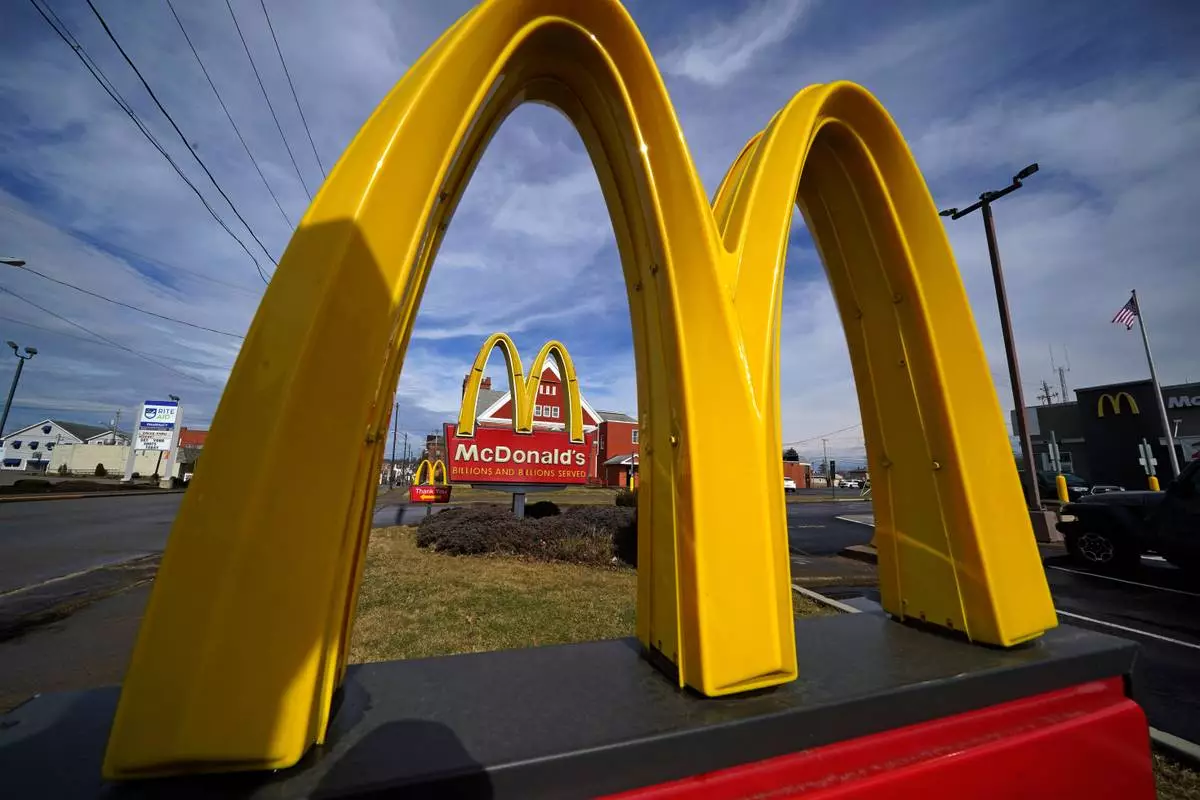
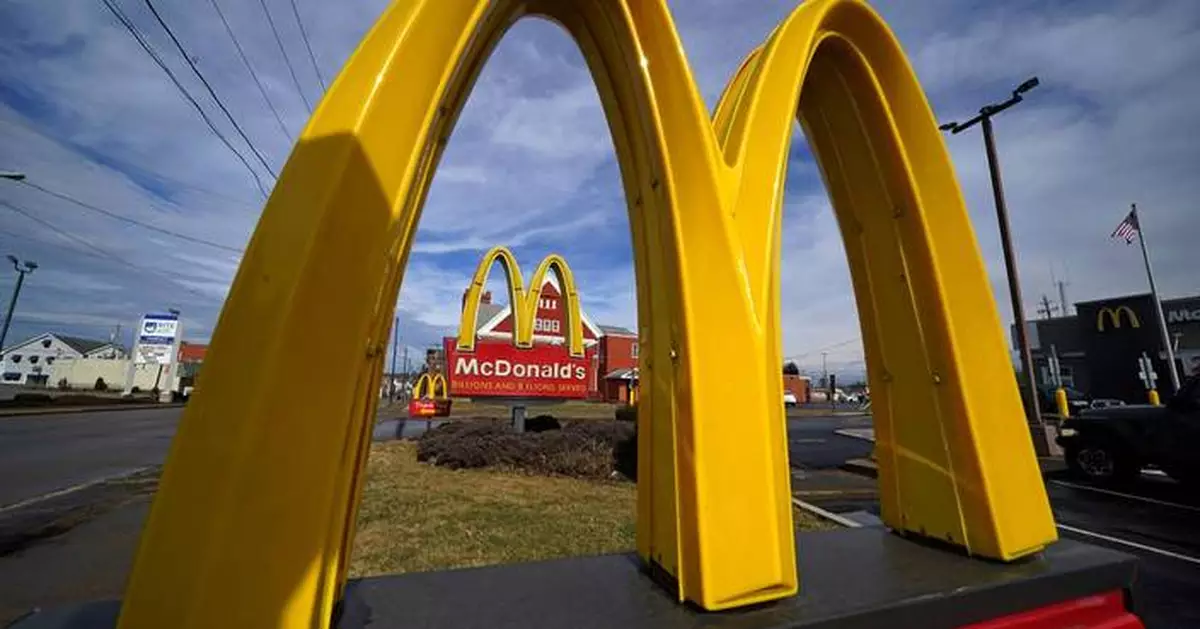
FILE - McDonald's restaurant signs are shown in in East Palestine, Ohio, Feb. 9, 2023. (AP Photo/Gene J. Puskar, File)

JERUSALEM (AP) — Over two dozen families from one of the few remaining Palestinian Bedouin villages in the central West Bank have packed up and fled their homes in recent days, saying harassment by Jewish settlers living in unauthorized outposts nearby has grown unbearable.
The village, Ras Ein el-Auja, was originally home to some 700 people from more than 100 families that have lived there for decades.
Twenty-six families already left on Thursday, scattering across the territory in search of safer ground, say rights groups. Several other families were packing up and leaving on Sunday.
“We have been suffering greatly from the settlers. Every day, they come on foot, or on tractors, or on horseback with their sheep into our homes. They enter people’s homes daily,” said Nayef Zayed, a resident, as neighbors took down sheep pens and tin structures.
Israel's military and the local settler governing body in the area did not respond to requests for comment.
Other residents pledged to stay put for the time being. That makes them some of the last Palestinians left in the area, said Sarit Michaeli, international director at B’Tselem, an Israeli rights group helping the residents.
She said that mounting settler violence has already emptied neighboring Palestinian hamlets in the dusty corridor of land stretching from Ramallah in the West to Jericho, along the Jordanian border, in the east.
The area is part of the 60% of the West Bank that has remained under full Israeli control under interim peace accords signed in the 1990s. Since the war between Israel and Hamas erupted in October 2023, over 2,000 Palestinians — at least 44 entire communities — have been expelled by settler violence in the area, B'Tselem says.
The turning point for the village came in December, when settlers put up an outpost about 50 meters (yards) from Palestinian homes on the northwestern flank of the village, said Michaeli and Sam Stein, an activist who has been living in the village for a month.
Settlers strolled easily through the village at night. Sheep and laundry went missing. International activists had to begin escorting children to school to keep them safe.
“The settlers attack us day and night, they have displaced us, they harass us in every way” said Eyad Isaac, another resident. “They intimidate the children and women.”
Michaeli said she’s witnessed settlers walk around the village at night, going into homes to film women and children and tampering with the village’s electricity.
The residents said they call the police frequently to ask for help — but it seldom arrives. Settlement expansion has been promoted by successive Israeli governments over nearly six decades. But Benjamin Netanyahu’s far-right government, which has placed settler leaders in senior positions, has made it a top priority.
That growth has been accompanied by a spike in settler violence, much of it carried out by residents of unauthorized outposts. These outposts often begin with small farms or shepherding that are used to seize land, say Palestinians and anti-settlement activists. United Nations officials warn the trend is changing the map of the West Bank, entrenching Israeli presence in the area.
Some 500,000 Israelis have settled in the West Bank since Israel captured the territory, along with east Jerusalem and the Gaza Strip, in the 1967 Mideast war. Their presence is viewed by most of the international community as illegal and a major obstacle to peace. The Palestinians seek all three areas for a future state.
For now, displaced families of the village have dispersed between other villages near the city of Jericho and near Hebron further south, said residents. Some sold their sheep and are trying to move into the cities.
Others are just dismantling their structures without knowing where to go.
"Where will we go? There’s nowhere. We’re scattered,” said Zayed, the resident, “People’s situation is bad. Very bad.”
An Israeli settler herds his flock near his outpost beside the Palestinian village of Ras Ein al-Auja in the West Bank, Sunday, Jan. 11, 2026. (AP Photo/Mahmoud Illean)
A Palestinian resident of Ras Ein al-Auja village, West Bank burns trash, Sunday, Jan. 11, 2026. (AP Photo/Mahmoud Illean)
Palestinian children play in the West Bank village of Ras Ein al-Auja, Sunday, Jan. 11, 2026. (AP Photo/Mahmoud Illean)
Palestinian residents of Ras Ein al-Auja village, West Bank pack up their belongings and prepare to leave their homes after deciding to flee mounting settler violence, Sunday, Jan. 11, 2026. (AP Photo/Mahmoud Illean)