COPENHAGEN, Denmark (AP) — In 2021, Danish video game live-streamer Marie Watson received an image of herself from an unknown Instagram account.
She instantly recognized the holiday snap from her Instagram account, but something was different: Her clothing had been digitally removed to make her appear naked. It was a deepfake.
“It overwhelmed me so much,” Watson recalled. “I just started bursting out in tears, because suddenly, I was there naked.”
In the four years since her experience, deepfakes — highly realistic artificial intelligence-generated images, videos or audio of real people or events — have become not only easier to make worldwide but also look or sound exponentially more realistic. That's thanks to technological advances and the proliferation of generative AI tools, including video generation tools from OpenAI and Google.
These tools give millions of users the ability to easily spit out content, including for nefarious purposes that range from depicting celebrities Taylor Swift and Katy Perry to disrupting elections and humiliating teens and women.
In response, Denmark is seeking to protect ordinary Danes, as well as performers and artists who might have their appearance or voice imitated and shared without their permission. A bill that's expected to pass early next year would change copyright law by imposing a ban on the sharing of deepfakes to protect citizens’ personal characteristics — such as their appearance or voice — from being imitated and shared online without their consent.
If enacted, Danish citizens would get the copyright over their own likeness. In theory, they then would be able to demand that online platforms take down content shared without their permission. The law would still allow for parodies and satire, though it’s unclear how that will be determined.
Experts and officials say the Danish legislation would be among the most extensive steps yet taken by a government to combat misinformation through deepfakes.
Henry Ajder, founder of consulting firm Latent Space Advisory and a leading expert in generative AI, said that he applauds the Danish government for recognizing that the law needs to change.
“Because right now, when people say ‘what can I do to protect myself from being deepfaked?’ the answer I have to give most of the time is: ‘There isn’t a huge amount you can do,’" he said, ”without me basically saying, ‘scrub yourself from the internet entirely.’ Which isn’t really possible."
He added: "We can’t just pretend that this is business as usual for how we think about those key parts of our identity and our dignity."
U.S. President Donald Trump signed bipartisan legislation in May that makes it illegal to knowingly publish or threaten to publish intimate images without a person’s consent, including deepfakes. Last year, South Korea rolled out measures to curb deepfake porn, including harsher punishment and stepped up regulations for social media platforms.
Danish Culture Minister Jakob Engel-Schmidt said that the bill has broad support from lawmakers in Copenhagen, because such digital manipulations can stir doubts about reality and spread misinformation.
“If you’re able to deepfake a politician without her or him being able to have that product taken down, that will undermine our democracy,” he told reporters during an AI and copyright conference in September.
The law would apply only in Denmark, and is unlikely to involve fines or imprisonment for social media users. But big tech platforms that fail to remove deepfakes could face severe fines, Engel-Schmidt said.
Ajder said Google-owned YouTube, for example, has a “very, very good system for getting the balance between copyright protection and freedom of creativity."
The platform's efforts suggest that it recognizes “the scale of the challenge that is already here and how much deeper it’s going to become,” he added.
Twitch, TikTok and Meta, which owns Facebook and Instagram, didn't respond to requests for comment.
Engel-Schmidt said that Denmark, the current holder of the European Union's rotating presidency, had received interest in its proposed legislation from several other EU members, including France and Ireland.
Intellectual property lawyer Jakob Plesner Mathiasen said that the legislation shows the widespread need to combat the online danger that's now infused into every aspect of Danish life.
“I think it definitely goes to say that the ministry wouldn’t make this bill, if there hadn’t been any occasion for it,” he said. “We're seeing it with fake news, with government elections. We are seeing it with pornography, and we’re also seeing it also with famous people and also everyday people — like you and me.”
The Danish Rights Alliance, which protects the rights of creative industries on the internet, supports the bill, because its director says that current copyright law doesn't go far enough.
Danish voice actor David Bateson, for example, was at a loss when AI voice clones were shared by thousands of users online. Bateson voiced a character in the popular “Hitman” video game, as well as Danish toymaker Lego's English advertisements.
“When we reported this to the online platforms, they say ‘OK, but which regulation are you referring to?’” said Maria Fredenslund, an attorney and the alliance’s director. “We couldn’t point to an exact regulation in Denmark.”
Watson had heard about fellow influencers who found digitally-altered images of themselves online, but never thought it might happen to her.
Delving into a dark side of the web where faceless users sell and share deepfake imagery — often of women — she said she was shocked how easy it was to create such pictures using readily available online tools.
“You could literally just search ‘deepfake generator’ on Google or ‘how to make a deepfake,’ and all these websites and generators would pop up,” the 28-year-old Watson said.
She is glad her government is taking action, but she isn’t hopeful. She believes more pressure must be applied to social media platforms.
“It shouldn’t be a thing that you can upload these types of pictures,” she said. “When it’s online, you’re done. You can’t do anything, it’s out of your control.”
Stefanie Dazio in Berlin, Kelvin Chan in London, and Barbara Ortutay in San Francisco, contributed to this report.

Danish video game live-streamer Marie Watson, 28, poses for a photo in her studio in Taastrup, Denmark, Thursday, Oct. 9, 2025. (AP Photo/James Brooks)

Danish video game live-streamer Marie Watson, 28, poses for a photo in her studio in Taastrup, Denmark, Thursday, Oct. 9, 2025. (AP Photo/James Brooks)

Danish video game live-streamer Marie Watson, 28, plays a video game in her studio in Taastrup, Denmark, Thursday, Oct. 9, 2025. (AP Photo/James Brooks)
U.S. President Donald Trump said the military could end its Iran offensive in two to three weeks and will shift responsibility for the Strait of Hormuz to countries that rely on it for oil and shipping as the White House announced a prime-time presidential address Wednesday evening on the war.
Trump expressed frustration Tuesday with allies who have been unwilling to do more to support the U.S. war effort, telling them to “go get your own oil.” Trump recently has vacillated between insisting there is progress in diplomatic talks with Iran and threatening to widen the war.
In an interview with pan-Arab broadcaster Al Jazeera, Iranian Foreign Minister Abbas Araghchi acknowledged receiving direct messages from U.S. Mideast envoy Steve Witkoff. He insisted, however, that there were no direct negotiations and said Iran has no faith that talks with the U.S. could yield any results, saying “the trust level is at zero.”
Trump said the U.S. “will not have anything to do with” what happens next in the vital waterway that has been closed by the Islamic Republic. Instead, he told reporters, the responsibility for keeping the strait open will rest with countries that rely on it. Gulf states rely on the waterway for both exports and imports, including food, and 20 percent of the world's oil supply flows through it.
U.S. gas prices jumped past an average of $4 a gallon for the first time since 2022 on Tuesday, as the Iran war continues to push fuel prices higher worldwide. Analysts say those high fuel costs will trickle into groceries as businesses’ transportation and packaging costs pile up.
Here is the latest:
The Iranian-backed Houthis in Yemen said Wednesday they fired a barrage of ballistic missiles toward Israel.
Air raid sirens went off in southern Israel in the early morning, from Beersheba to the Mediterranean coast following the launch. There were no immediate reports of impacts.
Brig. Gen. Yahya Saree, a military spokesman for the Houthis, said in a prerecorded statement that they fired at “sensitive targets” in southern Israel.
The attack is the third since the Houthis joined the war on Friday when they fired their first missile towards Israel since the U.S. and Israel launched massive airstrikes on Iran on Feb. 28.
Their entry has raised concerns that they could resume attacks on vessels in the Red Sea further disrupting the global shipping industry and sending oil prices much higher
A drone attack has killed a citizen of Bangladesh in Fujairah, one of the UAE’s seven emirates, authorities said.
He was killed Wednesday when Emirati air defense systems intercepted a drone, and shrapnel landed in a farm, the Fujairah media office said.
The fatality has brought the death toll in the UAE to nine civilians and two soldiers. A Moroccan contractor with the UAE army was also killed in Bahrain.
Earlier Saudi Arabia said it had destroyed two Iranian drones.
Emergency personnel said an 11-year-old girl was severely wounded in central Israel in the latest missile attack from Iran.
Two more people suffered moderate injuries including a 13-year-old boy and a 36-year-old woman, according to Israel’s Magen David Adom rescue services.
Iran’s foreign minister has acknowledged receiving direct messages from U.S. Mideast envoy Steve Witkoff.
The comments by Abbas Araghchi came in an interview with pan-Arab broadcaster Al Jazeera aired late Tuesday. He insisted that the messages didn’t constitute negotiations.
U.S. President Donald Trump has repeatedly described Iran and America has having talks over the war, while Pakistan has been a key intermediary along with Egypt and Turkey during the conflict.
“I receive messages from Witkoff directly, as before, and this does not mean that we are in negotiations,” he said.
He added: “We do not have any faith that negotiations with the U.S. will yield any results. The trust level is at zero.”
Asked about a possible ground offensive by the U.S., Araghchi said “we are waiting for them.”
“We know very well how to defend ourselves,” Araghchi reportedly told the Qatar-based broadcaster. “In a ground war, we can do it even better. We are completely ready to confront any sort of ground attack. We hope they do not make such a mistake.”
Lebanon’s Health Ministry said in a preliminary count early Wednesday 21 people were also wounded in the strike in Jnah.
The strike came without warning, and Israel did not declare the target. When it does, it often says it is targeting operatives from the Hezbollah militant group.
Emergency workers rushed to the scene to search for victims.
Israel’s military warned the public Wednesday a missile was incoming from Yemen, yet another attack from the country’s Houthi rebels who have just entered the war on Iran’s side.
Air raid sirens went off in southern Israel, from Beersheba to the Mediterranean coast.
The warning, just around dawn, broke a long lull, more than 19 hours since the last time Israel’s military warned of an incoming missile launch from Iran, and more than six hours from the last alarms in the northern part of Israel, which in past days received near-constant fire from Hezbollah in Lebanon.
A drone attack by Iran and its allies hit a fuel tank at Kuwait International Airport, sparking a fire, authorities said.
The state-run KUNA news agency said the attack early Wednesday sparked a “large fire” at the airport.
It said there were no immediate injuries from the attack and firefighters were working to control the blaze.
Kuwait International Airport has been attacked before by Iran during the war. The KUNA report suggested the attack may have been launched by Iranian-supported militias in Iraq with Tehran’s support.
In another strike, Bahrain said early on Wednesday morning that it was working to extinguish a fire at a business facility that resulted from an Iranian attack.
Israel said early Wednesday it struck a plant supplying Iran’s theocracy with fentanyl, a powerful synthetic opioid, to allegedly use in a chemical weapons program. Iran acknowledged the strike on Tofigh Daru factory, but insisted it only supplied “hospital drugs” used in medical operations.
The strike happened Tuesday, both the Israelis and the Iranians said.
Iranian Foreign Minister Abbas Araghchi posted a picture of the factory in Tehran, writing on X: “The war criminals in Israel are now openly and unashamedly bombing pharmaceutical companies.”
Hospitals extensively use fentanyl to treat severe pain. But a small amount of the drug can be fatal.
Both Israel and the United States have warned in recent years Iran was experimenting with fentanyl in munitions. The U.S. previously pointed to Iranian academic research studying how Russia likely used a fentanyl derivative during the 2002 Moscow theater hostage seizure by Chechen militants.
Israel alleged Tofigh Daru supplied fentanyl to an advanced research institute in Tehran, known by its acronym SPND. The U.S alleges SPND has conducted research and testing that could be applicable to the development of nuclear explosive devices and other weapons.
The United Arab Emirates has barred Iranians from entering or transiting the country as the war rages, three major airlines said Wednesday.
Long-haul carriers Emirates and Etihad, as well as the lower-cost airline FlyDubai, made the announcements on their websites.
Entry rules can sometimes be opaque in the autocratic United Arab Emirates, a federation of seven sheikhdoms, the three airlines agreed on the order. It said holders of 10-year Golden Visa residency permits could still enter the country.
Authorities have offered no official comment. But Dubai has already shut down the city-state’s Iranian Hospital and Iranian Club, institutions that date back to the time of the shah.
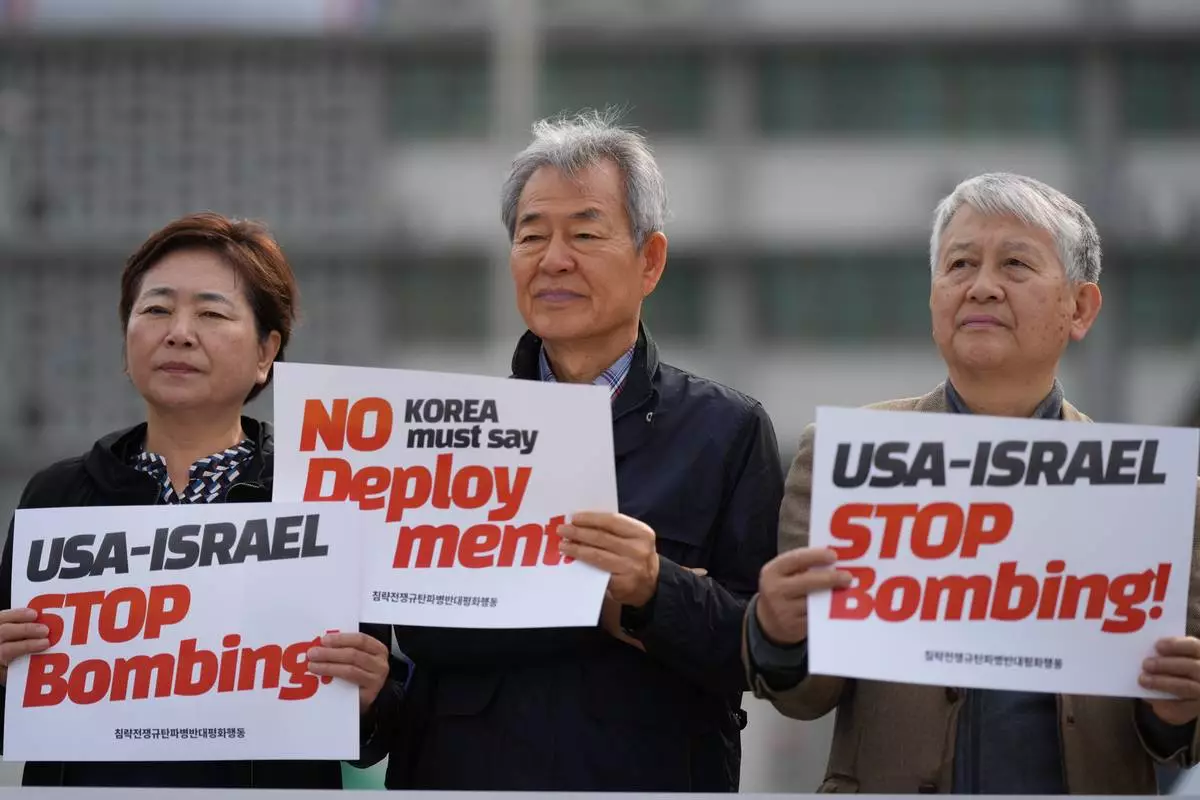
Members of civic groups hold signs against the U.S. and Israel attacks on Iran near the U.S. Embassy in Seoul, South Korea, Wednesday, April 1, 2026. (AP Photo/Lee Jin-man)
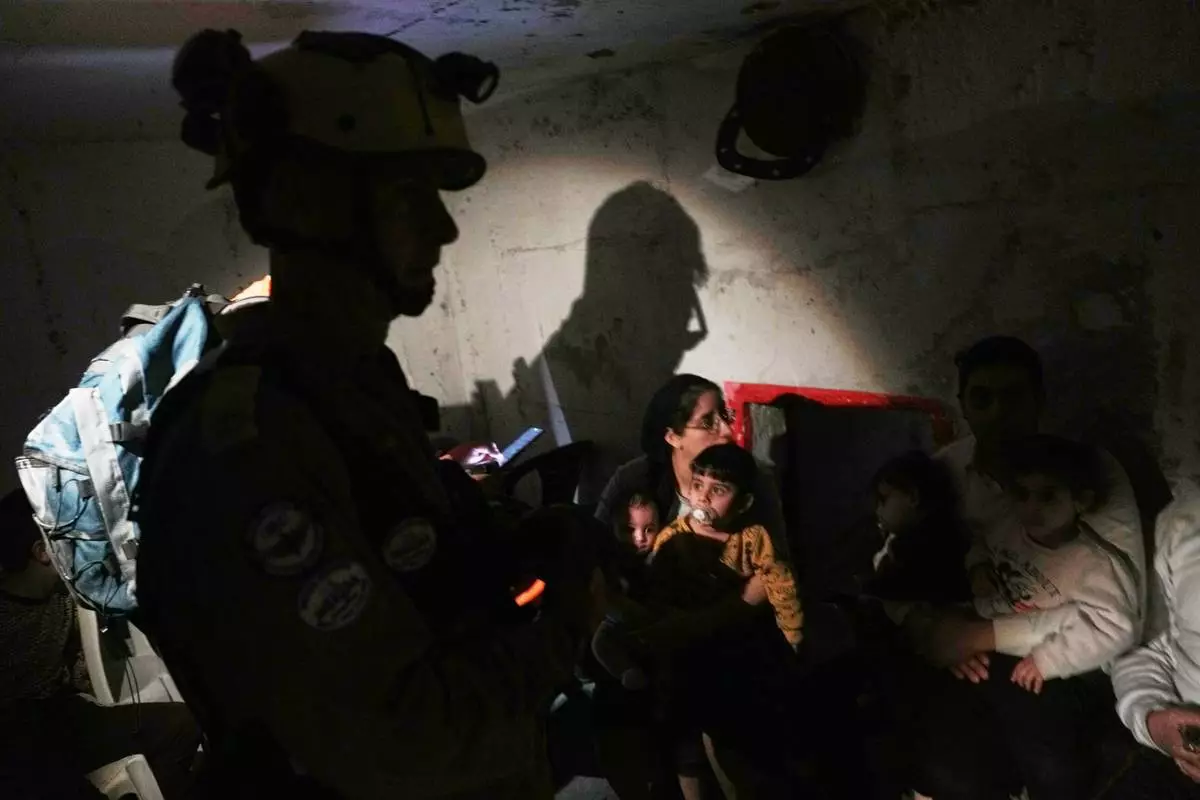
Israel's rescue teams and residents take shelter as sirens sounds next to a site struck by an Iranian missile in Bnei Brak, Wednesday, April 1, 2026. (AP Photo/Oded Balilty)
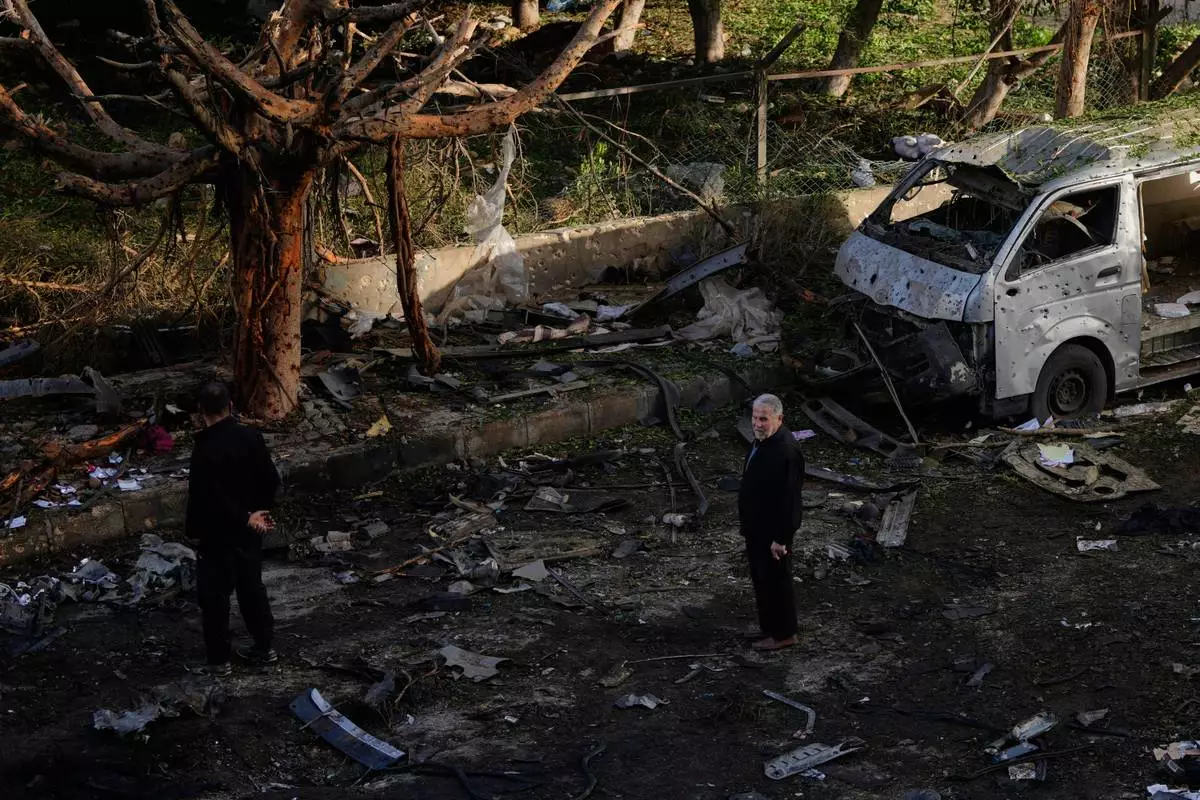
People stand near a damaged van beside scattered debris following an Israeli strike in Beirut, Lebanon, Wednesday, April 1, 2026. (AP Photo/Hassan Ammar)
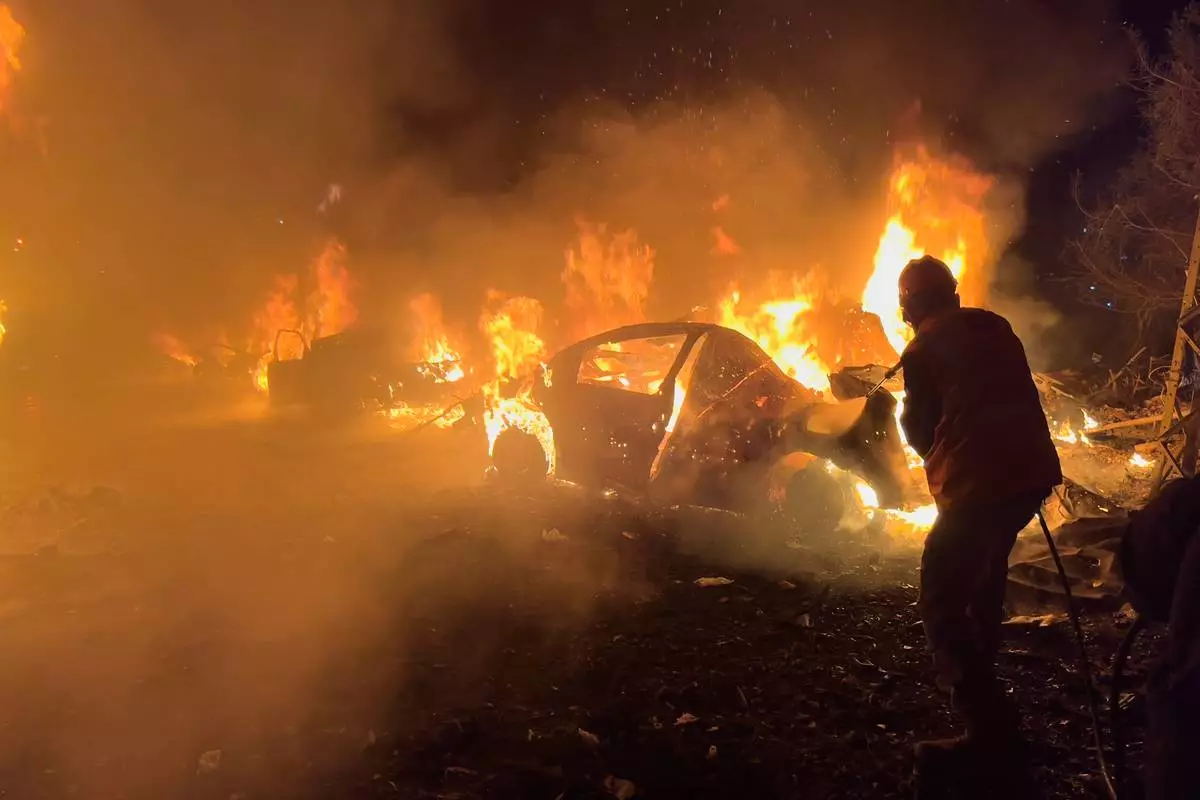
A firefighter extinguishes a car at the site of Israeli airstrikes, in Beirut, Lebanon, Wednesday, April 1, 2026. (AP Photo/Hussein Malla)
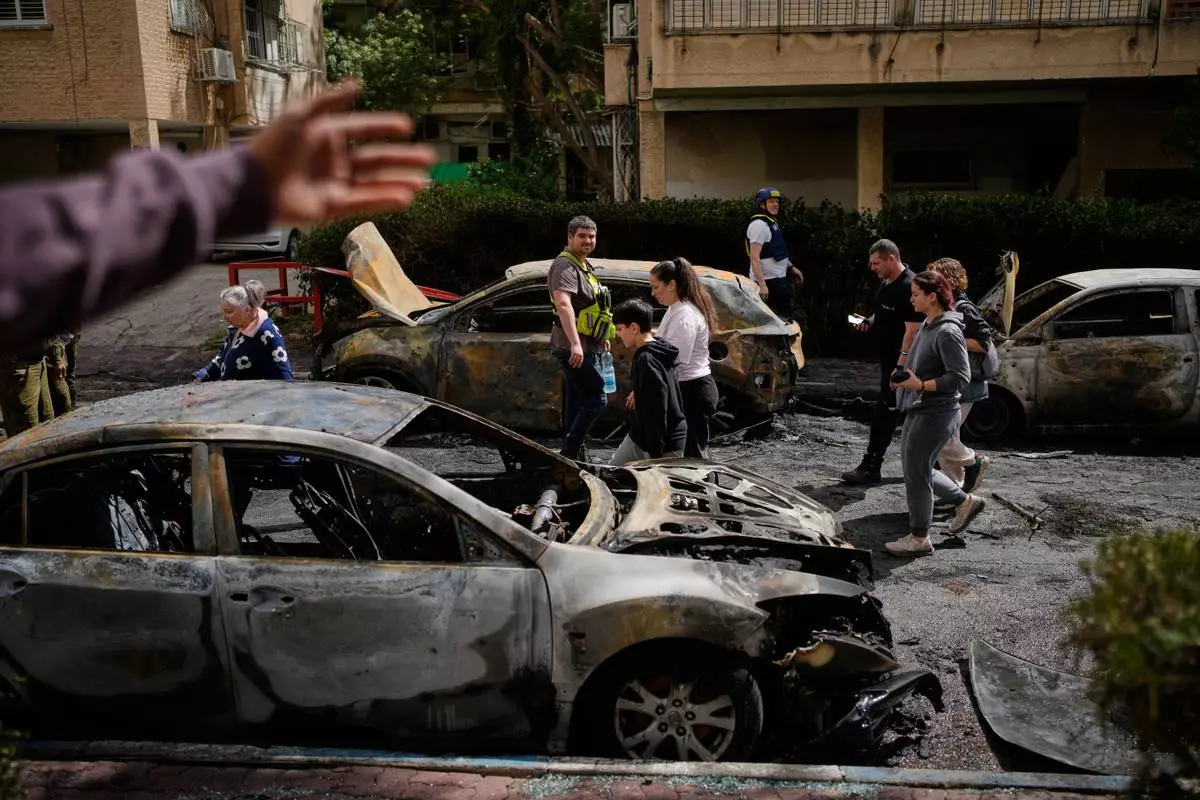
Residents and Israeli security forces inspect a site struck by an Iranian missile in Petah Tikva, Israel, Tuesday, March 31, 2026. (AP Photo/Ohad Zwigenberg)
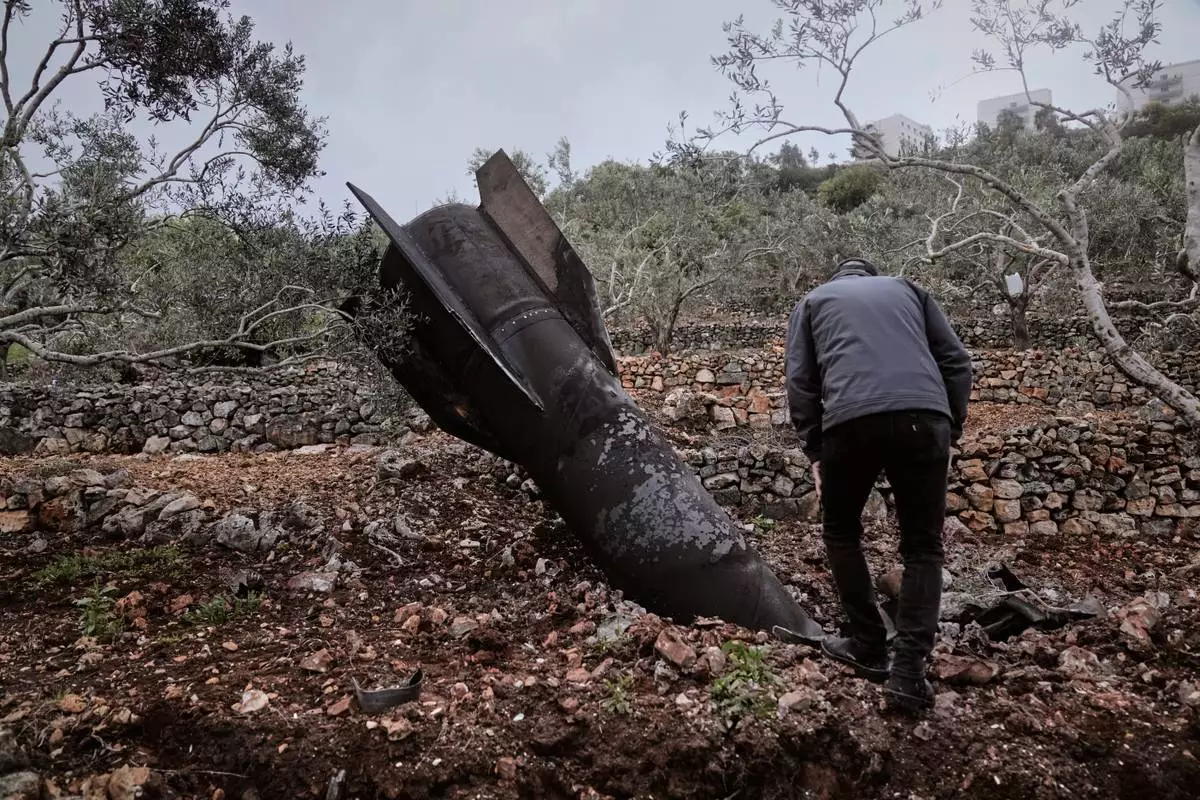
A man inspect the wreckage of an Iranian missile that landed near the West Bank village of Marda, Tuesday, March 31, 2026. (AP Photo/Majdi Mohammed)
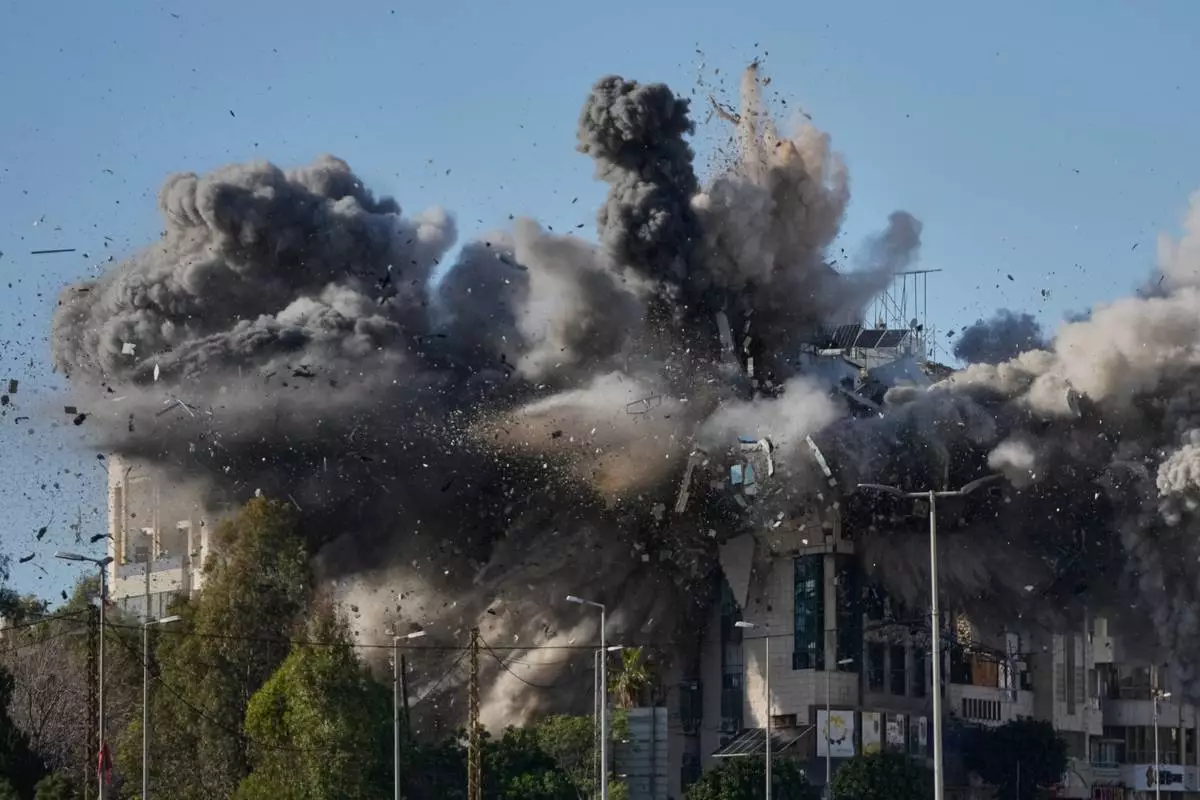
Smoke rises after an Israeli airstrike hits a building near the airport road in Beirut, Lebanon, Tuesday, March 31, 2026. (AP Photo/Hussein Malla)
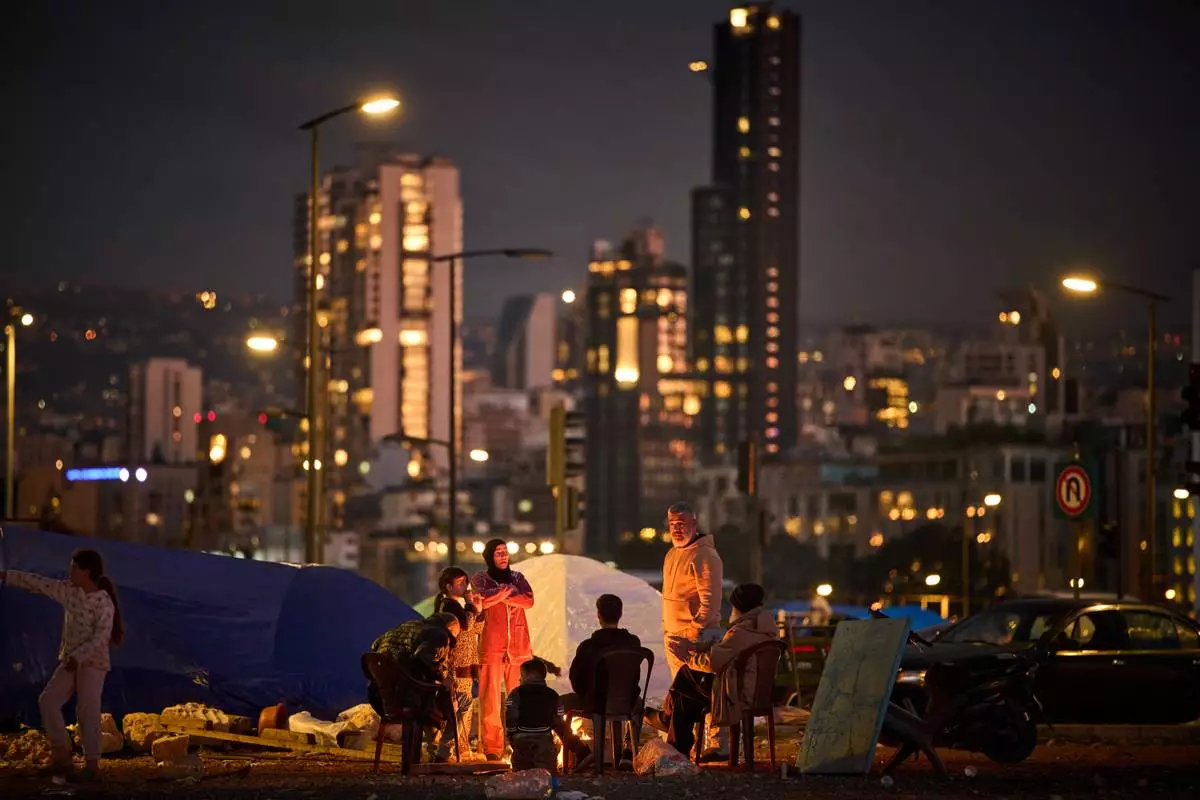
A family who fled Israeli shelling in southern Lebanon warm themselves by a bonfire next to tents used as shelters in Beirut, Lebanon, Tuesday, March 31, 2026. (AP Photo/Emilio Morenatti)