Update on chikungunya fever
The Centre for Health Protection (CHP) of the Department of Health announced that as of 5pm today (November 6), the CHP has recorded one new imported case of chikungunya fever (CF).
Latest case information
-----------------------------
The case involves a 73-year-old male living alone in Tung Chung. A preliminary investigation revealed that he visited Foshan in Guangdong alone between October 20 and 30. He developed a fever and joint pain on November 4, and sought medical attention at the Accident and Emergency Department of North Lantau Hospital yesterday (November 5). He was admitted for treatment in a mosquito-free environment and is now in stable condition. His blood sample tested positive for the chikungunya virus upon laboratory testing.
Since the patient stayed in Guangdong Province during his incubation period, the CHP considered that he was infected during travel. The case is classified as imported. The CHP has reported the case to the health authority of Guangdong Province.
Latest surveillance data
--------------------------
Hong Kong has recorded a total of 59 confirmed CF cases this year. Among them, three were local cases and the rest were imported cases. For the local case recently announced, the CHP's Public Health Laboratory Services Branch has completed genome analysis of the 45-year-old patient. The results indicated that the genetic sequence of his viral sample differed from those of other imported CF cases recorded in Hong Kong and the two local CF cases in Wong Tai Sin, suggesting separate sources of infection. The CHP cannot rule out the possibility that an earlier, undiagnosed patient in an area visited by the 45-year-old patient, transmitted the virus to mosquitoes, which then infected him.
Since the beginning of 2025, and as of September 30, a total of 445 271 suspected and confirmed CF cases and 155 CF-related deaths have been reported in 40 countries/territories. Cases have been reported in the Americas, Africa, Asia, and Europe. CF outbreaks currently occur in many countries worldwide. Members of the public should check the situation of the destinations before travelling abroad.
Government's comprehensive follow-up actions
--------------------------------------------------------------
In light of a recent local case in Kwai Tsing District,the CHP, based on the risk assessment, urged the residents living near Mount Haven in Tsing Yi, Kwai Chung Plaza and Shun Tak Centre in Sheung Wan to seek medical advice or contact the CHP immediately if they develop symptoms such as fever, rash or joint pain after October 1.The CHP officers and relevant District Services & Community Care Teams have distributed leaflets on CF prevention to over 10 000 households in Mount Haven and the surrounding areas , Kwai Chung Plaza, Shun Tak Centre in Sheung Wan and the vicinityto remind residents to monitor for relevant symptoms and maintain good environmental hygiene at home.
The CHP has set up health consultation booths at Cheung Hang Community Hall in Tsing Yi, Kwai Fong Estate (near Kwai Ming House) and the pedestrian bridge towards the east exit of Shun Tak Centre in Sheung Wan to provide assessments to members of the public with relevant symptoms. Please visit the CHP's webpage for the addresses and operating hours of the health consultation booths. The inquiry hotline (2125 2373), which was set up earlier, continues to operate daily from 9am to 8pm.
From November 3 to 5pm today, the CHP has conducted assessments for approximately 13 000 individuals residing or working in higher-risk districts through the health consultation booths at the abovementioned locations, its inquiry hotline, door-to-door visits and questionnaires conducted in the districts concerned. A total of 14 individuals with mild symptoms have been arranged to undergo blood tests. Details are as follows:
TheFood and Environmental Hygiene Department (FEHD)and relevant departments have comprehensively enhanced the mosquito control operations in Hong Kong since July this year, and this has continued. Among these, the FEHD has conducted vector investigations and targeted mosquito control operations against the imported and local cases. In light of the local case, the FEHD has immediately conducted follow-up actions, including:
The abovementioned measures will be continued. Furthermore, the Government will further enhance the mosquito control efforts in addition to the existing measures.
Preventive measures taken by the public
----------------------------------------------
Severe symptoms and deaths caused by CF are extremely rare, with a mortality rate of less than one in 1 000. The occurrence of severe complications is mostly related to the patients' underlying health conditions. Elderly persons (particularly those aged 65 or above), young children (particularly infants under 1 year old), pregnant women and persons with chronic illnesses (such as hypertension, diabetes or heart disease) are at higher risk of developing complications after contracting CF and may require a longer recovery period. Therefore, members of the public (especially the abovementioned high-risk groups) are advised to seek medical advice promptly if they develop relevant symptoms, particularly a fever, sudden severe joint pain and skin rash, after visiting areas affected by CF.
Members of the public should use DEET-containing insect repellents or other effective active ingredients properly to prevent mosquito bites, but the following precautions should be taken when using them:
The FEHD also appeals to members of the public to continue to stay alert and work together to carry out mosquito prevention and control measures early, including inspecting their homes and surroundings to remove potential breeding grounds, changing water in vases and scrubbing their inner surfaces, removing water in saucers under potted plants at least once a week, and properly disposing of containers such as empty cans and lunch boxes. The FEHD also advises members of the public and property management agencies to keep drains free of blockage and level all defective ground surfaces to prevent the accumulation of water. They should also scrub all drains and surface sewers with an alkaline detergent at least once a week to remove any mosquito eggs.
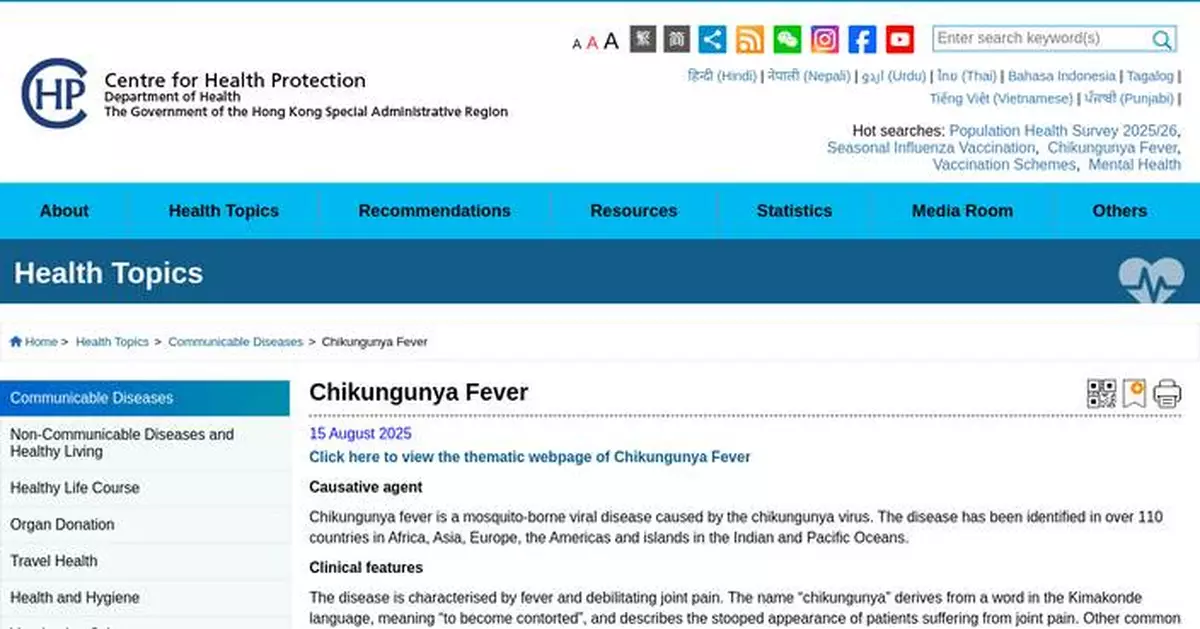
The public should call 1823 in case of mosquito problems, and may visit the following pages for more information: the CF page of theCHPand theTravel Health Service, the latestTravel Health News,tips for using insect repellents, and the CHPFacebook Page,Instagram AccountandYouTube Channel, and also theMosquito Prevention and Control dedicated pageof the FEHD.
Source: AI-found images