Skip to Content Facebook Feature Image

Bolivia's former interim president Jeanine Áñez freed from prison after Supreme Court ruling

News

Bolivia's former interim president Jeanine Áñez freed from prison after Supreme Court ruling
News

News

Bolivia's former interim president Jeanine Áñez freed from prison after Supreme Court ruling

2025-11-07 04:07 Last Updated At:04:10

LA PAZ, Bolivia (AP) — Bolivia's former interim president Jeanine Áñez left prison Thursday following a Supreme Court of Justice decision that annulled her 10-year sentence.

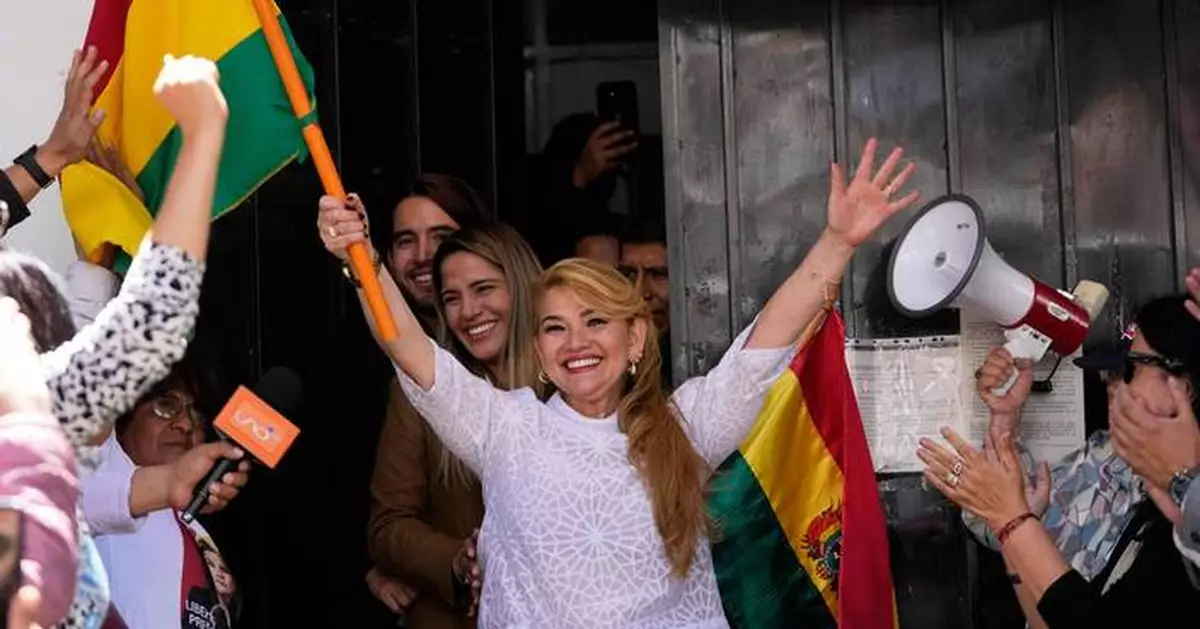
“It's like coming back to life,” Áñez said as she left the Miraflores women's prison in downtown La Paz. She smiled and waved a Bolivian flag as supporters celebrated and shouted, “Yes, we could.”

More Images
Bolivia's former President Jeanine Anez walks free from the Miraflores jail after the Supreme Court annulled her 10-year prison sentence in La Paz, Bolivia, Thursday, Nov. 6, 2025. (AP Photo/Juan Karita)

Bolivia's former President Jeanine Anez walks free from the Miraflores jail after the Supreme Court annulled her 10-year prison sentence in La Paz, Bolivia, Thursday, Nov. 6, 2025. (AP Photo/Juan Karita)
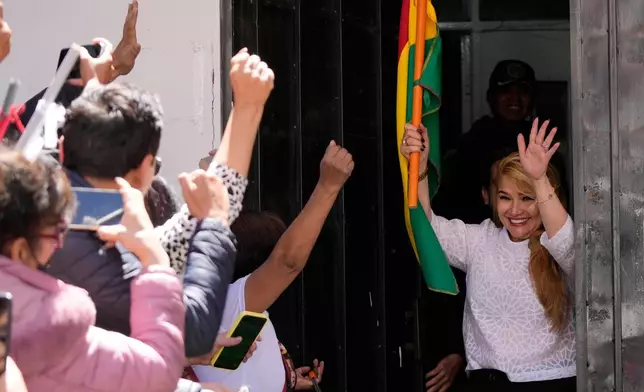
Former Bolivian President Jeanine Anez walks free from the Miraflores jail after the Supreme Court annulled her 10-year prison sentence in La Paz, Bolivia, Thursday, Nov. 6, 2025. (AP Photo/Juan Karita)

Former Bolivian President Jeanine Anez walks free from the Miraflores jail after the Supreme Court annulled her 10-year prison sentence in La Paz, Bolivia, Thursday, Nov. 6, 2025. (AP Photo/Juan Karita)
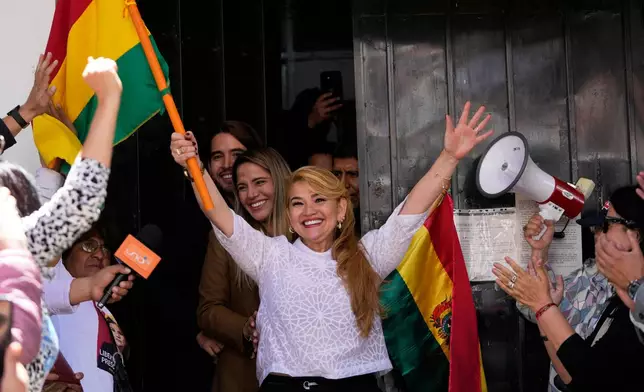
Former Bolivian President Jeanine Anez walks free from the Miraflores jail after the Supreme Court annulled her 10-year prison sentence in La Paz, Bolivia, Thursday, Nov. 6, 2025. (AP Photo/Juan Karita)

Former Bolivian President Jeanine Anez walks free from the Miraflores jail after the Supreme Court annulled her 10-year prison sentence in La Paz, Bolivia, Thursday, Nov. 6, 2025. (AP Photo/Juan Karita)

Bolivia's former President Jeanine Anez walks free from the Miraflores jail after the Supreme Court annulled her 10-year prison sentence in La Paz, Bolivia, Thursday, Nov. 6, 2025. (AP Photo/Juan Karita)

Bolivia's former President Jeanine Anez walks free from the Miraflores jail after the Supreme Court annulled her 10-year prison sentence in La Paz, Bolivia, Thursday, Nov. 6, 2025. (AP Photo/Juan Karita)

Bolivia's former President Jeanine Anez walks free from the Miraflores jail after the Supreme Court annulled her 10-year prison sentence in La Paz, Bolivia, Thursday, Nov. 6, 2025. (AP Photo/Juan Karita)

Bolivia's former President Jeanine Anez walks free from the Miraflores jail after the Supreme Court annulled her 10-year prison sentence in La Paz, Bolivia, Thursday, Nov. 6, 2025. (AP Photo/Juan Karita)

“I gave my country everything I had to give. It has been very painful... they treated me like a real criminal,” she added, her voice breaking.

Áñez had been imprisoned for more than four years. She was arrested in March 2021, and in convicted in June 2022, for her role in assuming the presidency in a controversial National Assembly session following the deadly 2019 protests that led to the resignation of then-president Evo Morales (2006-2019).

The protests, which resulted in 37 deaths, followed a crisis that erupted after presidential elections in which Morales won another term, despite the Organization of American States denouncing the results as fraudulent.

On Wednesday, Bolivia's Supreme Court of Justice annulled Áñez’s conviction and ordered a political trial, as demanded by her defense.

"Her actions were protected by a state of constitutional necessity aimed at preserving the institutional continuity of the Bolivian state,” the ruling said, closing the debate over whether there was a coup against Morales, as his supporters claim.

The top court's decision on Áñez came three days ahead of the inauguration of President-elect Rodrigo Paz, who secured a historic victory on Oct. 19 that ended nearly 20 years of political dominance by Morales' leftist Movement Toward Socialism (MAS) party.

Paz invited Áñez to the inauguration and her daughter, Carolina Rivera, said that she might attend it.

“The monster had to go for it to be acknowledged that there was not a coup in this country, but rather an electoral fraud... I will never regret having served my country when my country needed it,” Áñez said.

Áñez has been accused of multiple counts, but is no pending cases in ordinary courts. In August, courts annulled two other convictions against her over the deaths of 20 protesters during the 2019 political crisis.

The former interim president was arrested in March, 2021.

After the latest presidential elections, the court ordered an immediate review of the length of the pretrial detention imposed on Áñez and two other opposition leaders, who were released from prison and placed under house arrest.

Follow AP’s coverage of Latin America and the Caribbean at https://apnews.com/hub/latin-america
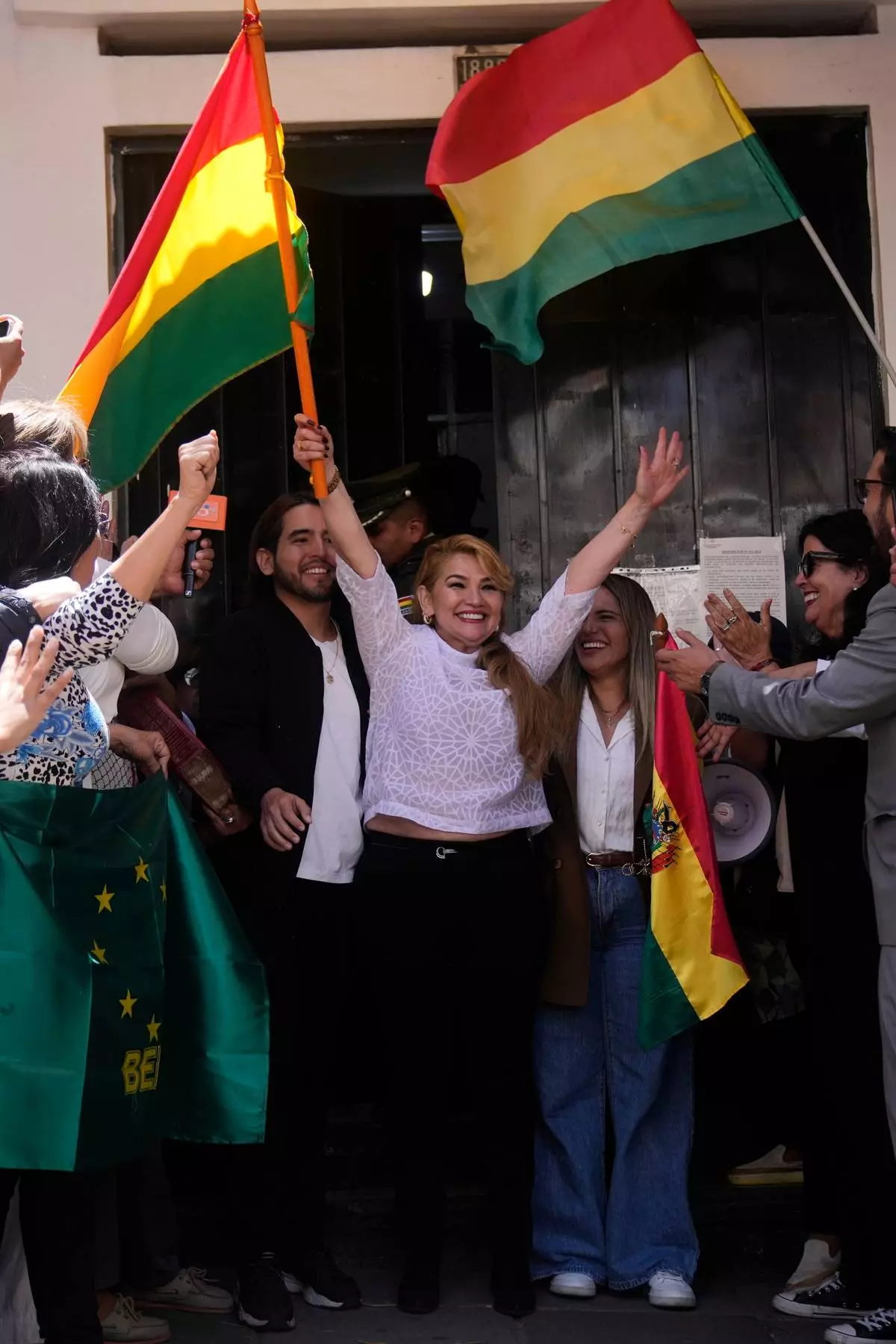
Bolivia's former President Jeanine Anez walks free from the Miraflores jail after the Supreme Court annulled her 10-year prison sentence in La Paz, Bolivia, Thursday, Nov. 6, 2025. (AP Photo/Juan Karita)
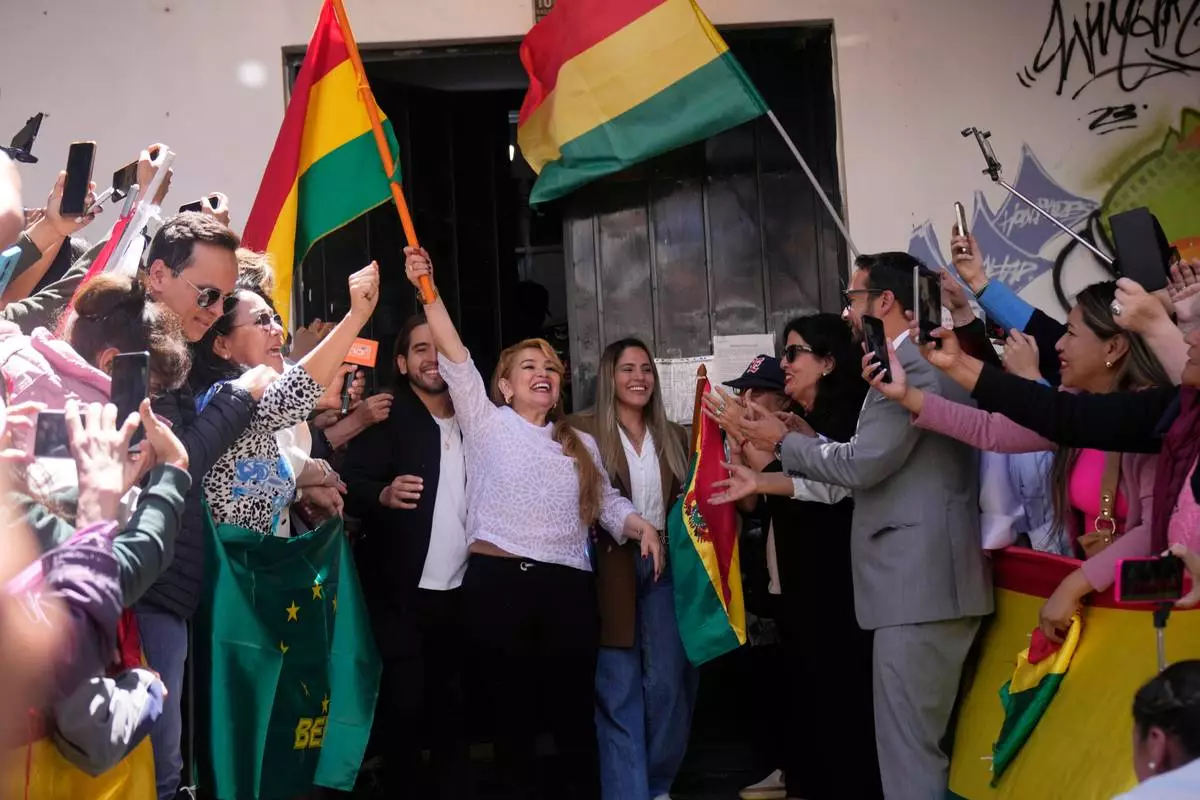
Bolivia's former President Jeanine Anez walks free from the Miraflores jail after the Supreme Court annulled her 10-year prison sentence in La Paz, Bolivia, Thursday, Nov. 6, 2025. (AP Photo/Juan Karita)
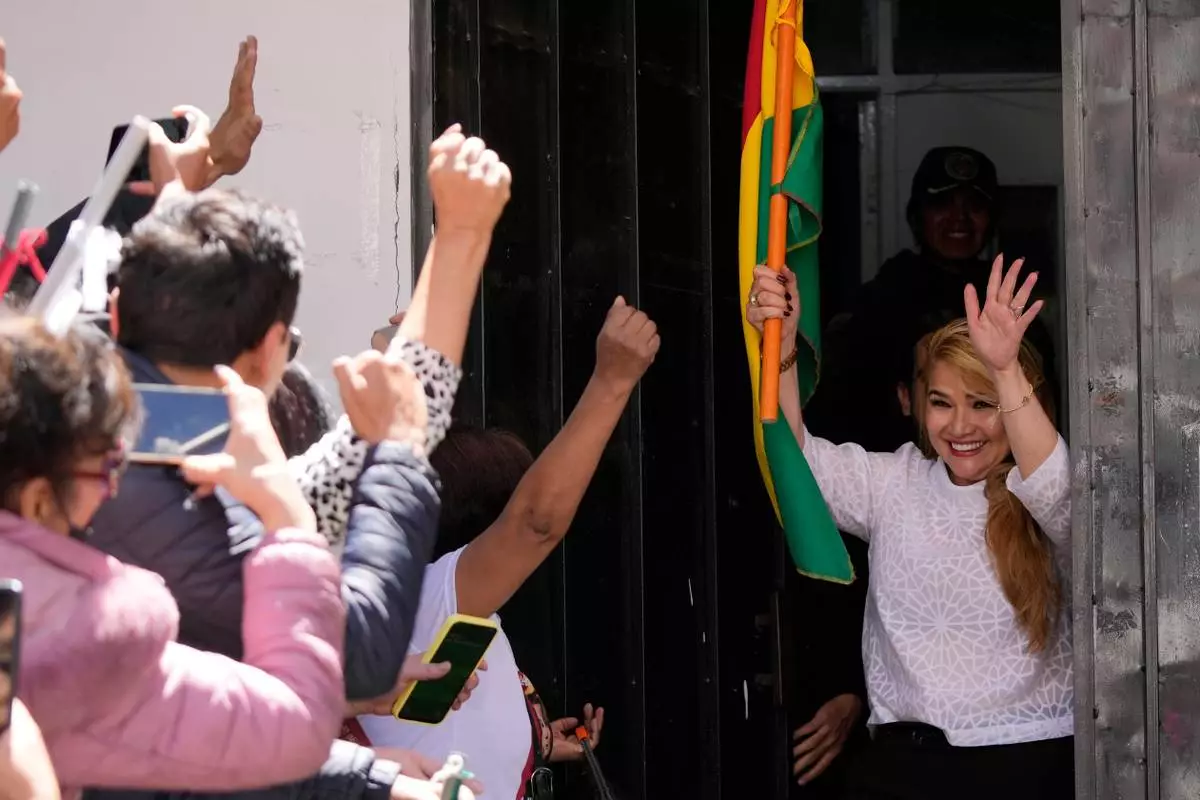
Former Bolivian President Jeanine Anez walks free from the Miraflores jail after the Supreme Court annulled her 10-year prison sentence in La Paz, Bolivia, Thursday, Nov. 6, 2025. (AP Photo/Juan Karita)

Former Bolivian President Jeanine Anez walks free from the Miraflores jail after the Supreme Court annulled her 10-year prison sentence in La Paz, Bolivia, Thursday, Nov. 6, 2025. (AP Photo/Juan Karita)
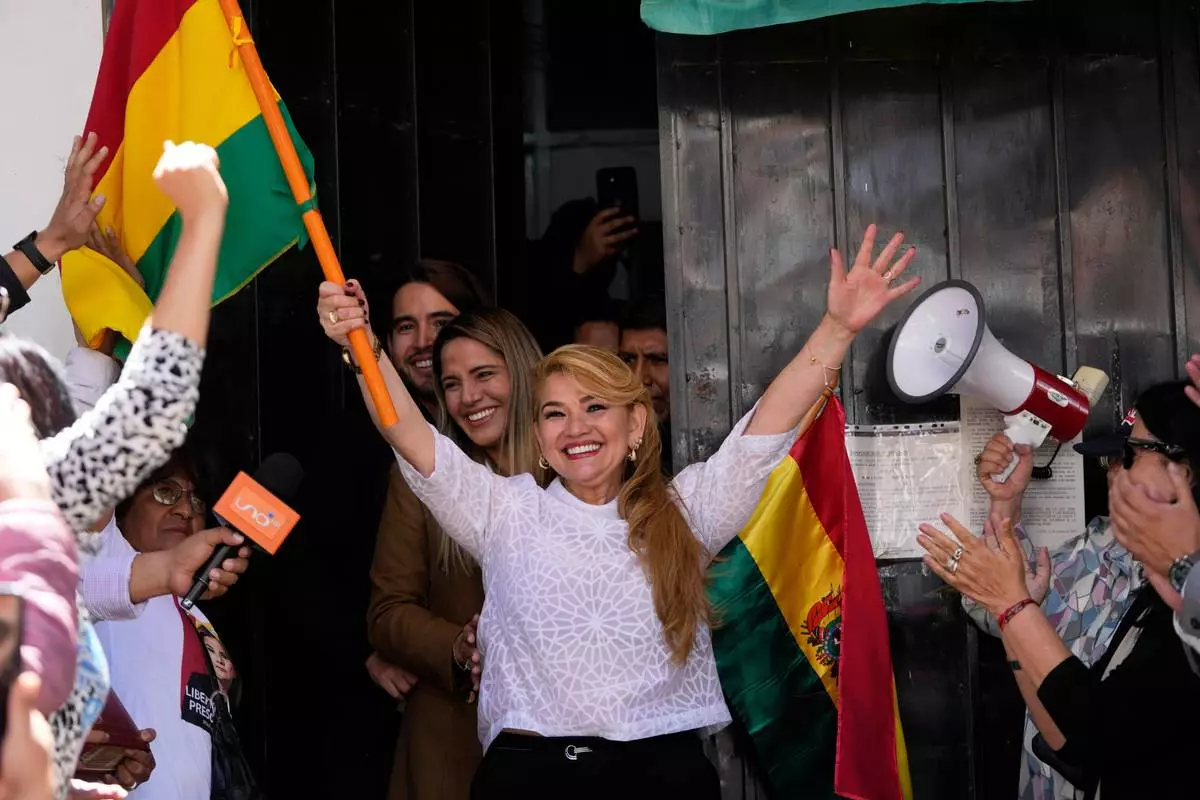
Former Bolivian President Jeanine Anez walks free from the Miraflores jail after the Supreme Court annulled her 10-year prison sentence in La Paz, Bolivia, Thursday, Nov. 6, 2025. (AP Photo/Juan Karita)
Former Bolivian President Jeanine Anez walks free from the Miraflores jail after the Supreme Court annulled her 10-year prison sentence in La Paz, Bolivia, Thursday, Nov. 6, 2025. (AP Photo/Juan Karita)
Bolivia's former President Jeanine Anez walks free from the Miraflores jail after the Supreme Court annulled her 10-year prison sentence in La Paz, Bolivia, Thursday, Nov. 6, 2025. (AP Photo/Juan Karita)

Bolivia's former President Jeanine Anez walks free from the Miraflores jail after the Supreme Court annulled her 10-year prison sentence in La Paz, Bolivia, Thursday, Nov. 6, 2025. (AP Photo/Juan Karita)
Bolivia's former President Jeanine Anez walks free from the Miraflores jail after the Supreme Court annulled her 10-year prison sentence in La Paz, Bolivia, Thursday, Nov. 6, 2025. (AP Photo/Juan Karita)

Bolivia's former President Jeanine Anez walks free from the Miraflores jail after the Supreme Court annulled her 10-year prison sentence in La Paz, Bolivia, Thursday, Nov. 6, 2025. (AP Photo/Juan Karita)

ATLANTA (AP) — A historical marker from the site of a 1918 lynching that was repeatedly vandalized in recent years is now safely on display in Atlanta in an exhibit that opens Monday.

It memorializes an event that some people in rural southern Georgia have tried hard to erase: the killing of Mary Turner by a white mob that was bent on silencing her after she demanded justice for the lynching of her husband, Hayes Turner, and at least 10 other Black people.

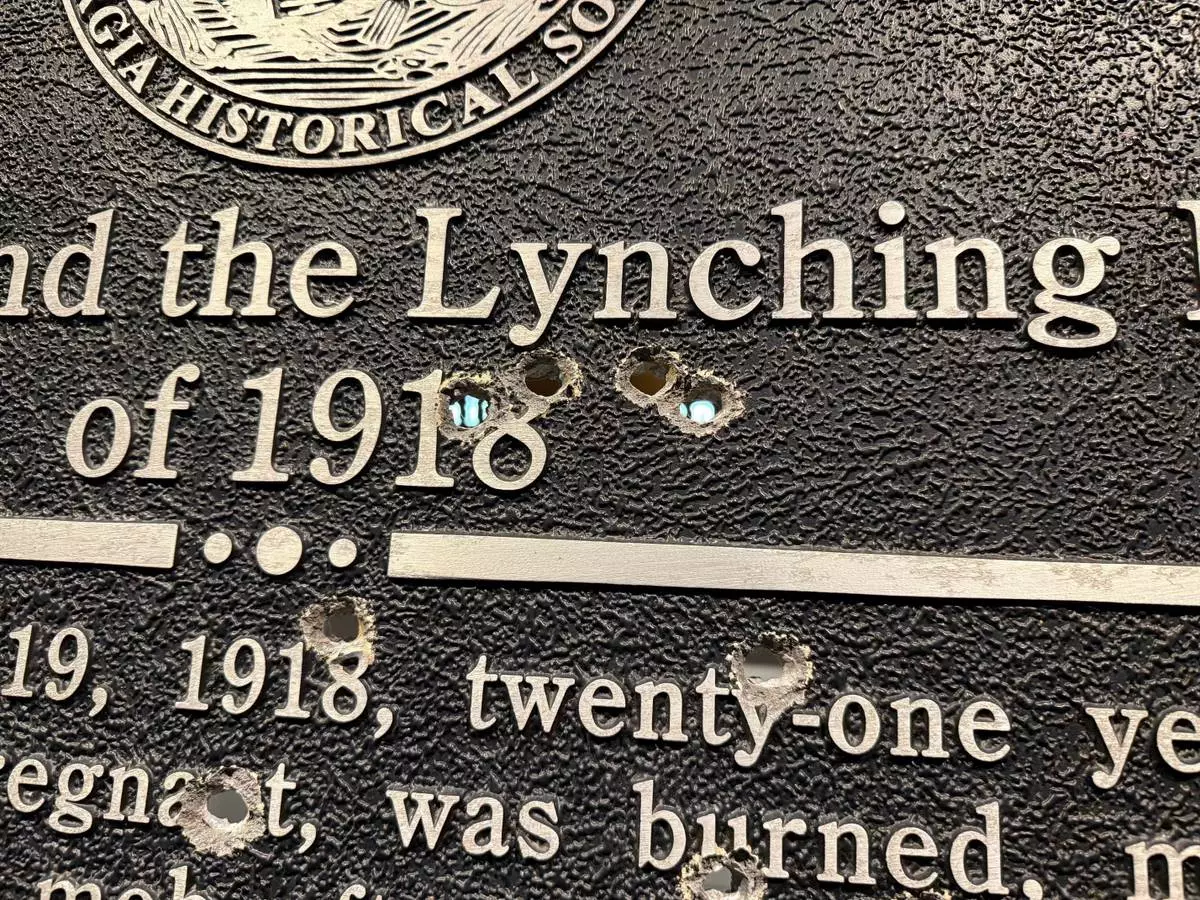
Pocked with bullet holes and cracked at its pedestal by an off-road vehicle, the Georgia Historical Society marker reads in part: “Mary Turner, eight months pregnant, was burned, mutilated, and shot to death by a mob after publicly denouncing her husband’s lynching the previous day. … No charges were ever brought against known or suspected participants in these crimes. From 1880-1930, as many as 550 people were killed in Georgia in these illegal acts of mob violence.”

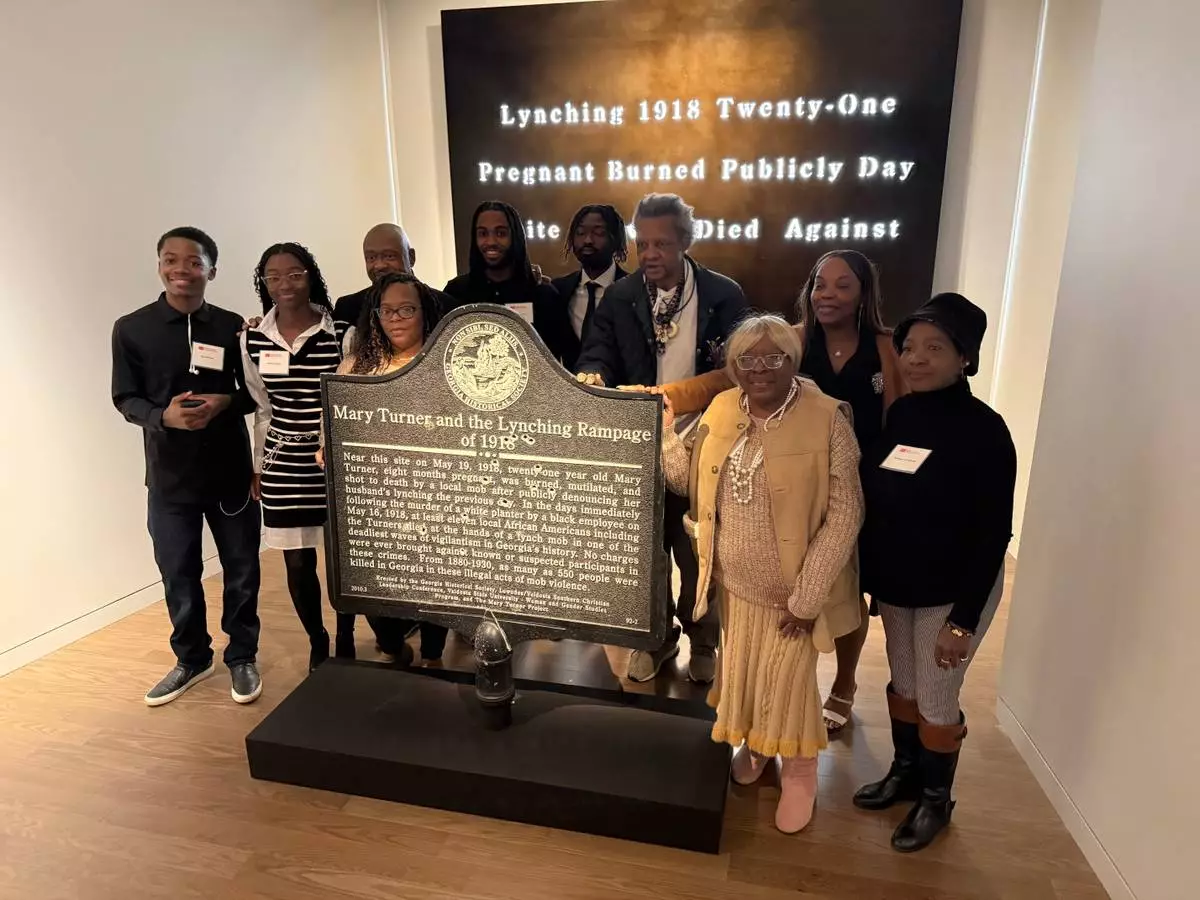
Now each word damaged by bullets is projected on a wall, and visitors hear those words spoken by some of Turner’s six generations of descendants.

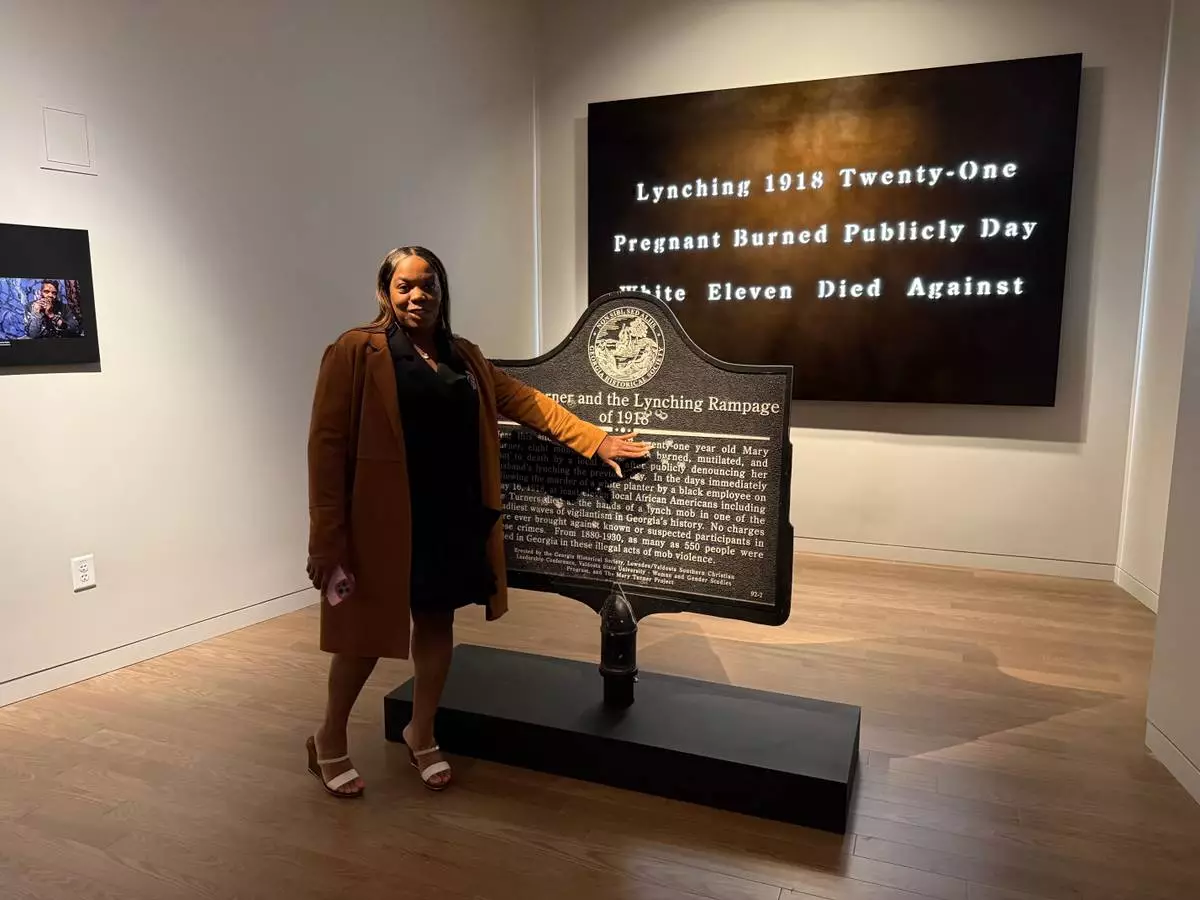
“I’m glad the memorial was shot up,” great-granddaughter Katrina Thomas said Saturday night after her first look at the exhibit in the National Museum for Civil and Human Rights. “Millions of people are going to learn her story. That her voice is continuing years and years after, it shows history does not disappear. It lives and continues to grow.”

Americans learned about these lynchings in 1918 because they were investigated in the immediate aftermath by Walter White, who founded the Georgia chapter of the National Association for the Advancement of Colored People and would become an influential voice for civil rights nationwide. A light-skinned Black man who could pass for white, he interviewed eyewitnesses and provided names of suspects to the governor of Georgia, according to his report in the NAACP’s publication, The Crisis.

Georgia was among the most active states for lynchings, according to the Equal Justice Initiative ’s catalog of more than 4,400 documented racial terror lynchings in the U.S. between Reconstruction and World War II. The organization has placed markers at many sites and built a monument to the victims in Montgomery, Alabama.

The nation’s first anti-lynching legislation was introduced in 1918 amid national reaction to deaths of Mary and Hayes Turner and their neighbors in Georgia's Brooks and Lowndes counties. It passed the House in 1922, but Southern senators filibustered it and another century would pass before lynching was made a federal hate crime in 2022.

“The same injustice that took her life was the same injustice that kept vandalizing it, year after year,” said Randy McClain, the Turners’ great-grandnephew. He grew up in the same rural area where the lynchings happened but did not know much about them or discover his family connection until he was an adult.

“Here it feels like a very safe space,” McClain said. “She's now finally at rest, and her story can be told. And her family can feel some sense of vindication.”

Closeup showing bullet holes in a Georgia Historic Marker memorializing the 1918 lynching of Mary Turner, now on display at the National Center for Civil and Human Rights, on Dec. 6, 2025 in Atlanta. (AP Photo/Michael Warren)

Closeup showing bullet holes in a Georgia Historic Marker memorializing the 1918 lynching of Mary Turner, now on display at the National Center for Civil and Human Rights, on Dec. 6, 2025 in Atlanta. (AP Photo/Michael Warren)

Katrina Thomas, a great-granddaughter of Mary Turner, who was lynched in 1918, poses with her historic marker at the National Center for Civil and Human Rights, on Dec. 6, 2025 in Atlanta. (AP Photo/Michael Warren)

Katrina Thomas, a great-granddaughter of Mary Turner, who was lynched in 1918, poses with her historic marker at the National Center for Civil and Human Rights, on Dec. 6, 2025 in Atlanta. (AP Photo/Michael Warren)

Descendants of Mary Turner, who was lynched in 1918, pose with her historic marker and artist Lonnie Holley, fourth from left, at the National Center for Civil and Human Rights, on Dec. 6, 2025 in Atlanta. (AP Photo/Michael Warren)

Descendants of Mary Turner, who was lynched in 1918, pose with her historic marker and artist Lonnie Holley, fourth from left, at the National Center for Civil and Human Rights, on Dec. 6, 2025 in Atlanta. (AP Photo/Michael Warren)

Recommended Articles