NFL coaches are part of a highly competitive fraternity and empathy is rarely expressed publicly among them.
Dan Campbell, though, feels for Dan Quinn.
Click to Gallery
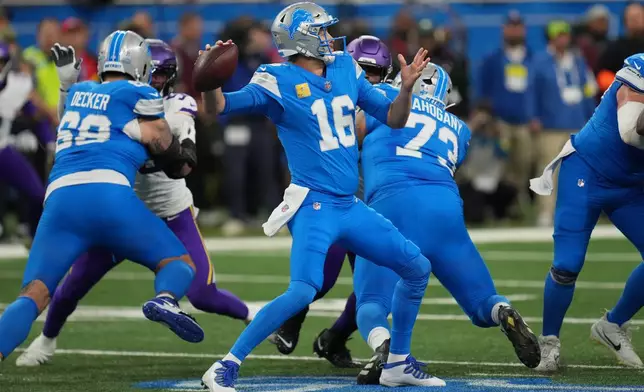
Detroit Lions quarterback Jared Goff (16) passes during the first half of an NFL football game against the Minnesota Vikings Sunday, Nov. 2, 2025, in Detroit. (AP Photo/Paul Sancya)
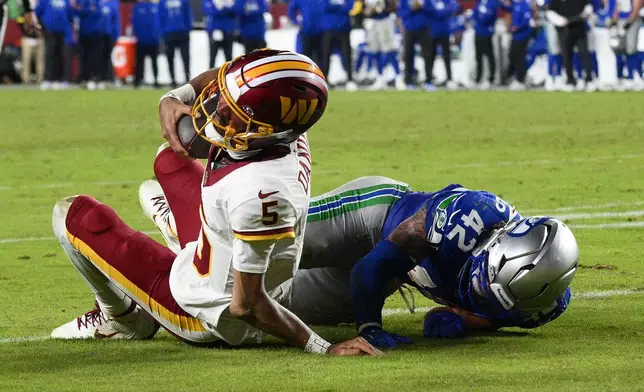
Washington Commanders quarterback Jayden Daniels (5) injures his arm as he is tackled by Seattle Seahawks linebacker Drake Thomas (42) during the second half of an NFL football game, Sunday, Nov. 2, 2025, in Landover, Md. (AP Photo/Nick Wass)
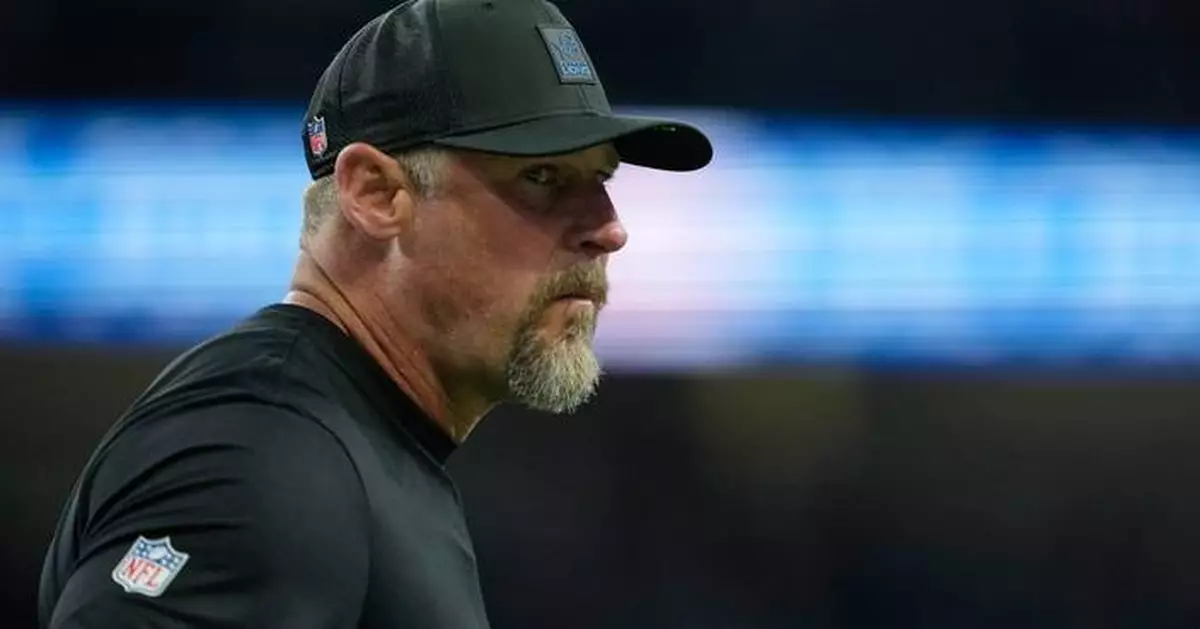
Washington Commanders head coach Dan Quinn on the sidelines before the start of of an NFL football game against the Seattle Seahawks, Sunday, Nov. 2, 2025, in Landover, Md. (AP Photo/Nick Wass)
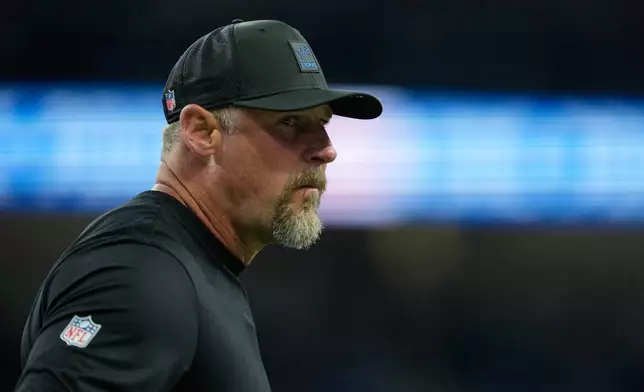
Detroit Lions head coach Dan Campbell stands on the field before an NFL football game against the Minnesota Vikings Sunday, Nov. 2, 2025, in Detroit. (AP Photo/Ryan Sun)
Quinn said it was his mistake that Washington Commanders quarterback Jayden Daniels was playing in the fourth quarter of their latest lopsided loss when he dislocated his left elbow.
“I know hindsight, all this and that, but yeah, I do feel for him,” Campbell said. “But I don’t feel like he should have to feel that way.”
The Campbell-led Detroit Lions (5-3) won't be feeling sorry for anyone, though, when they visit Washington on Sunday because they need a win to keep pace in the NFC North and among potential contenders in the conference.
The Commanders (3-6) are expected to be accommodating.
Detroit is an eight-point road favorite, according to BetMGM Sportsbook, against a team that has lost four straight and won't have its star quarterback.
Quinn acknowledged Daniels should not have been playing midway through the fourth quarter Sunday night, when the Commanders were down 31 points to Seattle in a game they lost 38-14. The reigning AP Offensive Rookie of the Year, who led Washington to an upset at Detroit in last season's playoffs, was tackled near the goal line, and when he used his non-throwing arm to brace himself, the elbow bent gruesomely.
“That’s on me,” Quinn said.
Marcus Mariota, the No. 2 overall draft pick a decade ago, will make his fourth start in place of Daniels. In five games this season, Mariota has as many touchdown passes (four) as interceptions.
The Lions trailed only Kansas City in odds to win the Super Bowl after their last win, 24-9 over the NFC South-leading Tampa Bay Buccaneers.
Expectations took a hit after Detroit's sloppy performance in a 27-24 loss to Minnesota.
“We were the greatest thing since sliced bread, and now we are a horrible offense apparently,” Lions quarterback Jared Goff said. “It comes and goes.”
Washington defensive coordinator Joe Whitt Jr. will be on the sideline on Sunday instead of in the booth, attempting to help a team that has given up nearly five touchdowns per game during a four-game losing streak.
“It’s the right call for us at this time, so the players can look directly at Joe (and) Joe can look directly at them," Quinn said.
The Commanders are giving up 253.6 yards through the air per game, ranking 29th in the league, and an NFL-high 8.36 yards per pass play.
The Lions chose to show confidence in their roster, and practice squad, instead of giving up draft picks at the trade deadline to acquire help for their banged-up offensive line or to bolster depth at defensive end.
“You know your own guys,” Campbell said. “You’ve been around them. You’ve seen them. You know the greatness behind them. You know their warts, too.”
The Commanders had the No. 1 rushing offense in the NFL earlier this season, and rookie seventh-round draft pick Jacory Croskey-Merritt deserved a lot of the credit.
Croskey-Merritt had a season-high 111 yards rushing and two of his four touchdowns in a 27-10 win over the Los Angeles Chargers in Week 5.
Since then, he hasn't run for more than 61 yards in a game and is averaging 32 yards and 2.8 yards per carry over the last three games.
Fixing the run game is a priority for Quinn.
“That’s one of the areas that’s really important to us," he said. "We look forward to improving in that area.”
Detroit has another opportunity to show it can bounce back from a loss better than any other NFL team.
The Lions have not lost two straight in the regular season since dropping five in a row from Sept. 25-Oct. 30, 2022, and no other team in the league has an active streak that is close to their run.
“It’s all kind of who we are and what we’re built for,” Goff said. "Now again, this is another team that’s coming off a loss and they probably pride themselves in being built that way as well, so we’ve got our hands full.”
AP NFL: https://apnews.com/hub/nfl
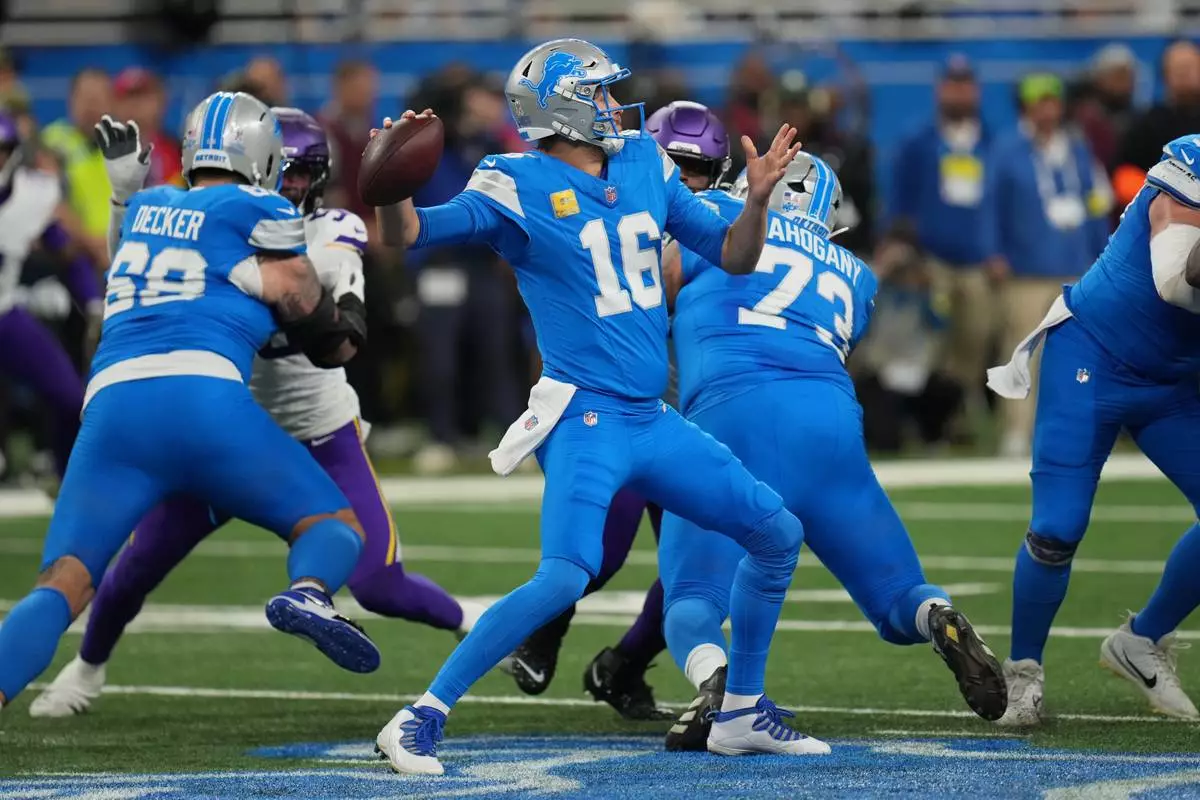
Detroit Lions quarterback Jared Goff (16) passes during the first half of an NFL football game against the Minnesota Vikings Sunday, Nov. 2, 2025, in Detroit. (AP Photo/Paul Sancya)
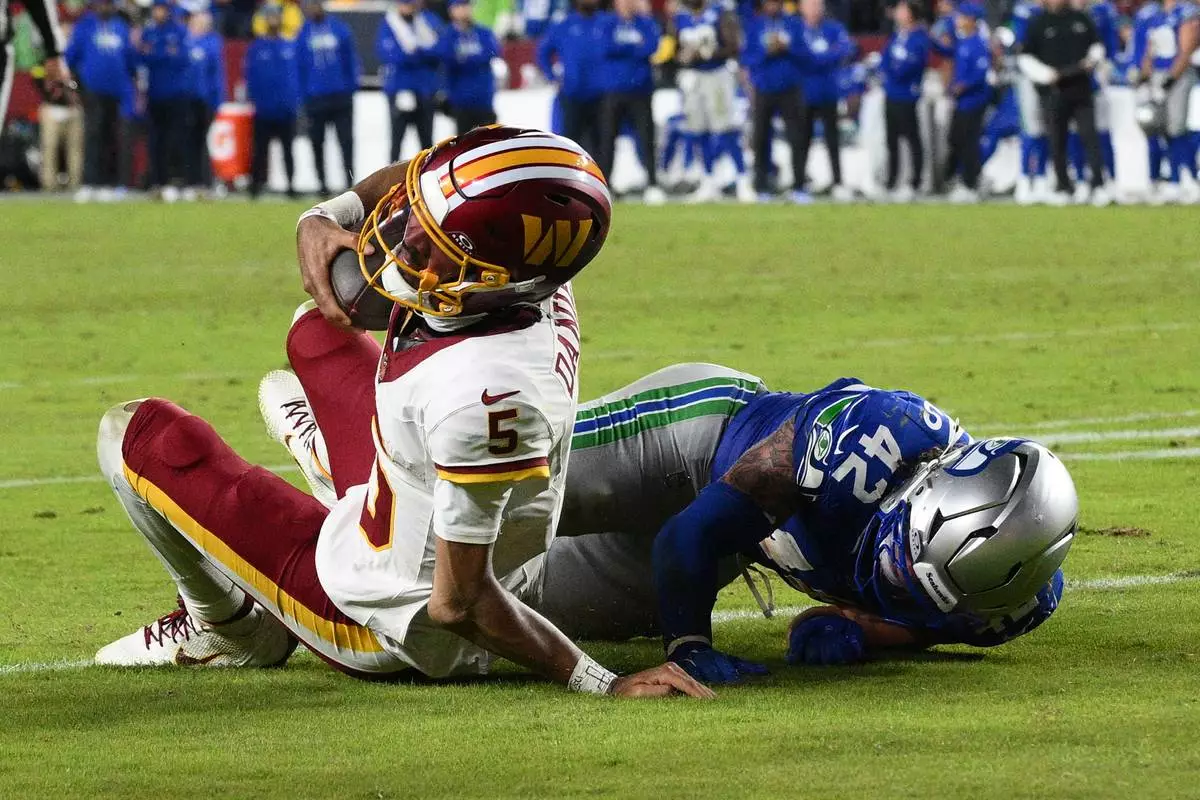
Washington Commanders quarterback Jayden Daniels (5) injures his arm as he is tackled by Seattle Seahawks linebacker Drake Thomas (42) during the second half of an NFL football game, Sunday, Nov. 2, 2025, in Landover, Md. (AP Photo/Nick Wass)
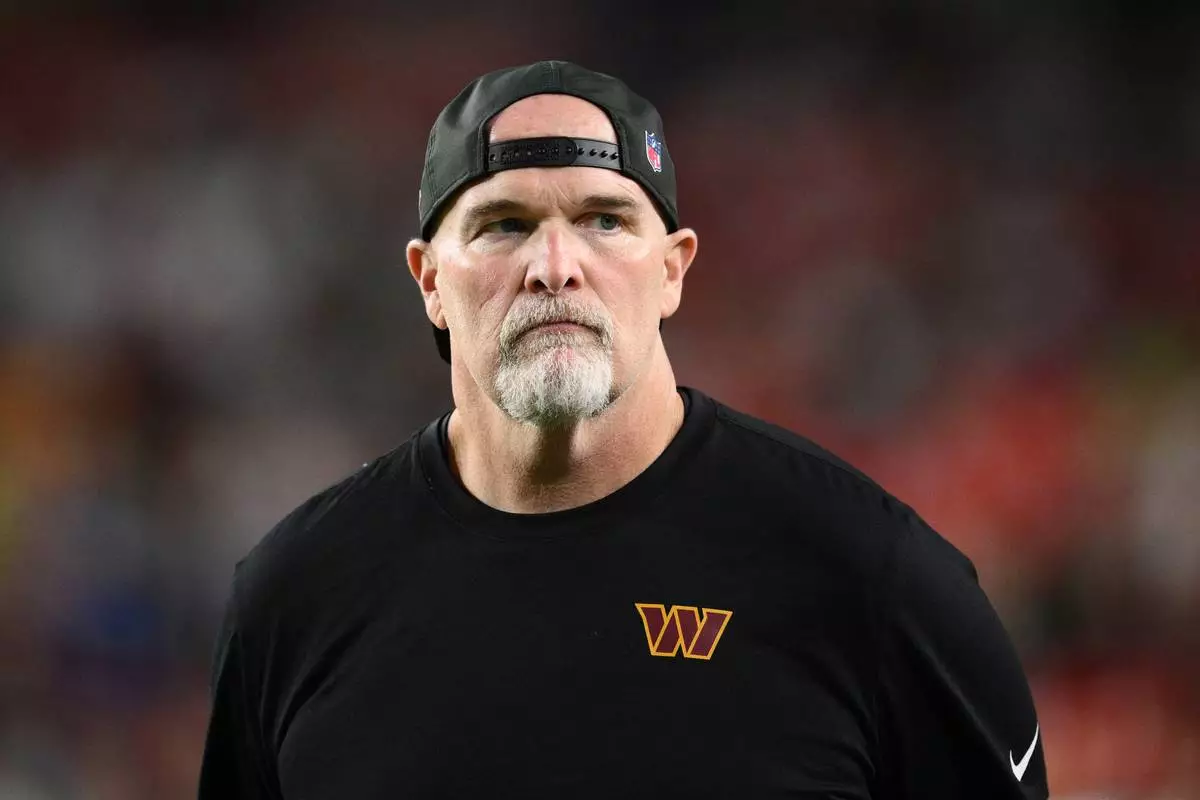
Washington Commanders head coach Dan Quinn on the sidelines before the start of of an NFL football game against the Seattle Seahawks, Sunday, Nov. 2, 2025, in Landover, Md. (AP Photo/Nick Wass)
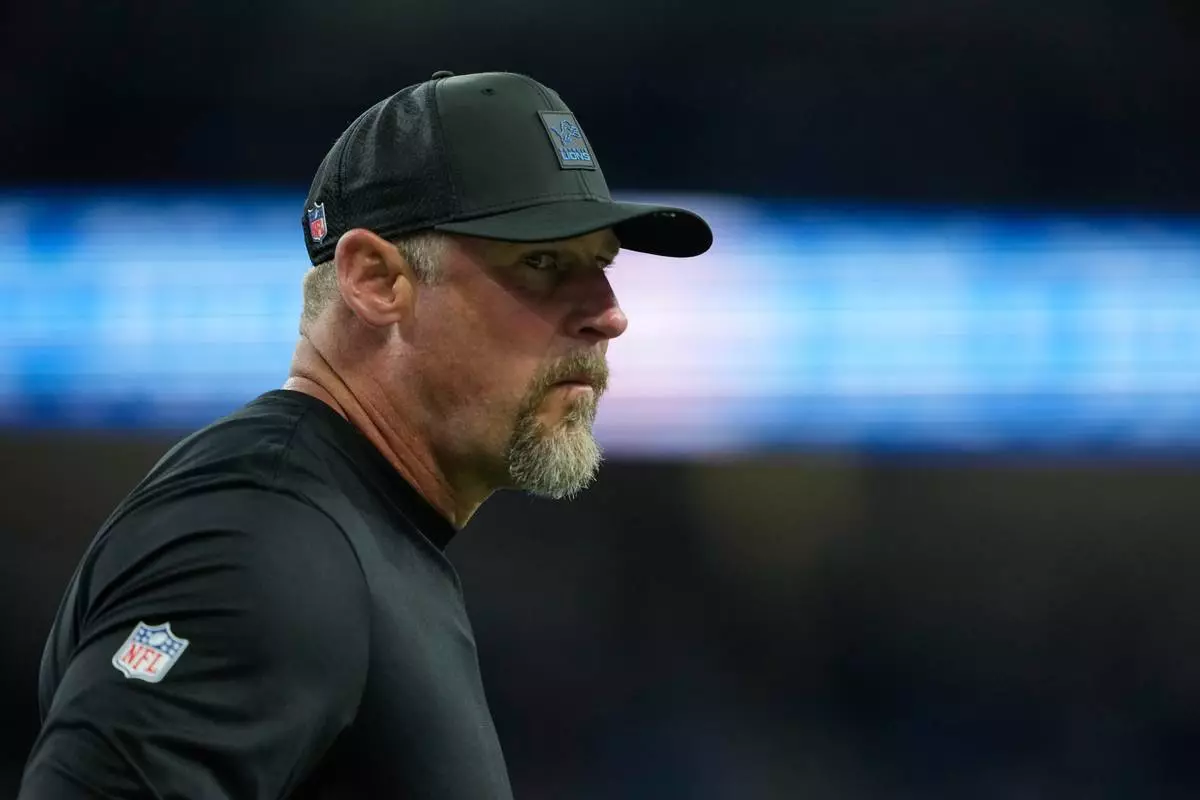
Detroit Lions head coach Dan Campbell stands on the field before an NFL football game against the Minnesota Vikings Sunday, Nov. 2, 2025, in Detroit. (AP Photo/Ryan Sun)
NEW YORK (AP) — Global leaders have been scrambling to contain the rising cost of oil and gasoline since the start of the Iran war, which took a record amount of oil off the market when tankers full of crude were stranded in the Persian Gulf and military strikes damaged refineries, pipelines and export terminals.
Hoping to ease some pain for consumers, President Donald Trump and other heads of state have been pulling on various levers, launching more oil on the market in a bid to calm the chaos.
A group of 32 nations that are members of the International Energy Agency began releasing the largest volume of emergency oil reserves in its history: 400 million barrels. Trump is tapping into oil from the Strategic Petroleum Reserve while lifting sanctions on Russian and Iranian crude and temporarily waiving the Jones Act, a maritime law that requires ships carrying goods between U.S. ports to be U.S.-flagged.
But despite those maneuvers, crude oil surpassed $100 a barrel and gasoline is selling for $4.06 a gallon on average in the U.S. While the stopgaps are helping, they're not adding up to enough oil to replace what's stranded, experts say.
“They're all incremental,” said Mark Barteau, professor of chemical engineering and chemistry at Texas A&M University. "You’re talking about these different patches being at the level of maybe 1 to 2 million barrels a day each, and you’ve got to get to 20, so it’s hard to see those actually adding up to the numbers that are needed. And then the question is, how long can you sustain those?”
Before the war began, roughly 15 million barrels of crude oil and 5 million barrels of oil products passed daily through the Strait of Hormuz, the narrow mouth of the Persian Gulf, amounting to about 20% of global oil consumption, according to the International Energy Agency.
In addition to that loss, some oil producing nations in the Middle East have halted oil production because they can't ship fuel out of the Gulf and their storage tanks are full. That's taken about 10 million more barrels per day off the market, the IEA said.
Then there are the eight countries around the Persian Gulf that together hold about 50% of global oil reserves. Under normal circumstances, they coordinate closely to raise or lower their output to keep prices steady, said Jim Krane, energy research fellow at Rice University’s Baker Institute. Usually Saudi Arabia steps in to bring spare oil to market and calm things down, he said.
“But all of that spare capacity is also bottled up inside the Persian Gulf right now and it can’t get to market either,” Krane said. “So the main emergency response system that we have is also blocked.”
The IEA said in its recent report that “the resumption of transit through the Strait of Hormuz is the single most important action to return to stable oil and gas flows and reduce the strains on markets and prices.”
Barring that, world leaders are grasping for ways to free up more oil.
Some nations have found workarounds to move oil out of the Gulf. Saudi Arabia is using its East-West pipeline, which stretches from the Persian Gulf to the Red Sea, to transfer about 5 million barrels per day out of the Gulf, said Michael Lynch, distinguished fellow at Energy Policy Research Foundation, a non-partisan institution focused on energy and economics. But the nation was already using that pipeline to transport oil, so it doesn’t have a lot of spare room to move oil from stranded tankers.
Trump also temporarily lifted sanctions on approximately 140 million barrels of Iranian oil that was already in transit. But that didn’t add oil to the market — it just widened the pool of potential buyers, said Daniel Sternoff, senior fellow at the Columbia Center on Global Energy Policy.
Typically, most Iranian oil was bought by private refiners in China, who purchased it at a steep discount, Sternoff said. But with sanctions lifted, others could scramble to buy the oil, which in turn raises its price to the benefit of Iran, he said.
“As soon as you are moving to waive sanctions on your adversary with whom you’re fighting a military conflict, to do something in their benefit, it just shows you that you are running out of options to try to prevent a rise in the price of oil,” Sternoff said.
The decision to lift sanctions on Russian oil could have more impact, because Russia had been storing unpurchased oil in tankers, Sternoff said. “By waiving sanctions, it will allow those barrels to clear.”
Trump’s temporary waiver of the Jones Act to allow foreign ships to temporarily transport goods between U.S. ports could potentially help ease natural gas prices by enabling companies to more efficiently ship liquefied natural gas from the Gulf Coast to New England.
But experts don’t expect the waiver to significantly impact the price of oil or gasoline. “It’s helpful, but not a game changer,” Lynch said.
The U.S. is a major oil producer, and exports more oil than it imports. But like any other oil producing nation, it can't just ramp up production instantly to fill the void.
“If the U.S. were to try to make up the global shortfall, we would need to nearly double our production,” Barteau said. “We couldn’t drill wells that fast even if we wanted to.”
Increasing domestic production by even 1 million barrels per day, a feat the U.S. accomplished during the shale boom, would be hard to duplicate, Lynch said.
“If we run every drilling rig right now, what happens a week from now when the war is over and the price goes back down $20?” Lynch asked. “People don’t want to develop long-term production based on a short-term price spike.”
Halting exports and using that oil within the U.S. wouldn't bring down gasoline prices either, experts say.
For one, oil is traded on a global market, so events happening halfway around the globe impact prices for everyone.
In addition, the U.S. doesn't produce enough of the type of oil its refineries process. It produced about 13.7 million barrels per day of oil at the end of 2025, according to the Energy Information Administration. And refineries processed about 16.3 million barrels per day that year, relying on imports to fill in the gaps, according to the American Fuel and Petrochemical Manufacturers (AFPM), a trade association.
That's because nearly 70% of U.S. refineries are set up to process heavy, sour crude, according to AFPM. But much of the oil produced in the U.S. is light, sweet crude, which was unlocked during the shale revolution.
“They need different crudes than the ones that are being produced right next to them now,” Krane said.
As a result, just 60% of the crude oil processed in U.S. refineries is extracted domestically, according to the AFPM. And retooling domestic refineries would cost billions of dollars, the group said. It also would require shutting down the refinery for a period of time, which generally raises gasoline prices.
“A lot of people like the IEA are making the point that this is the biggest oil crisis ever, which is partly true, partly an exaggeration, depending on how you count things,” Lynch said. “A lot of it has to do with how long does this last ... if it goes on for another six weeks we get to be in some serious trouble.”
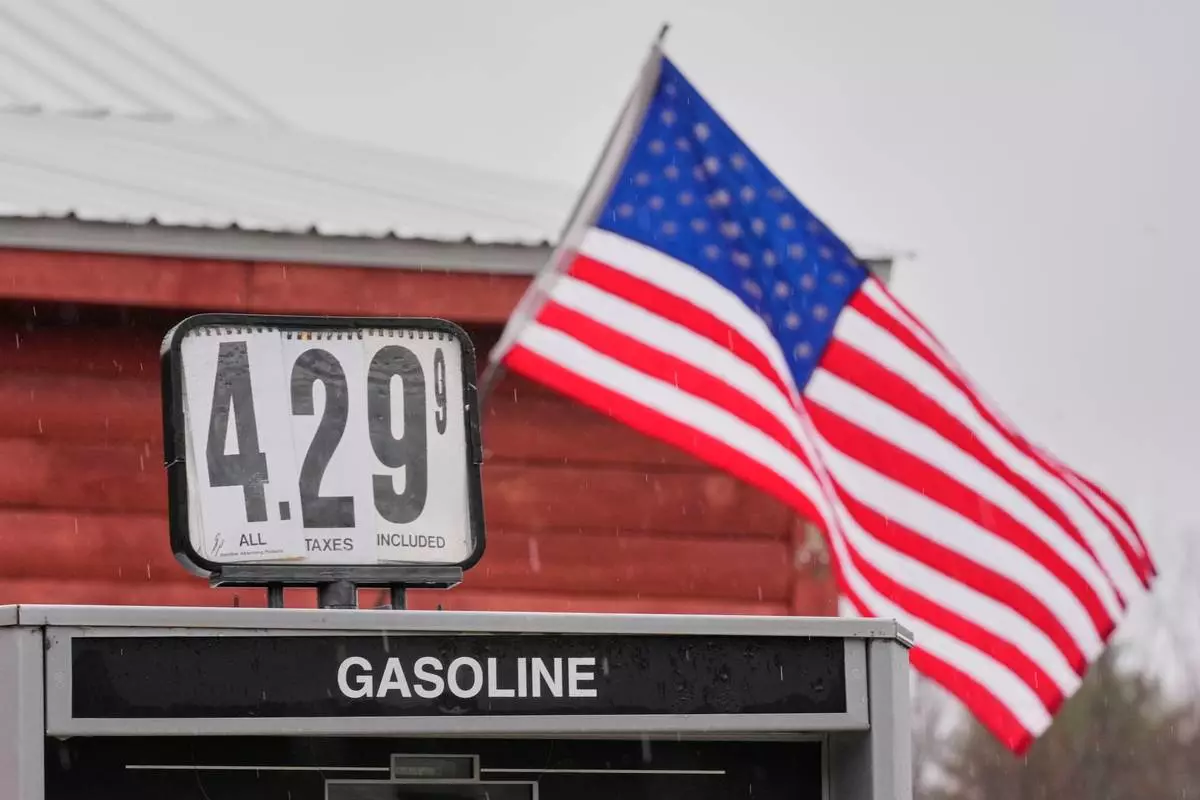
A sign shows the price of gas at a store, Tuesday, March 31, 2026, in Freeport, Maine. (AP Photo/Robert F. Bukaty)
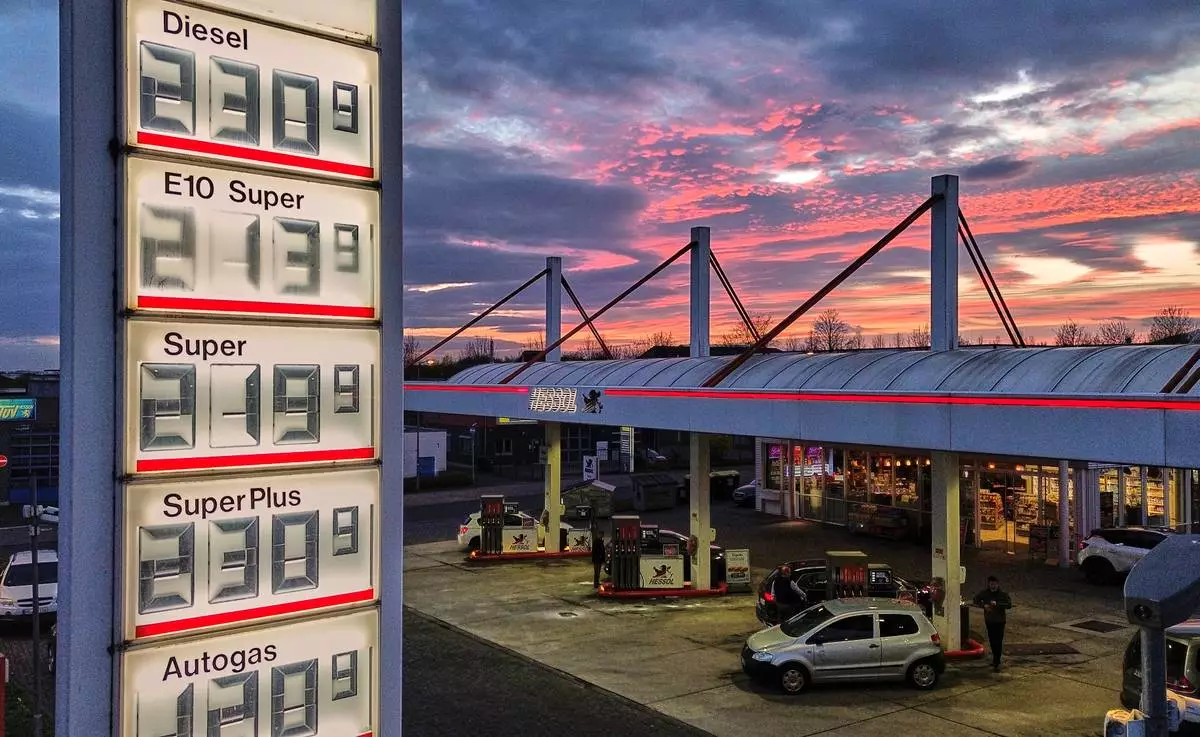
The sun has set behind a gas station in Frankfurt, Germany, Tuesday, March 31, 2026. (AP Photo/Michael Probst)
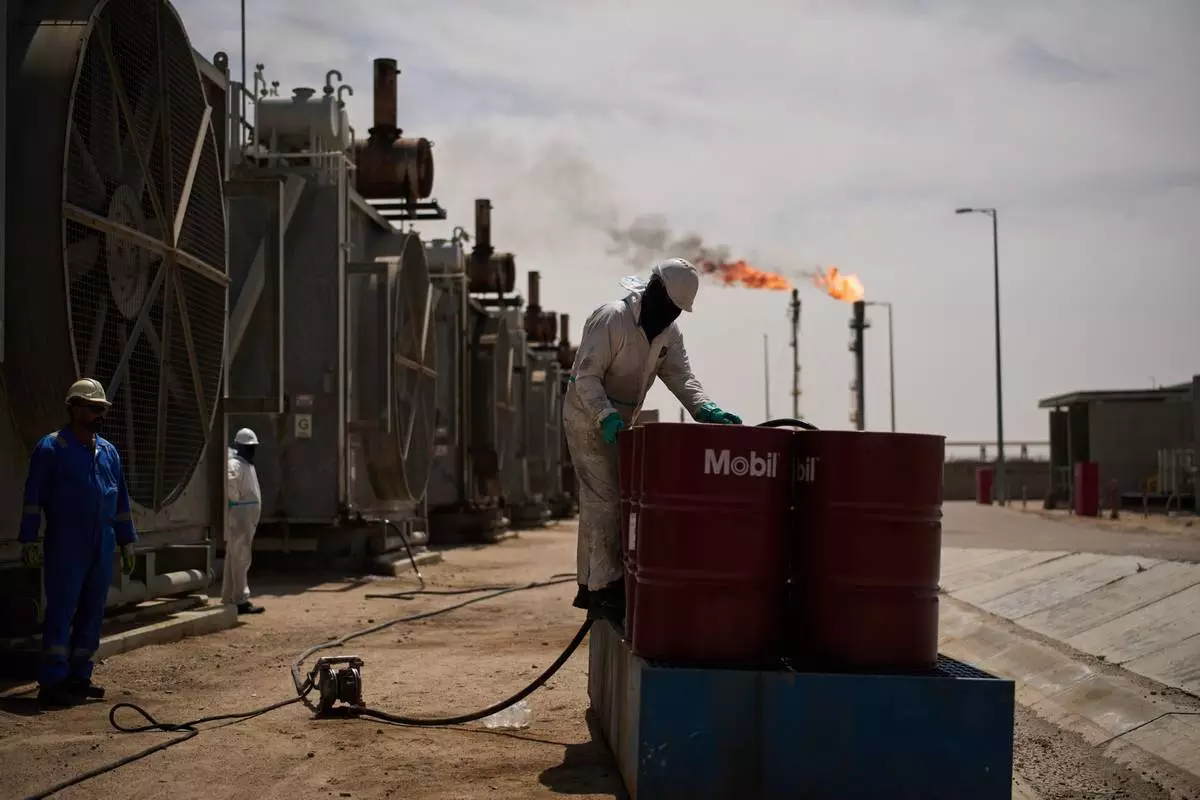
A worker collects engine oil as he works at a degassing station in Zubair oil field, whose operations have being reduced due to the Mideast war triggered by the U.S. and Israeli attacks on Iran, near Basra, Iraq, Saturday, March 28, 2026. (AP Photo/Leo Correa)
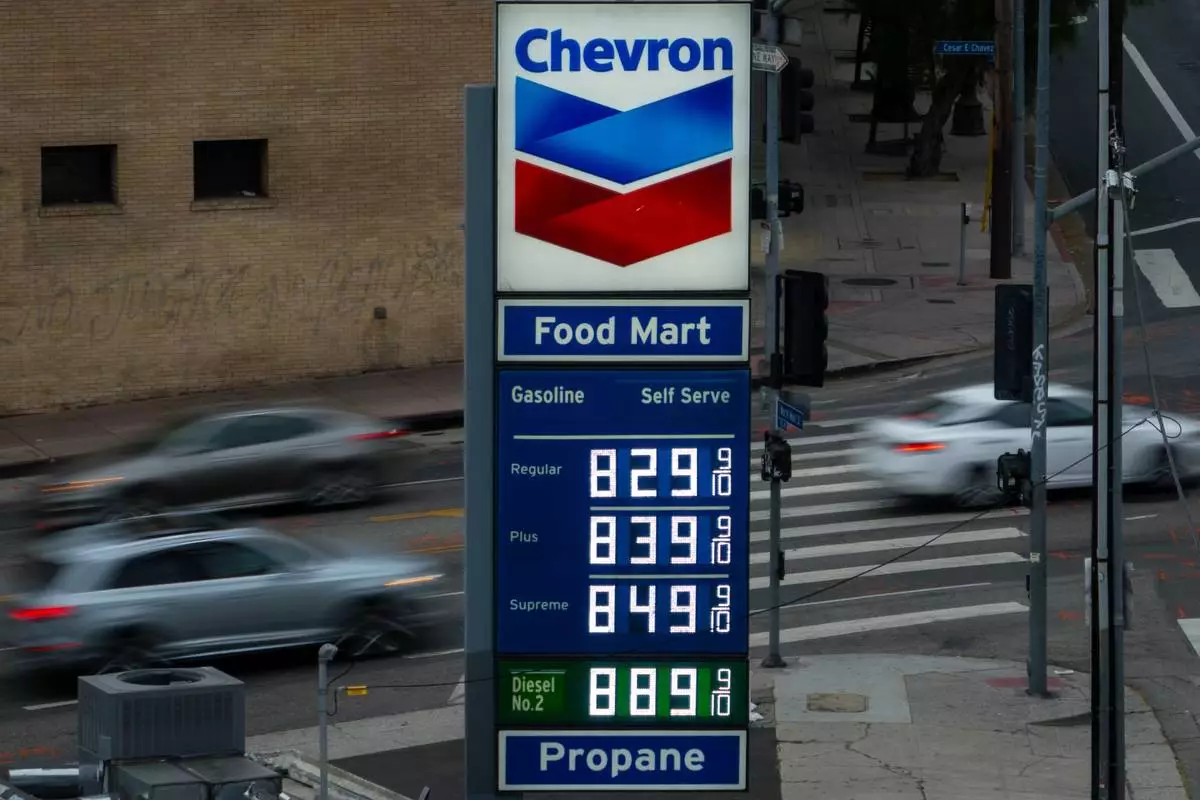
Gas prices are displayed at a Chevron gas station, in downtown Los Angeles, Tuesday, March 31, 2026. (AP Photo/Jae C. Hong)