Skip to Content Facebook Feature Image

Trump is ramping up a new effort to convince a skeptical public he can fix affordability worries

News

Trump is ramping up a new effort to convince a skeptical public he can fix affordability worries
News

News

Trump is ramping up a new effort to convince a skeptical public he can fix affordability worries

2025-11-08 09:55 Last Updated At:10:00

WASHINGTON (AP) — President Donald Trump is adjusting his messaging strategy to win over voters who are worried about the cost of living with plans to emphasize new tax breaks and show progress on fighting inflation.

The messaging is centered around affordability, and the push comes after inflation emerged as a major vulnerability for Trump and Republicans in Tuesday's elections, in which voters overwhelmingly said the economy was their biggest concern.

Democrats took advantage of concerns about affordability to run up huge margins in the New Jersey and Virginia governor races, flipping what had been a strength for Trump in the 2024 presidential election into a vulnerability going into next year's midterm elections.

White House officials and others familiar with their thinking requested anonymity to speak for this article in order to not get ahead of the president's actions. They stressed that affordability has always been a priority for Trump, but the president plans to talk about it more, as he did Thursday when he announced that Eli Lilly and Novo Nordisk would reduce the price of their anti-obesity drugs.

“We are the ones that have done a great job on affordability, not the Democrats,” Trump said at an event in the Oval Office to announce the deal. “We just lost an election, they said, based on affordability. It’s a con job by the Democrats.”

The White House is keeping up a steady drumbeat of posts on social media about prices and deals for Thanksgiving dinner staples at retailers such as Walmart, Lidl, Aldi and Target.

“I don’t want to hear about the affordability, because right now, we’re much less,” Trump told reporters Thursday, arguing that things are much better for Americans with his party in charge.

“The only problem is the Republicans don’t talk about it," he said.

As of now, the inflation outlook has worsened under Trump. Consumer prices in September increased at an annual rate of 3%, up from 2.3% in April, when the president first began to roll out substantial tariff hikes that suddenly burdened the economy with uncertainty. The AP Voter Poll showed the economy was the leading issue in Tuesday's elections in New Jersey, Virginia, New York City and California.

Grocery prices continue to climb, and recently, electricity bills have emerged as a new worry. At the same time, the pace of job gains has slowed, plunging 23% from the pace a year ago.

The White House maintains a list of talking points about the economy, noting that the stock market has hit record highs multiple times and that the president is attracting foreign investment. Trump has emphasized that gasoline prices are coming down, and maintained that gasoline is averaging $2 a gallon, but AAA reported Thursday that the national average was $3.08, about two cents lower than a year ago.

“Americans are paying less for essentials like gas and eggs, and today the Administration inked yet another drug pricing deal to deliver unprecedented health care savings for everyday Americans,” said White House spokesman Kush Desai.

Trump gets briefed about the economy by Treasury Secretary Scott Bessent and other officials at least once a week and there are often daily discussions on tariffs, a senior White House official said, noting Trump is expected to do more domestic travel next year to make his case that he’s fixing affordability.

But critics say it will be hard for Trump to turn around public perceptions on affordability.

“He’s in real trouble and I think it’s bigger than just cost of living,” said Lindsay Owens, executive director of Groundwork Collaborative, a liberal economic advocacy group.

Owens noted that Trump has “lost his strength” as voters are increasingly doubtful about Trump's economic leadership compared to Democrats, adding that the president doesn't have the time to turn around public perceptions of him as he continues to pursue broad tariffs.

There will be new policies rolled out on affordability, a person familiar with the White House thinking said, declining to comment on what those would be. Trump on Thursday indicated there will be more deals coming on drug prices. Two other White House officials said messaging would change — but not policy.

A big part of the administration's response on affordability will be educating people ahead of tax season about the role of Trump’s income tax cuts in any refunds they receive in April, the person familiar with planning said. Those cuts were part of the sprawling bill Republicans muscled through Congress in July.

This individual stressed that the key challenge is bringing prices down while simultaneously having wages increase, so that people can feel and see any progress.

There's also a bet that the economy will be in a healthier place in six months. With Federal Reserve Chair Jerome Powell's term ending in May, the White House anticipates the start of consistent cuts to the Fed's benchmark interest rate. They expect inflation rates to cool and declines in the federal budget deficit to boost sentiment in the financial markets.

But the U.S. economy seldom cooperates with a president’s intentions, a lesson learned most recently by Trump’s predecessor, Democrat Joe Biden, who saw his popularity slump after inflation spiked to a four-decade high in June 2022.

The Trump administration maintains it's simply working through an inflation challenge inherited from Biden, but new economic research indicates Trump has created his own inflation challenge through tariffs.

Since April, Harvard University economist Alberto Cavallo and his colleagues, Northwestern University’s Paola Llamas and Universidad de San Andres’ Franco Vazquez, have been tracking the impact of the import taxes on consumer prices.

In an October paper, the economists found that the inflation rate would have been drastically lower at 2.2%, had it not been for Trump's tariffs.

The administration maintains that tariffs have not contributed to inflation. They plan to make the case that the import taxes are helping the economy and dismiss criticisms of the import taxes as contributing to inflation as Democratic talking points.

The fate of Trump's country-by-country tariffs is currently being decided by the Supreme Court, where justices at a Wednesday hearing seemed dubious over the administration's claims that tariffs were essentially regulations and could be levied by a president without congressional approval. Trump has maintained at times that foreign countries pay the tariffs and not U.S. citizens, a claim he backed away from slightly Thursday.

“They might be paying something,” he said. “But when you take the overall impact, the Americans are gaining tremendously.”

Associated Press writers Will Weissert and Michelle L. Price contributed to this report.

President Donald Trump attends a dinner with leaders from countries in Central Asia, Thursday, Nov. 6, 2025, in the East Room of the White House in Washington. (AP Photo/Jacquelyn Martin)
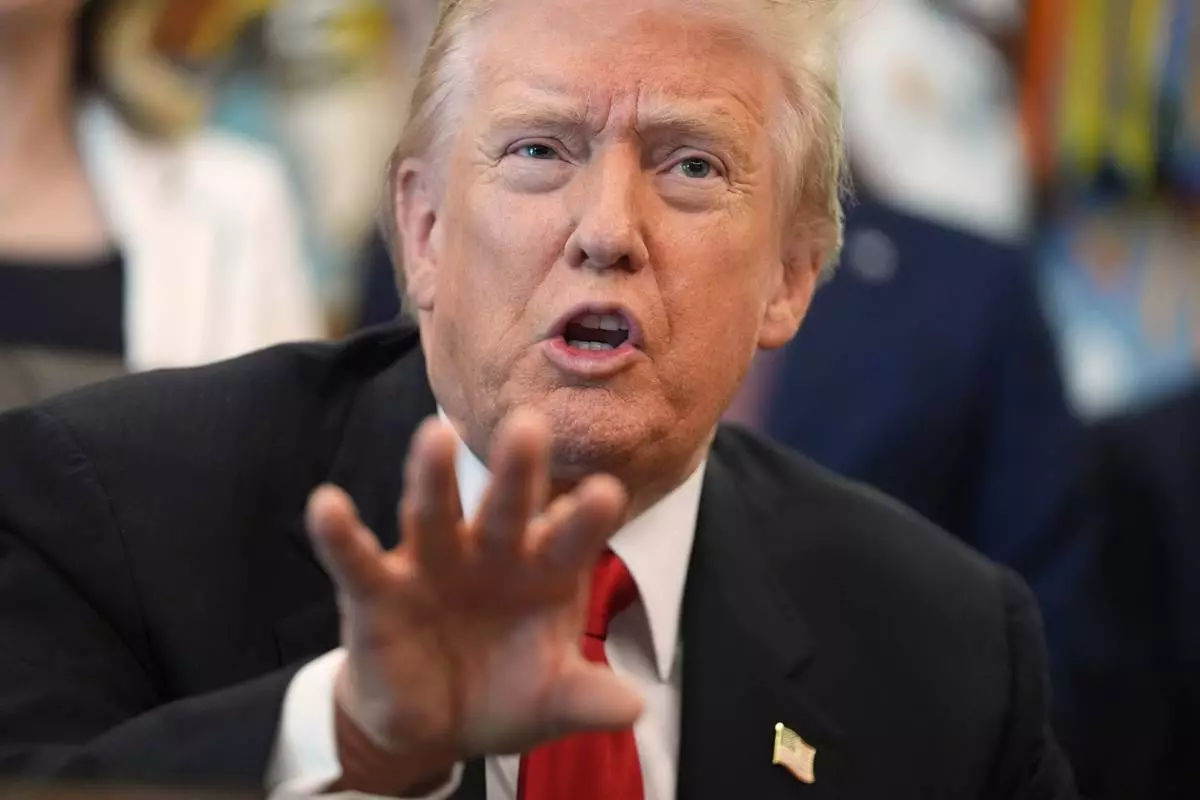
President Donald Trump attends a dinner with leaders from countries in Central Asia, Thursday, Nov. 6, 2025, in the East Room of the White House in Washington. (AP Photo/Jacquelyn Martin)

President Donald Trump speaks during an event about drug prices, Thursday, Nov. 6, 2025, in the Oval Office of the White House in Washington. (AP Photo/Evan Vucci)
President Donald Trump speaks during an event about drug prices, Thursday, Nov. 6, 2025, in the Oval Office of the White House in Washington. (AP Photo/Evan Vucci)
DUMAYR, Syria (AP) — A raid by U.S. forces and a local Syrian group aiming to capture an Islamic State group official instead killed a man who had been working undercover gathering intelligence on the extremists, family members and Syrian officials have told The Associated Press.

The killing in October underscores the complex political and security landscape as the United States begins working with interim Syrian President Ahmad al-Sharaa in the fight against remnants of IS.

According to relatives, Khaled al-Masoud had been spying on IS for years on behalf of the insurgents led by al-Sharaa and then for al-Sharaa’s interim government, established after the fall of former President Bashar Assad a year ago. Al-Sharaa’s insurgents were mainly Islamists, some connected to al-Qaida, but enemies of IS who often clashed with it over the past decade.

Neither U.S. nor Syrian government officials have commented on al-Masoud’s death, an indication that neither side wants the incident to derail improving ties. Weeks after the Oct. 19 raid, al-Sharaa visited Washington and announced Syria would join the global coalition against IS.

Still, al-Masoud’s death could be “quite a setback” for efforts to combat IS, said Wassim Nasr, a senior research fellow with the Soufan Center, a New York-based think tank focused on security issues.

Al-Masoud had been infiltrating IS in the southern deserts of Syria known as the Badiya, one of the places where remnants of the extremist group have remained active, Nasr said.

The raid targeting him was a result of “the lack of coordination between the coalition and Damascus,” Nasr said.

In the latest sign of the increasing cooperation, the U.S. Central Command said Sunday that American troops and forces from Syria’s Interior Ministry had located and destroyed 15 IS weapons caches in the south.

The raid occurred in Dumayr, a town east of Damascus on the edge of the desert. At around 3 a.m., residents woke to the sound of heavy vehicles and planes.

Residents said U.S. troops conducted the raid alongside the Syrian Free Army, a U.S.-trained opposition faction that had fought against Assad. The SFA now officially reports to the Syrian Defense Ministry.

Al-Masoud’s cousin, Abdel Kareem Masoud, said he opened his door and saw Humvees with U.S. flags on them.

“There was someone on top of one of them who spoke broken Arabic, who pointed a machine gun at us and a green laser light and told us to go back inside,” he said.

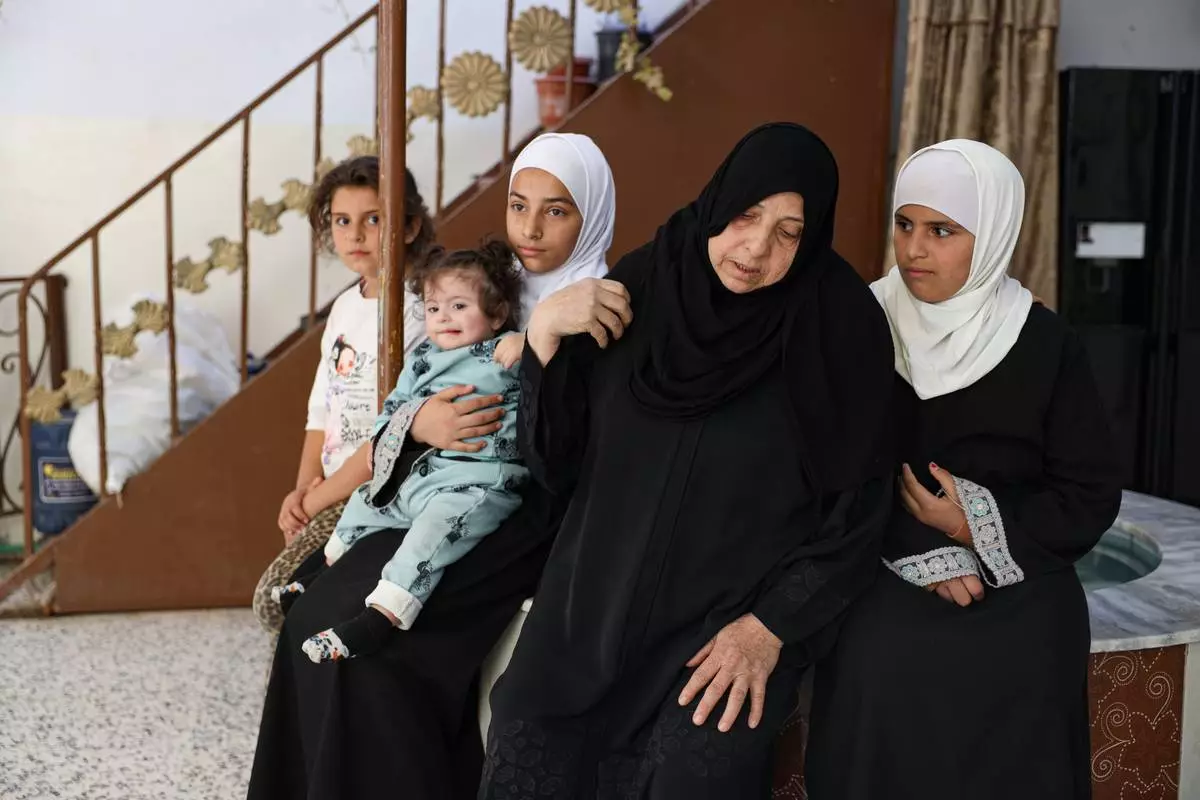
Khaled al-Masoud’s mother, Sabah al-Sheikh al-Kilani, said the forces then surrounded her son’s house next door, where he was with his wife and five daughters, and banged on the door.

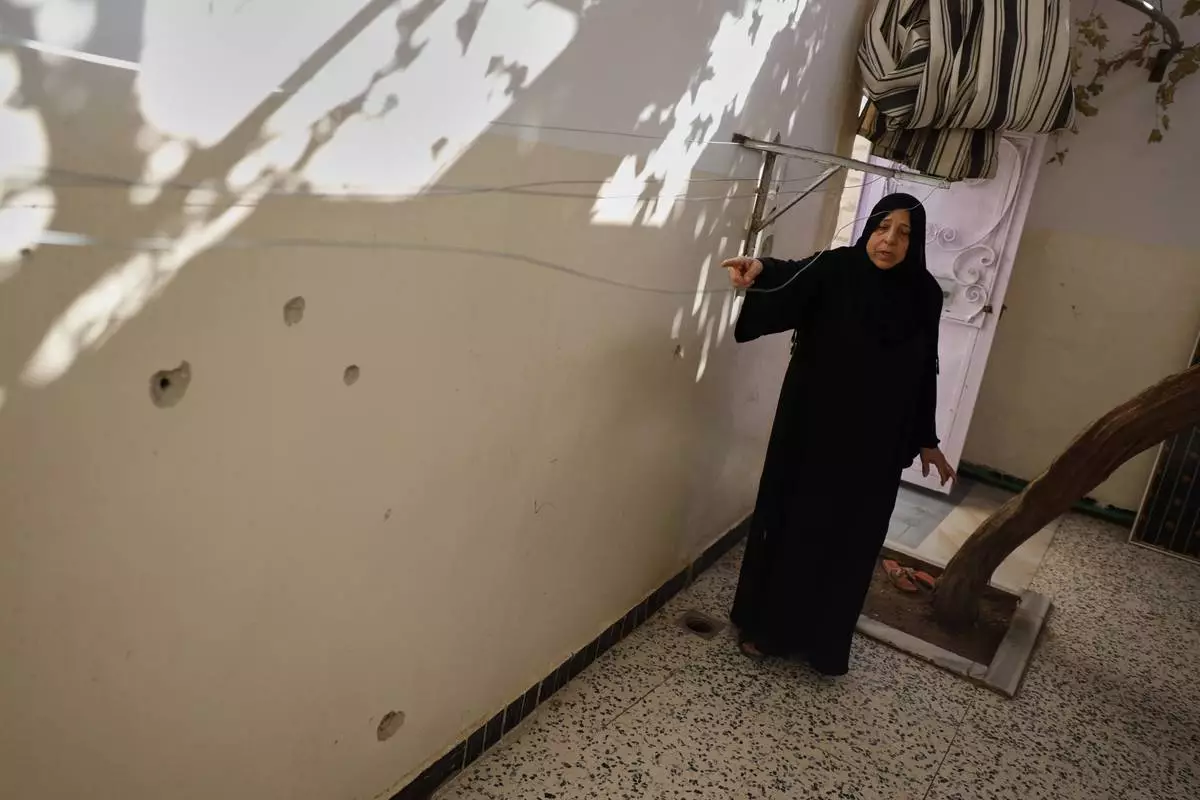
Al-Masoud told them that he was with General Security, a force under Syria’s Interior Ministry, but they broke down the door and shot him, al-Kilani said.

They took him away, wounded, al-Kilani said. Later, government security officials told the family he had been released but was in the hospital. The family was then called to pick up his body. It was unclear when he had died.

“How did he die? We don’t know,” his mother said. “I want the people who took him from his children to be held accountable.”

Al-Masoud’s family believes he was targeted based on faulty intelligence provided by members of the Syrian Free Army.

Representatives of the SFA did not respond to requests for comment.

Al-Masoud had worked with al-Sharaa’s insurgent group, Hayat Tahrir al-Sham, in its northwestern enclave of Idlib before Assad’s fall, his cousin said. Then he returned to Dumayr and worked with the security services of al-Sharaa’s government.

Two Syrian security officials and one political official, who spoke on condition of anonymity because they were not authorized to comment publicly, confirmed that al-Masoud had been working with Syria's interim government in a security role. Two of the officials said he had worked on combating IS.

Initial media reports on the raid said it had captured an IS official. But U.S. Central Command, which typically issues statements when a U.S. operation kills or captures a member of the extremist group in Syria, made no announcement.

A U.S. defense official, when asked for more information about the raid and its target and whether it had been coordinated with Syria's government, said, “We are aware of these reports but do not have any information to provide.” The official spoke on condition of anonymity in order to discuss a sensitive military operation.

Representatives of Syria’s defense and interior ministries, and of U.S. envoy to Syria Tom Barrack, declined to comment.

At its peak in 2015, IS controlled a swath of territory across Iraq and Syria half the size of the United Kingdom. It was notorious for its brutality against religious minorities as well as Muslims not adhering to the group’s extreme interpretation of Islam.

After years of fighting, the U.S.-led coalition broke the group's last hold on territory in late 2019. Since then, U.S. troops in Syria have been working to ensure IS does not regain a foothold. The U.S. estimates IS still has about 2,500 members in Syria and Iraq. U.S. Central Command last month said the number of IS attacks there had fallen to 375 for the year so far, compared to 1,038 last year.

Fewer than 1,000 U.S. troops are believed to be operating in Syria, carrying out airstrikes and conducting raids against IS cells. They work mainly alongside the Kurdish-led Syrian Democratic Forces in the northeast and the Syrian Free Army in the south.

Now the U.S. has another partner: the security forces of the new Syrian government.

Airwars, a London-based conflict monitor, has reported 52 incidents in which civilians were harmed or killed in coalition operations in Syria since 2020.

The group classified al-Masoud as a civilian.

Airwars director Emily Tripp said the group has seen "multiple instances of what the U.S. call ‘mistakes,’” including a 2023 case in which the U.S. military announced it had killed an al-Qaida leader in a drone strike. The target later turned out to be a civilian farmer.

It was unclear if the Oct. 19 raid went wrong due to faulty intelligence or if someone deliberately fed the coalition false information. Nasr said that in the past, feuding groups have sometimes used the coalition to settle scores.

“That’s the whole point of having a hotline with Damascus, in order to see who’s who on the ground,” he said.

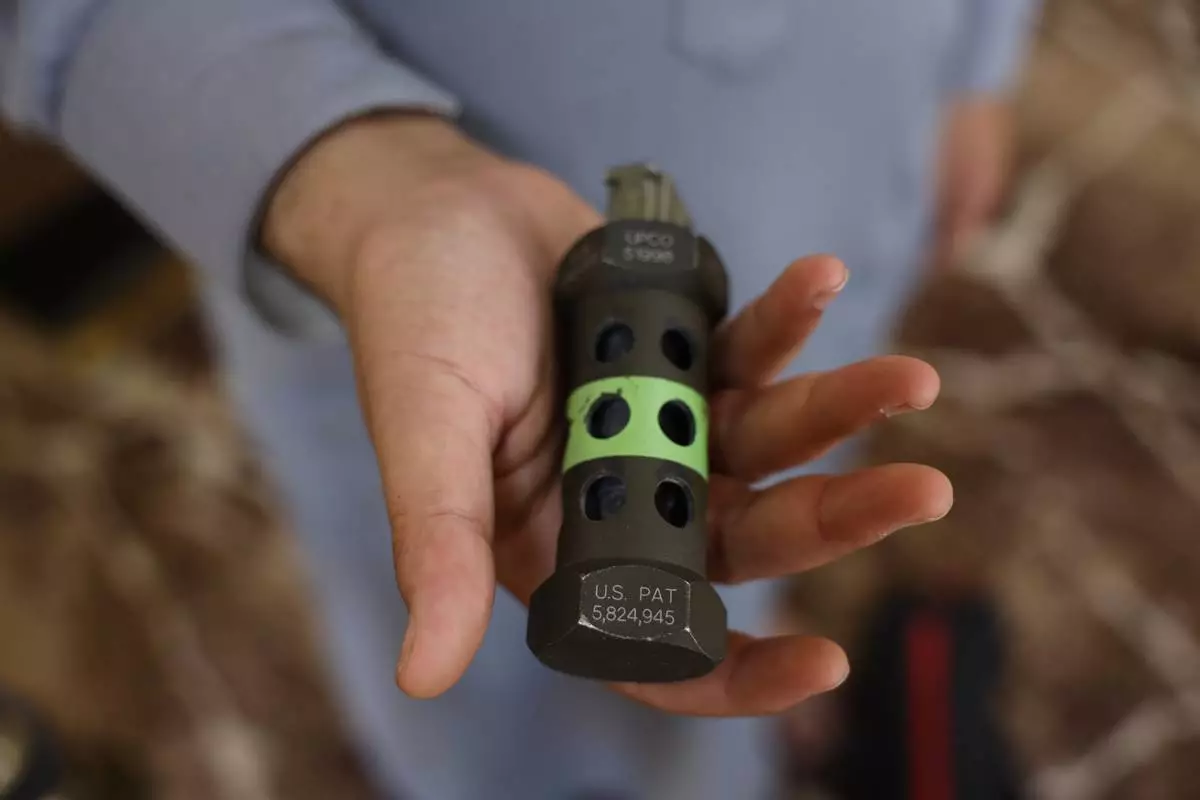
A relative of Khaled al-Masoud holds a piece of a munition said to have been used in the raid that killed him, in the town of Dumayr, in the Damascus countryside, Syria, Oct. 28, 2025. (AP Photo/Omar Albam)

A relative of Khaled al-Masoud holds a piece of a munition said to have been used in the raid that killed him, in the town of Dumayr, in the Damascus countryside, Syria, Oct. 28, 2025. (AP Photo/Omar Albam)

Sabah al-Sheikh al-Kilani, the mother of Khaled al-Masoud, sits with several of his daughters at the family home after he was killed during a raid in the town of al-Dumayr, in the Damascus countryside, Syria, Oct. 28, 2025. (AP Photo/Omar Albam)

Sabah al-Sheikh al-Kilani, the mother of Khaled al-Masoud, sits with several of his daughters at the family home after he was killed during a raid in the town of al-Dumayr, in the Damascus countryside, Syria, Oct. 28, 2025. (AP Photo/Omar Albam)

Sabah al-Sheikh al-Kilani, the mother of Khaled al-Masoud, points to bullet holes in the wall of her son's home after he was killed during a raid in the town of al-Dumayr, in the Damascus countryside, Syria, Oct. 28, 2025. (AP Photo/Omar Albam)

Sabah al-Sheikh al-Kilani, the mother of Khaled al-Masoud, points to bullet holes in the wall of her son's home after he was killed during a raid in the town of al-Dumayr, in the Damascus countryside, Syria, Oct. 28, 2025. (AP Photo/Omar Albam)

Recommended Articles