Welcome remarks by SDEV at Project Cost Management Forum 2025
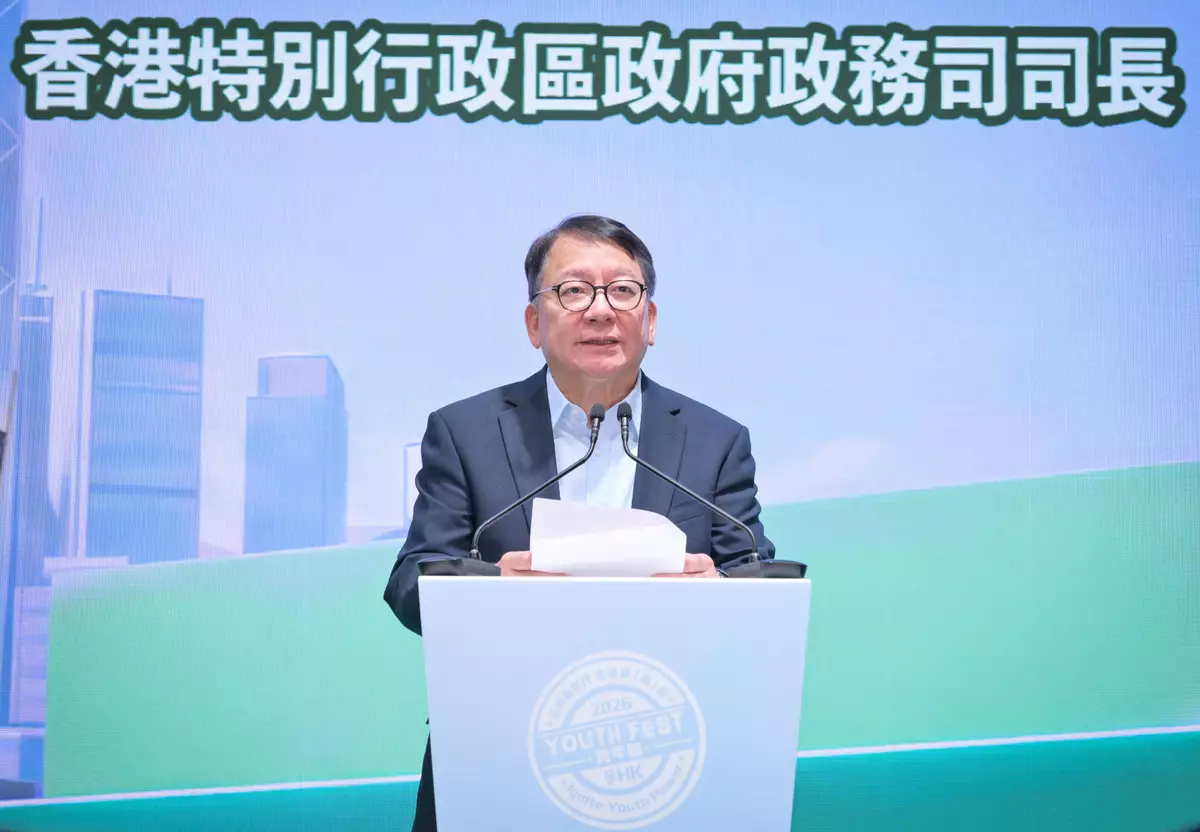
Following are the welcome remarks by the Secretary for Development, Ms Bernadette Linn, at the Project Cost Management Forum 2025 today (November 7):
Deputy Financial Secretary (Mr Michael Wong), our esteemed speakers from Qatar, Singapore, the United Kingdom and our close neighbour, the Guangdong Province and to all the practitioners from the sector, ladies and gentlemen,
Good morning! First of all, welcome to you all for joining this Project Cost Management Forum 2025 organised by the Centre of Excellence for Major Project Leaders spearheaded by the Development Bureau. We are privileged today to have renowned experts and practitioners from different parts of the world to share with us their advice on project cost governance and cost management, with their insights on project financing and delivery as well as adoption of innovative technology.
Hong Kong has made remarkable achievements as an international metropolis: we are well-known for our free economy, we are among the most desirable places to do business across the globe, and we ranked at the top among cities for our air cargo throughput etc, the list goes on. World-class infrastructure has been fundamental to this success, driving economic growth and sustaining our long-term competitiveness.
As you may have already known and as highlighted by the Deputy Financial Secretary just now, the 15th National Games will start this Sunday. We are hosting events like fencing, rugby sevens and handball. When it comes to sports, for sure, as the Deputy Financial Secretary has mentioned, the Kai Tak Sports Park would come to mind. Since its opening in March this year, numerous international events, games and concerts have been held, attracting not only locals but tourists around the world. The facility has lifted Hong Kong to greater heights. So it is a great example to testify how world-class facilities and infrastructure could drive our economy.
With a view to providing further impetus to drive Hong Kong's economy, as highlighted in the latest Policy Address and Budget, the Government is committed to accelerating the development of what we called the Northern Metropolis in the northern part of Hong Kong, a new engine for Hong Kong's future growth. This would entail involvement of significant amount of resources by both the public and private sectors to implement an array of infrastructure and development projects, delivering quality premises, as well as facilities for businesses and households.
Notwithstanding the benefits brought about by the investment, we are mindful of the need to use public money prudently. Since the inaugural Project Cost Management Forum held in 2021, we have been actively fostering a culture of cost-consciousness within the construction industry. Over the years, we have implemented holistic project cost management at various stages of public works projects to ensure the careful use of public funds. With the rollout of major development like the Northern Metropolis and an annual capital works expenditure exceeding HK$120 billion in the short to medium term, this cost-consciousness mindset is more critical than ever.
Given the current global financial situation, we must hold on to the principle of prudent use of public funds. Specifically, we are planning ahead with an "ownership" mindset - to comprehensively evaluate the cost-effectiveness of different implementation proposals and review site selection, usage mix, the scale of the project, design, implementation programme etc, in the very upfront stages, to formulate practical and cost-effective proposals.
We also fully embrace the full integration between technological and industrial innovation to enhance productivity, and we will adopt transformative solutions in our public works, echoing with our country's 15th Five-Year Plan. For example, the Development Bureau is actively formulating various measures to promote the use of Artificial Intelligence in the construction industry.
We are also keen to continuously uplift capabilities of our diverse construction talent pool, promote knowledge exchange with our Mainland and international partners, and strengthen collaborations with close working partners around the world, thereby reinforcing our role as international infrastructure centre.
As a concrete step to take forward the initiatives I mentioned just now, I am pleased to announce that we would shortly witness the exchange of a Memorandum of Understanding with Singapore. It demonstrates our shared commitment to fostering deeper collaboration in construction innovation and project management.
Lastly, just as robust infrastructure is fundamental to the progress of our society, so too is active civic participation. So you all know what I am going to say next. Please allow me to repeat an important message, an important appeal to you all, to actively participate in one such upcoming exercise to demonstrate civic mindedness, one that also bears significance to Hong Kong's development in the coming four years as we take forward major land development and infrastructure projects, and that is of course the Legislative Council election on December 7. I urge you to not just vote in your various capacities. I think all the practitioners here, you do have various capacities. So just vote in your various capacities and encourage your family, friends and colleagues to do the same. Just as our infrastructure helps shape a better city, your votes help build a better Hong Kong, the place we are proud to call home.
I am confident that today's Forum will be enlightening and inspiring. Let us make the most of this opportunity to collaborate, innovate, and drive progress together.
Thank you.

Source: AI-found images