Skip to Content Facebook Feature Image

France mourns its stolen crown jewels as their uncomfortable colonial past returns to view

News

France mourns its stolen crown jewels as their uncomfortable colonial past returns to view
News

News

France mourns its stolen crown jewels as their uncomfortable colonial past returns to view

2025-11-07 14:04 Last Updated At:18:10

PARIS (AP) — As French police race to track where the Louvre's stolen crown jewels have gone, a growing chorus wants a brighter light on where they came from.

The artifacts were French, but the gems were not. Their exotic routes to Paris run through the shadows of empire — an uncomfortable history that France, like other Western nations with treasure-filled museums, has only begun to confront.

More Images
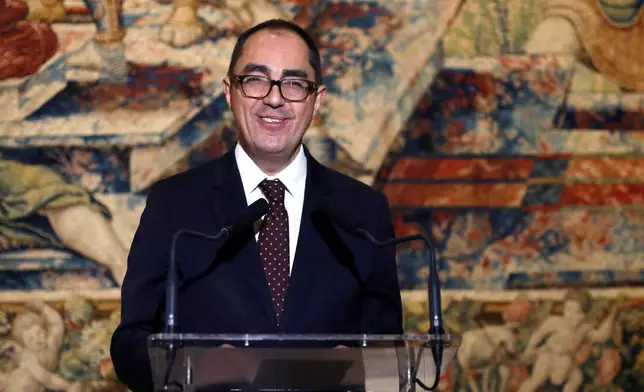
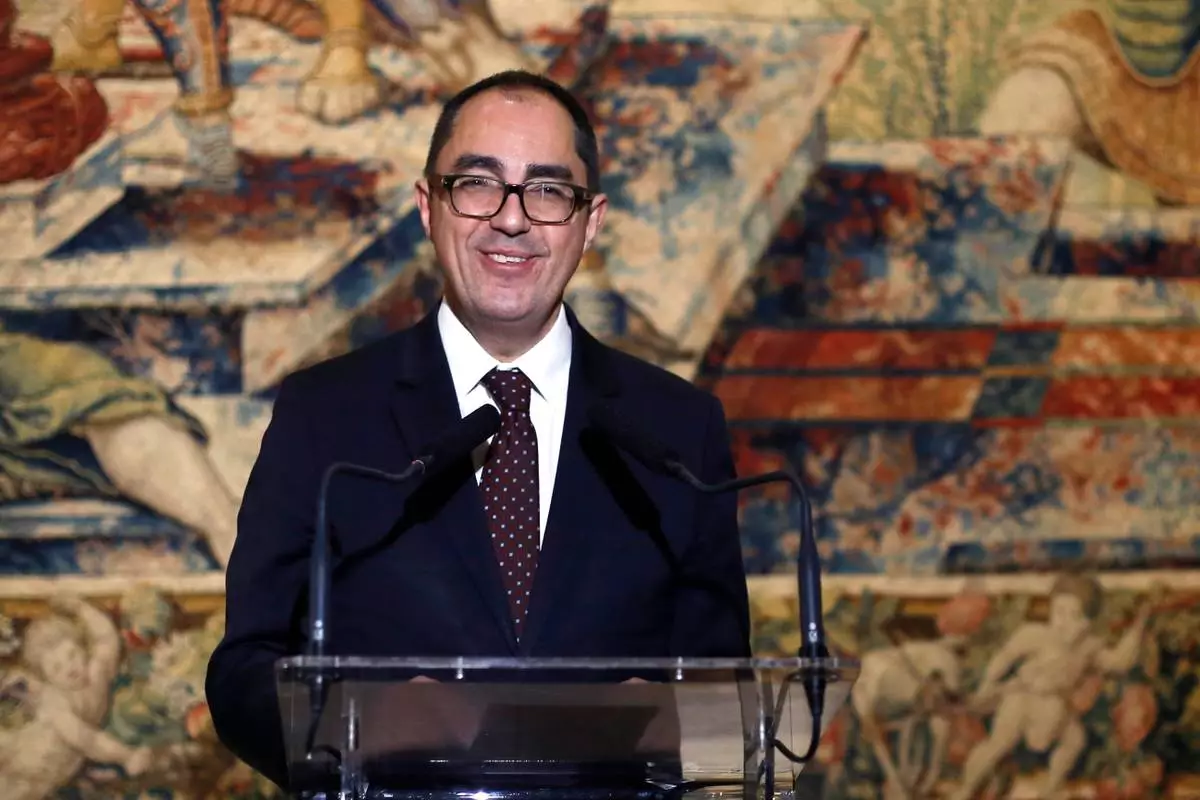
FILE - Louvre Museum Director Jean-Luc Martinez delivers a speech during a crowdfunding campaign at the Louvre museum in Paris, Oct. 24, 2017. (AP Photo/Thibault Camus, File)
FILE - Louvre Museum Director Jean-Luc Martinez delivers a speech during a crowdfunding campaign at the Louvre museum in Paris, Oct. 24, 2017. (AP Photo/Thibault Camus, File)

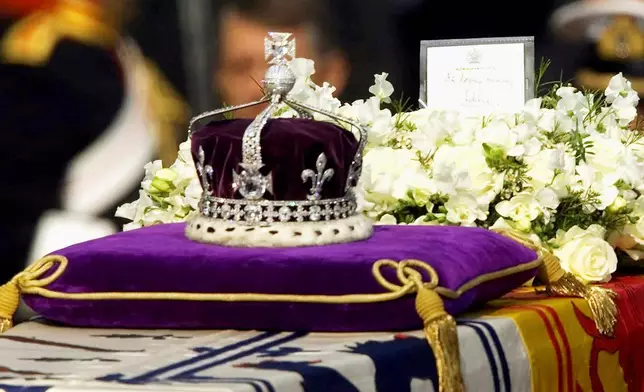
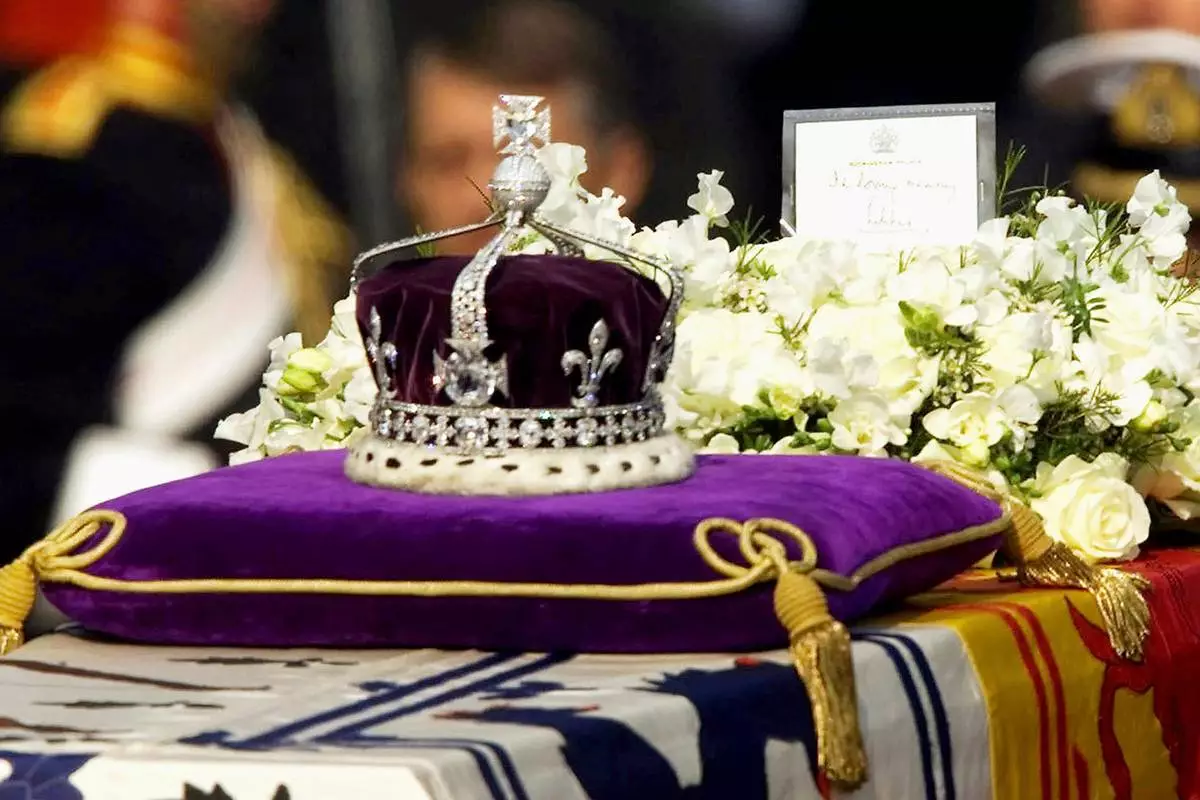
FILE - The Koh-i-Noor diamond, set in the Maltese Cross at the front of the crown made for Britain's late Queen Mother, is seen on her coffin as it is drawn to London's Westminster Hall on April 5, 2002. (AP Photo/Alastair Grant, File)
FILE - The Koh-i-Noor diamond, set in the Maltese Cross at the front of the crown made for Britain's late Queen Mother, is seen on her coffin as it is drawn to London's Westminster Hall on April 5, 2002. (AP Photo/Alastair Grant, File)

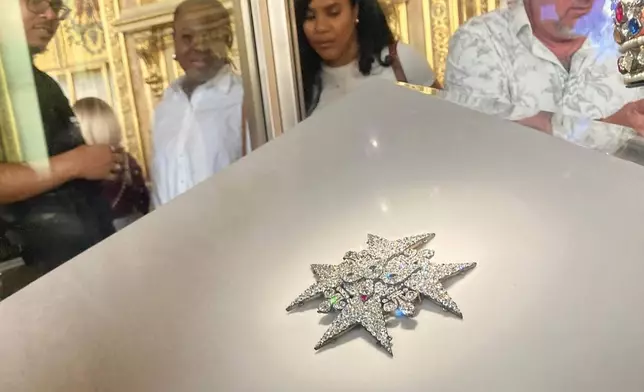
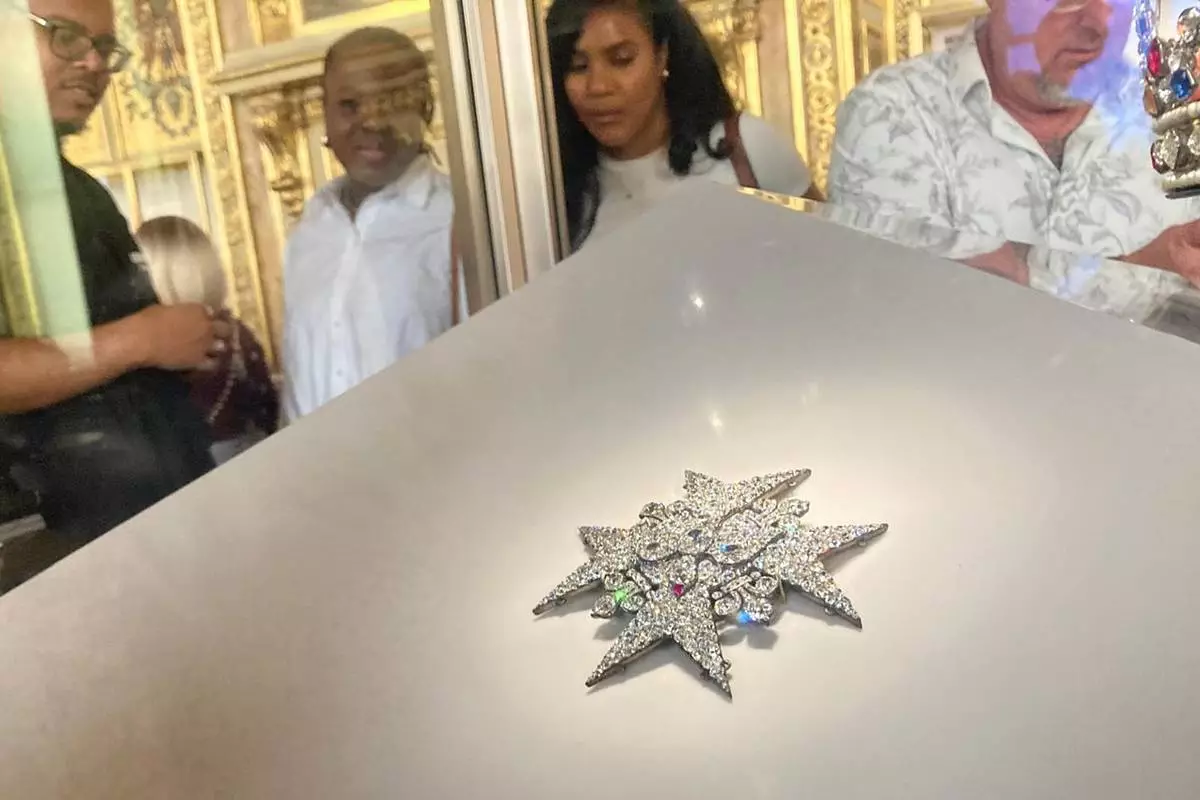
FILE - Visitors look at jewelry in the Apollo Gallery of the Louvre museum on Sept. 4, 2025, in Paris. (AP Photo/Alexander Turnbull, File)
FILE - Visitors look at jewelry in the Apollo Gallery of the Louvre museum on Sept. 4, 2025, in Paris. (AP Photo/Alexander Turnbull, File)

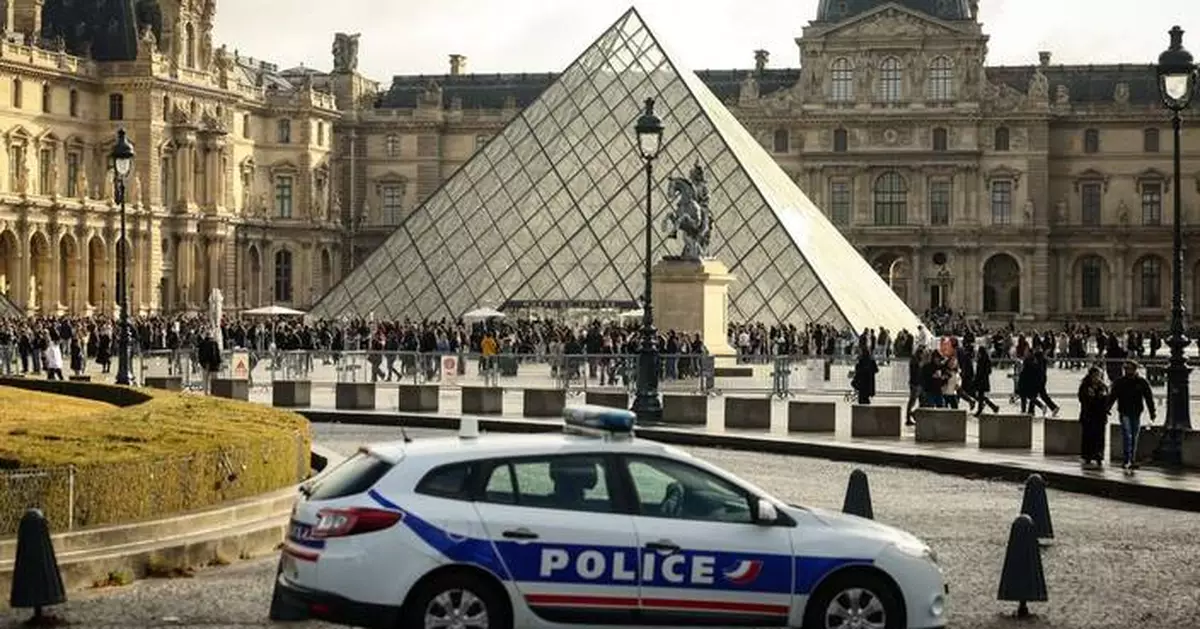
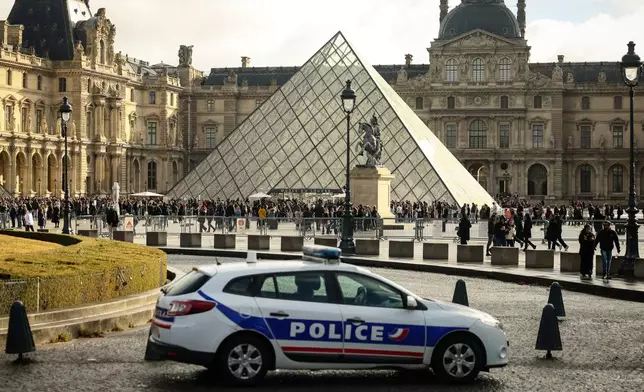
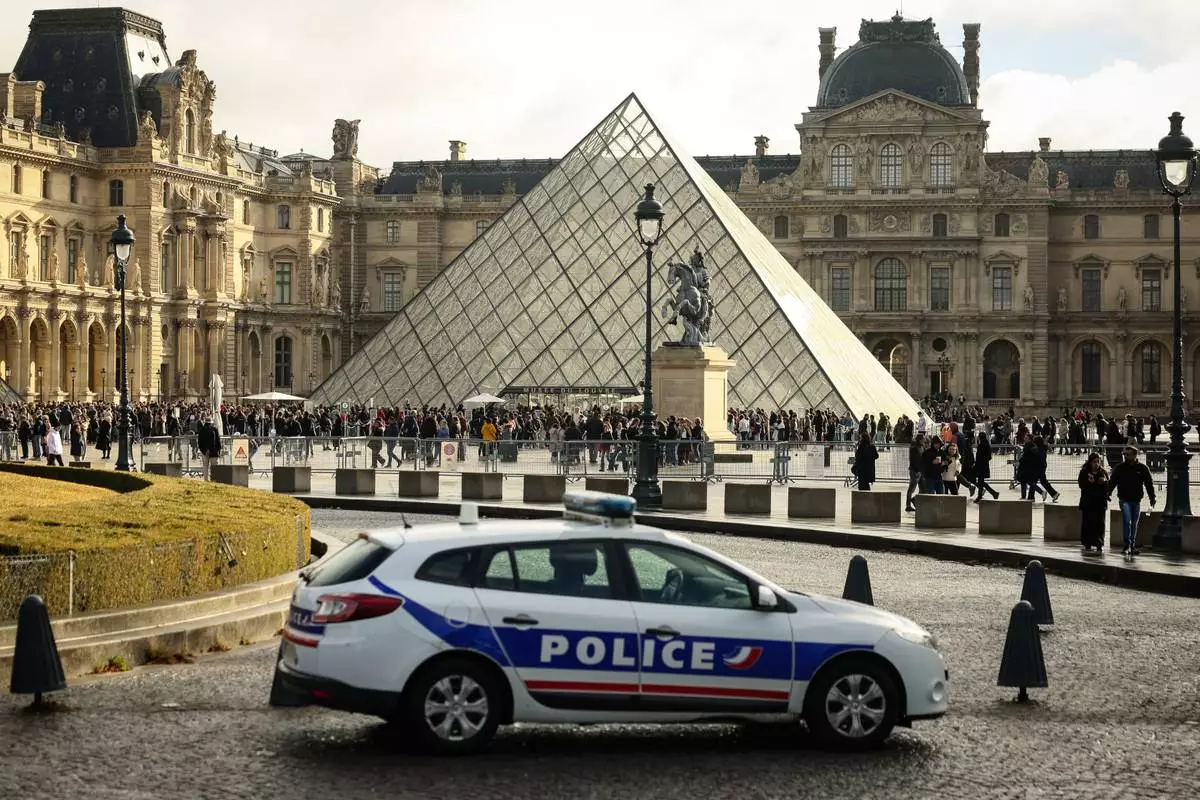
FILE - A police car parks in the courtyard of the Louvre museum, one week after the robbery, on Oct. 26, 2025, in Paris. (AP Photo/Thomas Padilla, File)

FILE - A police car parks in the courtyard of the Louvre museum, one week after the robbery, on Oct. 26, 2025, in Paris. (AP Photo/Thomas Padilla, File)

The attention sparked by the heist is an opportunity, experts say, to pressure the Louvre and Europe’s great museums to explain their collections' origins more honestly, and it could trigger a broader reckoning over restitutions.

Within hours of the theft, researchers sketched a likely colonial-era map for the materials: sapphires from Ceylon (Sri Lanka), diamonds from India and Brazil, pearls from the Persian Gulf and Indian Ocean and emeralds from Colombia.

That doesn’t make the Louvre robbery less criminal. It does complicate the public's understanding of what was lost.

“There is obviously no excuse for theft,” said Emiline C.H. Smith, a criminologist at the University of Glasgow who studies heritage crime. “But many of these objects are entangled with violent, exploitative, colonial histories.”

While there’s no credible evidence these specific gems were stolen — experts say that doesn’t end the argument: What was legal in the imperial age could still mean plunder in today’s lights. In other words, the paperwork of empire doesn’t settle the ethics.

Meanwhile, the heist investigation grinds on. Police have charged suspects, but investigators fear the jewels could be broken up or melted down. They are too symbolic to fence, but easy to monetize for metal and stones.

The Louvre provides scant information about how the gems in the French crown jewels – showcased in the Apollo Gallery until the theft — were originally extracted.

For example, the Louvre’s own catalog describes the stolen diadem of Queen Marie-Amélie as set with “Ceylon sapphires” in their natural, unheated state, bordered with diamonds in gold. It says nothing about who mined them, how they moved, or under what terms they were taken.

Provenance isn’t always a neutral ledger in Western museums. They sometimes “avoid spotlighting uncomfortable acquisition histories,” Smith said, adding that the lack of clarity about the gems’ origins is likely no accident.

The museum did not respond to requests for comment.

The stolen tiaras, necklaces and brooches were crafted in Paris by elite ateliers, and once belonged to 19th-century figures such as Marie-Amélie, Queen Hortense, and the wives of two Napoleons, Empress Marie-Louise of Austria and Empress Eugénie. Their raw materials, however, moved through imperial networks that converted global labor, resources — and even slavery — into European prestige, experts say.

Pascal Blanchard, a historian of France’s colonial past, draws a line between craftsmanship and supply. The jewels “were made in France by French artisans,” he said, but many stones came via colonial circuits and were “products of colonial production.” They were traded “under the legal conditions … of the time,” ones shaped by empires that siphoned wealth from Africa, Asia and South America.

Some French critics press the point further. They argue that national outcry over loss should sit beside the history of how imperial France acquired the stones that court jewelers later set in gold.

India is waging the best-known battle over a single colonial-era treasure — the Koh-i-Noor diamond.

India has repeatedly pressed the U.K. to return the mythologized 106-carat jewel, now set in the Queen Mother’s crown at the Tower of London. It likely originated in India's Golconda diamond belt — much like the Louvre's dazzling Regent diamond, one that was also legally acquired in imperial times and spared by the Oct. 19 robbers.

The Koh-i-Noor passed from court to court before landing in British hands, where it is hailed in London as a “lawful” imperial gift and denounced in India as a prize taken under the shadow of conquest. A 2017 petition to India’s Supreme Court seeking its return was dismissed on jurisdictional grounds, but the political and moral dispute endures.

France is not Britain, and the Koh-i-Noor is not the Louvre's story. But it frames the questions increasingly applied to 19th-century acquisitions: not only “was it bought?” but “who had the power to sell?” On that measure, experts say, even jewels made in France can be considered products of colonial extraction.

The Louvre case lands in a world already primed by other fights. Greece presses Britain to reunite the Parthenon Marbles. Egypt campaigns for the Rosetta Stone in London and the Nefertiti bust in Berlin.

France has moved — narrowly. President Emmanuel Macron’s pledge to return parts of Africa’s heritage produced a law enabling the return of 26 royal treasures to Benin and items to Senegal. Madagascar recovered the crown of Queen Ranavalona III through a specific process.

Critics say restitution is structurally blocked: French law forbids removing state-held objects unless Parliament makes a special exception, and risk-averse museums keep the rest behind glass.

They also say that under former Louvre chief Jean-Luc Martinez, the museum's narrow definition of what counts as “looted” — and its demand for near-legal levels of proof — created a chilling effect on restitution claims, even as the museum publicly praised transparency. (The Louvre says it follows the law and academic standards.)

Asking museum visitors to marvel at artifacts like the French crown jewels without understanding their social history is dishonest, says Erin L. Thompson, an art-crime scholar in New York. A decolonized approach, she and others argue, would name where such stones came from, how the trade worked, who profited and who paid — and share authorship with origin communities.

Egyptian archaeologist Monica Hanna calls the contradiction glaring.

“Yes, the irony is profound,” she said of the outcry over last month's Louvre theft, “and it’s central to the conversation about restitution.” She expects the heist will trigger action on restitutions across Western museums and fuel debate about transparency.

At a minimum, Hanna and other experts say, what's needed from museums are stronger words: plain-spoken labels and wall texts that acknowledge where objects came from, how they moved, and at whose expense. It would mean publishing what is known, admitting what isn’t, and inviting contested histories into the gallery — even when they cloud the shine.

Some offer a practical path.

“Tell the honest and complete story,” said Dutch restitution specialist Jos van Beurden. “Open the windows, not for thieves, but for fresh air.”

Associated Press writer Danica Kirka in London contributed to this report
FILE - Louvre Museum Director Jean-Luc Martinez delivers a speech during a crowdfunding campaign at the Louvre museum in Paris, Oct. 24, 2017. (AP Photo/Thibault Camus, File)
FILE - Louvre Museum Director Jean-Luc Martinez delivers a speech during a crowdfunding campaign at the Louvre museum in Paris, Oct. 24, 2017. (AP Photo/Thibault Camus, File)

FILE - The Koh-i-Noor diamond, set in the Maltese Cross at the front of the crown made for Britain's late Queen Mother, is seen on her coffin as it is drawn to London's Westminster Hall on April 5, 2002. (AP Photo/Alastair Grant, File)
FILE - The Koh-i-Noor diamond, set in the Maltese Cross at the front of the crown made for Britain's late Queen Mother, is seen on her coffin as it is drawn to London's Westminster Hall on April 5, 2002. (AP Photo/Alastair Grant, File)

FILE - Visitors look at jewelry in the Apollo Gallery of the Louvre museum on Sept. 4, 2025, in Paris. (AP Photo/Alexander Turnbull, File)
FILE - Visitors look at jewelry in the Apollo Gallery of the Louvre museum on Sept. 4, 2025, in Paris. (AP Photo/Alexander Turnbull, File)

FILE - A police car parks in the courtyard of the Louvre museum, one week after the robbery, on Oct. 26, 2025, in Paris. (AP Photo/Thomas Padilla, File)


FILE - A police car parks in the courtyard of the Louvre museum, one week after the robbery, on Oct. 26, 2025, in Paris. (AP Photo/Thomas Padilla, File)

VATICAN CITY (AP) — Pope Leo XIV made a historic apology on Monday for the Holy See's role in legitimizing slavery and for having failed to condemn it for centuries, calling the Vatican’s record a “wound in Christian memory.”

Past popes have apologized for Christians’ involvement in the trans-Atlantic slave trade. But no pope had ever publicly acknowledged, much less apologized for, the role that past popes played in giving European sovereigns explicit authority to subjugate and enslave “infidels.”

History’s first U.S.-born pope, whose family history includes both enslaved people and slave owners, delivered the apology in his first encyclical, “Magnifica Humanitas,” (Magnificent Humanity), which was released Monday.

The sweeping manifesto is about safeguarding humanity in an era of increasing reliance on artificial intelligence. Leo raised the slave trade in relation to what he called the new forms of slavery and colonialism that the digital revolution is fueling.

Black American Catholics, activists and scholars have long called for the Holy See to atone for its role in the colonial-era trade in human beings, beyond generic apologies for the involvement of individual Christians.

“It is impossible not to feel deep sorrow when contemplating the immense suffering and humiliation endured by so many in stark contrast to their immeasurable dignity as persons infinitely loved by the Lord,” Leo wrote. “For this, in the name of the church, I sincerely ask for pardon.”

Shannen Dee Williams, historian at the University of Dayton and author of the 2022 history of American Black Catholic nuns, “Subversive Habits,” welcomed the apology as a "monumental step toward the kind of essential truth-telling and reparation that many Catholics have prayed and worked to witness.”

“The Catholic Church has never been an innocent bystander in the history of white supremacy," said Williams. “Black Catholics have waited a long time to hear the Vatican speak honestly about the church’s leading roles in the trans-Atlantic slave trade and chattel slavery--and thus by extension the enduring systems of anti-Black racism in the world today.”

The Vatican has insisted that it always upheld the dignity of all human beings as children of God. But a series of 15th-century directives from the Vatican authorized Portuguese sovereigns to conquer Africa and the Americas and enslave non-Christians.

In 1452, for example, Pope Nicholas V issued the papal bull Dum Diversas, which gave the Portuguese king and his successors the right “to invade, conquer, fight and subjugate” and take all possessions — including land — of “Saracens, and pagans, and other infidels, and enemies of the name of Christ” anywhere.

The bull also gave the Portuguese permission “to reduce their persons to perpetual slavery.”

That bull and another issued three years later, Romanus Pontifex, formed the basis of the Doctrine of Discovery, the theory that legitimized the colonial-era seizure of land in Africa and the Americas.

Nicholas V’s permissions to the Portuguese were confirmed or renewed by Pope Callixtus III in 1456, Pope Sixtus IV in 1481 and Pope Leo X in 1514, according to the Rev. Christopher J. Kellerman, a Jesuit priest and author of “All Oppression Shall Cease: A History of Slavery, Abolitionism, and the Catholic Church.”

Spanish kings received the rights for the Americas.

In 2023, the Vatican formally repudiated the Doctrine of Discovery, but it never formally rescinded, abrogated or rejected the bulls themselves. The Vatican insists that a later bull, Sublimis Deus in 1537, reaffirmed that Indigenous peoples shouldn’t be deprived of their liberty or the possession of their property, and weren't to be enslaved.

In his encyclical, Leo recalled that his namesake, Pope Leo XIII, was the first pope to explicitly condemn slavery in 1888, long after many countries had abolished it. Before that, in antiquity and the Middle Ages, church institutions and even popes — Gregory the Great — had slaves, Kellerman said.

In acknowledging the 15th century papal bulls, Leo wrote in his encyclical: “Already in the early modern period, the Apostolic See of Rome, responding to the requests of sovereigns, intervened several times in order to regulate and legitimize forms of subjugation, and, in certain cases, including the enslavement of ‘infidels.’”

Leo said it wasn't possible to judge the morality of the decisions with today’s standards.

“Yet neither can we deny or diminish the delay with which both society and the church came to denounce the scourge of slavery,” he said.

The pope said that the church has long affirmed the dignity of every human being as the basis of its doctrine, “even if it took eighteen centuries for its full incompatibility with slavery to be explicitly recognized.”

“This constitutes a wound in Christian memory, one from which we cannot consider ourselves detached,” he said.

Leo said that the church must firmly condemn all forms of trafficking related to the digital technological revolution “if we want to avoid the need to ask for pardon again in the future for having failed to respect the treasure of human dignity that is required by our faith.”

Anthea Butler, senior fellow at the Koch History Center, Oxford University, said Leo needed to acknowledge and atone for the church's complicity in historic slavery if he wanted to credibly “speak to the current issues of technological enslavement.”

“For descendants of enslaved persons, this is once again a much needed apology from the pope,” said Butler, who is Black.

Kellerman, the scholar, welcomed Leo’s apology but said more needs to be done to further acknowledge how the Catholic Church legitimized and expanded slavery.

“Pope Leo has strengthened the moral credibility of the church with this admission and apology today,” he told The Associated Press. “Hopefully a future document will explain in more detail the church’s involvement with slaveholding. As a scholar I have some quibbles with the wording, but this is a truly remarkable moment.”

During a 1985 visit to Cameroon, St. John Paul II asked forgiveness of Africans for the slave trade on behalf of Christians who participated in it, but not the popes. In a 1992 visit to Goree Island, Senegal, which was the largest slave-trading center in West Africa, he denounced the injustice of slavery and called it a “tragedy of a civilization that called itself Christian.”

According to genealogical research published by Henry Louis Gates Jr., 17 of Leo’s American ancestors were Black, listed in census records as mulatto, Black, Creole or a free person of color. His family tree includes slaveholders and enslaved people, Gates wrote in The New York Times.

During a visit to Angola last month, Leo prayed at a Catholic shrine at the site of an important hub of the African slave trade during Portugal’s colonial rule. While at the Sanctuary of Mama Muxima, Leo recalled the “sorrow and great suffering” Angolans endured for centuries, but he didn’t refer specifically to slavery.

Winfield reported from Middletown, Connecticut.

Associated Press religion coverage receives support through the AP’s collaboration with The Conversation US, with funding from Lilly Endowment Inc. The AP is solely responsible for this content.

Pope Leo XIV speaks during the presentation of his first encyclical, "Magnifica humanitas: On Safeguarding the Human Person in the Time of Artificial Intelligence," at the Vatican, Monday, May 25, 2026. (AP Photo/Alessandra Tarantino)

Pope Leo XIV speaks during the presentation of his first encyclical, "Magnifica humanitas: On Safeguarding the Human Person in the Time of Artificial Intelligence," at the Vatican, Monday, May 25, 2026. (AP Photo/Alessandra Tarantino)

Pope Leo XIV listens to Cardinal Víctor Manuel Fernández, prefect of the Dicastery for the Doctrine of the Faith, right, during the presentation of Pope Leo XIV's first encyclical, "Magnifica humanitas: On Safeguarding the Human Person in the Time of Artificial Intelligence," at the Vatican, Monday, May 25, 2026. (AP Photo/Alessandra Tarantino)

Pope Leo XIV listens to Cardinal Víctor Manuel Fernández, prefect of the Dicastery for the Doctrine of the Faith, right, during the presentation of Pope Leo XIV's first encyclical, "Magnifica humanitas: On Safeguarding the Human Person in the Time of Artificial Intelligence," at the Vatican, Monday, May 25, 2026. (AP Photo/Alessandra Tarantino)

Pope Leo XIV, left, attends the presentation of his first encyclical, "Magnifica humanitas: On Safeguarding the Human Person in the Time of Artificial Intelligence," at the Vatican, Monday, May 25, 2026. (AP Photo/Alessandra Tarantino)

Pope Leo XIV, left, attends the presentation of his first encyclical, "Magnifica humanitas: On Safeguarding the Human Person in the Time of Artificial Intelligence," at the Vatican, Monday, May 25, 2026. (AP Photo/Alessandra Tarantino)

Pope Leo XIV, left, arrives with Vatican Secretary of State Cardinal Pietro Parolin for the presentation of his first encyclical, "Magnifica humanitas: On Safeguarding the Human Person in the Time of Artificial Intelligence," at the Vatican, Monday, May 25, 2026. (AP Photo/Alessandra Tarantino)

Pope Leo XIV, left, arrives with Vatican Secretary of State Cardinal Pietro Parolin for the presentation of his first encyclical, "Magnifica humanitas: On Safeguarding the Human Person in the Time of Artificial Intelligence," at the Vatican, Monday, May 25, 2026. (AP Photo/Alessandra Tarantino)

Vatican Secretary of State Cardinal Pietro Parolin, right, talks to theologian Leocadie Lushombo during the presentation of his first encyclical, "Magnifica humanitas: On Safeguarding the Human Person in the Time of Artificial Intelligence," at the Vatican, Monday, May 25, 2026. (AP Photo/Alessandra Tarantino)

Vatican Secretary of State Cardinal Pietro Parolin, right, talks to theologian Leocadie Lushombo during the presentation of his first encyclical, "Magnifica humanitas: On Safeguarding the Human Person in the Time of Artificial Intelligence," at the Vatican, Monday, May 25, 2026. (AP Photo/Alessandra Tarantino)

Pope Leo XIV holds the pastoral staff as he celebrates the Pentecost Mass in St. Peter's Basilica, at the Vatican, Sunday, May 24, 2026. (AP Photo/Gregorio Borgia)

Pope Leo XIV holds the pastoral staff as he celebrates the Pentecost Mass in St. Peter's Basilica, at the Vatican, Sunday, May 24, 2026. (AP Photo/Gregorio Borgia)

Recommended Articles