MADRID (AP) — The longest U.S. government shutdown on record is doing more than grind activities to a halt at home; an ocean away in Europe, local workers at U.S. military bases have started to feel the pain.
Thousands of people working at overseas bases in Europe have had their salaries interrupted since the shutdown began almost six weeks ago. In some cases, governments hosting the U.S. bases have stepped in to foot the bill, expecting the United States to eventually make good. In others, including in Italy and Portugal, people have simply kept working unpaid as the gridlock in Washington drags on.
“It’s an absurd situation because nobody has responses, nobody feels responsible,” said Angelo Zaccaria, a union coordinator at the Aviano Air Base in northeastern Italy.
“This is having dramatic effects on us Italian workers,” he told The Associated Press.
The jobs foreign nationals do at U.S. bases around the world range from food service, construction, logistics, maintenance and other, more specialized roles. In some cases, foreign workers are employed by private companies contracted by the U.S. government while others are direct hires.
How local employees are paid varies by country and is based on specific agreements the U.S. government has with each host nation, said Amber Kelly-Herard, a public affairs spokesperson for the U.S. Air Forces in Europe and Africa.
During the shutdown, Kelly-Herard said local employees were expected to continue to perform their jobs in accordance with their work contracts.
The AP reached out to the Pentagon with multiple questions on the pay disruption, but was only provided a brief statement that did not acknowledge it.
“We value the important contributions of our local national employees around the world,” it said. The official declined to answer any follow-up questions.
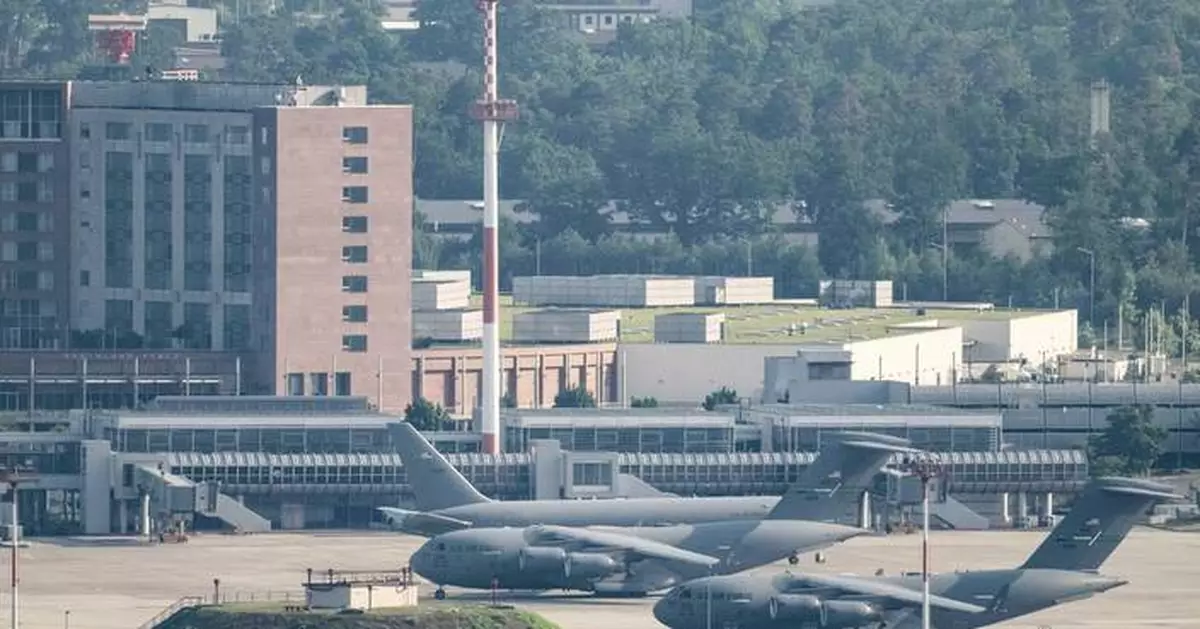
In Germany, the government has stepped in to pay the salaries of nearly 11,000 local employees that work on U.S. military bases, the nation's finance ministry said in a statement. American facilities in Germany include the Ramstein Air Base, a critical hub for operations in the Mideast and Africa and headquarters to the U.S. Air Forces in Europe and Africa.
Workers in other countries have not been so fortunate.
More than 4,600 Italian nationals work at the five U.S. bases in Italy, said union coordinator Zaccaria. Of those, about 2,000 workers — mostly at bases in Aviano and Vicenza — were not paid in October, Italy's foreign ministry said Saturday.
The ministry said in a statement it had discussed the issue with U.S. officials, and that the U.S. Army and Air Force were in talks with the Pentagon about using their own funds to pay the salaries of Italian workers.
“There are workers struggling to pay their mortgages, to support their children or even to pay the fuel to come to work,” Zaccaria said.
In Portugal, a similar situation was playing out at the Lajes Field base in the Azores archipelago in the Atlantic Ocean, where more than 360 Portuguese workers have not been paid, according to Paula Terra, head of the Lajes base workers’ committee.
Terra said unpaid staff are still turning up because furloughs aren’t legally recognized in a U.S.-Portugal agreement on the base. Staying away could leave them open to disciplinary proceedings, she added.
But this week, the Azores Islands regional government approved a bank loan to pay the Portuguese workers at the base in the interim. Terra said she was waiting to hear when workers could claim the money.
Germany is counting on being repaid once the shutdown ends, the finance ministry's spokesperson told the AP, adding that during previous shutdowns, civilians were paid by the U.S. government.
The governments of Poland, Lithuania and Greenland did not respond to a request for comment from the AP about whether they, too, have also stepped in to pay local workers.
Linda Bilmes, a professor of public policy at the Harvard Kennedy School and an expert on public finance, said local workers at U.S. military bases who work as contractors are generally most at-risk of losing pay during U.S. government shutdowns.
She added that the U.S. government in the past always paid back full-time employees, including those working at overseas facilities who may be foreign nationals — but that contractors are not always covered, which is why some add extra fees in their contracts to cover potential government funding stoppages.
“But I doubt anyone anticipated this length of delay,” Bilmes said.
In Spain, where the U.S. operates the Moron and Rota military bases in the south, a union representing more than 1,000 Spanish workers said a delay in payments had been resolved last month with the help of the Spanish government.
Spain's defense ministry did not respond to multiple requests seeking to confirm its involvement in resolving the pay issue.
Associated Press journalists Konstantin Toropin in Washington; Barry Hatton and Helena Alves in Lisbon, Portugal and Stefanie Dazio in Berlin contributed to this report.
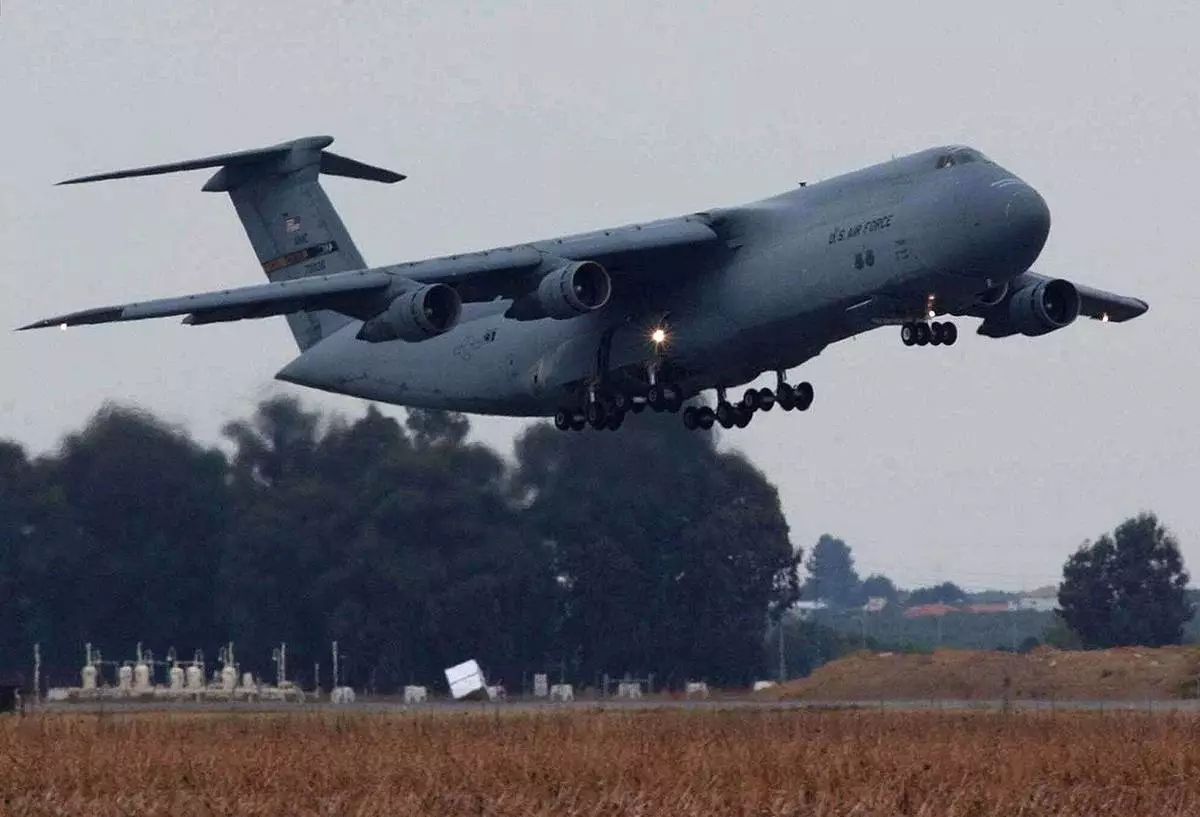
FILE -A U.S. Air Force C-5 Galaxy takes off from the joint-use Spanish and U.S. air base in Moron, southern Spain, Friday, Sept. 28, 2001. (AP Photo/Cristina Quicler, File)
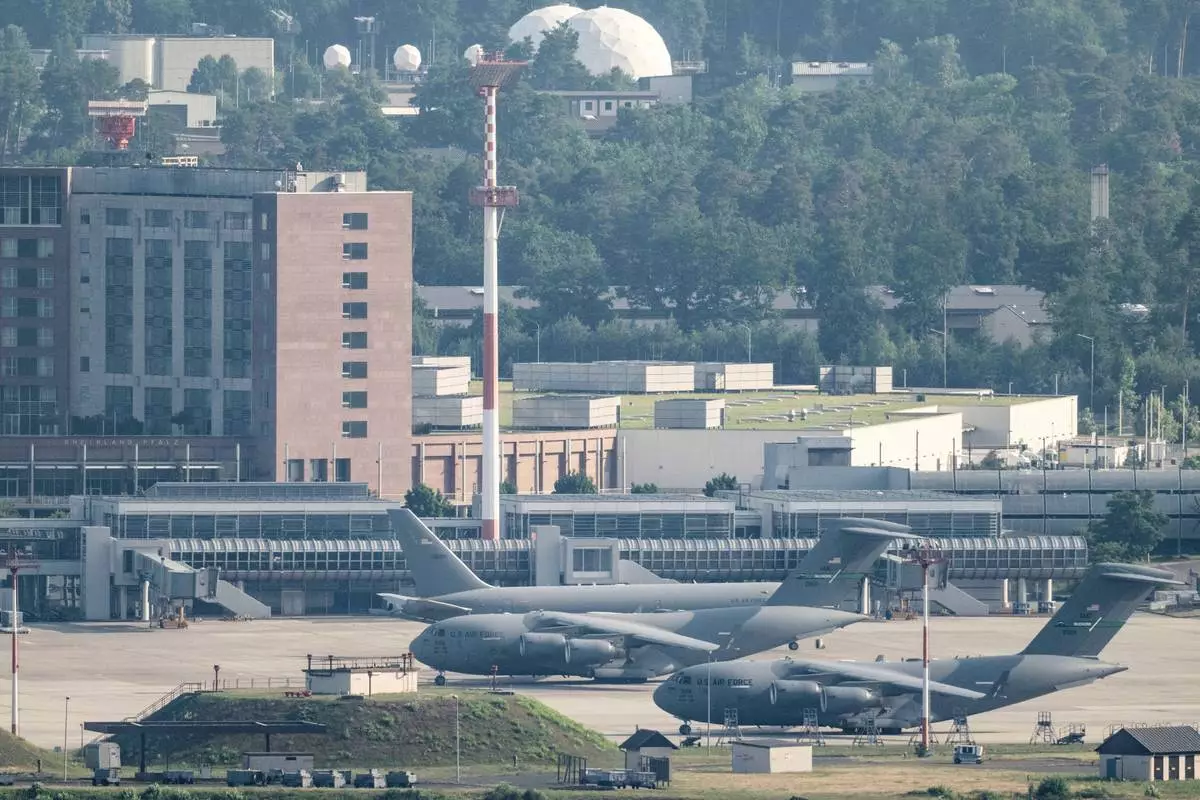
FILE -United States' Air Force transport aircrafts are seen on the tarmac at Ramstein US air base, in Landstuhl, Germany, June 23, 2025. (Boris Roessler/dpa via AP, File)