UDINE, Italy (AP) — Two players with Australian heritage helped Italy to sink the Wallabies 26-19 in Udine on Saturday.
Louis Lynagh, the son of Wallabies great Michael Lynagh, and Melbourne-born Monty Ioane, the nephew of former Wallabies winger Digby Ioane, scored back-to-back tries in Italy's comeback victory.
Click to Gallery
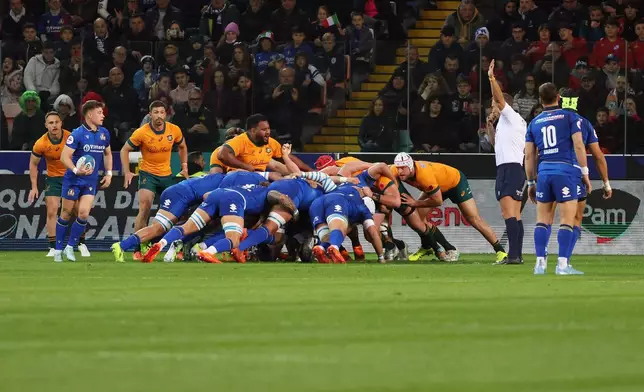
The scrum during the rugby union match between Italy and Australia in Udine, Italy, Saturday, Nov. 8, 2025. (Andrea Bressanutti/LaPresse via AP)
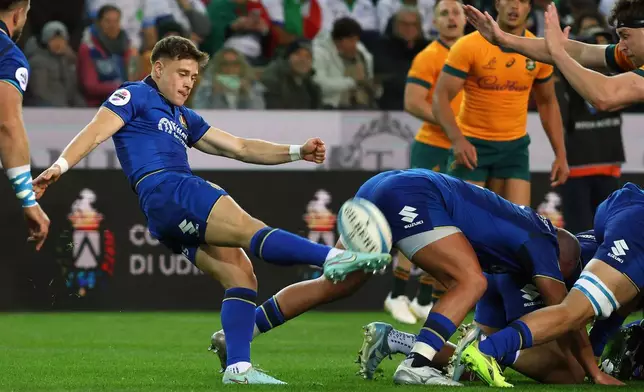
Italy's Stephen Varney kicks the ball during the rugby union match between Italy and Australia in Udine, Italy, Saturday, Nov. 8, 2025. (Andrea Bressanutti/LaPresse via AP)
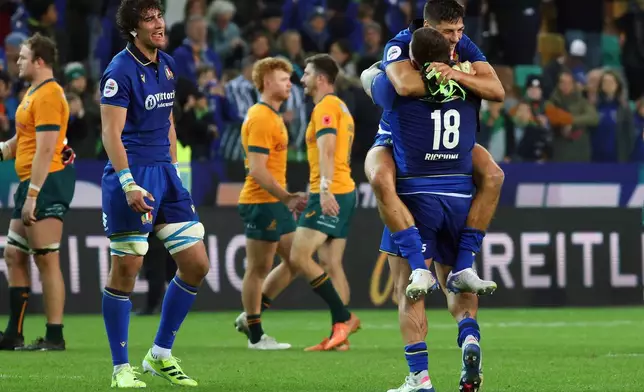
Italian players celebrate after winning the rugby union match between Italy and Australia in Udine, Italy, Saturday, Nov. 8, 2025. (Andrea Bressanutti/LaPresse via AP)
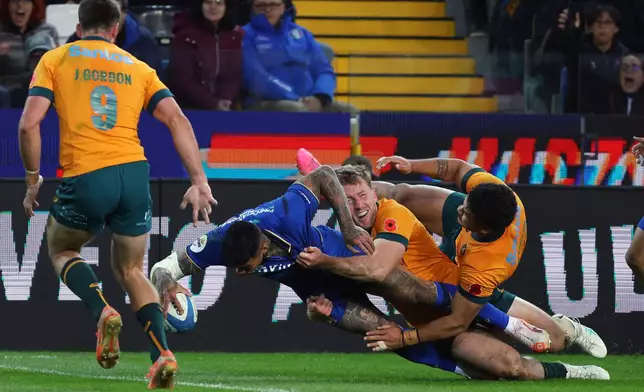
Australia's Monty Ioane scores a try during the rugby union match between Italy and Australia in Udine, Italy, Saturday, Nov. 8, 2025. (Andrea Bressanutti/LaPresse via AP)
Italy's Monty Ioane, left, celebrates after scoring a try during the rugby union match between Italy and Australia in Udine, Italy, Saturday, Nov. 8, 2025. (Andrea Bressanutti/LaPresse via AP)
Italy had never beaten Australia in 20 matches until 2022. But Saturday's result proved the win in Florence three years ago was not a fluke.
"This team has reached the point of maturity where it can win matches it wouldn't have won a few years ago,” said Italy coach Gonzalo Quesada, who added the process began before he arrived.
“We didn't need the perfect match, we needed to trust the process. Even with mistakes, avoidable fouls, and difficulties with throw-ins, we won. This is a huge step for the team, which needed confidence.”
Australia was looking for a rebound from a flat performance in the loss to England last weekend, and believed the addition of Tom Hooper and Carter Gordon would be enough of a boost. But after consecutive defeats coach Joe Schmidt was worried about his team's energy at the end of the year with bigger games coming against Ireland and France.
“That's a dip we can't afford to have and we've got two massive games coming up now,” Schmidt told Stan Sport. “I think we're going to have to just recuperate as best as we can and throw everything into the Irish game.”
Paolo Garbisi punished a sluggish start by Australia with two early penalties.
The Wallabies finally scored in the 21st through Matt Faessler in a driving maul and hit the front thanks to his fellow front-rower Angus Bell's try
Garbisi’s third and fourth penalties tied the score on 12 just after halftime.
Gordon, returned from rugby league, marked his first Wallabies appearance in two years with a try after Australia captain Harry Wilson was stripped. Believing it was a knock-on, Quesada kicked the advertising boards in frustration when the TMO ruled no error. But Italy and the crowd were galvanized.
Gordon left five minutes later with a recurring quad injury.
The match turned in the 58th with Australia up 19-12 when center Joseph-Aukuso Sua'ali'i was yellow-carded for a high tackle on Garbisi.
In the space of three minutes, Lynagh finished a well-worked converted try to level the score and a Stephen Varney break finished by Ioane put Italy in front.
The last quarter was frantic. Australia's Billy Pollard was held up over the line and Italy's Federico Ruzza made an intercept but didn't have the legs to reach the other end.
Rob Valetini and Fraser McReight pulled off steals for Australia but a turnover by Lorenzo Cannone sealed a precious Italy win.
AP rugby: https://apnews.com/hub/rugby
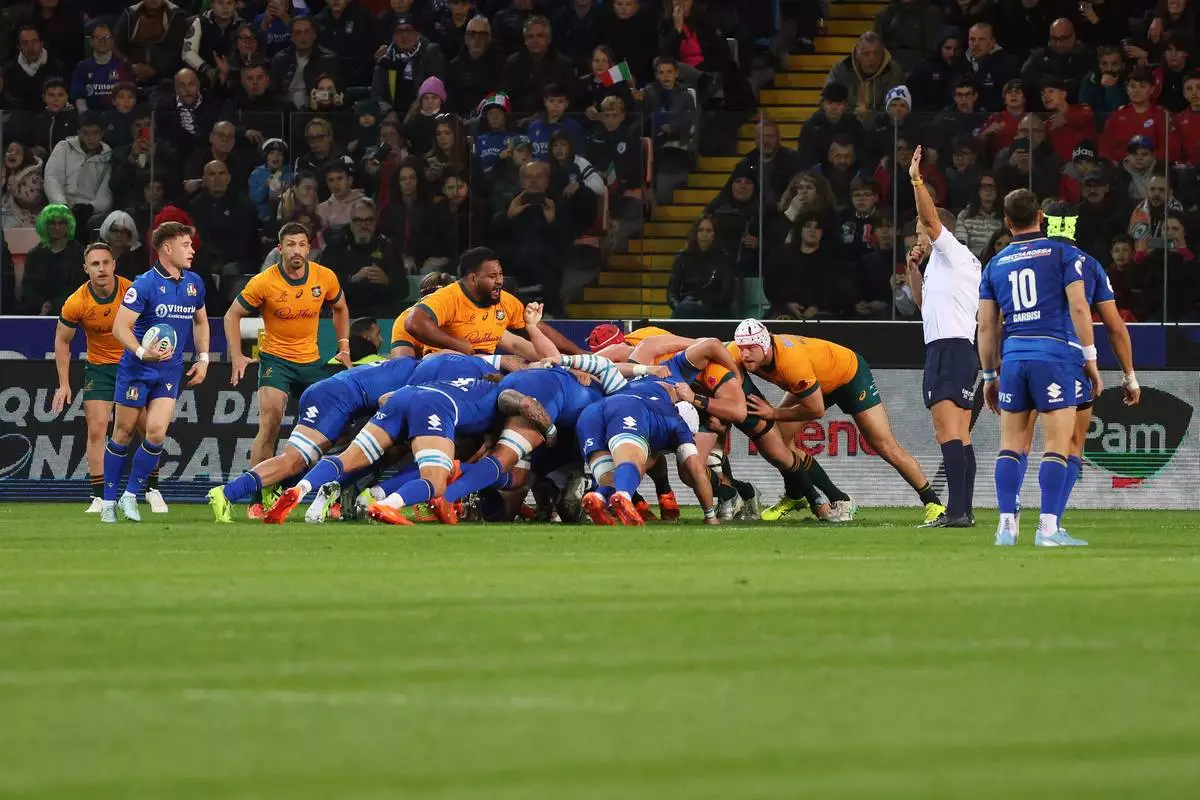
The scrum during the rugby union match between Italy and Australia in Udine, Italy, Saturday, Nov. 8, 2025. (Andrea Bressanutti/LaPresse via AP)
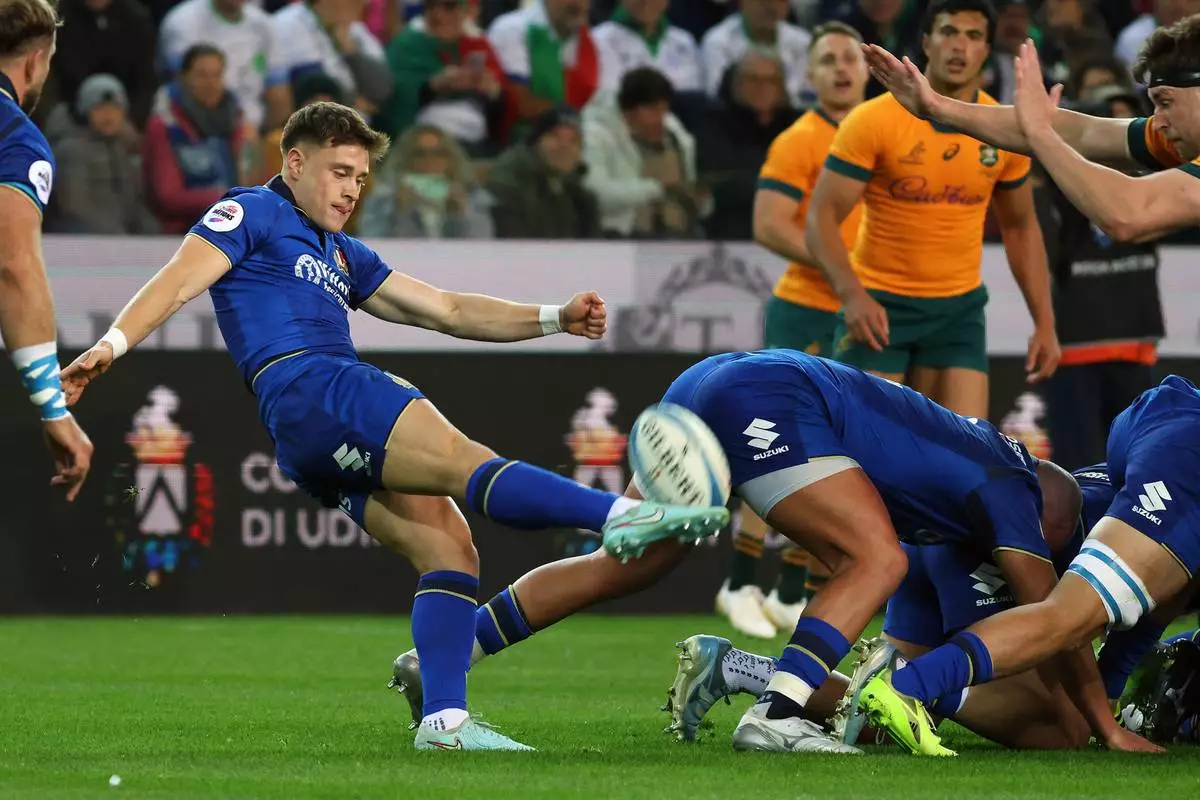
Italy's Stephen Varney kicks the ball during the rugby union match between Italy and Australia in Udine, Italy, Saturday, Nov. 8, 2025. (Andrea Bressanutti/LaPresse via AP)
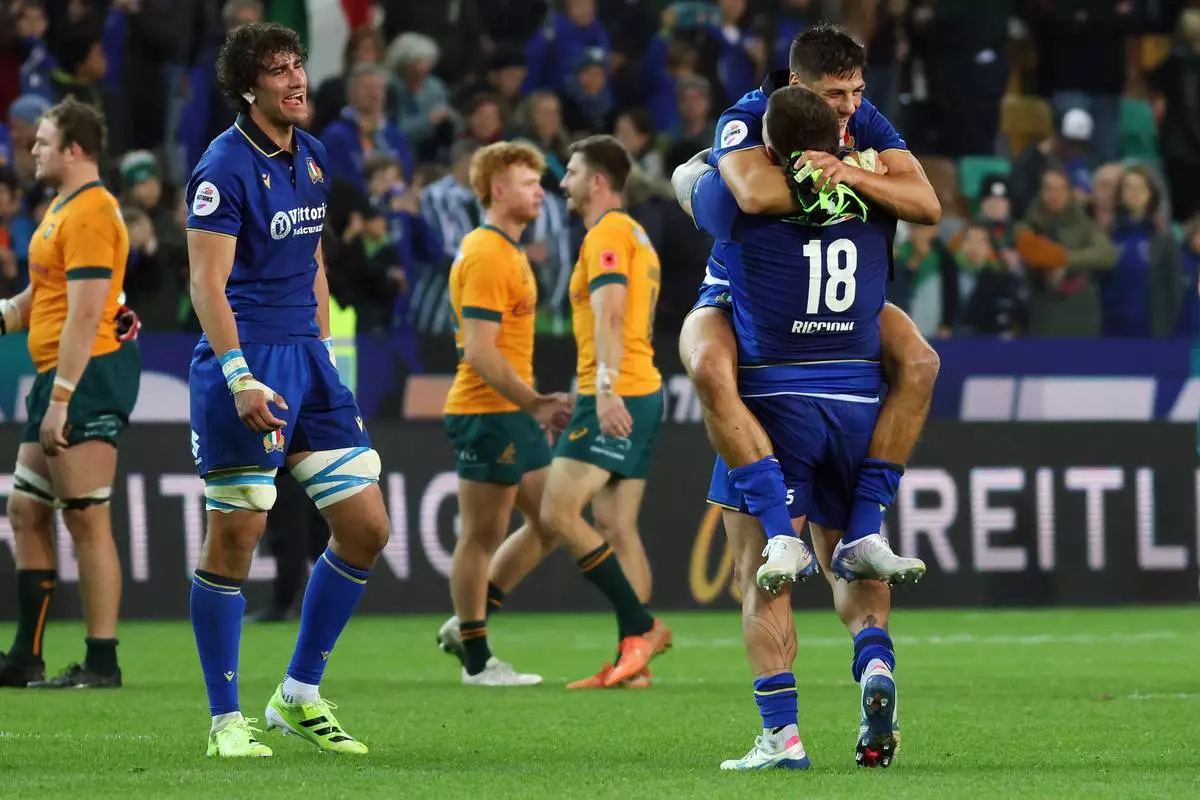
Italian players celebrate after winning the rugby union match between Italy and Australia in Udine, Italy, Saturday, Nov. 8, 2025. (Andrea Bressanutti/LaPresse via AP)
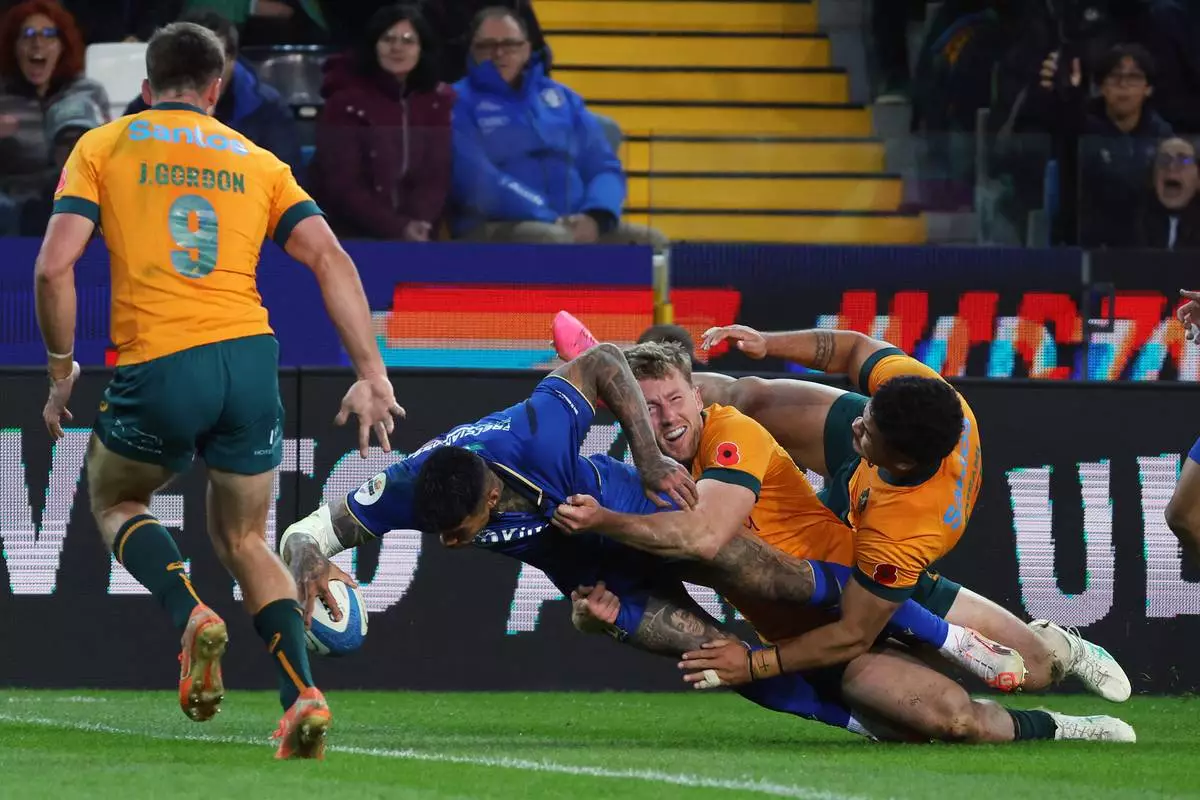
Australia's Monty Ioane scores a try during the rugby union match between Italy and Australia in Udine, Italy, Saturday, Nov. 8, 2025. (Andrea Bressanutti/LaPresse via AP)

Italy's Monty Ioane, left, celebrates after scoring a try during the rugby union match between Italy and Australia in Udine, Italy, Saturday, Nov. 8, 2025. (Andrea Bressanutti/LaPresse via AP)
LOS LLANITOS, México (AP) — On a dirt field on Mexico’s Pacific coast, five cousins between the ages of 8 and 13 strip down and kick off their shoes. Nearby, adults help them fasten the pre-Hispanic-style “fajado,” securing loincloths and leather belts that wrap around their hips.
The Osuna children grab the rubber ball, all 3.2 kilograms of it — around 7 pounds or seven times heavier than a soccer ball — and begin playing. Only the hips may touch it, forcing players to leap through the air or dive low when it skims the ground.
As Mexico prepares to co-host the 2026 FIFA World Cup, the nation is looking back 3,400 years to one of the oldest team sports: the ancient ballgame known as ulama, a ritual practice nearly erased during the Spanish conquest that survived only in the remote pockets of northwestern Mexico before its late 20th-century rebirth. Today, authorities and its modern players are leveraging the momentum of international soccer to shine a spotlight on the ancient sport once again.
While players acknowledge that tourism fueled the sport’s revival, many worry that projecting an “exotic” image undermines a tradition central to their identity.
“We must rid the game of the notion that it is a living fossil,” said Emilie Carreón, a researcher at the National Autonomous University of Mexico, UNAM, and director of a project aimed at studying and practicing the sport.
That's exactly what the Osuna family is trying to do. After ulama player Aurelio Osuna died, his widow, María Herrera, 53, continued his legacy, teaching the ballgame to their grandchildren in their small village in Sinaloa, 1,000 kilometers (620 miles) northwest of Mexico City.
“This seed will bear fruit someday,” she said.
According to the Popol Vuh, the sacred Mayan book, the world was created from a ballgame, where light and darkness clashed to balance life and death and set the universe in motion.
Long before the Maya, the Olmecs — the earliest known Mesoamerican civilization — practiced the sport; the recreation of this clash of opposing forces was common in various pre-Hispanic cultures. The evidence is in millennial rubber balls unearthed in Mexico and in nearly 2,000 ball courts found from Nicaragua to Arizona.
The game, depicted in codices, stone carvings and sculptures, had many variations and meanings, from fertility or war ceremonies, to political acts and even sacrifices.
While some players were beheaded — possibly the losers — Guatemalan archaeologist and anthropologist Carlos Navarrete explained this occurred only during specific periods and in certain regions. The physically demanding game was primarily a big social event, drawing crowds for fun and betting.
Spanish conquistador Hernán Cortés was impressed by the spectacle presented by the Aztec emperor Moctezuma but the Spanish ultimately banned ulama and ordered the destruction of its courts, likely viewing the tradition as a form of resistance to Christianity. For the Catholic Church “the ball was the living devil,” Carreón said.
The game — played by hitting the ball with the hip, the forearm or a mallet — survived only on the Mexican northern Pacific coast, where the colonial process led by Jesuit priests was less aggressive and ulama was accepted in Catholic festivities, said Manuel Aguilar Moreno, a professor of art history at California State University.
On the opening day of the 1968 Mexico City Olympics, spectators watched as burly men contorted their bodies in unexpected ways to keep the rubber ball moving for as long as possible. The exhibition sparked studies about the ballgame and how to preserve it in the following decades.
Luis Aurelio Osuna, 30, Herrera’s eldest son, began playing hip ulama after school, just as his father did decades ago in Los Llanitos, a ranch next to the port city of Mazatlán. Now his three children also play.
Osuna and his mother teach the children how to hit the ball and guide them through the complicated rules, which include a scoring system with points that are won and lost.
They do it out of passion, but also out of pragmatism in a state where organized crime is pervasive.
“We need to find a way to keep them entertained with good things,” said Osuna.
Hip ulama teams have up to six players and the Osuna family sometimes participates in tournaments or exhibitions.
Decades ago, matches were big events tied to religious feasts, sometimes stretching on for an entire week. But those days are gone, as interest waned and rubber balls became hard to get.
In the 1980s, filmmaker Roberto Rochín documented the work of perhaps the last rubber ball-maker in the mountains of Sinaloa. The artisan made them similar to the Olmecs, who discovered that mixing hot rubber sap with a plant created a strong, elastic and durable material. This civilization made some of the oldest balls of the world.
During the 1990s, staff from a resort in the Mexican Caribbean traveled across the country in search of Sinaloan families who could represent the ballgame as a tourist attraction in the Riviera Maya, where no one played it anymore.
“It’s pure spectacle: they paint their faces and put on feathered costumes,” Herrera said. Yet, she acknowledges the value. “That’s where the revival began.”
The ballgame began to spread and to be known outside Mexico. Osuna, with the family team his father had formed, ended up playing hip ulama in a Roman amphitheater in Italy. It attracted so much attention that they were hired for a deodorant commercial, he said.
As the World Cup approaches, authorities and corporations are launching exhibitions in Mexico City and Guadalajara, and featuring ulama players in ad campaigns highlighting Mexican heritage — a move that has sparked mixed feelings.
“We’re not circus monkeys,” says Ángel Ortega, a 21-year-old ulama player from Mexico City who recently participated in a TV commercial alongside football players.
Ilse Sil, a player and member of the UNAM project led by Carreón, believes that institutional support will help to preserve ulama but officials need to promote the game in communities and schools to recruit more young players, as it remains a marginal sport with approximately 1,000 players mainly in México and Guatemala.
In Los Llanitos, Herrera’s grandchildren love playing. They don't care where — in the dirt field, in a court or even in the house corridor — but always with the precious inheritance: a handmade decades-old rubber ball from the mountains of Sinaloa. They say it cushions the blows better.
Eight-year-old Kiki is the most enthusiastic. He says he is determined to keep practicing until he fulfills the dream of leading a team of his own.
Follow AP’s coverage of Latin America and the Caribbean at https://apnews.com/hub/latin-america
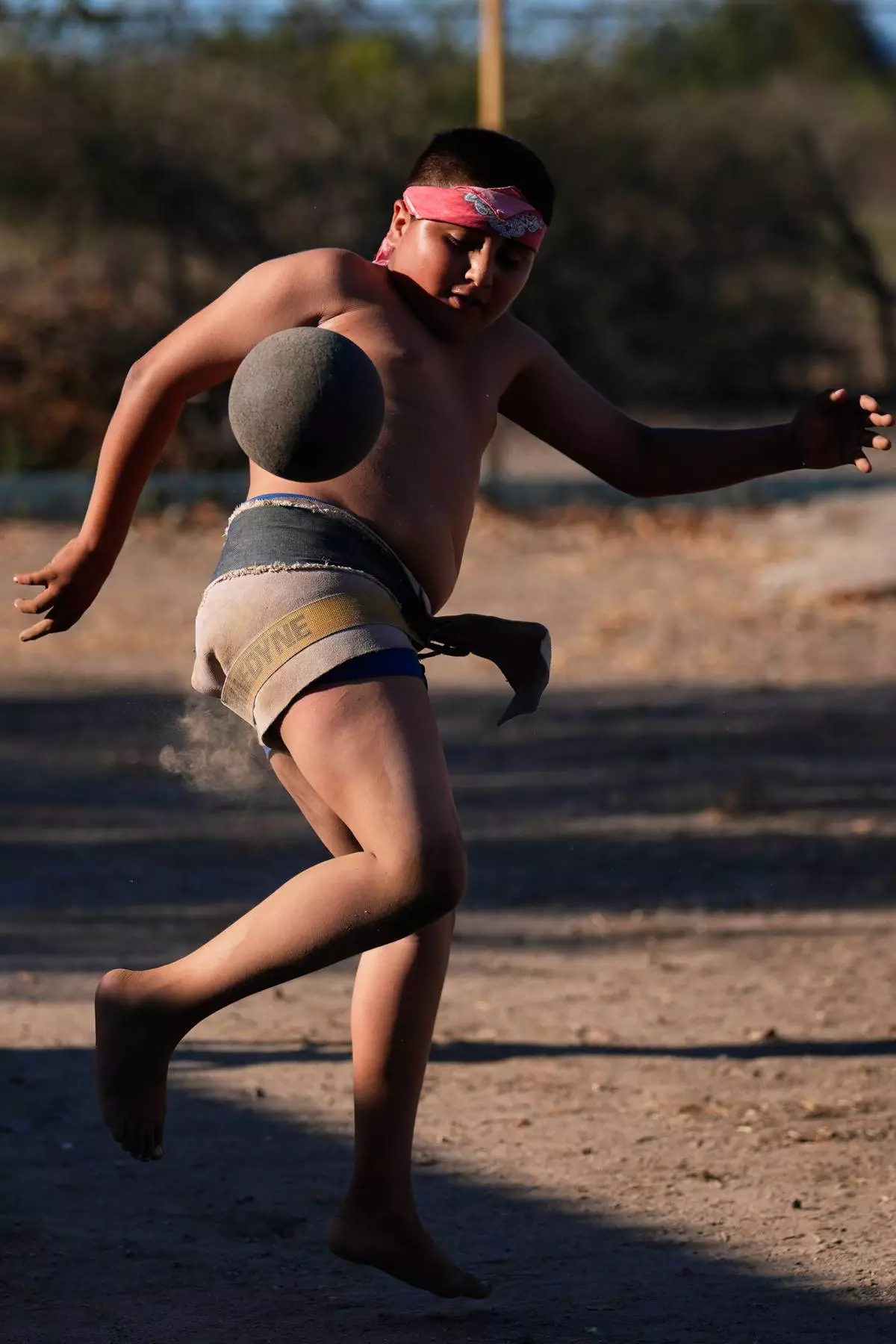
Juan Osuna plays ulama, a traditional Mesoamerican ballgame dating to pre-Hispanic times, in Los Llanitos on the outskirts of Mazatlan, Mexico, Saturday, April 25, 2026. (AP Photo/Marco Ugarte)
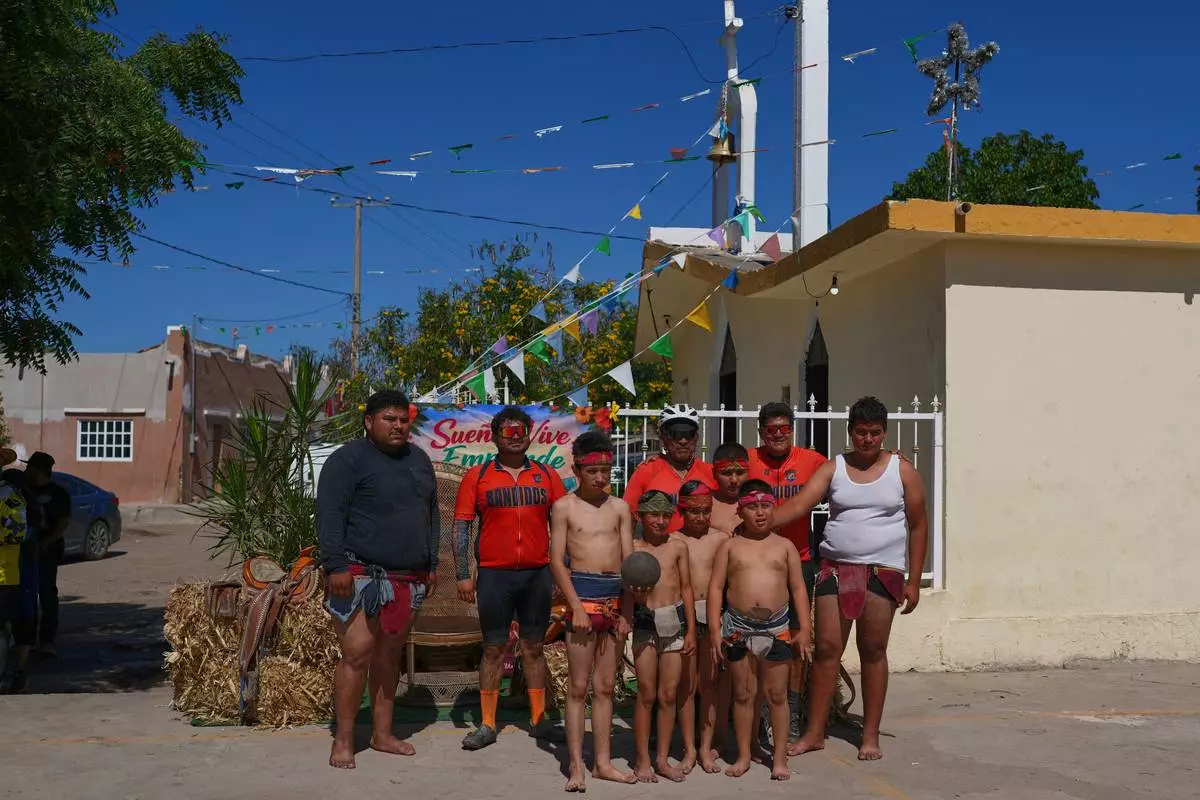
The Osuna family poses for a photo before a match of ulama, a traditional Mesoamerican ballgame dating to pre-Hispanic times, that they organized in Los Llanitos on the outskirts of Mazatlan, Mexico, Saturday, April 25, 2026. (AP Photo/Marco Ugarte)
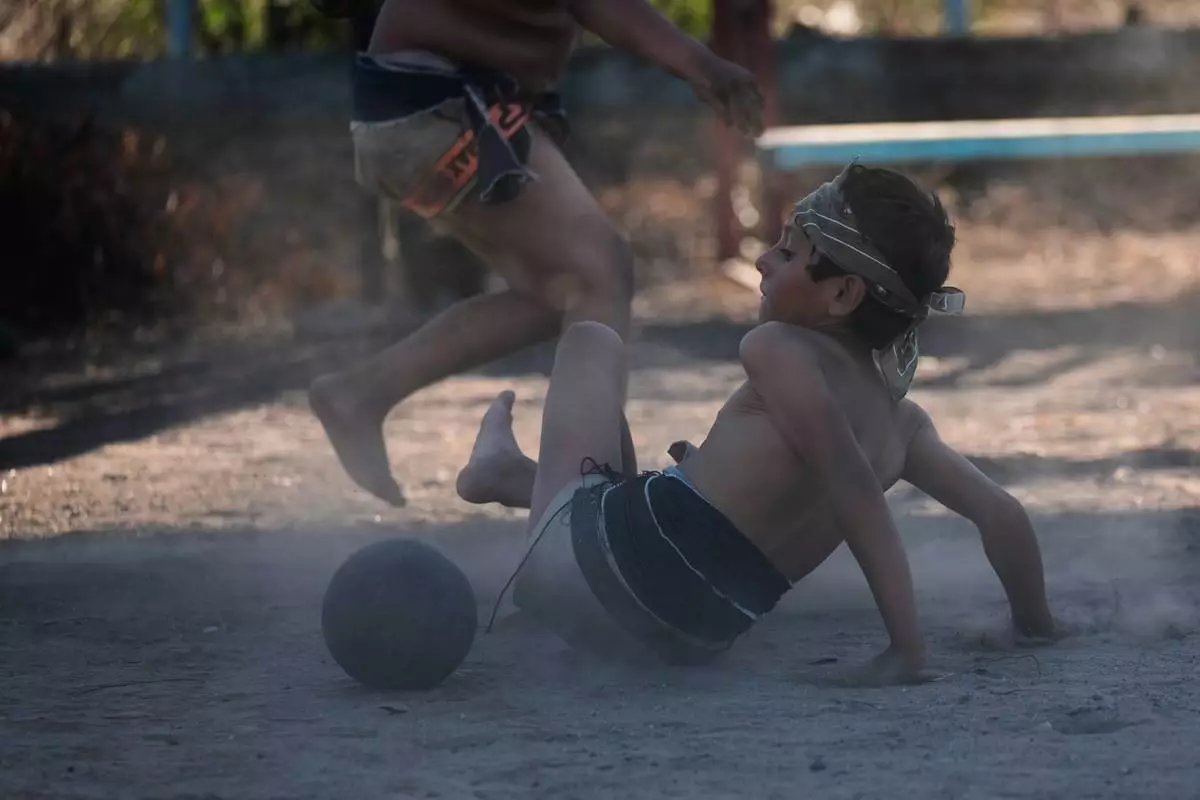
Iker Salgueido plays ulama, a traditional Mesoamerican ballgame dating to pre-Hispanic times, in Los Llanitos on the outskirts of Mazatlan, Mexico, Saturday, April 25, 2026. (AP Photo/Marco Ugarte)
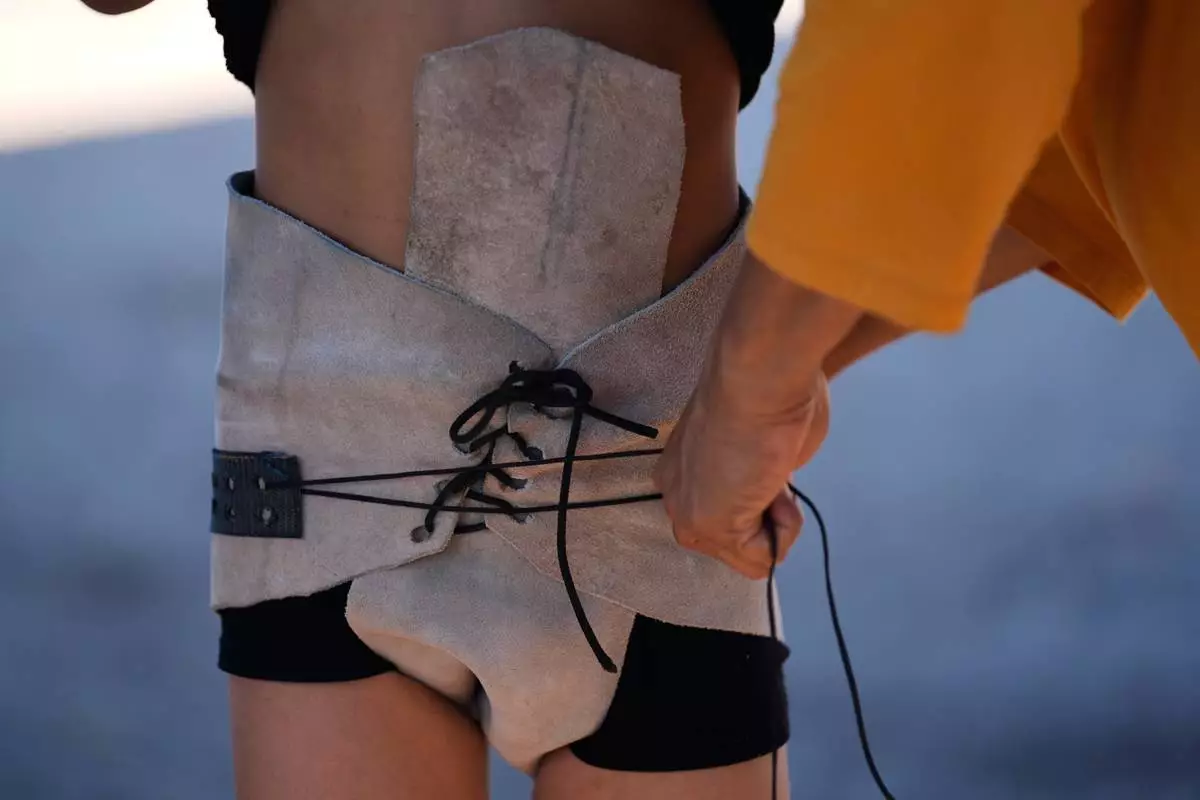
Iker Salgueiro stands still as an adult fastens a pre-Hispanic-style “fajado,” or leather belt, in preparation for ulama, a traditional Mesoamerican ballgame dating to pre-Hispanic times, in Los Llanitos on the outskirts of Mazatlan, Mexico, Saturday, April 25, 2026. (AP Photo/Marco Ugarte)
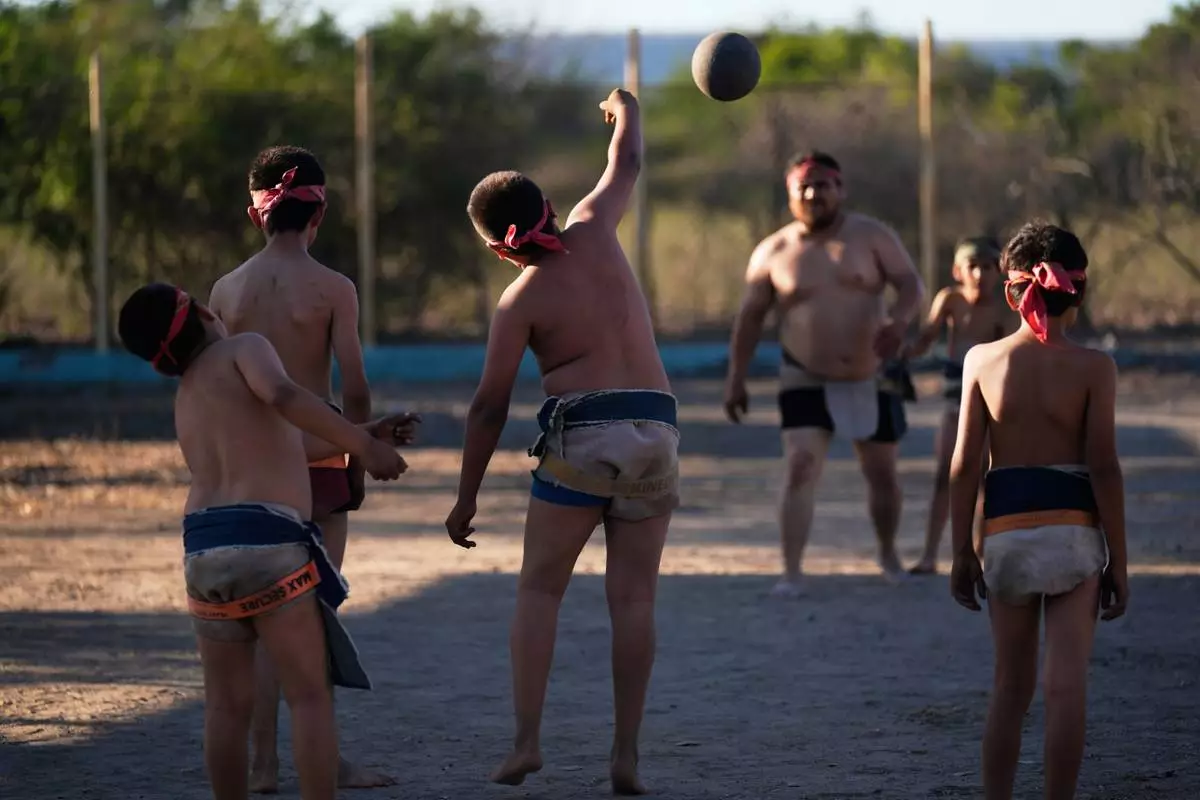
Youth play ulama, a traditional Mesoamerican ballgame dating to pre-Hispanic times, in Los Llanitos on the outskirts of Mazatlan, Mexico, Saturday, April 25, 2026. (AP Photo/Marco Ugarte)