
Skip to Content Facebook Feature Image

South Africa overcomes red card and halftime deficit to beat France 32-17 at Stade de France

Sport

South Africa overcomes red card and halftime deficit to beat France 32-17 at Stade de France
Sport

Sport

South Africa overcomes red card and halftime deficit to beat France 32-17 at Stade de France

2025-11-09 07:00 Last Updated At:07:10

PARIS (AP) — World champion South Africa overcame a red card and a halftime deficit to beat France 32-17 and hand Les Tricolores yet another stinging defeat.

The sides met for the first time since South Africa knocked host France out of the 2023 World Cup 29-28 despite France being in control in the first half.

More Images
France's Damian Penaud is tackled during the rugby union Nations Series match between France and South Africa in Saint-Denis, outside Paris, Saturday, Nov. 8, 2025 . (AP Photo/Michel Euler)

France's Damian Penaud is tackled during the rugby union Nations Series match between France and South Africa in Saint-Denis, outside Paris, Saturday, Nov. 8, 2025 . (AP Photo/Michel Euler)

South Africa's Lood de Jager, second left, gets a red card from referee Angus Gardner during the rugby union Nations Series match between France and South Africa in Saint-Denis, outside Paris, Saturday, Nov. 8, 2025 . (AP Photo/Michel Euler)

South Africa's Lood de Jager, second left, gets a red card from referee Angus Gardner during the rugby union Nations Series match between France and South Africa in Saint-Denis, outside Paris, Saturday, Nov. 8, 2025 . (AP Photo/Michel Euler)

South Africa's Sacha Feinberg-Mngomezulu scores a try during the rugby union Nations Series match between France and South Africa in Saint-Denis, outside Paris, Saturday, Nov. 8, 2025 . (AP Photo/Michel Euler)

South Africa's Sacha Feinberg-Mngomezulu scores a try during the rugby union Nations Series match between France and South Africa in Saint-Denis, outside Paris, Saturday, Nov. 8, 2025 . (AP Photo/Michel Euler)

South Africa's Grant Williams, second left, scores a try during the rugby union Nations Series match between France and South Africa in Saint-Denis, outside Paris, Saturday, Nov. 8, 2025 . (AP Photo/Michel Euler)

South Africa's Grant Williams, second left, scores a try during the rugby union Nations Series match between France and South Africa in Saint-Denis, outside Paris, Saturday, Nov. 8, 2025 . (AP Photo/Michel Euler)

Déjà-vu?

This time France was up 14-13 at halftime thanks to two tries from right winger Damian Penaud's two tries.

The Six Nations champion could even look forward to playing the entire second half against 14 players after Springbock lock Lood De Jager was shown a red card for a dangerous challenge on France fullback Thomas Ramos.

Yet it was still not enough for Les Tricolores.

After France failed to take advantage of several attacking positions, the teams were at 14-a-side when a deliberate knock-on from prolific left winger Louis Bielle-Biarrey saw him given a 10-minute sin bin.

The Springboks took an attacking lineout and, following a rolling maul, André Esterhuizen bundled over for a try. Flyhalf Sacha Feinberg-Mngomezulu missed the extras but replacement scrumhalf Grant Williams blindsided the defense and looped around the right for a converted score to crush Fabien Galthié's side.

“We need to move on. We need to stop dwelling on what happened two years ago (and) believe in our system,” Ramos said. “We're very disappointed tonight. We came up against a stronger team, but it's important to build team spirit in matches like these.”

Penaud earlier became France's all-time leading try scorer with 39 following an early converted score from Ramos' smart chip kick, but French indiscipline gave South Africa a string of penalties.

Feinberg-Mngomezulu made the first two count but missed the next two. Penaud punished the Springboks with another try in the right corner after Ramos set him up again following a quick skip pass from flyhalf Romain Ntamack.

Sloppy defending allowed scrumhalf Cobus Reinach space to launch a solo break from near midfield, and gather his chip ahead for a converted score.

De Jager, who went off early in the first half as part of concussion protocol then came back on, was shown red by referee Angus Gardner following a TMO review moments before the break for a shoulder-to-head charge on Ramos.

Captain Siya Kolisi became the ninth Springbok to play 100 tests and came off after the interval.

But Rugby Championship winner South Africa held firm as France failed to take advantage of the extra player until Ramos landed a penalty just before the hour mark.

It wasn't enough and the French then faded fast.

At the end, Kolisi was cheering his teammates on from the touchline as they launched a superb comeback.

AP rugby: https://apnews.com/hub/rugby

France's Damian Penaud is tackled during the rugby union Nations Series match between France and South Africa in Saint-Denis, outside Paris, Saturday, Nov. 8, 2025 . (AP Photo/Michel Euler)

France's Damian Penaud is tackled during the rugby union Nations Series match between France and South Africa in Saint-Denis, outside Paris, Saturday, Nov. 8, 2025 . (AP Photo/Michel Euler)

South Africa's Lood de Jager, second left, gets a red card from referee Angus Gardner during the rugby union Nations Series match between France and South Africa in Saint-Denis, outside Paris, Saturday, Nov. 8, 2025 . (AP Photo/Michel Euler)

South Africa's Lood de Jager, second left, gets a red card from referee Angus Gardner during the rugby union Nations Series match between France and South Africa in Saint-Denis, outside Paris, Saturday, Nov. 8, 2025 . (AP Photo/Michel Euler)
South Africa's Sacha Feinberg-Mngomezulu scores a try during the rugby union Nations Series match between France and South Africa in Saint-Denis, outside Paris, Saturday, Nov. 8, 2025 . (AP Photo/Michel Euler)
South Africa's Sacha Feinberg-Mngomezulu scores a try during the rugby union Nations Series match between France and South Africa in Saint-Denis, outside Paris, Saturday, Nov. 8, 2025 . (AP Photo/Michel Euler)
South Africa's Grant Williams, second left, scores a try during the rugby union Nations Series match between France and South Africa in Saint-Denis, outside Paris, Saturday, Nov. 8, 2025 . (AP Photo/Michel Euler)

South Africa's Grant Williams, second left, scores a try during the rugby union Nations Series match between France and South Africa in Saint-Denis, outside Paris, Saturday, Nov. 8, 2025 . (AP Photo/Michel Euler)

NEW DELHI (AP) — India has begun the world’s largest national population count, which could reshape welfare programs and political representation across the country.

The previous census in 2011 recorded a population of 1.21 billion. It's now estimated to be more than 1.4 billion, making India the most populous nation.

The new census had been planned for 2021 but was postponed due to the COVID-19 pandemic and logistical challenges.

Here’s how India’s census works and why it is significant:

The first phase of the count started Wednesday and will roll out around the country through September. The workers will spend about a month in each area collecting information on homes and available facilities and will document housing stock and living conditions.

The exercise will blend in-person surveys with a digital option where residents can submit information through a multilingual smartphone application that integrates satellite-based mapping.

The second phase to be conducted from September to next April 1 will record more detailed information like people's social and economic characteristics, including religion and caste.

More than 3 million government workers are expected to be deployed over the course of the year. In 2011, nearly 2.7 million enumerators surveyed more than 240 million households nationwide.

The second phase of the census will attempt a broader accounting of caste beyond historically marginalized groups.

Caste is an ancient system of social hierarchy in India and is influential in defining social standing and deciding who gets access to resources, education and economic opportunity. There are hundreds of caste groups based on occupation and economic status across India, particularly among Hindus, but the country has limited or outdated data on how many people belong to them.

The last attempt to gather detailed caste information through a census dates to 1931, during British colonial rule. Since independent India’s first census in 1951, it counted only Dalits and Adivasis, members of marginalized groups known as scheduled castes and tribes.

Successive governments have resisted conducting a full caste count, arguing it could heighten social tensions and trigger unrest.

Population data collected through the census underpins the distribution of government welfare programs and a wide range of public policies.

It could also prompt a redrawing of India’s political map, as seats in the lower house of Parliament and state legislatures may be increased to reflect population growth. A 2023 law reserves one-third of legislative seats for women, so any expansion would raise the number of seats set aside for female representatives.

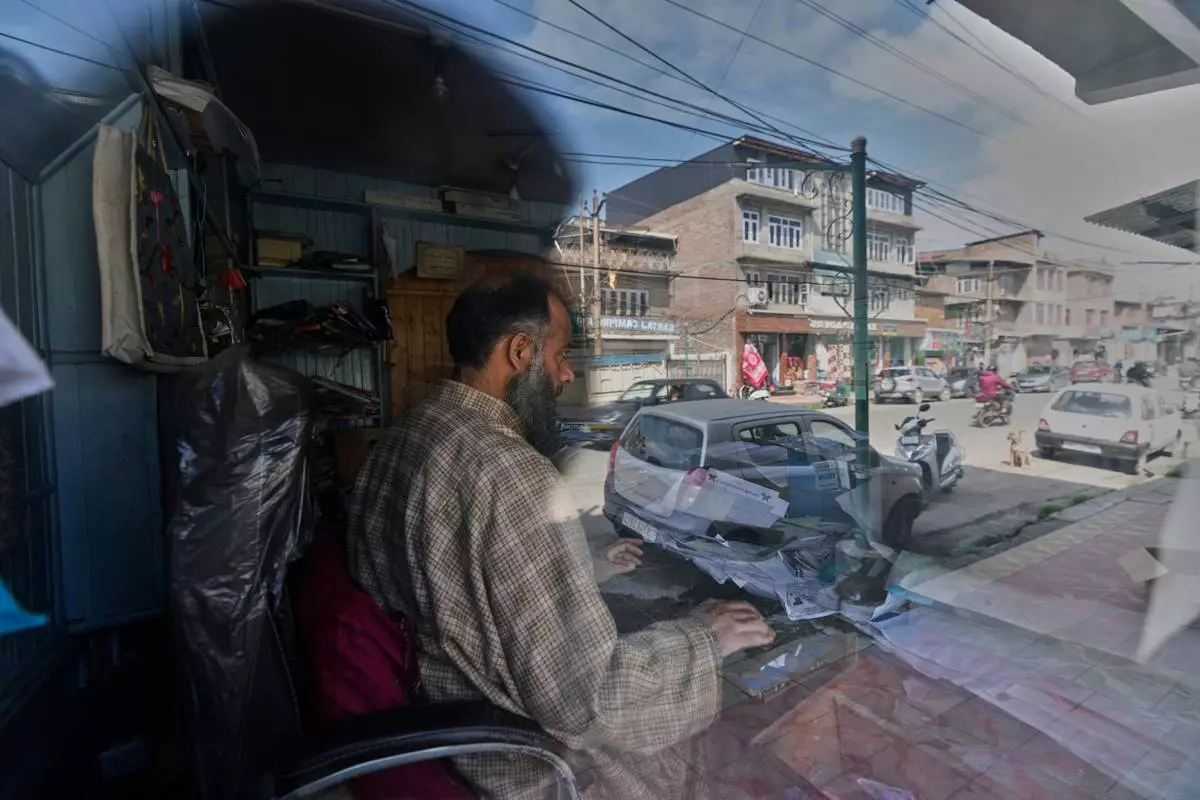
Irfan Ahmad checks census registration online at a registration center as the street is reflected on the glass in Srinagar, Indian controlled Kashmir, April 1, 2026. (AP Photo/Mukhtar Khan)

Irfan Ahmad checks census registration online at a registration center as the street is reflected on the glass in Srinagar, Indian controlled Kashmir, April 1, 2026. (AP Photo/Mukhtar Khan)

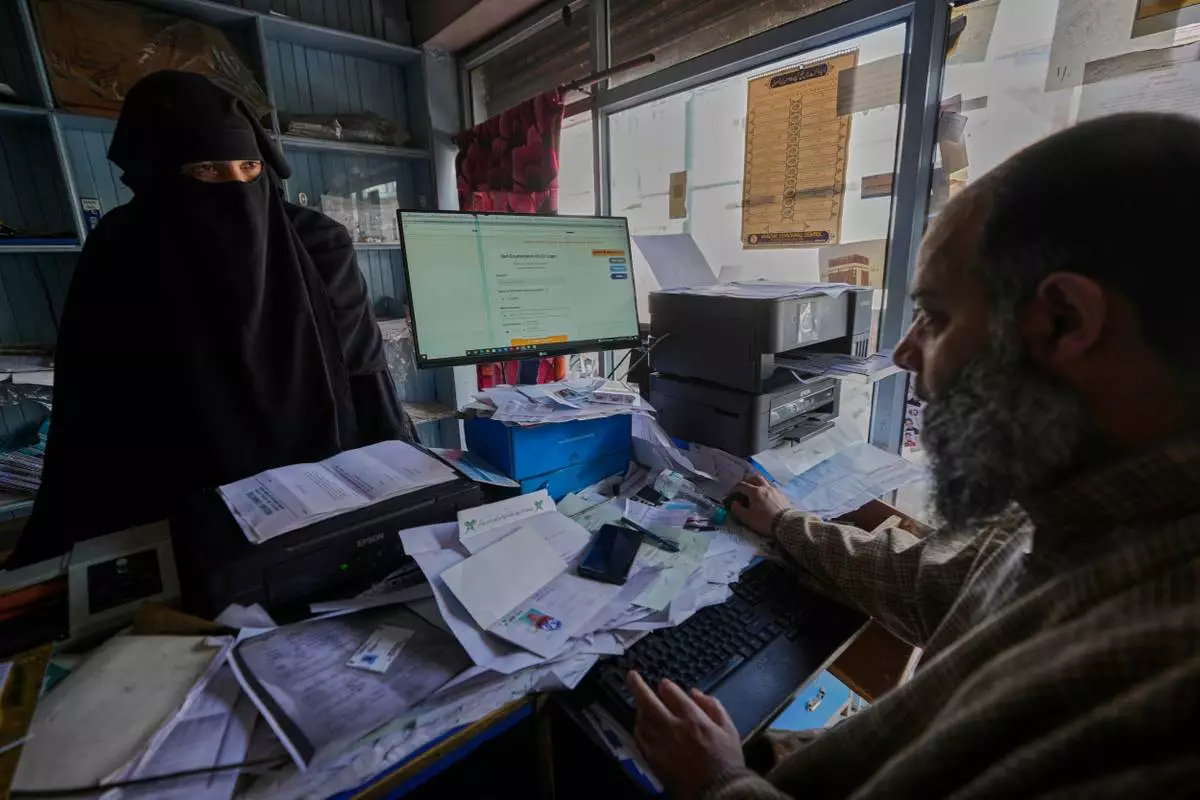
A Muslim woman checks her census registration online at a registration center in Srinagar, Indian controlled Kashmir, April 1, 2026. (AP Photo/Mukhtar Khan)

A Muslim woman checks her census registration online at a registration center in Srinagar, Indian controlled Kashmir, April 1, 2026. (AP Photo/Mukhtar Khan)

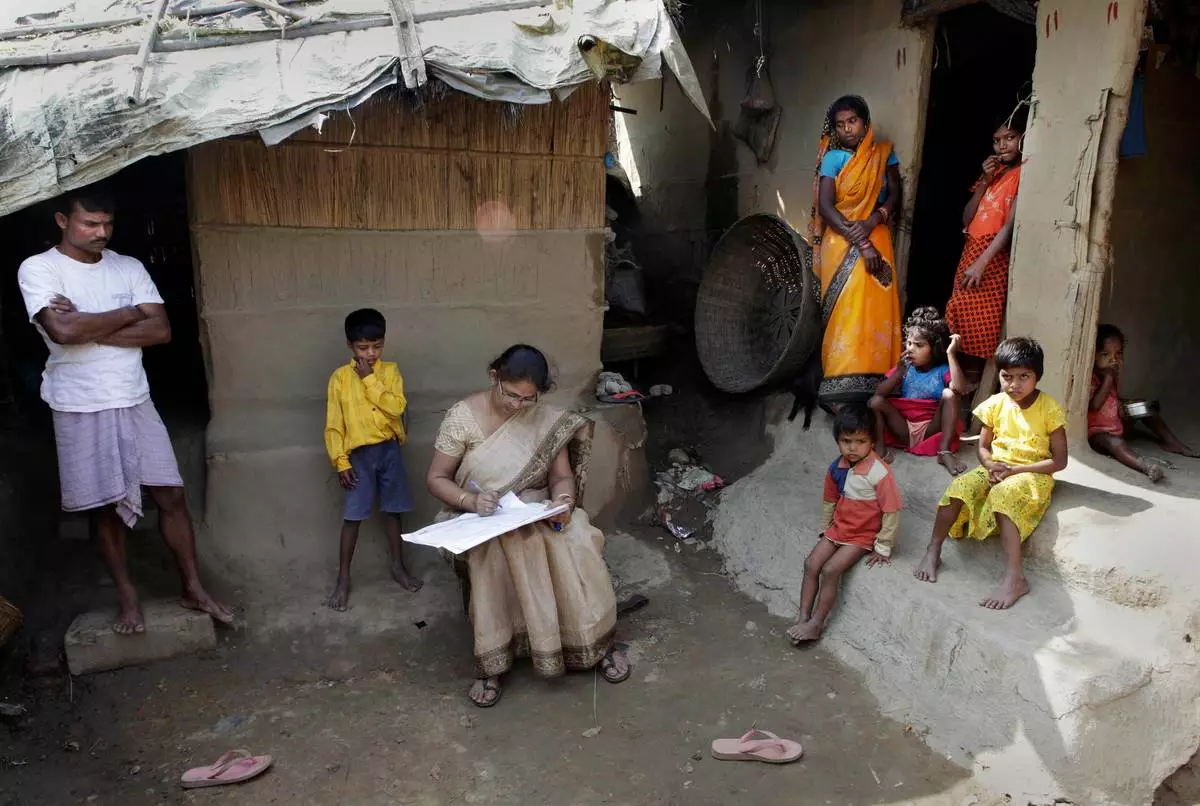
FILE -Mahesh Shah, left, stands as his family members look while census worker Rumima Das, writes the information on a paper on the first day of the national census at Ramsingh Chapori village, east of Gauhati, India, April 1, 2010. (AP Photo/Anupam Nath, File)

FILE -Mahesh Shah, left, stands as his family members look while census worker Rumima Das, writes the information on a paper on the first day of the national census at Ramsingh Chapori village, east of Gauhati, India, April 1, 2010. (AP Photo/Anupam Nath, File)

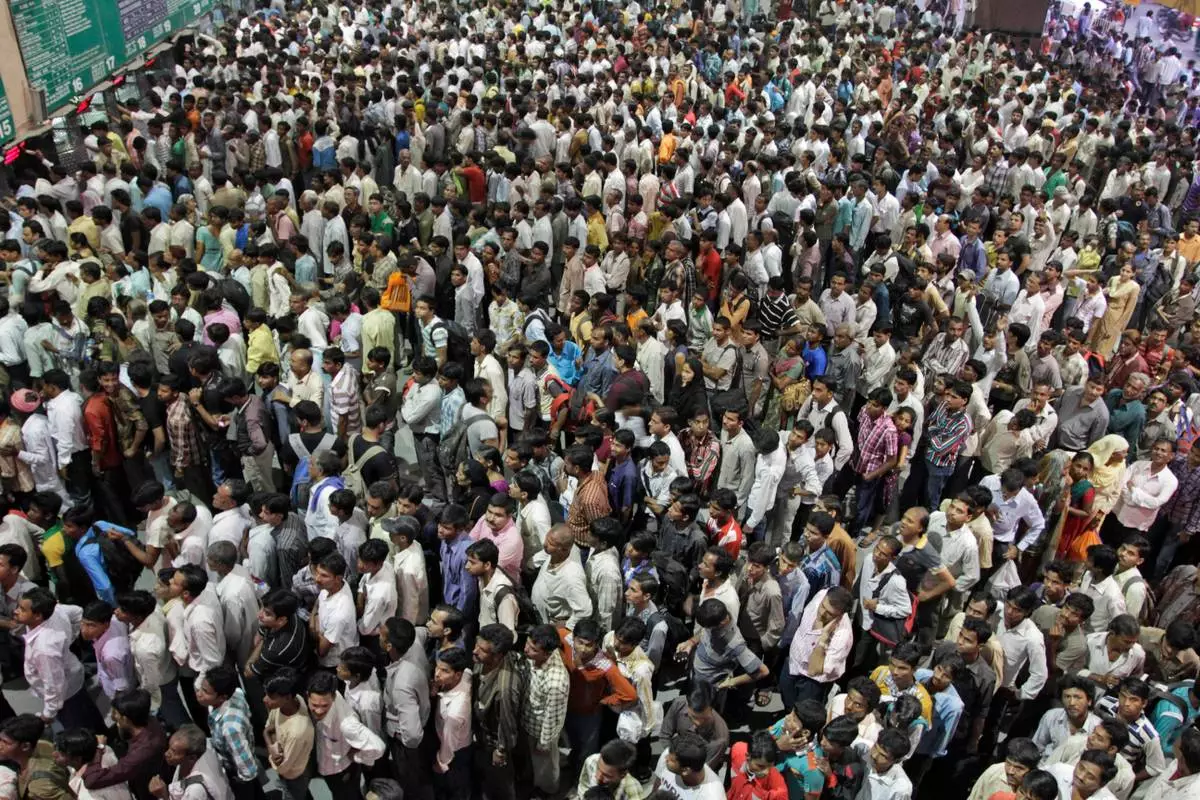
FILE - Indians crowd ticket counters at a railway station in Ahmadabad, India, Oct. 23, 2011. (AP Photo/Ajit Solanki, File)

FILE - Indians crowd ticket counters at a railway station in Ahmadabad, India, Oct. 23, 2011. (AP Photo/Ajit Solanki, File)

Recommended Articles