Skip to Content Facebook Feature Image

In Response to a Broader FDA Investigation, ByHeart Initiates a Voluntary Recall of Two Batches of Infant Formula

News

In Response to a Broader FDA Investigation, ByHeart Initiates a Voluntary Recall of Two Batches of Infant Formula
News

News

In Response to a Broader FDA Investigation, ByHeart Initiates a Voluntary Recall of Two Batches of Infant Formula

2025-11-09 07:56 Last Updated At:08:00

NEW YORK--(BUSINESS WIRE)--Nov 8, 2025--

ByHeart, a next-generation baby nutrition company, announced today that, out of an abundance of caution, it has chosen to voluntarily recall two batches of ByHeart Whole Nutrition Infant Formula following notification from the U.S. Food and Drug Administration (FDA) of a broader ongoing investigation into a recent outbreak of infant botulism.

This press release features multimedia. View the full release here: https://www.businesswire.com/news/home/20251108147813/en/

Infant botulism is a rare but potentially fatal illness that presents a serious threat to the health of infants which occurs when Clostridium botulinum spores are ingested and colonize the intestinal tract, producing botulinum neurotoxins in the immature gut of infants. Affected infants can present with some or all of the following signs and symptoms: constipation, poor feeding, ptosis (drooping eyelid), sluggish pupils, low muscle tone, difficulty sucking and swallowing, weak or altered cry, generalized weakness, respiratory difficulty, and possibly respiratory arrest.

ByHeart was notified by the FDA on November 7, 2025 of an estimated 83 cases of infant botulism that were reported nationwide since August 2025. Of these, the FDA also noted that 13 infants received ByHeart formula at some point. The FDA has not identified a direct link between any infant formula and these cases and there is no historical precedent of infant formula causing infant botulism. Botulism is extremely uncommon in dairy products or infant formula, and is naturally occurring in environmental sources like soil, select vegetables, and dust.

ByHeart adheres to the highest standards of Global and U.S. recommendations for product testing and safety. No ByHeart product has tested positive for any contaminants.

“The safety and well-being of every infant who uses our formula is our absolute highest priority,” said Mia Funt, Co-Founder and President. “We take any potential safety concern extremely seriously, and act quickly to protect families. As parents ourselves, we understand the concern this news may raise. This voluntary recall is out of an abundance of caution and comes from our ongoing commitment to transparency and safety for babies and their parents. While no testing by ByHeart or regulatory agencies has confirmed the presence of Clostridium botulinum spores or toxin in any ByHeart product, we are taking this proactive step to remove any potential risk from the market and ensure the highest level of safety for infants.”

Product Details for Voluntary Recall:

The voluntary recall applies to the following two batches of ByHeart infant formula:

The batch code and use by can be found on the bottom of the can.

No other ByHeart batches are impacted by this voluntary recall.

What Consumers Should Do:

Consumers who have purchased ByHeart infant formula from the identified batch codes should immediately discontinue use and dispose of the product. If you’ve discarded any formula from the following batches, ByHeart will replace those cans and include two additional cans at no cost.

If your infant is experiencing symptoms related to infant botulism, contact your health care provider immediately. To report an illness or adverse event, you can:

If any parents have questions please contact our experts at hello@byheart.com. For more information visit byheart.com or call 1 (833) 429 - 4327. We are available 24/7.


Universal Product Code

Universal Product Code

Front of Can
Front of Can

NEW DELHI (AP) — India has begun the world’s largest national population count, which could reshape welfare programs and political representation across the country.

The previous census in 2011 recorded a population of 1.21 billion. It's now estimated to be more than 1.4 billion, making India the most populous nation.

The new census had been planned for 2021 but was postponed due to the COVID-19 pandemic and logistical challenges.

Here’s how India’s census works and why it is significant:

The first phase of the count started Wednesday and will roll out around the country through September. The workers will spend about a month in each area collecting information on homes and available facilities and will document housing stock and living conditions.

The exercise will blend in-person surveys with a digital option where residents can submit information through a multilingual smartphone application that integrates satellite-based mapping.

The second phase to be conducted from September to next April 1 will record more detailed information like people's social and economic characteristics, including religion and caste.

More than 3 million government workers are expected to be deployed over the course of the year. In 2011, nearly 2.7 million enumerators surveyed more than 240 million households nationwide.

The second phase of the census will attempt a broader accounting of caste beyond historically marginalized groups.

Caste is an ancient system of social hierarchy in India and is influential in defining social standing and deciding who gets access to resources, education and economic opportunity. There are hundreds of caste groups based on occupation and economic status across India, particularly among Hindus, but the country has limited or outdated data on how many people belong to them.

The last attempt to gather detailed caste information through a census dates to 1931, during British colonial rule. Since independent India’s first census in 1951, it counted only Dalits and Adivasis, members of marginalized groups known as scheduled castes and tribes.

Successive governments have resisted conducting a full caste count, arguing it could heighten social tensions and trigger unrest.

Population data collected through the census underpins the distribution of government welfare programs and a wide range of public policies.

It could also prompt a redrawing of India’s political map, as seats in the lower house of Parliament and state legislatures may be increased to reflect population growth. A 2023 law reserves one-third of legislative seats for women, so any expansion would raise the number of seats set aside for female representatives.

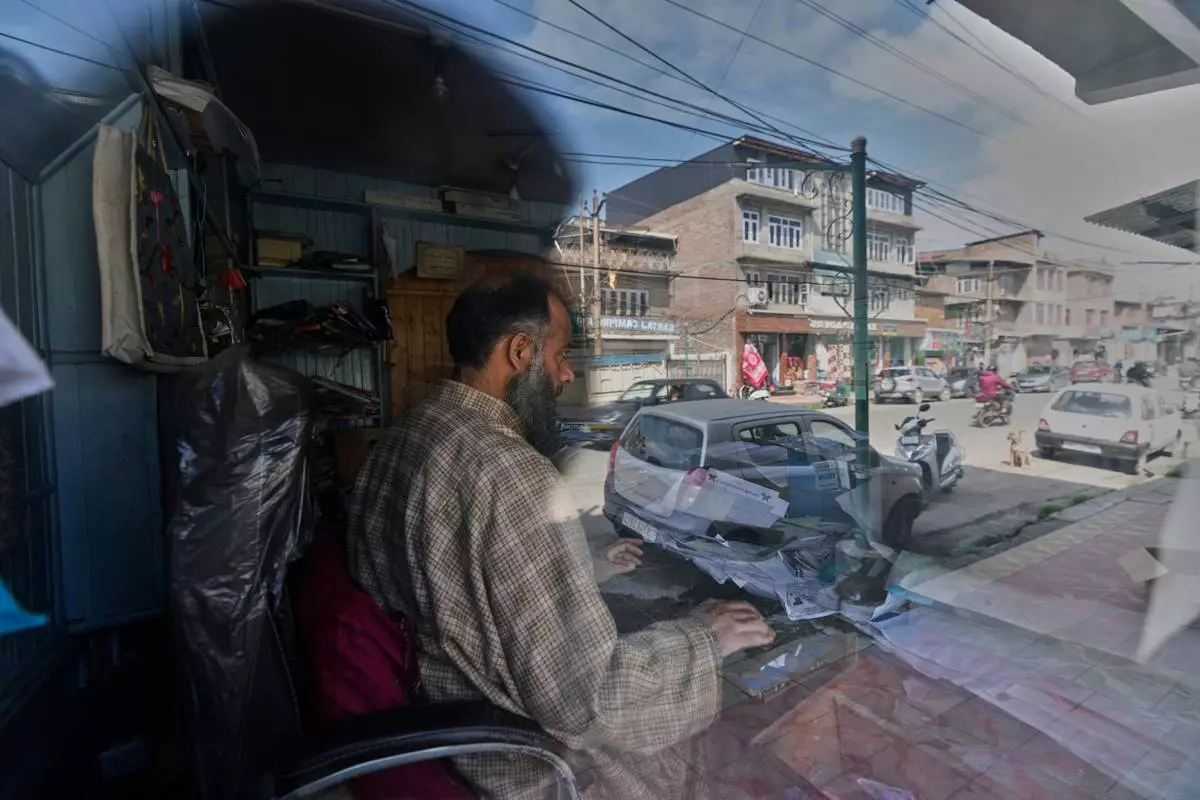
Irfan Ahmad checks census registration online at a registration center as the street is reflected on the glass in Srinagar, Indian controlled Kashmir, April 1, 2026. (AP Photo/Mukhtar Khan)

Irfan Ahmad checks census registration online at a registration center as the street is reflected on the glass in Srinagar, Indian controlled Kashmir, April 1, 2026. (AP Photo/Mukhtar Khan)

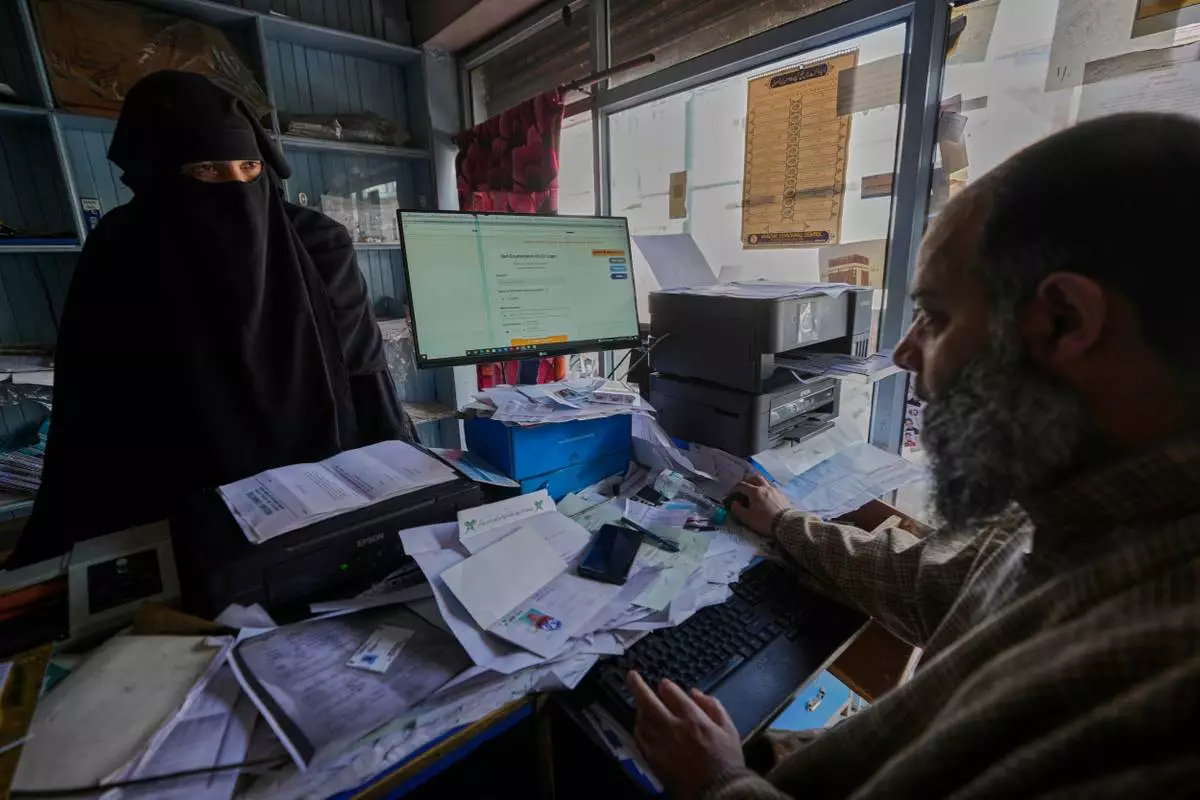
A Muslim woman checks her census registration online at a registration center in Srinagar, Indian controlled Kashmir, April 1, 2026. (AP Photo/Mukhtar Khan)

A Muslim woman checks her census registration online at a registration center in Srinagar, Indian controlled Kashmir, April 1, 2026. (AP Photo/Mukhtar Khan)

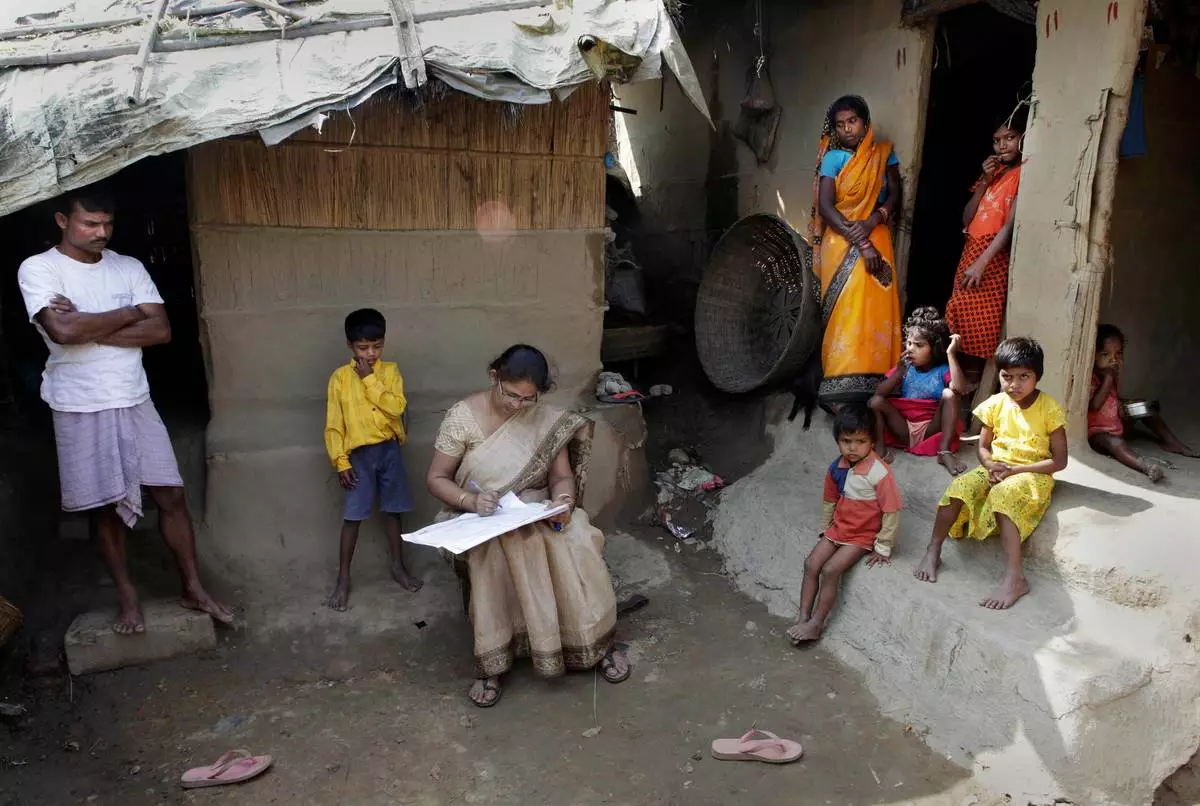
FILE -Mahesh Shah, left, stands as his family members look while census worker Rumima Das, writes the information on a paper on the first day of the national census at Ramsingh Chapori village, east of Gauhati, India, April 1, 2010. (AP Photo/Anupam Nath, File)

FILE -Mahesh Shah, left, stands as his family members look while census worker Rumima Das, writes the information on a paper on the first day of the national census at Ramsingh Chapori village, east of Gauhati, India, April 1, 2010. (AP Photo/Anupam Nath, File)

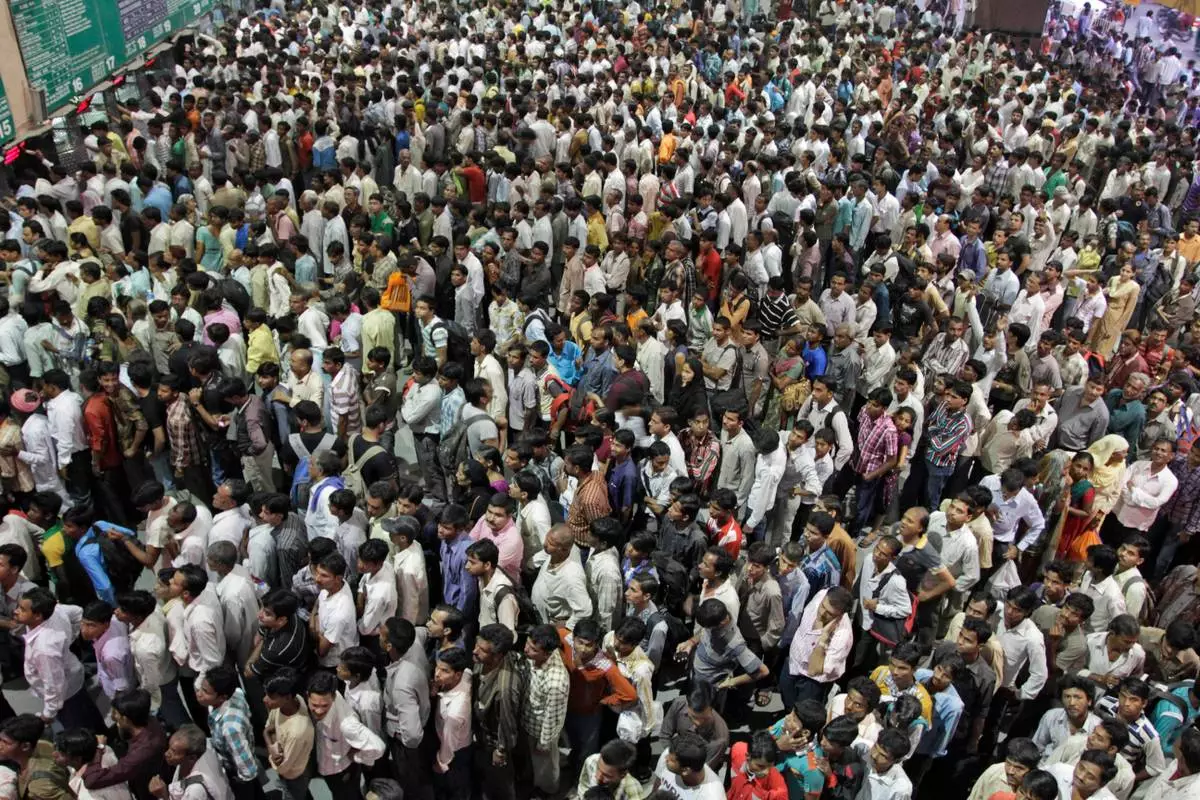
FILE - Indians crowd ticket counters at a railway station in Ahmadabad, India, Oct. 23, 2011. (AP Photo/Ajit Solanki, File)

FILE - Indians crowd ticket counters at a railway station in Ahmadabad, India, Oct. 23, 2011. (AP Photo/Ajit Solanki, File)

Recommended Articles