PARIS (AP) — When 15-year-old Pedro Elias Garzon Delvaux realized an Associated Press photo of him at the Louvre on the day of the crown jewels heist had drawn millions of views, his first instinct was not to rush online and unmask himself.
Quite the opposite.
Click to Gallery
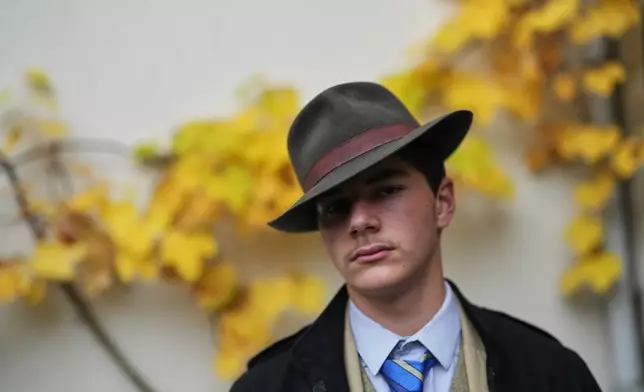
Pedro Elias Garzon Delvaux poses after an interview with Associated Press, Saturday, Nov. 8, 2025, in Rambouillet, south of Paris. (AP Photo/Thibault Camus)
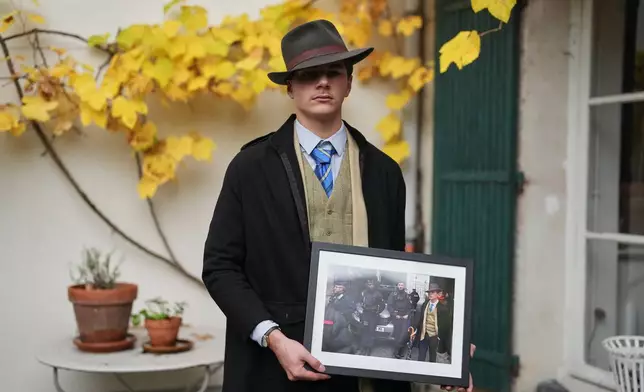
Pedro Elias Garzon Delvaux poses with an Associated Press photo of him outside the Louvre on the day of the crown jewels heist, Saturday, Nov. 8, 2025, in Rambouillet, south of Paris. (AP Photo/Thibault Camus)
Pedro Elias Garzon Delvaux poses after an interview with Associated Press, Saturday, Nov. 8, 2025, in Rambouillet, south of Paris. (AP Photo/Thibault Camus)
Pedro Elias Garzon Delvaux during an interview with Associated Press, Saturday, Nov. 8, 2025, in Rambouillet, south of Paris. (AP Photo/Thibault Camus)
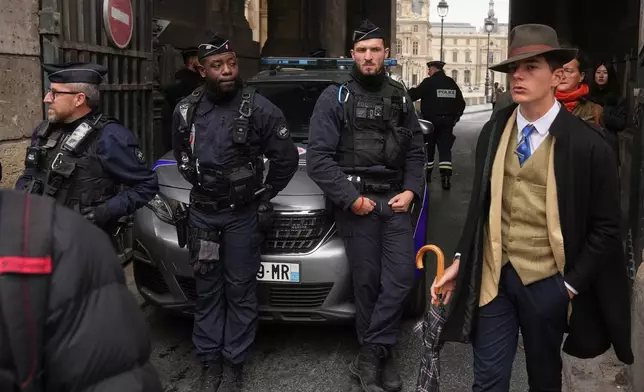
FILE - Pedro Elias Garzon Delvaux, right, walks past as police officers block an entrance to the Louvre after thieves carried out a daylight raid on French crown jewels, in Paris, Oct. 19, 2025. (AP Photo/Thibault Camus, File)
A fan of Sherlock Holmes and Hercule Poirot who lives with his parents and grandfather in Rambouillet, west of Paris, Pedro decided to play along with the world’s suspense.
As theories swirled about the sharply dressed stranger in the “Fedora Man” shot — detective, insider, AI fake — he decided to stay silent and watch.
“I didn’t want to say immediately it was me,” he said. “With this photo there is a mystery, so you have to make it last.”
For his only in-person interview since that snap turned him into an international curiosity, he appeared for the AP cameras at his home much as he did that Sunday: in a fedora hat, Yves Saint Laurent waistcoat borrowed from his father, jacket chosen by his mother, neat tie, Tommy Hilfiger trousers and a restored, war-battered Russian watch.
The fedora, angled just so, is his homage to French Resistance hero Jean Moulin.
In person, he is a bright, amused teenager who wandered, by accident, into a global story.
The image that made him famous was meant to document a crime scene. Three police officers lean on a silver car blocking a Louvre entrance, hours after thieves carried out a daylight raid on French crown jewels. To the right, a lone figure in a three-piece ensemble strides past; a flash of film noir in a modern-day manhunt.
The internet did the rest. “Fedora Man,” as users dubbed him, was cast as an old-school detective, an inside man, a Netflix pitch, or not human at all. Many were convinced he was AI-generated.
Pedro understood why. “In the photo, I’m dressed more in the 1940s, and we are in 2025,” he said. “There is a contrast.”
Even some relatives and friends hesitated until they spotted his mother in the background. Only then were they sure: The internet’s favorite fake detective was a real boy.
The real story was simple. Pedro, his mother and grandfather had come to visit the Louvre.
“We wanted to go to the Louvre, but it was closed,” he said. “We didn’t know there was a heist.”
They asked officers why the gates were shut. Seconds later, AP photographer Thibault Camus, documenting the security cordon, caught Pedro midstride.
“When the picture was taken, I didn’t know,” Pedro said. “I was just passing through.”
Four days later, an acquaintance messaged: Is that you?
“She told me there were 5 million views,” he said. “I was a bit surprised.” Then his mother called to say he was in The New York Times. “It’s not every day,” he said. Cousins in Colombia, friends in Austria, family friends and classmates followed with screenshots and calls.
“People said, ‘You’ve become a star,’” he said. “I was astonished that just with one photo you can become viral in a few days.”
The look that jolted tens of millions is not a costume whipped up for a museum trip. Pedro began dressing this way less than a year ago, inspired by 20th-century history and black-and-white images of suited statesmen and fictional detectives.
“I like to be chic,” he said. “I go to school like this.”
In a sea of hoodies and sneakers, he shows up in a riff on a three-piece suit. And the hat? No, that's its own ritual. The fedora is reserved for weekends, holidays and museum visits.
At his no-uniform school, his style has already started to spread. “One of my friends came this week with a tie,” he said.
He understands why people projected a whole sleuth character onto him: improbable heist, improbable detective. He loves Poirot (“very elegant”), and likes the idea that an unusual crime calls for someone who looks unusual. “When something unusual happens, you don’t imagine a normal detective,” he said. “You imagine someone different.”
That instinct fits the world he comes from. His mother, Félicité Garzon Delvaux, grew up in an 18th-century museum-palace, daughter of a curator and a performer, and regularly takes her son to exhibits.
“Art and museums are living spaces,” she said. “Life without art is not life.”
For Pedro, art and imagery were part of everyday life. So when millions projected stories onto a single frame of him in a fedora beside armed police at the Louvre, he recognized the power of an image and let the myth breathe before stepping forward.
He stayed silent for several days, then switched his Instagram from private to public.
“People had to try to find who I am,” he said. “Then journalists came, and I told them my age. They were extremely surprised.”
He is relaxed about whatever comes next. “I’m waiting for people to contact me for films,” he said, grinning. “That would be very funny.”
In a story of theft and security lapses, “Fedora Man” is a gentler counterpoint: A teenager who believes art, style and a good mystery belong to ordinary life. One photo turned him into a symbol. Meeting him confirms he is, reassuringly, real.
“I’m a star,” he says — less brag than experiment, as if he’s trying on the words the way he tries on a hat. “I’ll keep dressing like this. It’s my style.”

Pedro Elias Garzon Delvaux poses after an interview with Associated Press, Saturday, Nov. 8, 2025, in Rambouillet, south of Paris. (AP Photo/Thibault Camus)

Pedro Elias Garzon Delvaux poses with an Associated Press photo of him outside the Louvre on the day of the crown jewels heist, Saturday, Nov. 8, 2025, in Rambouillet, south of Paris. (AP Photo/Thibault Camus)

Pedro Elias Garzon Delvaux poses after an interview with Associated Press, Saturday, Nov. 8, 2025, in Rambouillet, south of Paris. (AP Photo/Thibault Camus)

Pedro Elias Garzon Delvaux during an interview with Associated Press, Saturday, Nov. 8, 2025, in Rambouillet, south of Paris. (AP Photo/Thibault Camus)
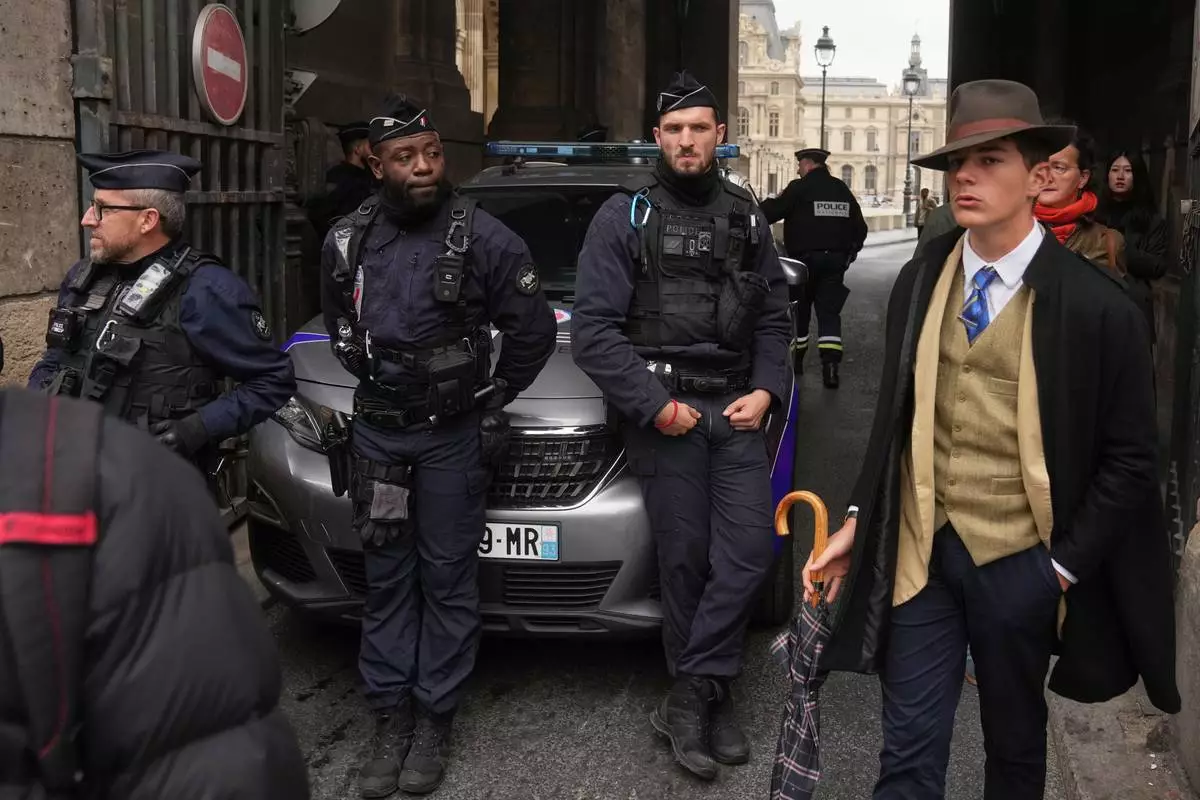
FILE - Pedro Elias Garzon Delvaux, right, walks past as police officers block an entrance to the Louvre after thieves carried out a daylight raid on French crown jewels, in Paris, Oct. 19, 2025. (AP Photo/Thibault Camus, File)
U.S. President Donald Trump said the military could end its Iran offensive in two to three weeks and will shift responsibility for the Strait of Hormuz to countries that rely on it for oil and shipping as the White House announced a prime-time presidential address Wednesday evening on the war.
Trump expressed frustration Tuesday with allies who have been unwilling to do more to support the U.S. war effort, telling them to “go get your own oil.” Trump recently has vacillated between insisting there is progress in diplomatic talks with Iran and threatening to widen the war.
He said the U.S. “will not have anything to do with” what happens next in the vital waterway that has been closed by the Islamic Republic. Instead, he told reporters, the responsibility for keeping the strait open will rest with countries that rely on it. Gulf states rely on the waterway for both exports and imports, including food, and 20 percent of the world's oil supply flows through it.
U.S. gas prices jumped past an average of $4 a gallon for the first time since 2022 on Tuesday, as the Iran war continues to push fuel prices higher worldwide. Analysts say those high fuel costs will trickle into groceries as businesses’ transportation and packaging costs pile up.
Here is the latest:
A drone attack has killed a citizen of Bangladesh in Fujairah, one of the UAE’s seven emirates, authorities said.
He was killed Wednesday when Emirati air defense systems intercepted a drone, and shrapnel landed in a farm, the Fujairah media office said.
The fatality has brought the death toll in the UAE to nine civilians and two soldiers. A Moroccan contractor with the UAE army was also killed in Bahrain.
Earlier Saudi Arabia said it had destroyed two Iranian drones.
Emergency personnel said an 11-year-old girl was severely wounded in central Israel in the latest missile attack from Iran.
Two more people suffered moderate injuries including a 13-year-old boy and a 36-year-old woman, according to Israel’s Magen David Adom rescue services.
Iran’s foreign minister has acknowledged receiving direct messages from U.S. Mideast envoy Steve Witkoff.
The comments by Abbas Araghchi came in an interview with pan-Arab broadcaster Al Jazeera aired late Tuesday. He insisted that the messages didn’t constitute negotiations.
U.S. President Donald Trump has repeatedly described Iran and America has having talks over the war, while Pakistan has been a key intermediary along with Egypt and Turkey during the conflict.
“I receive messages from Witkoff directly, as before, and this does not mean that we are in negotiations,” he said.
He added: “We do not have any faith that negotiations with the U.S. will yield any results. The trust level is at zero.”
Asked about a possible ground offensive by the U.S., Araghchi said “we are waiting for them.”
“We know very well how to defend ourselves,” Araghchi reportedly told the Qatar-based broadcaster. “In a ground war, we can do it even better. We are completely ready to confront any sort of ground attack. We hope they do not make such a mistake.”
Lebanon’s Health Ministry said in a preliminary count early Wednesday 21 people were also wounded in the strike in Jnah.
The strike came without warning, and Israel did not declare the target. When it does, it often says it is targeting operatives from the Hezbollah militant group.
Emergency workers rushed to the scene to search for victims.
Israel’s military warned the public Wednesday a missile was incoming from Yemen, yet another attack from the country’s Houthi rebels who have just entered the war on Iran’s side.
Air raid sirens went off in southern Israel, from Beersheba to the Mediterranean coast.
The warning, just around dawn, broke a long lull, more than 19 hours since the last time Israel’s military warned of an incoming missile launch from Iran, and more than six hours from the last alarms in the northern part of Israel, which in past days received near-constant fire from Hezbollah in Lebanon.
A drone attack by Iran and its allies hit a fuel tank at Kuwait International Airport, sparking a fire, authorities said.
The state-run KUNA news agency said the attack early Wednesday sparked a “large fire” at the airport.
It said there were no immediate injuries from the attack and firefighters were working to control the blaze.
Kuwait International Airport has been attacked before by Iran during the war. The KUNA report suggested the attack may have been launched by Iranian-supported militias in Iraq with Tehran’s support.
In another strike, Bahrain said early on Wednesday morning that it was working to extinguish a fire at a business facility that resulted from an Iranian attack.
Israel said early Wednesday it struck a plant supplying Iran’s theocracy with fentanyl, a powerful synthetic opioid, to allegedly use in a chemical weapons program. Iran acknowledged the strike on Tofigh Daru factory, but insisted it only supplied “hospital drugs” used in medical operations.
The strike happened Tuesday, both the Israelis and the Iranians said.
Iranian Foreign Minister Abbas Araghchi posted a picture of the factory in Tehran, writing on X: “The war criminals in Israel are now openly and unashamedly bombing pharmaceutical companies.”
Hospitals extensively use fentanyl to treat severe pain. But a small amount of the drug can be fatal.
Both Israel and the United States have warned in recent years Iran was experimenting with fentanyl in munitions. The U.S. previously pointed to Iranian academic research studying how Russia likely used a fentanyl derivative during the 2002 Moscow theater hostage seizure by Chechen militants.
Israel alleged Tofigh Daru supplied fentanyl to an advanced research institute in Tehran, known by its acronym SPND. The U.S alleges SPND has conducted research and testing that could be applicable to the development of nuclear explosive devices and other weapons.
The United Arab Emirates has barred Iranians from entering or transiting the country as the war rages, three major airlines said Wednesday.
Long-haul carriers Emirates and Etihad, as well as the lower-cost airline FlyDubai, made the announcements on their websites.
Entry rules can sometimes be opaque in the autocratic United Arab Emirates, a federation of seven sheikhdoms, the three airlines agreed on the order. It said holders of 10-year Golden Visa residency permits could still enter the country.
Authorities have offered no official comment. But Dubai has already shut down the city-state’s Iranian Hospital and Iranian Club, institutions that date back to the time of the shah.
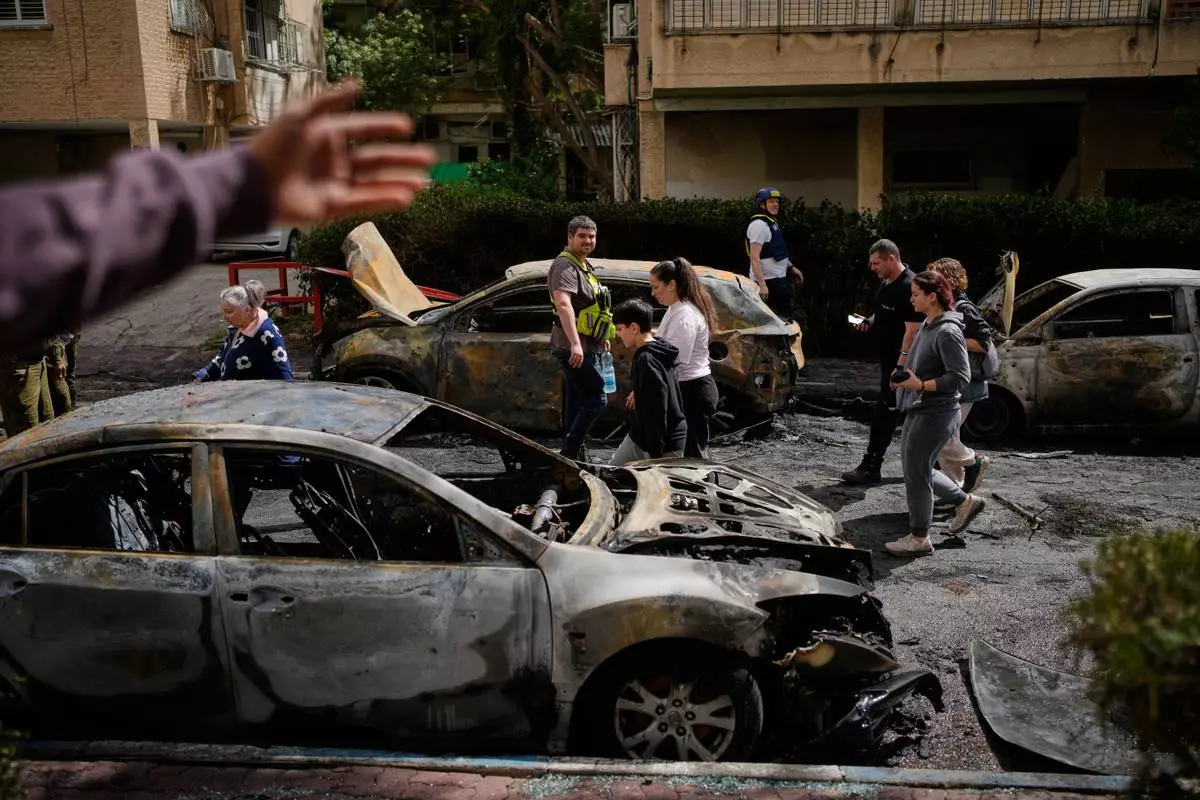
Residents and Israeli security forces inspect a site struck by an Iranian missile in Petah Tikva, Israel, Tuesday, March 31, 2026. (AP Photo/Ohad Zwigenberg)
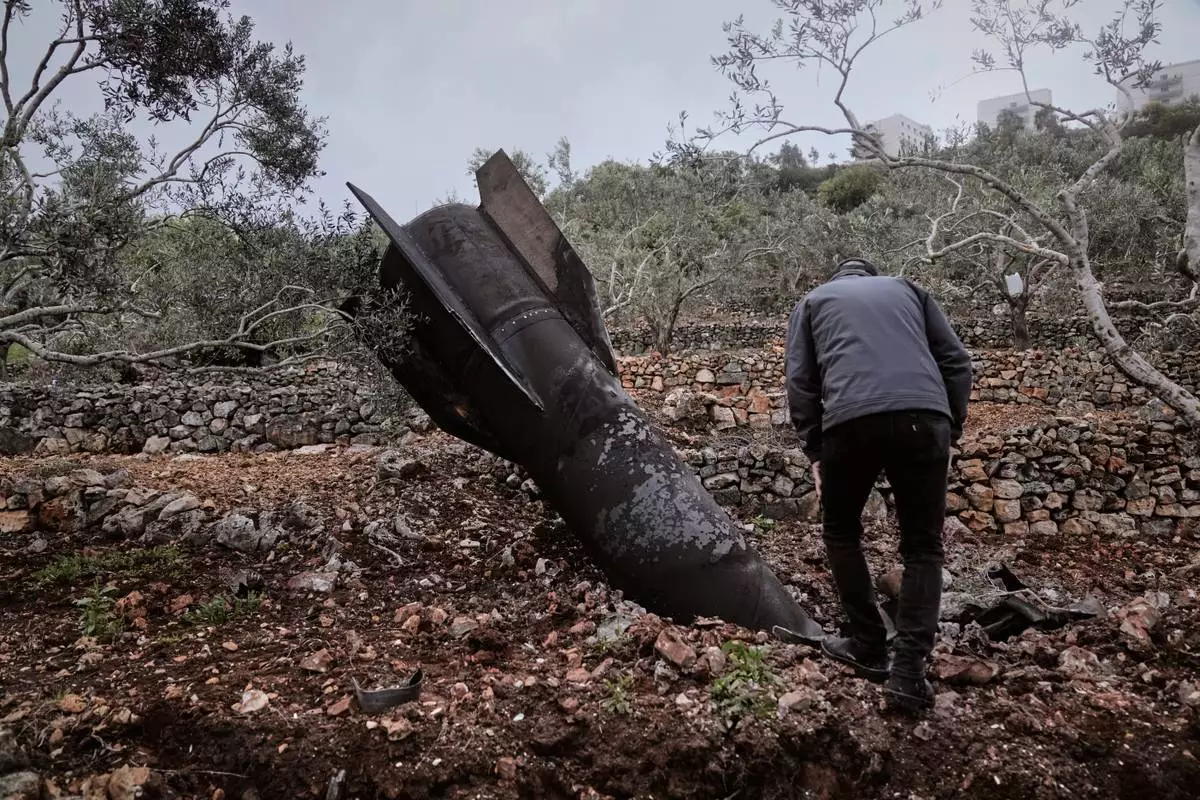
A man inspect the wreckage of an Iranian missile that landed near the West Bank village of Marda, Tuesday, March 31, 2026. (AP Photo/Majdi Mohammed)
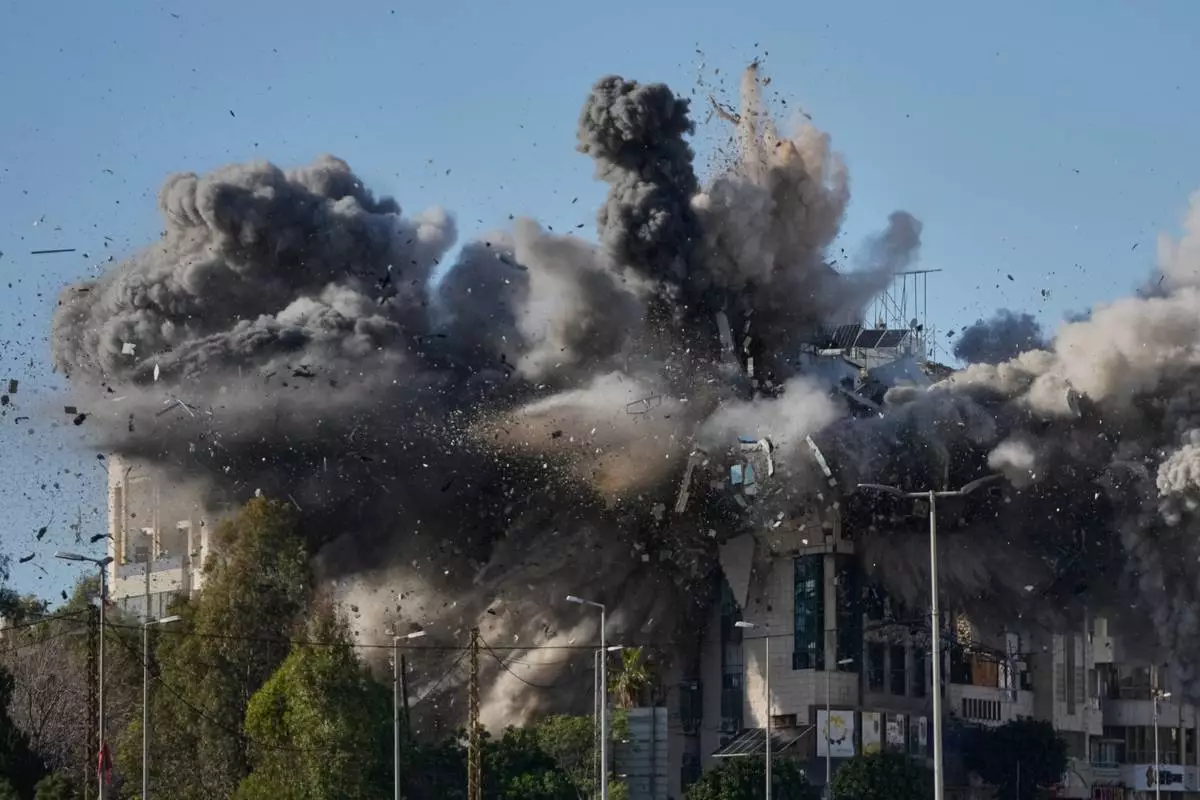
Smoke rises after an Israeli airstrike hits a building near the airport road in Beirut, Lebanon, Tuesday, March 31, 2026. (AP Photo/Hussein Malla)
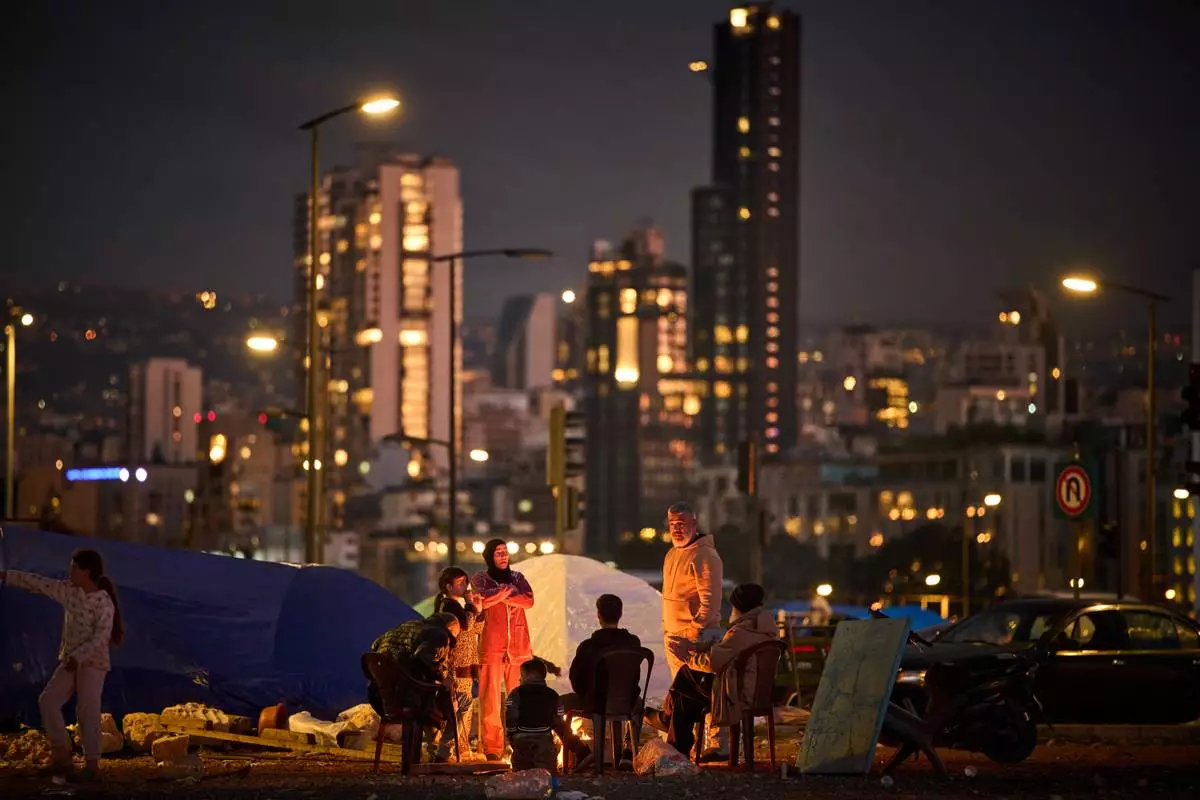
A family who fled Israeli shelling in southern Lebanon warm themselves by a bonfire next to tents used as shelters in Beirut, Lebanon, Tuesday, March 31, 2026. (AP Photo/Emilio Morenatti)