Hundreds of villages remain submerged by deep floodwaters in the northern Philippines after Typhoon Fung-wong carved out a trail of devastation in the country.
Fung-wong, the 26th typhoon of the year, made landfall in the Philippines on Sunday night, claiming at least 18 lives and displacing around 1.4 million people. It followed closely on the heels of Typhoon Kalmaegi, which struck central Philippines, killing hundreds and prompting a nationwide emergency declaration.
The fierce typhoon has moved away from the Philippines, but it could take days for floodwaters to recede, leaving residents struggling to rebuild after another powerful storm.
Among those affected is Josephine Marquez, a resident in the village of Barangay Mabini in Santiago, Isabela Province, which is left in chest-deep floodwaters. To make things worse, a fallen tree crashed onto her roof, destroying what little had left for her.
"Half of our roof was destroyed, then we got flooded. It's so stressful. Even if I want to cry, I can't anymore, because that's just how it is. We're used to it by now," Marquez said.
Across Santiago City, debris litters the streets: twisted metal sheets, fallen branches, and shattered glass are scattered everywhere.
A gasoline station along the main highway lies in ruins, with its roof ripped off by strong winds.
Uprooted trees blocked roads, and the roofs of several homes were blown away.
"We were terrified, because the wind was so strong. It was howling. We can hear tin roofs being torn apart. We were too scared to go out," said Lazaro Santos, another victim.
Santiago City and nearby provinces are still experiencing widespread power outages after the typhoon brought down transmission lines. Crews are working to restore electricity, but the authorities have said it could take up to a week before the full resumption of power supply.
Nationwide, Fung-wong's trail of destruction stretched from Luzon to the Visayas. Torrential rains triggered flash floods and landslides in at least seven regions, submerging roads, bridges, and farmland. The authorities have reported extensive damage to infrastructure and agriculture.
"We have five overflowed bridges here and the river really swelled. The common problem every time is there are so many debris that clogs the waterways. We have already deployed our heavy equipment there," said Julius Agustin, a local disaster risk reduction management officer in Santiago City.
Meanwhile, rescue teams are continuing to wade through flooded communities to deliver aid and assess the full scale of the devastation.
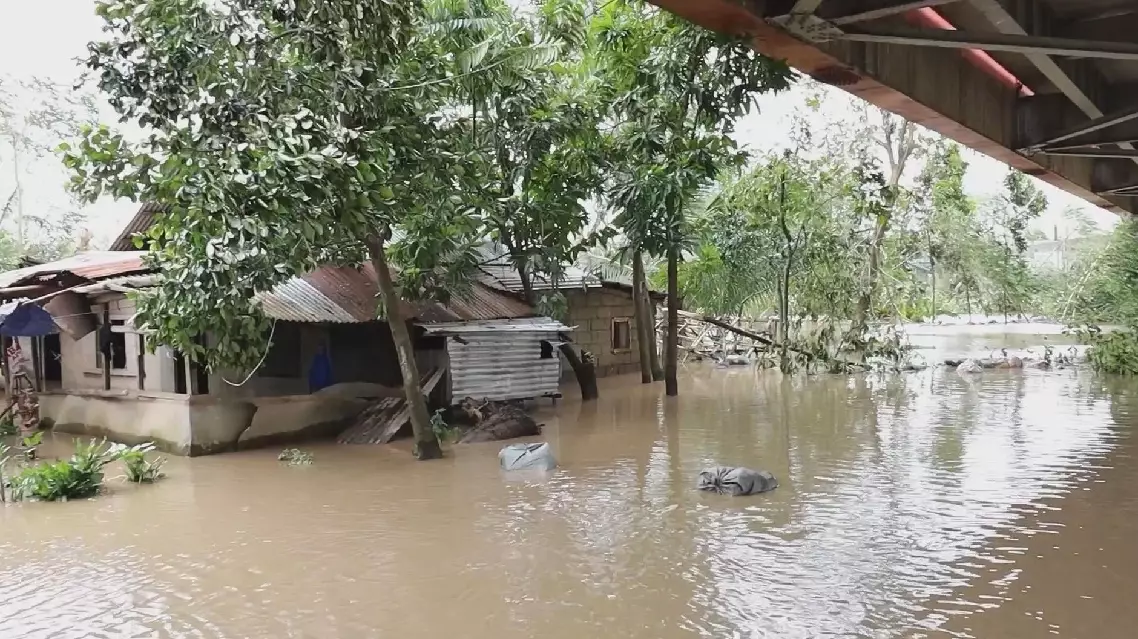
Super Typhoon Fung-wong leaves hundreds of villages flooded across Philippines