Opening speech by SEE at COP30 China Pavilion's Side Event
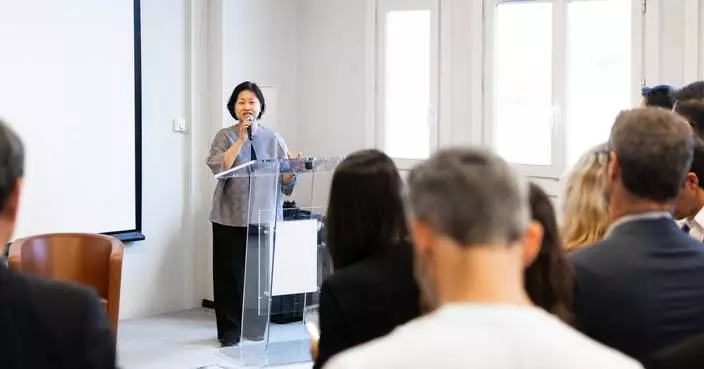
Following is the opening speech by the Secretary for Environment and Ecology, Mr Tse Chin-wan, at the China Pavilion's Side Event: "Converging Innovation in Hong Kong: Forging a Resilient City and a Global Green Finance Hub" of the 30th Conference of the Parties to the United Nations Framework Convention on Climate Change (COP30) in Belém, Brazil, on November 11 (Belém time):
Mr Van Begin (Secretary General of ICLEI-Local Governments for Sustainability, Mr Gino Van Begin), Dr Lam (Chairman of the Council for Carbon Neutrality and Sustainable Development, Dr Lam Ching-choi), Mr Marguccio (Deputy Chief Executive Officer of the Sustainable Energy for All, Mr Stefano Marguccio), Ophelia (Vice-Chairperson of Friends of the Earth (HK)), distinguished guests, ladies and gentlemen,
Good afternoon. It is my honour and pleasure to meet you at the China Pavilion. On behalf of the Government of the Hong Kong Special Administrative Region (SAR), may I extend our warmest welcome to you all.
Like you, I have travelled all the way to Belém, the gateway to the Amazon River, to explore solutions for the climate crisis.
As a Special Administrative Region of China, Hong Kong has taken early actions to reduce carbon. We stopped the building of coal-fired power plants in 1997 and have been gradually shifting to natural gas and nuclear power.
Hong Kong reached carbon peak in 2014. Compared to the peak, the carbon emissions have reduced by about a quarter now; per capita emissions have reduced by about 30 per cent to below 4.5 tonnes per year, which is about a quarter of that of the United States (US) and 60 per cent of the European Union.
To progress further, Hong Kong has set an interim target to half the peak emission before 2035, and achieve carbon neutrality before 2050.
To achieve these targets, Hong Kong's Climate Action Plan 2050 has put forward a four-pronged strategy: to go for net-zero carbon electricity supply; to promote energy saving and green buildings; to promote green transport; and to achieve zero landfilling of wastes, which is necessary to reduce methane.
By 2035, Hong Kong will stop using coal for power generation; increase the share of zero carbon electricity supply to over 60 per cent; stop the selling of conventional fuelled private cars, including hybrids; and stop landfilling of municipal wastes.
As at today, the use of coal for electricity generation has been reduced to about 15 per cent, around 60 per cent of the electricity supply is by natural gas, and 25 per cent by nuclear. Last year we also published a hydrogen development strategy to build a framework conducive to the development of hydrogen in a prudent and orderly manner.
We are progressing well also on promoting green transport. Out of 10 newly registered private cars, seven are now electric. We are also developing a public charging network based on super-fast charging technologies. Furthermore, an electric vehicle battery recycling facility is coming into operation next year.
To go for zero landfilling, Hong Kong has made tremendous efforts in the last three years which has successfully reduced waste disposal by 10 per cent. Quantities of material recycled have increased by 30 per cent.
On waste treatment, the first large scale waste to energy facility is coming into operation this month and the second one is being tendered for completion by 2030.
Recognising the importance of green fuels, we are working with authorities in Chinese Mainland to develop a production base for sustainable aviation fuel in the Greater Bay area. In parallel, we are also gearing up to develop Hong Kong into a green maritime fuel bunkering and trading centre.
Hong Kong is a leading international financial centre and Asia's sustainable finance hub. We can help channelling international capital to support the low carbon green transition.
Our capital market offers a wide range of green and sustainable investment products. As of June 2025, over 200 ESG (environmental, social and governance) funds were authorised by the Securities and Futures Commission, with assets under management over HK$1.1 trillion.
In 2024, the volume of green and sustainable bonds arranged in Hong Kong amounted to around US$43 billion, capturing around 45 per cent of the regional total and ranking first in the Asian market for seven consecutive years.
As of October 2025, the Hong Kong SAR Government has issued green bonds totalling about US$31 billion equivalent. These bonds covered Hong Kong dollar, Renminbi, Euro and US dollar, providing important benchmarks for potential issuers in Hong Kong and in the region.
Accurate, consistent and relevant information about sustainability-related matters is vital. We have implemented the Hong Kong Sustainability Disclosure Standards, fully aligned with the global baseline set by the International Sustainability Standards Board (ISSB).
Hong Kong's Core Climate, is currently the only carbon marketplace offering settlement in both Hong Kong dollars and Renminbi for international voluntary carbon credits.
We welcome and encourage enterprises worldwide to utilise Hong Kong's capital market and financial services for raising international capital for their sustainable projects.
Ladies and gentlemen, to tackle the challenge of climate change, international co-operation is critical. This is why all of us are gathering here.
The low carbon green transition is a difficult journey and yet has opened up many new collaboration opportunities.
Hong Kong looks forward to working hand in hand with all of you to build a climate resilient and sustainable future for our next generations.
Thank you.
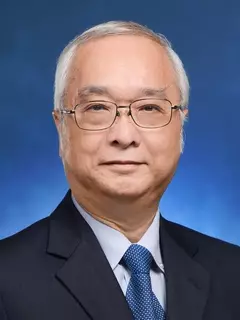
Mr Tse Chin-wan, Photo source: the official website of HK Government