NEW YORK (AP) — The number of people diagnosed with tuberculosis worldwide rose again last year, eclipsing 2023's record total, World Health Organization officials said Wednesday.
About 8.3 million people across the globe were reported as newly diagnosed with TB in 2024. Not all infections are diagnosed and the new numbers represent 78% of the estimated number of people who actually fell ill last year, the WHO noted.
WHO officials see the increase as an indication that screening and treatment are improving after health care disruptions during the COVID-19 pandemic. Globally, the number of deaths caused by TB fell in 2024 to 1.23 million, down from 1.25 million the year before.
U.S. tuberculosis cases continued to rise last year — reaching the highest level in more than a dozen years, according to preliminary data released earlier this year. The vast majority of U.S. TB cases are diagnosed in people born in other countries.
Tuberculosis is caused by bacteria that attack the lungs, and is spread through the air when an infectious person coughs or sneezes. Roughly a quarter of the global population is estimated to have TB, but only a fraction develop symptoms. It can be fatal if not treated, and is one of the top causes of death worldwide.
The WHO releases a TB report every year. The latest is based on data from 184 countries. Funding for fighting the disease was already stagnating, and experts worry about a possible backslide in the battle following recent spending cuts by the U.S. government and other funders.
The Associated Press Health and Science Department receives support from the Howard Hughes Medical Institute’s Department of Science Education and the Robert Wood Johnson Foundation. The AP is solely responsible for all content.

FILE - This 1966 microscope photo provided by the U.S. Centers for Disease Control and Prevention shows Mycobacterium tuberculosis bacilli, the organism responsible for causing the disease tuberculosis. (Elizabeth S. Mingioli/CDC via AP, File)
WASHINGTON (AP) — President Donald Trump said Thursday he will soon sign an order to pay all Department of Homeland Security employees who have gone without paychecks during the partial government shutdown that has reached 48 days.
He announced the unilateral move in a social media post, blaming Democrats for the impasse while thanking Republican leaders for their work this week in trying to end the standoff.
The Republican president used a similar maneuver to resume pay for the Transportation Security Administration after many employees had called out from work, resulting in long delays at airport security lines for travelers. Trump's latest intervention is expected to apply to other non-law enforcement employees at the department, including the Federal Emergency Management Agency and the U.S. Coast Guard and support staff.
Trump said their families “have suffered far too long.”
“Nevertheless, help is on the way for our Brave and Patriotic Public Servants who have continued to work hard, and do their part to protect and defend our Country,” Trump said.
The DHS funding lapse had seemed likely to stretch into next week as the House is contemplating passing a Senate plan it had previously rejected to fund the bulk of the agency, but not its immigration enforcement operations.
There was no legislative resolution Thursday after both chambers met for just a few minutes in pro forma sessions. Nonetheless, the Republican leadership and Trump had coalesced around a plan to fully fund DHS as part of a two-step process. The agreement puts the congressional leaders on the same page for ending the impasse after they had pursued separate paths that resulted in Congress leaving Washington last week for its spring recess without a fix.
During the brief sessions, Senate Majority Leader John Thune, R-S.D., put aside the House plan to fund the entire department for 60 days. Then the House met briefly without taking up the bipartisan Senate plan that had been worked out with Democrats, though Thune is looking toward eventual passage.
“I don’t know the particulars around what the House will do with it,” Thune told reporters. “My assumption is, at some point, hopefully, they’ll move it.”
Speaker Mike Johnson, R-La., and Thune, announced Wednesday that they would return to the Senate measure, which funds most of DHS with the exception of U.S. Immigration and Customs Enforcement and U.S. Border Patrol. Republicans will try later to fund those agencies through party-line spending legislation that could take months to finish.
Neither outcome is guaranteed, and the strategy could potentially still face opposition from the GOP’s own ranks even though Trump has given his support.
Johnson’s embrace of the two-track plan marks a sharp reversal from less than a week ago, when he derided it as a “joke” and said he was “quite convinced that it can’t be that every Senate Republican read the language of this bill.”
He now appears to be on board. But securing support from his own conference could prove more difficult after a sizable group of House Republicans blasted the Senate-passed bill last week.
House Republicans were expected to hold a conference call later Thursday to discuss the next steps.
Thune pointed to a “number of conversations” when he was asked how the Republican leadership and Trump aligned to move ahead after their apparent divisions a week earlier.
“The thing that some people want to do, we can’t do,” said Thune. “And so you have to figure out what’s in the realm of the possible. And you have to just continue to define reality for people.”
Democrats in both chambers were aligned last week with the Senate funding plan passed with bipartisan support. Senate Democratic leader Chuck Schumer of New York on Wednesday blamed Republicans for not acting more quickly.
“Republican divisions derailed a bipartisan agreement, making American families pay the price for their dysfunction,” Schumer said.
Even with the progress, the most conservative lawmakers are likely to seek full funding for all of Trump’s immigration and deportation operations.
“Let’s make this simple: caving to Democrats and not paying CBP and ICE is agreeing to defund Law Enforcement and leaving our borders wide open again,” Rep. Scott Perry, R-Pa., posted on X. “If that’s the vote, I’m a NO.”
Meanwhile, the budget package that Trump wants prepared for later this year is expected to fund ICE and Border Patrol through the remainder of Trump’s term, as a way to try to ensure those agencies are no longer at risk from Democrats objecting to his immigration enforcement agenda. Trump said he wants that legislation on his desk by June 1.
Thune acknowledged the potential hurdles to that route, such as efforts to expand the scope of the bill. He said the goal is to keep it “as narrow and focused as possible” to speed passage.
“We need to kind of move with haste,” he said. “It’s probably not a likely magnet for all these other issues.”
The vast majority of DHS employees have reported to work during the shutdown, but many thousands have gone without pay. As more Transportation Security Administration agents called out from work, there was increasing frustration for air travelers confronted by long waits at some airport security lines. Those bottlenecks appeared to be clearing this week as agents began receiving backpay after Trump signed an executive order.
AP Congressional Correspondent Lisa Mascaro contributed to this report.
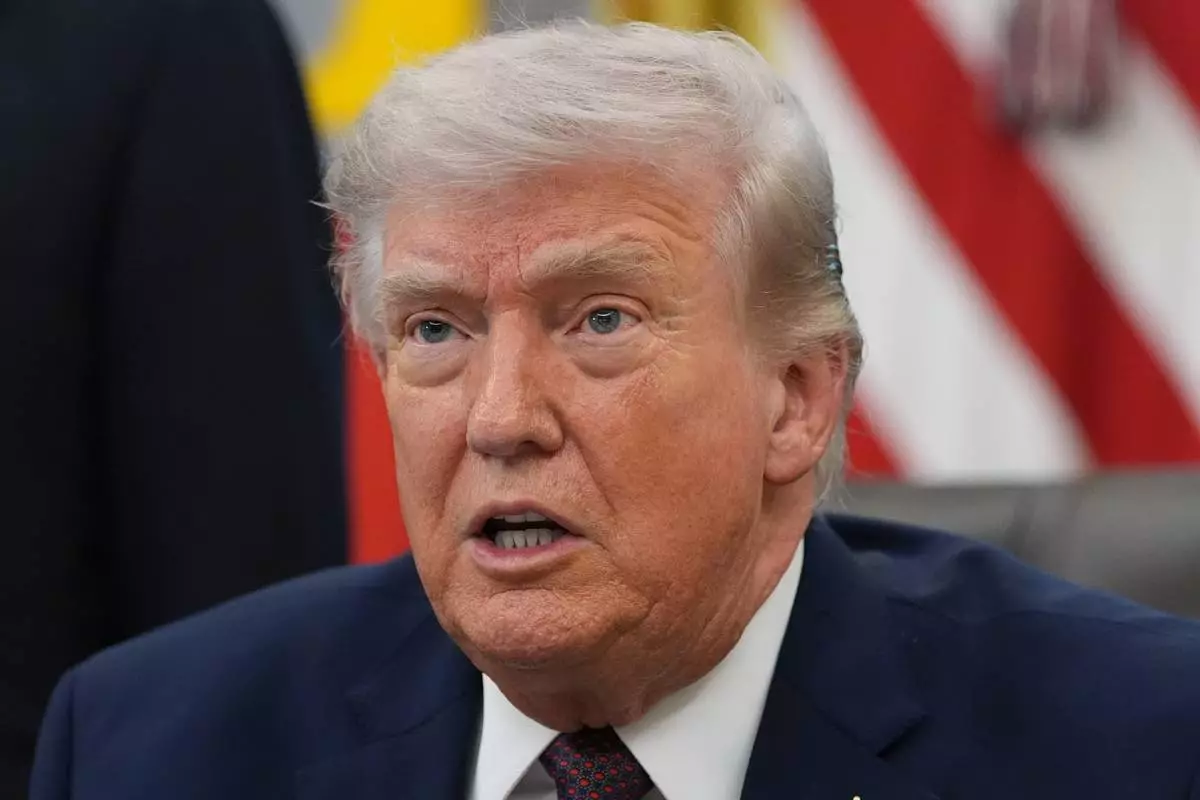
President Donald Trump answers questions from reporters after signing an executive order in the Oval Office of the White House Tuesday, March 31, 2026, in Washington. (AP Photo/Alex Brandon)
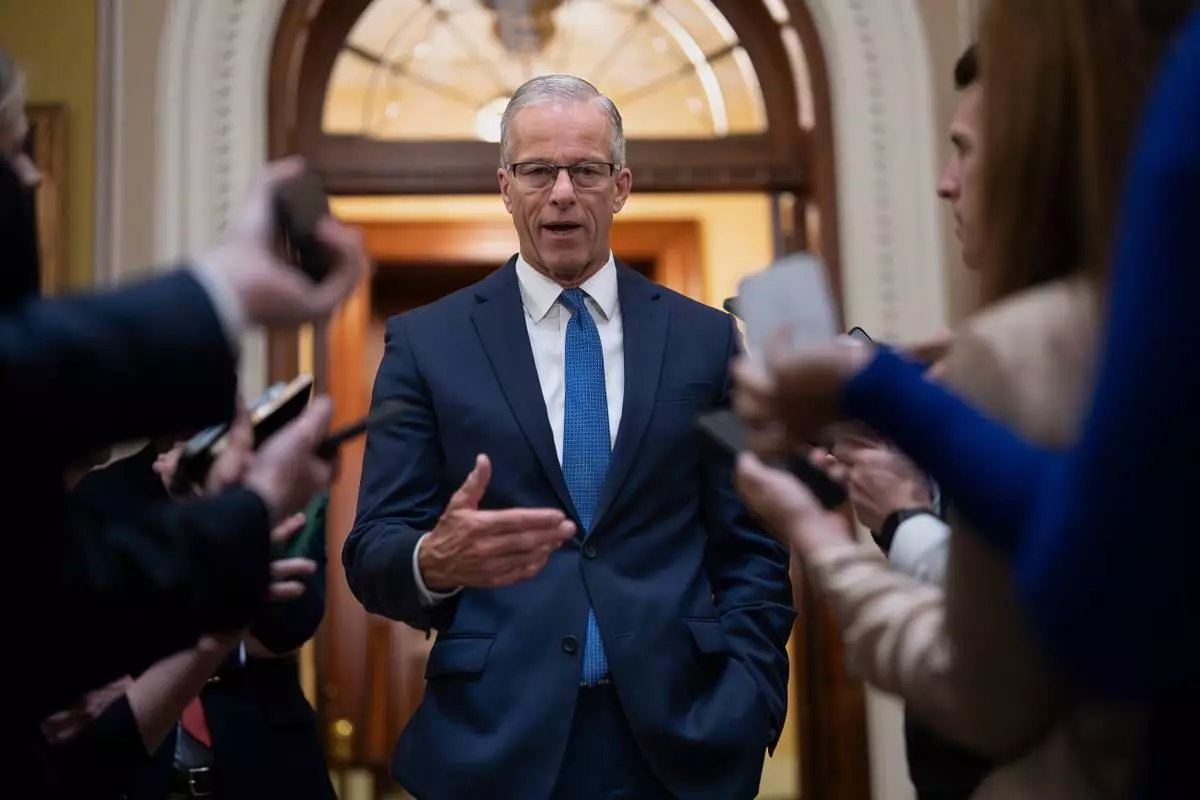
Senate Majority Leader John Thune, R-S.D., speaks to reporters outside the chamber after passing a measure by unanimous consent that would fund most of the Department of Homeland Security, if the House agrees, at the Capitol in Washington, Thursday, April 2, 2026. (AP Photo/J. Scott Applewhite)
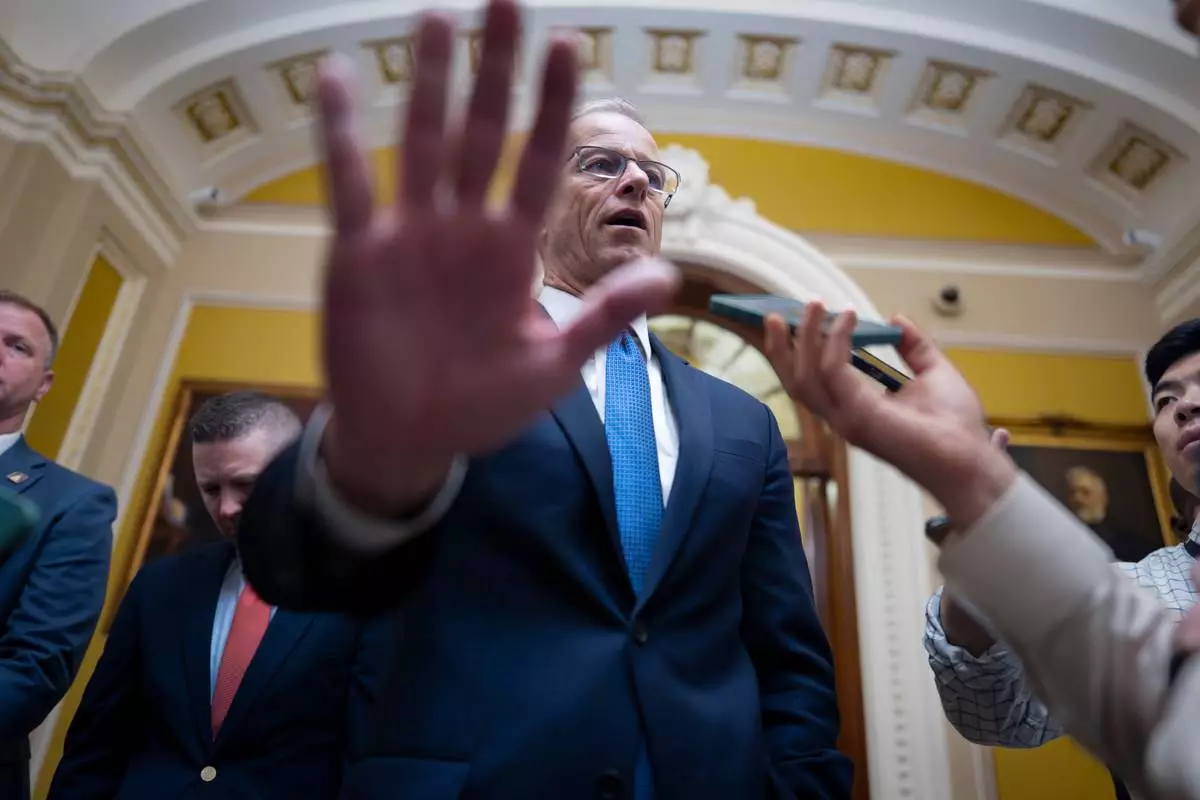
Senate Majority Leader John Thune, R-S.D., gestures as he speaks to reporters outside the chamber after passing a a measure by unanimous consent that would fund most of the Department of Homeland Security if the House agrees, at the Capitol in Washington, Thursday, April 2, 2026. (AP Photo/J. Scott Applewhite)
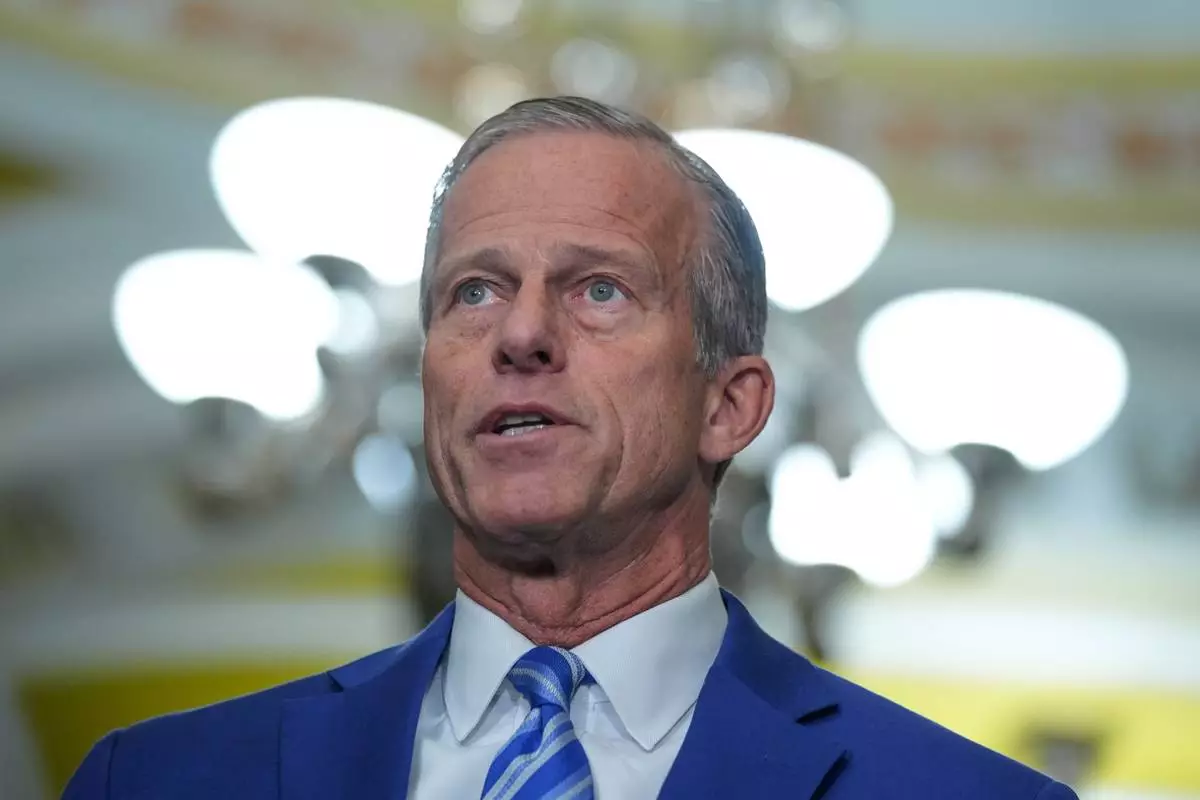
Sen. Majority Leader John Thune, R-S.D., speaks during a news conference after a policy luncheon on Capitol Hill,Tuesday, March 24, 2026, in Washington. (AP Photo/Mariam Zuhaib)
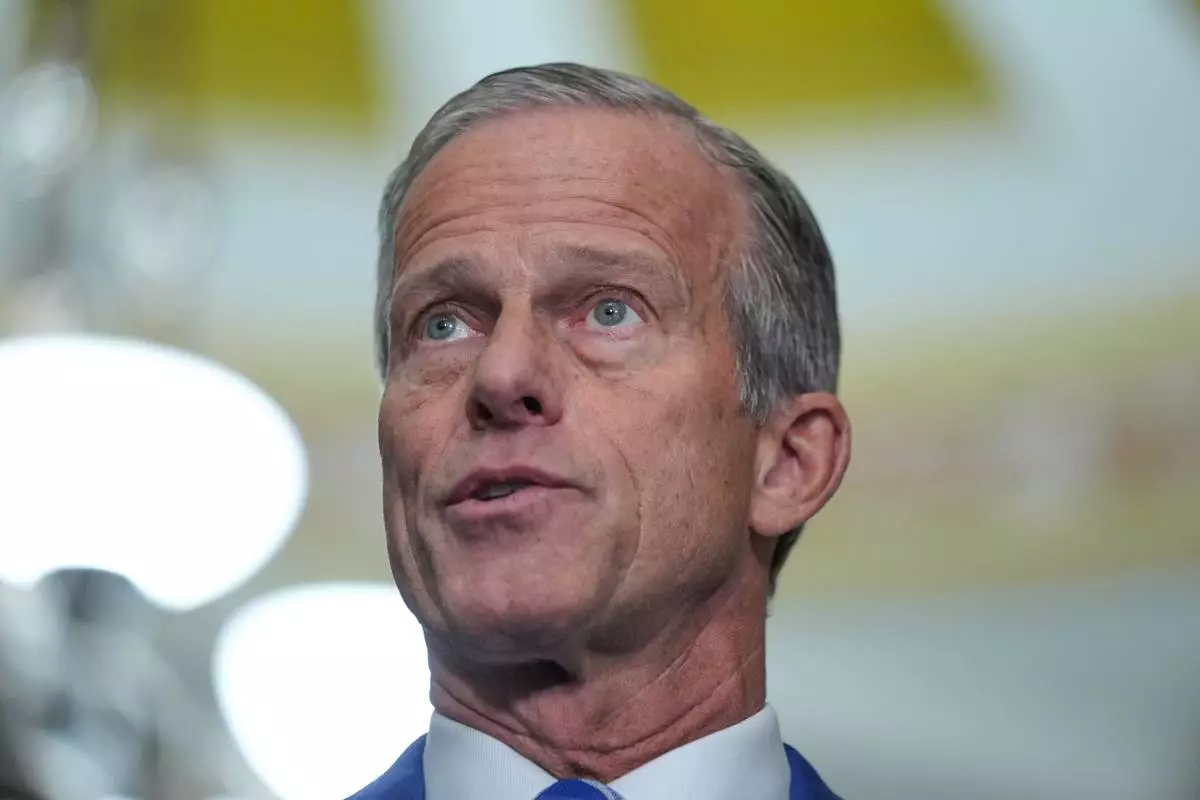
Sen. Majority Leader John Thune, R-S.D., speaks during a news conference after a policy luncheon on Capitol Hill, Tuesday, March 24, 2026, in Washington. (AP Photo/Mariam Zuhaib)

Speaker of the House Mike Johnson, R-La., speaks during a news conference on Capitol Hill, Friday, March 27, 2026, in Washington. (AP Photo/Mariam Zuhaib)