CAPE CANAVERAL, Fla. (AP) — Intense solar storms responsible for breathtaking auroras across the U.S. delayed the launch of Blue Origin’s big new rocket Wednesday.
Already grounded by poor weather, the New Glenn rocket was poised to blast off in the afternoon with two Mars orbiters for NASA from Florida. But five hours before the targeted liftoff, it was called off because of the heightened solar activity.
Worried about the possible impact of increased radiation on its Mars-bound spacecraft, NASA decided to postpone the launch until conditions improve. Officials said they would try again Thursday.
This will be only the second flight of a New Glenn rocket, which made its debut in January. At 321 feet (98 meters), it is considerably larger and more powerful than the New Shepard rockets that Jeff Bezos' Blue Origin is launching from Texas with passengers.
The Associated Press Health and Science Department receives support from the Howard Hughes Medical Institute’s Department of Science Education and the Robert Wood Johnson Foundation. The AP is solely responsible for all content.
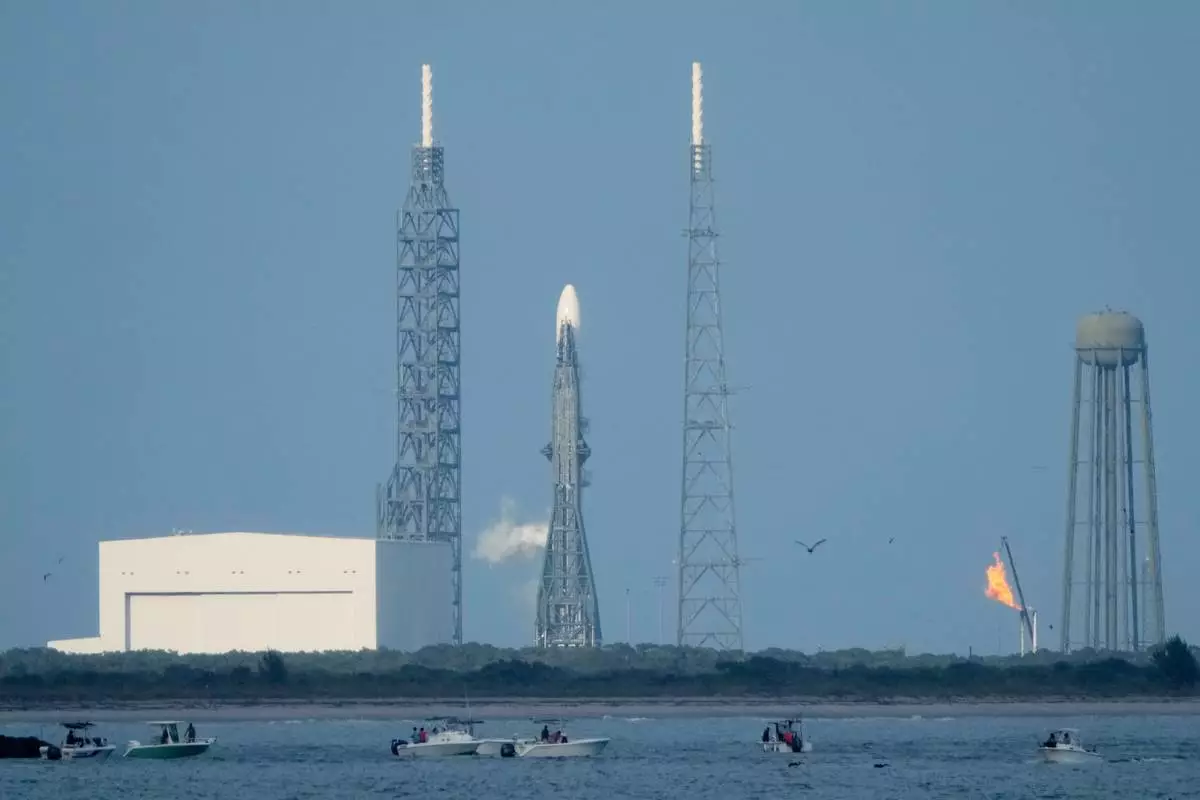
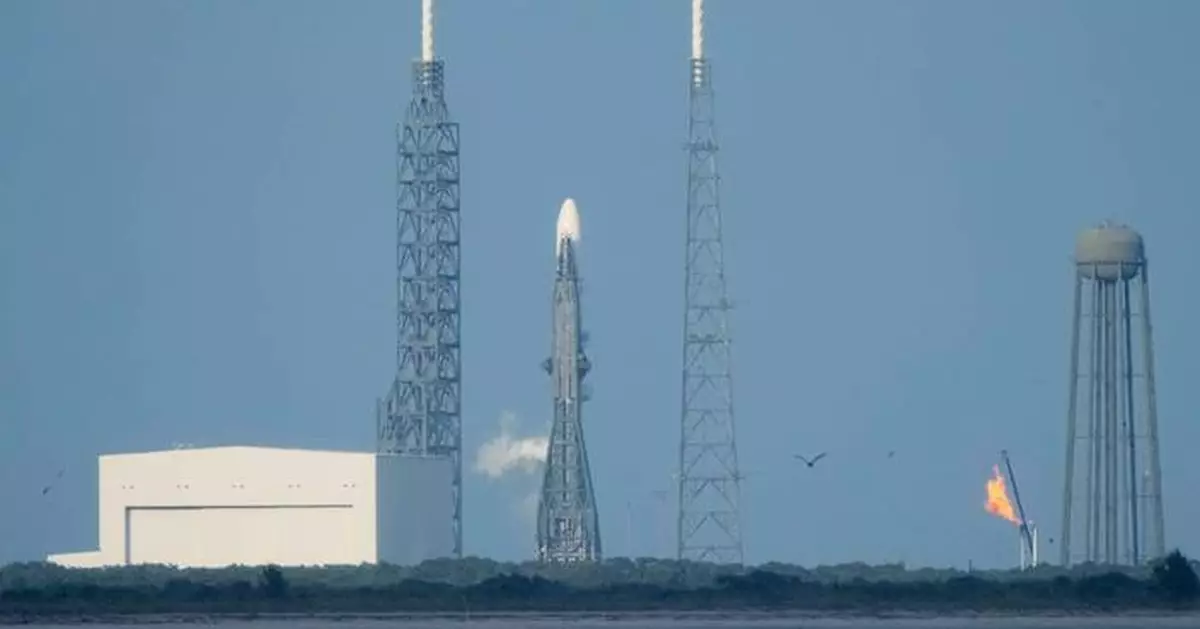
A Blue Origin New Glenn rocket stands ready on Launch Complex 36 a few minutes before the launch was scrubbed at the Cape Canaveral Space Force Station in Cape Canaveral, Fla., Sunday, Nov. 9, 2025. (AP Photo/John Raoux)
WASHINGTON (AP) — House Speaker Mike Johnson and Senate Majority Leader John Thune announced a plan Wednesday to fully fund the Department of Homeland Security, moving past a split between the two Republican leaders that resulted in Congress leaving Washington last week without a fix to a record-setting partial government shutdown.
They said in a joint statement that “in the coming days” Republicans in Congress will return to a Senate plan to fund most of the department through an agreement with Democratic senators, with the exception of U.S. Immigration and Customs Enforcement and U.S. Border Patrol. Republicans would then try later to fund those agencies through party-line spending legislation.
Neither outcome is guaranteed, and the strategy could potentially still face opposition from the GOP’s own ranks even though President Donald Trump has given his support.
“We appreciate and share the President’s determination to once and for all bring an end to the Democrat DHS shutdown,” said Johnson, R-La., and Thune, R-S.D.
The plan represents a do-over of what senators had in mind when they passed a bipartisan funding agreement through unanimous consent last Friday. The Senate could approve similar legislation as soon as Thursday morning through unanimous consent, but even if that happens, it's unclear how quickly the bill could move through the House. It will likely take several months for Republicans to act on the second part of Trump's plan and pass budgeting legislation to fund ICE and Border Patrol.
House Republicans refused to go along with the Senate plan last week, instead changing the bill to fund all of DHS for 60 days.
As a result, the shutdown continued as lawmakers left for their home states and congressional districts for a two-week recess. The DHS shutdown reached its 47th day on Wednesday.
Senate Democratic leader Chuck Schumer said in a statement, "Republican divisions derailed a bipartisan agreement, making American families pay the price for their dysfunction."
The announcement from the GOP leaders showed that for now, Thune and Johnson are on the same page. Their working relationship experienced a rupture late last week when Johnson — at the urging of many House Republicans — rejected Thune’s plan.
The top Republicans hoping the path ahead will win over skeptical GOP colleagues, but the most conservative lawmakers are likely to seek full funding for all of Trump’s immigration and deportation operations.
“Let’s make this simple: caving to Democrats and not paying CBP and ICE is agreeing to defund Law Enforcement and leaving our borders wide open again,” Rep. Scott Perry, R-Pa., posted on X. “If that’s the vote, I’m a NO.”
It is uncertain whether Johnson could find enough support from the House to recall lawmakers back to Washington before their spring recess ends in mid-April.
Meanwhile, the narrow budget package being prepared for later this year is expected to fund ICE and Border Patrol through the remainder of Trump’s term, as a away to try to ensure those agencies are no longer at risk from Democrats objecting to the president’s immigration enforcement agenda.
Earlier Wednesday, Trump weighed in on the shutdown, using a social media post to seemingly call on Republicans to fund the immigration portions of DHS through a bill that would not require Democratic support. He said he wanted the legislation on his desk by June 1.
“We are going to work as fast, and as focused, as possible to replenish funding for our Border and ICE Agents, and the Radical Left Democrats won’t be able to stop us,” Trump said.
House Democratic leader Hakeem Jeffries released a statement saying, “It’s time to pay TSA agents, end the airport chaos and fully fund every part of the Department of Homeland Security that does not relate to Donald Trump’s violent mass deportation machine.”
The vast majority of Homeland Security workers continue to report to work during the shutdown, but many thousands have been going without pay. That led to more Transportation Security Administration agents calling out from work, causing frustrating security lines at some of the nation's biggest airports. Those bottlenecks appeared to be clearing this week as agents began receiving backpay, per an executive order from Trump.
__
Associated Press writer Lisa Mascaro in Washington contributed reporting.
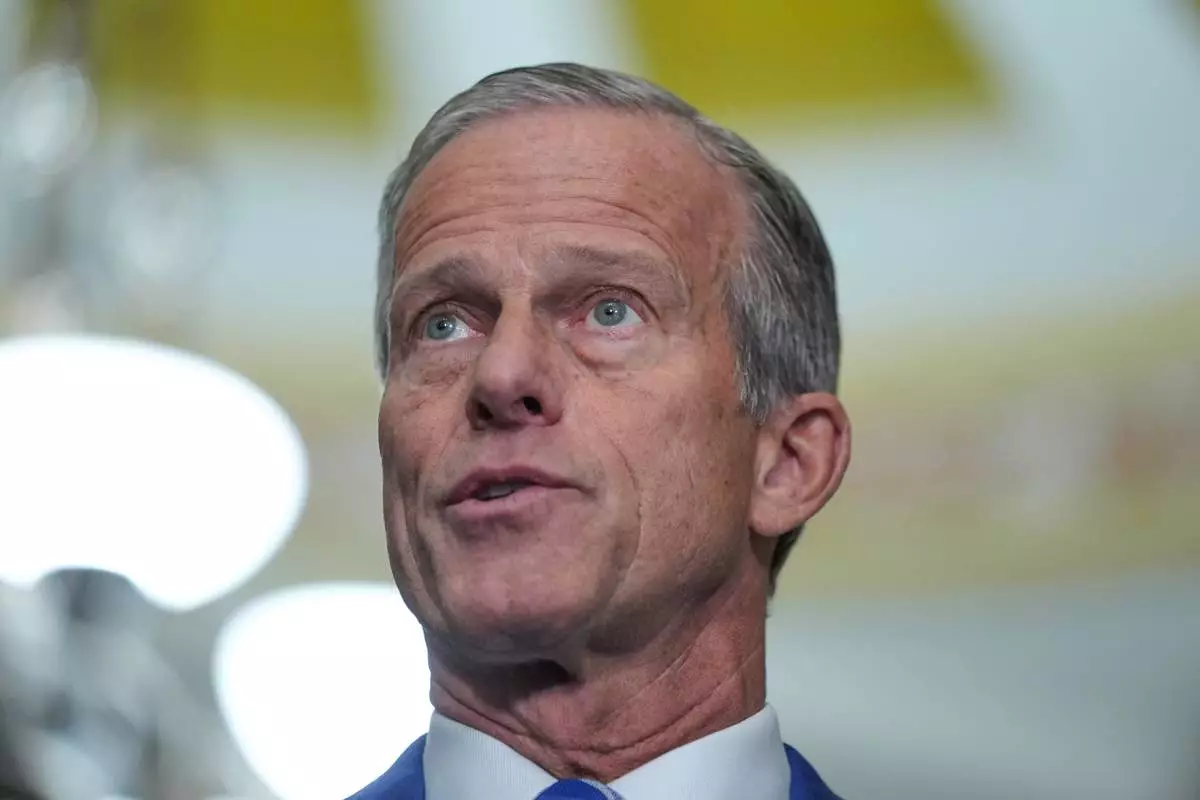
Sen. Majority Leader John Thune, R-S.D., speaks during a news conference after a policy luncheon on Capitol Hill, Tuesday, March 24, 2026, in Washington. (AP Photo/Mariam Zuhaib)

Speaker of the House Mike Johnson, R-La., speaks during a news conference on Capitol Hill, Friday, March 27, 2026, in Washington. (AP Photo/Mariam Zuhaib)