A U.S. professor has called for a budget process reform to prevent partisan confrontation from yielding harmful spending impasses, as the country's longest government shutdown ended on Wednesday.
The latest government shutdown began on Oct 1, when the U.S. Congress failed to pass temporary funding bills proposed by both Democrats and Republicans. The two parties had continued to trade blame during the budget impasse, accusing each other of "holding the government hostage".
It lasted for 43 days until U.S. President Donald Trump on Wednesday signed a funding package passed by the House of Representatives in 222-209 vote, largely along party lines. This package covers only three of the 12 annual appropriations bills Congress must pass each year, leaving nine bills to be finalized.
The parliamentary mechanisms that lead to shutdowns were intended to promote fiscal discipline and strengthen legislative oversight over government spending. However, the frequency and duration of shutdowns have been worsening over the past decade -- from 16 days in 2013 over the Affordable Care Act to 35 days in 2018-19 over the U.S.-Mexico border wall funding to the latest more than 40 days of impasse, turning budget approval, a routine procedure testing the government's capacity to govern, into a fierce arena of partisan combat.
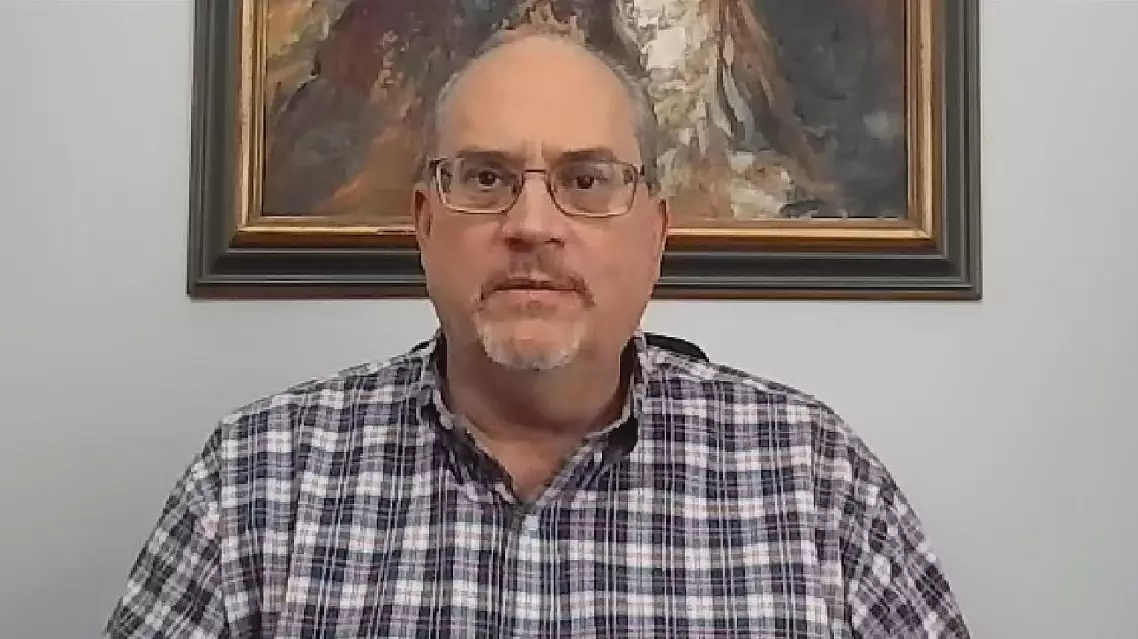
Matthew Wilson, a political science professor at Southern Methodist University, stressed the need to reform the budget process so that neither Democrats nor Republicans can treat budget negotiations as tools for voter mobilization and political leverage.
"I think this speaks to larger issues in the U.S. budgetary process and procedural reforms that are really necessary. It should not be possible for either party in Congress to essentially hold the nation hostage, either through threatening a government shutdown or threatening not to approve an increase in the debt ceiling. We've seen that sort of brinkmanship in the past as well, where they can essentially grind the country to a halt as a means of 'hostage-taking' to try to achieve political objectives that they can't otherwise. That's not a good way to run a country," said the scholar.
"Most other countries in the world don't deal with these sorts of impasses. So I think it speaks to some procedural reforms that may be in order, in order to prevent this from happening in the future," Wilson said.
U.S. professor calls for budget process reform to avert more gov’t shutdowns
Voting for the election of the eighth-term Legislative Council (LegCo) of China's Hong Kong Special Administrative Region (HKSAR) concluded on Sunday night.
Voting for the election began at 07:30 a.m. local time on Sunday. More than 600 polling stations were opened across Hong Kong, serving approximately 4.13 million registered voters.
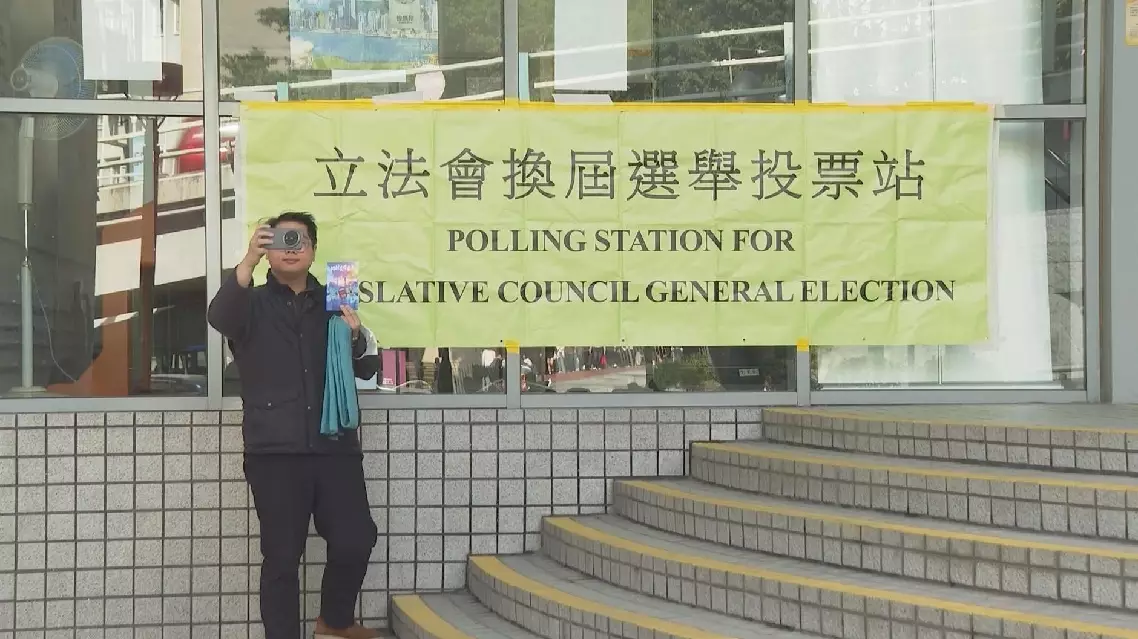
Long queues had already formed outside multiple polling stations across Hong Kong before the polls opened. At polling station entrances, staff and volunteers attentively assisted voters with the procedures. Some voters posed for a photo holding a thank-you card given by staff after casting their ballot.
"As a Hong Kong citizen, I think it's my responsibility to vote, and I don't want to give up my rights. That's why I come here to support," a voter said.
"We actually flew in from Thailand. Learning today is a special day to vote, we actually canceled all our appointments and canceled everything, and we flew in with the whole family just to be part of Hong Kong and to vote, and to cast our vote and be part of the community," said another voter.
HKSAR Chief Executive John Lee cast his ballot at around 08:30 a.m. at Raimondi College on Robinson Road. He said that the LegCo election is of great importance to Hong Kong's overall development and future reforms, and it also represents the expectations of Hong Kong society.
A number of voters said they look forward to the new term of the Legislative Council taking greater responsibility in advancing Hong Kong's economy, society, and public welfare.
"I think an area of focus I'd like to see is, one is the economy, and secondly is youth mobility and youth policies. I think youth are the future, and it's very important to get unity within the youth and also give us hope, right? The youth in general -- what can we do to, for us as youth, to partake in civil society and to show our responsibility, but also from the government, like, what kind of policy that can help us do that as well," said a young voter.
"I hope that there will be more fair education in the sense that even people from the poor family, they can actually receive good education in good schools," another voter said.
The new term of LegCo will be composed of 90 members, including 40 elected by the Election Committee, 30 elected by functional constituencies, and 20 elected by geographical constituencies through direct elections.
The eighth-term LegCo of the HKSAR will commence its four-year term on Jan 1, 2026.
Voting for 8th-term HKSAR LegCo election concludes