WASHINGTON (AP) — A confidant of Bill Pulte, the Trump administration's top housing regulator, provided confidential mortgage pricing data from Fannie Mae to a principal competitor, alarming senior officials of the government-backed lending giant who warned it could expose the company to claims that it was colluding with a rival to fix mortgage rates.
Emails reviewed by The Associated Press show that Fannie Mae executives were unnerved about what one called the “very problematic” disclosure of data by Lauren Smith, the company's head of marketing, who was acting on Pulte’s behalf.
“Lauren, the information that was provided to Freddie Mac in this email is a problem,” Malloy Evans, senior vice president of Fannie Mae’s single-family mortgage division, wrote in an Oct. 11 email. “That is confidential, competitive information.”
He also copied Fannie Mae’s CEO, Priscilla Almodovar, on the email, which bore the subject line: “As Per Director Pulte’s Ask.” Evans asked Fannie Mae's top attorney “to weigh in on what, if any, steps we need to take legally to protect ourselves now.”
While Smith still holds her position, the senior Fannie Mae officials who called her conduct into question were all forced out of their jobs late last month, along with internal ethics watchdogs who were investigating Pulte and his allies.
The dismissals rattled the housing industry and drew condemnation from Democrats. It also gave Pulte's critics evidence to support claims that he has leveraged the nonpublic information available to him to further his own political aims.
“This is another example of Bill Pulte weaponizing his role to do Donald Trump’s bidding, instead of working to lower costs amidst a housing crisis,” said Sen. Elizabeth Warren, of Massachusetts, the ranking Democrat on the Senate Banking Committee. “His behavior raises significant questions, and he needs to be brought in front of Congress to answer them.”
The episode marks the latest example of Pulte using what is typically a low-profile position in the federal bureaucracy to enhance his own standing and gain the attention of President Trump. He's prompted mortgage fraud investigations of prominent Democrats who are some of the president’s best known antagonists, including Sen. Adam Schiff of California, New York Attorney General Letitia James and California Rep. Eric Swalwell.
In June, he ordered Fannie Mae and Freddie Mac to prepare a proposal for the firms to accept cryptocurrency, another industry Trump has boosted, as part of the criteria for buying mortgages from banks. Last week, he persuaded Trump about the allure of a 50-year mortgage as a way to increase home buying and building — a proposal that was widely criticized because it would drastically increase the overall price of a loan.
Pulte also has focused on large home construction companies, which have drawn Trump's ire. Pulte requested confidential Fannie Mae data and has publicly signaled that he is considering a crackdown if the companies do not increase construction volume.
“I’m looking at the Fannie Mae builder data and with the top three homebuilders we buy EASILY over $20 billion in THEIR LOANS!” he posted to X in early October.
In a brief statement, the Federal Housing Finance Agency, which Pulte leads, did not address questions from the AP, but said the agency “requires its regulated entities to carry out their operations in compliance with all applicable laws and regulations.”
Fannie Mae said it takes “compliance with the law very seriously and we have a rigorous program to ensure we follow all laws and regulations.”
Pulte and Smith did not respond to requests for comment.
Since his appointment to lead the FHFA, Pulte has sought to ingratiate himself with Trump. The 37-year-old scion of a homebuilding company fortune, Pulte has cultivated a reputation as a hyper-online millennial with a thirst for recognition and a desire to please the president. He and his wife also donated about $1 million to Trump's campaign, campaign finance disclosures show.
When Trump sought to oust Federal Reserve chair Jay Powell, Pulte became a leading attacker, routinely taking to X, formerly Twitter, where he has over 3 million followers, to excoriate the central bank leader.
The Wall Street Journal reported this week that some Fannie Mae ethics and oversight officials who were fired last month had been investigating whether Pulte improperly obtained mortgage information for James, who was charged last month with bank fraud after Pulte sent a criminal referral to the Justice Department. She said the charges, which she denies, are politically motivated.
Pulte's power over the mortgage lending industry is unusual. Not long after his Senate confirmation, he appointed himself chairman of both Fannie Mae and Freddie Mac, which hold trillions of dollars in assets. The companies serve as a crucial backstop for the home lending industry by buying up mortgages from individual lenders, which are packaged together and sold to investors.
The three competing roles present the potential for a conflict of interest that is detailed in emails reviewed by AP. Like many matters of public policy in Trump's Washington, it appears to have begun with a social media post.
In October, Trump criticized the homebuilding industry, which he likened to the oil-market-dominating cartel OPEC.
“They're sitting on 2 million empty lots, A RECORD,” the president posted to his social media platform, Truth Social. “I'm asking Fannie Mae and Freddie Mac to get Big Homebuilders going.”
“On it,” Pulte posted in response on X.
Pulte turned to Smith, who in her brief tenure at Fannie Mae had become a trusted Pulte ally whose work portfolio transcended the boundaries dividing Fannie Mae, Freddie Mac and the FHFA, according to two people who spoke on condition of anonymity out of fear of retribution.
Soon, a team at Fannie Mae was overseeing an effort to pull together a tranche of mortgage data, according to emails reviewed by the AP. Smith played a central role and shared the confidential lender-level pricing information with Freddie Mac, which set off alarms at both companies, according to the emails. A spokesman for Freddie Mac declined comment.
In the Oct. 11 message to Smith, Evans, the Fannie Mae mortgage executive, also added others to the email chain because they “were involved with this week's efforts to compile this information” and he wanted to “make sure you do not exacerbate this issue.”
Danielle McCoy, Fannie Mae's general counsel, weighed in, adding that the information Smith provided to Freddie Mac should “never be shared” and “could put the company at risk.”
Others who were part of the email chain included Almodovar, the CEO; chief operating officer Peter Akwaboah; Devang Doshi, a senior vice president for capital markets; and John Roscoe, a Pulte loyalist and former Trump White House aide, who served as Fannie Mae's executive vice president of public relations and operations.
Days later, Almodovar, McCoy and Evans — who did not respond to requests for comment — were out of a job. Meanwhile, Roscoe was promoted to co-president of the company, while Akwaboah was named acting CEO.
Pulte also got something he wanted.
A day after the terse email exchange, Trump posted a graphic to his Truth Social network that featured Fannie Mae's logo, a list of large homebuilders and the headline “We Give Them Billions.”
Pulte quickly reposted it.
Associated Press writer Fatima Hussein contributed reporting.
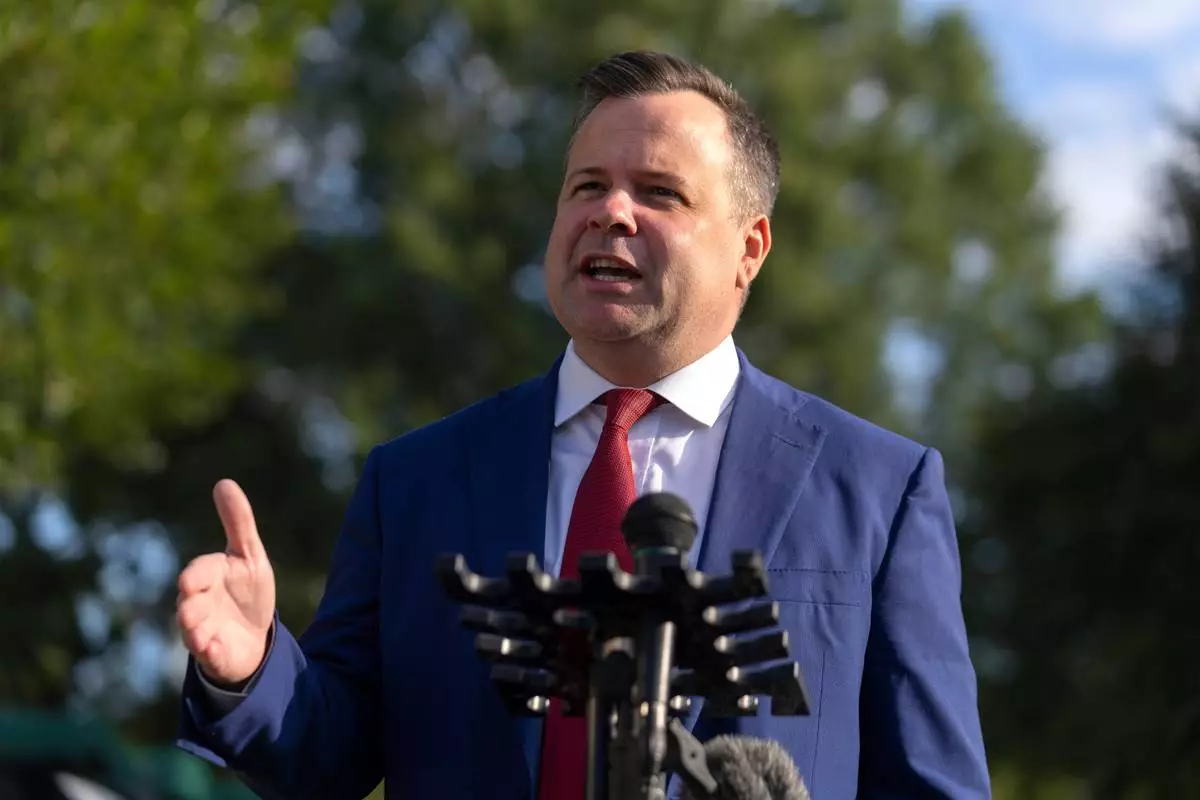
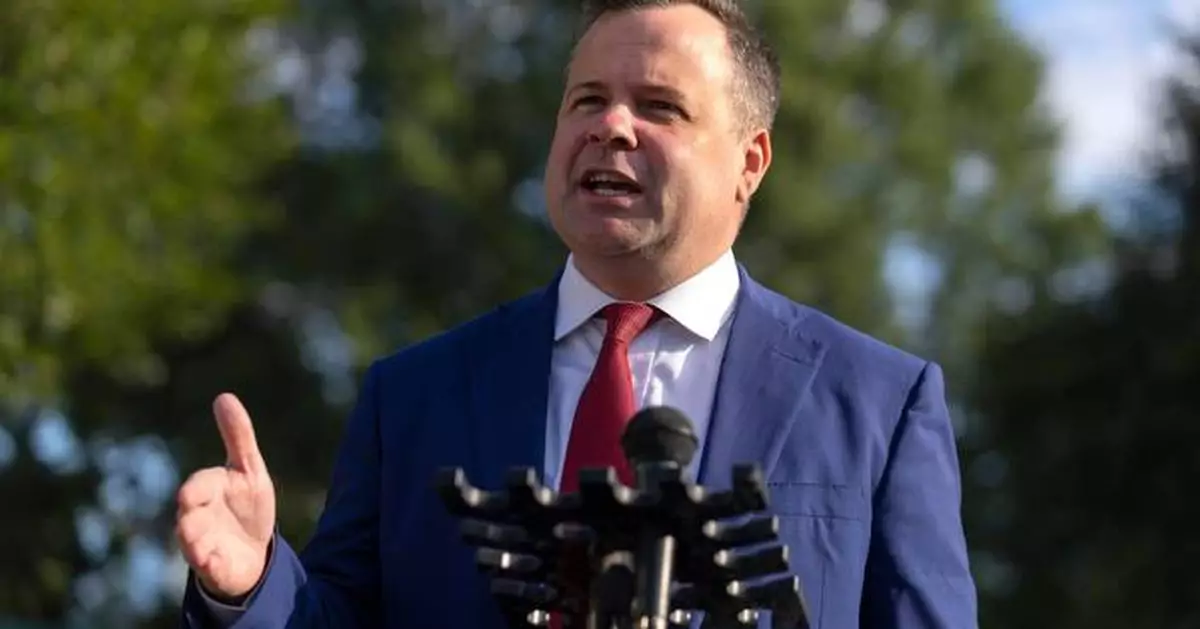
FILE - Director of the Federal Housing Finance Agency Bill Pulte speaks with reporters at the White House, Sept. 2, 2025, in Washington. (AP Photo/Mark Schiefelbein, File)
NEW YORK (AP) — Global leaders have been scrambling to contain the rising cost of oil and gasoline since the start of the Iran war, which took a record amount of oil off the market when tankers full of crude were stranded in the Persian Gulf and military strikes damaged refineries, pipelines and export terminals.
Hoping to ease some pain for consumers, President Donald Trump and other heads of state have been pulling on various levers, launching more oil on the market in a bid to calm the chaos.
A group of 32 nations that are members of the International Energy Agency began releasing the largest volume of emergency oil reserves in its history: 400 million barrels. Trump is tapping into oil from the Strategic Petroleum Reserve while lifting sanctions on Russian and Iranian crude and temporarily waiving the Jones Act, a maritime law that requires ships carrying goods between U.S. ports to be U.S.-flagged.
But despite those maneuvers, crude oil surpassed $100 a barrel and gasoline is selling for $4.06 a gallon on average in the U.S. While the stopgaps are helping, they're not adding up to enough oil to replace what's stranded, experts say.
“They're all incremental,” said Mark Barteau, professor of chemical engineering and chemistry at Texas A&M University. "You’re talking about these different patches being at the level of maybe 1 to 2 million barrels a day each, and you’ve got to get to 20, so it’s hard to see those actually adding up to the numbers that are needed. And then the question is, how long can you sustain those?”
Before the war began, roughly 15 million barrels of crude oil and 5 million barrels of oil products passed daily through the Strait of Hormuz, the narrow mouth of the Persian Gulf, amounting to about 20% of global oil consumption, according to the International Energy Agency.
In addition to that loss, some oil producing nations in the Middle East have halted oil production because they can't ship fuel out of the Gulf and their storage tanks are full. That's taken about 10 million more barrels per day off the market, the IEA said.
Then there are the eight countries around the Persian Gulf that together hold about 50% of global oil reserves. Under normal circumstances, they coordinate closely to raise or lower their output to keep prices steady, said Jim Krane, energy research fellow at Rice University’s Baker Institute. Usually Saudi Arabia steps in to bring spare oil to market and calm things down, he said.
“But all of that spare capacity is also bottled up inside the Persian Gulf right now and it can’t get to market either,” Krane said. “So the main emergency response system that we have is also blocked.”
The IEA said in its recent report that “the resumption of transit through the Strait of Hormuz is the single most important action to return to stable oil and gas flows and reduce the strains on markets and prices.”
Barring that, world leaders are grasping for ways to free up more oil.
Some nations have found workarounds to move oil out of the Gulf. Saudi Arabia is using its East-West pipeline, which stretches from the Persian Gulf to the Red Sea, to transfer about 5 million barrels per day out of the Gulf, said Michael Lynch, distinguished fellow at Energy Policy Research Foundation, a non-partisan institution focused on energy and economics. But the nation was already using that pipeline to transport oil, so it doesn’t have a lot of spare room to move oil from stranded tankers.
Trump also temporarily lifted sanctions on approximately 140 million barrels of Iranian oil that was already in transit. But that didn’t add oil to the market — it just widened the pool of potential buyers, said Daniel Sternoff, senior fellow at the Columbia Center on Global Energy Policy.
Typically, most Iranian oil was bought by private refiners in China, who purchased it at a steep discount, Sternoff said. But with sanctions lifted, others could scramble to buy the oil, which in turn raises its price to the benefit of Iran, he said.
“As soon as you are moving to waive sanctions on your adversary with whom you’re fighting a military conflict, to do something in their benefit, it just shows you that you are running out of options to try to prevent a rise in the price of oil,” Sternoff said.
The decision to lift sanctions on Russian oil could have more impact, because Russia had been storing unpurchased oil in tankers, Sternoff said. “By waiving sanctions, it will allow those barrels to clear.”
Trump’s temporary waiver of the Jones Act to allow foreign ships to temporarily transport goods between U.S. ports could potentially help ease natural gas prices by enabling companies to more efficiently ship liquefied natural gas from the Gulf Coast to New England.
But experts don’t expect the waiver to significantly impact the price of oil or gasoline. “It’s helpful, but not a game changer,” Lynch said.
The U.S. is a major oil producer, and exports more oil than it imports. But like any other oil producing nation, it can't just ramp up production instantly to fill the void.
“If the U.S. were to try to make up the global shortfall, we would need to nearly double our production,” Barteau said. “We couldn’t drill wells that fast even if we wanted to.”
Increasing domestic production by even 1 million barrels per day, a feat the U.S. accomplished during the shale boom, would be hard to duplicate, Lynch said.
“If we run every drilling rig right now, what happens a week from now when the war is over and the price goes back down $20?” Lynch asked. “People don’t want to develop long-term production based on a short-term price spike.”
Halting exports and using that oil within the U.S. wouldn't bring down gasoline prices either, experts say.
For one, oil is traded on a global market, so events happening halfway around the globe impact prices for everyone.
In addition, the U.S. doesn't produce enough of the type of oil its refineries process. It produced about 13.7 million barrels per day of oil at the end of 2025, according to the Energy Information Administration. And refineries processed about 16.3 million barrels per day that year, relying on imports to fill in the gaps, according to the American Fuel and Petrochemical Manufacturers (AFPM), a trade association.
That's because nearly 70% of U.S. refineries are set up to process heavy, sour crude, according to AFPM. But much of the oil produced in the U.S. is light, sweet crude, which was unlocked during the shale revolution.
“They need different crudes than the ones that are being produced right next to them now,” Krane said.
As a result, just 60% of the crude oil processed in U.S. refineries is extracted domestically, according to the AFPM. And retooling domestic refineries would cost billions of dollars, the group said. It also would require shutting down the refinery for a period of time, which generally raises gasoline prices.
“A lot of people like the IEA are making the point that this is the biggest oil crisis ever, which is partly true, partly an exaggeration, depending on how you count things,” Lynch said. “A lot of it has to do with how long does this last ... if it goes on for another six weeks we get to be in some serious trouble.”
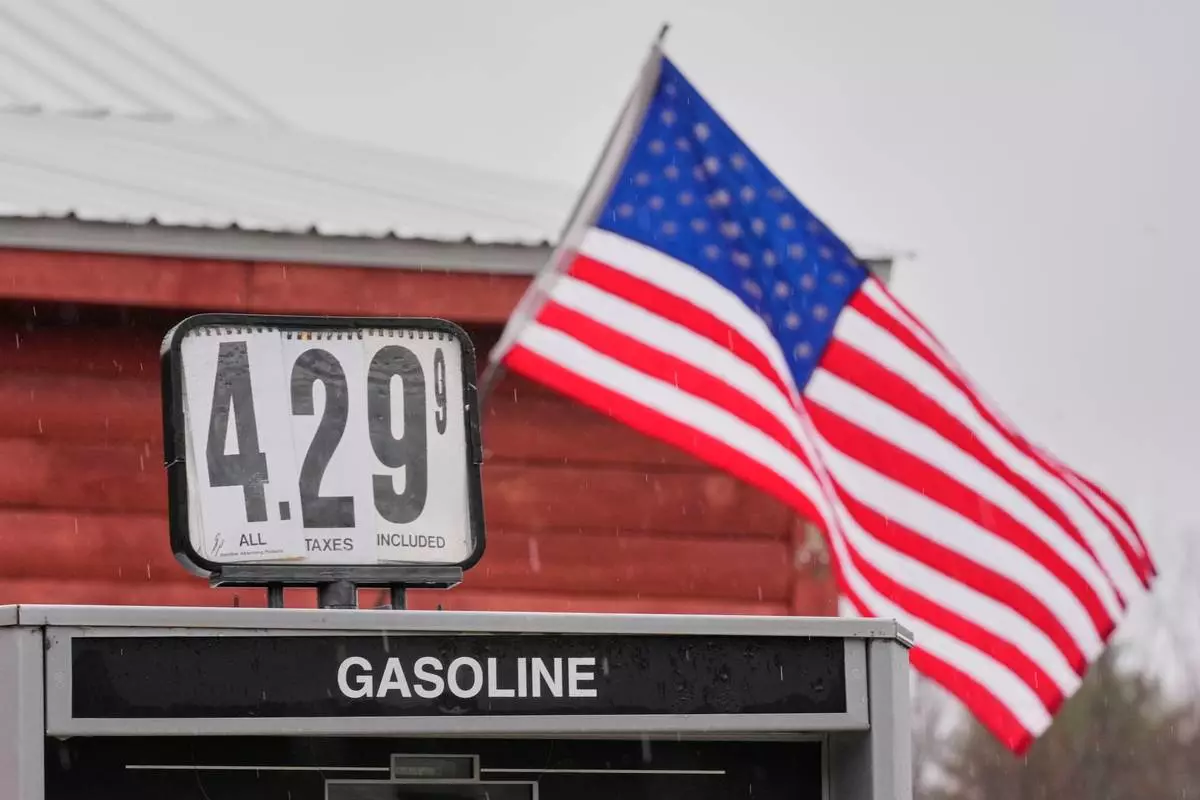
A sign shows the price of gas at a store, Tuesday, March 31, 2026, in Freeport, Maine. (AP Photo/Robert F. Bukaty)
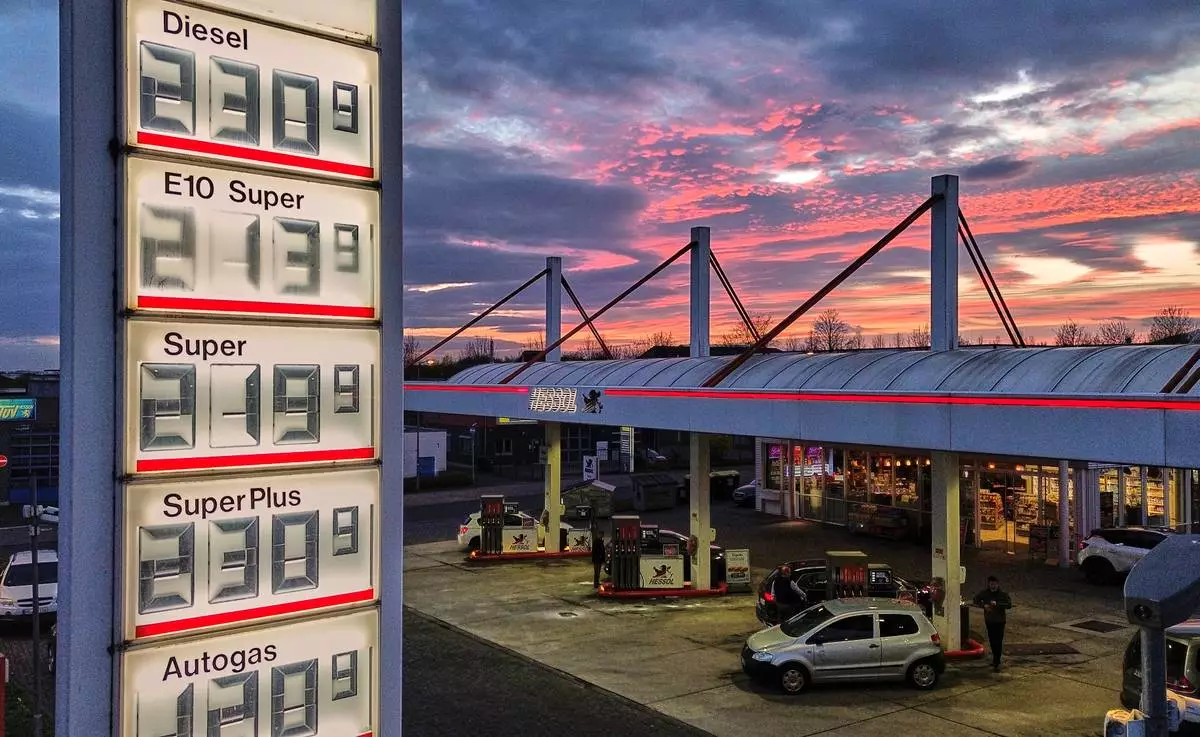
The sun has set behind a gas station in Frankfurt, Germany, Tuesday, March 31, 2026. (AP Photo/Michael Probst)
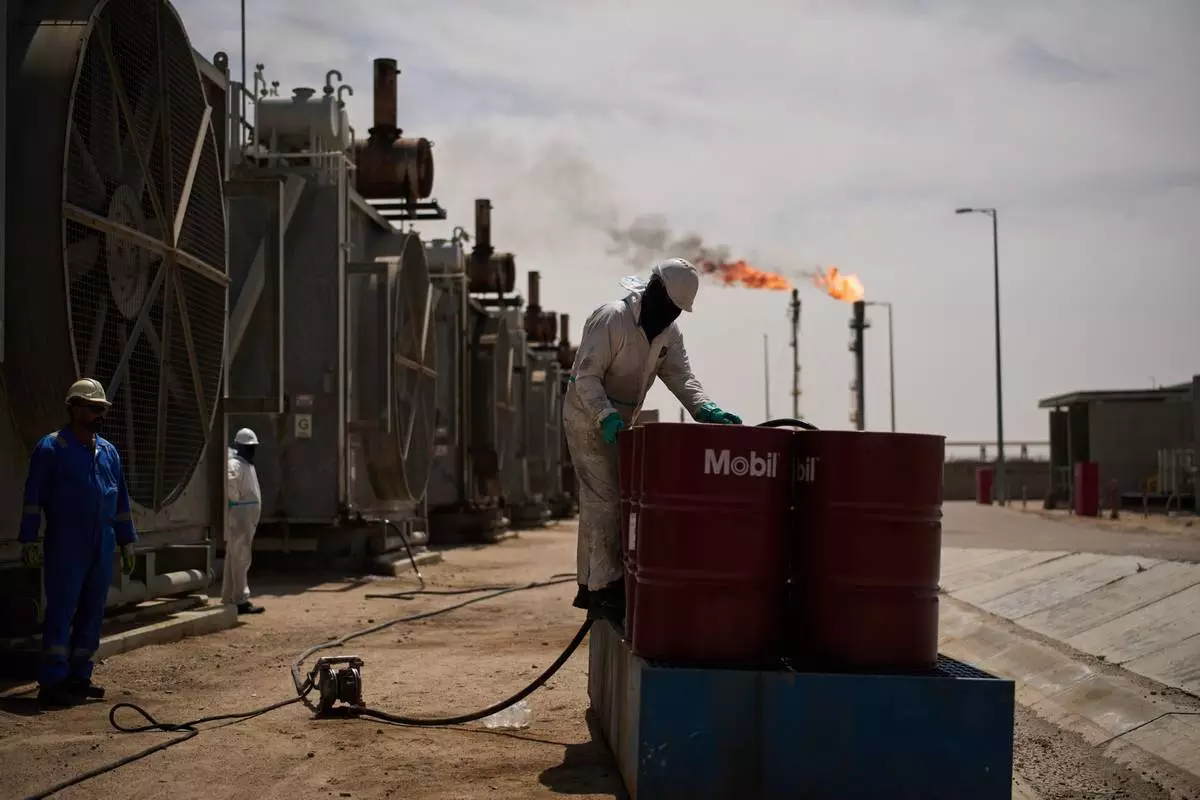
A worker collects engine oil as he works at a degassing station in Zubair oil field, whose operations have being reduced due to the Mideast war triggered by the U.S. and Israeli attacks on Iran, near Basra, Iraq, Saturday, March 28, 2026. (AP Photo/Leo Correa)
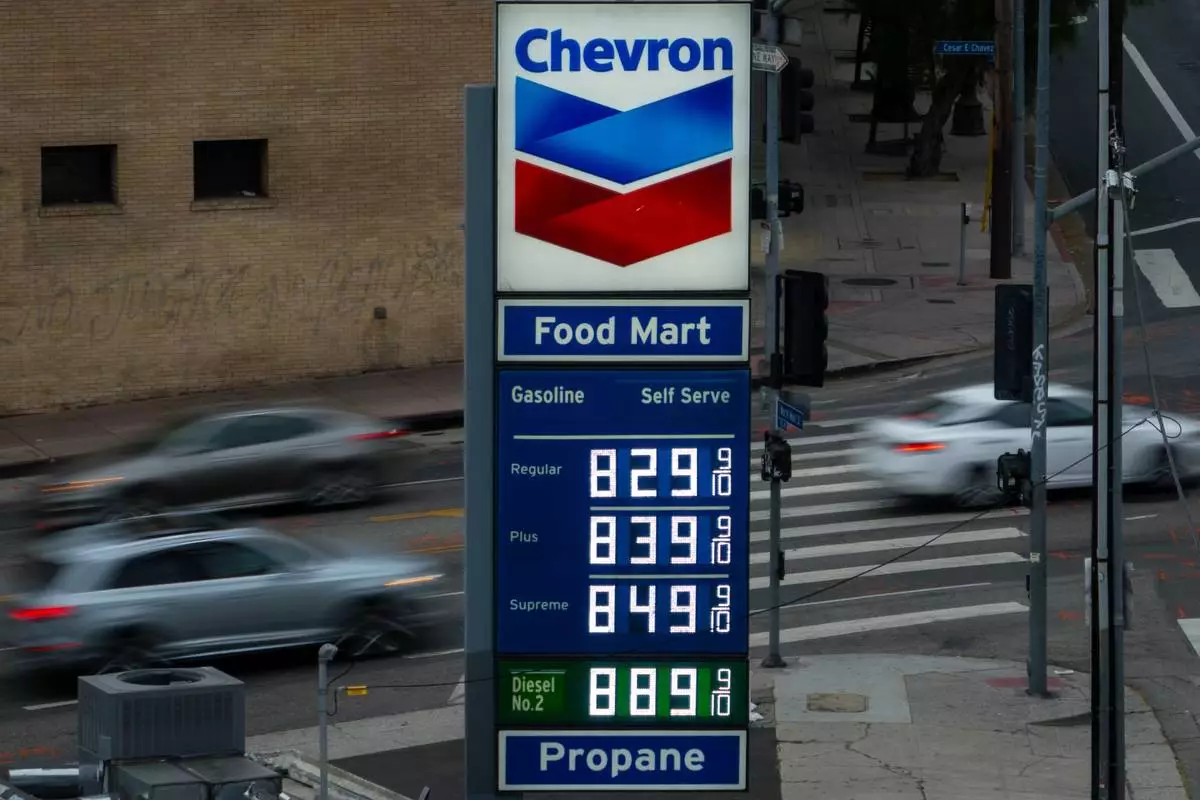
Gas prices are displayed at a Chevron gas station, in downtown Los Angeles, Tuesday, March 31, 2026. (AP Photo/Jae C. Hong)