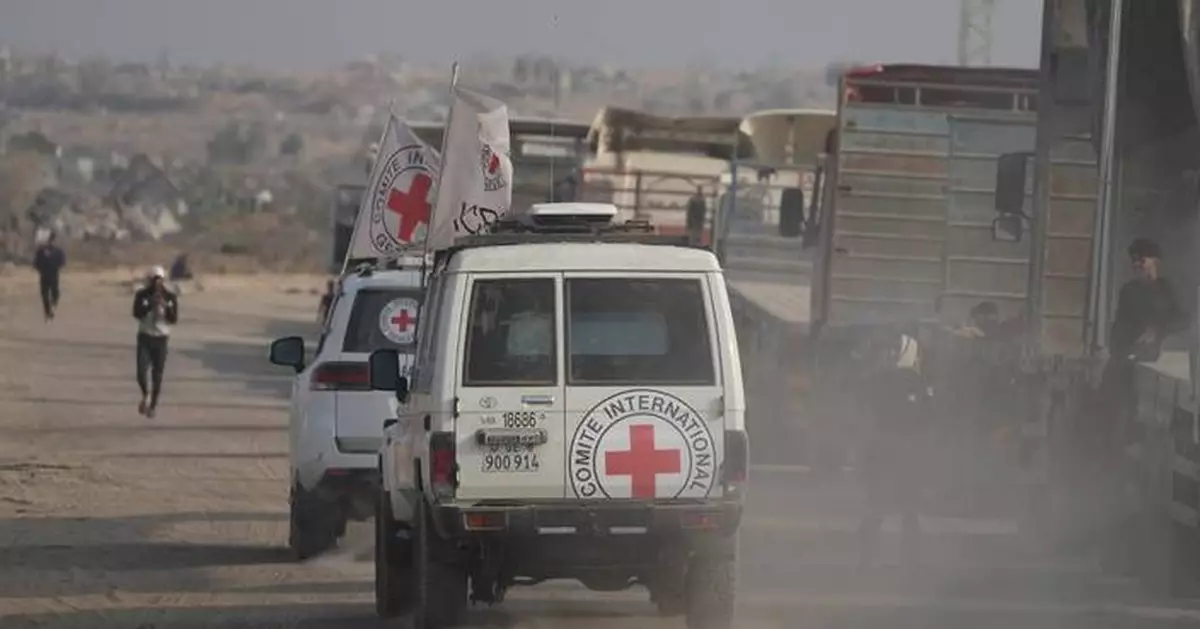
JERUSALEM (AP) — Since the U.S.-brokered ceasefire in Gaza began Oct. 10, Palestinian militants have released the remains of 26 hostages. But the return of the last two hostages under the agreement's terms is progressing slowly.
Hamas says it has not been able to reach all of the remains because they are buried under rubble left by Israel’s two-year offensive in Gaza. Israel has accused the militants of stalling and threatened to resume military operations or withhold humanitarian aid if all remains are not returned.
In the most recent release, Palestinian militants returned the remains of Dror Or, who was killed by the militants in Kibbutz Be’eri in southern Israel and abducted to Gaza. His wife, Yonat, was killed during the attack and his two children, Noam and Alma, were abducted and returned to Israel in a November 2023 hostage deal.
In return, Israel has released the bodies of 330 Palestinians back to Gaza. Health officials in Gaza have struggled to identify the bodies without access to DNA kits.
Only 97 have been identified, according to the Gaza Health Ministry, The ministry, which is part of the Hamas-run government and is staffed by medical professionals, maintains detailed records viewed as generally reliable by independent experts.
Israel has not provided details on their identities, and it is unclear if they were people killed in Israel during the Oct. 7 attack, Palestinian detainees who died in Israeli custody or bodies taken from Gaza by Israeli troops during the war.
Here’s a look at the hostages whose remains have not been returned.
Ran Gvili, who served in an elite police unit, was recovering from a broken shoulder he sustained in a motorcycle accident but rushed to assist fellow officers on Oct. 7. After helping people escape from the Nova music festival, he was killed fighting at another location and his body was taken to Gaza. The military confirmed his death four months later. He is survived by his parents and a sister.
Sudthisak Rinthalak was an agricultural worker from Thailand who had been employed at Kibbutz Be’eri. According to media reports, Sudthisak was divorced and had been working in Israel since 2017. A total of 31 workers from Thailand were abducted on Oct. 7, the largest group of foreigners to be held in captivity. Most of them were released in the first and second ceasefires. The Thai Foreign Ministry has said in addition to the hostages, 46 Thais have been killed during the war.
Follow AP’s war coverage at https://apnews.com/hub/israel-hamas-war
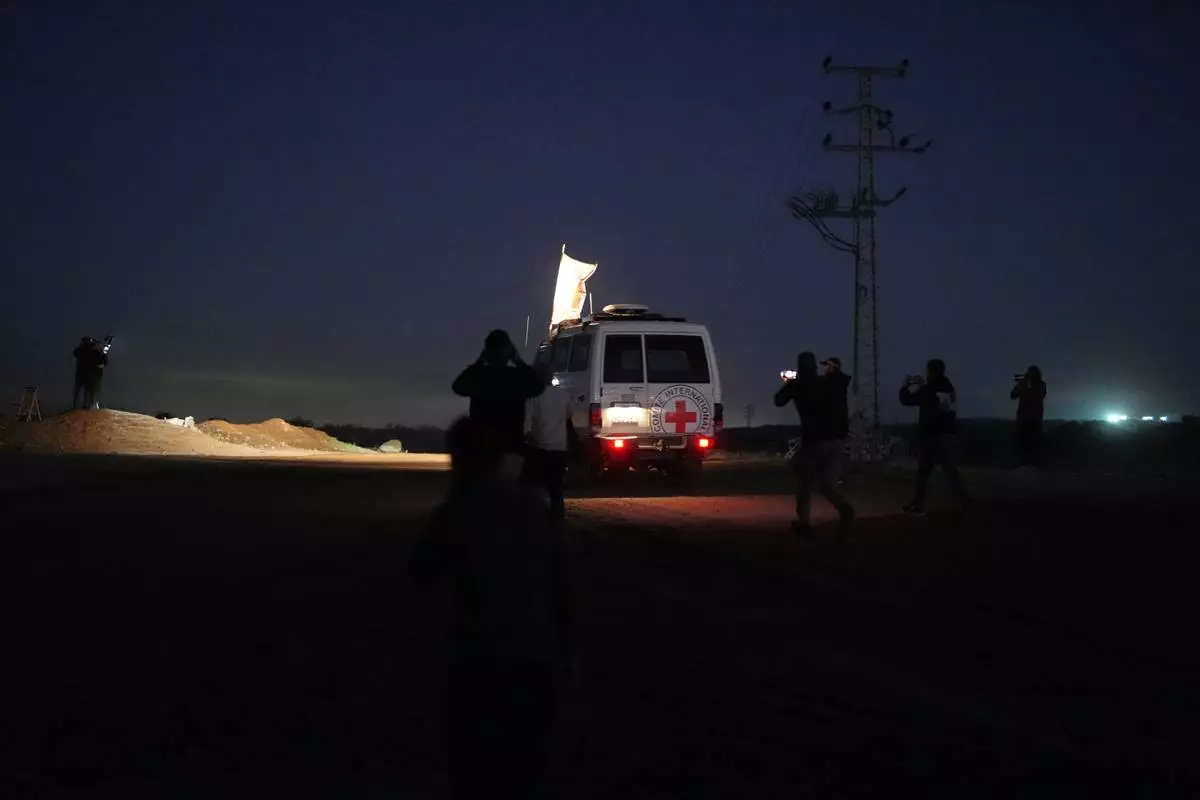
Red Cross convoy carrying the remains of a person believed to be a deceased hostage handed over by Gaza militants makes its way toward the border crossing with Israel, to be transferred to Israeli authorities, in Deir al-Balah, central Gaza Strip, Tuesday, Nov. 25, 2025. (AP Photo/Abdel Kareem Hana)
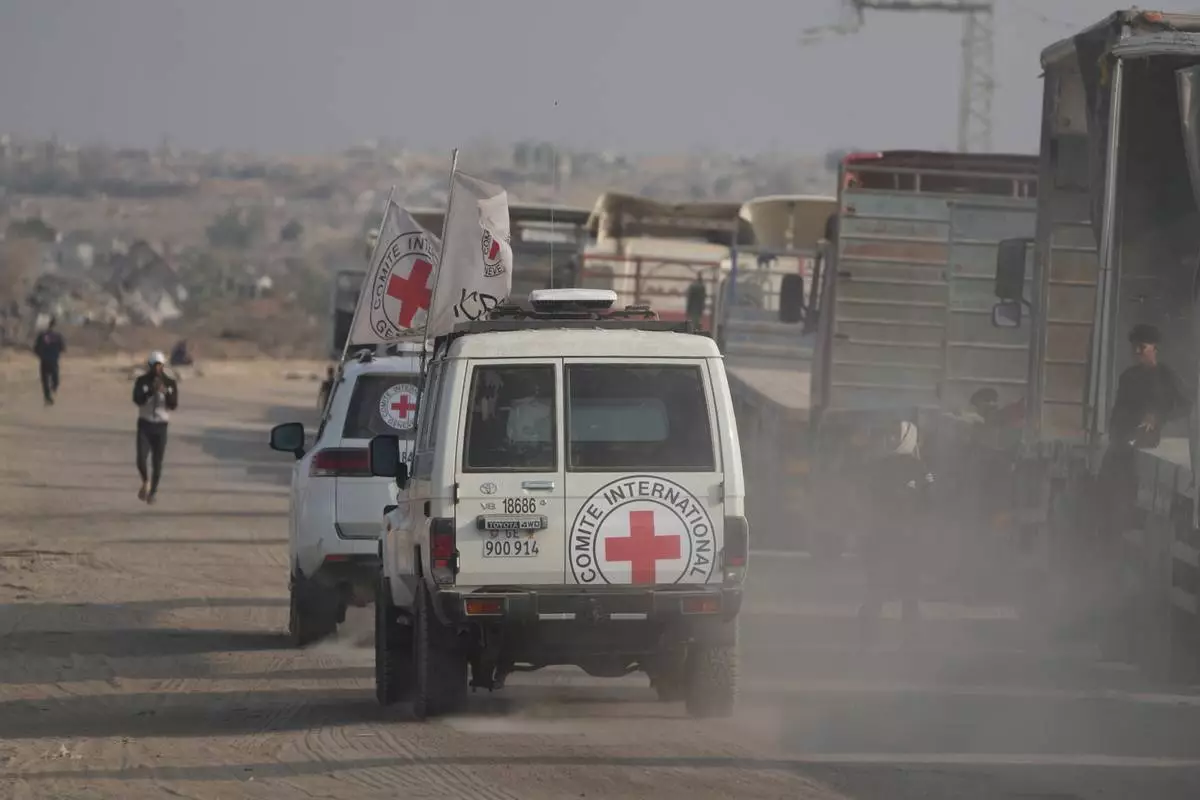
Red Cross convoy carrying what Hamas claims is the remains of an Israeli soldier who was killed in Gaza in 2014 and whose body has been held in Gaza since. makes its way toward the border crossing with Israel, to be transferred to Israeli authorities, in Deir al-Balah, Gaza Strip, Sunday, Nov. 9, 2025. (AP Photo/Jehad Alshrafi)
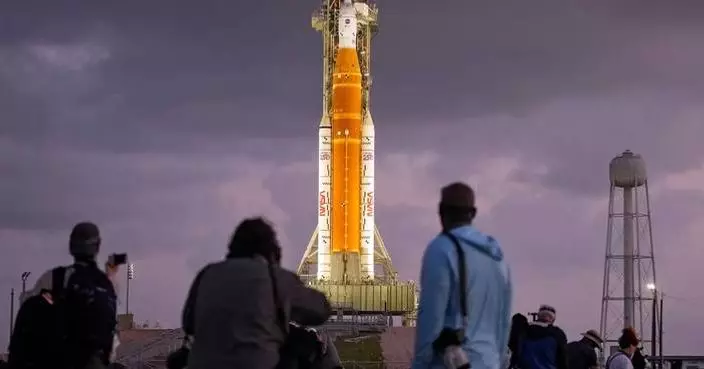
CAPE CANAVERAL, Fla. (AP) — Four astronauts strapped into NASA's new moon rocket and awaited liftoff Wednesday on humanity’s first lunar trip in more than half a century.
The three Americans and one Canadian waved and shaped their hands into hearts as they emerged from crew quarters to cheers and said goodbye to their families. The crowd applauded and cheered again as the astronauts boarded their astrovan for the nine mile (14-kilometer) ride to the launch pad.
Commander Reid Wiseman thanked the throngs who gathered to see them off.
“It's a great day for us. It's a great day for this team,” Wiseman called out.
Tensions were high earlier in the day as hydrogen fuel started flowing into the rocket. Dangerous hydrogen leaks erupted during a countdown test earlier this year, forcing a lengthy flight delay.
To NASA's relief, no significant hydrogen leaks occurred. The launch team loaded more than 700,000 gallons of fuel (2.6 million liters) into the 32-story Space Launch System rocket on the pad, a smooth operation that set the stage for the Artemis II crew to board.
A problem cropped up with the rocket's flight-termination system with only two hours remaining in the countdown. Commands weren't getting through to the system, which is needed to send a self-destruct signal in case the rocket veers off course and threatens populated areas. But the issue was quickly resolved, according to NASA.
“It is time to fly,” Wiseman declared on the eve of launch via X. Favorable weather was forecast.
The four will fly around the moon without stopping or even orbiting — then head straight back for a Pacific splashdown. They will set a new distance record for the farthest humans have traveled from Earth as they zoom some 4,000 miles (6,400 kilometers) beyond the moon and then hang a U-turn.
Astronauts last flew to the moon during Apollo 17 in 1972.
Artemis II is the opening shot of NASA's grand plans for a permanent moon base. The space program is aiming for a moon landing near the lunar south pole in 2028.
“The next era of exploration begins,” NASA Administrator Jared Isaacman posted on X.
Best wishes already have started to pour in, including from England's King Charles III to Canadian Space Agency astronaut Jeremy Hansen.
Hansen will become the first non-U. S. citizen to launch to the moon. The crew also includes Christina Koch and Victor Glover, the first woman and first Black astronaut, respectively, destined for the moon.
“In this historic moment, you stand as a bridge between nations and generations,” the king wrote in a letter to Hansen, “and I commend you for your courage, discipline and vision that have brought you to this threshold.”
The Associated Press Health and Science Department receives support from the Howard Hughes Medical Institute’s Department of Science Education and the Robert Wood Johnson Foundation. The AP is solely responsible for all content.
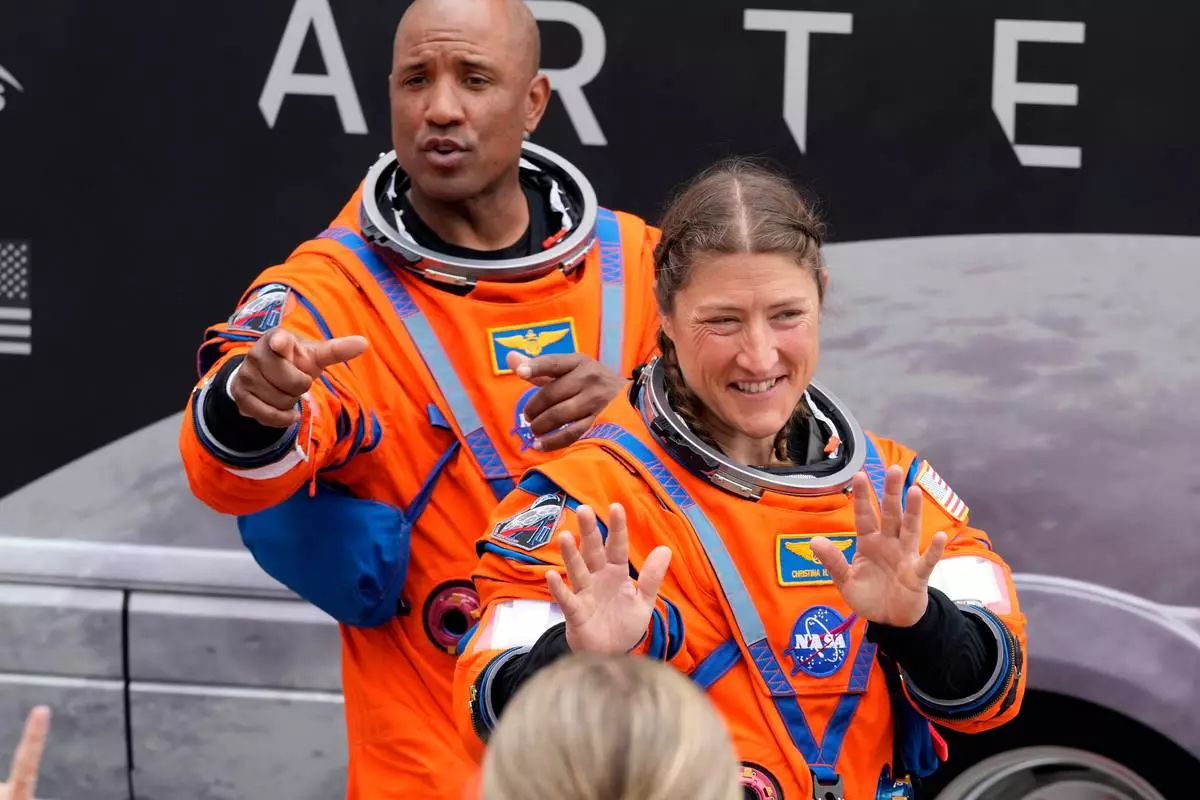
Astronauts, Mission Specialist Christina Koch, right, and Pilot Victor Glover wave to family members as they leave the Operations and Checkout Building for a trip to Launch Pad 39-B and a planned liftoff on NASA's Artermis II moon rocket at the Kennedy Space Center Wednesday, April 1, 2026, in Cape Canaveral, Fla. (AP Photo/Chris O'Meara)
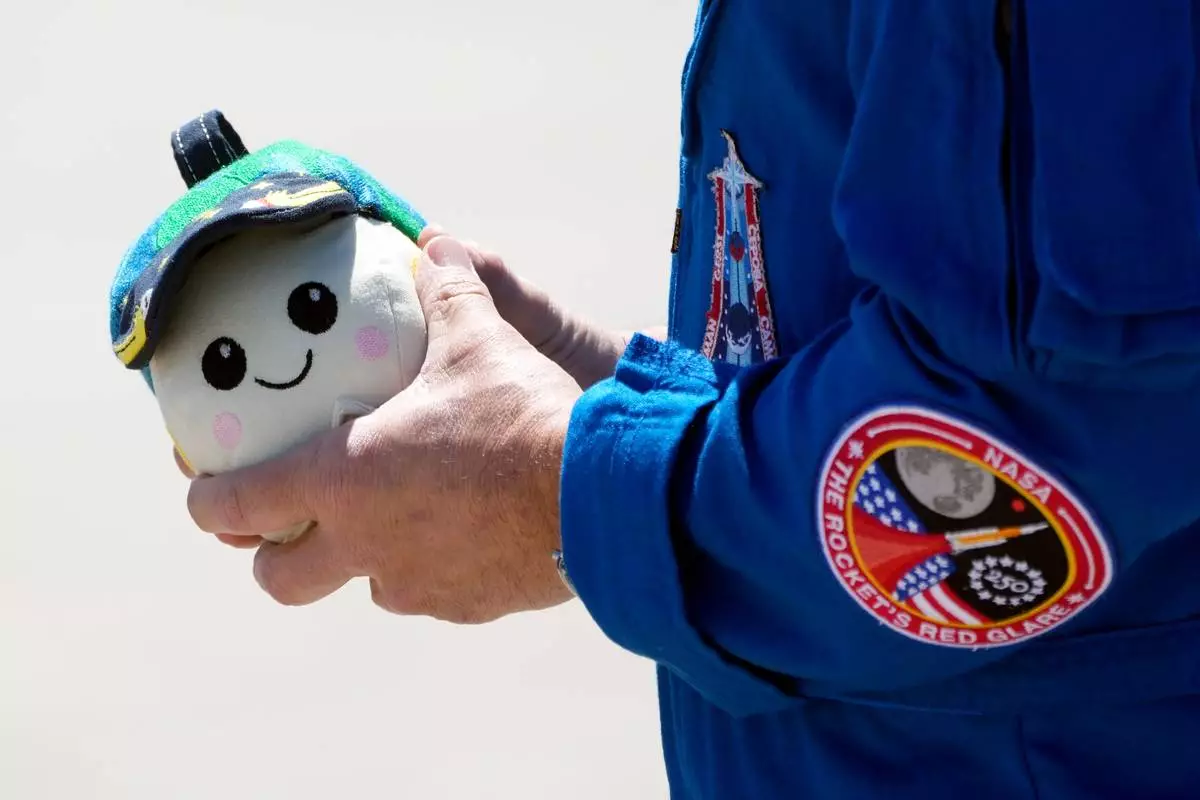
Artemis 2 crew member Commander Reid Wiseman holds "Rise" after the crew's arrival at the Kennedy Space Center Friday, March 27, 2026, in Cape Canaveral, Fla. (AP Photo/Chris O'Meara)
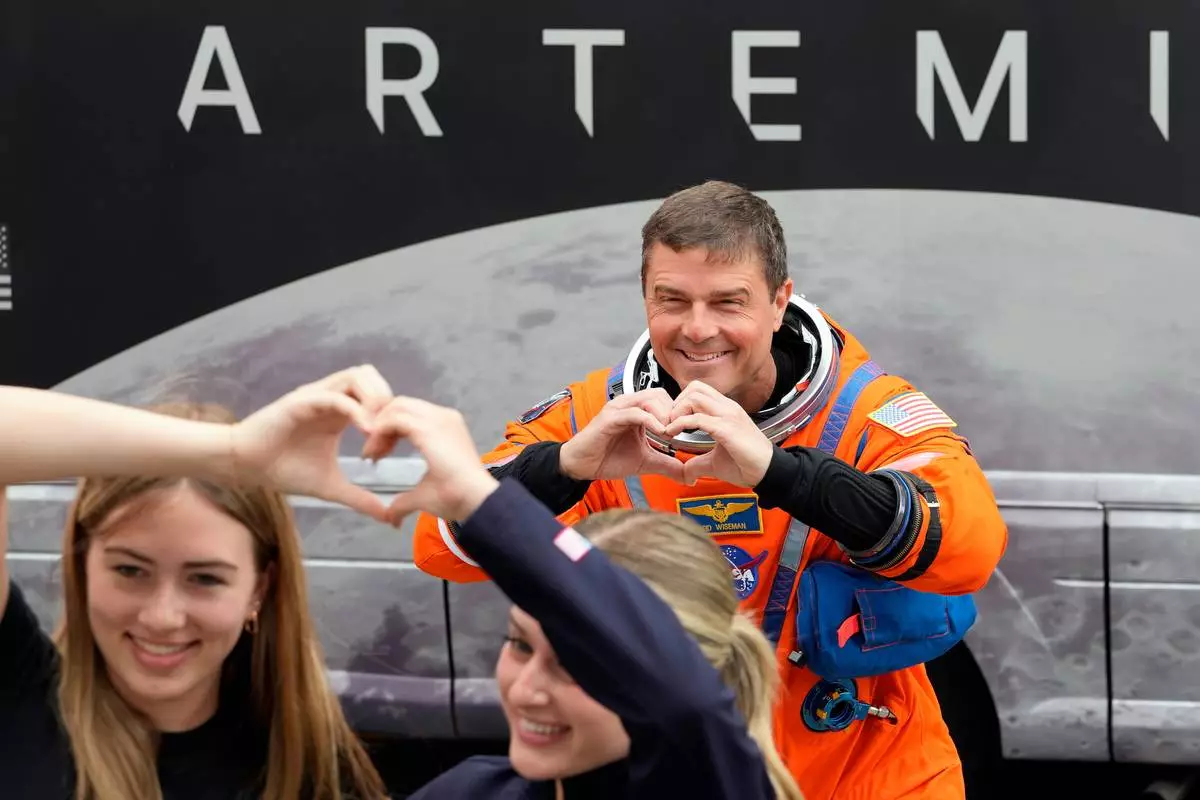
Commander Reid Wiseman poses for a photo with family members after leaving the Operations and Checkout Building for a trip to Launch Pad 39-B and a planned liftoff on NASA's Artermis II moon rocket at the Kennedy Space Center Wednesday, April 1, 2026, in Cape Canaveral, Fla. (AP Photo/Chris O'Meara)
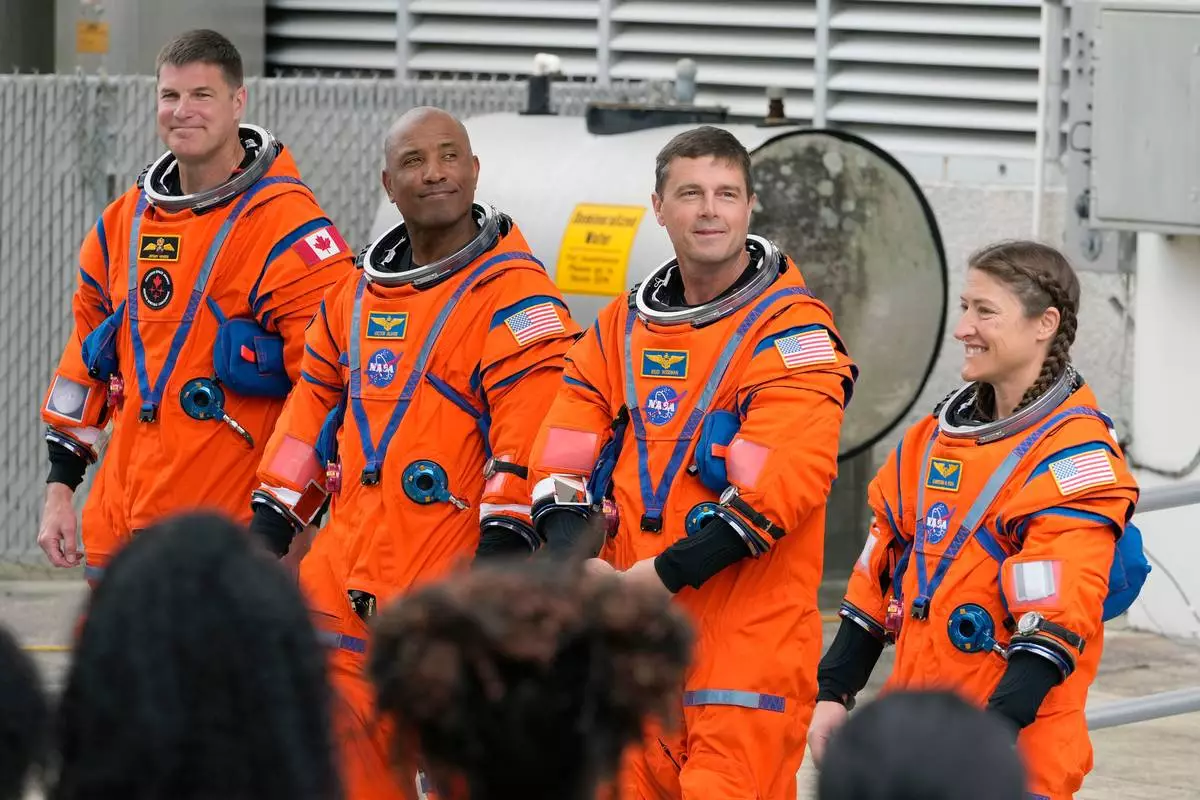
Astronauts, from left, Mission Specialist Jeremy Hansen, of Canada,, Pilot Victor Glover, Commander Reid Wiseman, and Mission Specialist Christina Koch pose for a photo after leaving the Operations and Checkout Building for a trip to Launch Pad 39-B and a planned liftoff on NASA's Artermis II moon rocket at the Kennedy Space Center Wednesday, April 1, 2026, in Cape Canaveral, Fla. (AP Photo/Chris O'Meara)
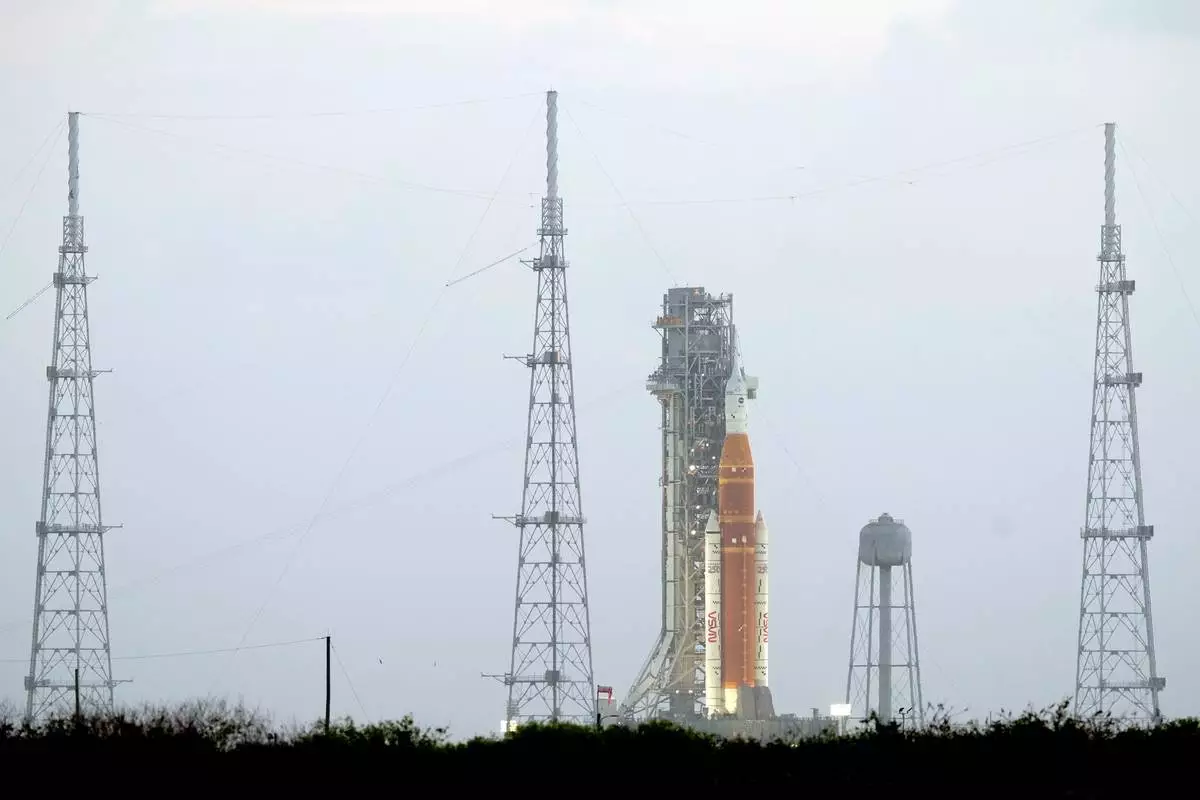
NASA's Artermis II moon rocket sits on Launch Pad 39-B at the Kennedy Space Center hours ahead of a planned launch attempt Wednesday, April 1, 2026, in Cape Canaveral, Fla. (AP Photo/Chris O'Meara)
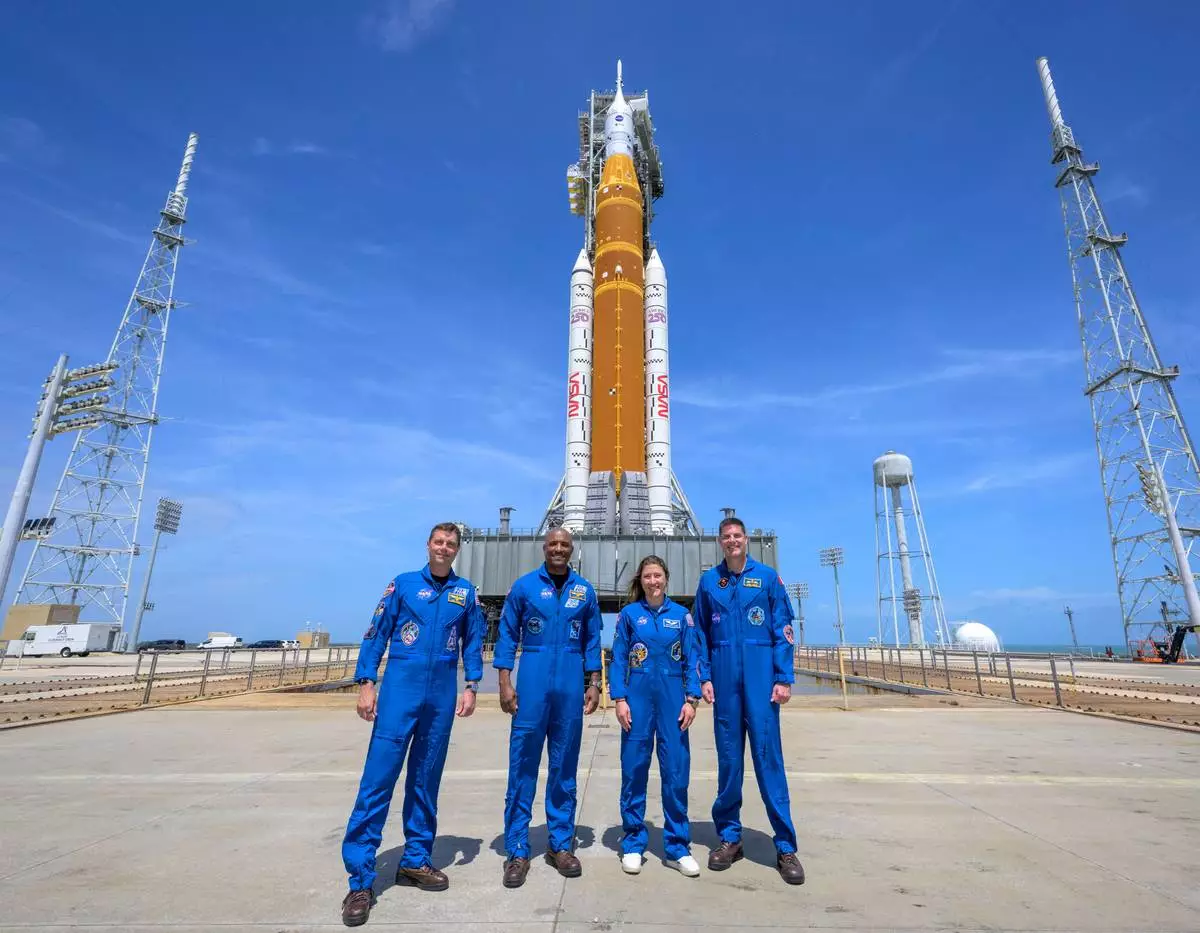
This photo provided by NASA shows NASA astronauts Reid Wiseman, Artemis II commander, from left, Victor Glover, Artemis II pilot, Christina Koch, Artemis II mission specialist, and CSA (Canadian Space Agency) astronaut Jeremy Hansen, Artemis II mission specialist, right, in a group photograph as they visit NASA's Artemis II SLS (Space Launch System) rocket and Orion spacecraft, Monday, March 30, 2026, at Launch Complex 39B of NASA's Kennedy Space Center, in Cape Canaveral, Fla. (Bill Ingalls/NASA via AP)
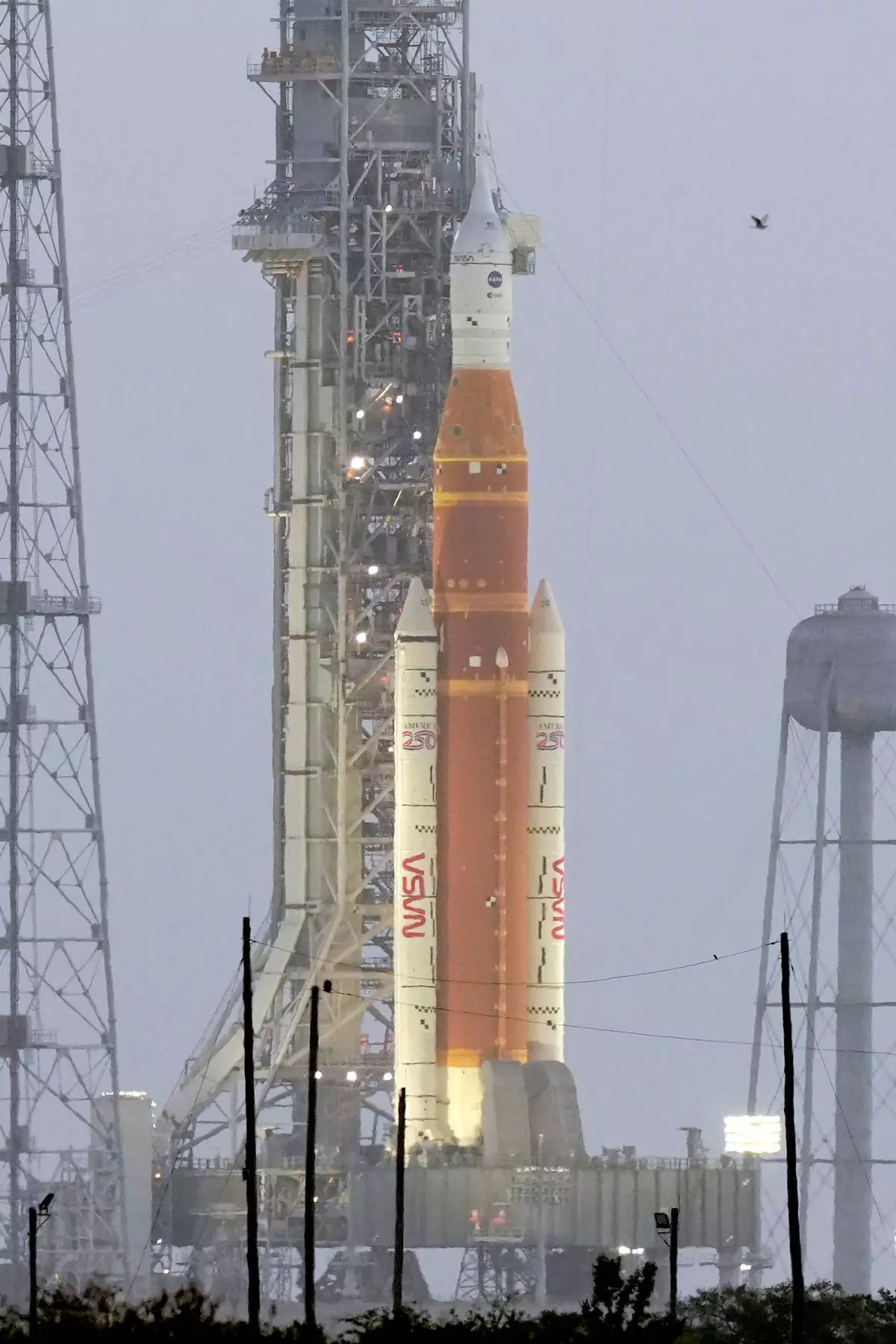
NASA's Artermis II moon rocket sits on Launch Pad 39-B at the Kennedy Space Center hours ahead of planned liftoff Wednesday, April 1, 2026, in Cape Canaveral, Fla. (AP Photo/Chris O'Meara)