Skip to Content Facebook Feature Image

Postmaster general says US Postal Service needs revenue growth, not just cuts

News

Postmaster general says US Postal Service needs revenue growth, not just cuts
News

News

Postmaster general says US Postal Service needs revenue growth, not just cuts

2025-11-18 01:43 Last Updated At:01:50

The U.S. Postal Service can’t fix its finances through cuts alone, Postmaster General David Steiner said Friday.

Steiner said the 250-year-old agency needs to expand its revenue base to restore prominence in the nation’s delivery network. It also should capitalize on its long-standing legal obligation to deliver to every address.

One way it can do that, Steiner said during the Postal Board of Governors meeting in Washington, is by working with more customers to provide final or "last mile” delivery to individual home and businesses, the most expensive and labor-intensive part of delivery.

“I've taken to saying that we cannot cost-cut our way to prosperity," Steiner said. “We have to grow.”

Steiner said the postal service, which has faced an uncertain future since President Donald Trump's election to a second term, is currently negotiating deals with private parcel delivery service UPS and similar companies to expand its last-mile service for the final leg of delivery. He said USPS also wants to open up that program to large and small retailers, offering same-day and next-day delivery.

“We've begun discussions with a number of retailers and the desire for fast, reliable and affordable delivery is certainly strong among all retailers,” he said. “Our value resides in going to every address six and often seven days a week while offering a remarkable retail and processing footprint.”

Steiner, who began as postmaster general in July, was previously a board member of the FedEx delivery service.

While a new financial report released Friday showed operating revenue of $80.5 billion, an increase of $916 million from last fiscal year, the postal service suffered net losses totaling $9 billion. It marks a slight improvement from the previous fiscal year, when the net loss was $9.5 billion.

Amber McReynolds, who was re-elected chair of the Postal Board of Governors on Friday, said “long-standing and unnecessary restrictions” are weighing down USPS's bottom line and “highlight the urgent need for executive and legislative action" so the postal service can be financially sustainable for the long-term. USPS is an independent and mostly self-supporting federal agency.

She said the postal service is currently required to pay a “disproportionate share” into its retiree system compared to other federal agencies. It's also only allowed to invest postal retirement funds in treasury securities, losing out on hundreds of billions of dollars that could be invested in a diversified portfolio, she added.

McReynolds also called for congressional updates to USPS's pricing system, its workers' compensation program and its borrowing limits, which haven't been changed since 1991.

“This is urgent and it is time for action," she said.

Steiner warned Friday there's also a need to cut costs at the post office, be more efficient and use innovative methods, including bringing artificial intelligence into the USPS logistics network.

“To do all of this, we need capital and the ability to leverage our assets,” he said. “We should be able to borrow like our competitors, who are not limited by statute.”

Steiner, who said he has visited more than 20 postal facilities and spoken with thousands of postal workers and stakeholders during his first 100 days on the job, made it clear Friday he plans to mostly stay the course with the $40 billion, 10-year modernization and financial stabilization plan launched by his predecessor, Louis DeJoy.

He said the progress made so far has empowered the USPS to “reach new levels,” noting on-time mail delivery has been steadily improving and most customers can expect delivery of their mail and packages in less than three days on average. However, he said more improvements are still needed.

With the busy holiday season looming, Steiner said the postal service is ready, noting $20 billion has been spent over the past four years on mail processing and logistics modernization. Also, due to a “stabilized workforce,” only a “modest” number of seasonal employees of roughly 14,000 people will need to be hired.

While multiple members of the public on Friday voiced concerns about the postal service possibly being privatized, an idea raised by President Donald Trump and his former adviser, Elon Musk, McReynolds tried to quash the notion.

“There are no proposals or plans to privatize the postal service,” she said. “The new postmaster general has talked at length about that in his public comments and the board certainly has shared that sentiment as well.”

This story was first published on Nov. 14, 2025. It was updated on Nov. 17, 2025, to correct the age of the U.S. Postal Service. It is 250 years old, not 150 years old.
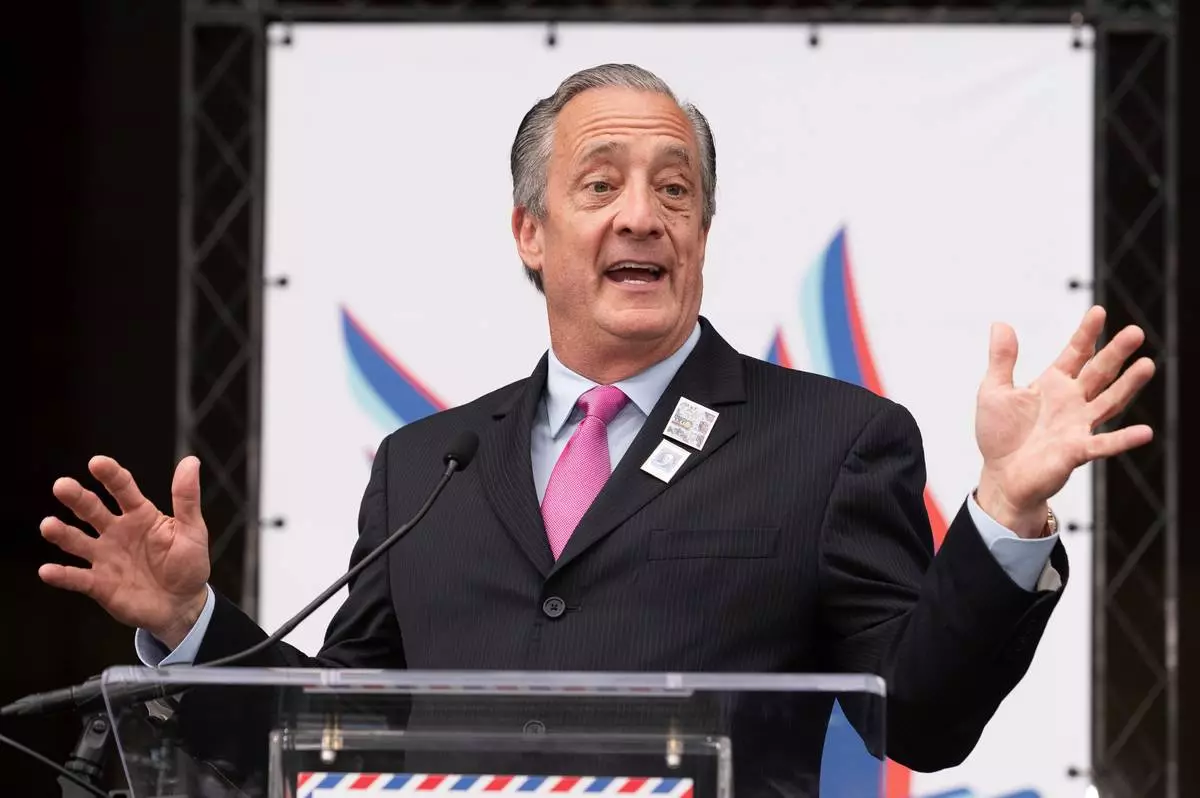
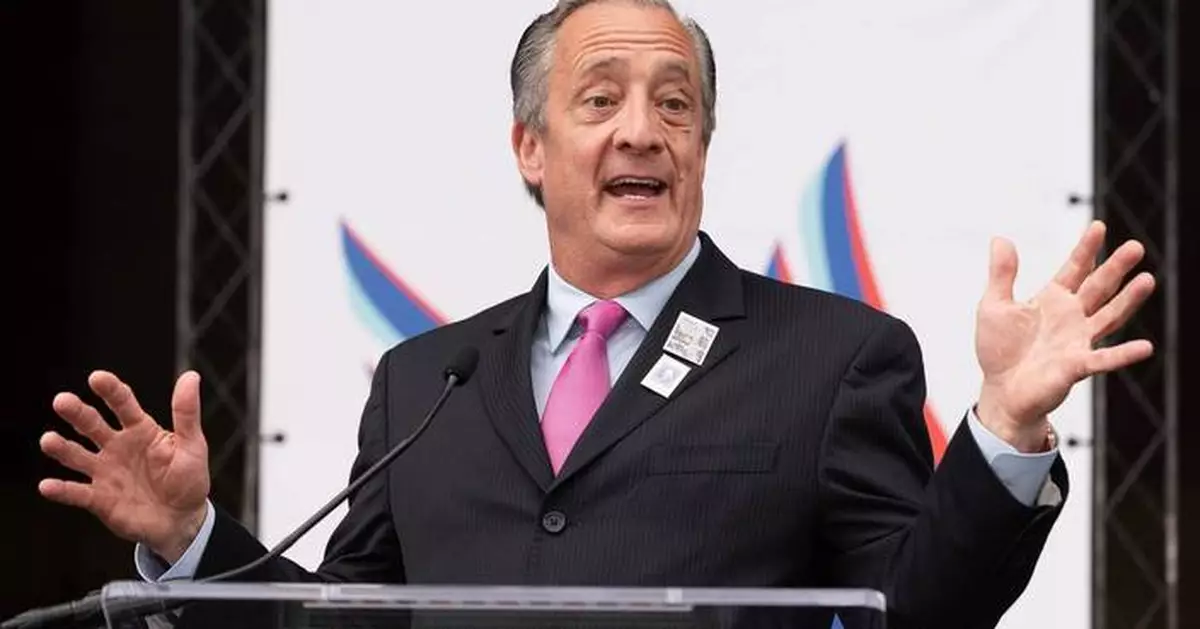
FILE - Postmaster General David Steiner speaks at an event marking the 250th anniversary of postal service's founding, July 23, 2025, in Washington. (AP Photo/Cliff Owen, File)
FILE - Postmaster General David Steiner speaks at an event marking the 250th anniversary of postal service's founding, July 23, 2025, in Washington. (AP Photo/Cliff Owen, File)
In a matter of hours Sunday, what had appeared to be a year no teams with losing records would be needed to fill out the bowl schedule suddenly changed when Notre Dame, Iowa State and Kansas State announced they would decline bids despite being eligible.

There are 41 bowls this year, and 82 teams won the necessary six games to be eligible. But Iowa State and Kansas State teams going through coaching changes almost simultaneously said they were hanging up their cleats for the season. Notre Dame, the first team left out of the College Football Playoff, followed a few hours later.

Mississippi State and Rice, both 5-7, swooped in to accept bids because they were among the first in line based on their Academic Progress Rate. The Bulldogs will play Wake Forest in the Duke's Mayo Bowl in Charlotte, North Carolina, and the Owls will face Texas State in the Armed Forces Bowl in Fort Worth, Texas.

The Birmingham Bowl was still searching Sunday evening for an opponent to play Georgia Southern, according to On3.

Iowa State, Kansas State and Notre Dame weren't going to play in any of those lower-level bowls, but their decisions altered the order of selections and presumably allowed three lesser teams to move up and bowls at the bottom to scramble.

Notre Dame's decision to shut down for the year came after it was announced as the first team left out of the playoff.

“As a team, we've decided to withdraw our name from consideration for a bowl game following the 2025 season,” the Fighting Irish said in a statement on social media. “We appreciate all the support from our families and fans, and we're hoping to bring the 12th national title to South Bend in 2026.”

Notre Dame won its last 10 games following a three-point loss to Miami and a one-point loss to Texas A&M. The Fighting Irish, which lost to Ohio State in the national championship game last season, finished 10-2 and ranked No. 9 on Sunday in The Associated Press poll and No. 11 in the CFP rankings.

Miami got into the playoff as an at-large selection after moving from No. 12 to No. 10 in the final rankings. Notre Dame dropped a spot and will now stay home for the postseason for the first time since 2016.

The Big 12 Conference said it will fine Iowa State and Kansas State $500,000 each for opting out of bowl participation. Both schools are going through coaching transitions with Matt Campbell leaving Iowa State for Penn State and Chris Klieman announcing his retirement.

“While the conference acknowledges the difficult timing around coaching changes, the Big 12 is responsible for fulfilling its contractual obligations to its bowl partners,” the Big 12 said in a statement.

Iowa State announced its players voted to not play in a bowl because the team doesn't have healthy players to safety practice and play. ISU did not mention the coaching change from Campbell to Jimmy Rogers in its statement.

The Cyclones sustained numerous injuries this season while going 8-4, and members of the athletics administration and the previous coaching staff met Sunday with the players to gauge their interest in a bowl.

“The administrative staff and coaches respect and support the players decision,” athletic director Jamie Pollard said. “Our student-athletes have had an incredible season and we are grateful for their leadership as we worked through this process with them today.”

K-State athletic director Gene Taylor said he had conversations with players and Big 12 Commissioner Brett Yormark before deciding to decline a bowl bid. The Wildcats were 6-6 after beating Colorado at home in their final home game.

“This decision was not taken lightly, but with our coaching staff transition and several uncertainties regarding player availability, I felt it was not in our best interest to try to field a team that was not representative of Kansas State University," Taylor said. "We applaud this group for fighting back from a 2-4 record to lead us to bowl eligibility yet again, and we are happy that our seniors were able to go out on top with a victory inside Bill Snyder Family Stadium.”

Get poll alerts and updates on the AP Top 25 throughout the season. Sign up here. AP college football: https://apnews.com/hub/ap-top-25-college-football-poll and https://apnews.com/hub/college-football

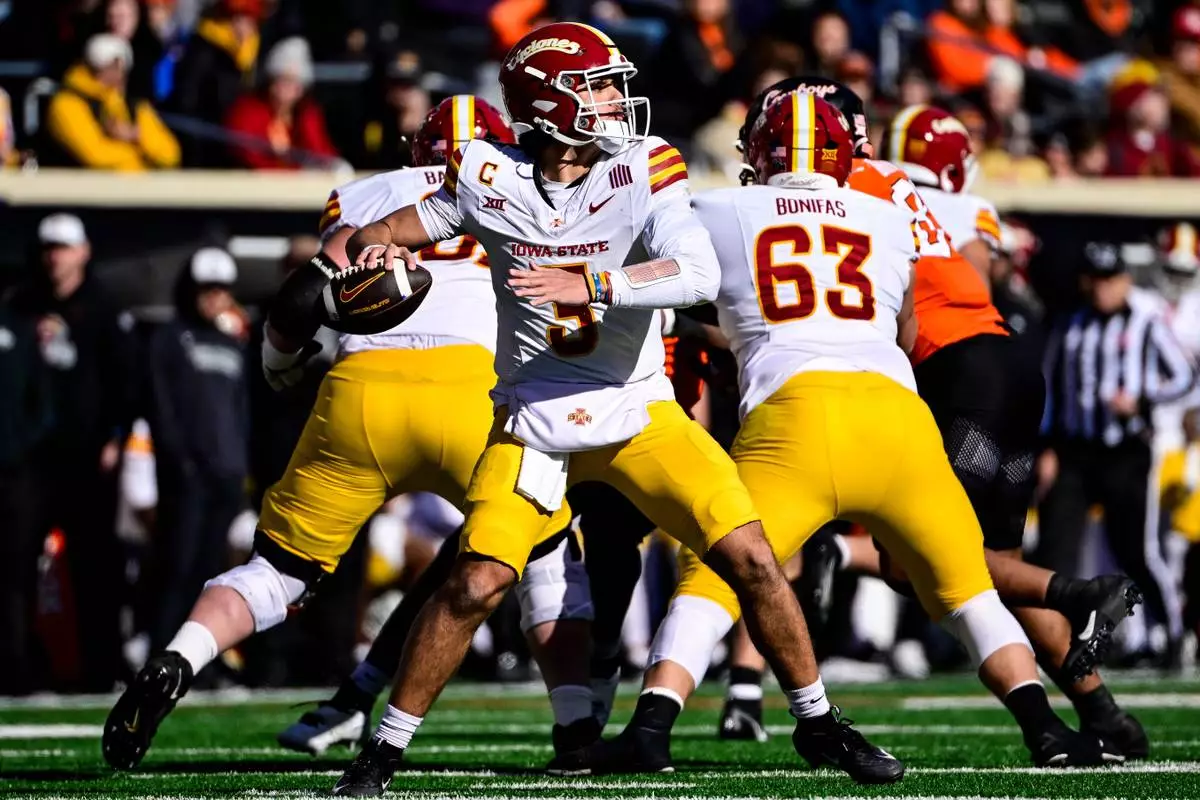
Iowa State quarterback Rocco Becht (3) looks to pass against the Oklahoma State during the second half of an NCAA college football game, Saturday, Nov. 29, 2025, in Stillwater, Okla. (AP Photo/Gerald Leong)

Iowa State quarterback Rocco Becht (3) looks to pass against the Oklahoma State during the second half of an NCAA college football game, Saturday, Nov. 29, 2025, in Stillwater, Okla. (AP Photo/Gerald Leong)

Recommended Articles