PHILADELPHIA (AP) — Steel: 50%. Copper: 50%. Cars: up to 25%. But an even bigger Trump-era levy looms: 107 % on Italian pasta.
Mamma mia.
It started with the U.S. Commerce Department launching what it says was a routine antidumping review, based on allegations Italian pasta makers sold product into the US at below-market prices and undercut local competitors. That has led to a threat of 92% duties, which would come on top of the 15% tariff President Donald Trump’s administration imposed on European exports generally.
The news sent shockwaves through Italy, where 13 producers would be subject to the whopping one-two punch. They say sales in their second biggest export market would shrivel if prices to American consumers more than double. And while the measure would hardly prompt pasta shortages, it still has perplexed importers like Sal Auriemma, whose shop in Philadelphia’s Italian market, Claudio Specialty Food, has been operating for over 60 years.
“Pasta is a pretty small sector to pick on. I mean, there’s a lot bigger things to pick on," said Auriemma, pointing to luxury items as an alternative.
But pasta? “It’s basic food,” he said. "Something’s got to be sacred.”
Italy is a nation of avid pasta eaters. Less known is that most of the tortellini, spaghetti and rigatoni its factories churn out gets sent abroad. The U.S. accounts for about 15% of its €4 billion ($4.65 billion) in exports, making it Italy’s largest market after Germany, data from farmers’ association Coldiretti show.
The punitive pasta premium has become a cause célèbre for Italy’s politicians, executives and economists. Agriculture Minister Francesco Lollobrigida told lawmakers in mid-October that the government was working with the European Commission and engaging in diplomatic efforts, while supporting the companies’ legal actions to oppose U.S. sanctions.
EU Trade Commissioner Maros Sefcovic addressed reporters in Rome last month, stressing the lack of evidence backing the U.S. decision and calling the combined 107% levy “unacceptable.”
Margherita Mastromauro, president of the pasta makers sector of Unione Italiana Food, told The Associated Press that prices for Italian pasta in the U.S. remain high, and certainly higher than American-made rivals — undermining any dumping claim.
She said that the measures could deal a fatal blow to small- and medium-sized producers. Lucio Miranda, president of consultancy group Export USA, agreed.
“A duty rate of 107% would definitely kill this flow of export,” Miranda, who is Italian, said by phone from New York. “It’s not going to be something that you can just dump on the consumer and move on, life continues. It will definitely be a deal killer.”
The Commerce Department’s investigation started in 2024 after complaints from Missouri-based 8th Avenue Food & Provisions, which owns pasta brand Ronzoni, and Illinois-based Winland Foods, whose multiple brands include Prince, Mueller’s and Wacky Mac.
The office’s review focused on La Molisana and Garofalo, chosen as primary respondents because they are Italy’s two largest exporters, the Commerce Department said in an emailed statement. Any sale price below either producers’ costs or the price they charge in the Italian market would be considered dumping, in line with numerous other reviews of Italian pasta since 1996, it said.
The two companies presented information incorrectly or withheld it, significantly impeding analysis, according to the Commerce Department. And in the face of these alleged deficiencies, the office presented its 92% duty estimate, which it extended to 11 other companies based on an assumption the two companies’ behavior was representative.
“After they screwed up their initial responses, the Commerce Department explained to them what the problems were and asked them to fix those problems; they didn’t,” White House spokesperson Kush Desai said in an emailed response to the AP's questions. “And then Commerce communicated the requirements again, and they didn’t answer for a third time.”
La Molisana declined to comment when contacted by the AP. Garofalo didn’t respond to a request for comment.
The sanctions would be applied not just to imports going forward, but also the 12 months through June 2024, according to the Commerce Department. It added that only 16% of total Italian pasta imports may be affected. Its final decision is scheduled for Jan. 2, which could be extended by 60 days.
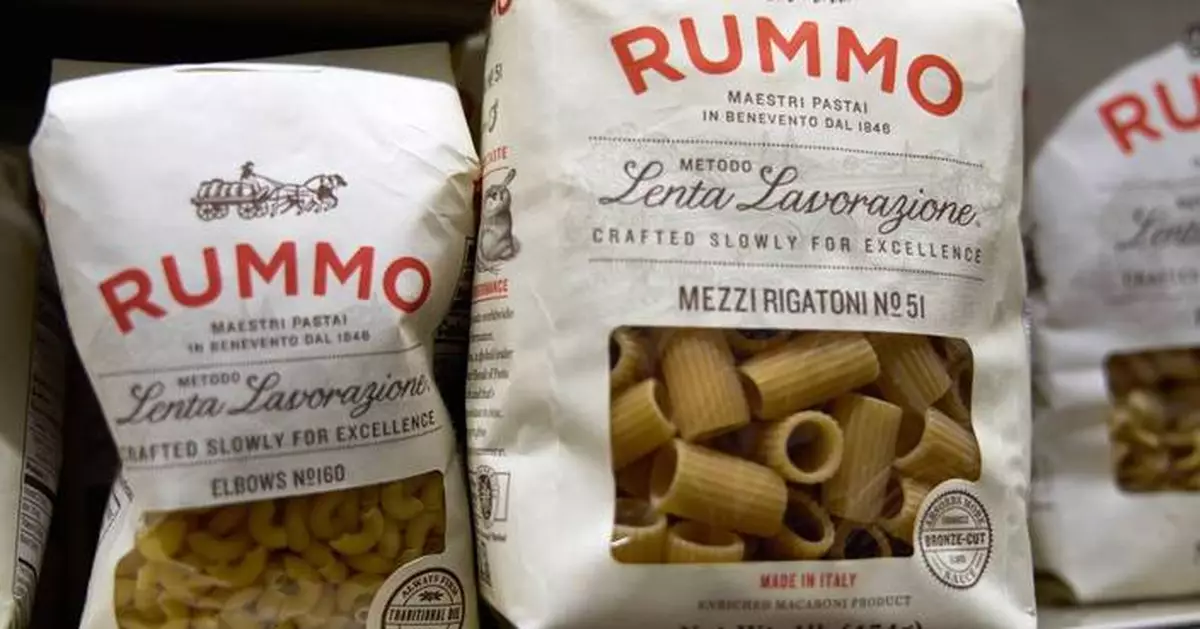
A little over an hour’s drive northeast from Naples is Benevento, a sleepy hilltop town of 55,000 people famed for its ancient Roman theater and Aglianico red wine. It’s also home to Pasta Rummo, founded in 1846, which prides itself on its seven-phase, “slow work” production method.
CEO Cosimo Rummo is outraged by the threat to his company’s annual 20 million euros in exports to the U.S.
“These tariffs are completely senseless,” Rummo said in a phone interview. “These are fast-moving consumer goods … Who would ever buy a pack of pasta that costs 10 dollars, the same price as a bottle of wine?”
He added that he has no intention to start producing pasta stateside, as some companies have done and so would be spared the prospective levy. That includes Barilla, which for decades has been the main Italian pasta brand in the U.S. and now has large-scale production facilities there.
When the transatlantic imbroglio started simmering, Robert Tramonte of Arlington, Virginia sought assurances. The owner of The Italian Store called his supplier, who told him there’s enough pasta inventory stocked in the warehouse to keep prices steady until Easter.
Tramonte’s clients count on him for top-shelf product and he was relieved that, at least for the time being, they won’t have to shell out for the real deal. Or worse -- perish the thought! -- purchase made-in-America pasta.
“They’ve tried to make Italian products and use the same ingredients, but the source wasn’t Italy,” he said. “And they just didn’t taste the same.”
Zampano reported from Rome and Wiseman from Washington. Associated Press videojournalists Paolo Santalucia in Rome and Tassanee Vejpongsa in Philadelphia contributed to this report.
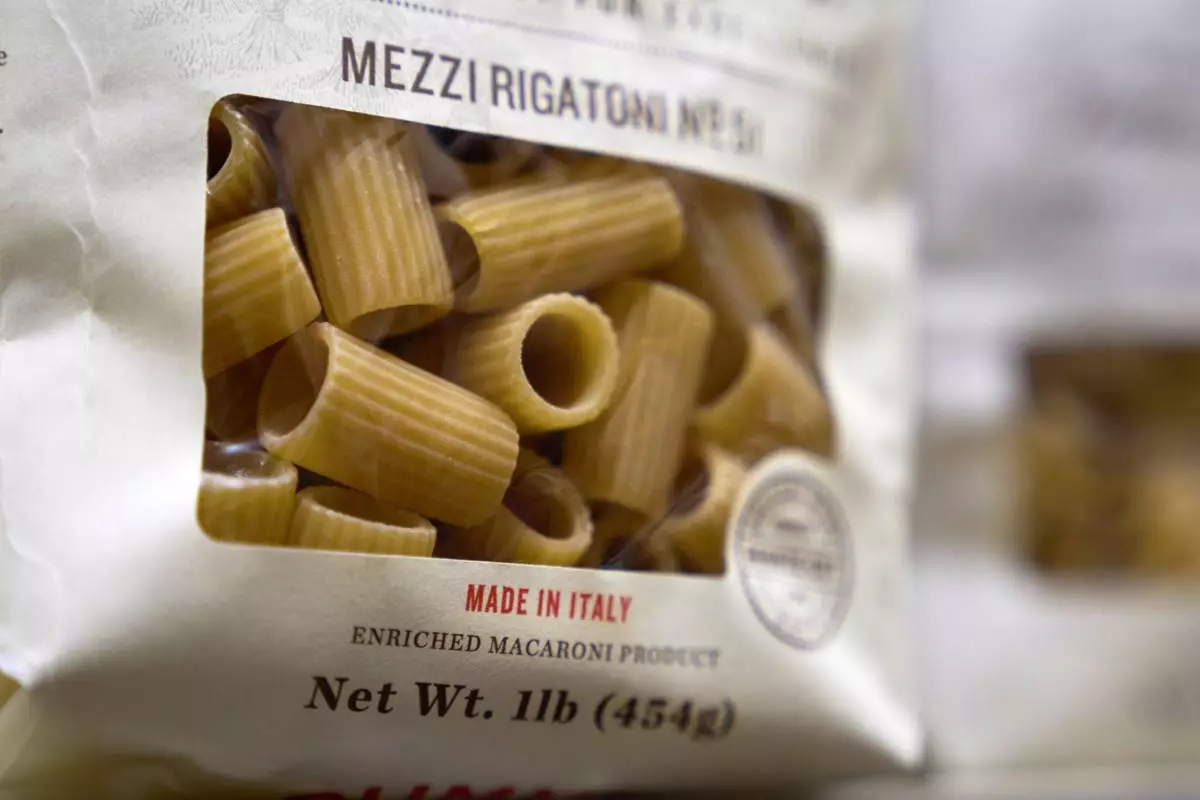
Boxes of imported Italian pasta are seen on shelves, Tuesday, Nov. 11, 2025, in Detroit. (AP Photo/Ryan Sun)
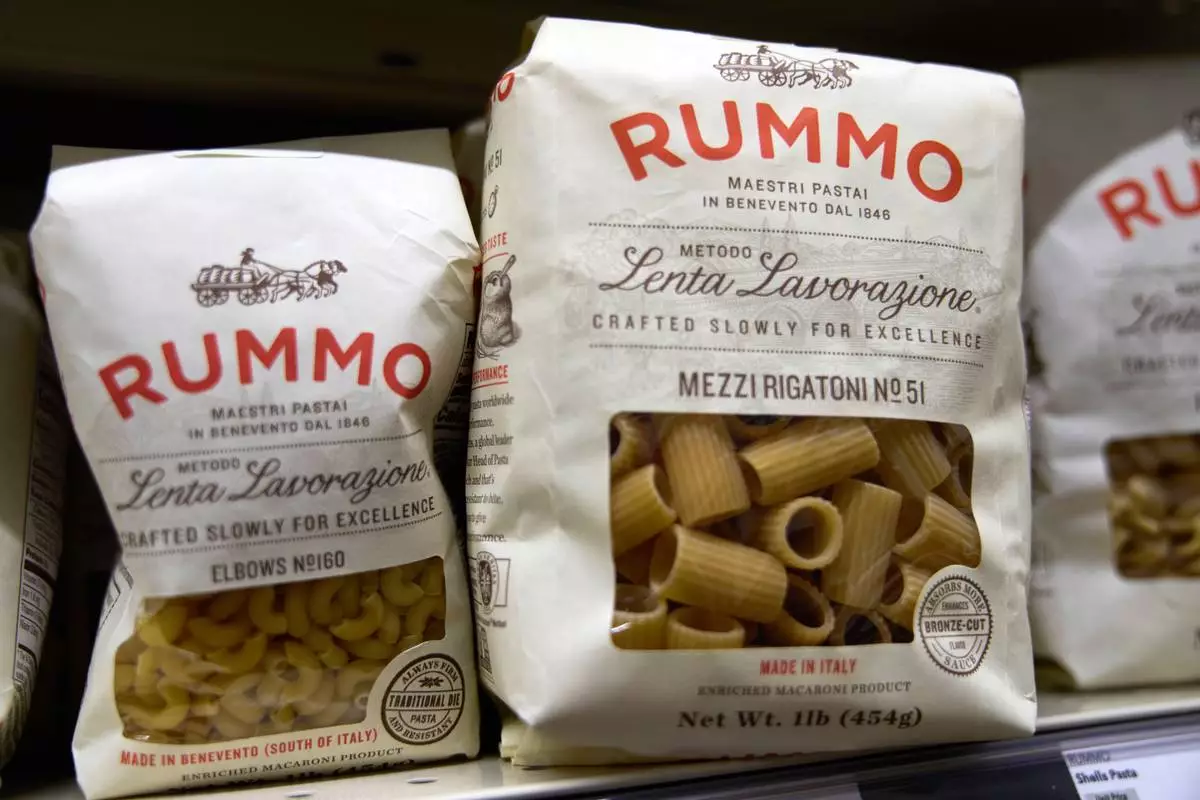
Packages of imported Italian pasta sit on shelves Tuesday, Nov. 11, 2025, in Detroit. (AP Photo/Ryan Sun)
Quarterback Geno Smith is returning to where his career started after the New York Jets acquired him in a trade with Las Vegas, a person with knowledge of the deal said Tuesday.
The Raiders could have been in position to release Smith, their starter for a 3-14 team last season, with the expectation that they will make Heisman Trophy winner Fernando Mendoza the No. 1 pick out of Indiana in the draft next month.
Instead, Las Vegas worked out a swap of late-round selections with the Jets, who get a seventh-rounder while giving up a sixth-round choice and reuniting with their second-round pick from 2013.
ESPN reported that the Jets and the 35-year-old Smith agreed on a renegotiated contract, which had two years and $66 million remaining.
A person with knowledge of the deal said Detroit reached an agreement on the second day of free agency to add running back Isiah Pacheco as a replacement for David Montgomery after the Lions traded Jahmyr Gibbs' backup last week, before the negotiating window opened.
All the people are speaking to The Associated Press on condition of anonymity because transactions can’t become official until Wednesday, the first day of the NFL’s new league year.
Pacheco spent his first four seasons in the running back rotation with the Kansas City Chiefs, who agreed to a $45 million, three-year deal with Super Bowl MVP Kenneth Walker III in the opening hours of free agency.
Pacheco rushed for 2,537 yards and 14 touchdowns over four seasons with the Chiefs, helping them win two Super Bowls.
Montgomery, who no longer wanted to play behind Gibbs, was sent to the Houston Texans for offensive lineman Juice Scruggs along with fourth- and seventh-round draft picks.
The Chiefs also agreed to a $24.5 million, three-year deal with former Baltimore safety Alohi Gilman and an $11 million, two-year contract with receiver Tyquan Thornton, who emerged as perhaps their best deep threat during a 6-11 season that ended a 10-year playoff streak.
Gilman fills a big need in Kansas City’s depleted defensive backfield. Safety Bryan Cook is headed to Cincinnati, the Chiefs traded cornerback Trent McDuffie to the Rams and fellow cornerbacks Jaylen Watson and Joshua Williams are signing elsewhere.
The Green Bay Packers are doing some shuffling at cornerback by adding Benjamin St-Juste while informing Nate Hobbs of a plan to release him a year after signing him to the $48 million, four-year contract, according to two people with knowledge of the decisions. St-Juste is getting a $10.5 million, two-year deal.
The Packers are keeping offensive lineman Darian Kinnard, who agreed to a one-year deal worth up to $3.75 million after starting four games last season.
St-Juste was on the field for about 35% of the Chargers’ defensive plays last season and also was a key special teams contributor during his lone year in Los Angeles. The 28-year-old has two interceptions over five seasons, the first four in Washington for the 2021 third-round draft pick.
Hobbs injured his knee in training camp last year and was benched midseason after leaving the Las Vegas Raiders to join the Packers. The 26-year-old made five starts in 11 appearances and had a career-low two pass breakups.
The Packers will designate Hobbs a post-June 1 cut, which will save about $8 million on the salary cap. Hobbs missed the wild-card loss to Chicago and said after the season he tore a medial collateral ligament Dec. 27 against Baltimore.
Pittsburgh agreed with running back Rico Dowdle on a $12.25 million, two-year deal in what will be a reunion with new Steelers coach Mike McCarthy. They were together in Dallas, where Dowdle became the first undrafted Cowboys running back to rush for 1,000 yards in McCarthy's final season in 2024.
Dowdle signed with Carolina last year and followed a 206-yard outing against Miami with 183 yards rushing and a 36-yard touchdown catch against the Cowboys. Dowdle finished the season with 1,076 yards.
The Steelers are waiting on what would be a much more significant reunion for McCarthy. Quarterback Aaron Rodgers hasn't said whether he plans to return for a 22nd season, and second in Pittsburgh. The 42-year-old was with McCarthy for 12-plus seasons in Green Bay, and they won a Super Bowl during the 2010 season.
New England picked up one of the top available receivers in Romeo Doubs, agreeing with the former Green Bay player on a $70 million, four-year contract. The defending AFC champions also added guard Alijah Vera-Tucker on a $42 million, three-year deal.
The Buffalo Bills and tight end Dawson Knox agreed to a three-year contract extension that will save money under the salary cap. The seventh-year player was entering the final year of his deal and scheduled to count $17 million against Buffalo’s cap.
The New York Giants have an agreement with cornerback Greg Newsome after losing starter Cor'Dale Flott to Tennessee on the first day of negotiations for free agents. New York also has a deal with safety Ar’Darius Washington, the third player to follow new coach John Harbaugh from Baltimore after tight end Isaiah Likely and All-Pro punter Jordan Stout.
The Dallas Cowboys added a safety for the second day in a row, agreeing to a deal with P.J. Locke while also picking up defensive tackle Otito Ogbonnia.
Locke spent his first six seasons with Denver, which included time with new Dallas defensive coordinator Christian Parker. The Cowboys added Jalen Thompson, who was with Arizona, on the first day of free agency.
Cleveland and linebacker Quincy Williams have agreed on a two-year contract worth up to $17 million. The deal reunites Williams with new Browns defensive coordinator Mike Rutenberg, who was the New York Jets linebackers coach from 2021-24.
The Browns are re-signing offensive lineman Teven Jenkins, who played all 17 games last season and made four starts at right guard.
Minnesota is keeping two-time All-Pro long snapper Andrew DePaola. The 38-year-old is set for a seventh season with the Vikings. DePaola is the only long snapper to make three straight Pro Bowls (2022-24).
New Orleans brought back linebacker Kaden Elliss, a 2019 seventh-round draft pick who left the Saints for Atlanta as a free agent three seasons ago. He returns on a three-year deal worth up to $33 million, a person with knowledge of the contract told the AP. The Elliss signing came a day after Demario Davis, a starting Saints linebacker since 2018, left in free agency for the Jets.
AP NFL: https://apnews.com/hub/nfl

FILE - Las Vegas Raiders quarterback Geno Smith (7) leaves the field during the second half of an NFL football game against the New York Giants, Dec. 28, 2025, in Las Vegas. (AP Photo/David Becker, File)

FILE - Los Angeles Chargers cornerback Benjamin St-Juste warms up before an NFL football game against the Jacksonville Jaguars, Nov. 16, 2025, in Jacksonville, Fla. (AP Photo/Phelan M. Ebenhack, File)
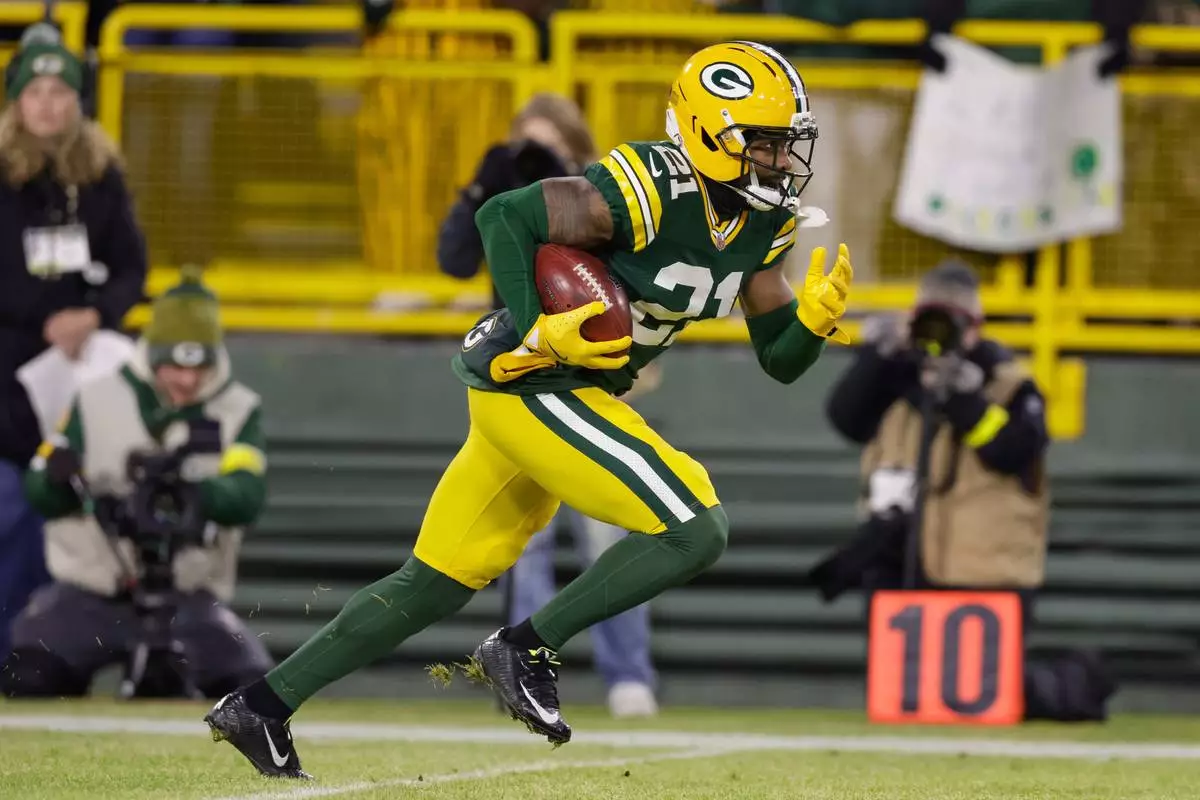
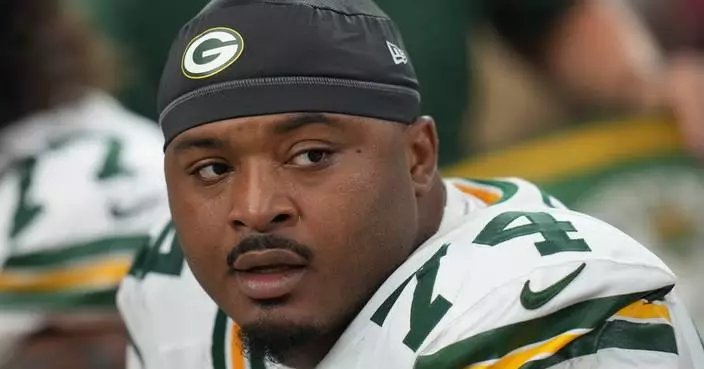
FILE - Green Bay Packers cornerback Nate Hobbs returns a kick off during an NFL football game between the Green Bay Packers and Baltimore Ravens, Dec. 27, 2025, in Green Bay, Wis. (AP Photo/Matt Ludtke, File)