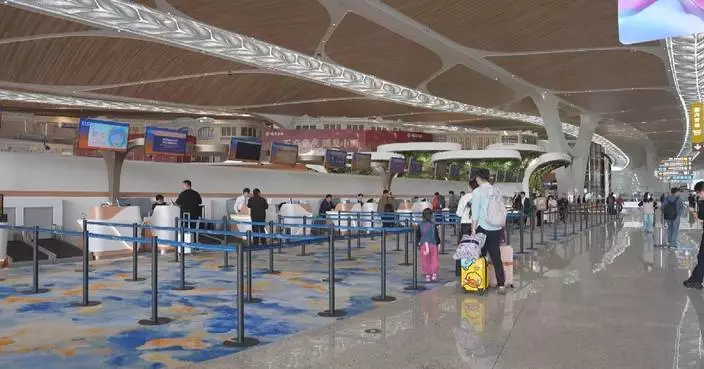
Skip to Content Facebook Feature Image

Shenzhen applies green tech to competition venues for sustainable National Games

China

China

China

Shenzhen applies green tech to competition venues for sustainable National Games

2025-11-15 21:20 Last Updated At:21:57

Shenzhen, a vibrant metropolis in south China's Guangdong Province, is redefining the future of large-scale sporting events by integrating cutting-edge low-carbon technologies and sustainable materials into the infrastructure of its competition venues for the 15th National Games.

For the first time, China's premier multi-sport event, the National Games, is co-hosted by Guangdong Province and the two special administrative regions of Hong Kong and Macao. Shenzhen serves as a primary host city, staging major competitions in swimming, boxing, and equestrian events across 20 venues, 14 of which have been meticulously renovated to prioritize sustainability.

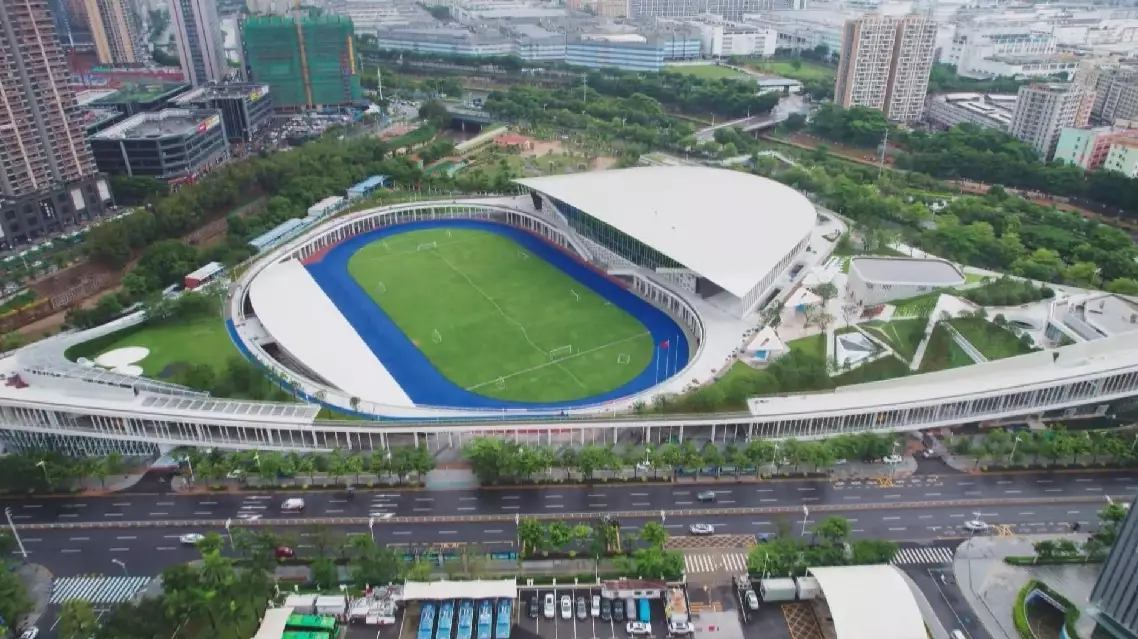
At the Longhua Cultural and Sports Center in Shenzhen, innovation and sustainability converge through seamlessly integrated solar panels on the roof and glass facade, enhancing energy efficiency.

"Our glass facade's sloped design was deliberately crafted to enhance efficiency, minimizing solar heat gain and reducing air conditioning usage," said Chen Guanzhou, deputy director of the Longhua Cultural and Sports Center.

The badminton arena at the Shenzhen Universiade Sports Center features 6,500 square meters of photovoltaic panels, producing enough electricity annually to reduce approximately 792 tons of carbon emissions.

Inside the swimming venue, energy-efficient LED lighting cuts power consumption by 40 percent while offering programmable dynamic light shows to elevate the spectator experience.

All competition venues in Shenzhen for the National Games are powered 100 percent by green electricity, an initiative expected to prevent 50,000 tons of carbon emissions during the event, equivalent to planting 2.7 million trees. The green electricity, sourced from seven other provincial regions in the country, including Qinghai, Guangxi, and Yunnan, is transmitted through China's first zero-carbon, smart power substation. Engineered for carbon neutrality, this substation reduces annual carbon emissions by 60 tons, equivalent to planting 3,333 trees.

Beyond the 15th National Games, Shenzhen envisions a lasting legacy. All competition venues will be transformed into multi-functional community hubs that host concerts, sports training, and public events, ensuring they remain enduring assets that enrich urban life.

"We seek to transform the competition venues into 'living rooms' of our city, demonstrating the innovative technologies from local enterprises," said Zhang Xingzheng, deputy director of the Shenzhen City Ecology and Environment Bureau.
Shenzhen applies green tech to competition venues for sustainable National Games
Shenzhen applies green tech to competition venues for sustainable National Games

The torch relay for the Milan-Cortina 2026 Winter Olympic Games began on Saturday morning in Rome, marking the start of a two-month journey ahead of next year's opening ceremony.

The launch ceremony was held at the Stadio dei Marmi, an open-air arena lined with Roman-style statues next to Rome's Olympic Stadium.

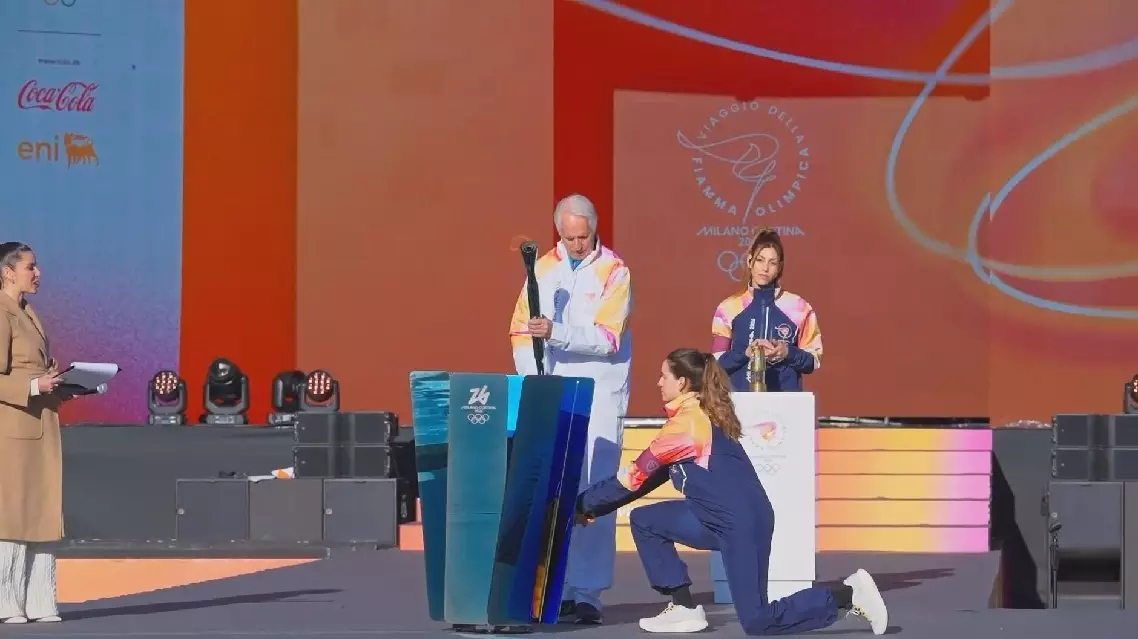
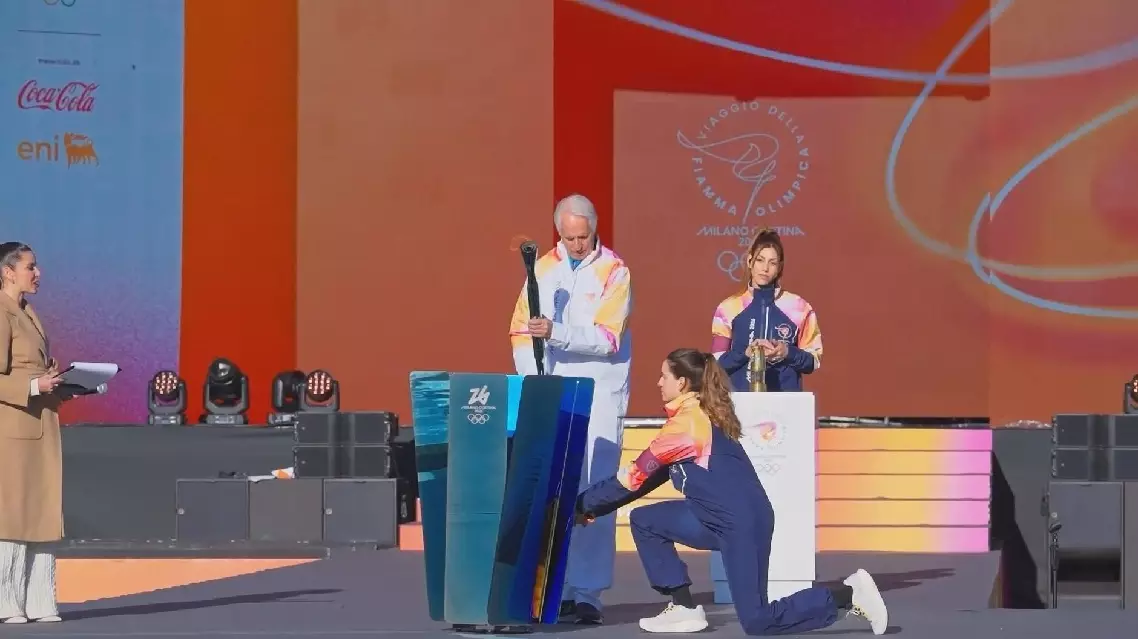
At around 09:50, Giancarlo Peris, the final torchbearer of the 1960 Rome Games, brought the flame onto the launch stage. A torch was lit with the flame, and Giovanni Malago, president of the Milan-Cortina 2026 organizing committee, lit the cauldron with it.

The first torchbearer, Italy's Olympic champion Gregorio Paltrinieri, lit the relay torch from the cauldron and then ran a half-lap around the stadium to cheers from spectators, officially starting the relay.

Italian fencer Elisa Di Francisca and high jump Olympic champion Gianmarco Tamberi followed as the second and third torchbearers and completed their relay segments inside the stadium. Tamberi performed a torch kiss with the next runner, Achille Polonara, who carried the flame out of the stadium to begin the route through the city.

The relay will traverse 12,000 kilometers over 60 days across Italy, pass through more than 300 municipalities and feature celebrations in 60 cities, reach all 110 Italian provinces, and light up UNESCO sites along the route.

More than 10,000 torchbearers from all walks of life will take part in the relay, including figures from sectors of sports, culture, film and civil society.

The flame will see Christmas in Naples, New Year in Bari, and return to Cortina d'Ampezzo on January 26, 2026, the 70th anniversary of the 1956 Winter Games opening ceremony. The relay will conclude on February 6 at Milan's San Siro Stadium.

Andrea Varnier, CEO of the Milan-Cortina 2026 Winter Olympic Games' organizing committee, said the torch relay will strengthen the spirit of peace and hope for humanity.

"Our torch will pass through all cultural heritage sites. So along the way, we'll see both our nation's historical landmarks as well as natural landscapes. But what matters most are the people who embrace the torch as a symbol of peace and hope. Athletes and ordinary citizens carrying the Winter Olympics torch will carry the spirit all the way to Milan," he said.

Torch relay for Milan-Cortina 2026 Winter Games starts in Rome

Torch relay for Milan-Cortina 2026 Winter Games starts in Rome

Torch relay for Milan-Cortina 2026 Winter Games starts in Rome

Torch relay for Milan-Cortina 2026 Winter Games starts in Rome

Recommended Articles