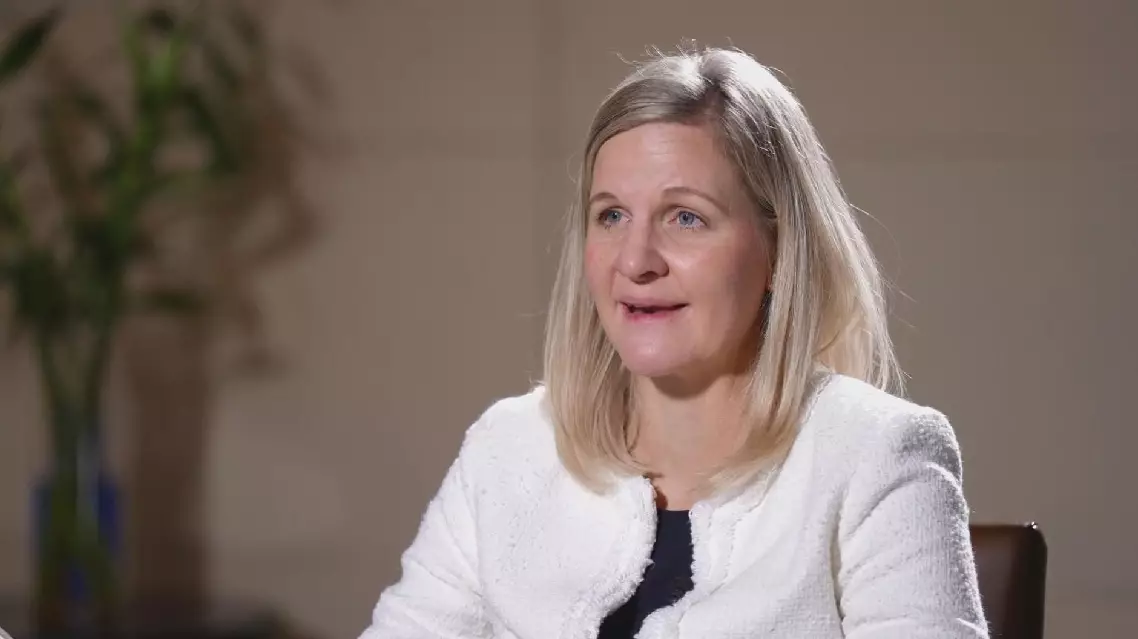
International Olympic Committee (IOC) President Kirsty Coventry has shared vital insight into the sources of inspiration that have driven her remarkable journey from a nine-year-old girl dreaming of Olympic gold to becoming one of the Africa's most successful Olympians.
She made the remarks in an exclusive interview with China Media Group after attending the opening ceremony of the country's 15th National Games in the city of Guangzhou on Sunday.
Coventry was elected as the 10th president of the IOC in 2025, making history as the first woman and the first African to lead the global Olympic movement. She has been a member of the International Olympic Committee (IOC) since 2013 and served as chair of the IOC Athletes' Commission, where she played a vital role in advocating for athletes' rights and welfare.
Hailing from Zimbabwe, she is one one of Africa's most decorated athletes, having won seven Olympic medals, including two golds at the 2004 Athens Olympic Games and the 2008 Beijing Olympic Games. Reflecting on her career, she noted that the source of an athlete's inspiration can come in many forms, from the quest for personal glory to the pride of a nation.
"I think the inspiration changes. As an athlete, it was always my dream. In 2004, it was a very individual dream. It was that a nine-year-old girl wanting to win an Olympic gold medal. And I didn't recognize at the time how much it maybe influenced or how that would impact my country. My country, at that time, was going through a hard time in our history. When I went back and saw all of Zimbabwe come out to celebrate -- hundreds of thousands of people on the streets -- I was not prepared for that. I thought, 'This is strange. I'm a swimmer, not a football player.' So it was a strange moment to go back and think, wow, everyone is celebrating my success. And then I quickly realized it was not just my success; it was the success for the country, and I was so proud to do that," said Coventry.
Now at the helm of the IOC, she bears greater responsibility that goes even beyond her own country. She stressed her hope to use the leadership role in a way that benefits athletes around the world.
"And the inspiration going into 2008, coming here to Beijing, was that I wanted to make my country proud again. I think that inspiration changes. I think now, going into sports administration, when I was the Zimbabwean youth and sport minister, the inspiration for me was that I was an athlete and now an administrator, and I can make the changes I wanted to see as an athlete. How do I do that? How do I make my fellow athletes look back at the time I was there and be like, 'She did a great job for us, the athletes.' And I think that experience leading into this leadership role, the inspiration is many different things. It's my children. I want to be a good leader, and make sure that this Olympic movement is something they are inspired by, even if they don't become athletes. And I want to be able to give back to a movement, so that is an inspiration in itself. I want to be able to continue to lead this organization that makes other athletes proud that allows for athletes to believe in their dreams and to succeed in their dreams. So I think the inspiration, sort of, evolves over time," she said.
IOC president reflects on journey of evolving inspiration