Skip to Content Facebook Feature Image

Border Patrol official says dozens arrested in North Carolina immigration enforcement surge

News

Border Patrol official says dozens arrested in North Carolina immigration enforcement surge
News

News

Border Patrol official says dozens arrested in North Carolina immigration enforcement surge

2025-11-18 08:07 Last Updated At:08:10

A top Border Patrol commander touted dozens of arrests in North Carolina’s largest city on Sunday as Charlotte residents reported encounters with federal immigration agents near churches, apartment complexes and stores.

The Trump administration has made the Democratic city of about 950,000 people its latest target for an immigration enforcement surge it says will combat crime, despite fierce objections from local leaders and downtrending crime rates.

Gregory Bovino, who led hundreds of U.S. Customs and Border Protection agents in a similar effort in Chicago, took to X to document a few of the more than 80 arrests he said agents had made. He also posted a highly-edited video of uniformed CBP officers handcuffing people.

“From border towns to the Queen City, our agents go where the mission calls,” he posted on X, referring to Charlotte.

The effort was dubbed “Operation Charlotte’s Web” as a play on the title of a famous children’s book that isn’t about North Carolina.

Some welcomed the intervention, including Mecklenburg County Republican Party Chairman Kyle Kirby, who said in a post Saturday that the county GOP “stands with the rule of law — and with every Charlottean’s safety first.”

The flurry of activity prompted fear and questions, including where detainees would be held, how long the operation would last and what agents' tactics — criticized elsewhere as aggressive and racist — would look like in North Carolina. On Saturday, at least one U.S. citizen said he was thrown to the ground and briefly detained.

At Camino, a nonprofit group that offers services to Latino communities, some said they were too afraid to leave their homes to attend school, medical appointments or work. A dental clinic the group runs had nine cancellations on Friday, spokesperson Paola Garcia said.

“Latinos love this country. They came here to escape socialism and communism, and they’re hard workers and people of faith,” Garcia said. “They love their family, and it’s just so sad to see that this community now has this target on their back.”

Bovino's operations in Chicago and Los Angeles triggered lawsuits over the use of force, including widespread deployment of chemical agents. Democratic leaders in both cities accused agents of inflaming community tensions. Federal agents fatally shot one suburban Chicago man during a traffic stop.

Bovino, head of a Border Patrol sector in El Centro, California, and other Trump administration officials have called their tactics appropriate for growing threats on agents.

Bovino posted pictures Sunday of people the Trump administration commonly dubs “criminal illegal aliens,” meaning people living in the U.S. without legal permission who allegedly have criminal records. That included one of a man with an alleged history of drunk driving convictions.

“We arrested him, taking him off the streets of Charlotte so he can’t continue to ignore our laws and drive intoxicated on the same roads you and your loved ones are on,” Bovino said.

The Department of Homeland Security, which oversees CBP, did not respond to inquiries about the Charlotte arrests. Bovino's spokesman did not return a request for comment Sunday.

Elsewhere, DHS has not offered many details about its arrests. In the Chicago area, the agency only provided names and details on a handful of its more than 3,000 arrests in the region from September to last week. U.S. citizens were detained during several operations. Dozens of protesters were arrested.

By Sunday, reports of CBP activity around Charlotte were “overwhelming” and difficult to quantify, Greg Asciutto, executive director of the community development group CharlotteEast, said in an email.

“The past two hours we’ve received countless reports of CBP activity at churches, apartment complexes and a hardware store,” he said.

City council member-elect JD Mazuera Arias said federal agents appeared to be focused on churches and apartment buildings.

“Houses of worship. I mean, that’s just awful,” he said. “These are sanctuaries for people who are looking for hope and faith in dark times like these and who no longer can feel safe because of the gross violation of people’s right to worship.”

Two people were arrested during a small protest Sunday outside a DHS office in Charlotte and taken to a local FBI office, said Xavier T. de Janon, an attorney who was representing them. He said it remained unclear what charges they faced.

DHS said it was focusing on North Carolina because of so-called sanctuary policies, which limit cooperation between local authorities and immigration agents.

Most North Carolina county jail operators have long honored “detainers,” or requests from federal officials to hold an arrested immigrant for a limited time so agents can take custody of them. But some non-cooperation policies have existed in a handful of places in the state, including Charlotte, where the police do not help with immigration enforcement. In Mecklenburg County, where Charlotte is located, the sheriff previously did not honor detainers but said the jail now does as required under changes made to state law since last year.

Several county jails house immigrant arrestees and honor detainers, which allow jails to hold detainees for immigration officers to pick them up. But Mecklenburg County, where Charlotte is located, does not. Also, the city's police department does not help with immigration enforcement.

DHS alleged that about 1,400 detainers across North Carolina had not been honored, putting the public at risk.

“We are surging DHS law enforcement to Charlotte to ensure Americans are safe and public safety threats are removed," Assistant Secretary Tricia McLaughlin said in a statement.

This story has been updated to correct which of North Carolina’s county jail operators honor immigration detainers. Most have long honored detainer requests, and the Mecklenburg County sheriff says his jail also does so now as required under changes made to state law since last year. The story summary also misspelled the federal operation’s name, which is “Charlotte’s Web,” not “Charlotte’s Webb.”

Tareen and Dale reported from Chicago. Witte reported from Annapolis, Maryland.
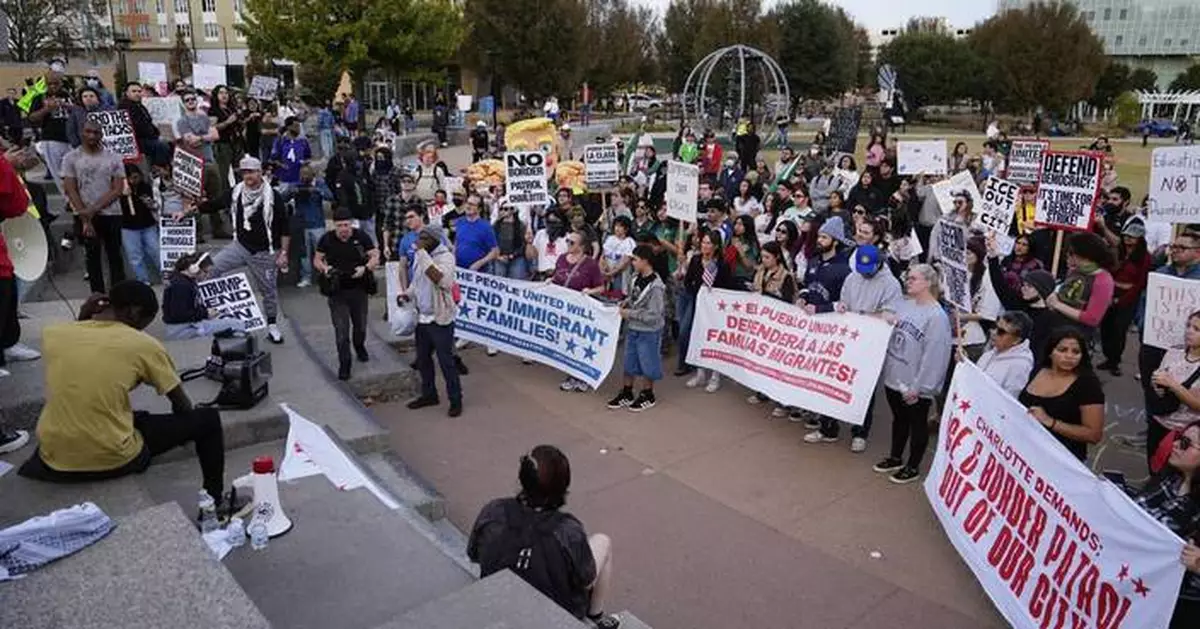
People protest against federal immigration enforcement Saturday, Nov. 15, 2025, in Charlotte, N.C. (AP Photo/Erik Verduzco)
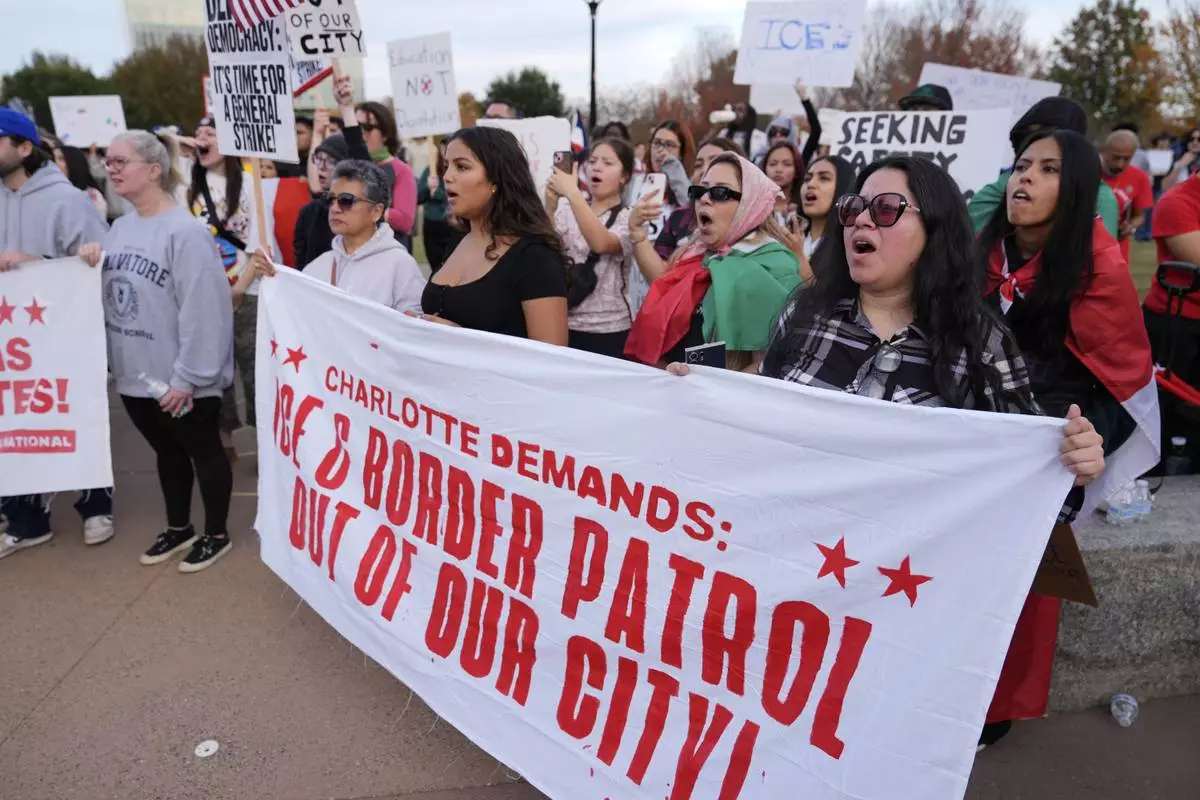
People protest against federal immigration enforcement Saturday, Nov. 15, 2025, in Charlotte, N.C. (AP Photo/Erik Verduzco)
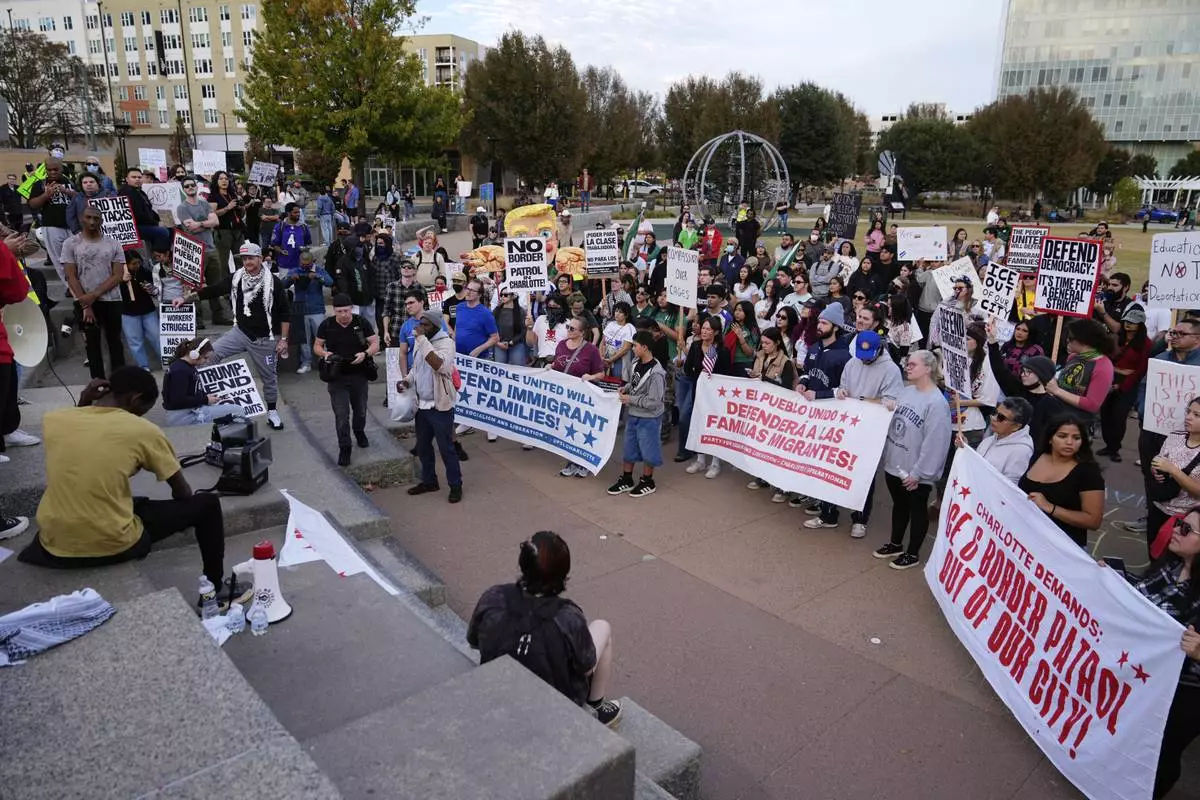
People protest against federal immigration enforcement Saturday, Nov. 15, 2025, in Charlotte, N.C. (AP Photo/Erik Verduzco)
People protest against federal immigration enforcement Saturday, Nov. 15, 2025, in Charlotte, N.C. (AP Photo/Erik Verduzco)
LAGOS, Nigeria (AP) — Benin has joined a growing list of African countries where military officers have seized power since 2020. The military takeover lasted several hours on Sunday before officials announced it was foiled.

In a familiar scene across West Africa, a group of soldiers appeared on Benin ’s state TV on Sunday announcing the removal of President Patrice Talon and the dissolution of the government following the swift takeover of power.

Hours later, Benin's Interior Minister Alassane Seidou said in a video shared online that the coup was foiled. The soldiers in question “launched a mutiny with the aim of destabilizing the state and its institutions,” Seidou said, adding that the military remained ”committed to the republic.”

Here is a timeline of coups in Africa, following a pattern of disputed elections, constitutional upheaval, security crises and youth discontent:

Since August 2020, Mali has witnessed two back-to-back coups. A group of soldiers mutinied and arrested senior military officers just outside the capital, Bamako, after weeks of protests by civilians demanding the then-president, Ibrahim Keïta, resign over accusations of corruption and failing to clamp down on armed groups.

Col. Assimi Goita, the military leader, entered into a power-sharing deal with Bah Ndaw, a civilian president, with Goita serving as the vice president of a so-called transitional government. In 2021, Goita overthrew Ndaw following a series of disagreements and installed himself as president. He postponed an election slated for 2022 to 2077.

Mali is one of a tripartite group of landlocked West African countries, along with Burkina Faso and Niger, run by military juntas that have now formed their own bloc after breaking from the Economic Community of West African states, and have firmly stated their objections to a return to democracy.

Following his father's death in 2021, Mahamat Idris Deby, an army general, quickly seized power, extending his family's three-decade rule of the central African nation.

Three years later, he delivered an election that he promised when he assumed power. Deby was declared the winner of the election, which the opposition claimed was rigged. He has since clamped down on critics. Former Prime Minister Succes Masra, an opposition figure, was sentenced to 20 years in prison earlier this year.

After 11 years in office, Alpha Conde was removed by a group of soldiers led by Mamady Doumbouya. In 2020, Conde had changed the constitution to allow himself to stand for a third term.

Doumbouya is running in the December polls and looking to shed his military fatigues, after a referendum this year allowed junta members to stand in elections and extended the presidential term limit from five to seven years.

The Sudanese military, led by Gen. Abdel-Fattah Burhan, staged a coup in October 2021, deposing Omar al-Bashir, who ruled the country for 26 years.

Burhan went on to share power with Muhammad Dangalo, known as Hedmeti, the leader of the paramilitary Rapid Support Forces.

In April 2023, a simmering feud between them led to one of the world's most catastrophic conflicts, according to the United Nations. The war is still going on.

Like its neighbor Mali, Burkina Faso also witnessed two successive coups. In January 2022, Roch Kaboré was ousted by Lt. Col. Paul-Henri Damiba. In September, Capt. Ibrahim Traoré, the head of an artillery unit of Burkina Faso army, ousted Damiba on the same pretext as the earlier coup — deteriorating security.

Traoré has since ruled the country. In July, he dissolved the independent electoral commission.

Gen. Abdourahamane Tchiani ousted Mohamed Bazoum, ending a rare democratic transition in Niger. The dramatic coup sparked a crisis in the regional ECOWAS bloc, which threatened to invade Niger if Bazoum was not installed and the country returned to democracy.

The crisis split the region, with Niger teaming with Burkina Faso and Mali to form a breakaway Alliance of Sahel States.

Shortly after President Ali Bongo, who had been in power for 14 years and had run for a third term, was declared the winner of an election in 2023, a group of soldiers appeared on television saying they were seizing power. They canceled the election and dissolved all state institutions.

Brice Oligui Nguema, a cousin of Bongo, took power and has since ruled Gabon. He was announced the winner of a presidential election in April.

Expressing their frustration over chronic water shortages and power outages, young people in Madagascar took to the streets to demand former President Andry Rajoelina’s resignation.

Rajoelina instead dissolved his government and refused to resign, leading to a military takeover of the southern African country.

On Nov. 26, Soldiers in Guinea-Bissau followed up a disputed presidential election three days earlier by seizing power. Critics including the opposition called the coup a staged takeover to avoid having the incumbent lose the election.

Incumbent President Umaro Sissoco Embaló and the main opposition candidate, Fernando Dias, both claimed to have won the Nov. 23 presidential election.

Embaló was released and allowed to flee to neighboring Senegal, from where he has since departed. The new military junta made appointments, several of them allies of the deposed president.

Less than two weeks after the coup in Guinea-Bissau, soldiers staged a similar takeover in Benin that followed gunshots heard near the presidential palace.

A group of soldiers, which called itself the Military Committee for Refoundation, appeared on state TV announcing that the West African nation's leader, Talon, has been removed and state institutions dissolved.

The soldiers appointed Lt. Col. Pascal Tigri as president of the military committee.

Hours later, officials said the coup was foiled by the armed forces and that the military remained ”committed to the republic.”

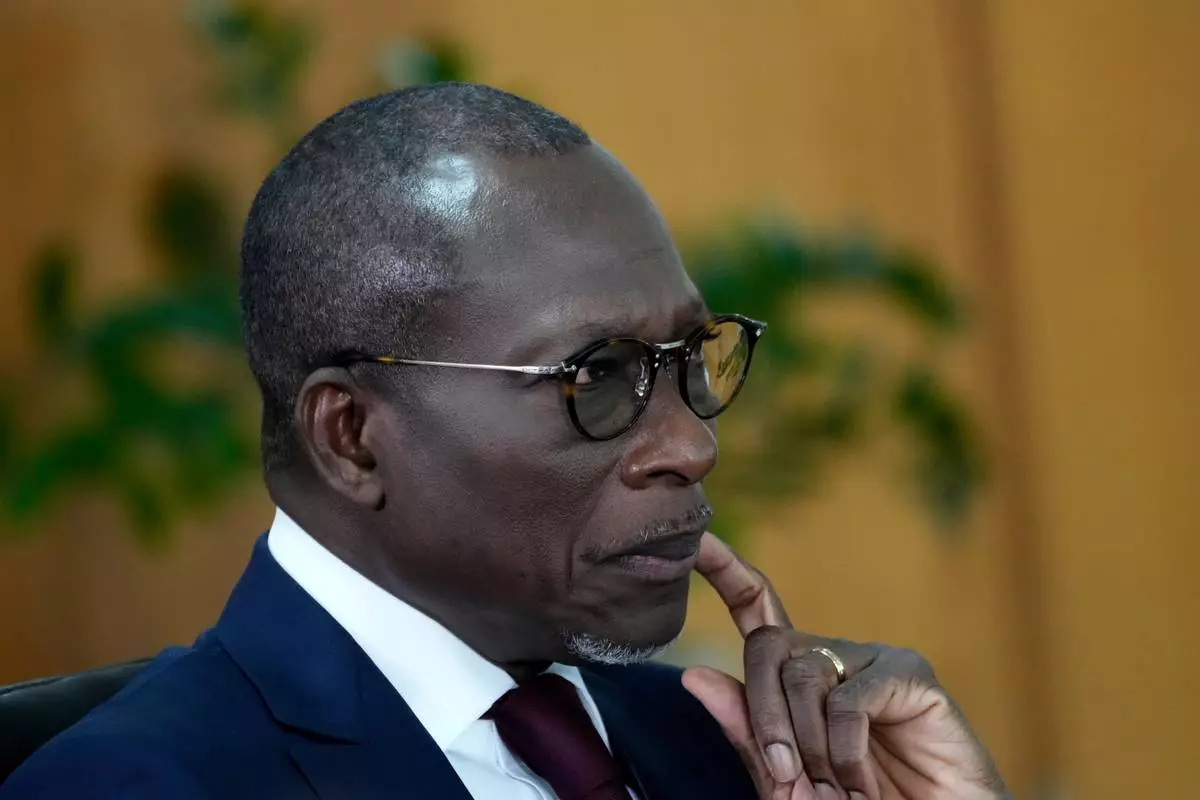
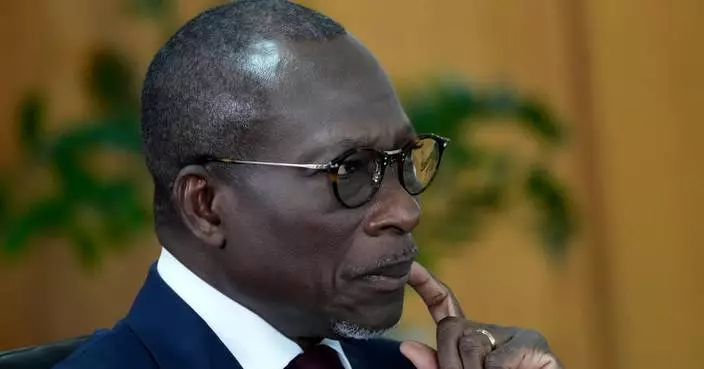
FILE - Benin's President Patrice Talon attends a meeting with Brazilian President Luiz Inacio Lula da Silva at Planalto presidential palace in Brasilia, Brazil, on May 23, 2024. (AP Photo/Eraldo Peres, File)

FILE - Benin's President Patrice Talon attends a meeting with Brazilian President Luiz Inacio Lula da Silva at Planalto presidential palace in Brasilia, Brazil, on May 23, 2024. (AP Photo/Eraldo Peres, File)

Recommended Articles