Skip to Content Facebook Feature Image

Timbuktu's famed manuscripts escaped al-Qaida but the threat remains

News

Timbuktu's famed manuscripts escaped al-Qaida but the threat remains
News

News

Timbuktu's famed manuscripts escaped al-Qaida but the threat remains

2025-11-17 15:42 Last Updated At:15:50

TIMBUKTU, Mali (AP) — Thirteen years ago, Abdoulaye Cissé risked his life to smuggle tens of thousands of fragile manuscripts out of Timbuktu as al-Qaida -linked extremists swept into the desert town.

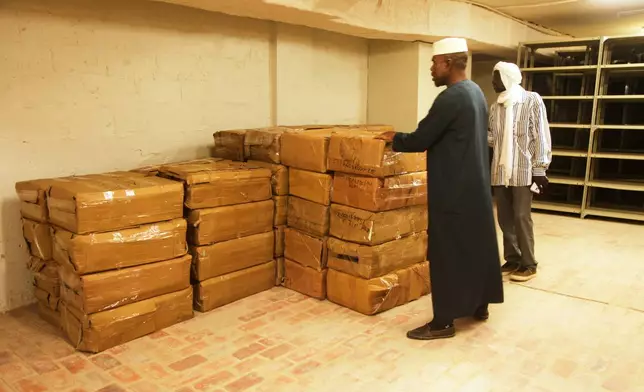
At night, he loaded crates of manuscripts from the Ahmed Baba Institute of Higher Islamic Studies and Research onto donkey carts, aware that their pages carried evidence of his people’s glorious past. They were taken to the river, where wooden boats and then buses took them to Mali’s capital, Bamako — a 1,200-kilometer (750-mile) journey.

More Images
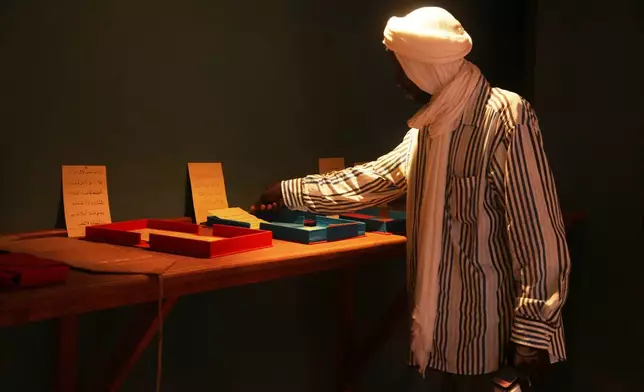
An employee of the Ahmed Baba Institute of Higher Islamic Studies and Research displays manuscripts at the exhibition hall in Timbuktu, Mali, Sept. 4, 2025. (AP Photo/Baba Ahmed)
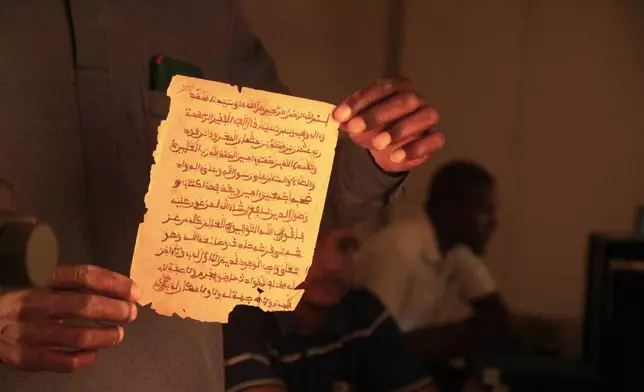
An employee of the Ahmed Baba Institute of Higher Islamic Studies and Research displays manuscripts at the exhibition hall in Timbuktu, Mali, Sept. 4, 2025. (AP Photo/Baba Ahmed)

An employee displays a manuscript at the Ahmed Baba Institute of Higher Islamic Studies and Research in Timbuktu, Mali, Sept. 4, 2025. (AP Photo/Baba Ahmed)
An employee displays a manuscript at the Ahmed Baba Institute of Higher Islamic Studies and Research in Timbuktu, Mali, Sept. 4, 2025. (AP Photo/Baba Ahmed)

Abdoulaye Cissé, Left, an employee of the Ahmed Baba Institute of Higher Islamic Studies and Research, inspects crates containing manuscripts in Timbuktu, Mali, Sept. 4, 2025. (AP Photo/Baba Ahmed)
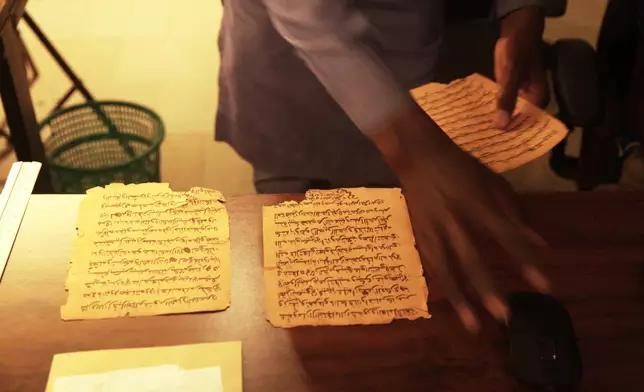
Abdoulaye Cissé, Left, an employee of the Ahmed Baba Institute of Higher Islamic Studies and Research, inspects crates containing manuscripts in Timbuktu, Mali, Sept. 4, 2025. (AP Photo/Baba Ahmed)

Manuscript pages are being scan at the Ahmed Baba Institute of Higher Islamic Studies and Research in Timbuktu, Mali, Sept. 4, 2025. (AP Photo/Baba Ahmed)
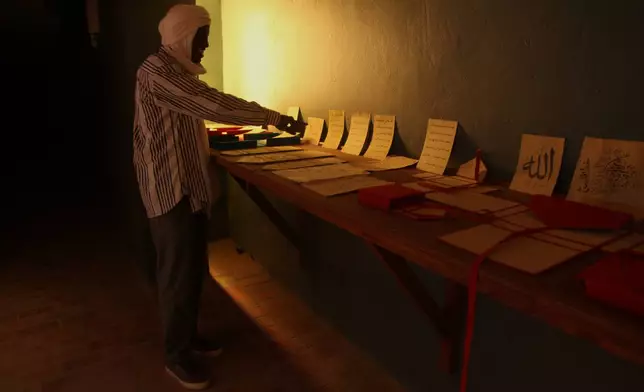
Manuscript pages are being scan at the Ahmed Baba Institute of Higher Islamic Studies and Research in Timbuktu, Mali, Sept. 4, 2025. (AP Photo/Baba Ahmed)

An employee of the Ahmed Baba Institute of Higher Islamic Studies and Research displays manuscripts at the exhibition hall in Timbuktu, Mali, Sept. 4, 2025. (AP Photo/Baba Ahmed)

An employee of the Ahmed Baba Institute of Higher Islamic Studies and Research displays manuscripts at the exhibition hall in Timbuktu, Mali, Sept. 4, 2025. (AP Photo/Baba Ahmed)

“It was dark, but we knew the route by heart,” said Cissé, the institute’s general secretary.

Moving the manuscripts took a month. The institute’s staff knew they risked their lives.

The 28,000 manuscripts returned safely to Timbuktu in August after a request from local leaders and civil society. It reflected both the city’s pride in cultural preservation and concerns about the potentially damaging humidity in Bamako. Mali’s government has portrayed it as a victory.

But al-Qaida remains a threat. Its fighters attacked Timbuktu as recently as June, and affiliated fighters with the JNIM group have imposed a fuel blockade on landlocked Mali, threatening to bring down the military regime.

Beyond the institute, which is owned by the government, Timbuktu is home to private libraries holding an estimated 377,000 manuscripts in total. All were smuggled to the capital, where they remain.

“What we find in these documents does not exist anywhere else in the world,” said Mohamed Diagayeté, director of the institute, who specializes in old manuscripts.

The trove contradicts assumptions that African history has been primarily oral. The manuscripts are an archive of dealings among West African empires and tribes, with histories dating back centuries.

A world comes to life on their pages. Letters between scholars and emirs debate whether tobacco was sin or solace, and outline demands by officials to shrink women’s dowries so poor men might marry.

Scribbled notes in the margins detail events that shaped history, like earthquakes that shook the region in the 15th century.

Timbuktu was once a center of Islamic learning, with scholars also coming to study mathematics, science, astrology and governance.

The manuscripts offer evidence that Islam in the region was long marked by tolerance and respect. One manuscript in a private library records a local decree warning men not to impose themselves on women, and granting women the right to seek justice if they do.

The brutality of al-Qaida’s arrival in 2012 was a shock. The militants destroyed more than 4,000 manuscripts, some dating back to the 13th century, according to the findings of a United Nations expert mission. They also destroyed the mausoleums of Timbuktu, which are listed as UNESCO World Heritage Sites, and the city’s “sacred gate.”

Al-Qaida’s rampage was a wake-up call for protecting Timbuktu’s treasures.

Before the manuscripts were smuggled out of the city, only 20% of the institute’s manuscripts had been digitized, Cissé said. Now nearly all are digitized, and the archives are backed up on servers based elsewhere.

“Even if one server is damaged, we can still recover these manuscripts,” he said.

Archivists and librarians say challenges remain.

The manuscripts are still stored in aging mud-brick libraries, though staffers of the institute say their holdings are now in “a secure place.” They plan to install surveillance cameras inside.

Timbuktu’s history-loving residents try to balance protection with accessibility.

“As long as these manuscripts remain in trunks, they remain dead because people cannot enjoy them,” said Sane Chirfi Alpha, a founding member of a local nonprofit, SAVAMA-DCI, for their preservation.

For students like 24-year-old Baylaly Mahamane, the manuscripts offer fresh insights from traditional practices. One text describes doctors crushing white wormwood leaves to soothe the stomach, blending millet with mutton to stop vomiting, and packing swollen feet with clay and henna.

“I want to study the Timbuktu manuscripts on herbal medicine so that I can help doctors in Timbuktu hospitals treat patients who cannot obtain medication at home,” Mahamane said.

For more on Africa and development: https://apnews.com/hub/africa-pulse

The Associated Press receives financial support for global health and development coverage in Africa from the Gates Foundation. The AP is solely responsible for all content. Find AP’s standards for working with philanthropies, a list of supporters and funded coverage areas at AP.org.
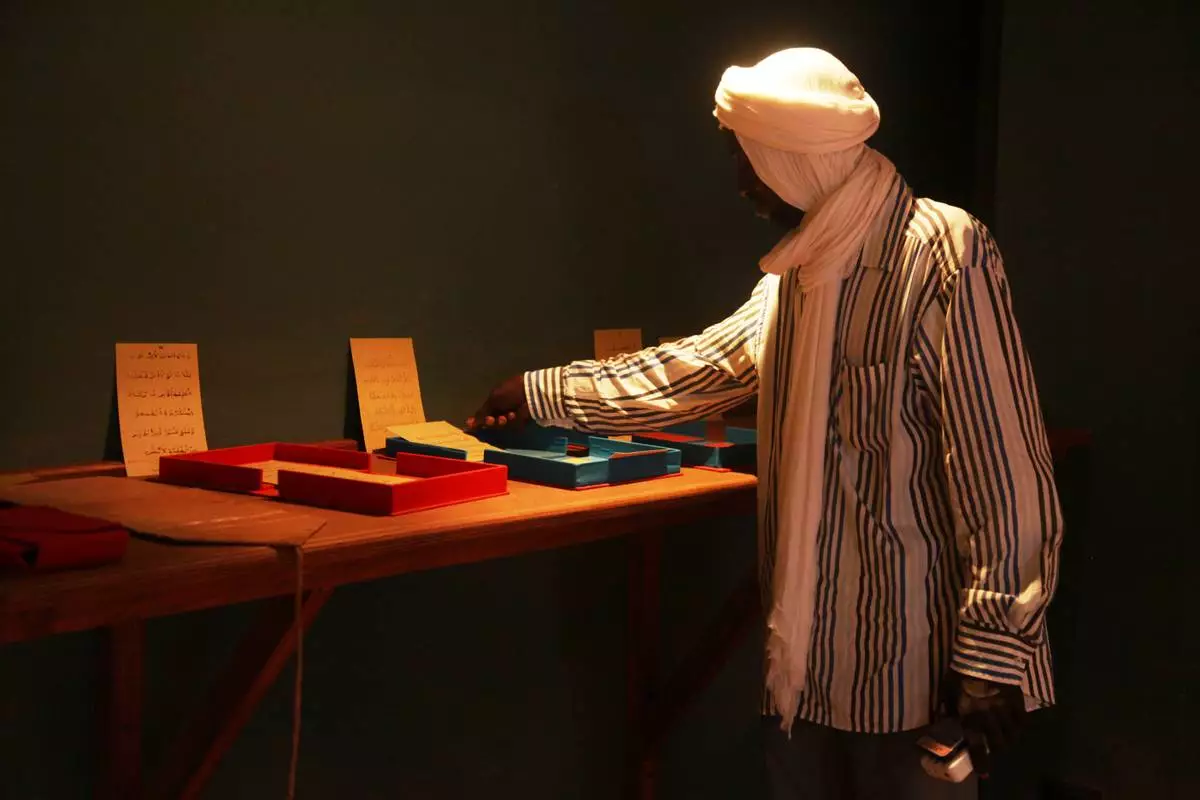
An employee of the Ahmed Baba Institute of Higher Islamic Studies and Research displays manuscripts at the exhibition hall in Timbuktu, Mali, Sept. 4, 2025. (AP Photo/Baba Ahmed)
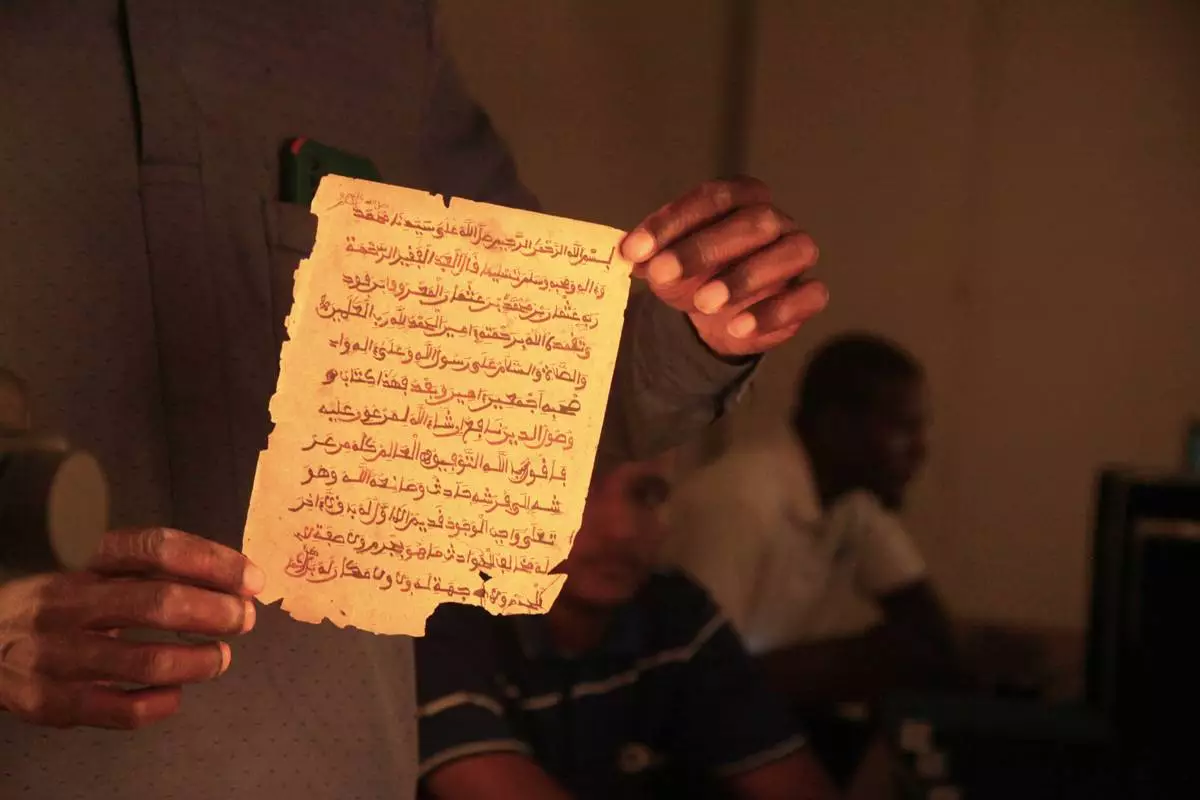
An employee of the Ahmed Baba Institute of Higher Islamic Studies and Research displays manuscripts at the exhibition hall in Timbuktu, Mali, Sept. 4, 2025. (AP Photo/Baba Ahmed)

An employee displays a manuscript at the Ahmed Baba Institute of Higher Islamic Studies and Research in Timbuktu, Mali, Sept. 4, 2025. (AP Photo/Baba Ahmed)
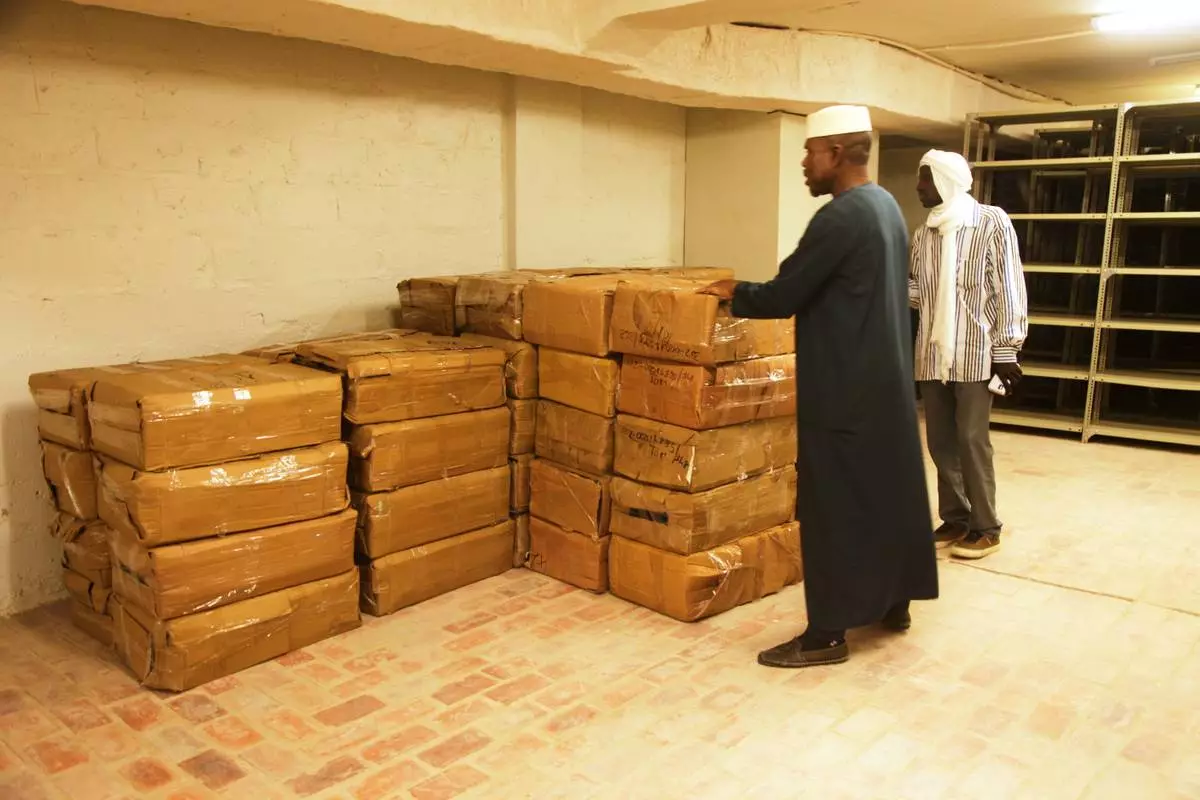
An employee displays a manuscript at the Ahmed Baba Institute of Higher Islamic Studies and Research in Timbuktu, Mali, Sept. 4, 2025. (AP Photo/Baba Ahmed)

Abdoulaye Cissé, Left, an employee of the Ahmed Baba Institute of Higher Islamic Studies and Research, inspects crates containing manuscripts in Timbuktu, Mali, Sept. 4, 2025. (AP Photo/Baba Ahmed)
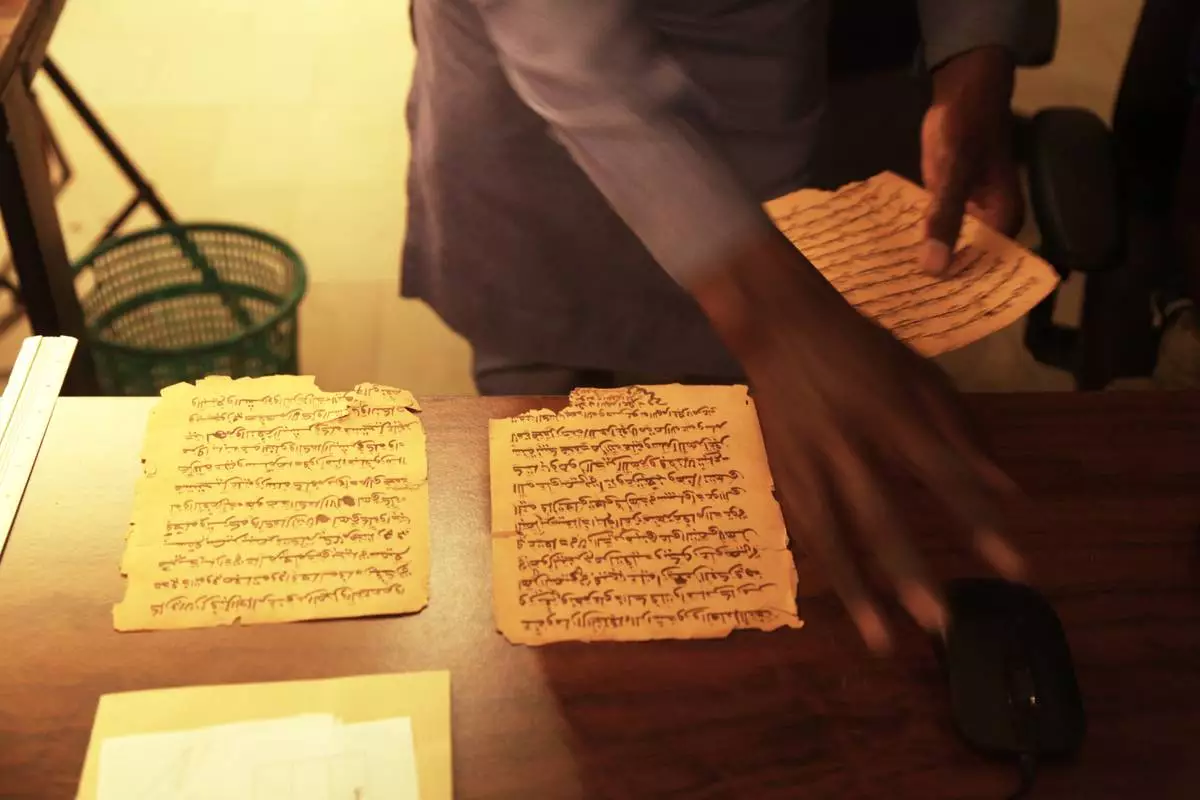
Abdoulaye Cissé, Left, an employee of the Ahmed Baba Institute of Higher Islamic Studies and Research, inspects crates containing manuscripts in Timbuktu, Mali, Sept. 4, 2025. (AP Photo/Baba Ahmed)

Manuscript pages are being scan at the Ahmed Baba Institute of Higher Islamic Studies and Research in Timbuktu, Mali, Sept. 4, 2025. (AP Photo/Baba Ahmed)
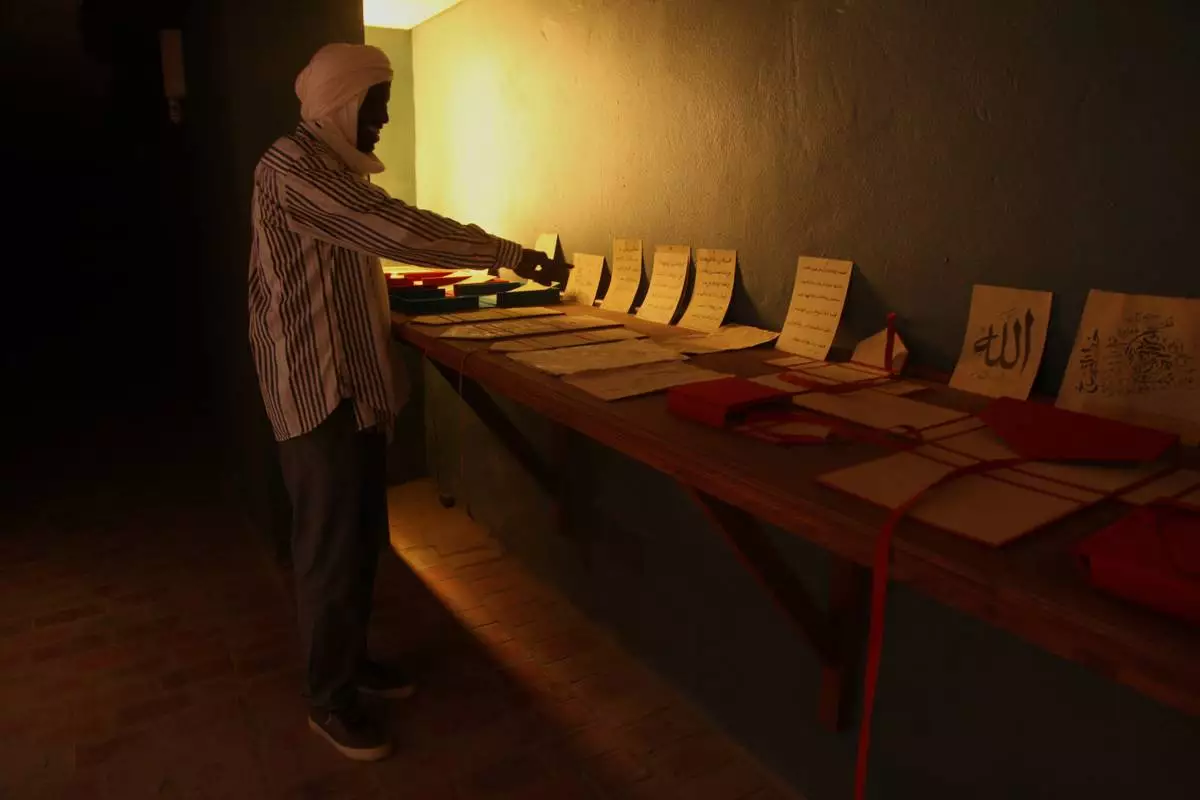
Manuscript pages are being scan at the Ahmed Baba Institute of Higher Islamic Studies and Research in Timbuktu, Mali, Sept. 4, 2025. (AP Photo/Baba Ahmed)

An employee of the Ahmed Baba Institute of Higher Islamic Studies and Research displays manuscripts at the exhibition hall in Timbuktu, Mali, Sept. 4, 2025. (AP Photo/Baba Ahmed)
An employee of the Ahmed Baba Institute of Higher Islamic Studies and Research displays manuscripts at the exhibition hall in Timbuktu, Mali, Sept. 4, 2025. (AP Photo/Baba Ahmed)

PROVO, Utah (AP) — The man accused of killing Charlie Kirk on a Utah college campus was back in court Friday as a state judge denied some efforts by his attorneys to limit public access to certain documents while not ruling out the possibility of closing portions of an upcoming hearing.

The outcome sets the stage for an April hearing in which attorneys for Tyler Robinson will make their case to exclude TV cameras, microphones and photographers from the courtroom.

Judge Tony Graf has been weighing the public’s right to know details about the case against concerns by defense attorneys that the media attention could undermine Robinson’s right to a fair trial. Prosecutors, Kirk’s widow and attorneys for news organizations have urged Graf to keep the proceedings open.

Prosecutors intend to seek the death penalty for Robinson, 22, who is charged with aggravated murder in the Sept. 10 shooting of the conservative activist on the Utah Valley University campus in Orem. They have said DNA evidence connects Robinson to the killing.

Robinson has not yet entered a plea.

Attorneys on Friday debated whether the defense's written request to exclude cameras, which was classified by the court as private, should be made public.

Graf said the defense failed to make its case to keep the motion private but that he will continue “balancing all the factors” when deciding which portions of the upcoming hearing may be closed.

Staci Visser, an attorney for Robinson, told the judge that the defense is not arguing in the court of public opinion.

“There seems to be an idea that flooding the public sphere with information from this courtroom will somehow dispel conspiracy theories or shift public narratives. That, in and of itself, is concerning to the defense,” Visser said. “All we should be worried about is protecting what happens in this courtroom.”

Robinson’s defense team went on to say that the April hearing will involve discussions about prejudicial pretrial publicity — for example, evidence that has yet to be admitted, confessions, personal opinions about guilt or public statements that would otherwise be inadmissible in court.

“We don’t want to be in that position of bringing in front of the court all of this prejudicial information and having the press regurgitate it yet one more time, and reinflicting a wound that we’re seeking to avoid,” defense attorney Michael Burt said.

Christopher Ballard, a prosecutor with the Utah County Attorney’s Office, dismissed those arguments. He said careful questioning during jury selection and tools like expanding the jury pool can ensure a defendant gets a fair trial.

“So just saying that this a content tornado or there's been a barrage of media coverage doesn't necessarily mean that there is going to be prejudice to the defendant,” Ballard said.

Ballard noted that most of the evidence that will be discussed at the April 17 hearing is already public, so most of it should be open.

Coalitions of national and local news organizations, including The Associated Press, are fighting to preserve media access in the case.

Media access has been a focal point of several recent hearings, with the judge placing temporary restrictions on local TV stations for showing Robinson's shackles in violation of a court order and filming close-up shots that might allow viewers to interpret what he was discussing with his attorneys.

The judge also has prevented full video recordings of Kirk’s shooting from being shown in court after defense attorneys argued the graphic footage would interfere with a fair trial. An estimated 3,000 people attended the outdoor rally to hear Kirk, a co-founder of Turning Point USA who helped mobilize young people to vote for President Donald Trump.

Defense attorney Staci Visser, left, and defendant Tyler Robinson, accused in the fatal shooting of conservative activist Charlie Kirk, attend a hearing in 4th District Court, Friday, March. 13, 2026, in Provo, Utah. (Laura Seitz/The Deseret News via AP, Pool)

Defense attorney Staci Visser, left, and defendant Tyler Robinson, accused in the fatal shooting of conservative activist Charlie Kirk, attend a hearing in 4th District Court, Friday, March. 13, 2026, in Provo, Utah. (Laura Seitz/The Deseret News via AP, Pool)

Prosecuting and defense attorneys and defendant Tyler Robinson, right, accused in the fatal shooting of conservative activist Charlie Kirk, attend a hearing in 4th District Court, Friday, March. 13, 2026, in Provo, Utah. (Laura Seitz/The Deseret News via AP, Pool)

Prosecuting and defense attorneys and defendant Tyler Robinson, right, accused in the fatal shooting of conservative activist Charlie Kirk, attend a hearing in 4th District Court, Friday, March. 13, 2026, in Provo, Utah. (Laura Seitz/The Deseret News via AP, Pool)

Prosecutor Chad Grunander, center, listens, Friday, March. 13, 2026, in 4th District Court in Provo, Utah, during a hearing for Tyler Robinson, who is accused in the fatal shooting of conservative activist Charlie Kirk. (Laura Seitz/The Deseret News via AP, Pool)

Prosecutor Chad Grunander, center, listens, Friday, March. 13, 2026, in 4th District Court in Provo, Utah, during a hearing for Tyler Robinson, who is accused in the fatal shooting of conservative activist Charlie Kirk. (Laura Seitz/The Deseret News via AP, Pool)

Attorney Richard Novak, left, and defendant Tyler Robinson, accused in the fatal shooting of conservative activist Charlie Kirk, attend a hearing, in 4th District Court, Friday, March. 13, 2026, in Provo, Utah. (Laura Seitz/The Deseret News via AP, Pool

Attorney Richard Novak, left, and defendant Tyler Robinson, accused in the fatal shooting of conservative activist Charlie Kirk, attend a hearing, in 4th District Court, Friday, March. 13, 2026, in Provo, Utah. (Laura Seitz/The Deseret News via AP, Pool

Fourth District Court Judge Tony Graf presides, Friday, March. 13, 2026, in 4th District Court in Provo, Utah, during a hearing for Tyler Robinson, who is accused in the fatal shooting of conservative activist Charlie Kirk. (Laura Seitz/The Deseret News via AP, Pool)

Fourth District Court Judge Tony Graf presides, Friday, March. 13, 2026, in 4th District Court in Provo, Utah, during a hearing for Tyler Robinson, who is accused in the fatal shooting of conservative activist Charlie Kirk. (Laura Seitz/The Deseret News via AP, Pool)

FILE - Tyler Robinson, who is accused of fatally shooting Charlie Kirk, appears during a hearing in Fourth District Court, in Provo, Utah, Dec. 11, 2025. (Rick Egan/The Salt Lake Tribune via AP, Pool, File)

FILE - Tyler Robinson, who is accused of fatally shooting Charlie Kirk, appears during a hearing in Fourth District Court, in Provo, Utah, Dec. 11, 2025. (Rick Egan/The Salt Lake Tribune via AP, Pool, File)

FILE - Fourth District Court Judge Tony Graf presides over a hearing for Tyler Robinson, accused in the fatal shooting of conservative activist Charlie Kirk, in 4th District Court, Feb. 3, 2026, in Provo, Utah. (Trent Nelson/The Salt Lake Tribune via AP, Pool, File)

FILE - Fourth District Court Judge Tony Graf presides over a hearing for Tyler Robinson, accused in the fatal shooting of conservative activist Charlie Kirk, in 4th District Court, Feb. 3, 2026, in Provo, Utah. (Trent Nelson/The Salt Lake Tribune via AP, Pool, File)

Recommended Articles