COLOGNE, Germany--(BUSINESS WIRE)--Nov 17, 2025--
TRU Simulation + Training Inc., a Textron Inc. (NYSE:TXT) company, and an affiliate of Textron Aviation Inc. and Bell Textron Inc. today announced its Bell 525 Full Flight Simulator (FFS) located at the Bell Training Academy received Interim Level C qualification from the Federal Aviation Administration (FAA). Bell Textron Inc. has designed and will manufacture the Bell 525 helicopter. By achieving this milestone, pilots can earn more flight hours on the Bell 525 platform ahead of the rotorcraft’s expected FAA type certification.
This press release features multimedia. View the full release here: https://www.businesswire.com/news/home/20251117520706/en/
“The accuracy and realism of our Flight Simulation Devices play a crucial role in ensuring that pilots can effectively translate their training into real-world scenarios,” said Jerry Messaris, vice president and general manager, TRU Simulation. “This qualification achievement ensures pilots can practice their skills in a controlled environment as the 525 program continues to progress.”
The simulator is outfitted with high-fidelity visual systems, realistic cockpit environments and advanced motion platforms, all of which combine to create a training experience that closely mirrors actual flight conditions. Designed to provide pilots with an immersive and highly realistic training experience, it accurately replicates the performance and handling characteristics of Bell's 525 helicopters. Utilizing cutting-edge technology, TRU Simulation ensures that pilots can sharpen their skills and enhance their readiness for real-world operations.
About TRU Simulation
TRU Simulation + Training Inc., a Textron Inc. company and an affiliate of Textron Aviation Inc. and Bell Textron Inc. is a leading provider of high-fidelity training devices and full-motion simulators for the aviation industry. With a strong commitment to excellence and innovation, TRU Simulation has been at the forefront of flight simulation technology for over a decade. Our customized simulator solutions empower pilots to navigate the skies confidently, while our state-of-the-art technology ensures safe and realistic training experiences. For more information, visit www.TRUSimulation.com.
About Bell
Thinking above and beyond is what we do. For more than 80 years, we’ve been reimagining the experience of flight – and where it can take us.
We are pioneers. We were the first to break the sound barrier and to certify a commercial helicopter. We were aboard NASA’s first lunar mission and brought advanced tiltrotor systems to market. Today, we’re defining the future of on-demand mobility.
Headquartered in Fort Worth, Texas – as a wholly-owned subsidiary of Textron Inc., – we have strategic locations around the globe. And with nearly one quarter of our workforce having served, helping our military achieve their missions is a passion of ours.
Above all, our breakthrough innovations deliver exceptional experiences to our customers. Efficiently. Reliably. And always, with safety at the forefront.
About Textron Inc.
Textron Inc. is a multi-industry company that leverages its global network of aircraft, defense, industrial and finance businesses to provide customers with innovative solutions and services. Textron is known around the world for its powerful brands such as Bell, Cessna, Beechcraft, Pipistrel, Jacobsen, Kautex, Lycoming, E-Z-GO, and Textron Systems. For more information, visit: www.textron.com.
Certain statements in this press release may project revenues or describe strategies, goals, outlook or other non-historical matters; these forward-looking statements speak only as of the date on which they are made, and we undertake no obligation to update them. These statements are subject to known and unknown risks, uncertainties, and other factors that may cause our actual results to differ materially from those expressed or implied by such forward-looking statements.

TRU Simulation’s Bell 525 Flight Simulator receives FAA Interim Level C qualification
DUBAI, United Arab Emirates (AP) — The Pentagon has released the names of four of the six service members were killed in the Iran war, saying they died in a drone strike in Kuwait.
All four Army Reserve soldiers were killed Sunday when a drone hit a command center in Port Shuaiba, Kuwait. That was just a day after the U.S. and Israel launched its military campaign against Iran, which launched retaliatory strikes.
All were assigned to the 103rd Sustainment Command in Des Moines, lowa.
Killed were Capt. Cody A. Khork, 35, of Winter Haven, Florida; Sgt. 1st Class Noah L. Tietjens, 42, of Bellevue, Nebraska; Sgt. 1st Class Nicole M. Amor, 39, of White Bear Lake, Minnesota; and Spc. Declan J.
THIS IS A BREAKING NEWS UPDATE. AP’s earlier story follows below.
DUBAI, United Arab Emirates (AP) — Israel said it launched airstrikes against Iranian missile launchers and a nuclear research site Tuesday, and Iran struck back against Israel and across the Gulf region, targeting U.S. embassies and disrupting energy supplies and travel.
Four days into a war that President Donald Trump suggested would last several weeks or perhaps longer, nearly 800 people have been killed in Iran, including some Trump said he had considered as possible future leaders of the country.
Explosions rang out Tuesday in Tehran and in Lebanon, where Israel said it retaliated against Hezbollah militants. The American embassy in Saudi Arabia and the U.S. consulate in the United Arab Emirates came under drone attacks. Iran has fired dozens of ballistic missiles at Israel, though most of the incoming fire has been intercepted. Eleven people in Israel have been killed since the conflict began.
The spiraling nature of the war raised questions about when and how it would end.
The administration has offered various objectives, including destroying Iran’s missile capabilities, wiping out its navy, preventing it from obtaining a nuclear weapon and ensuring it cannot continue to support allied armed groups.
While the initial U.S.-Israeli strikes killed Iranian Supreme Leader Ayatollah Ali Khamenei and Trump urged Iranians to overthrow their government, senior administration officials have since said regime change was not the goal.
Trump on Tuesday seemed to downplay chances of the war ending Iran's theocratic rule, saying that “someone from within” the Iranian regime might be the best choice to take power once the U.S.-Israel campaign is finished.
Speaking Tuesday from the Oval Office, Trump said Reza Pahlavi, the exiled son of Iran’s toppled shah, is not someone that his administration has considered in depth to take over.
As far as possible leaders inside Iran, “the people we had in mind are dead,” Trump said.
“I guess the worst case would be do this, and then somebody takes over who’s as bad as the previous person, right? That could happen," Trump said. "We don’t want that to happen.”
Iran’s leaders are scrambling to replace Khamenei, who ruled the country for 37 years. It’s only the second time since the 1979 Islamic Revolution that a new supreme leader is being chosen. Potential candidates range from hard-liners committed to confrontation with the West to reformists who seek diplomatic engagement.
Information coming out of Iran has been limited because of poor communications, round-the-clock airstrikes and tight restrictions on journalists. But across Iran’s capital, aircraft were heard overhead, and explosions rang out.
The Israeli military said it conducted a wave of airstrikes on sites that produce and store ballistic missiles, in Tehran and Isfahan. It also said it destroyed what it called Iran’s secret, underground nuclear headquarters. Without providing evidence, it said the site was used for scientific research “to develop a key component for nuclear weapons.”
“The regime attempted to rebuild its efforts and conceal them, thinking we wouldn’t notice. They were mistaken,” said Israeli military spokesman Brig. Gen. Effie Defrin.
There was no immediate public comment from the U.S. or Iran about the site Israel named.
Iran has said it has not enriched uranium since June, though it has maintained its right to do so and says its nuclear program is peaceful.
The United Nations’ nuclear watchdog said Iran’s Natanz nuclear enrichment site had sustained “some recent damage,” though there was “no radiological consequence expected.” The U.S. hit Natanz during the 12-day war in June, when Israeli and American strikes greatly weakened Iran's nuclear program.
New rounds of U.S. and Israeli airstrikes rattled Iran.
“Since midnight, I and my wife are hearing sound of explosions,” said Ali Amoli, an engineer living in north Tehran.
Satellite images published Tuesday by Colorado-based company Vantor showed the domed roof of Iran’s presidential complex in Tehran had been destroyed, supporting Israel’s claim of an overnight strike. Iran did not acknowledge the damage or report any casualties.
A north Tehran resident who spoke on condition of anonymity for fear of retaliation described growing fears in the capital as it comes under heavy bombardment. The resident said most stores in the normally bustling area of Tajrish were closed, though bakeries and supermarkets remained open.
An attack from two drones on the U.S. Embassy in Riyadh caused a “limited fire,” according to the Saudi Arabian Defense Ministry, and the embassy urged Americans to avoid the compound.
An Iranian drone struck a parking lot outside the U.S. consulate in Dubai, sparking a small fire, Secretary of State Marco Rubio said in Washington. He said all personnel were accounted for.
The United Arab Emirates said it has intercepted the vast majority of more than 1,000 Iranian missile and drone attacks against it.
U.S. embassies in Saudi Arabia, Kuwait and Lebanon said they were closed to the public.
The U.S. State Department ordered the evacuation of non-emergency personnel and family in Kuwait, Bahrain, Iraq, Qatar, Jordan and the United Arab Emirates. The U.S. also urged its citizens to leave more than a dozen Middle Eastern countries, though with much of the airspace closed, many were stranded.
The State Department said Tuesday it’s preparing military and charter flights for Americans who want to leave the Middle East. Several other countries also arranged evacuation flights for their citizens.
The U.S.-Israeli strikes have killed at least 787 people in Iran, according to the Red Crescent Society. In Lebanon, where Israel launched retaliatory strikes on the Iranian-supported militant group Hezbollah, 50 people were killed, including seven children, Lebanon's health ministry said.
The U.S. military has confirmed six deaths of American service members. In addition, three people were killed in the United Arab Emirates, and one each in Kuwait and Bahrain.
Turkish Foreign Minister Hakan Fidan on Tuesday criticized Iran's attacks against Gulf neighbors that had worked to prevent war as an “incredibly flawed strategy” that threatened to widen the war if those states decide to retaliate.
This story has been updated to correct that communications in Iran are poor, but that the internet isn't shut down. It also clarifies that more than one drone hit the U.S. Embassy in Saudi Arabia. Some instances referred to just one drone.
Becatoros reported from Athens, Greece, and Magdy from Cairo. Associated Press writers Seung Min Kim, Michelle Price and Konstantin Toropin in Washington, David Rising in Bangkok, Melanie Lidman in Tel Aviv, Israel, Hallie Golden in Seattle, Giovanna Dell'Orto in Miami, and Suzan Fraser in Ankara, Turkey, contributed to this report.
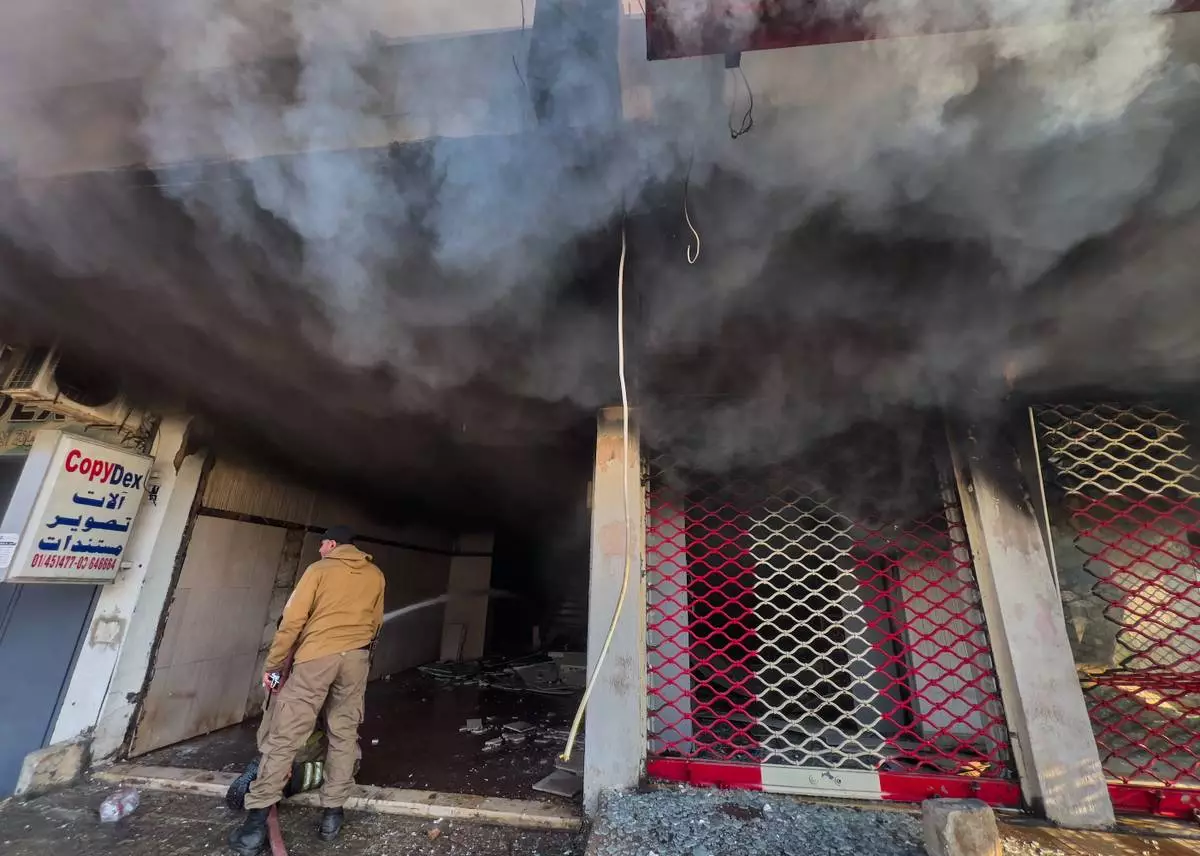
A firefighter extinguishes fire at a building that was hit by an Israeli airstrike in Dahiyeh, a southern suburb of Beirut, Lebanon, Tuesday, March 3, 2026. (AP Photo/Hussein Malla)
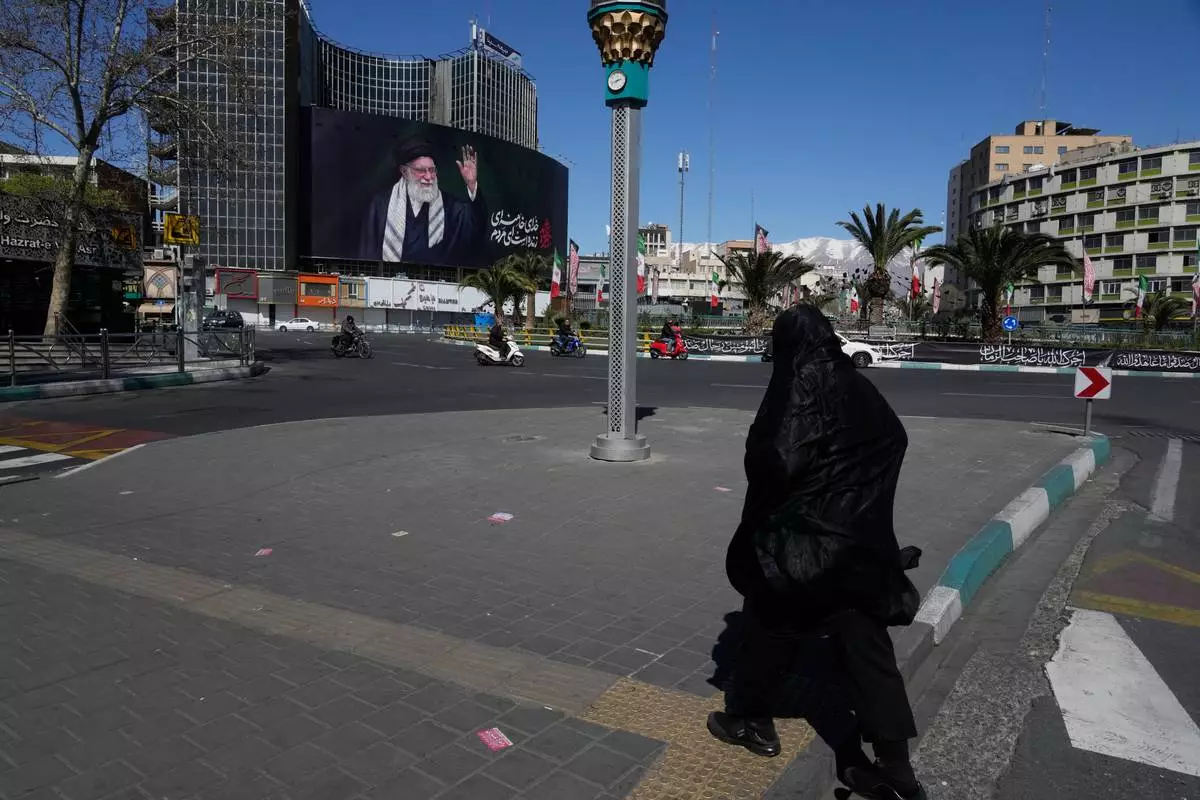
A woman crosses almost deserted square with a billboard at rear showing a portrait of the late Iranian Supreme Leader Ayatollah Ali Khamenei, who was killed in the U.S.–Israeli military campaign, in Tehran, Iran, Tuesday, March 3, 2026. (AP Photo/Vahid Salemi)
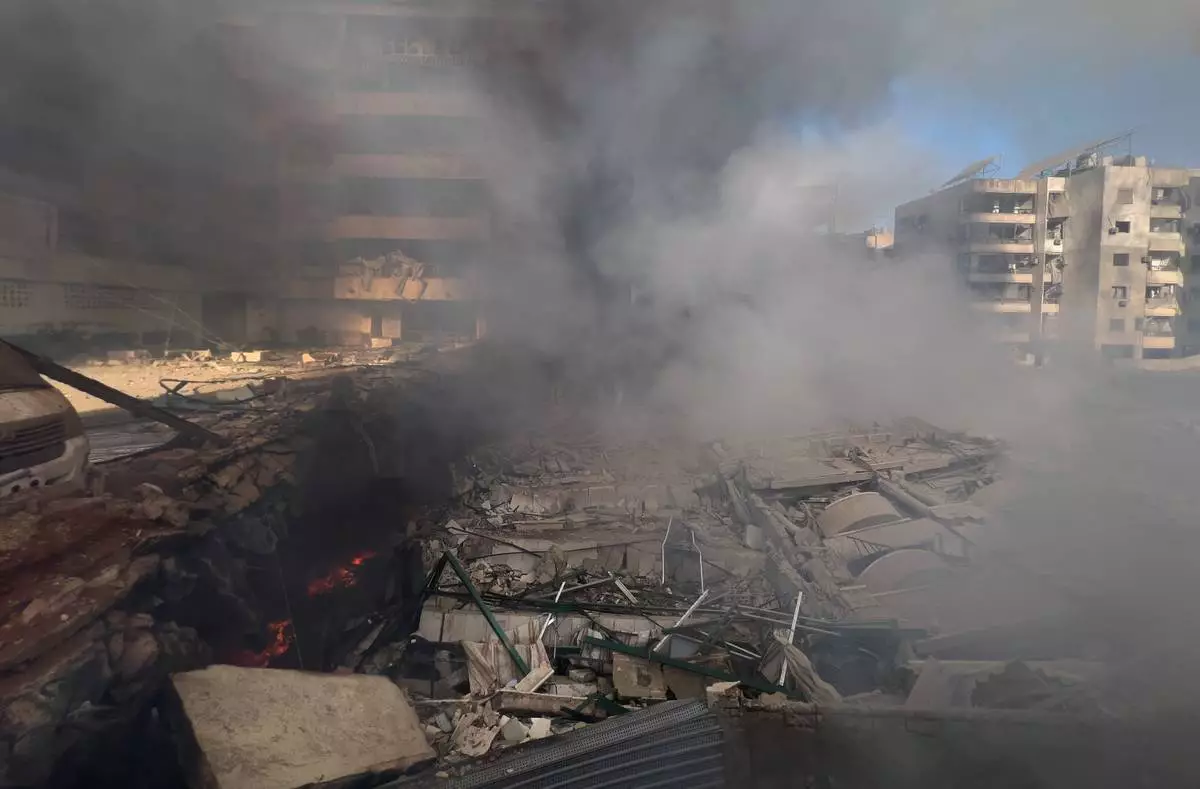
Smoke rises from a destroyed building that was hit by an Israeli airstrike in Dahiyeh, a southern suburb of Beirut, Lebanon, Tuesday, March 3, 2026. (AP Photo/Hussein Malla)
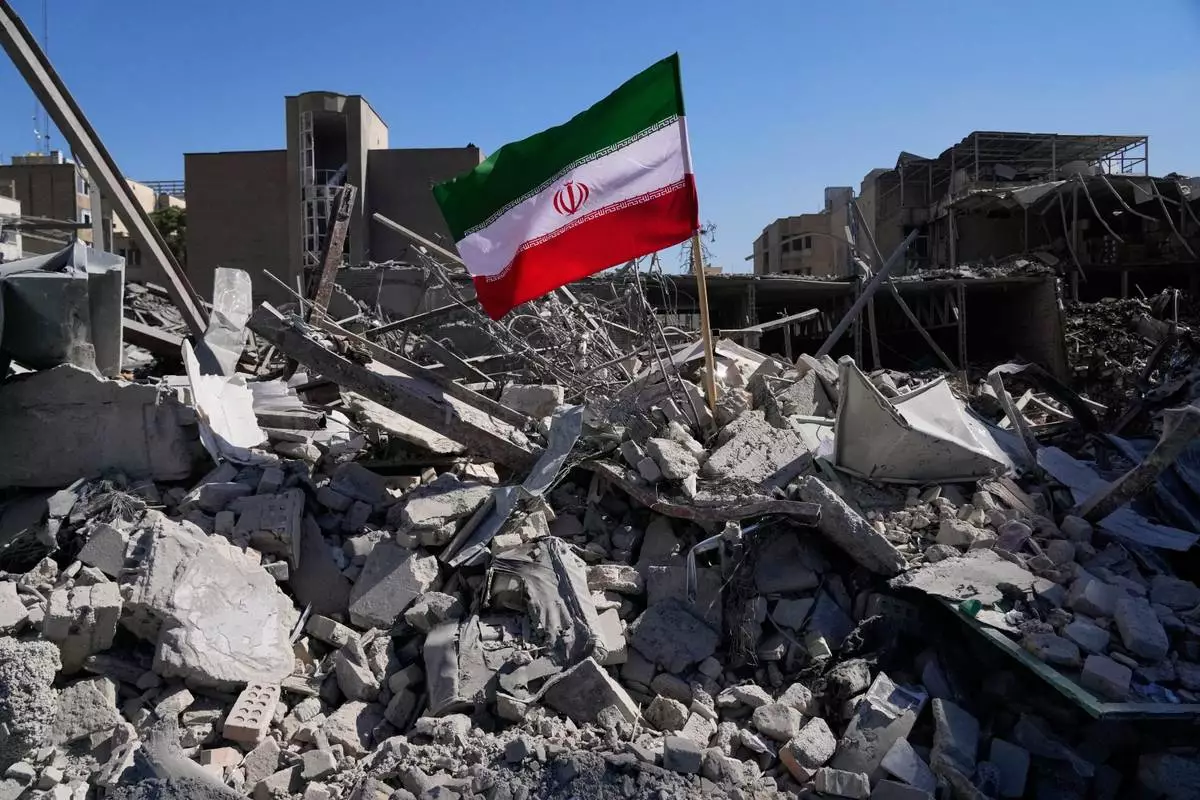
An Iranian flag is placed among the ruins of a police station struck Monday during the U.S.–Israeli military campaign in Tehran, Iran, Tuesday, March 3, 2026. (AP Photo/Vahid Salemi)
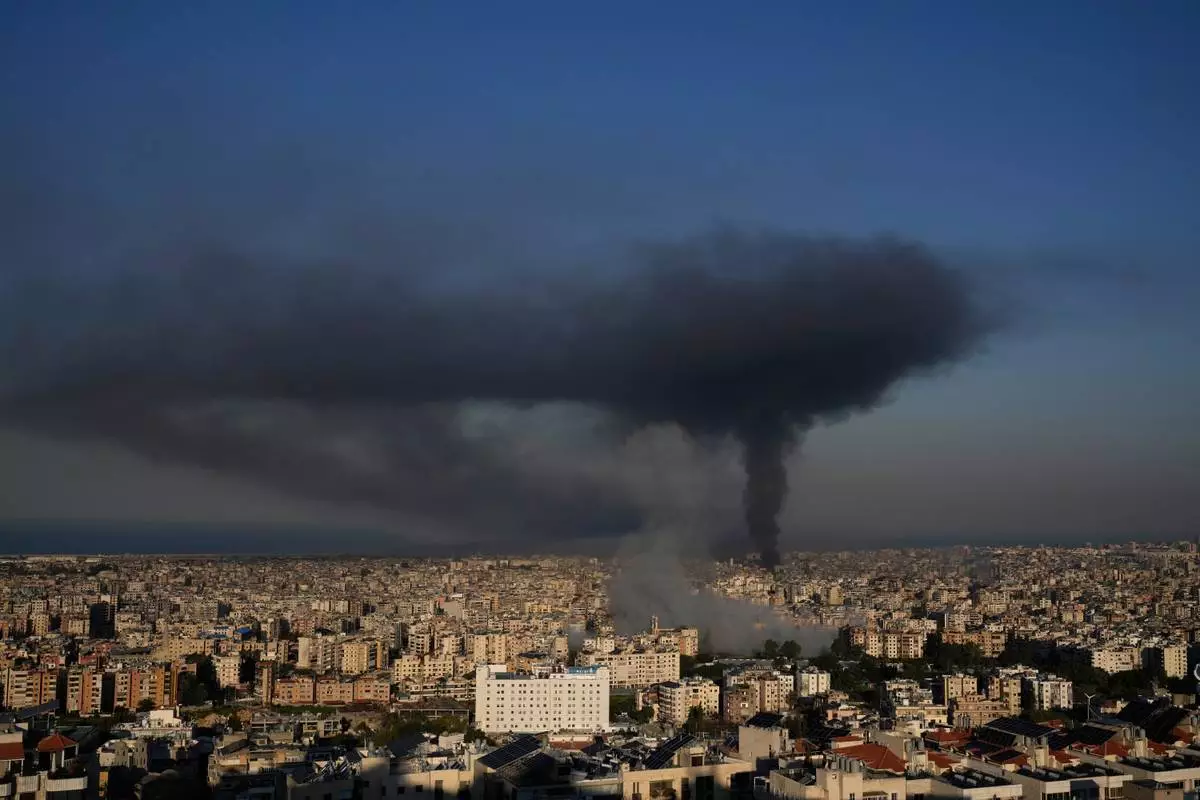
Smoke rises from Israeli airstrikes in Dahiyeh, a southern suburb of Beirut, Lebanon, Tuesday, March 3, 2026. (AP Photo/Hussein Malla)

Jewish men covered in prayer shawls pray in an underground parking garage as a precaution against possible Iranian missile attacks, in Tel Aviv, Israel, Tuesday, March 3, 2026. (AP Photo/Oded Balilty)
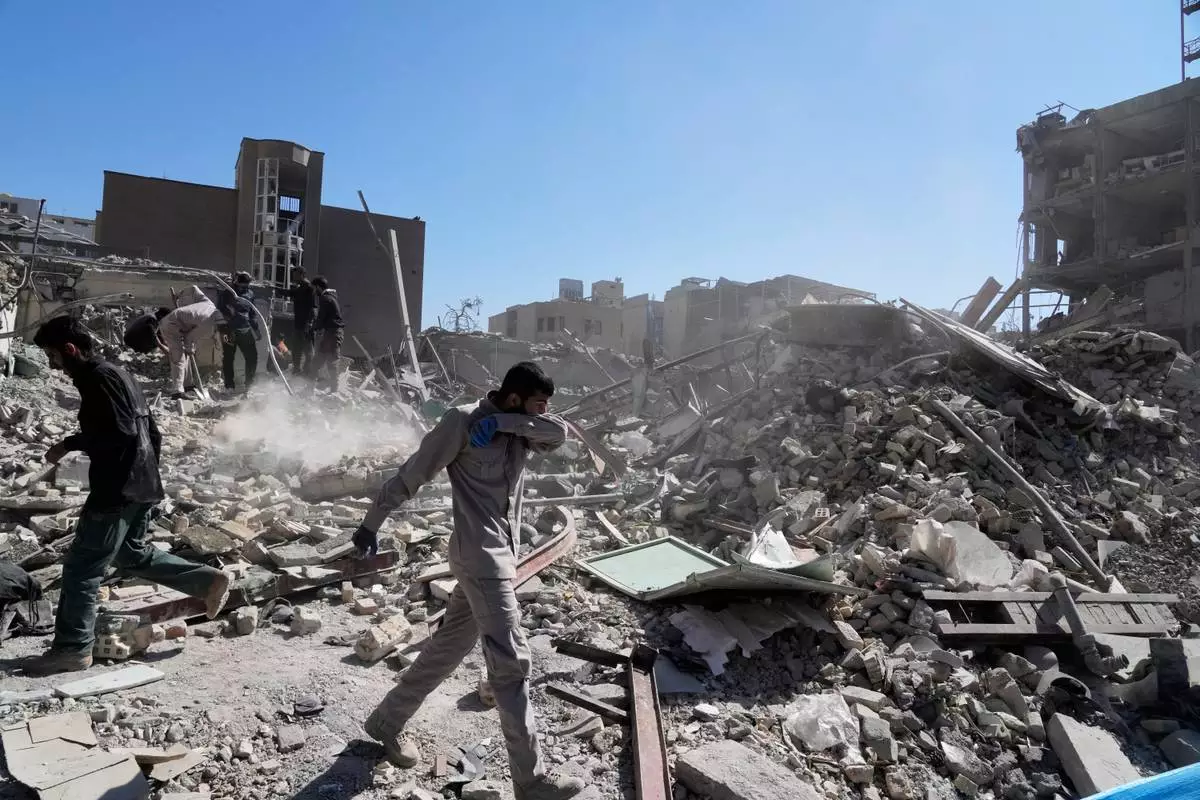
A group of men inspects the ruins of a police station struck Monday amid the U.S.–Israeli military campaign in Tehran, Iran, Tuesday, March 3, 2026. (AP Photo/Vahid Salemi)
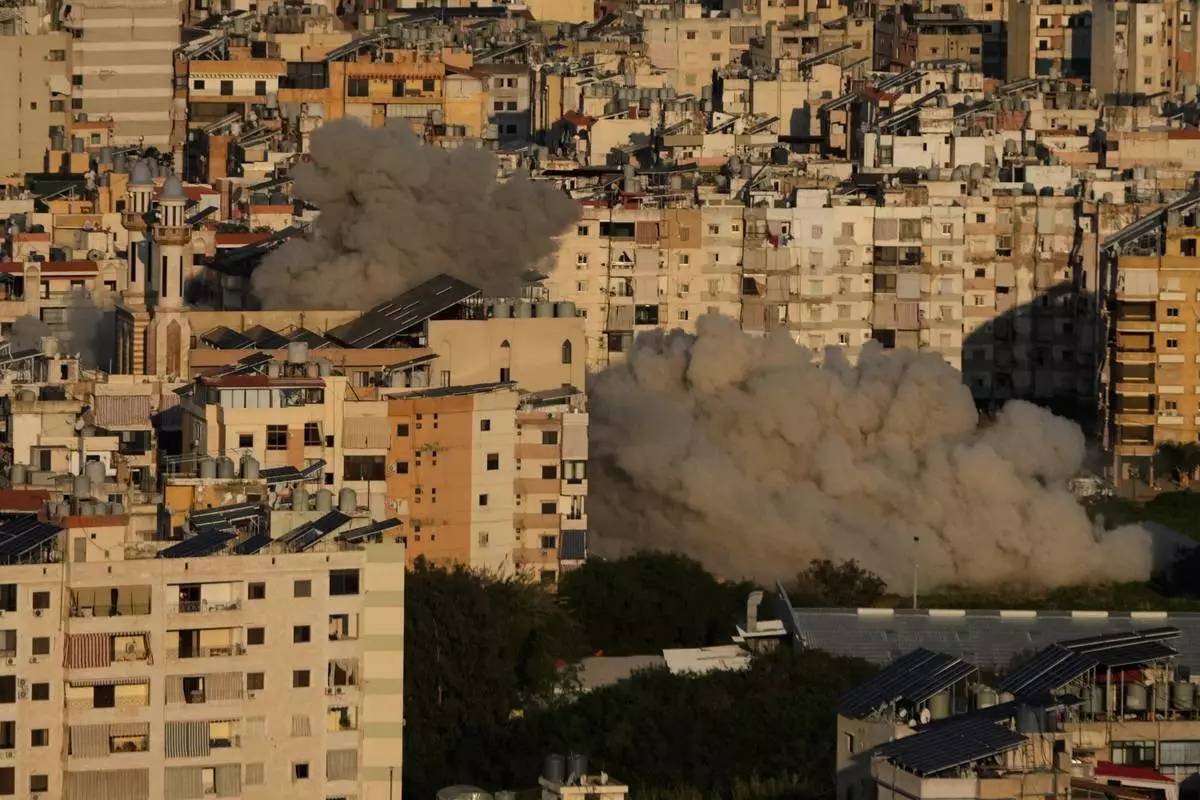
Smoke rises from Israeli airstrikes in Dahiyeh, a southern suburb of Beirut, Lebanon, Tuesday, March 3, 2026. (AP Photo/Hussein Malla)
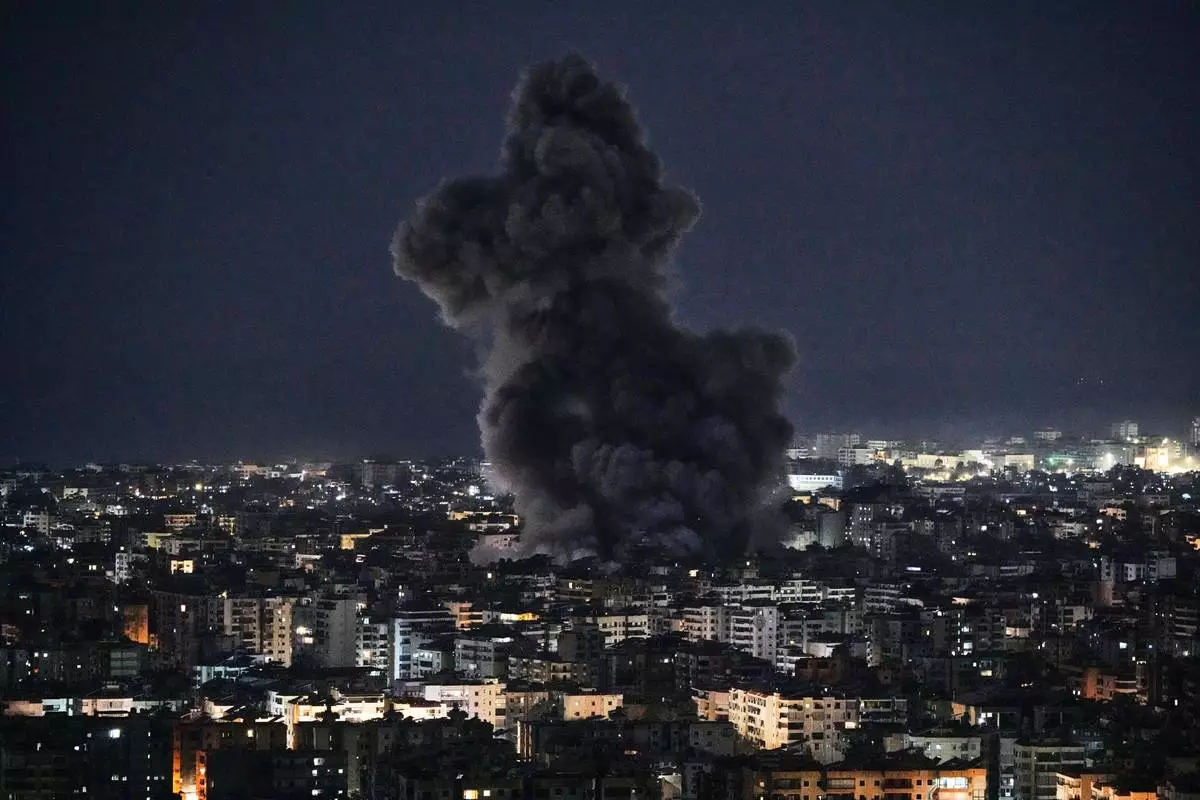
Smoke rises from Israeli airstrikes in Dahiyeh, a southern suburb of Beirut, Lebanon, early Tuesday, March 3, 2026. (AP Photo/Bilal Hussein)
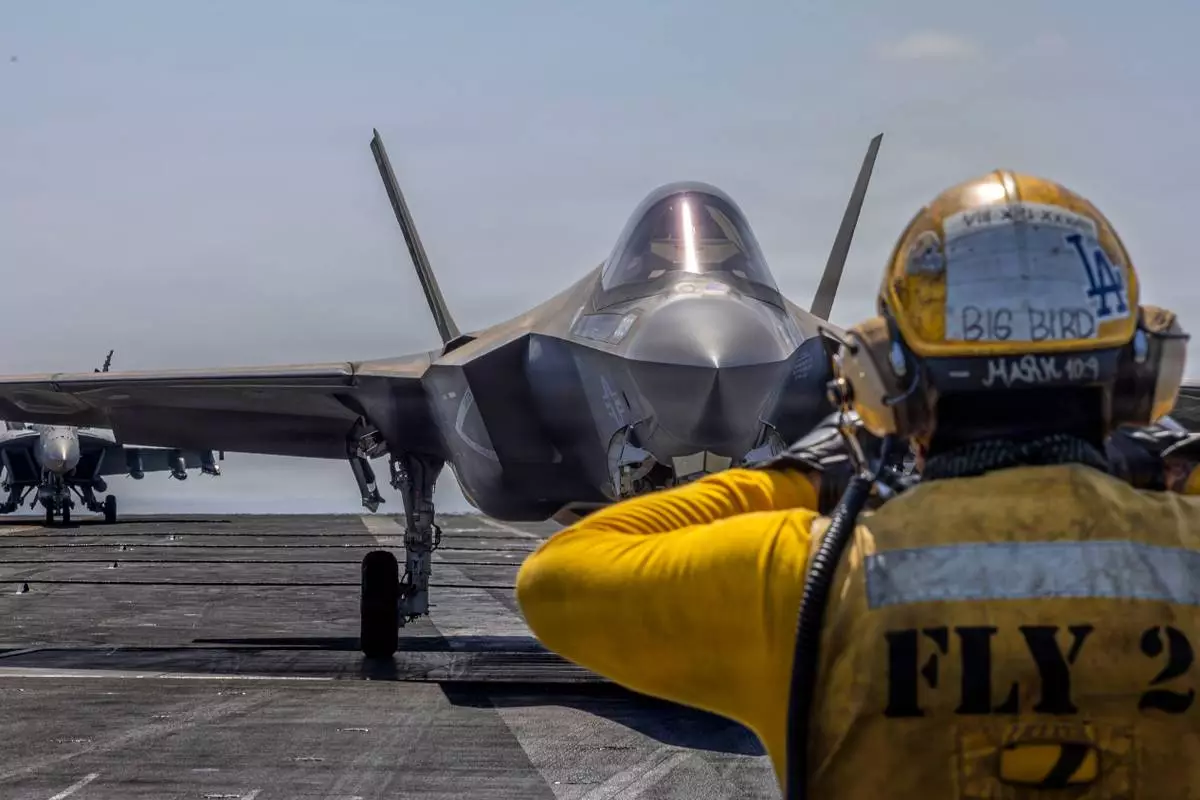
This image provided by U.S. Central Command shows a F-35C Lightning II preparing for launch on the flight deck of the USS Abraham Lincoln (CVN 72) in support of Operation Epic Fury on Monday, March 2, 2026. (U.S. Navy via AP)
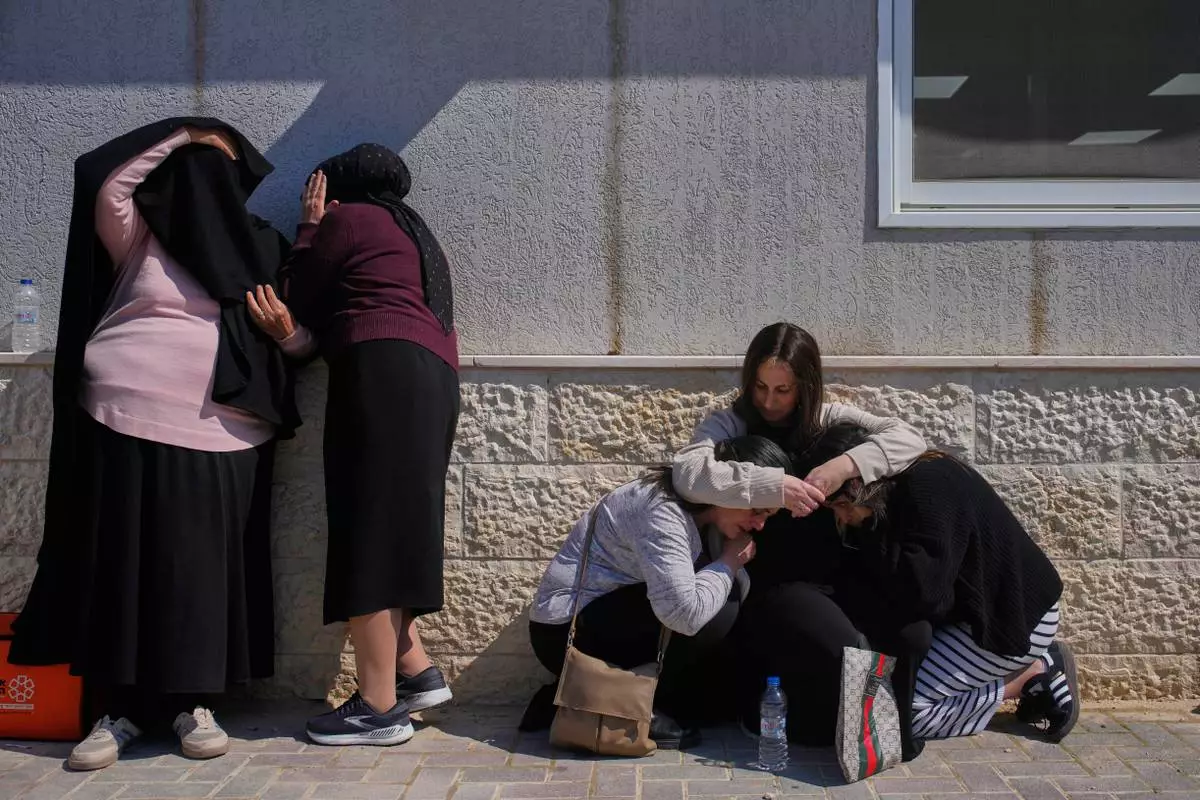
Mourners take cover while air-raid sirens warn of incoming missiles launched by Iran toward Israel during the funeral of Sarah Elimelech and her daughter Ronit who were killed in an Iranian missile attack, in Beit Shemesh, Israel, Monday, March 2, 2026. (AP Photo/Ohad Zwigenberg)
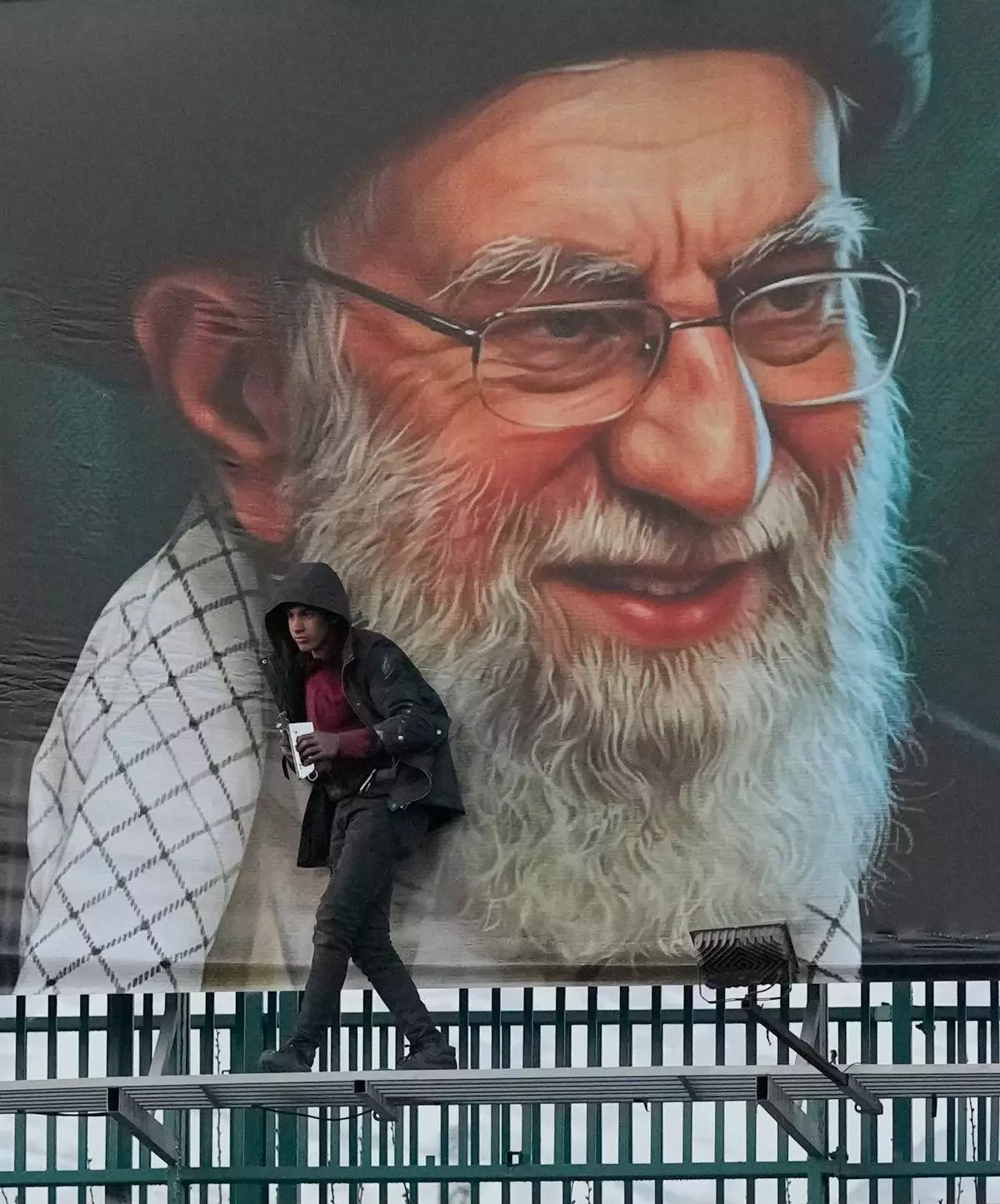
A worker instals a billboard on an overpass containing a portrait of the late Iranian Supreme Leader Ayatollah Ali Khamenei, who was killed during the ongoing joint U.S.-Israeli military campaign, in Tehran, Iran, Monday, March 2, 2026. (AP Photo/Vahid Salemi)
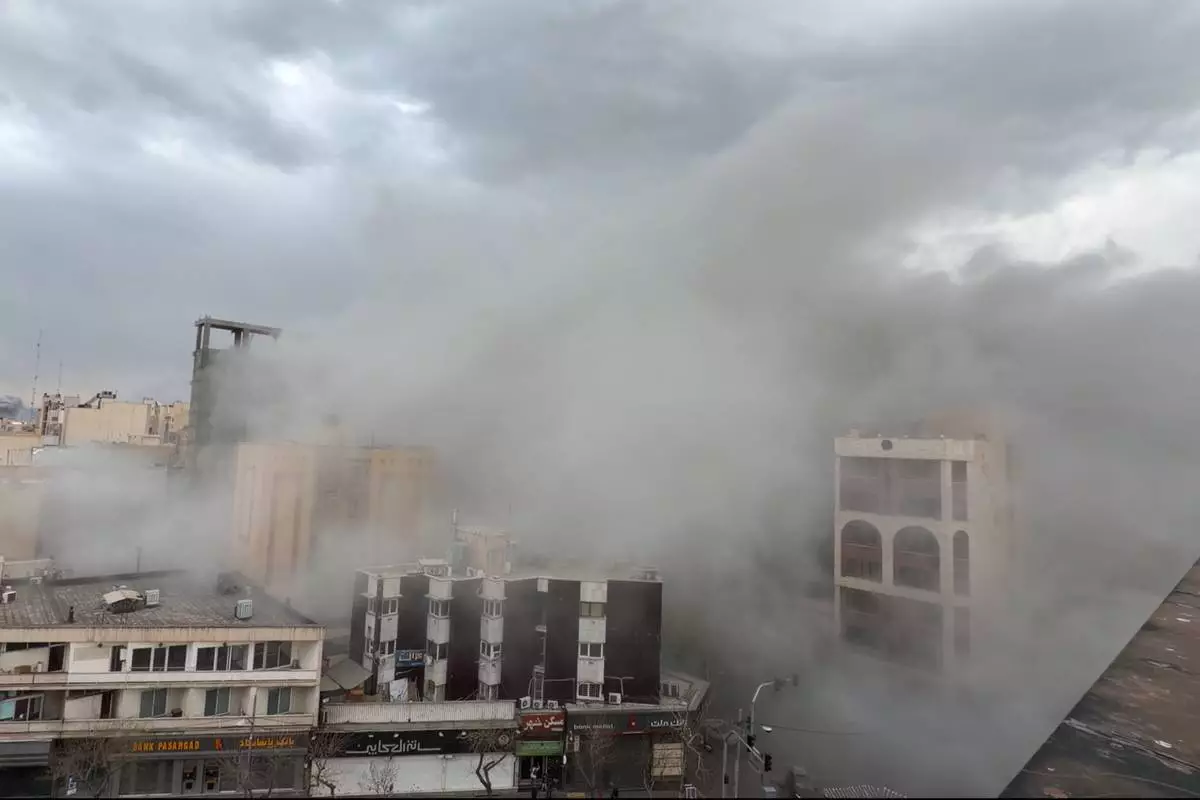
Smoke engulfs a street after a strike in Tehran, Iran, Monday, March 2, 2026. (AP Photo/Mohsen Ganji)