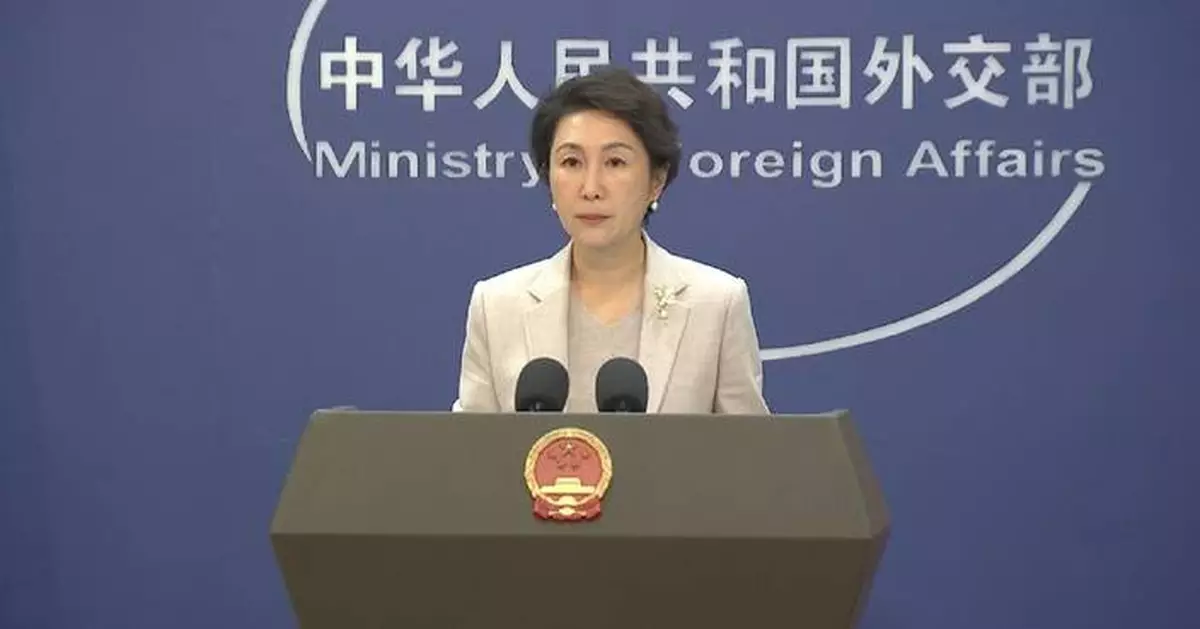
Japan must stop crossing the red line and playing with fire on the Taiwan question, Chinese Foreign Ministry spokeswoman Mao Ning said at a press briefing in Beijing on Monday.
She made the remarks in response to the recent wrong statements by some Japanese officials on the Taiwan question.
"Regarding Japanese Prime Minister Sanae Takaichi's erroneous remarks concerning Taiwan, China has repeatedly stated its solemn position. Such remarks seriously violate the spirit of the four political documents between China and Japan and fundamentally undermine the political foundation of bilateral relations. During the discussion of resuming diplomatic ties between China and Japan, China explicitly proposed the three principles for reestablishment of diplomatic relations: The government of the People's Republic of China (PRC) is the sole legitimate government representing the Chinese people; Taiwan Province is an inalienable part of the territory of the PRC; the so-called 'peace treaty' between Japan and the Chiang Kai-shek authorities is illegal and invalid and must be annulled," she said.
In 1972, the China-Japan Joint Statement was signed, formally establishing diplomatic relations between the two countries. The joint statement contains three references to the Taiwan issue: First, the preamble says that the Japanese side reaffirms its position of seeking the normalization of PRC-Japanese relations based on a full understanding of the three principles for the normalization of diplomatic relations proposed by the PRC government; secondly, Article 2 states that the Japanese government recognizes the PRC government as the sole legitimate government of China; thirdly, Article 3 stipulates that the PRC government reaffirms that Taiwan is an inalienable part of its territory and the Japanese government fully understands and respects this position of the PRC government and adheres to its position of abiding by Article 8 of the Potsdam Proclamation, said Mao.
The spokeswoman said in 1978, China and Japan signed the Treaty of Peace and Friendship, explicitly stating that the China-Japan Joint Statement forms the foundation of peaceful and friendly relations between the two countries, and the principles expressed therein shall be strictly observed. This legally confirmed the principles and content of the joint statement, establishing legal norms for China-Japan relationship.
In 1998, the two sides issued the China-Japan Joint Declaration On Building a Partnership of Friendship and Cooperation for Peace and Development. Japan pledged to continue to abide by the position on the Taiwan question defined by Japan in the China-Japan Joint Statement, reaffirming that there is only one China. Japan will continue to only maintain people-to-people and region-to-region exchanges with Taiwan. This has eliminated any legal space for Japan to develop official relations with Taiwan, said Mao.
She further noted that in 2008, Article 5 of the China-Japan Joint Statement on All-round Promotion of Strategic Relationship of Mutual Benefit explicitly stipulates that Japan will continue to adhere to the position on the Taiwan question expressed in the China-Japan Joint Statement.
"The above provisions constitute clear stipulations on the Taiwan question made in the four political documents between China and Japan, representing solemn commitments by the Japanese government with legal effect under international law. There is no room for ambiguity or misinterpretation. Regardless of which party or individual governs Japan, it must uphold and honor the Japanese government's commitments on the Taiwan question. We urge Japan to act responsibly toward history and bilateral relations by ceasing to cross the line and play with fire, retracting erroneous words and deeds, and genuinely translating its commitments to China into concrete actions," said Mao.
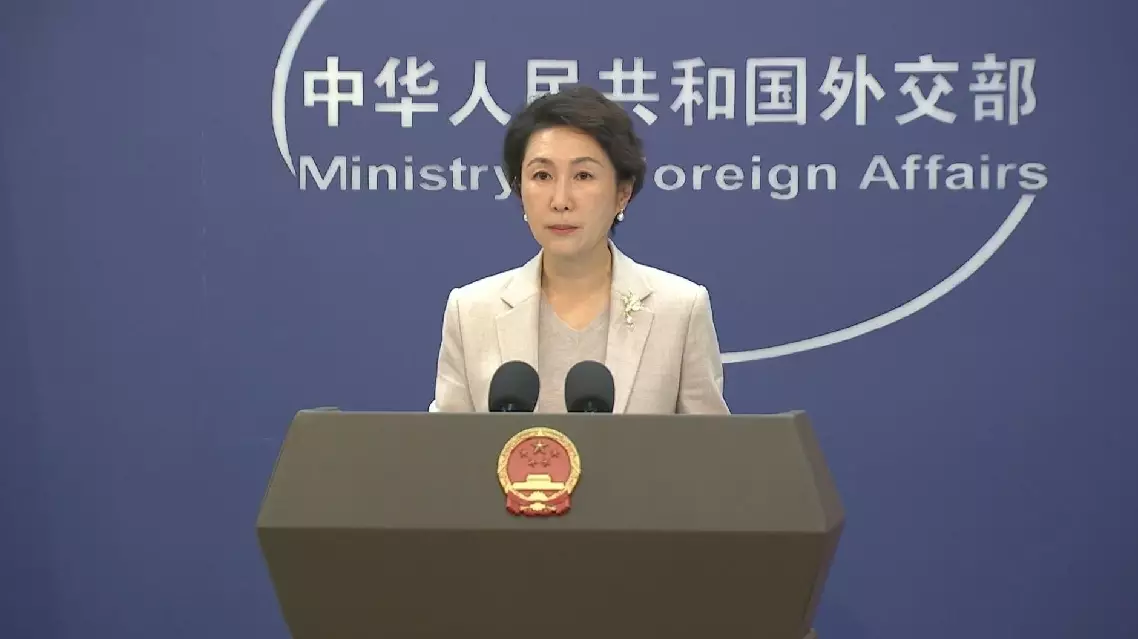
Japan must stop playing with fire on Taiwan question: spokeswoman