THE HAGUE, Netherlands (AP) — Prosecutors at the International Criminal Court on Monday asked for a life sentence for a leader of the feared Janjaweed militia convicted of playing a major role in a campaign of atrocities committed in the Sudanese region of Darfur more than 20 years ago — including ordering mass executions and bludgeoning two prisoners to death with an ax.
“You literally have an axe murderer before you,” prosecutor Julian Nicholls told judges in The Hague as Ali Muhammad Ali Abd–Al-Rahman, also known as Ali Kushayb, looked on.
Last month, Abd–Al-Rahman was convicted of 27 counts, including mass murders and rapes, for leading Janjaweed militia forces that went on a campaign of killing and destruction in 2003-2004. It was the first time the court had convicted a suspect of crimes in Darfur.
“He committed these crimes knowingly, willfully, and with, the evidence shows, enthusiasm and vigor,” Nicholls said.
Abd–Al-Rahman pleaded innocent to charges of war crimes and crimes against humanity when his trial opened in April 2022 and argued he was not the person known as Ali Kushayb. The judges rejected that defense, saying he even identified himself by his name and nickname in a video when he surrendered.
The defense will take the floor later in the week and has asked for a seven-year sentence, which would allow the 76-year-old to be released in the next 18 months, considering time served.
Abd–Al-Rahman surrendered to authorities in the Central African Republic, near the border with Sudan, in 2020.
Rebels from Darfur’s ethnic central and sub-Saharan African community launched an insurgency in 2003, complaining of oppression by the Arab-dominated government in the capital, Khartoum.
Then-President Omar al-Bashir’s government responded with a scorched-earth campaign of aerial bombings and raids by the Janjaweed, who often attacked at dawn, sweeping into villages on horseback or camelback.
Up to 300,000 people were killed and 2.7 million were driven from their homes in Darfur over the years. Al-Bashir has been charged by the ICC with crimes including genocide, but he has not been handed over to face justice in The Hague, despite being ousted from power and detained.
The sentencing hearing comes as Sudan has plunged into further violence. Last week, the U.N.’s top human rights body held a one-day special session to highlight hundreds of killings at a hospital in Sudan’s Darfur region and other atrocities blamed on paramilitary forces fighting the army in the northeast African country.
The military and the rival paramilitary Rapid Support Forces, or RSF, went to war in 2023, when tensions erupted between them. The army and RSF are former allies that were supposed to oversee a democratic transition after a 2019 uprising.
The latest fighting has killed at least 40,000 people, according to the World Health Organization, and displaced 12 million others.

FILE - Ali Muhammad Ali Abd–Al-Rahman, also known as Ali Kushayb, attends a hearing at the International Criminal Court (ICC) in The Hague, Netherlands, Monday, Oct. 6, 2025. (Piroschka van de Wouw/Pool Photo via AP, File)
WASHINGTON (AP) — Should Sen. Markwayne Mullin be approved as the next secretary of Homeland Security, he will walk into the department's sprawling Washington, D.C., campus with his work cut out for him.
Immigration enforcement is at a crossroads. Disaster-hit states and their lawmakers are angry at delayed federal assistance. Frustrated travelers face long airport security lines due to a monthlong funding battle in Congress.
Mullin would take over from embattled outgoing secretary Kristi Noem, who entered office with President Donald Trump’s backing but whose social media-driven management style of the government’s third-largest department contributed to her downfall.
“We’ve got serious management problems at DHS, and we need somebody steering the ship,” said Sen. John Kennedy, R-La., adding that he told the Oklahoma senator a full audit of the department is needed.
Mullin, a former mixed martial arts fighter, has earned a reputation as a combative presence in the Senate. After 13 years in Congress, he has the confidence of fellow lawmakers and is expected to follow the White House's policy priorities. His confirmation hearing is set for Wednesday.
A top challenge for Mullin would be taking over the administration's centerpiece policy of mass deportations, which has triggered a surge of immigrant arrests, sparked fear in communities and raised concerns about detention and enforcement tactics.
A year of high-profile operations resulted in high arrest numbers but also criticism that officers were too aggressive. The shooting deaths of two protesters in Minneapolis by federal officers sparked calls for reform at immigration enforcement agencies.
Approval of Trump’s immigration approach is down from when he started his second term, with most Americans saying Trump has “gone too far." The souring public mood could force Mullin to recalibrate how the agencies he would oversee implement the deportation push.
Since being nominated, Mullin has not publicly revealed his vision for running the department and has declined to answer questions.
He is likely to be a faithful ally to Trump in his new role. In the Senate, he has been less focused on legislation and more engaged as a de facto spokesman for the White House — talking to the president often and amplifying his messages in the hallways of the Capitol and behind closed doors.
He has been a strong supporter of Immigration and Customs Enforcement officers and the congressional funding approved last summer that super-charged immigration enforcement.
Following the shooting deaths of the U.S. citizens in Minneapolis, he backed law enforcement and blamed local leaders for rhetoric that he said had “emboldened” protesters.
John Sandweg, a former acting director at ICE during the Obama administration, said Mullin will need to balance pressures from different players inside the administration over how to conduct future enforcement operations — whether to ramp up deportations through arrest sweeps or keep enforcement more targeted on people who’ve committed crimes.
“He’s going to have to reconcile ... are we about numbers or about quality?” said Sandweg. “And I think he’ll face a lot of pressure to also deliver on numbers.”
Mullin is also walking into a battle with congressional Democrats demanding reforms at ICE, which has led to a monthlong lapse in funding for DHS.
Senate Democrats want changes to immigration enforcement before they approve more money. That includes a ban on masks worn by deportation officers, an end to roving patrols of officers looking for immigrants and a requirement that officers use warrants signed by a judge to enter a person's house. Republicans have held the line against those demands.
As the standoff has dragged on, thousands of Homeland Security staffers are being forced to work without pay, including airport security screeners. Some airports have started to see long security lines, raising concerns that screeners are calling out sick, taking on side jobs to make ends meet, struggling with fuel costs or leaving their jobs altogether.
In his new role, Mullin is expected to improve relationships with Congress, where Republicans treated Noem with skepticism. He is close to both House Speaker Mike Johnson, R-La., and Senate Majority Leader John Thune, R-S.D.
Republicans are hoping that switching out Noem for Mullin will serve as enough of a change to appease Democratic demands to fund the department.
“This is what the Democrats have been clamoring for. They wanted a new change and shake-up in the leadership, and it’s now happening," said Thune.
But Democrats have insisted on widespread changes.
“I like Markwayne personally, but I don’t think it’s a question of who is at the helm, it’s a question of law," said Sen. Brian Schatz, D-Hawaii.
Mullin will also inherit a Federal Emergency Management Agency mired in upheaval and uncertainty over the administration's attempts to shift disaster responsibility to states and Trump's threats to abolish the agency.
DHS under Noem drove a torrent of policies in the name of that objective, stalling funding, driving out staff and attracting lawsuits over just how much authority a homeland security secretary could exert over FEMA, which still lacks a permanent administrator.
Noem enacted a policy that she personally approve expenditures over $100,000, which critics said delayed billions in disaster recovery dollars. State emergency managers hope to see a quick repeal, along with the release of grant funding for preparedness and resilience, said Karen Langdon, a National Emergency Management Association spokesperson.
There are still over $2.2 billion in recovery and mitigation projects awaiting DHS approval as of Friday, according to official figures seen by The Associated Press.
The Trump-appointed FEMA Review Council, chaired by Noem, is months behind in releasing a highly anticipated recommendation report after the outgoing secretary clashed with other council members on how far to take the reforms.
Mullin's views on FEMA aren't entirely clear, but he has expressed skepticism of a federal disaster response in the past.
“It’s not FEMA that’s going to respond,” he told Fox Business shortly after Hurricane Helene in 2024. “It’s the local people that are going to respond, and we’re going to be fighting with FEMA to get reimbursed if they ever do reimburse.”
Lawmakers and states generally support reforms that would streamline disaster aid and ease bureaucratic burden, but state and local governments need dependable leadership and time to prepare for changes, said Sarah Labowitz, senior fellow at the Carnegie Endowment for International Peace.
“What we want to see going forward is predictability,” Labowitz said. “There’s a lot of work to be done to re-earn trust.”
Associated Press reporters Mary Clare Jalonick, Kevin Freking and Stephen Groves contributed to this report.
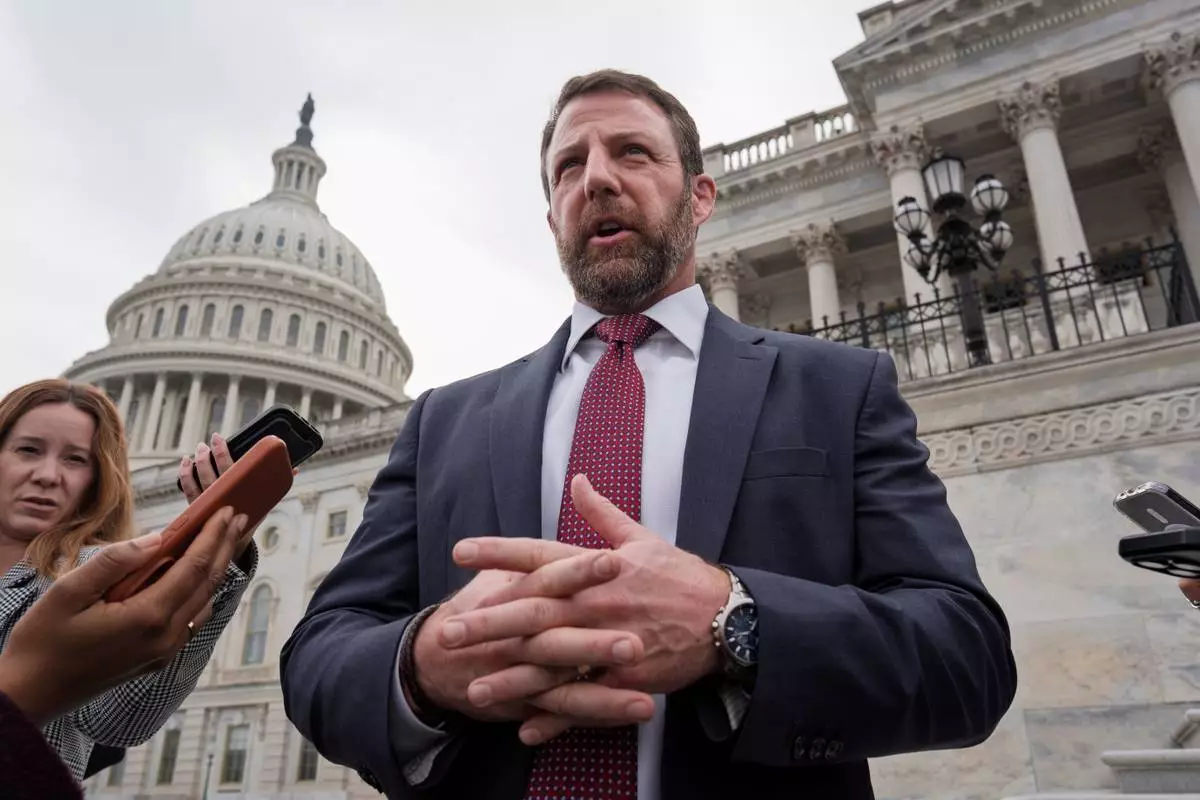
Sen. Markwayne Mullin, R-Okla., speaks with reporters on the steps at the Capitol in Washington, Thursday, March 5, 2026. (AP Photo/J. Scott Applewhite)
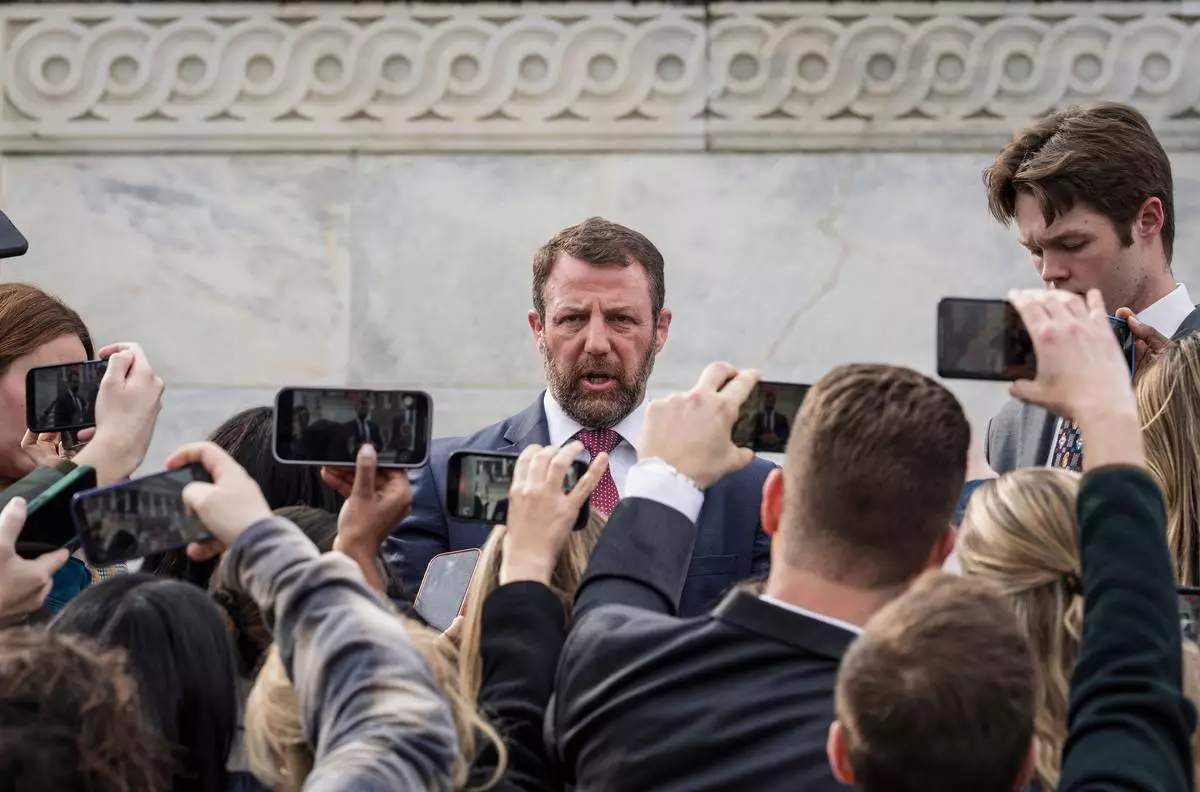
Sen. Markwayne Mullin, R-Okla., speaks with reporters on the steps at the Capitol in Washington, Thursday, March 5, 2026. (AP Photo/J. Scott Applewhite)