TIPTONVILLE, Tenn. (AP) — An attorney for a man charged with killing four members of the same family told a judge on Monday that he plans to request that a jury from outside the county hear the case, which set a swath of rural Tennessee on edge as the man eluded authorities for a week after the shootings.
Austin Robert Drummond pleaded not guilty in his first court appearance since he was indicted on charges including first-degree murder and aggravated kidnapping in the July 29 shootings in Lake County, in rural northwest Tennessee.
Prosecutors have said they plan to seek the death penalty if Drummond is convicted of first-degree murder at trial.
During the brief hearing, Drummond’s attorney, Bryan Huffman, told Circuit Court Judge Mark Hayes that he intends to file a motion for a change of venue. Such motions can be entered in cases where pre-trial publicity is high and lawyers believe that an unbiased jury cannot be selected.
Drummond appeared in court wearing orange jail clothing and a protective vest, with shackles on his wrists and ankles.
A grand jury indicted Drummond on Nov. 10. Drummond also had pleaded not guilty in a lower court before a judge ruled there was enough evidence for his case to proceed to the grand jury. A trial date has not been set.
Drummond is accused of the deaths of the parents, grandmother and uncle of an infant found abandoned in a home’s front yard. An intense search for Drummond ended on Aug. 5 in Jackson, about 70 miles (115 kilometers) southeast of the location of the killings in Tiptonville.
An FBI agent testified at a hearing in September that data from a cellphone used by Drummond showed he was in the vicinity of a wooded area where the bodies were found with gunshot wounds and covered by tarpaulins.
But Huffman argued that there was no evidence presented at the hearing that showed Drummond actually shot any of the victims.
On the day of the shootings, officers responded to a call of an infant in a car seat being dropped off at a “random individual’s front yard” roughly 40 miles (65 kilometers) from Tiptonville, the Dyer County Sheriff’s Office has said.
Then, investigators in neighboring Lake County reported four people had been found dead from gunshot wounds in Tiptonville. They were identified as the baby’s parents, James M. Wilson, 21, and Adrianna Williams, 20; Williams’ brother, Braydon Williams, 15; and their mother, Cortney Rose, 38. Drummond’s girlfriend is Rose's sister, Huffman said.
In all, five people have been charged with being accessories after the fact in the case.
Drummond has served prison time for robbing a convenience store and threatening to go after jurors. He was also charged with the attempted murder of a prison guard while behind bars, and he was out on bond at the time of the killings, District Attorney Danny Goodman has said.
With a population of about 3,400 people, Tiptonville is about 120 miles (195 kilometers) north of Memphis, near the Mississippi River and scenic Reelfoot Lake.
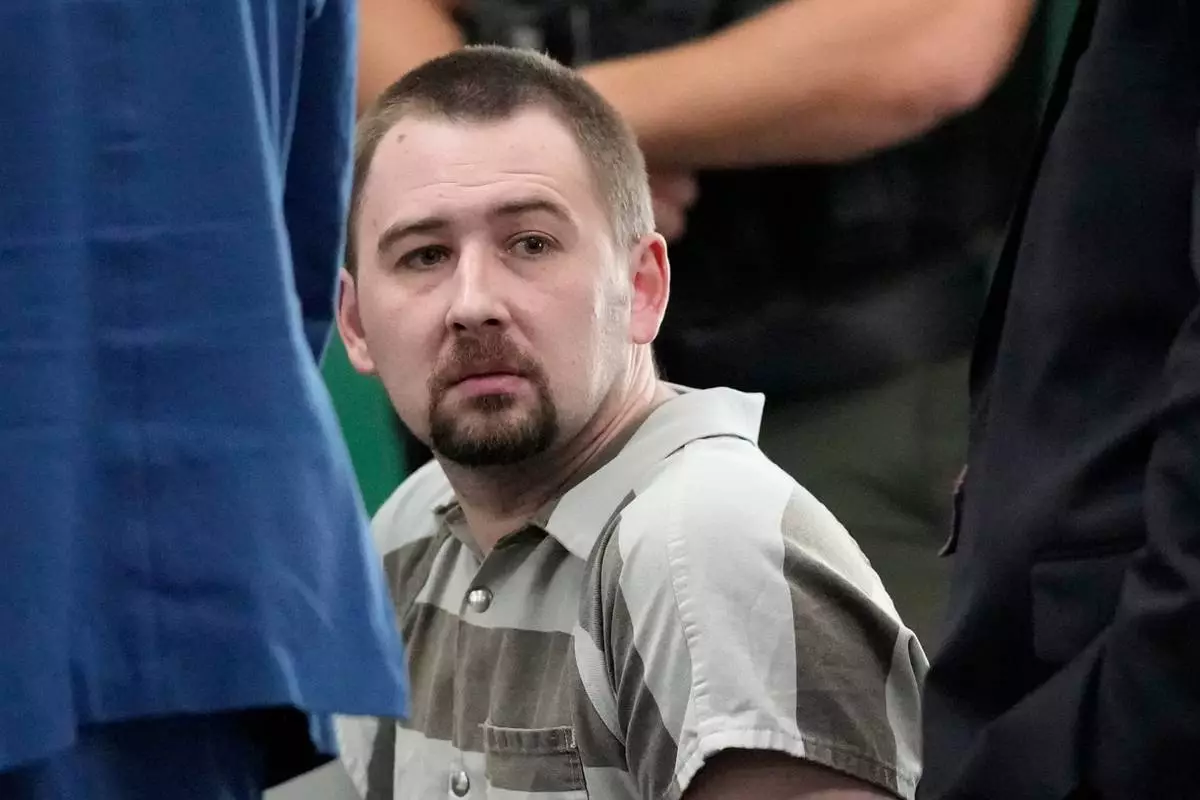
FILE - Defendant Austin Drummond, accused of quadruple murder, appears in court during a preliminary hearing Sept. 4, 2025, in Tiptonville, Tenn. (AP Photo/George Walker IV, Pool, File)
What do you get when Formula 1's most successful car designer takes full control of a team with cutting-edge technology? A dud, apparently.
The big surprise of F1 preseason testing was seeing design great Adrian Newey's radical-looking Aston Martin at the bottom of the time charts, sometimes slower than new team Cadillac.
Aston Martin arrives at the season-opening Australian Grand Prix this week fighting just to keep its unreliable car running.
At 44, a year at the back of the grid isn't what two-time world champion Fernando Alonso needs, and the difficulties could potentially cause friction with engine supplier Honda.
Newey has been given full control as team principal in arguably his most hands-on role since he was an engineer for Mario Andretti in IndyCar races in the 1980s. So what's gone wrong?
The big problem is that there isn't one big problem.
The Honda engine seems to lack power, but Aston Martin's exclusive works relationship with the Japanese auto giant means there's no other team with a Honda engine to compare it with, or learn from.
Alonso showed great faith in Newey during testing in Bahrain last month, but was more careful with his language about Honda.
“On the chassis there is no doubt. We have the best with us," he said. "After 30-plus years of Adrian Newey dominating the sport I think no one will doubt that we will find a way to have the best car eventually.
“On the power unit, we need to wait and see when we unlock all the performance, where are we, what is missing, and then work hard.”
The Aston Martin is also unreliable and undercooked after arriving late to the first test and missing valuable time due to breakdowns.
Battery problems limited testing time in Bahrain as Honda worked on the issue. Aston Martin also seemed to have gearbox trouble and a shortage of parts.
Is Aston's problem not enough Newey?
After agreeing on his exit from Red Bull, Newey had to wait until March 2025 before starting at Aston Martin, at first as “managing technical partner.”
That was after other teams were already well under way with their 2026 work. Newey has talked of working long days and said in November that his wife Amanda complained he was in a “design trance” and unsociable.
“What limited processing power I have is all concentrated on the task in hand, given these pressing deadlines, but that’s not a state to stay in for too long,” he added.
Newey still sketches out ideas on a drawing board to explore design concepts and has access to brand-new facilities built at great expense by Aston Martin team owner Lawrence Stroll.
Newey is also skeptical about handing over key design processes to AI. “Even with AI advancing as rapidly as it is, we’re a long way off,” Newey said in November. “It really depends very heavily on human ideas and that really is, I suppose, the essence of Formula 1. That ability to conceptualize, to react quickly and to be self-critical.”
Long before he was an F1 great, Newey shuttled between Britain and the United States in the mid-1980s designing Indianapolis 500-winning cars and getting his hands dirty preparing them trackside for greats like Mario Andretti, his son Michael and Bobby Rahal.
It was a punishing schedule, but all the red-eye flights gave Newey time to develop concepts which later revolutionized F1 design.
“I look back at my ideas now and I can pinpoint which ones I did over the Atlantic,” he wrote in his 2017 autobiography.
Newey's designs transformed F1, winning 12 constructors' titles and 13 drivers' championships from Nigel Mansell's 1992 win with Williams to Max Verstappen's fourth in a row with Red Bull in 2024.
Newey's exit from Red Bull that year followed 18 years at the team, after record-breaking dominance for his RB19 design the year before, and as the team faced uncertainty around then-team principal Christian Horner and star driver Max Verstappen.
AP auto racing: https://apnews.com/hub/auto-racing
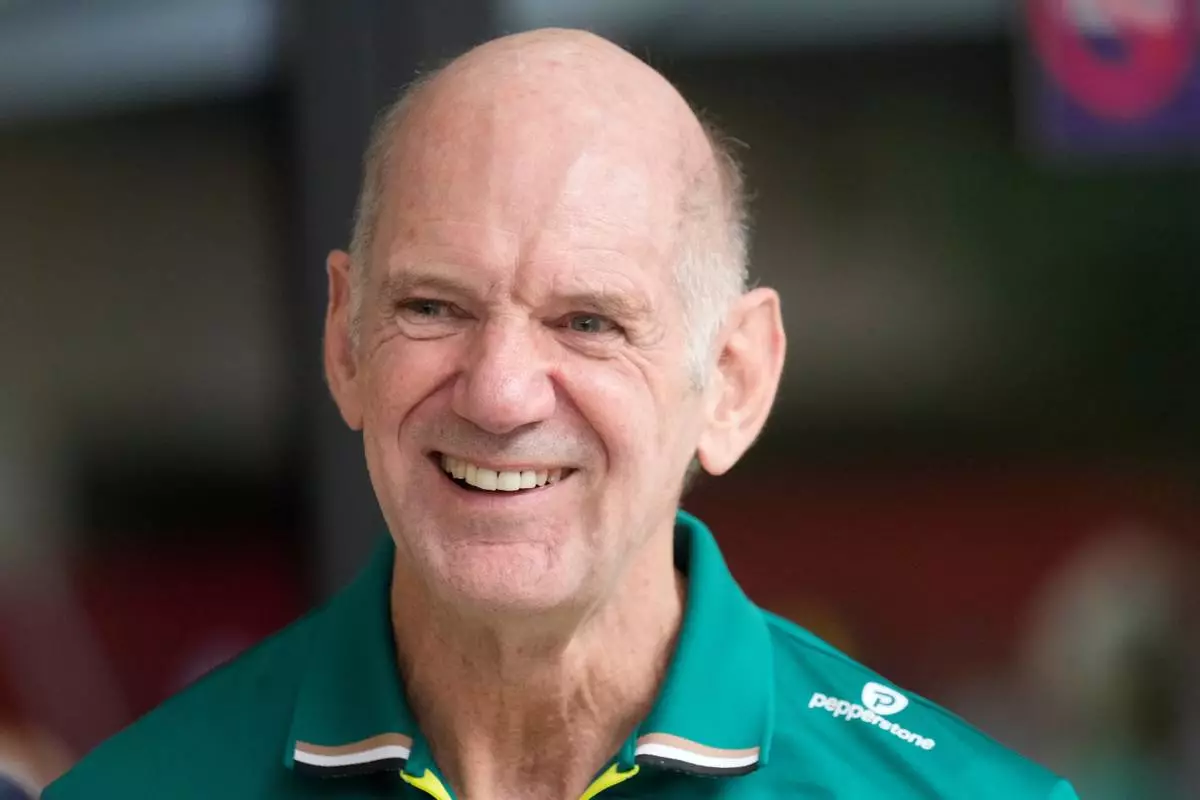
FILE - Aston Martin team principal Adrian Newey smiles in the paddock prior to the start of the sprint qualifying at the Lusail International Circuit ahead of the Qatar Formula One Grand Prix, in Lusail, Qatar, Friday, Nov. 28, 2025. (AP Photo/Darko Bandic, File)