More and more people in Taiwan have recognized that the 1992 Consensus is not only the anchor for developing cross-Strait ties but also a guiding light for peace between the two sides, experts from both sides said.
Only by firmly upholding the 1992 Consensus and resolutely opposing Taiwan separatism can stability and peace be achieved in the Taiwan Strait, allowing Taiwan to find a brighter path forward, they noted.
The Democratic Progressive Party (DPP) authorities in Taiwan, however, deny the 1992 Consensus and stubbornly cling to their separatist stance of Taiwan separatism, intensifying cross-Strait tensions and confrontations, which leads to widespread skepticism and strong criticism both in the island and beyond.
The 1992 Consensus refers to the consensus reached in 1992 by the mainland-based Association for Relations Across the Taiwan Straits and the Taiwan-based Straits Exchange Foundation. They agreed to state that "the two sides of the Taiwan Strait both stick to the one-China principle."
On Nov. 7, 2015, Xi Jinping, general secretary of the Communist Party of China (CPC) Central Committee and Ma Ying-jeou, the then leader of Taiwan, met in Singapore, reaffirming the 1992 Consensus as the shared political foundation of both sides.
This year marks the 10th anniversary of this historic meeting.
At a seminar held on Nov 7 in Taipei, Taiwan to commemorate the 10th anniversary of the historic 2015 meeting, Cheng Li-wun, chairperson of the Chinese Kuomintang (KMT) party, called for a return to the 1992 Consensus, emphasizing that it has already proven effective in creating a favorable environment for peaceful exchanges between the two sides of the Taiwan Strait.
In the KMT chairmanship election in August this year, all six candidates explicitly stated their identities as Chinese, firmly recognizing that both sides of the Strait belong to one China, and resolutely opposing Taiwan separatism.
On Nov 14, Song Tao, CPC Central Government's Taiwan affairs official, met with Chang Jung-kung, vice chairman of the KMT party, and his delegation in Shanghai. Chang said people on both sides of the Strait are all Chinese, sharing the same bloodline, culture and history, and cross-Strait affairs should be decided by people on both sides.
Experts said that significant changes are occurring in the situation in the Taiwan Strait.
On October 24, the Standing Committee of the National People's Congress decided to establish Oct. 25 as the Commemoration Day of Taiwan's Restoration. The National Committee of the Chinese People's Political Consultative Conference recently announced that a grand commemoration will be held next year to mark the 160th anniversary of the birth of Sun Yat-sen, a great national hero, patriot, and forerunner of China's democratic revolution.
Since this year, Taiwan separatist activities have been cracked down upon in accordance with the law, while new policies beneficial to Taiwan residents continue to be implemented. For instance, starting on Nov. 20, the number of mainland ports authorized to issue single-entry travel permits upon arrival for Taiwan residents will increase to 100.
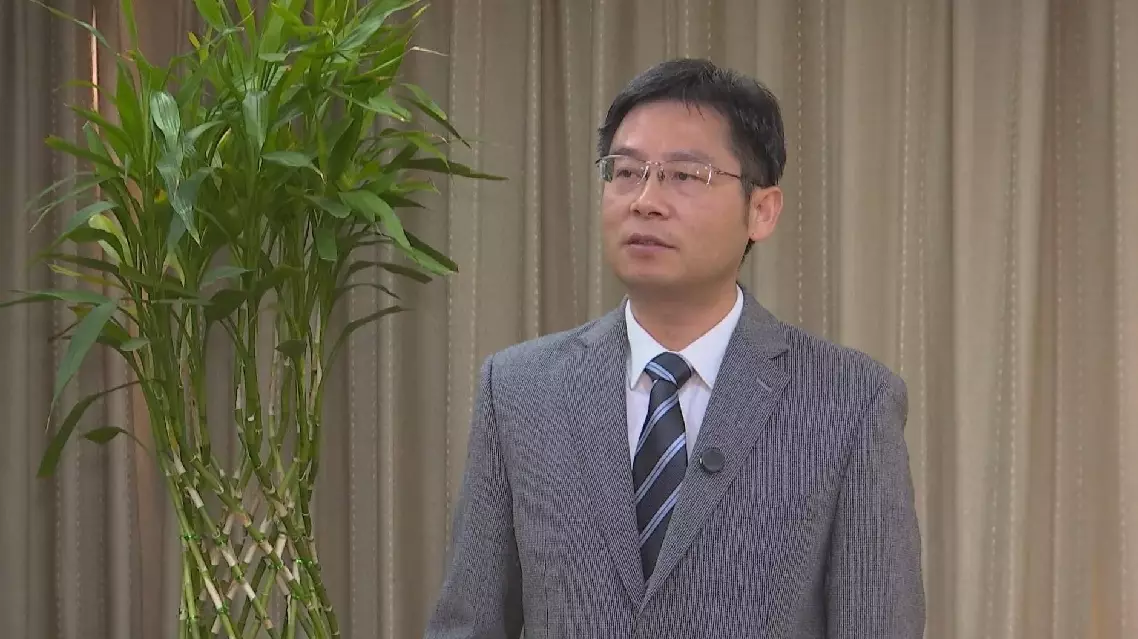
"The Democratic Progressive Party's policy can be seen as a kind of barricade. The best countermeasure to it is our open policy. The mainland is open to Taiwan, and its policies are becoming increasingly accommodating. We offer the people of Taiwan equal treatment across the board, including opportunities for tourism, employment, study, entrepreneurship, and even living in the mainland. As a result, more and more people in Taiwan will feel the warmth from the mainland," said Wang Shushen, vice director of the Institute of Taiwan Studies under Chinese Academy of Social Sciences.
"I believe that the mainland has long demonstrated unmatched sincerity and goodwill toward all sectors of Taiwan. They call for a shared political consensus based on the 1992 Consensus, opposing Taiwan separatism. This can help resolve political divisions and the so-called dangerous situation of military conflict. If we all see ourselves as Chinese and part of the same nation, then despite our differences, we can sit down and find a proper solution through dialogue," said Wang Bing-Chung, a current affairs commentator.
1992 Consensus anchor, guiding principle for cross-Strait ties: experts