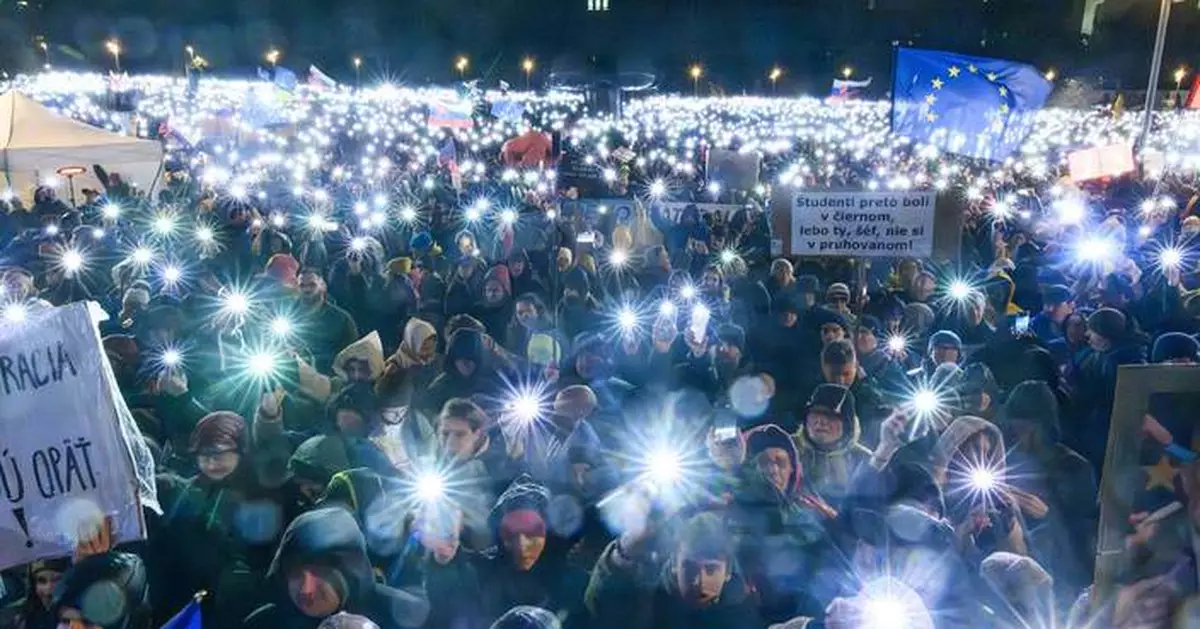
BRATISLAVA, Slovakia (AP) — Tens of thousands of people in Slovakia on Monday protested against populist Prime Minister Robert Fico and his pro-Russian stance, taking advantage of the anniversary of the 1989 Velvet Revolution that ended decades of communist rule in the former Czechoslovakia.
Rallies and marches took place in dozens of communities. The protesters in Freedom Square in the rainy capital, Bratislava, chanted, “We have enough of Fico,” “We want a change” and “Resign."
One banner in the crowd displayed the words by late Czechoslovak and Czech President Václav Havel that became the motto of the Velvet Revolution: “Truth and love must prevail over lies and hatred."
Fico has long been a divisive figure in Slovakia, and thousands have repeatedly rallied to protest his policies. Most recently, his government canceled the national holiday on Monday that marked the Velvet Revolution, calling it part of austerity measures.
Michal Šimečka, leader of the major opposition Progressive Slovakia party, rejected that explanation.
“It has nothing to do with economy or savings,” Šimečka said. “Robert Fico just wants to tell us that the holiday of freedom is useless, that freedom is useless. We value freedom and we will not let it be taken away from us.”
Fico also recently angered many in Slovakia by telling students in the city of Poprad that they should go to fight for Ukraine if they don’t agree with his pro-Russian views.
Fico has met Russian President Vladimir Putin three times since Russia's full-scale invasion of Ukraine in 2022 and cancelled all Slovakian bilateral military support for Ukraine. He also has openly challenged the European Union’s policies on Ukraine.

People attend a rally to celebrate the 36th anniversary of the pro-democratic Velvet Revolution, in Bratislava, Slovakia, Monday, Nov. 17, 2025. (Jaroslav Novak/TASR via AP)
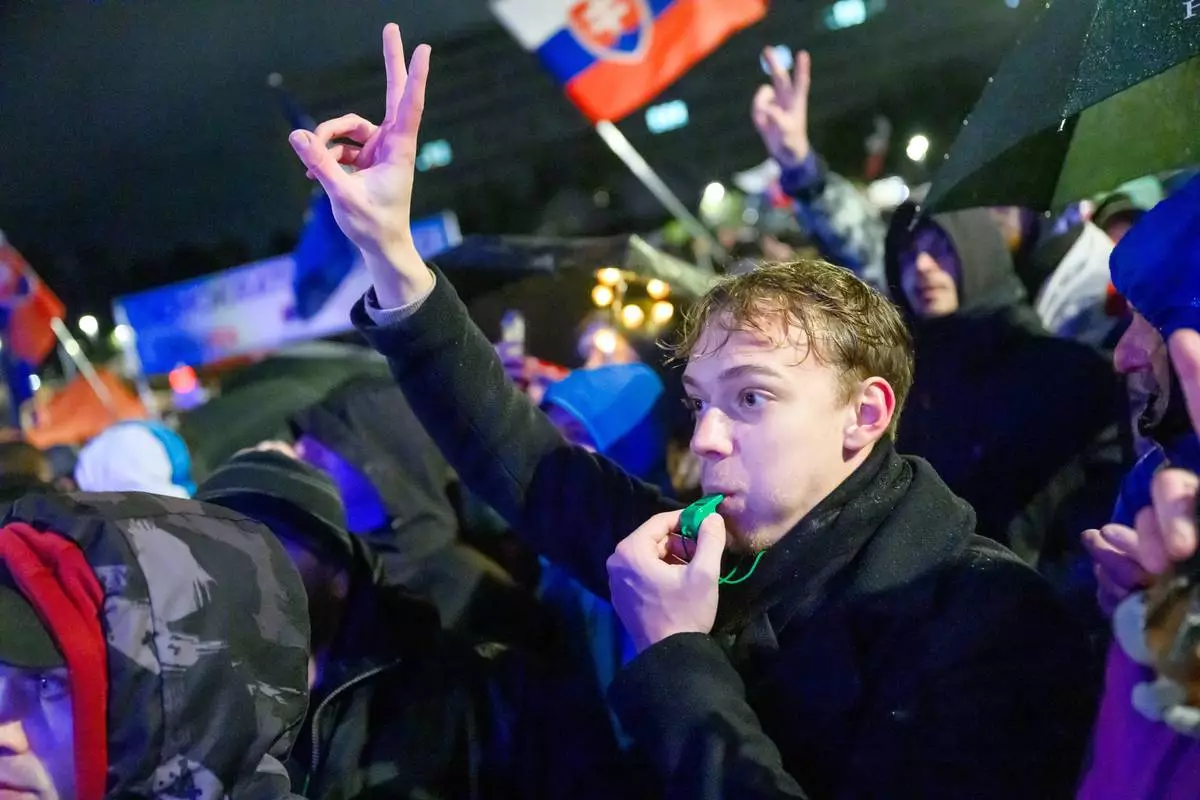
A demonstrant blows a whistle and shows the victory sign during a rally to celebrate the 36th anniversary of the pro-democratic Velvet Revolution, in Bratislava, Slovakia, Monday, Nov. 17, 2025. (Jaroslav Novak/TASR via AP)

People hold mobile phones with flashlights during a rally to celebrate the 36th anniversary of the pro-democratic Velvet Revolution, in Bratislava, Slovakia, Monday, Nov. 17, 2025. (Jaroslav Novak/TASR via AP)
ATLANTA (AP) — A judge has rejected a request for a new trial for a Venezuelan man convicted of killing Georgia nursing student Laken Riley, a case that became a flashpoint in the national debate over immigration.
Lawyers for Jose Ibarra argued his constitutional rights were violated when the judge declined two defense motions before trial. One was a request to delay the trial to give an expert witness time to review and analyze DNA data. The other would have excluded some cellphone evidence.
Clarke County Superior Court Judge H. Patrick Haggard, who presided over the trial, wrote in an order Monday that the evidence of Ibarra's guilt presented by the state was “overwhelming and powerful.” After Ibarra waived his right to a jury trial, Haggard found him guilty of murder and other charges during the November 2024 trial and sentenced him to life in prison.
A spokesperson for Ibarra's attorneys said they plan to file an appeal.
Ibarra, 28, had entered the U.S. illegally in 2022 and was allowed to stay while he pursued his immigration case.
Prosecutors said Ibarra encountered Riley while she was running on the University of Georgia campus in Athens on Feb. 22, 2024, and killed her during a struggle. Riley was a student at Augusta University College of Nursing, which also has a campus in Athens, about 70 miles (115 kilometers) east of Atlanta.
Ibarra's trial attorneys had asked the judge to delay the trial after a DNA expert said she would need six weeks to review evidence analyzed using TrueAllele Casework, software used to interpret DNA and assist the defense. The judge wrote in his order Monday that Ibarra's lawyers “effectively challenged the TrueAllele DNA evidence at trial" and concluded that Ibarra was not harmed by the denial of a delay.
The DNA expert testified during a January hearing on the motion for a new trial, and the judge wrote that he did not find her opinion to be persuasive or credible and that it would not have changed the trial outcome.
Ibarra's attorneys also had challenged the seizure of two cellphones from his apartment, saying they were not listed on the search warrant, and sought to exclude evidence pulled from them. Haggard wrote that there were “exigent circumstances authorizing the seizure of the cellphones” and that the phones were not searched until after warrants were issued authorizing the search of the contents of the phones.

FILE - Jose Ibarra enters court during a hearing on a motion for a new trial for Ibarra in a Athens-Clark County courtroom, Jan. 30, 2026, in Athens, Ga. (AP Photo/Mike Stewart, Pool, File)