MINNEAPOLIS (AP) — Naz Reid scored a season-high 22 points and the Minnesota Timberwolves beat the short-handed Dallas Mavericks 120-96 Monday night.
Reid scored 10 points in the first quarter and led all scorers with 19 points in the first half. He hit a 3-pointer just before the end of third quarter, capping his 22-point game and sending Minnesota into the fourth quarter with a 32-point lead.
Six Timberwolves scored in double figures, including all five starters. Jaden McDaniels and Rudy Gobert scored 15 points apiece and star Anthony Edwards had a relatively quiet night with 13 points on 5-for-14 shooting.
Top draft pick Cooper Flagg and Brandon Williams each had 15 points for Dallas, which fell to 1-2 in the second game of back-to-backs this season. The Mavericks were coming off a win over Portland on Sunday.
Dallas was without two of its big men who were being rested for injury management in the second game of a back-to-back. Daniel Gafford sat out Monday’s game with an ankle injury, while Dereck Lively II was held out with a knee injury. Anthony Davis also remains sidelined for the Mavericks, giving rookie big man Moussa Cissé his first career start.
The Mavericks hung around early in the second quarter, trailing by seven points before the Timberwolves extended their lead to 17 points, at 61-44, at the break.
Minnesota continued to control the game in the second half. McDaniels hit three straight 3-pointers to push the Wolves’ lead to 30 points at 85-55 in the third quarter. Minnesota shot under 33% from deep for the fourth straight game, finishing at 32% (14 for 44).
The Mavericks also struggled from 3-point range, connecting on 9 of 30 shots. Dallas entered the game with the second-worst 3-point percentage in the league (31.1%).
Dallas: Hosts the New York Knicks on Wednesday.
Minnesota: Hosts the Washington Wizards on Wednesday.
AP NBA: https://apnews.com/hub/nba

Minnesota Timberwolves guard Mike Conley shoots over Dallas Mavericks guard Brandon Williams (10) and forward Cooper Flagg (32) during the first half of an NBA basketball game, Monday, Nov. 17, 2025, in Minneapolis. (AP Photo/Abbie Parr)

Dallas Mavericks forward Cooper Flagg reacts after a turnover by his team during the first half of an NBA basketball game against the Minnesota Timberwolves, Monday, Nov. 17, 2025, in Minneapolis. (AP Photo/Abbie Parr)

Minnesota Timberwolves guard Anthony Edwards (5) passes the ball as Dallas Mavericks guard Brandon Williams, second from left, defends during the first half of an NBA basketball game, Monday, Nov. 17, 2025, in Minneapolis. (AP Photo/Abbie Parr)
CAPE CANAVERAL, Fla. (AP) — Four astronauts strapped into NASA's new moon rocket and awaited liftoff Wednesday on humanity’s first lunar trip in more than half a century.
The three Americans and one Canadian waved and shaped their hands into hearts as they emerged from crew quarters to cheers and said goodbye to their families. The crowd applauded and cheered again as the astronauts boarded their astrovan for the nine mile (14-kilometer) ride to the launch pad.
Commander Reid Wiseman thanked the throngs who gathered to see them off.
“It's a great day for us. It's a great day for this team,” Wiseman called out.
Tensions were high earlier in the day as hydrogen fuel started flowing into the rocket. Dangerous hydrogen leaks erupted during a countdown test earlier this year, forcing a lengthy flight delay.
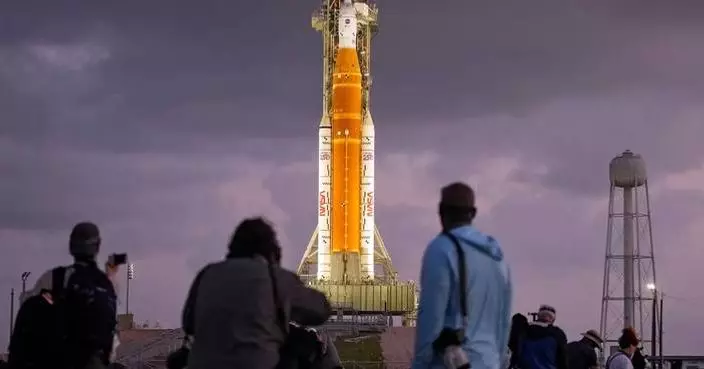
To NASA's relief, no significant hydrogen leaks occurred. The launch team loaded more than 700,000 gallons of fuel (2.6 million liters) into the 32-story Space Launch System rocket on the pad, a smooth operation that set the stage for the Artemis II crew to board.
A problem cropped up with the rocket's flight-termination system with only two hours remaining in the countdown. Commands weren't getting through to the system, which is needed to send a self-destruct signal in case the rocket veers off course and threatens populated areas. But the issue was quickly resolved, according to NASA.
“It is time to fly,” Wiseman declared on the eve of launch via X. Favorable weather was forecast.
The four will fly around the moon without stopping or even orbiting — then head straight back for a Pacific splashdown. They will set a new distance record for the farthest humans have traveled from Earth as they zoom some 4,000 miles (6,400 kilometers) beyond the moon and then hang a U-turn.
Astronauts last flew to the moon during Apollo 17 in 1972.
Artemis II is the opening shot of NASA's grand plans for a permanent moon base. The space program is aiming for a moon landing near the lunar south pole in 2028.
“The next era of exploration begins,” NASA Administrator Jared Isaacman posted on X.
Best wishes already have started to pour in, including from England's King Charles III to Canadian Space Agency astronaut Jeremy Hansen.
Hansen will become the first non-U. S. citizen to launch to the moon. The crew also includes Christina Koch and Victor Glover, the first woman and first Black astronaut, respectively, destined for the moon.
“In this historic moment, you stand as a bridge between nations and generations,” the king wrote in a letter to Hansen, “and I commend you for your courage, discipline and vision that have brought you to this threshold.”
The Associated Press Health and Science Department receives support from the Howard Hughes Medical Institute’s Department of Science Education and the Robert Wood Johnson Foundation. The AP is solely responsible for all content.
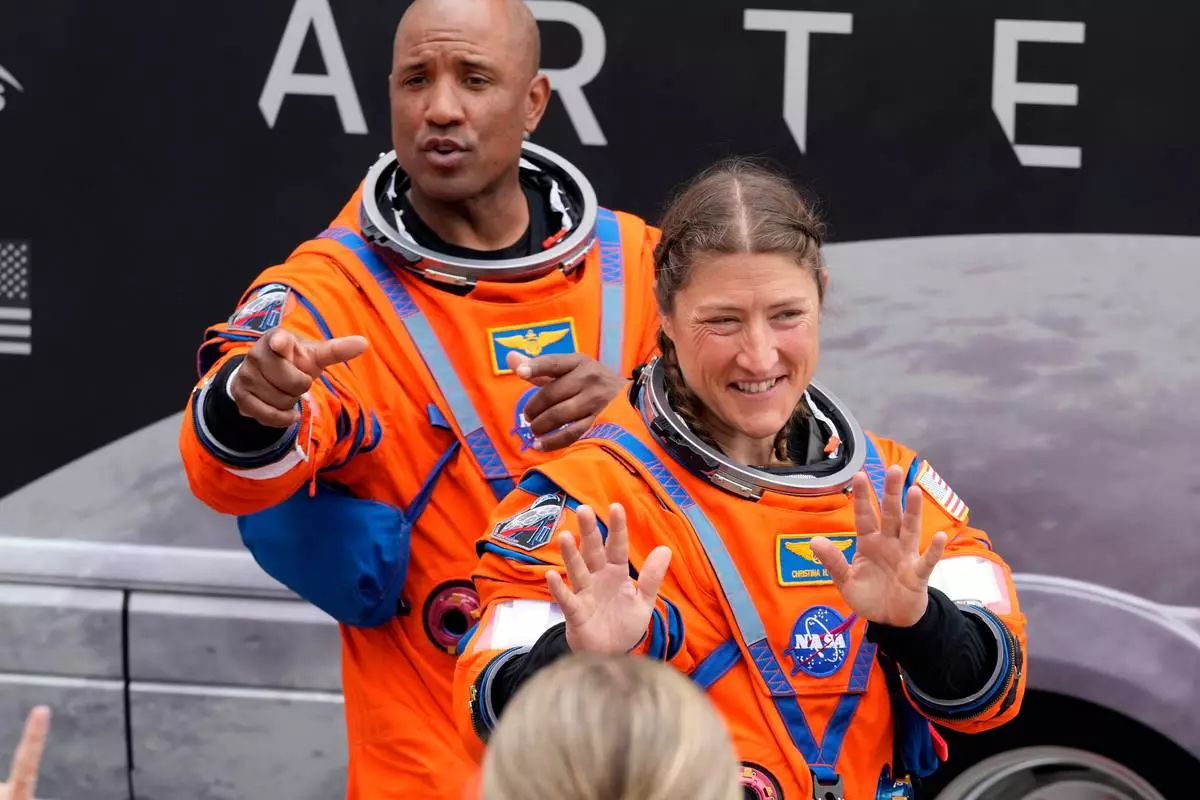
Astronauts, Mission Specialist Christina Koch, right, and Pilot Victor Glover wave to family members as they leave the Operations and Checkout Building for a trip to Launch Pad 39-B and a planned liftoff on NASA's Artermis II moon rocket at the Kennedy Space Center Wednesday, April 1, 2026, in Cape Canaveral, Fla. (AP Photo/Chris O'Meara)
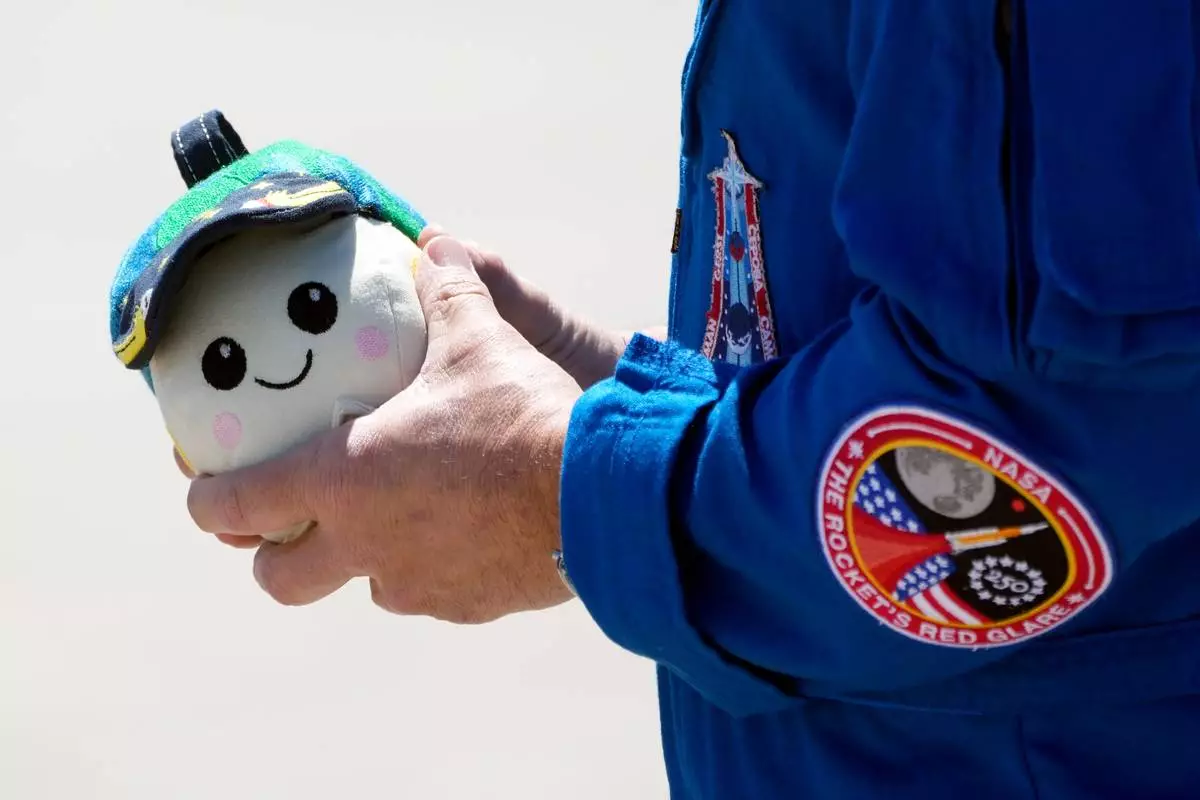
Artemis 2 crew member Commander Reid Wiseman holds "Rise" after the crew's arrival at the Kennedy Space Center Friday, March 27, 2026, in Cape Canaveral, Fla. (AP Photo/Chris O'Meara)

Commander Reid Wiseman poses for a photo with family members after leaving the Operations and Checkout Building for a trip to Launch Pad 39-B and a planned liftoff on NASA's Artermis II moon rocket at the Kennedy Space Center Wednesday, April 1, 2026, in Cape Canaveral, Fla. (AP Photo/Chris O'Meara)
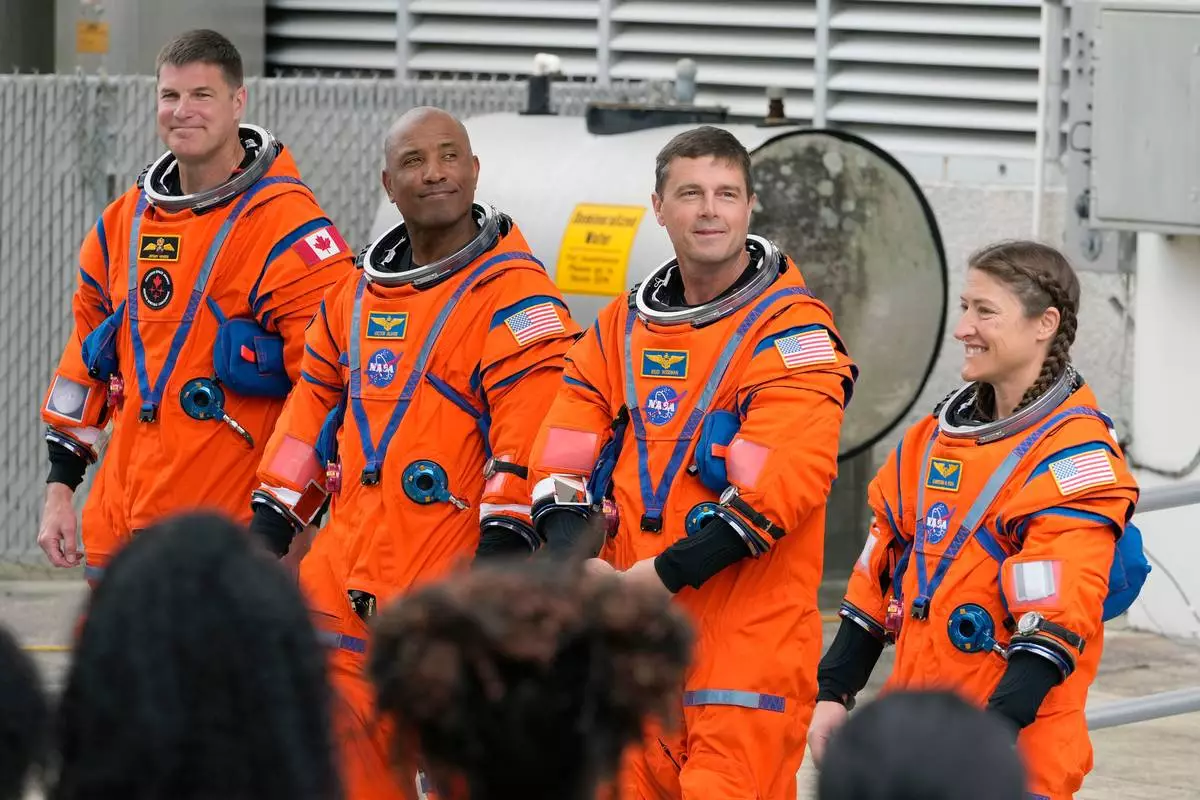
Astronauts, from left, Mission Specialist Jeremy Hansen, of Canada,, Pilot Victor Glover, Commander Reid Wiseman, and Mission Specialist Christina Koch pose for a photo after leaving the Operations and Checkout Building for a trip to Launch Pad 39-B and a planned liftoff on NASA's Artermis II moon rocket at the Kennedy Space Center Wednesday, April 1, 2026, in Cape Canaveral, Fla. (AP Photo/Chris O'Meara)
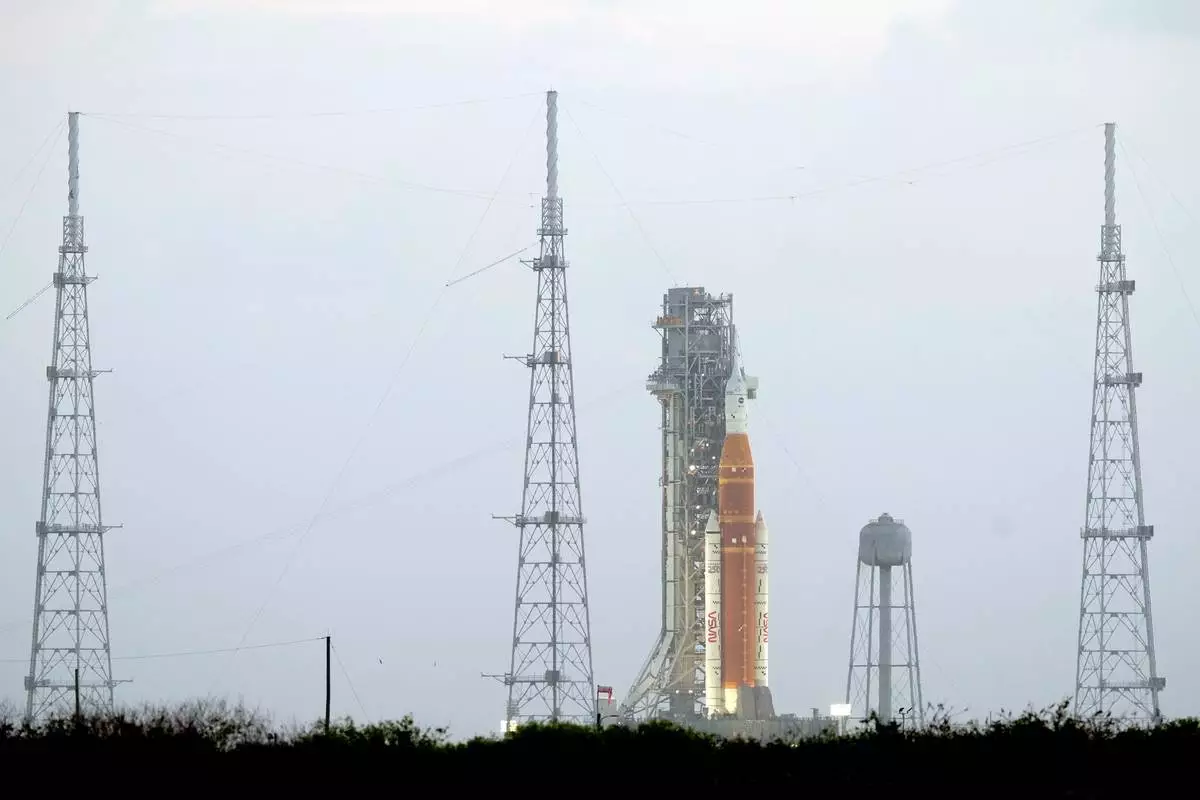
NASA's Artermis II moon rocket sits on Launch Pad 39-B at the Kennedy Space Center hours ahead of a planned launch attempt Wednesday, April 1, 2026, in Cape Canaveral, Fla. (AP Photo/Chris O'Meara)
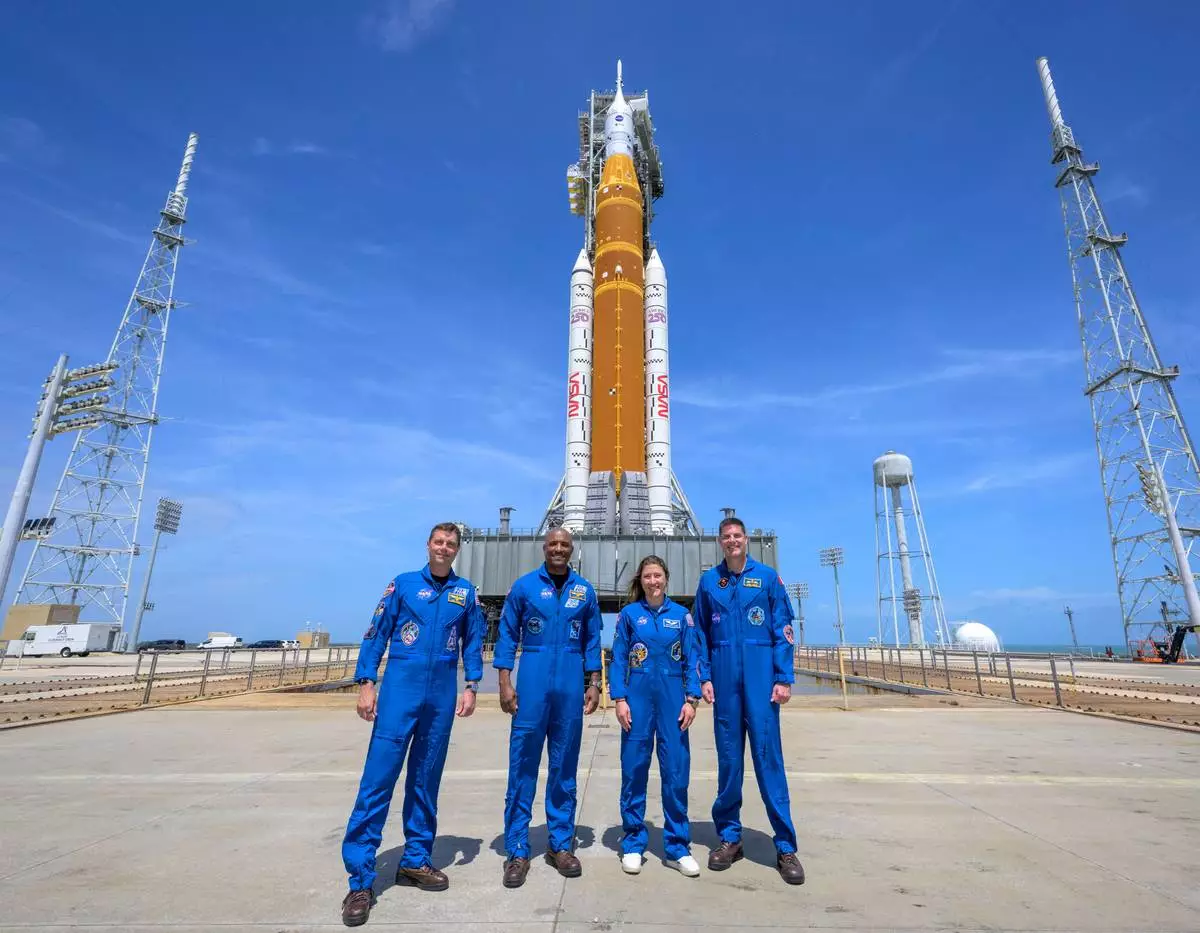
This photo provided by NASA shows NASA astronauts Reid Wiseman, Artemis II commander, from left, Victor Glover, Artemis II pilot, Christina Koch, Artemis II mission specialist, and CSA (Canadian Space Agency) astronaut Jeremy Hansen, Artemis II mission specialist, right, in a group photograph as they visit NASA's Artemis II SLS (Space Launch System) rocket and Orion spacecraft, Monday, March 30, 2026, at Launch Complex 39B of NASA's Kennedy Space Center, in Cape Canaveral, Fla. (Bill Ingalls/NASA via AP)
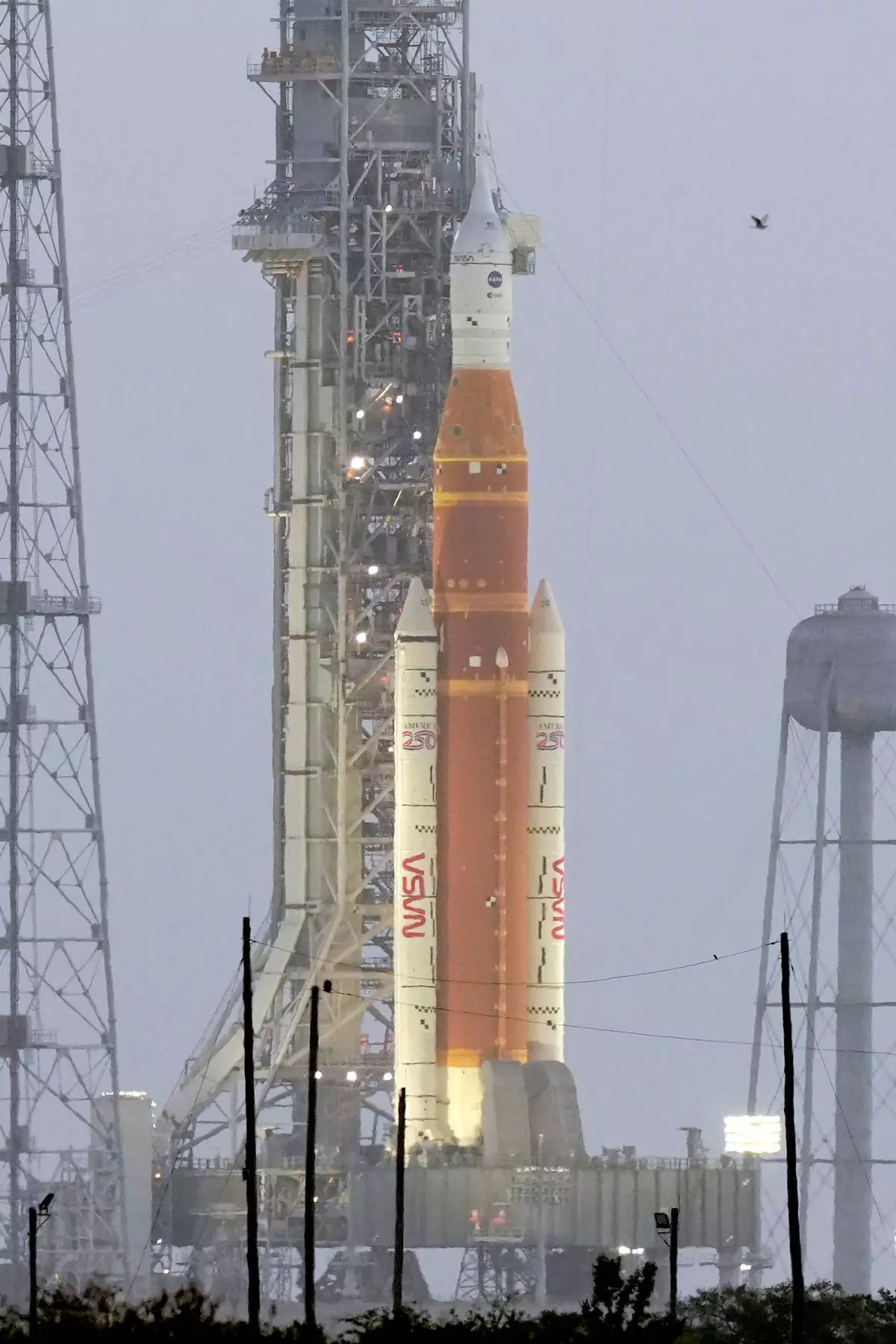
NASA's Artermis II moon rocket sits on Launch Pad 39-B at the Kennedy Space Center hours ahead of planned liftoff Wednesday, April 1, 2026, in Cape Canaveral, Fla. (AP Photo/Chris O'Meara)