The UN Security Council on Monday adopted a resolution to endorse the creation of an international stabilization force (ISF) in Gaza.
The U.S.-drafted Resolution 2803 won the support of 13 council members. Russia, which has presented a competing draft resolution, abstained, along with China.
The resolution endorses the 20-point Comprehensive Plan for Gaza announced by U.S. President Donald Trump in September.
In response to the UN approval of the resolution, Islamic Resistance Movement (Hamas) issued a statement on the same day, criticizing the resolution for not meeting the political and humanitarian needs of the Palestinian people, particularly those in Gaza.
It added that the proposal seeks to impose outcomes that Israel "failed to achieve militarily," and separates Gaza from the rest of the Palestinian territory in a way that undermines Palestinian national rights.
Hamas also warned that assigning tasks to an international force inside Gaza would compromise the force's neutrality and turn it into a party to the conflict. It said that any international force should operate only along the borders under full UN supervision and in coordination with official Palestinian institutions, and should focus on monitoring a ceasefire and facilitating humanitarian aid.
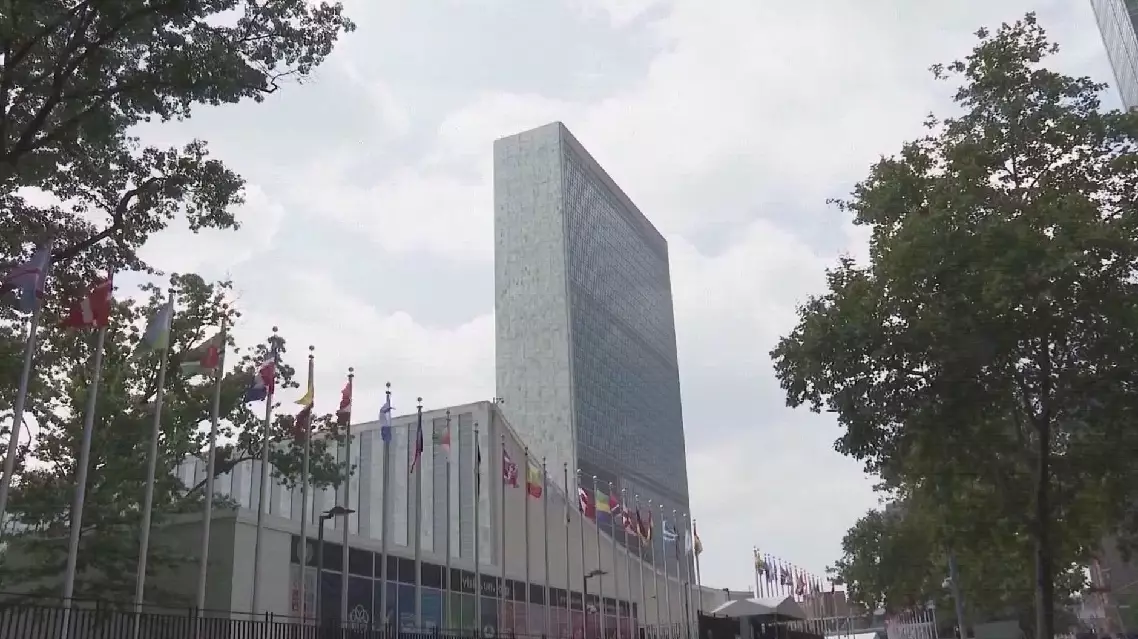
UN Security Council endorses int'l stabilization force in Gaza
UN Security Council endorses int'l stabilization force in Gaza
A forum on human rights protection in the Chinese path to modernization, was held at Guangzhou University in south China's Guangdong Province on Saturday, bringing together more than 80 experts and scholars of political science and law from leading Chinese universities.
Attendees held in-depth discussions on topics such as "Building China's Independent Knowledge System of Human Rights," "Criminal Law Issues and Human Rights Challenges in the Digital Age," and "Protecting the Rights and Interests of Minors."
During the event, participating experts said that China has developed its own approach to protecting human rights as the country continues to modernize.
"China's approach to human rights protection diverges from the Western path. One of ours is comprehensive cooperation, demonstrated through initiatives like common prosperity, rural revitalization, and Chinese modernization. I believe we must encourage more young people to engage in the development of human rights in China, whether through theoretical research or practical contributions," said Liu Zhiqiang, a professor at the Institute for Human Rights at Guangzhou University. Other scholars emphasized that protecting the human rights of China's 1.4 billion people is a foundational element of the country's modernization, evoking insights from classical Chinese philosophy.
"Chinese modernization is, first, modernization on a massive population scale. Despite the vast size of China’s population, we are committed to ensuring that every individual is respected and that the human rights of all are protected. The principle of 'Benevolence is to love all people' from Chinese philosophy offers profound insight for the world in understanding human rights—emphasizing care, respect for others, and a balanced appreciation for both the rights of others and oneself," said Dong Yanbin, a research fellow at Southwest University of Political Science and Law.
The fourth plenary session of the 20th Central Committee of the Communist Party of China (CPC) in October put forward proposals to advance the development of human rights. The forum in Guangdong aimed to lay a pathway for the implementation of the proposals and contribute to the improvement of the human rights protection system in China.

Forum on Human Rights Protection in Chinese Modernization held in Guangzhou