KYIV, Ukraine (AP) — Utility workers in Ukraine are risking their lives as they battle to keep the lights as Russia repeatedly attacks the energy system.
The Associated Press interviewed several of the workers about their jobs and how they have changed since Russia's invasion of Ukraine almost four years ago. All of them agreed to be photographed, but three spoke on condition only their first names be used because of heightened security concerns about their locations.
Click to Gallery

Andrii, 46, a senior technician at a Ukrainian thermal power plant, who declined to give his surname due to security concerns, poses for a portrait at a work site, Wednesday, Oct. 29, 2025. "Every time, we expect winter to be difficult, but we manage to cope, and spring comes anyway," he said. "We can't give up — we have to keep working." (AP Photo/Julia Demaree Nikhinson)

Maria, 35, a bridge crane operator, who declined to give her surname due to security concerns, poses for a portrait at a Ukrainian thermal power plant, Wednesday, Oct. 29, 2025. Her heart sinks anytime she hears missiles overhead, praying they don't hit her plant. “And then you hear explosions and realize they probably have (hit),” she says. “You feel anxious — not for yourself, but for what we do, for our work.” (AP Photo/Julia Demaree Nikhinson)
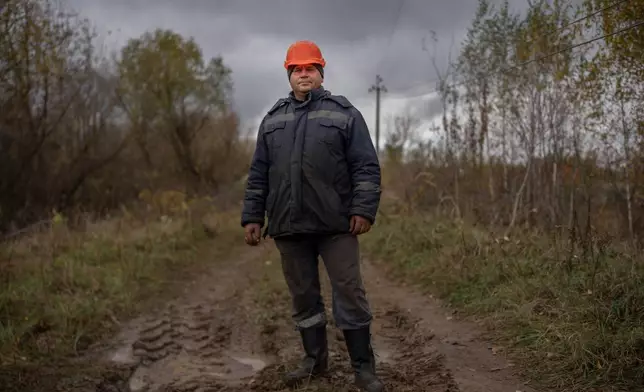
Serhii Staroselskyi, 37, a section supervisor, poses for a portrait while repairing power lines damaged following a Russian attack, Thursday, Oct. 16, 2025, in Shostka, Ukraine. "It's always rewarding when you restore power and people thank you," he says. "That's the best reward." (AP Photo/Julia Demaree Nikhinson)

Oleksandr Leheda, 49, a power line repairman, poses for a portrait while waiting out an air alarm on the job, where his team was supposed to fix power lines damaged following a Russian attack, Friday, Oct. 17, 2025, in Chernihiv, Ukraine. “It’s scary to work near the Russian border,” he said. Every morning, Leheda’s wife repeats to him the same mantra: “Be careful,” “Easy,” and “Mind your step.” (AP Photo/Julia Demaree Nikhinson)

Mykhailo, 45, a senior power unit engineer, who declined to give his surname due to security concerns, poses for a portrait in the control room of a Ukrainian thermal power plant, Wednesday, Oct. 29, 2025. "If all the turbine operators hid during attacks, there'd be no energy left," he says. "We have to stay at our posts. Who else would do the job?" (AP Photo/Julia Demaree Nikhinson)

CORRECTS FAMILY NAME TO ADAMCHUK - Oleksandr Adamchuk, 36, a repair and maintenance supervisor for substations, poses for a portrait while performing scheduled repair work on an energy substation, Friday, Oct. 24, 2025, in Kyiv region, Ukraine. "The main thing is that our soldiers hold the front so the Russians don't come here. We'll do everything to make sure people don't freeze this winter." (AP Photo/Julia Demaree Nikhinson)

Bohdan Bilous, 24, poses for a portrait while repairing power lines damaged following a Russian attack, Thursday, Oct. 16, 2025, in Shostka, Ukraine. “Better I become a target for Russia than civilians or soldiers,” said Bilous, dressed in his work uniform as he repaired power lines in the northern town of Shostka in the Sumy region — one of the first cities plunged into blackout this season after heavy strikes. (AP Photo/Julia Demaree Nikhinson)

Andrii Dzhuma, 58, poses for a portrait while waiting out an air alarm on the job, where his team was supposed to fix power lines damaged following a Russian attack, Friday, Oct. 17, 2025, in Chernihiv, Ukraine. “Somehow, but we still give people light,” Dzhuma says with a shy smile, acknowledging that he is proud of his work and of his colleagues. (AP Photo/Julia Demaree Nikhinson)
At least 160 workers have been killed and more than 300 wounded since the start of the war. Yet tens of thousands still head to work each day.
In the northern city of Chernihiv, Andrii Dzhuma has spent more than three decades replacing and repairing the same power lines he first helped build — when old wooden poles were swapped for new concrete ones and Ukraine was still part of the Soviet Union. Dzhuma has patched nearly 100 kilometers (65 miles) of damaged wires since the war began — not to modernize, but to restore what’s been shattered.
“Somehow, but we still give people light,” he said with a shy smile, acknowledging that he is proud of his work and of his colleagues.
“Better I become a target for Russia than civilians or soldiers,” said Bohdan Bilous, dressed in his work uniform as he repairs power lines in the northern town of Shostka in the Sumy region — one of the first cities plunged into blackout this season after heavy strikes.
His shifts are often 12 hours or more, sometimes under the buzz of drones, he said.
“If one hits me, of course, it’ll be sad for everyone. But I’ll be glad it wasn’t a child, or a residential building. In a way, it’s a kind of self-sacrifice.”
For Oleksandr Adamchuk, a repair and maintenance supervisor for substations in the Kyiv region, the work can call at any hour — even the middle of the night. The father of three lived through the Russian occupation of his village early in the war.
“The main thing is that our soldiers hold the front so the Russians don’t come here. We’ll do everything to make sure people don’t freeze this winter.”
Friends often ask Mykhailo, a senior power unit engineer, whether he hides in a shelter during Russia’s bombardments.
“If all the turbine operators hid during attacks, there’d be no energy left,” he said, standing inside the machine hall of a thermal power plant. “We have to stay at our posts. Who else would do the job?”
Mykhailo has worked in the energy sector for 23 years and never imagined his daily reality could be so perilous. He was just a few meters away when a colleague was killed at his post after a Russian strike last year.
“I was simply luckier,” Mykhailo said quietly.
Oleksandr Leheda, a power line repairman, began working in the energy sector in 2019, a few years before Russia’s full-scale invasion. He remembers the war’s first months as the most terrifying, when crews had to work under artillery fire that reached the northern city of Chernihiv.
But even since Russian forces retreated, the job has remained dangerous, he said. Energy workers operate under the constant watch of explosive-laden drones that Russians launch. In October, two of his colleagues were killed when a Russian Lancet drone struck their vehicle as they returned from repair work.
“It’s scary to work near the Russian border,” he said. Every day in the morning, his wife repeats to him the same mantra: “Be careful,” “Easy,” and “Mind your step.”
Serhii Staroselskyi’s childhood dream of working in the energy sector came true in 2010. When Russia’s invasion began, he was a line worker. Now he’s a section supervisor who often travels to border areas.
Sometimes his team takes cover in basements during shelling, then goes back out to finish repairs. He recalls the first year of the invasion as the most terrifying — though, he adds, it hasn’t gotten any easier.
“It’s always rewarding when you restore power and people thank you,” he said. “That’s the best reward.”
Maria has operated a bridge crane at a Ukrainian power plant since 2018, moving heavy equipment across the main hall. Airstrikes usually come at night, when she is home. Her heart sinks anytime she hears missiles overhead, praying they don’t hit her plant.
“And then you hear explosions and realize they probably have (hit),” she says. “You feel anxious — not for yourself, but for what we do, for our work.”
Some of Maria’s colleagues once worked at the Kurakhove Thermal Power Plant, which was captured by Russian troops in January 2025.
“They’ve seen more and faced greater danger than we have,” she says. “They keep working, so I believe that if they can do it, so can we.”
Andrii always knew his job as a senior technician in Ukraine’s energy sector was dangerous — high temperatures, the risk of electric shock — but he never imagined it would become a wartime target. He refuses to leave, saying the energy system needs its most experienced workers, and he’s been one since 1997.
“Every time, we expect winter to be difficult, but we manage to cope, and spring comes anyway,” he said. “We can’t give up — we have to keep working.”
This is a documentary photo story curated by AP photo editors.
This story has been updated to correct a worker’s name from Oleksandr Tomchuk to Oleksandr Adamchuk.

Andrii, 46, a senior technician at a Ukrainian thermal power plant, who declined to give his surname due to security concerns, poses for a portrait at a work site, Wednesday, Oct. 29, 2025. "Every time, we expect winter to be difficult, but we manage to cope, and spring comes anyway," he said. "We can't give up — we have to keep working." (AP Photo/Julia Demaree Nikhinson)
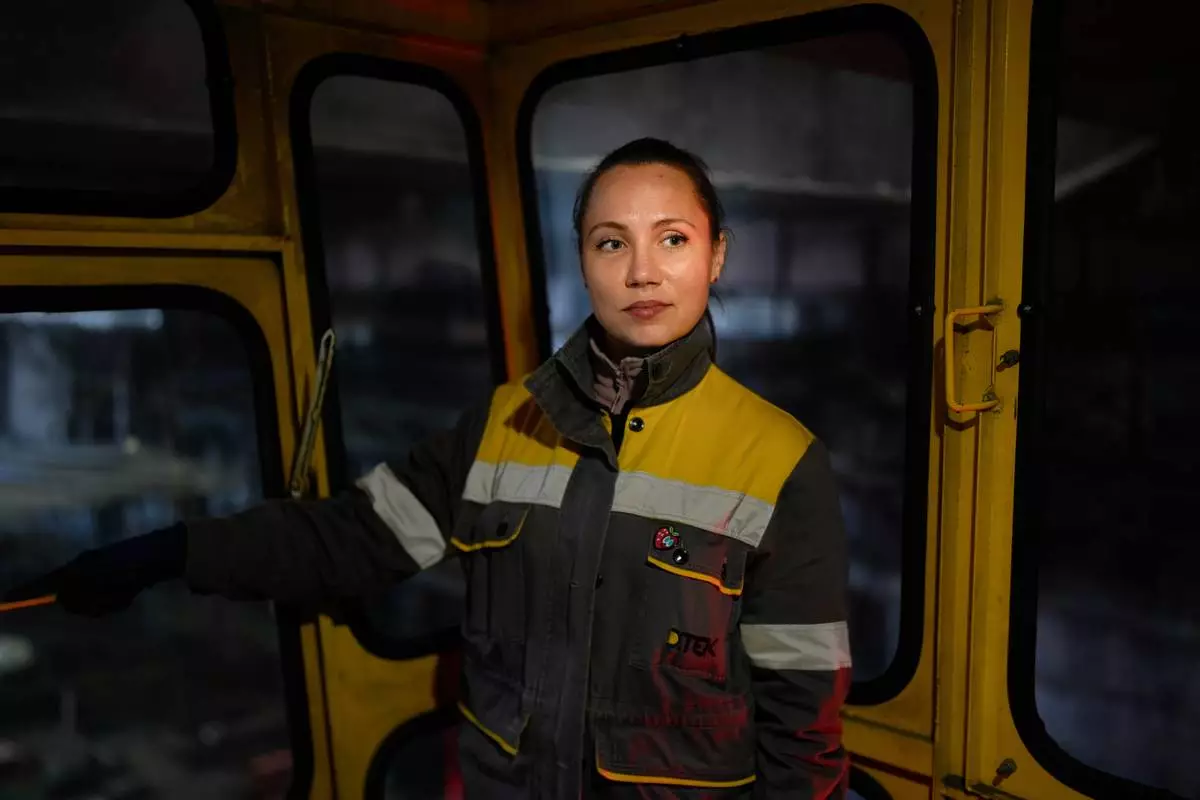
Maria, 35, a bridge crane operator, who declined to give her surname due to security concerns, poses for a portrait at a Ukrainian thermal power plant, Wednesday, Oct. 29, 2025. Her heart sinks anytime she hears missiles overhead, praying they don't hit her plant. “And then you hear explosions and realize they probably have (hit),” she says. “You feel anxious — not for yourself, but for what we do, for our work.” (AP Photo/Julia Demaree Nikhinson)

Serhii Staroselskyi, 37, a section supervisor, poses for a portrait while repairing power lines damaged following a Russian attack, Thursday, Oct. 16, 2025, in Shostka, Ukraine. "It's always rewarding when you restore power and people thank you," he says. "That's the best reward." (AP Photo/Julia Demaree Nikhinson)

Oleksandr Leheda, 49, a power line repairman, poses for a portrait while waiting out an air alarm on the job, where his team was supposed to fix power lines damaged following a Russian attack, Friday, Oct. 17, 2025, in Chernihiv, Ukraine. “It’s scary to work near the Russian border,” he said. Every morning, Leheda’s wife repeats to him the same mantra: “Be careful,” “Easy,” and “Mind your step.” (AP Photo/Julia Demaree Nikhinson)
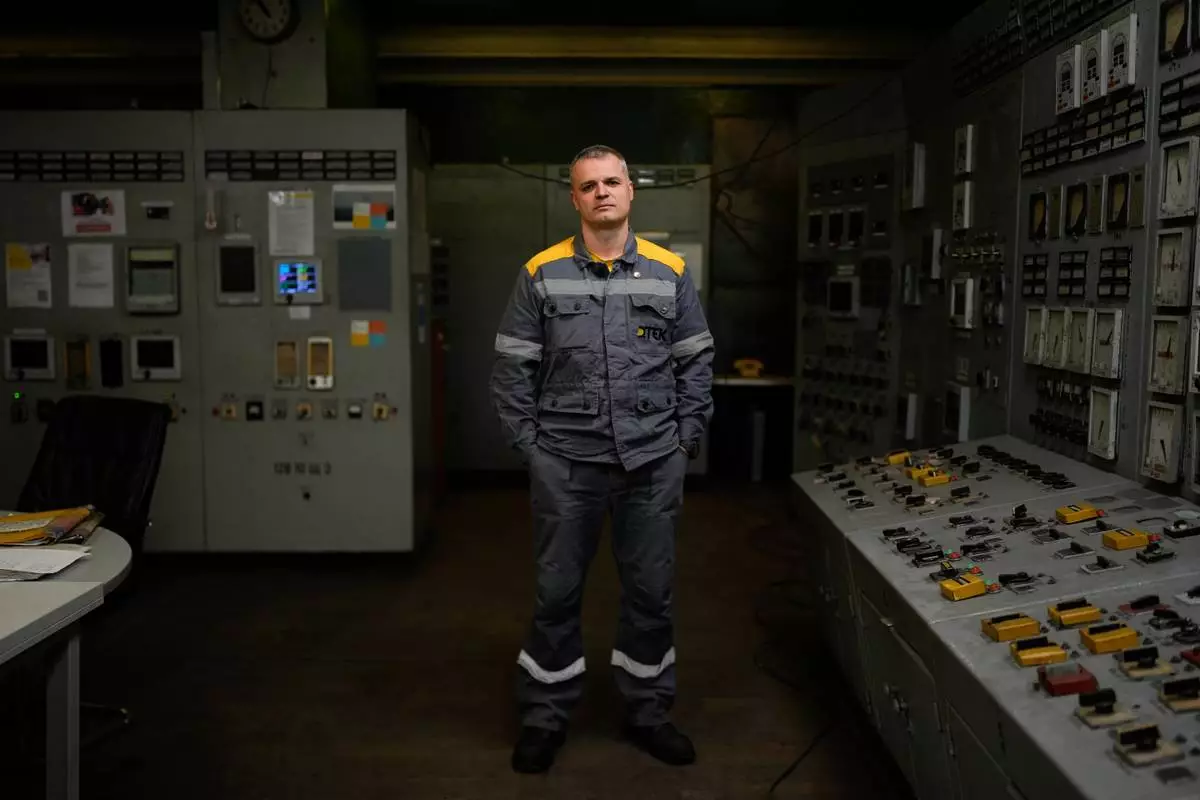
Mykhailo, 45, a senior power unit engineer, who declined to give his surname due to security concerns, poses for a portrait in the control room of a Ukrainian thermal power plant, Wednesday, Oct. 29, 2025. "If all the turbine operators hid during attacks, there'd be no energy left," he says. "We have to stay at our posts. Who else would do the job?" (AP Photo/Julia Demaree Nikhinson)

CORRECTS FAMILY NAME TO ADAMCHUK - Oleksandr Adamchuk, 36, a repair and maintenance supervisor for substations, poses for a portrait while performing scheduled repair work on an energy substation, Friday, Oct. 24, 2025, in Kyiv region, Ukraine. "The main thing is that our soldiers hold the front so the Russians don't come here. We'll do everything to make sure people don't freeze this winter." (AP Photo/Julia Demaree Nikhinson)

Bohdan Bilous, 24, poses for a portrait while repairing power lines damaged following a Russian attack, Thursday, Oct. 16, 2025, in Shostka, Ukraine. “Better I become a target for Russia than civilians or soldiers,” said Bilous, dressed in his work uniform as he repaired power lines in the northern town of Shostka in the Sumy region — one of the first cities plunged into blackout this season after heavy strikes. (AP Photo/Julia Demaree Nikhinson)

Andrii Dzhuma, 58, poses for a portrait while waiting out an air alarm on the job, where his team was supposed to fix power lines damaged following a Russian attack, Friday, Oct. 17, 2025, in Chernihiv, Ukraine. “Somehow, but we still give people light,” Dzhuma says with a shy smile, acknowledging that he is proud of his work and of his colleagues. (AP Photo/Julia Demaree Nikhinson)